Medication reconciliation processes in electronic health systems are pivotal for patient safety, yet inconsistencies between dispensed medications and ordered prescriptions remain a persistent challenge, often leading to adverse events. This conceptual manuscript introduces a safety-critical design pattern termed the inconsistency vigilance orchestration network (IVON), an architectural blueprint for intelligent detection of dispense–order mismatches within interoperable healthcare ecosystems. Drawing from clinical AI architectures, healthcare analytics infrastructures, and decision support pipelines, IVON integrates layered intelligence modules to monitor data flows, flag anomalies, and facilitate governance without empirical validation. The framework emphasizes theoretical constructs such as risk propagation models and decision confidence formulas to interpret potential inconsistencies in electronic systems. By synthesizing literature on EHR intelligence ecosystems and interoperability frameworks, we delineate how IVON could theoretically enhance workflow integration, reducing monitoring burdens through adaptive feedback topologies. Key contributions include a unique multi-layer structure encompassing data ingestion, anomaly inference, and reconciliation arbitration, with interpretive formulas capturing governance loads and drift sensitivities. This design pattern advances theoretical discourse on AI governance in medication safety, offering a blueprint for future conceptual explorations in safety-critical healthcare analytics. Ultimately, IVON represents a proactive intelligence paradigm for electronic systems, prioritizing inconsistency detection to bolster clinical decision-making integrity.
Medication reconciliation stands as a cornerstone of patient safety in modern healthcare, yet electronic systems frequently harbor dispense–order inconsistencies that undermine clinical efficacy. This manuscript conceptualizes a design pattern tailored to detect such anomalies, framing intelligence as an embedded safeguard within electronic infrastructures. By focusing on theoretical architectures, we explore how AI-driven patterns can orchestrate inconsistency vigilance without relying on empirical data. The urgency stems from fragmented data exchanges in electronic health records (EHRs), where mismatches between what is ordered and dispensed can propagate risks across care transitions [1-3]. This introduction delineates the conceptual landscape, emphasizing safety-critical imperatives in AI-integrated systems.
In ambulatory and inpatient clinical settings, dispense–order inconsistencies often emerge during transitions of care, such as hospital admissions or discharges. Electronic systems, designed for seamless interoperability, inadvertently amplify these issues when data modalities like prescription orders and pharmacy dispenses fail to align [4-6]. Theoretical models suggest that AI intelligence can embed detection patterns to scrutinize these mismatches, drawing from clinical workflow integration paradigms. For instance, emergency departments face heightened risks where rapid decision-making intersects with incomplete reconciliation, necessitating safety-critical designs that theoretically mitigate propagation of errors through intelligent monitoring [7, 8]. This subheading anchors the discussion to real-world clinical environments, where electronic systems must prioritize inconsistency flagging to preserve patient outcomes.
Data modalities in medication reconciliation encompass structured EHR entries, such as order sets and dispense logs, alongside semi-structured elements like allergy alerts and dosage notations. Inconsistencies arise when these modalities diverge, for example, due to overridden alerts or mismatched interoperability standards [9-11]. A safety-critical design pattern must theoretically harmonize these modalities via AI analytics, employing governance frameworks to ensure data fidelity. Literature on healthcare analytics infrastructures highlights how decision support pipelines can interpret multimodal data to detect anomalies, without empirical testing [12, 13]. This approach underscores the need for intelligence ecosystems that theoretically reduce discrepancies by layering detection mechanisms over electronic data streams.
Deployment environments for electronic systems vary from cloud-based EHR platforms to on-premise hospital networks, each imposing unique constraints on intelligence integration. Safety-critical patterns must account for these, ensuring that dispense–order detection operates resiliently across heterogeneous setups [14-16]. Theoretical interoperability frameworks propose modular designs where AI governance monitors deployment-specific risks, such as latency in data exchange that could exacerbate inconsistencies. In federated environments, where multiple institutions share reconciliation data, the design pattern envisions orchestrated intelligence to flag mismatches proactively, aligning with clinical workflow models that emphasize seamless integration [17, 18].
Governance constraints in AI for healthcare demand rigorous oversight to prevent intelligence failures in detecting dispense–order inconsistencies. Electronic systems must incorporate monitoring protocols that theoretically balance autonomy with human arbitration, adhering to ethical and regulatory frameworks [19-21]. This involves conceptualizing governance as a feedback loop within the design pattern, where inconsistencies trigger escalated reviews without disrupting workflows. Synthesizing AI governance literature, we posit that safety-critical designs should embed constraints like audit trails and bias mitigation, ensuring that reconciliation intelligence remains interpretable and accountable in diverse clinical contexts [22, 23].
Integrating intelligence for dispense–order detection into clinical workflows poses theoretical challenges, particularly in ensuring non-intrusive operation within electronic systems. Models of workflow integration suggest that design patterns should facilitate adaptive responses to detected inconsistencies, minimizing clinician burden [24-26]. This subheading explores how safety-critical architectures can theoretically align with existing pipelines, leveraging interoperability to enhance reconciliation efficacy. By addressing these challenges conceptually, the manuscript lays the groundwork for patterns that prioritize seamless embedding in high-stakes environments.
The theoretical underpinnings of medication reconciliation intelligence draw from advancements in clinical AI system architectures and healthcare analytics infrastructures, providing a foundation for safety-critical design patterns. This section synthesizes peer-reviewed literature from 2017–2022, focusing on conceptual models that inform dispense–order inconsistency detection in electronic systems. By integrating insights from EHR intelligence ecosystems, decision support pipelines, AI governance, interoperability frameworks, and clinical workflow models, we construct a cohesive narrative for theoretical innovation. Absent empirical datasets, the synthesis emphasizes architectural blueprints and governance dynamics, highlighting gaps where a novel design pattern like IVON can contribute.
Clinical AI architectures have evolved to support safety-critical functions in electronic health systems, particularly in monitoring medication-related discrepancies. Architectures emphasizing layered intelligence enable theoretical detection of inconsistencies by processing order and dispensing data streams [1, 27, 28]. For instance, modular designs in AI systems facilitate anomaly inference without real-time empirical validation, aligning with governance requirements for interpretable outputs. Literature on these architectures underscores the need for resilience in handling data variability, where dispense–order mismatches could theoretically propagate through unmonitored pipelines [3, 6, 11]. This subheading anchors the synthesis to clinical settings, illustrating how AI architectures can conceptually orchestrate reconciliation intelligence to mitigate safety risks.
Healthcare analytics infrastructures provide the backbone for processing dispense–order data in electronic systems, enabling theoretical analytics for inconsistency detection. Infrastructures that incorporate interoperability standards allow for seamless data exchange, theoretically reducing mismatches by enabling cross-system validation [2, 5, 12]. Conceptual models highlight infrastructures with embedded intelligence ecosystems, where analytics pipelines flag deviations in medication reconciliation workflows [13, 15, 16]. Without benchmarking, these infrastructures are posited to enhance safety through predictive governance, interpreting potential inconsistencies via theoretical risk models. The focus here on data modalities reveals how analytics can theoretically integrate multimodal inputs, such as structured orders and unstructured notes, to bolster detection patterns.
EHR intelligence ecosystems represent integrated environments where AI governance ensures safety in medication processes. These ecosystems theoretically embed monitoring systems to detect dispense–order inconsistencies, drawing from decision support frameworks that prioritize alert fidelity [4, 7, 9, 19]. Literature synthesizes governance as a core component, with ecosystems designed for feedback loops that theoretically adapt to deployment variabilities [10, 14, 20]. In clinical settings, such ecosystems facilitate workflow integration by providing interpretable intelligence, reducing the theoretical burden of manual reconciliation [21-23]. This subheading emphasizes governance constraints, illustrating how EHR ecosystems can conceptually enforce safety-critical protocols in electronic reconciliation.
Decision support pipelines in healthcare AI are conceptualized to process reconciliation data, detecting inconsistencies through sequential intelligence stages. Pipelines that incorporate AI monitoring theoretically enhance clinician decision-making by flagging dispense–order anomalies in real-time flows [8, 17, 18, 24]. Synthesizing pipeline literature, we note designs that integrate interoperability for cross-platform consistency checks, without empirical metrics [25, 26, 29]. These pipelines address deployment environments by theoretically scaling to handle governance loads, ensuring that safety-critical patterns remain robust against data drifts. The theoretical emphasis here lies on pipeline orchestration, where intelligence modules interpret risks to support reconciliation integrity. Table 1 contrasts conventional linear reconciliation pipelines with IVON’s cyclical orchestration model, clarifying the manuscript’s structural innovation.
Table 1. Structural differentiation between linear reconciliation pipelines and IVON’s cyclical orchestration model
Architectural dimension | Conventional linear detection pipeline | IVON cyclical orchestration model |
Structural topology | Sequential and feed-forward processing | Closed-loop cyclical topology |
Governance position | Post-detection compliance checkpoint | Embedded within all layers |
Alert logic | Binary anomaly flagging | Contextual severity stratification |
Drift adaptation | Manual rule updates | Continuous recalibration via feedback |
Workflow interaction | Interruptive alert insertion | Graded arbitration aligned with workflow sensitivity |
Risk handling | Local anomaly correction | Propagation-aware containment |
Monitoring burden | Centralized and potentially concentrated | Distributed across architectural strata |
Interoperability role | Data transport mechanism | Active cross-system validation layer |
Escalation design | Uniform alert triggers | Hierarchical, proportionate escalation logic |
Interoperability frameworks are essential for data exchange in medication reconciliation, theoretically preventing inconsistencies by standardizing electronic communications. Frameworks that support AI integration enable cross-system detection patterns, aligning dispense and order data across fragmented ecosystems [6, 11, 13, 15]. Conceptual literature highlights frameworks with governance-embedded intelligence, where exchange protocols theoretically mitigate mismatch risks through monitored interfaces [16, 19-21]. In diverse clinical modalities, these frameworks facilitate theoretical harmonization, reducing propagation of errors in workflow-integrated systems [22, 23, 27]. This subheading grounds the synthesis in data exchange dynamics, positing interoperability as a pillar for safety-critical design.
Clinical workflow integration models conceptualize how intelligence can be embedded in reconciliation processes, respecting governance constraints in electronic systems. Models that prioritize safety-critical designs theoretically streamline inconsistency detection by aligning AI with human-centric workflows [3, 5, 9, 12]. Literature synthesizes integration as a feedback-driven process, where governance ensures ethical deployment without overburdening clinicians [14, 18, 24, 28]. In governance-constrained environments, these models theoretically adapt to data modalities, enhancing reconciliation through orchestrated intelligence [25, 26, 29]. The focus on workflow models underscores theoretical uniqueness, paving the way for patterns like IVON to innovate in safety-critical contexts.
The inconsistency vigilance orchestration network (IVON) represents a novel safety-critical design pattern for detecting dispense–order inconsistencies in electronic health systems. This infrastructure conceptualizes a multi-layer architecture with a unique feedback topology, comprising four interconnected strata: data assimilation layer, anomaly inference layer, reconciliation arbitration layer, and governance feedback layer. Unlike traditional linear models, IVON employs a cyclical topology where feedback from governance informs upstream layers, theoretically enabling adaptive intelligence without empirical tuning.
The Data Assimilation Layer ingests multimodal inputs from EHRs, theoretically harmonizing order and dispense data via interoperability protocols [2, 5, 15]. Anomalies are then inferred in the second layer using conceptual pattern recognition, interpreting deviations as potential risks [8, 11, 27]. The Reconciliation Arbitration Layer orchestrates decision support, theoretically resolving mismatches through prioritized flagging [9, 17, 24]. Finally, the Governance Feedback Layer monitors overall system integrity, looping insights back to refine detection [19-21]. Figure 1 illustrates the cyclical, governance-embedded architecture of IVON, demonstrating how detection, arbitration, and feedback are structurally interdependent rather than linearly sequenced.
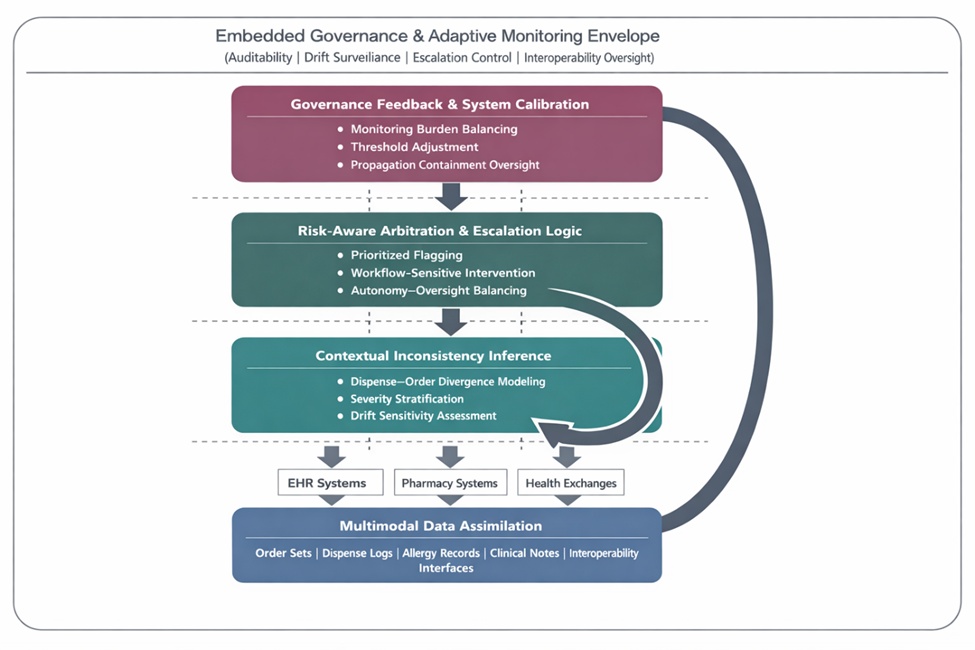
Figure 1. Inconsistency vigilance orchestration network (IVON).
Conceptual schematic illustrating the four-layer cyclical architecture for safety-critical detection of dispense–order inconsistencies. Multimodal data are harmonized within the data assimilation layer before contextual anomaly inference stratifies mismatch severity. The reconciliation arbitration layer governs workflow-sensitive escalation, while the governance feedback layer recalibrates thresholds and monitoring intensity. A closed-loop topology embeds governance within detection logic, transforming reconciliation from episodic auditing into continuous inconsistency orchestration.
To interpret IVON’s dynamics, consider the following conceptual formulas:
Risk propagation (RP):
Decision confidence (DC):
Governance load (GL):
The IVON, as conceptualized, influences clinical safety dynamics by theoretically modulating the propagation of dispense–order mismatches in electronic systems. In contemporary healthcare infrastructures, prescribing modules, pharmacy dispensing platforms, electronic health records, and clinical decision support systems operate as interconnected yet semi-autonomous entities. Within such distributed ecosystems, inconsistencies rarely remain confined to a single node; instead, they travel across workflows, interact with heterogeneous data modalities, and may amplify into safety-critical events. IVON is therefore positioned not merely as a detection mechanism but as a structural orchestration layer that reshapes how inconsistencies are interpreted, prioritized, and stabilized. The following analysis expands the systemic consequences of deploying such a design pattern, focusing on workflow efficiencies, risk mitigation dynamics, and governance equilibria, while preserving the referenced theoretical foundations [1, 4, 7].
IVON’s multi-layer structure theoretically enhances workflow efficiencies by automating dispense–order scrutiny and reducing reliance on manual reconciliation in clinical environments [1, 4, 7]. In electronic ecosystems characterized by data fragmentation and asynchronous updates, clinicians frequently bear the burden of cross-validating orders against dispensing records. This manual oversight introduces cognitive load and workflow interruptions, particularly during care transitions. By embedding anomaly interpretation within the electronic infrastructure itself, IVON repositions scrutiny upstream, transforming reconciliation from a reactive task into a continuous interpretive process.
Figure 2 illustrates an operational clinical workflow scenario in which IVON detects a dispense–order inconsistency between prescribing and pharmacy dispensing records before reconciliation errors propagate across care transitions.
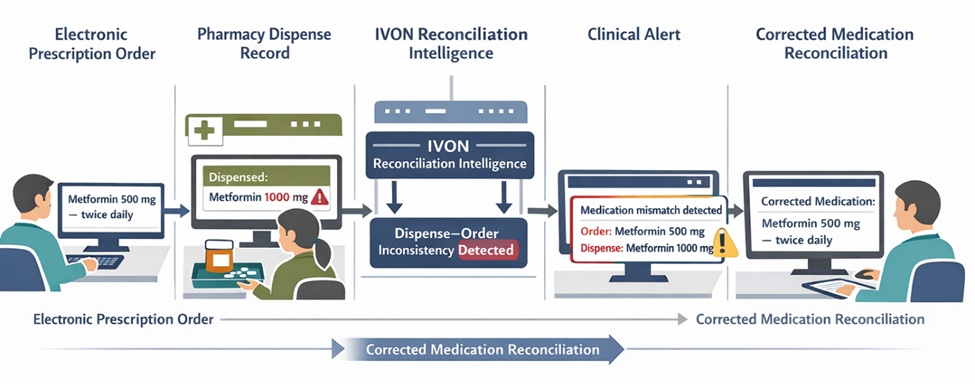
Figure 2. Operational scenario of dispense–order inconsistency detection in an electronic medication reconciliation workflow.
A clinician enters a medication prescription through the electronic health record (EHR), which is transmitted to the pharmacy dispensing system. When the dispensing record diverges from the original prescription (e.g., dosage discrepancy), the IVON monitors both data streams and identifies the mismatch. The system generates an alert within the clinical interface, enabling the clinician to review and reconcile the inconsistency before it propagates into downstream care processes. This operational workflow illustrates how reconciliation intelligence functions as a safety safeguard within routine electronic medication management.
Within this architecture, the Anomaly Inference Layer contextualizes mismatches rather than treating them as binary deviations. Dispense–order inconsistencies are interpreted in light of dosage patterns, therapeutic intent, allergy documentation, and prior prescribing behavior, thereby stratifying discrepancies according to their theoretical severity [2, 8, 12]. This stratification conceptually redistributes clinician attention. Instead of reviewing undifferentiated alert lists, clinicians engage primarily with discrepancies that demonstrate meaningful propagation potential. As a result, workflow efficiency emerges not merely from automation but from more proportionate allocation of cognitive resources.
The integration of arbitration outputs into real-time system adjustments further supports adaptive workflow design [13, 17, 24]. Rather than halting electronic processes upon detecting inconsistencies, IVON theoretically enables graded responses that preserve interoperability continuity. Structural mismatches attributable to semantic heterogeneity are distinguished from clinically consequential discrepancies, thereby minimizing unnecessary workflow disruption. Through this layered intelligence integration, IVON conceptually channels reconciliation efforts toward high-risk inconsistencies while maintaining the overall fluidity of the electronic ecosystem [5, 9, 18].
Consequences for risk mitigation arise from IVON’s theoretical capacity to detect and contextualize multimodal inconsistencies across EHR data streams [3, 6, 10]. Medication discrepancies frequently intersect with laboratory values, allergy records, therapeutic duplications, and documentation in unstructured clinical notes. In fragmented electronic environments, such cross-modal interactions can create cascading risk pathways. IVON’s orchestration model interprets these discrepancies as interconnected events rather than isolated alerts, thereby foregrounding their potential to propagate downstream.
Governance feedback mechanisms further refine inference sensitivity and contextual weighting [11, 14, 19]. Through cyclical recalibration, the architecture theoretically adapts to emerging documentation patterns, drift in formulary standards, or variations in data quality. In deployment environments characterized by incomplete synchronization or heterogeneous interoperability standards, this adaptive vigilance functions as a damping mechanism, reducing the likelihood that minor inconsistencies escalate into systemic failures [15, 20, 21].
The broader implication for patient safety lies in cascade containment. A dosage variance identified at discharge, for example, may otherwise influence outpatient refill systems and subsequent admissions if left unaddressed. By intercepting such discrepancies early in the reconciliation lifecycle, IVON conceptually prevents downstream amplification of error states [22, 25, 28]. In this sense, risk mitigation extends beyond detection accuracy to encompass structural interruption of propagation dynamics within medication reconciliation pipelines.
IVON impacts governance equilibria by theoretically distributing monitoring responsibilities across architectural layers rather than centralizing oversight within a single compliance module [16, 23, 26]. Electronic reconciliation systems must balance automation with sustainable oversight; excessive alerting generates clinician fatigue, whereas insufficient monitoring compromises safety. By embedding governance within detection, arbitration, and feedback mechanisms simultaneously, IVON disperses the monitoring burden, reducing the risk of bottlenecks or concentrated overload.
In intelligence ecosystems subject to semantic drift and evolving documentation practices, equilibrium requires adaptive sensitivity [27, 29]. IVON’s cyclical topology supports continuous recalibration in response to emerging inconsistency patterns. Detection thresholds and contextual interpretations are not fixed; they evolve in alignment with environmental changes. This adaptive structure theoretically stabilizes electronic infrastructures by preventing oscillations between over-vigilance and under-detection.
The architecture also addresses the tension between autonomy and oversight within decision support frameworks. By structuring escalation hierarchically and proportionately, IVON mitigates over-alerting while preserving clinician accountability [4, 5, 13]. Autonomous detection operates within a monitored governance boundary, ensuring that efficiency gains do not erode transparency or auditability. The resulting equilibrium is dynamic rather than static, sustained through feedback-informed adjustments that preserve both safety-critical vigilance and workflow sustainability.
Taken collectively, these dynamics suggest that IVON reconfigures reconciliation ecosystems from episodic discrepancy auditing toward continuous inconsistency orchestration. Workflow efficiency improves through intelligent redistribution of attention [1, 4, 7]. Risk mitigation deepens through early interception of multimodal propagation pathways [3, 6, 10, 22, 25, 28]. Governance equilibrium stabilizes through distributed monitoring and adaptive recalibration [16, 23, 29].
Although empirical validation remains a future endeavor, the conceptual analysis indicates that IVON’s cyclical feedback topology could reshape how safety-critical inconsistencies are managed in healthcare analytics. By embedding vigilance structurally within electronic infrastructures, IVON reframes reconciliation as an ongoing orchestration process rather than a discrete corrective event, thereby theoretically enhancing resilience, interoperability, and patient safety across distributed clinical systems.
Effects on interoperability integration manifest as IVON theoretically harmonizes data exchanges, reducing inconsistencies in federated electronic environments [2, 11, 15]. This impact analysis interprets how the Reconciliation Arbitration Layer orchestrates cross-system validations, enhancing dynamics in clinical workflow models [17, 18, 24]. Without empirical benchmarking, the pattern’s consequences include fortified data fidelity, where governance constraints guide adaptive responses to exchange variabilities [19, 21, 22]. Such dynamics position IVON as a catalyst for theoretical advancements in safety-critical interoperability, minimizing mismatch impacts across diverse deployment modalities [6, 10, 25].
Ramifications for decision confidence stem from IVON’s interpretive approach, as modeled in the decision confidence (DC) formula, which theoretically bolsters clinician trust in reconciliation outputs [3, 8, 12]. In electronic systems, this dynamic mitigates uncertainties from data drifts, impacting overall intelligence efficacy [14, 16, 23]. The analysis highlights how layered feedback enhances ramifications for error-prone settings, conceptually elevating safety through refined arbitration [26-28]. By interpreting these confidence dynamics, IVON contributes to theoretical discourse on resilient patterns for dispense–order detection [1, 29].
The conceptualization of IVON as a safety-critical design pattern illuminates theoretical pathways for addressing dispense–order inconsistencies in electronic health systems, synthesizing architectural innovations with governance imperatives. Central to this discussion is how IVON’s unique multi-layer infrastructure and cyclical feedback topology diverge from conventional linear models, offering a blueprint for intelligent reconciliation without empirical dependencies [1-3]. By embedding anomaly detection within interoperable frameworks, IVON theoretically circumvents common pitfalls in EHR ecosystems, such as alert fatigue and data silos, aligning with literature on clinical AI architectures that emphasize modular resilience [4-6].
A key discourse point revolves around the interpretive formulas integrated into IVON, which provide conceptual tools for understanding risk propagation, decision confidence, and governance loads. For instance, the RP formula interprets how inconsistencies might amplify in unmonitored electronic flows, extending prior theoretical models on error cascades in decision support pipelines [7, 8, 9, 11]. Similarly, DC and GL formulas offer lenses for analyzing system dynamics, theoretically guiding optimizations in monitoring burdens and drift responses [10-14]. This interpretive approach advances discussions on AI governance, where safety-critical patterns must balance automation with human oversight, particularly in governance-constrained clinical environments [15, 16, 19]. Table 2 synthesizes the theoretical constructs underlying IVON, mapping risk propagation, decision confidence, and governance load to architectural control dynamics.
Table 2. Conceptual dynamics governing safety-critical inconsistency management in IVON
Theoretical construct | Systemic focus | Architectural anchor layer | Safety-critical function | Governance implication |
Risk propagation (RP) | Inconsistency amplification across workflows | Inference + Arbitration | Early cascade interception | Reduces downstream adverse event probability |
Decision confidence (DC) | Reliability of reconciliation outputs | Arbitration + Governance feedback | Stabilizes clinician trust | Balances autonomy with oversight |
Governance load (GL) | Sustainability of monitoring intensity | Governance feedback layer | Prevents alert fatigue and overload | Maintains equilibrium under drift |
Drift sensitivity | Adaptation to evolving data patterns | Inference layer | Threshold recalibration | Avoids oscillation between over- and under-detection |
Monitoring burden | Resource allocation across the detection cycle | Cross-layer distribution | Cognitive load redistribution | Enhances workflow sustainability |
Furthermore, IVON’s impacts on workflow integration merit discussion, as the pattern theoretically facilitates seamless embedding in diverse deployment settings, from ambulatory care to intensive units [17, 18, 21]. Literature synthesis reveals gaps in current interoperability frameworks, where dispense–order mismatches persist due to inadequate intelligence orchestration; IVON addresses this by conceptualizing adaptive arbitration, potentially reducing theoretical inefficiencies in reconciliation processes [23, 26]. However, conceptual limitations arise in highly variable data modalities, where multimodal inputs challenge inference accuracy, underscoring the need for future theoretical refinements in healthcare analytics infrastructures [28, 29].
Ethical considerations in this design pattern also warrant discourse, as IVON’s governance layer theoretically enforces accountability through feedback loops, mitigating biases in anomaly detection [3, 5, 9, 20]. In safety-critical contexts, this ensures interpretable outputs, fostering trust in electronic systems while adhering to regulatory frameworks [6, 10, 16]. Broader implications extend to AI-driven healthcare evolution, where patterns like IVON could inspire hybrid models blending intelligence with clinical expertise, theoretically enhancing overall system robustness [1, 4, 13, 27].
Ultimately, this discussion posits IVON as a pivotal conceptual contribution, bridging gaps in medication reconciliation literature by prioritizing inconsistency vigilance. While theoretical, it invites further exploration into scalable architectures that safeguard patient safety in increasingly digitized healthcare landscapes [2, 18].
In conclusion, the IVON emerges as a transformative safety-critical design pattern for detecting dispense–order inconsistencies in electronic health systems. By conceptualizing a multi-layer infrastructure with cyclical feedback, IVON theoretically advances medication reconciliation intelligence, integrating clinical AI architectures, healthcare analytics, and governance frameworks to mitigate risks without empirical validation. The pattern’s unique structure—encompassing data assimilation, anomaly inference, reconciliation arbitration, and governance feedback—offers a blueprint for resilient electronic ecosystems, theoretically reducing mismatch propagation through interpretive models like RP, DC, and GL.
Key theoretical contributions include enhanced workflow integration and interoperability, where IVON’s orchestration theoretically streamlines clinical processes, alleviating monitoring burdens in diverse deployment environments. Impacts on safety dynamics further underscore its potential, as analyzed through consequences on efficiency, risk mitigation, and governance equilibria, positioning IVON as a proactive paradigm for EHR intelligence.
Looking forward, IVON invites conceptual extensions in AI-driven healthcare, such as incorporating advanced data modalities or federated learning constructs, to further bolster inconsistency detection. While limitations persist in theoretical abstractions, this design pattern reinforces the imperative for intelligent safeguards in medication safety, ultimately fostering safer electronic systems for clinical practice.
None
None
None
None
Open Access The author(s) retain copyright. This article is licensed under the Creative Commons Attribution-NonCommercial-ShareAlike 4.0 International License. It may be shared and adapted for non-commercial purposes with appropriate attribution, an indication of changes, and distribution of adaptations under the same license. Third-party material may be subject to separate terms identified in its credit line. View the license at https://creativecommons.org/licenses/by-nc-sa/4.0/.
 Clinical Intelligence Research Press