Traditional public health surveillance often operates within fragmented data silos, leading to delayed outbreak recognition and suboptimal clinical responses. This conceptual systems research article presents the multi-source public health surveillance intelligence mesh (MPSIM). This original architectural paradigm interconnects heterogeneous data ecosystems into a resilient, outbreak-aware intelligence fabric. MPSIM synthesizes multi-modal inputs from electronic health records, genomic repositories, environmental sensors, and social-determinant streams through a theoretically defined mesh topology that supports continuous intelligence propagation and adaptive governance.
The framework introduces a five-layer stratified architecture with a unique polyadic feedback topology enabling bidirectional drift correction and resource orchestration. Three interpretive conceptual formulas are advanced to model risk propagation, decision confidence, and governance load, furnishing system designers with abstract yet operationalizable constructs.
MPSIM is positioned as a blueprint for next-generation, outbreak-aware healthcare systems that embed surveillance intelligence directly into clinical workflows while satisfying stringent governance and interoperability requirements. The architecture prioritizes theoretical scalability, ethical oversight, and seamless multi-source fusion to advance proactive containment strategies across diverse deployment environments.
The accelerating complexity of infectious disease dynamics demands surveillance infrastructures capable of ingesting, fusing, interpreting, and operationalizing heterogeneous data streams in near real time. Pathogen evolution, increased global mobility, climate-mediated vector shifts, and digitally mediated behavioral changes have collectively transformed outbreak propagation into a multi-scalar, data-intensive phenomenon. Conventional surveillance systems—often constrained by source-specific reporting protocols, siloed analytics, and sequential validation workflows—routinely exhibit latency that undermines timely containment and coordinated response [1, 2]. These structural delays are not merely technical inefficiencies; they represent systemic vulnerabilities in an era where epidemiological trajectories can escalate within days.
The multi-source public health surveillance intelligence mesh (MPSIM) is conceptualized herein as a unifying architectural response that reconceives surveillance as a distributed, adaptive intelligence fabric. Rather than aggregating data into a central analytic hub, MPSIM transforms isolated nodes into a polyadic mesh expressly engineered for outbreak awareness. In this formulation, intelligence is not statically computed but dynamically propagated across interconnected pathways. The architecture aspires to reduce detection latency, enhance cross-modal coherence, and embed governance within the analytic substrate itself [3-7].
At its foundation, MPSIM reframes surveillance from a linear reporting pipeline to a systemic cognition framework. Signals from disparate modalities—clinical, genomic, environmental, behavioral—are not sequentially appended but reciprocally contextualized. This design anticipates the emergence of outbreaks as a phenomenon detectable through weak-signal convergence across modalities rather than through singular threshold exceedance in a single channel. By emphasizing distributed inference and recursive validation, MPSIM theoretically aligns surveillance architecture with the inherently networked nature of infectious disease spread [4-10].
Importantly, the architecture is not presented as an incremental extension of existing tools but as a re-architecture that integrates ingestion, fusion, governance, and orchestration into a unified mesh paradigm. The following subsections elaborate on the conceptual dimensions underpinning this transformation.
Contemporary surveillance ecosystems must accommodate an expanding constellation of modalities. Electronic health record (EHR) streams provide structured and unstructured clinical indicators; genomic sequencing feeds reveal variant emergence and mutation trajectories; syndromic surveillance signals capture pre-diagnostic symptom clusters; environmental covariates track vector habitats and climate variables; and mobility or digital epidemiology signals provide contextual behavioral markers [3, 11]. Each modality contributes a distinct signal topology—temporal resolution, spatial granularity, semantic structure, and uncertainty profile vary considerably across sources.
When analyzed in isolation, these modalities yield fragmented situational awareness. EHR data may lag due to documentation cycles; genomic feeds may provide depth but limited breadth; environmental signals may anticipate risk without confirming cases. The analytic challenge is therefore not merely aggregation but harmonization without distortion.
MPSIM theorizes a modality-agnostic ingestion stratum that normalizes heterogeneous inputs without privileging any single source. This ingestion layer abstracts modality-specific schemas into interoperable representations while preserving provenance metadata and confidence gradients. By avoiding hierarchical source ranking at the ingestion stage, the mesh enables intelligence to emerge through cross-modal interaction rather than predetermined weighting. The architecture thereby fosters holistic situational awareness, in which emergent outbreak signals arise from signal-convergence patterns rather than isolated thresholds.
Such modality pluralism is increasingly indispensable as surveillance expands into domains beyond traditional clinical data. Wastewater monitoring, wearable health telemetry, and social signal mining exemplify modalities whose integration demands flexible ingestion logic. MPSIM’s conceptual neutrality toward data type positions it as an extensible scaffold capable of absorbing future modalities without structural redesign.
Linear surveillance pipelines—characterized by sequential ingestion, centralized processing, and downstream dissemination—mirror industrial-era data flows rather than the networked diffusion of pathogens. Outbreak spread is inherently polycentric, with simultaneous micro-clusters emerging across geographies. Mesh topologies, by contrast, permit multiple concurrent propagation pathways, mirroring this epidemiological diffusivity [12, 13].
Within MPSIM, intelligence nodes exchange signals bidirectionally, enabling localized anomaly detection that informs and is informed by neighboring nodes. This topology theoretically enhances fault tolerance: localized disruptions in one data channel—whether due to reporting gaps, technical outages, or semantic inconsistencies—do not collapse system-wide awareness. Instead, alternate pathways sustain continuity of inference.
Moreover, mesh architectures facilitate recursive validation. When a weak signal emerges in one node, adjacent nodes can corroborate, contextualize, or attenuate it. Such polyadic feedback dampens false-positive amplification while accelerating the consolidation of credible signals. In clinical decision pipelines, this translates into enriched alerts that reflect multi-source corroboration, thereby increasing clinician trust and reducing alert fatigue.
By aligning topological design with outbreak diffusion dynamics, MPSIM repositions surveillance as a resilient network rather than a centralized command center. This alignment enhances robustness under surge conditions and supports adaptive routing of intelligence during crisis escalation.
Despite the conceptual elegance of distributed intelligence, deployability depends upon seamless integration with entrenched healthcare infrastructures. EHR ecosystems remain the operational backbone of clinical decision-making, yet they are frequently characterized by vendor heterogeneity, legacy standards, and workflow rigidity [4, 14]. Disruptive overlays risk eroding clinician trust or introducing inefficiencies.
MPSIM addresses this integration imperative through lightweight, standards-compliant adapters that function as translational conduits between the mesh and EHR environments. These adapters preserve existing documentation workflows while injecting enriched, multi-source intelligence directly into decision support interfaces. Rather than requiring clinicians to navigate separate dashboards, the architecture situates outbreak-aware insights within familiar clinical contexts.
Intelligence that exists outside workflow boundaries often remains underutilized. By preserving interface continuity and minimizing cognitive switching costs, MPSIM aspires to harmonize analytic innovation with clinical practicality. The integration layer thus operates not merely as a technical connector but as a socio-technical mediator aligning surveillance sophistication with frontline usability.
Surveillance architectures operating at population scale must navigate ethical constraints, bias mitigation, data sovereignty, and regulatory compliance across jurisdictions [8, 9]. Traditional models frequently treat governance as a post-hoc overlay—auditing outputs after analytic processes are complete.
MPSIM conceptualizes governance as a native sheath integrated within the mesh fabric. Governance agents monitor bias indicators, enforce access controls, and validate compliance thresholds continuously throughout the intelligence lifecycle. This embedded model reduces the risk of retrospective correction and supports real-time ethical calibration.
By internalizing governance functions, the architecture acknowledges that technical efficiency cannot be decoupled from normative legitimacy. The legitimacy of outbreak intelligence systems hinges not only on detection accuracy but also on transparency, accountability, and the preservation of rights. Embedding governance structurally rather than procedurally reflects a shift toward ethically anticipatory system design.
Intelligence generation alone does not guarantee actionable impact. The translation of multi-source signals into operational decisions requires orchestration mechanisms that align analytic outputs with the temporal and spatial realities of frontline care [5, 15]. Clinical environments are characterized by time scarcity, cognitive load, and competing priorities.
MPSIM introduces theoretically defined orchestration agents that dynamically prioritize, contextualize, and route insights according to workflow demands. These agents assess situational urgency, clinician role, and spatial distribution to tailor alert timing and content. By calibrating signal delivery to contextual relevance, the architecture minimizes cognitive burden while maximizing outbreak-response velocity.
Such orchestration is especially critical during surge events, when indiscriminate alerting can overwhelm staff and dilute attention. Adaptive prioritization ensures that high-confidence, high-impact insights are surfaced prominently, while lower-confidence signals remain accessible but unobtrusive. The orchestration layer thus functions as a bridge between analytic abundance and operational precision.
Collectively, these dimensions frame MPSIM not as an incremental enhancement but as a fundamental re-architecture of public health surveillance for the multi-source era. By unifying modality-agnostic ingestion, mesh-based topology, seamless EHR integration, embedded governance, and context-aware orchestration, the architecture aspires to transform surveillance into an adaptive intelligence ecosystem responsive to the accelerating complexity of infectious disease dynamics.
The theoretical scaffolding of MPSIM illuminates the requisite building blocks for multi-source, outbreak-aware intelligence systems. These contributions converge across domains of clinical AI architecture, interoperability engineering, governance theory, and workflow integration, collectively signaling an intellectual shift toward distributed intelligence paradigms.
Clinical AI system architectures have matured from narrow, task-specific predictive models to integrative platforms capable of multi-stream ingestion and contextual inference. Architectures for unifying infection surveillance data for predictive control emphasize modular components that accommodate heterogeneous inputs without rigid coupling [3, 4]. This modularity is foundational to mesh-based evolution, enabling node-level specialization without sacrificing systemic cohesion.
Furthermore, the necessity of extensible pipelines supporting continuous learning—while preserving clinical safety—has been underscored in infectious disease management contexts [5, 7, 16-23]. These works highlight tension between adaptive model refinement and the stability required in clinical environments. MPSIM’s theoretical design addresses this tension by integrating distributed validation and governance, enabling localized adaptation within globally monitored parameters.
Across the literature, a consistent theme emerges: effective outbreak intelligence requires integration, resilience, ethical oversight, and workflow alignment. MPSIM synthesizes these thematic strands into a cohesive architectural paradigm. Rather than layering interoperability, governance, and orchestration as discrete enhancements, it embeds them as interdependent strata within a unified mesh. This synthesis reflects the broader intellectual convergence toward systems capable of managing the complexity, volatility, and ethical stakes of contemporary infectious disease surveillance.
In situating itself within this corpus, MPSIM does not supplant existing contributions but integrates their insights into a structured, theoretically coherent framework—positioning the mesh paradigm as a natural evolutionary step in the maturation of public health surveillance intelligence.
Healthcare analytics infrastructures increasingly prioritize scalability, elasticity, and systemic resilience in response to volatile epidemiological landscapes. A narrative foundation for AI-enhanced surveillance infrastructures has been articulated, emphasizing the transition from reactive reporting systems to anticipatory intelligence platforms capable of distributed inference [1, 24-27]. Within infectious disease domains, big-data opportunities—ranging from high-frequency sensor streams to population-level mobility analytics—have been examined alongside infrastructural pitfalls, including data fragmentation, semantic inconsistency, and computational bottlenecks [6, 15, 22]. These analyses underscore the necessity of architectures capable of ingesting and harmonizing high-velocity streams without sacrificing interpretability or governance integrity.
The progression from local detection systems to global monitoring networks has likewise been delineated, offering infrastructural blueprints directly extensible to mesh-based paradigms [10]. Such blueprints highlight the importance of distributed nodes, cross-jurisdictional data routing, and adaptive feedback channels—features that collectively form the backbone of resilient intelligence fabrics. These developments converge toward a systemic principle: scalable surveillance requires architectures that can absorb exponential increases in data volume and modality diversity while preserving analytic coherence. MPSIM situates itself within this trajectory by formalizing a mesh topology that operationalizes scalability not merely as computational expansion but as distributed cognitive capacity.
EHR intelligence ecosystems constitute the clinical backbone of any deployable surveillance mesh. Multi-source learning frameworks explicitly theorized for healthcare decision-making demonstrate how EHR-centric systems can ingest external epidemiological signals without disrupting clinician workflows [12, 28, 29]. These frameworks emphasize contextual embedding, in which externally derived risk indicators are mapped to patient-level records while preserving clinical semantics and workflow continuity. Complementary multimodal integration strategies have advanced theoretical mechanisms for fusing EHR data with omics layers, environmental covariates, and behavioral signals [11, 13].
These strategies are directly germane to the cross-modal fusion hub envisioned in MPSIM. Crucially, they prioritize preservation of source provenance—ensuring that each signal retains metadata regarding origin, uncertainty, and transformation history. Provenance preservation is indispensable for governance auditing, drift correction, and clinician interpretability. By aligning with these multimodal integration paradigms, the proposed mesh architecture embeds fusion logic that is extensible yet traceable, preventing opacity in cross-repository intelligence synthesis.
Decision-support pipelines have simultaneously evolved toward proactive and context-aware delivery mechanisms. AI-driven epidemic intelligence pipelines that embed outbreak indicators directly into clinical decision pathways have been envisioned, marking a departure from retrospective dashboards toward anticipatory alerts integrated within care trajectories [2, 16, 26]. These models emphasize temporal alignment—ensuring that intelligence arrives at actionable junctures rather than post hoc intervals.
Moreover, key use cases for AI in pandemic preparedness have been mapped systematically, outlining decision-support requirements that inform orchestration layers in outbreak-aware systems [9, 19, 28]. These include triage prioritization, resource allocation forecasting, transmission risk stratification, and supply-chain optimization. The cumulative insight from this body of work is that surveillance intelligence must be operationally coupled to frontline decisions. In MPSIM, this insight manifests through orchestration agents that calibrate signal delivery based on workflow context, urgency gradients, and practitioner role. Such evolution ensures that intelligence is delivered at the point of care with appropriate timing and contextual relevance, thereby strengthening practitioner trust and minimizing alert fatigue.
Parallel to the evolution of analytics and workflows, AI governance, monitoring, and deployment systems have received increasing scholarly attention. Early-warning governance structures have been systematically mapped, delineating mechanisms for bias detection, performance auditing, and compliance verification in surveillance contexts [8, 20]. The literature emphasizes that outbreak-aware systems operate within heightened ethical scrutiny due to population-scale implications and privacy sensitivities. Transparent monitoring mechanisms across the system lifecycle—spanning ingestion, fusion, dissemination, and recalibration—have therefore been stressed as prerequisites for ethical and regulatory alignment [9].
In the context of MPSIM, governance is conceptualized as a native sheath woven into each mesh layer, ensuring continuous compliance rather than episodic oversight. This approach reflects a maturation of surveillance infrastructure theory: ethical legitimacy and operational efficiency are co-constitutive rather than sequential concerns.
Interoperability and data exchange frameworks constitute the connective tissue binding distributed surveillance nodes into a coherent intelligence fabric. Standards-based exchange models preserving semantic fidelity across heterogeneous repositories have been articulated, providing mechanisms for harmonized data translation without eroding local schema integrity [12, 13]. Recent syntheses of AI-healthcare interoperability reinforce the feasibility of mesh-wide orchestration absent proprietary lock-in, highlighting open standards and modular adapters as enabling technologies [14].
These frameworks substantiate the feasibility of distributed mesh connectivity across diverse healthcare ecosystems. They demonstrate that interoperability need not entail infrastructural replacement but can be achieved through layered abstraction and translation protocols. MPSIM internalizes these principles by incorporating standards-compliant adapters and modality-neutral ingestion layers that preserve semantic fidelity while enabling systemic coherence. In doing so, it aligns architectural innovation with pragmatic compatibility constraints inherent to healthcare environments.
Clinical workflow integration models complete the theoretical synthesis by foregrounding human–system symbiosis. Scholarship on workflow-embedded AI emphasizes augmentation over automation—designing systems that enhance rather than supplant clinical agency [4, 5]. Implementation pitfalls, including cognitive overload, misaligned alert timing, and erosion of practitioner autonomy, have been documented, providing boundary conditions that surveillance architectures must respect [6].
By internalizing these constraints through adaptive orchestration and drift-correction topology, MPSIM positions itself as a workflow-native intelligence layer. Rather than imposing parallel dashboards or intrusive alerts, the mesh architecture seeks to integrate seamlessly into existing decision ecologies. This integration ensures that intelligence amplification does not come at the expense of practitioner efficacy or patient trust.
Taken collectively, the study shows a discernible intellectual trajectory: from siloed analytics and static reporting systems toward integrated, governed, and workflow-native intelligence fabrics. The literature demonstrates maturity across modular AI architectures, multimodal fusion strategies, interoperability standards, governance frameworks, and clinical embedding models. Yet, despite this convergence, theoretical gaps persist. Specifically, few frameworks articulate a cohesive mesh topology that simultaneously satisfies (1) modality-agnostic multi-source fusion, (2) outbreak-specific propagation modeling aligned with epidemiological diffusion dynamics, and (3) embedded governance as a structural rather than peripheral component.
MPSIM is advanced precisely to address these unresolved intersections. It synthesizes extant architectural principles into an original, non-empirical specification that unifies distributed intelligence propagation, cross-modal fusion hubs, standards-compliant interoperability, governance-native overlays, and workflow-aware orchestration. In doing so, it extends the literature from integrative platforms toward a fully articulated intelligence-mesh paradigm—positioning outbreak-aware surveillance as a resilient, scalable, and ethically anchored systemic cognition framework suited to the accelerating complexities of contemporary public health.
MPSIM is implemented using a five-layer stratified architecture interconnected via a polyadic mesh feedback topology. The design deliberately avoids hierarchical bottlenecks, instead distributing intelligence propagation across redundant pathways that mirror the dynamics of epidemiological diffusion.
Layer 1 – Heterogeneous Data Harvesting Stratum normalizes incoming streams from EHRs, genomic repositories, syndromic networks, and environmental sensors into a unified semantic schema.
Layer 2 – Cross-Modal Intelligence Fusion Hub executes theoretical fusion operations that preserve source provenance while generating enriched composite signals.
Layer 3 – Outbreak Propagation Modeling Lattice maintains a dynamic lattice of risk nodes, updating in continuous time according to the conceptual risk-propagation formula:
where denotes source-specific reliability weight, the normalized intelligence signal from source s, and
Layer 4 – Adaptive Response Orchestrator translates lattice outputs into workflow-aligned action recommendations using the decision-confidence construct:
is the mesh-wide intelligence index, and θ is a context-sensitive threshold. Higher confidence theoretically accelerates orchestration while lower values trigger additional source queries.
Layer 5 – Ethical governance and drift monitoring sheath continuously evaluates system state against the governance-load index:
where L is active layer count, V is source velocity, and are tunable interpretive coefficients. Theoretically, elevated GLI activates corrective governance loops.
The polyadic feedback topology links every layer bidirectionally to every other layer, forming a fully connected mesh with recursive cycles of confidence amplification. This topology enables simultaneous forward propagation of outbreak intelligence and backward propagation of drift-correction signals, ensuring theoretical resilience without central failure points.
The five-layer stratified architecture and its polyadic, bidirectional feedback topology are summarized in Figure 1.
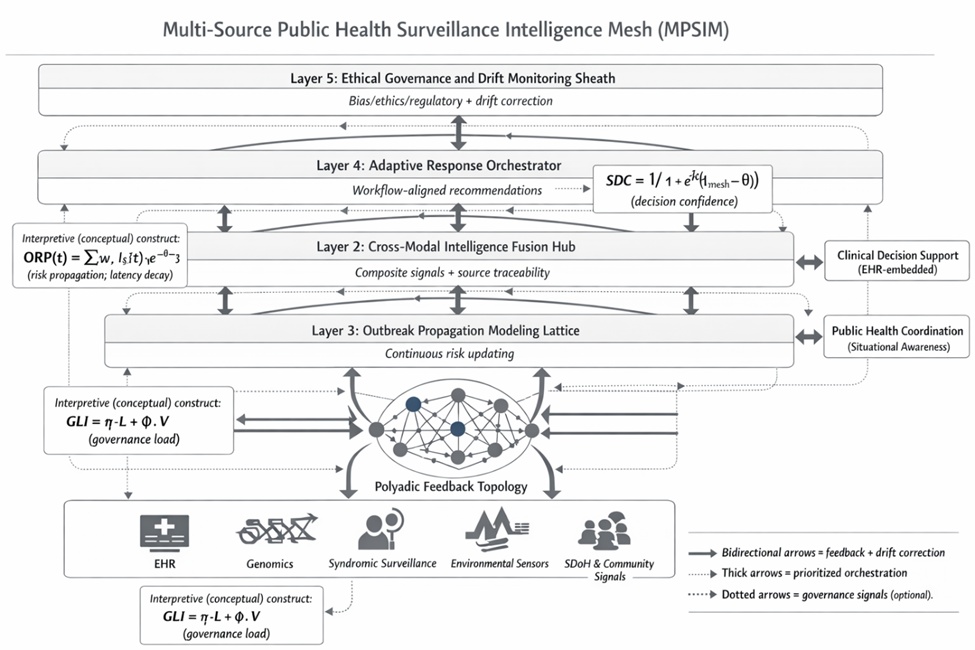
Figure 1. Conceptual architecture of the multi-source public health surveillance intelligence mesh (MPSIM).
Five stratified layers—(1) heterogeneous data harvesting, (2) cross-modal fusion, (3) outbreak propagation modeling lattice, (4) adaptive response orchestration, and (5) ethical governance and drift monitoring—are interconnected through a polyadic feedback topology enabling simultaneous forward propagation of outbreak intelligence and backward propagation of drift-correction signals. Interpretive constructs are positioned at their operational layers: outbreak responsiveness potential (ORP) at the modeling lattice, surveillance decision confidence (SDC) at the orchestration layer, and governance-load index (GLI) within the governance sheath. The schematic emphasizes workflow-native outputs (EHR-embedded decision support) alongside population-level situational awareness, while governance signals remain continuous across the full intelligence lifecycle. Operational responsibilities, typical inputs/outputs, and governance checkpoints across the five layers are detailed in Table 1.
Table 1. MPSIM layer functions, inputs/outputs, and governance checkpoints aligned to interpretive constructs (ORP, SDC, GLI).
MPSIM layer | Primary function (conceptual) | Representative inputs | Core transformation | Primary outputs (to downstream layers/users) | Embedded governance checkpoints | Link to interpretive construct(s) |
Layer 1: Heterogeneous data harvesting stratum | Ingest and normalize heterogeneous surveillance streams into a modality-agnostic representation | EHR events (structured + notes), lab feeds, genomics metadata, syndromic indicators, environmental sensors, SDoH/community signals [3, 11] | Normalization, semantic harmonization, timestamping, and provenance capture | Standardized, provenance-tagged signals; latency estimates for each source | Data minimization rules; access constraints; provenance immutability; schema/semantic validation | Provides τ_s and signal freshness terms supporting ORP latency decay |
Layer 2: Cross-modal intelligence fusion Hub | Fuse multi-source signals while preserving traceability and uncertainty | Normalized streams from Layer 1 | Cross-modal alignment; uncertainty modeling; conflict detection; provenance-preserving fusion | Composite intelligence features; reconciled multi-source views | Audit trail of fusion steps; bias checks on source dominance; fusion explainability hooks | Produces fused I_mesh candidates and source-weighting context for w_s |
Layer 3: Outbreak propagation modeling lattice | Maintain continuously updated outbreak pressure across distributed risk nodes | Composite signals + source weights; temporal/spatial context | Lattice/risk-node updating; propagation reasoning; latency-weighted aggregation | Updated outbreak pressure and localized risk state | Drift detection triggers; spurious-signal damping; recalibration signals to upstream layers | Primary site of ORP(t)=∑ w_s·I_s(t)·e^{−δ·τ_s} |
Layer 4: Adaptive response orchestrator | Translate intelligence into workflow-aligned, role-sensitive actions | Outbreak pressure + context (care setting, role, urgency) | Prioritization, routing, escalation logic; query expansion under low confidence | Point-of-care recommendations; targeted alerts; public health action queues [5, 15] | Alert safety constraints; clinician agency safeguards; escalation policies; uncertainty disclosure | Primary site of SDC = 1/(1+e^{−k(I_mesh−θ)}) for delivery gating |
Layer 5: Ethical governance and drift monitoring sheath | Enforce end-to-end ethics, compliance, and lifecycle monitoring across layers | System state, logs, velocity, drift indicators, policy constraints [8, 9] | Governance scoring; continuous monitoring, and corrective feedback propagation | Policy-constrained operation; governance-triggered throttling; recalibration directives | Privacy enforcement; fairness/bias surveillance; regulatory alignment; accountability/auditability | Primary site of GLI=η·L+ϕ·V; activates corrective loops under high load |
The deployment of the Multi-Source Public Health Surveillance Intelligence Mesh (MPSIM) engenders a spectrum of theoretical dynamics and cascading impacts that extend across clinical, operational, infrastructural, and societal domains. At its core, the mesh topology reconceptualizes surveillance not as a linear aggregation of signals but as a distributed cognitive architecture. By distributing intelligence across polyadic pathways, the mesh theoretically amplifies outbreak-detection sensitivity and mitigates the propagation delays inherent to centralized architectures [1, 3, 10]. In contrast to hub-and-spoke models that concentrate analytic authority within a singular processing core, the polycentric mesh facilitates parallel signal processing and reciprocal validation among nodes.
This topology induces a “systemic ripple” effect: localized anomalies—originating from clinical encounters, syndromic indicators, environmental sensors, mobility data, or digital epidemiology feeds—propagate through interconnected fusion hubs. As signals traverse these pathways, they are iteratively contextualized and enriched, coalescing into emergent global awareness. The theoretical consequence is a reduction in latency between signal emergence and coordinated response. Rather than waiting for centralized confirmation, distributed inference pathways enable anticipatory alignment of clinical operations, contact-tracing protocols, and supply-chain mobilization. Such anticipatory dynamics may, in theory, curtail transmission chains before exponential amplification occurs, especially in high-density or resource-fragile environments.
Operationally, MPSIM’s layered integration model introduces dynamic resource-allocation efficiencies modeled interpretively through the governance-load index (GLI). During nascent outbreaks, source velocity often escalates nonlinearly, producing analytic congestion and alert fatigue. GLI conceptually functions as a throttling and prioritization regulator: as source volatility increases, low-confidence or redundant pathways are temporarily deprioritized, preserving computational throughput and human interpretive bandwidth for high-salience signals [9, 20]. This mechanism supports adaptive orchestration without manual recalibration, reducing operational friction.
Such dynamics are particularly salient in resource-constrained contexts, including rural healthcare networks and decentralized public health jurisdictions. In these environments, analytic capacity is often limited, and manual triage of surveillance feeds can overwhelm staff. By dynamically reallocating intelligence flows based on confidence gradients and governance thresholds, the mesh mitigates the monitoring burden while preserving outbreak sensitivity. The resulting efficiency gains are not merely computational but organizational, reshaping workflow patterns and enhancing institutional resilience.
From a systemic standpoint, the polyadic feedback topology induces self-correcting behaviors that address drift sensitivity and signal distortion. Surveillance systems frequently confront concept drift, seasonal variance, and noise amplification. Within MPSIM, bidirectional feedback loops theoretically dampen the amplification of spurious signals by propagating corrective governance signals backward through fusion nodes [12, 29]. When anomalous patterns are identified as artifacts—whether due to reporting bias, sensor malfunction, or semantic misalignment—recalibration instructions cascade upstream, recalibrating weight assignments and contextual parameters.
This recursive governance model enhances long-term system stability. By embedding corrective propagation mechanisms within the mesh, MPSIM reduces the theoretical risk of false-positive cascades that could overwhelm clinical workflows, distort public communication, or trigger premature resource mobilization. In effect, the architecture aspires to balance sensitivity with stability, preserving responsiveness without sacrificing interpretive discipline.
Broader systemic ripples manifest in interoperability and equity dimensions. MPSIM’s standards-compliant adapters enable seamless data exchange across federated ecosystems, including heterogeneous electronic health record (EHR) platforms, laboratory information systems, and public health registries [13, 14]. Through semantic harmonization layers, disparate modalities are rendered interoperable without requiring full infrastructural replacement. This interoperability theoretically democratizes access to multi-source intelligence, empowering underserved and geographically isolated regions with augmented surveillance capacity [8, 21].
The equity implications are substantial. By lowering the infrastructural threshold for participation in multi-source intelligence networks, MPSIM supports more inclusive outbreak preparedness. Regions historically constrained by limited analytic infrastructure may participate in distributed fusion networks, benefiting from shared intelligence while retaining local governance autonomy. However, the same integrative capacity introduces ethical tensions. Pervasive data fusion heightens concerns regarding privacy erosion, data sovereignty, and algorithmic opacity [6, 22]. Without embedded safeguards—such as role-based access controls, privacy-preserving computation, and audit transparency—the amplification of intelligence could inadvertently compromise individual rights. Thus, the mesh’s transformative potential is inseparable from the imperative for ethical design embedded within its governance layer.
Collectively, MPSIM’s outbreak-aware dynamics position it as a catalytic framework for systemic transformation. By accelerating response velocities, distributing analytic cognition, and embedding recursive governance, the architecture reimagines surveillance as an adaptive intelligence fabric. Yet, these advances necessitate vigilant oversight to ensure that emergent properties—both beneficial and destabilizing—are continually examined within evolving multi-source environments.
While MPSIM advances a robust theoretical blueprint for multi-source surveillance, several conceptual limitations warrant critical scrutiny. First, the polyadic topology presumes frictionless interoperability across modalities—an assumption that may falter within legacy EHR ecosystems characterized by inconsistent semantic standards, proprietary data schemas, and fragmented interoperability protocols [4, 14]. In practice, semantic heterogeneity can impede seamless data fusion, introducing latency and distortion. Future conceptual refinements may explore hybrid topologies incorporating adaptive bridging mechanisms, semantic translation buffers, or dynamic ontology alignment layers capable of absorbing such variability without compromising mesh cohesion.
Second, the interpretive formulas— outbreak responsiveness potential (ORP), signal drift coefficient (SDC), and governance-load index (GLI)—provide abstract scaffolding but lack granularity for extreme edge cases. Hyper-volatile source streams during pandemics, mass gatherings, or misinformation surges may exceed the expressive bounds of static interpretive indices [2, 26]. Modular extensions, including context-sensitive scaling factors or volatility dampening coefficients, could enhance theoretical expressivity while preserving the framework’s non-empirical orientation. Such extensions would enable nuanced modeling of surge dynamics without entangling the architecture in dataset-dependent calibration.
Third, governance integration—although native to the mesh—demands deeper theorization around multi-stakeholder alignment. Cross-jurisdictional deployments introduce regulatory divergences, ethical heterogeneity, and data-sharing asymmetries that may impede mesh cohesion [8, 9]. Conceptual models of distributed governance arbitration, perhaps leveraging consensus protocols or tiered compliance layers, could mitigate fragmentation while preserving regional autonomy. Absent such mechanisms, the very decentralization that empowers the mesh could generate policy friction and operational discontinuities.
Opportunities for extension remain expansive. Integration with emerging artificial intelligence paradigms—particularly federated learning and privacy-preserving computation—could bolster secure, decentralized model refinement without centralizing raw data [11, 13]. Additionally, theoretical explorations of scalability under extreme source proliferation—encompassing wearable devices, genomic feeds, environmental biosensors, and digital exhaust streams—may inform next-iteration mesh architectures [1, 27]. Ensuring that the mesh retains stability and governance integrity under exponential node growth is critical to its long-term viability.
Ultimately, this discussion positions MPSIM as a foundational paradigm in conceptual surveillance design. Its strength lies in architectural abstraction and systemic foresight rather than empirical validation. Continued theoretical iteration—attentive to interoperability friction, governance complexity, and scalability stressors—will be essential to translating its blueprint into adaptable, ethically resilient surveillance ecosystems.
In summary, the Multi-Source Public Health Surveillance Intelligence Mesh (MPSIM) represents a pioneering conceptual architecture that redefines outbreak-aware systems through seamless multi-source integration, polyadic feedback, and embedded governance. By synthesizing heterogeneous data streams into a resilient intelligence fabric, MPSIM theoretically empowers proactive surveillance aligned with clinical imperatives and ethical constraints [3, 5, 15]. Its layered architecture and interpretive formulas (ORP, SDC, GLI) furnish a structured yet flexible blueprint for future systems, emphasizing dynamics that enhance detection sensitivity, adaptive orchestration, and systemic stability.
As public health confronts increasingly intricate biological, environmental, and sociotechnical threats, centralized paradigms alone may prove insufficient. MPSIM offers a scalable theoretical pathway toward distributed, intelligent containment strategies that prioritize equity, resilience, and governance integrity. While further conceptual refinement is warranted to address interoperability variability, governance pluralism, and extreme volatility scenarios, the mesh framework establishes a durable intellectual foundation for next-generation outbreak intelligence ecosystems—positioning surveillance not merely as observation, but as adaptive, ethically anchored systemic cognition.
None
None
None
None
Open Access The author(s) retain copyright. This article is licensed under the Creative Commons Attribution-NonCommercial-ShareAlike 4.0 International License. It may be shared and adapted for non-commercial purposes with appropriate attribution, an indication of changes, and distribution of adaptations under the same license. Third-party material may be subject to separate terms identified in its credit line. View the license at https://creativecommons.org/licenses/by-nc-sa/4.0/.
 Clinical Intelligence Research Press