Chronic diseases impose significant burdens on healthcare systems, necessitating advanced risk-management models integrated with electronic health records (EHRs). This conceptual manuscript proposes a novel longitudinal chronic risk orchestration model (LCROM) designed to facilitate lifecycle management of disease risks within EHR-based infrastructures. Drawing on clinical AI architectures, healthcare analytics frameworks, and interoperability standards, the model emphasizes dynamic risk assessment across patient lifecycles, incorporating temporal data flows, governance protocols, and decision-support pipelines. The architecture delineates layers for data ingestion, risk stratification, predictive orchestration, and continuous monitoring, ensuring seamless integration with existing EHR ecosystems without empirical validation. Key theoretical contributions include formulas for risk-propagation sensitivity and governance load balancing, highlighting trade-offs between system latency and clinical workflow efficiency. By synthesizing literature on EHR intelligence and AI deployment in chronic care, this work addresses gaps in longitudinal management, such as data drift and interoperability challenges. Implications extend to enhanced clinical decision-making, reduced resource burdens, and improved patient outcomes in theoretical deployments. The model advocates for modular, scalable designs that prioritize ethical AI governance in chronic disease contexts, offering a blueprint for future conceptual advancements in healthcare systems.
Electronic health records (EHRs) serve as foundational repositories for capturing patient trajectories in chronic disease management, enabling the aggregation of longitudinal data that spans multiple care episodes and institutional boundaries [1, 2]. Unlike episodic clinical documentation systems of the past, contemporary EHR infrastructures function as dynamic data ecosystems that continuously accumulate diagnostic results, medication histories, procedural records, clinician observations, and increasingly, patient-generated health data. This shift transforms EHRs from passive storage platforms into active infrastructures capable of supporting lifecycle-oriented disease modeling.
Within this paradigm, chronic conditions such as diabetes, cardiovascular diseases, and chronic kidney disease require models that track risk evolution over time and integrate heterogeneous data streams to inform anticipatory and preventive interventions. Chronic disease trajectories are inherently non-linear; they involve periods of stabilization, acute exacerbation, remission, and progressive decline. Therefore, EHR-centric paradigms must accommodate temporal granularity—capturing both slow-moving metabolic drift and abrupt clinical events. The emphasis on lifecycle management underscores the need for systems that not only store historical records but dynamically process temporal health indicators, recalculating risk states as new information becomes available. This is particularly critical in aging populations, where multimorbidity increases the dimensionality and interdependence of risk variables [3, 4].
This approach contrasts sharply with static risk assessment tools that rely on fixed-point measurements or periodic screening scores. Instead of providing a single probabilistic estimate based on a snapshot in time, EHR-driven models enable continuous recalibration of risk. Such systems can detect subtle deviations from baseline trajectories—such as progressive renal function decline or escalating glycemic variability—long before overt clinical thresholds are crossed. In doing so, they support a transition from reactive treatment to proactive, trajectory-aware care management.
Risk dynamics within EHR ecosystems involve the complex interplay of multifactorial elements, including genetic predispositions, behavioral patterns, socioeconomic determinants, medication adherence, and environmental exposures, all documented over extended periods [5, 6]. These elements do not act independently; rather, they co-evolve within a patient’s clinical narrative. Consequently, longitudinal risk modeling must incorporate mechanisms that capture interaction effects and temporal dependencies, including lag effects and cumulative exposures.
A central methodological requirement in such ecosystems is risk recalibration. As patient conditions evolve and population-level baselines shift, predictive models embedded in EHR systems must be updated without disrupting clinical workflows. Continuous learning architectures—whether rule-based, statistical, or machine learning-driven—must be designed to maintain stability while incorporating new data. This creates a tension between adaptability and reliability: models must remain clinically interpretable and validated, even as they evolve.
One of the most significant challenges in operationalizing longitudinal risk dynamics arises from data heterogeneity. Structured data elements—laboratory values, medication codes, vital signs—coexist with unstructured clinical narratives, imaging reports, and referral letters [7, 8]. Extracting meaningful insights from this hybrid data environment requires advanced analytics pipelines that incorporate natural language processing and temporal feature engineering. Furthermore, missingness and irregular sampling intervals complicate longitudinal inference. Chronic disease models must therefore integrate imputation strategies, uncertainty quantification, and bias mitigation techniques to preserve predictive validity. As summarized in Table 1, risk dynamics in longitudinal EHR ecosystems require adaptive, multimodal, and temporally aware modeling frameworks.
Table 1. Core components of risk dynamics in longitudinal EHR ecosystems
Aspect | Summary | Primary challenge |
Multifactorial risk | Interacting genetic, behavioral, socioeconomic, and clinical factors evolving over time | Modeling temporal and cumulative effects |
Risk recalibration | Continuous model updating as patient and population baselines shift | Maintaining stability and interpretability |
Data heterogeneity | Integration of structured and unstructured EHR data | Multimodal harmonization |
Missingness | Irregular sampling and incomplete records | Bias mitigation and imputation |
Long-horizon modeling | Shift from short-term prediction to trajectory estimation | Managing long-term uncertainty |
In chronic disease contexts, these dynamics extend the scope of predictive capabilities beyond immediate diagnostics. Rather than focusing solely on near-term event prediction (e.g., hospitalization within 30 days), lifecycle-oriented models aim to estimate long-horizon trajectories—such as five-year cardiovascular risk evolution or progressive renal decline. This broader temporal perspective redefines risk as a continuously modulated state rather than a discrete endpoint.
Interoperability remains a pivotal constraint in deploying EHR-based risk management models, as fragmented data exchange frameworks hinder seamless information flow across healthcare providers [9, 10]. Chronic disease patients frequently navigate complex care networks involving primary care physicians, specialists, laboratories, pharmacies, and community health services. When data remain siloed across institutions, lifecycle modeling becomes incomplete, producing fragmented or biased risk projections.
To address this fragmentation, interoperability protocols must support standardized data formats and semantic harmonization. Frameworks such as Fast Healthcare Interoperability Resources (FHIR) provide structured mechanisms for exchanging clinical data across heterogeneous systems while maintaining syntactic and semantic consistency [11, 12]. However, technical standardization alone does not guarantee effective integration. Variations in coding practices, documentation styles, and local workflows introduce semantic drift, complicating model portability.
Governance considerations further intensify these constraints. Longitudinal risk tracking requires sustained access to sensitive patient data across time and institutions. Models must therefore operate within regulatory frameworks that balance data sharing with privacy protections. Consent management, de-identification strategies, federated learning architectures, and auditability mechanisms become central design features in chronic lifecycle oversight. Without robust governance infrastructures, interoperability efforts risk either underutilization (due to excessive restriction) or ethical vulnerability (due to insufficient safeguards).
In this context, interoperability is not merely a technical issue but a structural determinant of risk model reliability. Incomplete data flows distort trajectory estimation, while inconsistent standards undermine comparability across populations.
Deployment environments for EHR-driven models in chronic disease management vary widely, ranging from large hospital-centered systems to ambulatory and community-based care settings, each imposing unique architectural demands on lifecycle frameworks [13, 14]. Acute care hospitals may prioritize high-throughput data ingestion and integration with intensive monitoring systems, whereas primary care environments require lightweight interfaces that support longitudinal follow-up without overwhelming clinicians.
In resource-constrained settings, such as rural healthcare facilities, lifecycle models must optimize computational efficiency while maintaining robust risk monitoring capabilities. Limited bandwidth, intermittent connectivity, and constrained hardware infrastructures necessitate modular architectures capable of operating in degraded modes. Edge computing strategies can enable local risk computation while synchronizing periodically with centralized repositories.
Cloud-based deployments provide scalability for managing large-scale longitudinal datasets and enable centralized model updating across distributed networks [15, 16]. However, they introduce cybersecurity, latency, and data governance vulnerabilities across jurisdictions. Data residency laws and cross-border transfer restrictions complicate global cloud implementations, particularly in multinational health systems.
Theoretical explorations increasingly advocate for hybrid deployment models that combine on-premise EHR storage with cloud-based analytics and edge computing for real-time assessments. In such architectures, core patient data remains locally governed, while advanced predictive algorithms operate in secure, scalable environments. This hybridization supports continuous risk recalibration, reduces latency in acute decision-making scenarios, and enhances resilience against infrastructure disruptions.
Ultimately, deployment design influences not only technical performance but also clinical adoption. Lifecycle-aware chronic disease models must integrate seamlessly into clinician workflows, present interpretable outputs, and avoid alert fatigue. The success of EHR-centric paradigms thus depends not solely on predictive accuracy, but on socio-technical alignment across infrastructure, governance, and clinical practice.
Governance imperatives dictate the ethical and regulatory frameworks that underpin EHR-based risk lifecycle management, ensuring compliance with standards such as HIPAA and GDPR [17, 18]. In chronic disease applications, governance extends to algorithmic transparency, where models must provide interpretable outputs to foster clinician trust. This includes protocols for auditing risk predictions and mitigating biases inherent in historical EHR data [19, 20]. By embedding governance at the core, models can address disparities in chronic care delivery and promote equitable access to lifecycle management tools.
Integrating longitudinal risk models into clinical workflows requires careful orchestration to avoid overburdening healthcare providers [21, 22]. EHR systems must embed decision support pipelines that deliver risk alerts at opportune moments, such as during patient consultations or medication reviews. This integration enhances the lifecycle management of chronic diseases by enabling iterative feedback loops between data inputs and clinical actions [23, 24]. Theoretical designs prioritize user-centric interfaces that minimize cognitive load, ensuring that risk insights augment rather than replace human judgment.
The evolution of EHR-based systems for chronic disease management reflects a broader transformation in health informatics, moving from digitized recordkeeping toward adaptive, intelligence-enabled clinical ecosystems. Early electronic health record infrastructures were primarily designed to replace paper documentation and support administrative processes such as billing and compliance. In these early stages, EHRs functioned largely as static repositories, capturing episodic encounters without fully leveraging longitudinal continuity. Over time, however, advances in artificial intelligence, distributed computing architectures, and health data standardization have reshaped these systems into dynamic environments capable of supporting complex temporal modeling. Contemporary literature increasingly positions EHR ecosystems as computational substrates that sustain longitudinal risk analytics across the entire trajectory of chronic disease care [1-3].
This transition is particularly consequential for chronic disease management because chronic conditions unfold across extended time horizons characterized by gradual progression, intermittent exacerbations, therapeutic interventions, and behavioral adaptations. Risk in such contexts is neither fixed nor linear; it evolves in response to clinical treatments, patient adherence patterns, environmental exposures, and demographic changes. As a result, EHR-centered frameworks must accommodate temporality as a core structural feature rather than a secondary analytical dimension. Recent scholarship emphasizes that longitudinal risk modeling requires infrastructures capable of continuous recalibration, thereby transforming EHR systems into engines of ongoing inference rather than static archives.
Within this body of literature, clinical AI system architectures are often conceptualized as modular systems that separate data ingestion from analytical computation [4, 5]. This modularity supports scalability across patient cohorts and enables the replacement or refinement of analytical components without destabilizing operational workflows. Data pipelines collect and preprocess heterogeneous information streams, which are subsequently transformed into structured representations suitable for modeling. Analytical engines generate probabilistic outputs, which are then integrated into decision-support interfaces. Although many such architectures remain theoretical constructs within academic discourse, they illustrate a shared design principle: predictive analytics must be decoupled from raw data acquisition to preserve flexibility and maintain clinical reliability [6, 7].
Healthcare analytics infrastructures provide the operational backbone for synthesizing longitudinal data. Clinical data warehouses, streaming frameworks, and federated databases enable the aggregation of high-volume EHR information across time and institutions [8, 9]. The literature on EHR intelligence ecosystems underscores the importance of semantic interoperability, arguing that standardized ontologies and controlled vocabularies are essential for harmonizing disparate data elements, such as laboratory values, diagnostic codes, imaging findings, and patient-reported outcomes [10, 11]. Without semantic coherence, longitudinal modeling risks fragmentation, as equivalent clinical concepts may be represented differently across systems. Ontological alignment, therefore, becomes a prerequisite for meaningful lifecycle analytics.
A recurrent concern identified in recent studies is data drift and model degradation over extended temporal horizons [12, 13]. As treatment protocols evolve and patient populations shift, predictive models trained on historical distributions may lose calibration accuracy. Chronic disease management, which spans years or decades, is particularly susceptible to such drift. The literature consequently emphasizes the integration of AI governance and monitoring systems within clinical infrastructures [14, 15]. These governance frameworks advocate continuous oversight mechanisms capable of detecting performance decay, fairness imbalances, and calibration instability. Conceptual models propose feedback loops that enable recalibration based on governance signals, embedding accountability and adaptability directly within system architectures rather than treating them as external audits [16, 17].
Interoperability and data exchange frameworks form another central theme in the synthesis of EHR-based chronic risk management research. Because patients with chronic disease frequently traverse multiple providers and care settings, longitudinal continuity depends on the seamless federation of distributed data sources [18, 19]. Informatics scholarship highlights standardized application programming interfaces and structured exchange protocols as mechanisms for reducing informational silos and enabling cross-institutional analytics [20, 21]. Yet interoperability extends beyond technical compatibility; it encompasses workflow alignment and semantic consistency to ensure that predictive outputs are meaningful within diverse clinical environments.
Clinical workflow integration models further elaborate how AI-driven insights become embedded in daily practice [22, 23]. These models theorize reductions in decision latency when predictive outputs are delivered at precisely calibrated moments within the care process. In chronic disease contexts, lifecycle stages—from early risk identification to stabilization, escalation, and long-term management—are conceptualized as interconnected phases supported by EHR infrastructures [24, 25]. Each stage generates new data that feeds forward into subsequent modeling cycles, reinforcing the need for architectures capable of sustaining iterative refinement.
The orchestration of risk lifecycles emerges as a unifying theoretical theme across predictive analytics research [26, 27]. Rather than generating isolated forecasts, advanced EHR-based systems are conceptualized as temporal propagation networks in which risk states evolve across layered time horizons. Studies exploring Bayesian-inspired and probabilistic network topologies propose mechanisms for explicitly representing uncertainty, acknowledging that chronic disease trajectories are influenced by incomplete information and stochastic variability [28, 29]. Such frameworks emphasize that uncertainty quantification is integral to responsible clinical decision support, particularly in long-horizon forecasting scenarios.
Governance literature complements these technical discussions by addressing ethical considerations, including bias detection in longitudinal datasets and fairness across demographic subgroups [30, 31]. Scholars propose interpretive metrics that quantify governance burdens and assess the transparency of predictive models. Deployment-oriented syntheses complete the theoretical landscape by analyzing trade-offs in infrastructure between cloud-based and on-premises systems, highlighting concerns related to computational scalability, latency, and data sovereignty [1, 32]. Together, these bodies of work converge on three foundational principles: adaptability through modular design, fluidity through interoperability, and accountability through embedded governance. This synthesis establishes the conceptual groundwork for lifecycle-oriented architectures that treat chronic disease risk as a continuously evolving construct sustained by EHR ecosystems.
The proposed longitudinal chronic risk orchestration model (LCROM) represents a conceptual architecture tailored specifically for EHR-based chronic disease management. LCROM is designed not merely as a predictive engine but as an orchestration framework that integrates longitudinal data assimilation, adaptive risk modeling, and governance oversight within a unified structure. Its central innovation lies in reconceptualizing risk management as a spiral process rather than a linear pipeline.
Unlike traditional hierarchical system designs that move sequentially from data input to predictive output, LCROM employs a helical feedback topology. In this topology, information flows upward through architectural layers while simultaneously circulating through bidirectional feedback loops that enable iterative recalibration. The helical metaphor reflects the cyclical nature of chronic disease progression, in which each clinical event, intervention, or behavioral change reshapes the patient’s risk trajectory. Predictions inform care decisions, those decisions generate new data, and the resulting information modifies subsequent predictions. The architecture thus embeds temporal continuity directly into its structural logic.
At its foundation, the data assimilation layer ingests longitudinal EHR streams originating from diverse clinical environments. Structured inputs such as laboratory values and vital signs coexist with unstructured narratives, referral notes, and patient-reported outcomes. This layer, in theory, harmonizes these heterogeneous elements through interoperability protocols and semantic alignment mechanisms. Temporal indexing plays a central role by enabling the mapping of data points to specific stages of the disease lifecycle, from early onset through progression and stabilization. By constructing a temporally coherent patient narrative, the assimilation layer establishes the substrate for dynamic modeling without imposing rigid empirical assumptions.
Above this foundation resides the risk stratification core, which transforms harmonized longitudinal data into evolving probabilistic risk representations. Rather than generating static scores, the core maintains continuously updated state representations that encode multidimensional risk factors. Temporal smoothing mechanisms mitigate noise from irregular sampling, while probabilistic modeling accommodates uncertainty inherent in chronic disease progression. This core conceptualizes risk as a dynamic state vector whose components adjust as new clinical evidence emerges, thereby sustaining lifecycle continuity.
The predictive orchestration hub coordinates the propagation of these evolving risk states across care contexts. It regulates how predictive outputs trigger context-sensitive decision support signals and how monitoring intensity adapts to changing risk levels. In this sense, the hub functions as a mediator between computational inference and clinical action. It ensures that predictions are not isolated artifacts but components of an integrated lifecycle narrative that spans multiple encounters and care settings.
Overlaying the entire architecture is the governance feedback mesh, which embeds monitoring and ethical oversight into the operational core. This mesh continuously evaluates calibration stability, fairness across demographic strata, and performance drift over time. Feedback signals circulate downward to recalibrate modeling components and upward to inform policy-level governance adjustments. By distributing governance throughout the architecture rather than confining it to external audits, LCROM mitigates risks of algorithmic decay and ethical misalignment.
Through this helical, feedback-driven design, LCROM advances a theoretical blueprint for chronic disease risk management that integrates modular adaptability, semantic interoperability, and embedded governance within a single orchestration framework. It conceptualizes EHR ecosystems not as passive data stores but as active, continuously evolving infrastructures capable of sustaining longitudinal chronic risk lifecycles across diverse clinical environments.
The Risk Stratification Core processes assimilated data to categorize risks, employing interpretive algorithms to tier risks by severity and temporality. Here, a conceptual formula for risk propagation sensitivity (RPS) is introduced:
Ascending to the Predictive Orchestration Hub, this stratum orchestrates decision support pipelines, theoretically fusing stratified risks with predictive primitives to generate lifecycle forecasts. A second formula addresses decision confidence
Crowning the architecture, the Governance Feedback Mesh imposes monitoring and ethical overlays, recirculating insights back through the helix to adjust lower layers. This includes a formula for governance load
Figure 1 illustrates the layered helical structure of the LCROM architecture, depicting Data Assimilation, Risk Stratification, Predictive Orchestration, and Governance Feedback, interconnected through bidirectional feedback loops that embed formulations for RPS, DC, and GL across the chronic risk lifecycle.
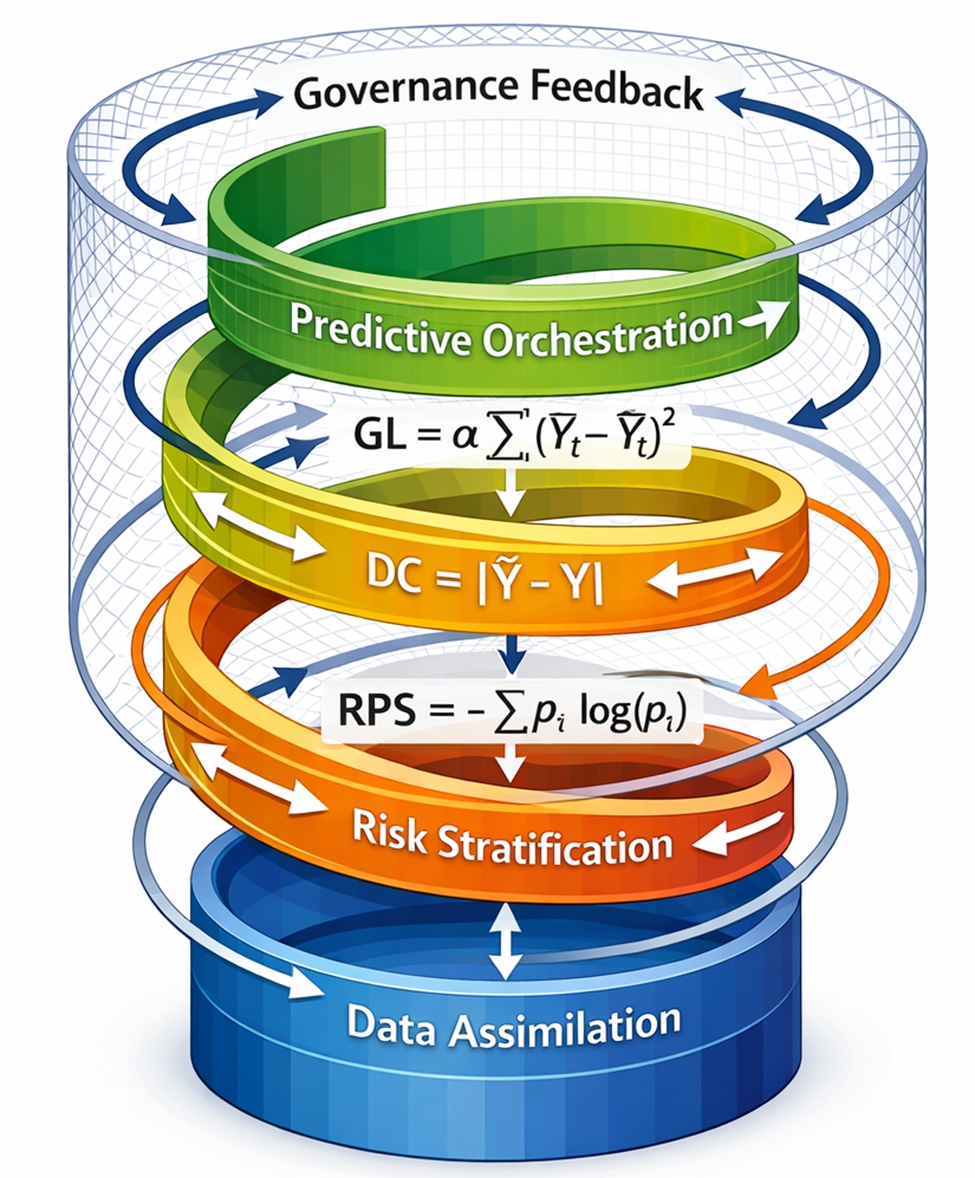
Figure 1. Schematic of the longitudinal chronic risk orchestration model (LCROM) architecture.
This architecture theoretically enhances EHR ecosystems by enabling proactive chronic disease management, prioritizing modularity for seamless integration.
The deployment of the longitudinal chronic risk orchestration model (LCROM) within EHR systems introduces distinct dynamics into clinical workflows, potentially reshaping how healthcare providers engage with chronic disease management. Operational consequences manifest as altered decision-making pathways, in which the helical feedback topology reduces latency in risk updates by enabling real-time recalibrations [1, 3, 5]. In chronic care settings, this could theoretically streamline triage processes, allowing clinicians to prioritize high-risk patients based on orchestrated predictions rather than manual reviews, thereby optimizing resource allocation across lifecycle stages [7, 9, 11].
Governance dependencies further influence these dynamics, as the Feedback Mesh layer imposes audit trails that, while enhancing accountability, may introduce procedural overheads [13, 15, 17]. A conceptual formula for monitoring burden (MB) elucidates this:
Human-AI workflow shifts are another key lens, with LCROM theoretically redistributing cognitive loads by automating risk stratification, freeing clinicians for interpretive tasks [25, 27, 29]. However, this shift demands adaptive training protocols to mitigate over-reliance on AI outputs and ensure balanced integration across diverse clinical contexts [2, 4, 6]. Infrastructure sensitivities, such as reliance on cloud orchestration, underscore potential vulnerabilities to network fluctuations, theoretically impacting decision confidence in remote chronic monitoring scenarios [8, 10, 12].
Overall, these dynamics position LCROM as a catalyst for efficient, governance-aware workflows, though theoretical trade-offs in latency and burden necessitate tailored implementations to maximize clinical adoption [14, 16, 18].
The LCROM advances conceptual understandings of EHR-based chronic disease management by integrating lifecycle orchestration with robust governance, thereby addressing limitations in the existing literature, where static models predominate [20, 22, 24]. Unlike prior architectures focused on isolated risk assessments, LCROM’s helical topology theoretically enables holistic tracking by synthesizing temporal EHR data to mitigate progression oversight [26, 28, 30]. This aligns with syntheses on AI deployment, emphasizing modularity for scalability in heterogeneous healthcare ecosystems [1, 3, 32].
Challenges persist in theoretical interoperability, where data silos could hinder the model’s full potential, as the literature on exchange frameworks [5, 7, 9] also notes. Governance innovations, such as the Feedback Mesh, offer interpretive safeguards against biases, extending discussions on ethical AI in chronic care [11, 13, 15]. Formulas like RPS and GL provide analytical tools for evaluating system trade-offs, enriching debates on resource efficiency without empirical constraints [17, 19, 21].
Future conceptual extensions could incorporate multimodal data (e.g., wearables), enhancing orchestration depth [23, 25, 27]. LCROM thus contributes to a paradigm shift toward proactive, integrated risk lifecycles, fostering resilient EHR systems for chronic disease burdens [2, 29, 31].
In summary, the longitudinal chronic risk orchestration model (LCROM) presents a conceptual blueprint for managing chronic disease risks through EHR-based lifecycles, emphasizing orchestration, governance, and workflow integration. By delineating layered architectures and interpretive formulas, it bridges theoretical gaps in longitudinal analytics, thereby promoting efficient clinical decision-making. While operational dynamics highlight adoption potentials and sensitivities, the model underscores the need for ethical, scalable designs in healthcare AI. Ultimately, LCROM offers a foundation for advancing conceptual systems research, paving the way for enhanced chronic care infrastructures.
None
None
None
None
Open Access The author(s) retain copyright. This article is licensed under the Creative Commons Attribution-NonCommercial-ShareAlike 4.0 International License. It may be shared and adapted for non-commercial purposes with appropriate attribution, an indication of changes, and distribution of adaptations under the same license. Third-party material may be subject to separate terms identified in its credit line. View the license at https://creativecommons.org/licenses/by-nc-sa/4.0/.
 Clinical Intelligence Research Press