The rapid evolution of artificial intelligence (AI) in healthcare necessitates innovative frameworks to optimize hospital operations. This conceptual manuscript proposes the Digital Twin-Enabled Operations Resilience Architecture (DTORA), a novel intelligence framework that leverages digital twins to simulate, monitor, and enhance hospital operational dynamics. DTORA integrates real-time data from electronic health records (EHRs), clinical workflows, and interoperable systems to create virtual replicas of hospital processes, enabling predictive analytics and decision support without empirical testing. The framework’s layered structure includes a simulation core, intelligence orchestration layer, and governance feedback loop, addressing challenges in resource allocation, workflow efficiency, and risk mitigation. By synthesizing recent literature on clinical AI architectures and healthcare analytics infrastructures, DTORA emphasizes theoretical interoperability, AI governance, and human-AI integration. Conceptual formulas model risk propagation, decision confidence, and monitoring burden, providing interpretive tools for system design. This work highlights the potential of digital twins to transform hospital intelligence ecosystems, fostering resilient operations amid data complexities and regulatory demands. While theoretical, DTORA offers a blueprint for future deployments, underscoring the need for ethical monitoring and seamless integration in diverse clinical settings.
Hospital operations involve a complex interplay of clinical, administrative, and logistical elements, and inefficiencies can compromise patient outcomes and escalate costs. In an era dominated by data-driven healthcare, the integration of digital twins—virtual models that mirror physical entities in real time—emerges as a transformative approach to infusing intelligence into these operations. This manuscript conceptualizes a framework that harnesses digital twins to drive hospital operations intelligence, focusing on architectural designs that enhance predictive capabilities and operational resilience without relying on empirical validations.
Digital twins, originally conceptualized in manufacturing, have found fertile ground in healthcare for replicating dynamic hospital environments. In hospital settings, these twins simulate patient flows, resource utilization, and procedural timelines using data from EHRs and sensor networks [1, 2]. Unlike static models, digital twins evolve with real-time inputs, offering a theoretical foundation for anticipating operational bottlenecks. For instance, in emergency departments, a digital twin could virtually replicate triage processes, allowing for hypothetical adjustments to staffing or bed allocation. This mirroring capability aligns with hospital operations intelligence by providing a non-invasive means to explore “what-if” scenarios, thereby informing strategic decisions in resource-constrained clinical contexts [3].
Infusing intelligence into hospital workflows requires seamless integration of AI-driven analytics with existing infrastructures. Hospital operations encompass diverse modalities, from surgical scheduling to supply chain management, each generating vast data streams that demand intelligent processing [4]. The proposed framework posits that digital twins are central to this infusion, enabling analytics pipelines that process multimodal data—such as imaging, vital signs, and administrative logs—to generate actionable insights. Theoretical models suggest that such intelligence can optimize workflow modalities by reducing decision-making latency, though governance constraints such as data privacy must be embedded from the outset [5, 6]. By anchoring intelligence to specific hospital modalities, the framework avoids generic AI applications and tailors twins to operational nuances.
Aligning data modalities poses significant challenges in deploying digital twin-driven intelligence in hospitals. EHRs, often siloed and heterogeneous, complicate the creation of accurate twins, leading to potential discrepancies between virtual simulations and real operations [7]. Interoperability frameworks are crucial here, ensuring data exchange across systems while maintaining fidelity in twin representations. The literature highlights data poverty in under-resourced settings, which could exacerbate operational inequities if left unaddressed [4]. The manuscript’s framework conceptualizes solutions through standardized exchange protocols, emphasizing how digital twins can bridge modality gaps in hospital intelligence ecosystems.
Governance plays a pivotal role in shaping the deployment of digital twin-driven intelligence in hospital environments. Regulatory requirements, including AI oversight and ethical monitoring, constrain how twins are integrated into operations [5, 8]. For example, frameworks must incorporate self-governance mechanisms to ensure transparency and accountability, particularly in decision support pipelines that influence clinical workflows. Theoretical considerations include balancing innovation with risk, where governance constraints dictate deployment scales—from single-department twins to hospital-wide intelligence networks [9]. This section underscores the need for robust governance to foster trust in digital twin applications.
Adaptations tailored to specific clinical settings are essential for effective digital twin-driven hospital operations intelligence. In intensive care units (ICUs), twins might focus on real-time monitoring of patient trajectories, while in outpatient clinics, they could optimize appointment scheduling [10, 11]. These adaptations account for environmental variabilities, such as high-acuity versus low-volume settings, ensuring the framework’s relevance across hospital spectra. By embedding setting-specific terminology, the framework promotes precision in intelligence application, theoretically enhancing operational efficiency without empirical interventions.
Interoperability remains a cornerstone for digital twin ecosystems in hospital operations. Seamless data exchange frameworks enable twins to draw from diverse sources, creating comprehensive intelligence overlays [12, 13]. Challenges arise in federated environments where data silos persist, necessitating theoretical architectures that prioritize standardization. The proposed framework envisions interoperability as a foundational layer that facilitates the flow of intelligence across hospital boundaries and supports collaborative decision-making in multi-site operations [14].
The theoretical underpinnings of digital twin-driven hospital operations intelligence draw from advancements in clinical AI system architectures and healthcare analytics infrastructures. Recent scholarship has illuminated how digital twins can serve as foundational elements in healthcare, extending beyond mere simulation to encompass intelligent decision-making and operational optimization [1, 2]. This synthesis integrates key publications, focusing on peer-reviewed works that address EHR intelligence ecosystems, decision support pipelines, AI governance, interoperability frameworks, and clinical workflow integration models.
Digital twins in healthcare have been conceptualized as tools for precision medicine, with emphasis on their computational and regulatory considerations [1]. Studies highlight their role in tackling cardiovascular diseases through interdisciplinary approaches, including a review of how twins integrate physiological data for predictive insights [2]. Extending this to viral infections, theoretical models demonstrate twins’ utility in simulating infection dynamics, providing a basis for operational intelligence in pandemic-responsive hospital settings [3]. These works underscore the shift from static data analysis to dynamic, twin-based intelligence, aligning with hospital operations by enabling virtual experimentation.
Healthcare analytics infrastructures form another critical pillar, where data poverty emerges as a barrier to equitable digital health [4]. Literature advocates for industry self-governance to build trust in AI deployments, outlining frameworks for oversight that ensure safe integration into hospital systems [5]. In low- and middle-income countries, strategies for mHealth data sharing and governance provide theoretical blueprints for scalable analytics, emphasizing privacy and interoperability [6]. Implementation frameworks for clinical AI, such as the SALIENT model, derive principles for end-to-end deployment, focusing on architectural derivations that support hospital intelligence without empirical metrics [7].
EHR intelligence ecosystems are explored through concepts like health digital states and smart EHR systems, which propose digital representations for enhanced monitoring [9]. The Internet of Things (IoT) in healthcare, combined with AI, enables remote monitoring systems that inform hospital operations [13]. Medical 4.0 technologies delineate features for healthcare applications, including digital twins for operational enhancements [11]. The ethical implications of digital twins in health care are dissected, identifying socio-ethical benefits and risks that must inform the design of the framework [15-25].
Decision support pipelines benefit from reengineering efforts, where AI integration into clinical systems is theorized to improve outcomes [19]. Federated learning applications for biomedical data provide systematic reviews that support distributed intelligence in hospital networks [20]. Blockchain’s role in healthcare is synthesized, offering secure data management for twin-driven operations [21]. Best practices in real-world data lifecycles emphasize comprehensive strategies for data handling in clinical AI [22].
AI governance, monitoring, and deployment systems are central themes, with calls for rethinking global digital health innovation to address challenges [23]. Protocols for co-creation in AI implementation guide governance in health care, focusing on frameworks that balance technology and human factors [24]. The convergence of digital twins with IoT and mobile medicine review platforms for smart healthcare, providing architectural insights [26]. Cloud-based storage for emergency healthcare twins explores networked computing for operational resilience [27].
Interoperability and data exchange frameworks are advanced through health information technology for national learning systems, advocating digital innovation [16]. Leveraging informatics for health equity addresses disparities and informs inclusive twin designs [17]. AI in radiation therapy, while specialized, offers transferable principles for decision pipelines in hospital operations [18].
Clinical workflow integration models evolve with determinants of digital twin adoption in hospital management, identifying operational factors [28]. Contesting futures of AI in healthcare examines formal expectations versus informal anticipations, shaping theoretical integrations [29]. Early ethical paradigms for digital twins set foundational implications for current frameworks [30].
Synthesizing these, the literature reveals a maturation in clinical AI architectures, from basic twin simulations to sophisticated intelligence ecosystems. Gaps persist in holistic frameworks that unify digital twins with hospital-specific operations, particularly in governance and interoperability. For instance, while twins excel at individual patient modeling [1, 2], extending them to operational scales requires layered architectures that incorporate feedback for drift detection [14, 15]. Theoretical sensitivities, such as governance loads and decision latencies, are modeled conceptually to guide designs [5, 8].
This synthesis posits that hospital operations intelligence demands a fusion of twin simulation with AI orchestration, ensuring theoretical robustness. By drawing on these works, the proposed framework advances beyond isolated systems, offering a cohesive architecture for resilient operations.
The core of this manuscript is the Digital Twin-Enabled Operations Resilience Architecture (DTORA), a conceptual framework that orchestrates intelligence in hospital operations through digital twins. DTORA comprises four unique layers: the Twin Simulation Substrate, Intelligence Orchestration Mesh, Governance Feedback Nexus, and Adaptive Integration Envelope. This structure facilitates a closed-loop feedback topology, where operational data informs twin updates, intelligence outputs refine decisions, and governance metrics trigger adaptive recalibrations.
The Twin Simulation Substrate serves as the foundation, generating virtual replicas of hospital processes using interoperable data streams from EHRs and clinical sensors. This layer theoretically mirrors operational dynamics, such as bed occupancy or surgical throughput, without real-world disruptions.
The Intelligence Orchestration Mesh overlays AI analytics, processing twin data to yield predictive insights. It employs decision support pipelines to optimize resource allocation, integrating modular AI components for flexibility.
The Governance Feedback Nexus ensures ethical monitoring by incorporating AI oversight mechanisms to detect biases or drift. This nexus feeds back into lower layers, enabling dynamic adjustments.
Finally, the Adaptive Integration Envelope handles interoperability, facilitating seamless data exchange across hospital systems. As illustrated in Figure 1, DTORA is structured as a multi-layered, closed-loop topology that integrates simulation, intelligence orchestration, governance, monitoring, and interoperability within a resilient hospital intelligence stack.
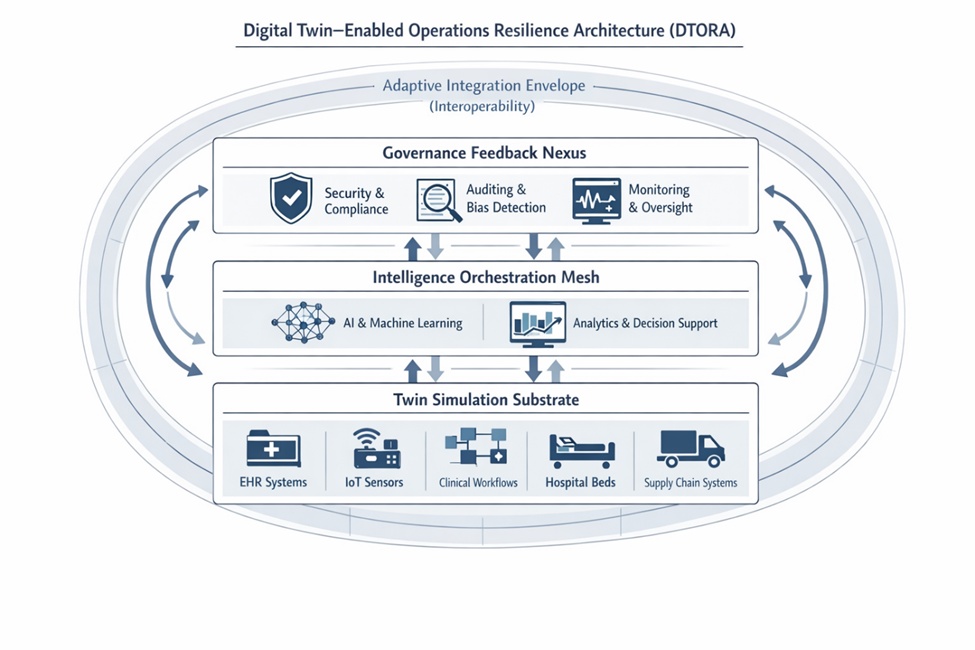 Figure 1. Digital DTORA: layered closed-loop intelligence topology
To interpret system dynamics, consider the following conceptual formulas:
Risk propagation (RP):
Decision confidence (DC):
Monitoring burden (MB):
These formulas provide theoretical lenses for designing DTORA implementations. The structural elements of DTORA and their associated operational implications are summarized in Table 1.
Table 1. Structural components, functional roles, and operational implications of DTORA
DTORA layer | Core functional role | Data dependencies | Intelligence contribution | Governance implications | Operational impact |
Twin simulation substrate | Real-time virtual replication of hospital processes | EHRs, IoT sensors, workflow logs, and resource systems | Scenario simulation and predictive state modeling | Requires data fidelity validation and audit traceability | Reduces decision latency and anticipates bottlenecks |
Intelligence orchestration mesh | AI-driven analytics and optimization layer | Structured and multimodal twin outputs | Predictive analytics, decision support pipelines, resource optimization | Bias detection, algorithmic transparency, and drift monitoring | Enhances decision confidence and resource allocation |
Governance feedback nexus | Continuous oversight and ethical monitoring | Model performance metrics and compliance indicators | Drift correction, fairness evaluation, and auditability | Regulatory compliance, ethical accountability, and trust calibration | Sustains resilience and reduces systemic risk |
Adaptive integration envelope | Interoperability and infrastructure coordination | Cross-platform exchange protocols, APIs, and federated systems | Enables distributed intelligence and data harmonization | Privacy preservation, secure data exchange, and federated governance | Facilitates multi-site collaboration and scalability |
The deployment of the DTORA in hospital settings introduces profound operational dynamics and resilience impacts, theoretically reshaping how intelligence permeates clinical and administrative workflows. This section delves into the consequences of DTORA’s integration, examining how its layered structure influences system behaviors, risk distributions, and adaptive capacities across hospital operations. By leveraging digital twins as dynamic simulators, DTORA fosters a resilience paradigm where operational perturbations—such as sudden patient influxes or supply shortages—are anticipated and mitigated through virtual foresight [1, 2, 10]. The framework’s feedback topology ensures that intelligence is not static but evolves, creating ripple effects in workflow efficiency and decision-making robustness.
Central to these dynamics is the interplay between the twin simulation substrate and the intelligence orchestration mesh, which collectively drive predictive analytics for hospital resource management. Theoretically, this integration reduces decision latency by simulating multiple operational scenarios in parallel, allowing hospital administrators to preempt bottlenecks in areas such as emergency room throughput and ICU bed utilization [11, 14]. For instance, in high-volume clinical environments, DTORA’s orchestration layer could theoretically redistribute cognitive loads from human operators to AI-driven twins, minimizing errors in real-time triage [12, 19]. However, this shift introduces dependencies on data fidelity; low-quality inputs from EHRs could propagate inaccuracies, amplifying operational risks as modeled in the Risk Propagation (RP) formula:
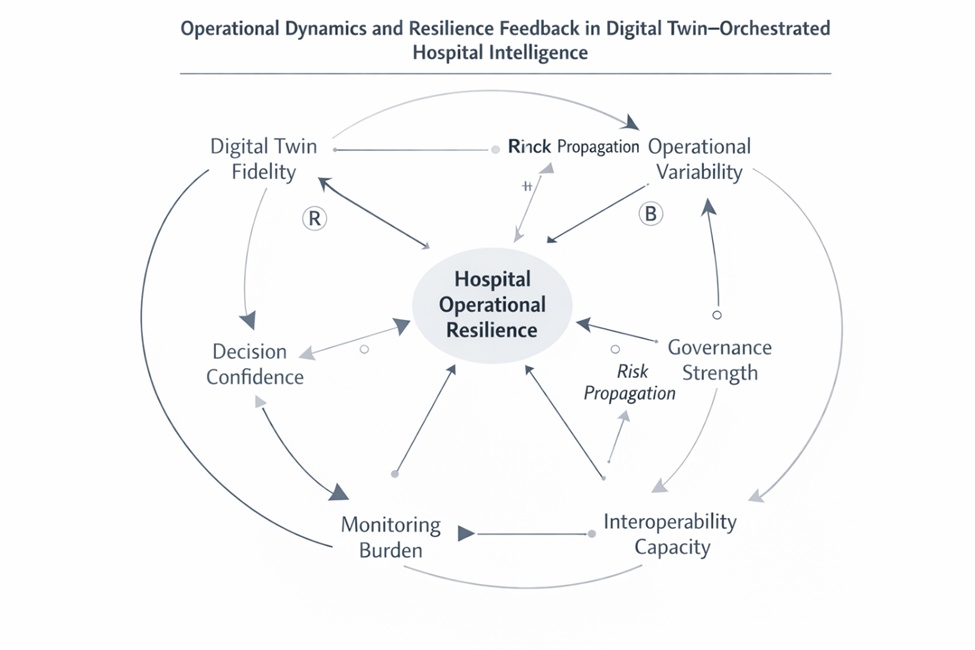
Figure 2. Operational dynamics and resilience feedback in digital twin–orchestrated hospital intelligence
Resilience impacts extend to governance dependencies, where the Governance Feedback Nexus plays a pivotal role in sustaining long-term operational integrity. The literature on AI governance underscores the need for continuous monitoring to detect drift in twin models, such as those caused by evolving clinical protocols or regulatory updates [5, 8, 24]. In DTORA, this nexus theoretically automates oversight, reducing monitoring burden (MB) as per
Human-AI workflow shifts represent another key impact pathway, where DTORA reconfigures traditional hospital hierarchies. Clinical staff, accustomed to manual decision-making processes, may experience a redistribution of cognitive load, with AI orchestration handling routine analytics to free humans for complex judgments [6, 17, 29]. Theoretical models suggest this could improve overall efficiency, boosting decision confidence (DC) via
Infrastructure sensitivities further shape DTORA’s impacts, with the Adaptive Integration Envelope addressing vulnerabilities in data silos and legacy systems [9, 13, 21]. Theoretically, this envelope facilitates seamless fusion of multimodal data—EHRs, IoT sensors, and administrative logs—enhancing operational intelligence but introducing sensitivities to cyber threats or data breaches [28]. Impacts include improved resource allocation during peak loads, where twins optimize supply chains, as well as heightened governance demands if monitoring escalates to counter drifts [5, 15]. Overall, DTORA’s dynamics promote a resilient ecosystem, where operational consequences ripple positively through reduced latencies and proactive risk management, though balanced against dependencies on robust governance and interoperability [7, 8, 14].
Expanding on these impacts, consider the broader ecosystem effects in federated hospital networks. DTORA enables cross-site intelligence sharing, theoretically allowing twins from one facility to inform operations in another, fostering collaborative resilience [20, 22]. This could mitigate regional disparities, as seen in literature on health data poverty, by virtualizing resource pooling [4, 16]. However, dynamics involve trade-offs in decision latency; while cloud-based twins accelerate simulations, network dependencies might introduce delays in real-time operations [27]. Governance sensitivities amplify here, requiring federated oversight to ensure equitable distribution of intelligence without compromising privacy [6, 24]. In surgical workflows, for example, DTORA’s orchestration could simulate procedural timelines, impacting resilience by predicting equipment needs and reducing downtime [11, 18]. Yet, human factors remain critical; workflow shifts might initially increase training burdens, though long-term dynamics suggest acclimation leads to higher confidence in AI-supported decisions [12, 19, 29].
Drift sensitivity emerges as a nuanced phenomenon, in which environmental changes—such as policy shifts or technological upgrades—can desynchronize twins from reality [15, 25]. DTORA’s feedback nexus counters this by providing iterative updates, theoretically maintaining alignment and minimizing the propagation of outdated intelligence [3, 26]. Operational consequences include sustained efficiency in chronic care management, where twins track long-term resource trends [2, 10]. In emergency contexts, resilience impacts are pronounced, with twins enabling rapid scenario testing to bolster preparedness [1, 13]. However, infrastructure sensitivities to data volume could overburden systems in data-rich environments, necessitating optimized allocation as per the MB formula [27, 28]. Ethical dimensions further layer these dynamics, as twin-driven intelligence must navigate socio-ethical risks, ensuring impacts align with equitable care delivery [25, 30].
Theoretical explorations also reveal trade-offs in latency for decision support. While DTORA accelerates insights via parallel simulations, governance checks might introduce minor delays, balancing speed with safety [5, 8]. Impacts on clinical adoption are dynamic; early resistance could give way to widespread integration as operational resilience benefits become evident [23, 24]. In summary, DTORA’s operational dynamics and impacts weave a tapestry of enhanced intelligence, tempered by careful management of dependencies, sensitivities, and shifts, positioning it as a cornerstone for future hospital ecosystems [7, 14, 21].
The conceptualization of DTORA within the realm of digital twin-driven hospital operations intelligence opens the door to transformative advancements. Yet, it also invites scrutiny of its theoretical assumptions and broader implications. Building on the synthesized literature, DTORA addresses gaps in current clinical AI architectures by providing a cohesive framework that unifies simulation, orchestration, and governance [1, 2, 5]. Unlike fragmented approaches in existing EHR ecosystems, DTORA’s layered design ensures theoretical scalability, allowing hospitals to adapt intelligence to varying operational scales—from departmental workflows to enterprise-wide systems [9, 11, 16]. This discussion elaborates on the framework’s strengths, limitations, and alignments with evolving healthcare paradigms, emphasizing its role in fostering resilient, intelligent operations.
One strength lies in DTORA’s emphasis on interoperability, which, in theory, bridges the data silos prevalent in hospital infrastructures [12, 13, 22]. By embedding the Adaptive Integration Envelope, the framework facilitates seamless data flows, enhancing the fidelity of digital twins and, consequently, the reliability of intelligence outputs [4, 7, 20]. This aligns with calls in the literature for standardized exchange frameworks, where interoperability is seen as essential for equitable digital health [6, 23]. For instance, in multi-site hospitals, DTORA could enable federated learning-like dynamics without actual data sharing, preserving privacy while amplifying operational insights [20, 21]. However, limitations arise in resource-constrained environments; theoretical assumptions of abundant computational power may not hold in low-income settings, potentially exacerbating health data poverty [4, 17].
Governance integration is another pivotal aspect, where DTORA’s Feedback Nexus advances beyond ad hoc monitoring to embedded self-regulation [5, 8, 24]. This proactive stance mitigates risks such as model drift, as captured in the conceptual formulas, ensuring sustained decision confidence amid operational variability [15, 25, 27]. The literature on AI ethics supports this, highlighting the socio-ethical benefits of twins while cautioning against risks such as bias amplification [25, 30]. DTORA’s design theoretically counters these by incorporating continuous feedback, but practical limitations include the interpretive nature of formulas—while useful for design, they lack empirical grounding, necessitating future validations [18, 19]. Moreover, human-AI synergies are enhanced, with workflow shifts promoting collaborative intelligence, though adoption dynamics may vary by clinical culture [12, 29].
In broader contexts, DTORA aligns with Medical 4.0 paradigms, where IoT and AI converge to enable smart healthcare [10, 11, 13, 26]. Its twin-driven approach extends to emergency and chronic care, offering theoretical resilience against disruptions like pandemics [3, 28]. Yet, discussions must acknowledge infrastructure sensitivities; dependencies on cloud storage and networked twins introduce vulnerabilities to cyber threats, as noted in blockchain-integrated models [21, 27]. Theoretical trade-offs in monitoring burden underscore the need for efficient resource allocation, where over-reliance on automation could inadvertently increase governance loads if human oversight diminishes [6, 14, 30, 31].
Expanding the discourse, DTORA’s impact on clinical decision pipelines merits deeper exploration. By orchestrating intelligence through twins, it theoretically optimizes support systems, reducing latency in critical sectors such as radiation therapy analogs or infection control [3, 18]. This aligns with reengineering efforts for AI in clinical support, promoting precision without empirical benchmarks [19]. Limitations include the potential oversimplification of complex human judgments, while formulas like the DC model’s confidence abstract away nuances of clinician intuition [12, 29]. Furthermore, global applicability is discussed in light of LMIC strategies, where DTORA could adapt mHealth governance for twin deployments, though cultural and regulatory variances pose challenges [6, 23].
Ethical and societal implications weave through this discussion, with DTORA positioned to contest AI futures in healthcare [29, 30]. By prioritizing governance, it addresses formal expectations of transparency, yet informal anticipations—such as clinician trust—require theoretical nurturing through co-creation protocols [24]. Strengths in resilience impacts, like adaptive envelopes for data exchange, counter structural challenges in patient care [12, 16]. However, limitations in drift sensitivity highlight the need for advanced monitoring, where conceptual models guide but do not prescribe solutions [15, 25].
Ultimately, DTORA enriches the discourse on hospital intelligence by synthesizing architectural innovations with governance imperatives, paving theoretical paths for future integrations [7, 8, 14]. Its conceptual formulas provide interpretive tools for analyzing dynamics, fostering a balanced view of opportunities and constraints in digital twin ecosystems [1, 2, 26].
In synthesizing the conceptual landscape of digital twin-driven hospital operations intelligence, this manuscript posits DTORA as a pioneering framework that harmonizes simulation, orchestration, governance, and integration to elevate operational resilience. By drawing on a robust body of literature, DTORA addresses critical gaps in clinical AI architectures, healthcare analytics, and interoperability, offering a theoretical blueprint for intelligent hospital ecosystems. The framework’s unique layered structure and feedback topology enable proactive management of operational dynamics, mitigating risks through interpretive models like RP, DC, and MB.
Key insights underscore DTORA’s potential to transform workflows, redistribute cognitive loads, and enhance decision support, all while embedding ethical governance to navigate socio-ethical landscapes. Operational impacts reveal pathways for resilience in diverse clinical settings, from emergency responses to chronic management, though sensitivities to data fidelity and infrastructure demand vigilant design. Limitations, such as assumptions of ideal interoperability and the non-empirical nature of its constructs, highlight avenues for future theoretical refinements or empirical explorations.
Ultimately, DTORA advances the discourse on AI in healthcare, advocating for twin-driven intelligence as a cornerstone for equitable, efficient operations. As hospitals evolve amid digital innovations, frameworks like DTORA provide essential guidance, ensuring intelligence serves as a resilient ally in patient-centered care.
None
None
None
None
Open Access The author(s) retain copyright. This article is licensed under the Creative Commons Attribution-NonCommercial-ShareAlike 4.0 International License. It may be shared and adapted for non-commercial purposes with appropriate attribution, an indication of changes, and distribution of adaptations under the same license. Third-party material may be subject to separate terms identified in its credit line. View the license at https://creativecommons.org/licenses/by-nc-sa/4.0/.
 Clinical Intelligence Research Press