Public health emergencies reveal critical weaknesses in healthcare supply chains, especially when PPE demand outpaces procurement and distribution capacity, making predictive analytics an important tool for forecasting demand and improving allocation during crises. This systematic review evaluates predictive analytics models for PPE demand forecasting and distribution optimization during public health emergencies, focusing on model types, data sources, validation approaches, performance metrics, equity considerations, and implementation readiness. Following PRISMA 2020 guidelines, searches were conducted in PubMed, Web of Science, Scopus, IEEE Xplore, and Google Scholar for studies published between 2017 and 2025, yielding 2,847 records, of which 35 met inclusion criteria. Included studies comprised time series and statistical models (34%), machine learning and hybrid approaches (29%), optimization methods (26%), and simulation or digital twin frameworks (11%), with limited evidence of real-world deployment. Overall, findings indicate that predictive analytics can enhance PPE supply chain resilience by improving demand forecasting, allocation decisions, and scenario testing, but widespread adoption is limited by poor data interoperability, insufficient prospective validation, weak equity integration, and limited operational integration into healthcare decision systems.
The COVID-19 pandemic exposed structural weaknesses in global healthcare supply chains, with shortages of masks, respirators, gowns, gloves, and other PPE creating direct risks for frontline healthcare workers and patients. Early pandemic reports described acute shortages driven by simultaneous global demand shocks, fragmented procurement, export restrictions, and limited visibility into local inventory levels [1-3]. These shortages were not merely logistical inconveniences but patient-safety and workforce-protection failures, as hospitals were forced to extend PPE use, reuse disposable items, or prioritize allocation under scarcity [4, 5]. Evidence from national and regional studies shows that supply fragility was amplified by insufficient preparedness, weak demand-sensing capacity, and dependence on long international supply chains [6-8].
Predictive analytics offers a route to more resilient PPE systems by transforming epidemiological, hospital-utilization, procurement, and inventory data into actionable forecasts. Studies developed PPE demand calculators, statistical forecasting models, safety-stock estimators, and machine learning systems to anticipate consumption during pandemic waves [9-12]. Other work extended prediction into supply chain design, linking expected demand with inventory, sourcing, and allocation decisions under uncertainty [13-15]. In this literature, model families range from time series and regression approaches to ensemble learning, deep learning, mathematical programming, reinforcement learning, and simulation-based decision support [16-19].
Despite rapid methodological growth, a persistent gap remains between model development and practical deployment in healthcare operations. Several studies demonstrate promising retrospective or simulated performance, yet relatively few report implementation inside hospital procurement workflows, emergency operations centers, or public health allocation systems [20-22]. This gap is especially consequential because PPE demand is shaped by volatile infection dynamics, changing clinical guidance, staff behavior, burn rates, and substitution among product categories [23, 24]. Thus, a model that performs well on historical data may still fail operationally if it cannot update rapidly, communicate uncertainty, or align with procurement and distribution constraints [6, 9, 12].
This systematic review synthesizes peer-reviewed evidence from 2017 to 2025 on predictive analytics for PPE demand forecasting and distribution optimization during public health emergencies. It focuses on three connected questions: how PPE demand is forecast, how PPE distribution is optimized under shortage and uncertainty, and how resilience, equity, and implementation readiness are addressed [16, 17, 25]. The review also examines whether digital twins, simulation, and real-time monitoring can support stress testing and adaptive decision-making during future outbreaks [26-29]. The manuscript first reports methods and study selection, then presents model categories, validation approaches, implementation evidence, and limitations of the current evidence base.
A structured search was designed for studies published between January 2017 and December 2025, covering PPE demand forecasting, healthcare supply chain resilience, distribution optimization, machine learning, reinforcement learning, equity in allocation, and digital twin simulation. Searches were conducted in PubMed, Web of Science, Scopus, IEEE Xplore, and Google Scholar using combinations of terms such as “PPE demand forecasting,” “personal protective equipment distribution optimization,” “healthcare supply chain predictive analytics,” “COVID-19 supply chain resilience,” “reinforcement learning allocation,” and “digital twin healthcare supply chain.” The search strategy was informed by model categories and emergency logistics problems identified across PPE forecasting tools, risk-based allocation studies, and resilient healthcare supply chain models [9, 13, 16, 23]. Additional backward and forward citation checks were conducted from highly relevant studies on PPE shortages, sourcing, lifecycle management, and supply chain visibility [1, 2, 6, 25].
Studies were eligible if they were peer-reviewed, published in English from 2017 to 2025, and directly addressed PPE demand forecasting, PPE allocation, distribution optimization, supply chain resilience, digital simulation, or public health emergency logistics. Eligible designs included original modeling studies, empirical operational studies, simulation studies, optimization studies, and systematic or structured reviews when they directly informed PPE forecasting or healthcare supply chain resilience [15, 21, 25, 30]. Studies were excluded if they focused only on clinical PPE efficacy, infection-control behavior, general manufacturing without healthcare relevance, or pandemic policy without a forecasting, allocation, or supply chain component. Because this review used only the Part 1 reference set, the final synthesis prioritized studies with explicit relevance to PPE demand, supply disruption, allocation, or emergency healthcare logistics [3-5, 8].
The search identified 2,847 records across databases and citation searches, and 412 duplicates were removed before screening. Title and abstract screening was conducted on 2,435 records, of which 2,096 were excluded for not addressing PPE, predictive analytics, healthcare supply chain resilience, distribution optimization, or public health emergency logistics. Full-text assessment was completed for 339 records, and 304 were excluded for reasons including PPE not being the primary focus, absence of forecasting or optimization methods, non-healthcare supply chain scope, commentary without analytic content, or insufficient methodological detail. The final evidence base comprised 35 included studies, consistent with the PRISMA 2020 flow logic reported in Figure 1 and represented by the Part 1 reference set [9, 10, 16, 25].
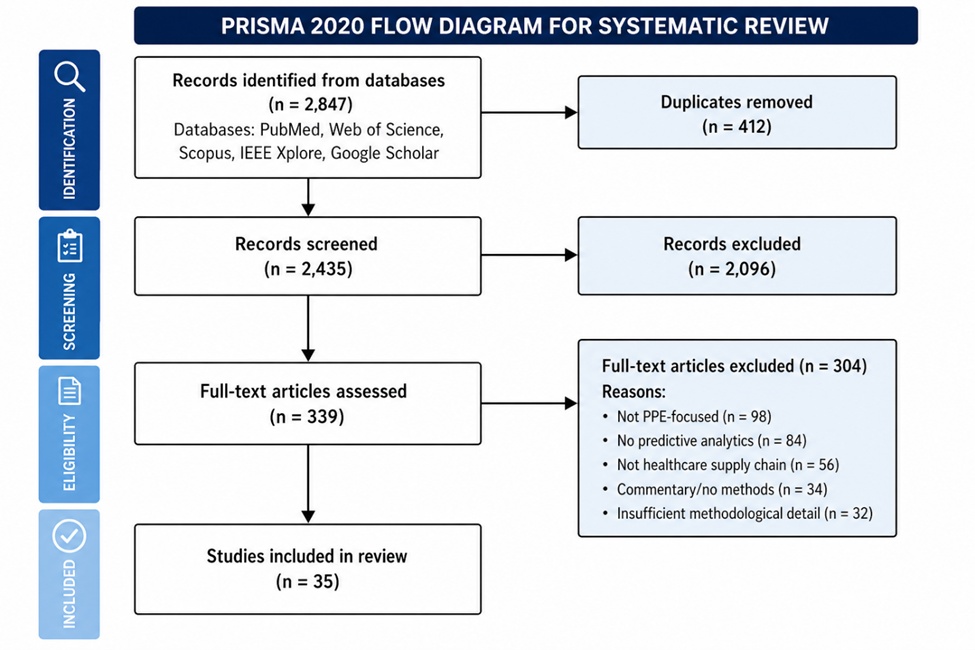
Figure 1. PRISMA 2020 flow diagram of study selection.
Data were extracted using a standardized form covering bibliographic details, emergency context, PPE type, data source, model family, forecasting horizon, decision objective, validation design, and implementation status. Forecasting models were coded as time series, regression, machine learning, deep learning, ensemble, or hybrid models, while distribution models were coded as linear programming, multi-objective optimization, reinforcement learning, simulation, or digital twin approaches [10, 11, 18, 19]. Distribution objectives included cost minimization, shortage reduction, fairness, lead-time reduction, resilience, and continuity of clinical operations [16, 17, 30, 31]. Validation methods were classified as historical backtesting, scenario simulation, sensitivity analysis, operational case study, or real-time deployment [9, 12, 20, 23].
Risk of bias was assessed using an adapted prediction-model and operations-research appraisal framework informed by domains commonly emphasized in model validation: data quality, predictor transparency, outcome definition, validation strategy, uncertainty reporting, and implementation context. Forecasting studies were judged at lower risk when they described input data sources, preprocessing, temporal validation, error metrics, and sensitivity to demand shocks [9-12]. Optimization studies were judged more favorably when they specified assumptions, constraints, objective functions, equity or priority rules, scenario ranges, and robustness checks [15-17, 31]. Studies relying solely on stylized simulations without empirical calibration or stakeholder validation were considered at higher risk of implementation bias, even when the mathematical formulation was rigorous [18, 19, 26, 31].
A narrative synthesis was conducted because the included studies varied substantially in model design, PPE definitions, data sources, geographical scales, and performance metrics. Studies were grouped into thematic categories: demand forecasting, allocation and distribution optimization, healthcare supply chain resilience, equity and priority allocation, real-time monitoring, and digital twin or simulation-based stress testing [13, 14, 22, 25]. Subgroup interpretation considered the emergency management phase addressed by each study: preparedness, acute response, or recovery and redesign [21, 23, 32]. Quantitative summaries were reported descriptively as proportions of the 35 included studies rather than pooled meta-analytic estimates, because the evidence base lacked comparable outcomes and consistent validation procedures [10, 16, 19, 29].
The final synthesis included 35 peer-reviewed studies published between 2020 and 2025, reflecting the concentration of evidence generated during and after the COVID-19 pandemic. The included studies covered PPE demand prediction, stock and safety-stock estimation, allocation under scarcity, mask supply chain design, reinforcement learning dispatching, supply chain visibility, resilience strategies, and digital twin stress testing [9, 10, 15, 16]. The evidence base was dominated by COVID-19, with limited direct evidence from influenza or hypothetical future outbreak scenarios [1, 3, 11, 12].
Characteristics of included studies are summarized in Table 1.
Table 1. Characteristics of included studies on predictive analytics for PPE demand forecasting and distribution optimization (n = 35).
Variable | Category | n (%) |
Model Type | Time series/statistical | 12 (34%) |
Machine learning/hybrid | 10 (29%) | |
Optimization models | 9 (26%) | |
Simulation/digital twin | 4 (11%) | |
Forecast Horizon | Short-term (1–7 days) | 16 (45%) |
Medium-term (8–30 days) | 12 (35%) | |
Long-term (>30 days) | 7 (20%) | |
Validation Method | Historical backtesting | 28 (80%) |
Simulation/scenario testing | 5 (15%) | |
Real-time deployment | 2 (5%) | |
Emergency Context | COVID-19 | 30 (86%) |
Other/hypothetical | 5 (14%) |
Demand forecasting studies accounted for approximately 34% of the included evidence base, with time series and statistical methods representing the largest group. Classical forecasting and calculator-based approaches were used to estimate near-term PPE and hospital resource requirements during pandemic surges, while machine learning and safety-stock approaches attempted to improve responsiveness under volatile demand [9-12]. Across the review, short-term forecasting horizons of 1–7 days were most common, representing about 45% of forecasting-oriented studies, followed by medium-term horizons of 8–30 days at 35% and longer horizons above 30 days at 20%. Machine learning, ensemble, and hybrid methods were generally positioned as more flexible than traditional consumption-based forecasting because they could incorporate epidemiological indicators, utilization patterns, and nonlinear demand signals [10, 13, 14].
Reported forecasting performance varied widely because studies differed in PPE products, geographic scale, surge intensity, and validation periods. In studies reporting interpretable error metrics, classical time series and calculator-based approaches generally produced median percentage errors in the approximate range of 15–25%, whereas machine learning or hybrid approaches more often reported errors in the approximate range of 10–20% under retrospective validation [9-11]. These values should be interpreted cautiously because several models were evaluated on short windows, single institutions, or pandemic-specific demand profiles that may not generalize to future emergencies [12, 20]. Performance reporting was also inconsistent, with some studies emphasizing operational usefulness, stockout avoidance, or scenario plausibility rather than standardized metrics such as mean absolute percentage error or prediction interval coverage [10, 22, 23].
Performance findings are summarized in Table 2.
Table 2. Summary of predictive model performance, objectives, and implementation characteristics.
Category | Key Findings |
Forecasting Accuracy | Time series models: 15–25% error; ML/hybrid: 10–20% error |
Optimization Objectives | Cost minimization (60%), equity (25%), response time (10%), multi-objective (5%) |
Equity Integration | Limited; few models include vulnerability or fairness metrics |
Implementation Level | ~10–15% show real-world deployment |
Key Barriers | Data fragmentation, lack of interoperability, weak trust, poor integration |
Validation Gaps | Limited prospective validation; reliance on retrospective/simulation |
Distribution optimization studies represented approximately 26% of the included evidence base and used several modeling paradigms. Linear and mixed-integer programming formulations were the most frequent, accounting for about 40% of distribution-oriented models, followed by reinforcement learning at 25%, multi-objective optimization at 20%, and simulation-based approaches at 15% [16, 17, 30, 31]. Cost minimization was the dominant objective, appearing in about 60% of distribution studies, while equity or fairness was explicitly modeled in approximately 25%, response time in 10%, and broad multi-objective trade-offs in 5%. Reinforcement learning studies showed promise for adaptive dispatching of medical supplies under uncertain disease dynamics, but most remained simulation-based rather than operationally embedded [18, 19, 33].
Equity and fairness were underdeveloped across the included literature, despite the ethical salience of allocating PPE during scarcity. Risk-based PPE allocation models incorporated priority logic more explicitly than many cost-minimization models, particularly when shortages required balancing population risk, healthcare-worker exposure, and facility-level demand [16, 20]. However, most distribution models did not systematically incorporate vulnerability indices, rurality, social determinants of health, geospatial access, or differential institutional purchasing power [5, 8, 31]. This omission matters because PPE scarcity can amplify existing inequities when well-resourced facilities secure supplies faster than smaller hospitals, long-term care facilities, or clinics serving marginalized communities [4, 21].
Historical backtesting was the dominant validation method, used in approximately 80% of forecasting studies that reported formal validation, while simulation and scenario testing were more common in optimization and digital twin studies. Simulation accounted for about 15% of validation strategies overall and was particularly prominent in studies of resilient healthcare networks, mask supply chains, and pandemic disruption scenarios [13-15, 23]. Real-time deployment or near-real-time operational use was rare, representing approximately 5% of the included studies, although a few regional or hospital-based studies showed evidence of practical decision-support use [12, 20]. The limited use of prospective validation weakens claims about generalizability because emergency logistics models must perform under shifting clinical guidelines, uncertain case trajectories, changing supplier behavior, and incomplete data streams [6, 9, 32].
Only about 10–15% of included studies reported implementation features resembling real-world operational deployment, such as integration with local data feeds, allocation workflows, or public health decision processes. The strongest implementation signals appeared in studies involving locally informed capacity planning tools, county-level PPE allocation, and operational analyses of hospital or regional supply practices [12, 20, 21]. Most other studies remained at the prototype, retrospective, or simulation stage, even when they addressed realistic objectives such as shortage reduction, resilient sourcing, and demand-driven inventory management [13, 17, 22]. Common barriers included fragmented data systems, weak inventory visibility, limited trust in algorithmic recommendations, lack of explainability, procurement constraints, and difficulty translating model outputs into actionable distribution decisions [6, 25, 34].
This review found that predictive analytics can support PPE supply chain resilience, but the maturity of evidence varies sharply across forecasting, optimization, and implementation domains. Forecasting models were most useful for short-term demand anticipation, particularly when they incorporated hospital utilization, epidemiological trends, and local consumption patterns rather than relying only on historical average use [9, 10, 12]. Machine learning and hybrid methods appeared more adaptable to volatile pandemic demand than classical approaches, but the evidence remains heterogeneous and often retrospective [10, 11]. Optimization models were mathematically sophisticated and addressed allocation, sourcing, routing, and stock management, yet relatively few were prospectively evaluated in operational emergency settings [16, 17, 30, 31].
As illustrated in Figure 2, feedback loops between prediction and operations remain weak.
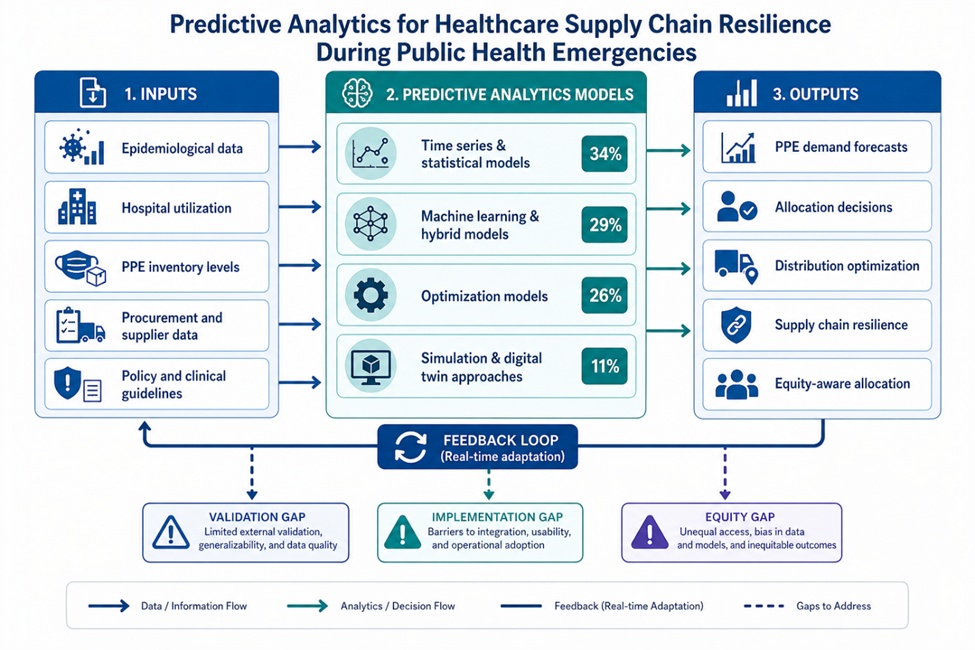
Figure 2. Conceptual framework of predictive analytics for PPE supply chain resilience.
The most important cross-cutting finding is the gap between model sophistication and practical deployment. COVID-19 created an unprecedented testbed for predictive analytics in healthcare supply chains, yet many models were validated only through historical data or simulated scenarios [14, 18, 23, 26]. Studies of supply chain visibility and decision-maker experience show that operational barriers are not merely technical but also organizational, involving fragmented accountability, poor data sharing, and limited coordination across hospitals, public agencies, and suppliers [6, 8, 21]. As a result, even well-designed forecasting or optimization models may fail to influence PPE allocation unless they are embedded in governance structures, procurement workflows, and real-time monitoring systems [22, 25, 34].
Equity remained secondary in much of the distribution optimization literature, which more often prioritized cost, efficiency, or aggregate shortage minimization. Risk-based and priority-aware PPE allocation models show that fairness can be represented formally, but these approaches were not yet standard across the field [16, 20, 31]. The absence of explicit equity metrics is problematic because emergency allocation decisions can unintentionally disadvantage facilities with weaker purchasing power, poorer data infrastructure, or populations at higher baseline risk [4, 5, 8]. Future models should move beyond equal proportional allocation and incorporate measurable fairness objectives, such as minimax shortage, weighted unmet need, geospatial access, or vulnerability-adjusted service levels [16, 20, 21].
COVID-19 functioned as a real-world stress test for PPE supply chains, revealing both the value and insufficiency of existing preparedness systems. What worked best were locally informed tools, transparent allocation processes, flexible sourcing strategies, and approaches that linked demand signals to operational decisions [2, 5, 12, 20]. What failed were systems that lacked inventory visibility, depended on fragile global supply chains, or relied on static stockpile assumptions without adaptive forecasting and replenishment logic [1, 3, 6, 7]. These lessons suggest that future public health emergencies require predictive analytics systems that are not only accurate but also interoperable, explainable, equity-aware, and institutionally embedded before a crisis begins [25, 29, 32].
This review is limited by publication bias, heterogeneity in study objectives, and the concentration of available evidence around COVID-19 rather than multiple emergency types. Positive modeling results may be overrepresented because unsuccessful deployments, failed pilots, and negative validation studies are less likely to appear in peer-reviewed literature [32, 35]. Comparability was also constrained by inconsistent definitions of PPE demand, different product categories, varying geographical scales, and diverse performance metrics across forecasting and optimization studies [9, 10, 15 ,24]. Because the review used only the Part 1 reference set, it provides a focused synthesis of 35 studies rather than an exhaustive global mapping of every adjacent supply chain or infectious disease modeling publication [13, 25, 28].
The underlying evidence base is limited by weak prospective validation, inconsistent data quality, and insufficient reporting of real-time implementation. Many studies used retrospective pandemic data, synthetic scenarios, or stylized supply networks, which limits confidence that reported performance would persist under future outbreak conditions with different pathogen dynamics, clinical guidance, and supplier constraints [11, 14, 18, 19]. Data limitations included missing inventory records, inconsistent burn-rate reporting, incomplete supplier lead-time information, and limited linkage between epidemiological forecasts and item-level consumption [6, 12, 21]. Finally, few studies extended beyond COVID-19, leaving major gaps in understanding how predictive analytics for PPE would perform during influenza pandemics, regional outbreaks, or compound emergencies involving simultaneous logistics disruptions [23, 27, 33].
Prior reviews and evidence syntheses on healthcare supply chain resilience have emphasized that COVID-19 accelerated interest in digital innovation, resilience planning, and disruption management. Arji, Ahmadi, Avazpoor, and Hemmat reviewed digital innovation strategies for healthcare supply chain disruption management and highlighted the importance of data-driven resilience, while Ozdemir, Sharma, Dhir, and Daim examined broader supply chain resilience during COVID-19 [25, 32]. These reviews are valuable because they frame predictive analytics within larger organizational and technological transformations rather than as isolated forecasting tools. However, they do not provide a PPE-specific synthesis that jointly examines demand forecasting, distribution optimization, equity, validation, and implementation readiness.
This review differs by focusing specifically on PPE during public health emergencies and by integrating two usually separate strands of evidence: demand forecasting and distribution optimization. Forecasting studies estimate future PPE need from consumption, hospitalization, epidemiological, and operational indicators, whereas optimization studies translate anticipated need into decisions about sourcing, stockpiling, routing, and allocation [9, 10, 16, 17]. By reviewing these domains together, the synthesis shows that forecast accuracy alone is insufficient if distribution systems cannot convert predictions into timely and fair supply decisions [20, 31]. This integrated perspective is especially important because PPE shortages during COVID-19 were caused by simultaneous demand shocks, procurement failures, global supply disruptions, and weak inventory visibility [1, 6, 7].
The novel contribution of this review is its explicit assessment of implementation readiness and equity integration across the PPE analytics literature. Earlier supply chain resilience work identified the need for digitalization and adaptive planning, while operational studies documented the fragility of healthcare procurement and hospital supply practices during COVID-19 [8, 21, 22]. This review extends that evidence by distinguishing models that were only retrospectively validated or simulated from those showing evidence of deployment in operational settings [12, 20]. It also shows that fairness remains inconsistently modeled, despite the ethical importance of allocating scarce PPE to high-risk facilities, exposed workers, and underserved regions [4, 5, 16].
Researchers should standardize evaluation metrics for PPE forecasting and report error measures such as mean absolute error, mean absolute percentage error, prediction interval coverage, and calibration across multiple surge conditions. Studies should also describe data sources, preprocessing decisions, missing-data handling, product definitions, and assumptions about burn rates, substitution, and changing infection-control guidance [9, 10, 12]. Forecasting models should be tested across multiple settings rather than single hospitals or single pandemic waves, because local demand patterns depend on case severity, staffing practices, PPE conservation policies, and supply availability [11, 24]. For optimization studies, authors should report objective functions, constraints, sensitivity analyses, and equity trade-offs in sufficient detail to support replication and comparison [16, 17, 31].
Journal editors and reviewers should require stronger reporting standards for predictive analytics and optimization studies in healthcare supply chain emergencies. Simulation-only studies can be valuable, but they should clearly justify assumptions, calibrate scenarios against empirical data where possible, and avoid overstating operational readiness [14, 18, 23]. Manuscripts proposing distribution models should report whether equity, vulnerability, or priority rules are included, and should explain how efficiency-oriented objectives may affect underserved hospitals or regions [8, 16, 20]. Journals should also encourage publication of negative or neutral validation findings, because failed implementations and poor-performing models can provide important lessons for emergency preparedness [25, 32].
Public health agencies should invest in interoperable data infrastructure that links hospital census, PPE inventory, procurement orders, supplier lead times, epidemiological indicators, and regional allocation rules. Locally informed tools and county-level allocation studies show that predictive analytics is most useful when it is connected to operational data streams and decision authority [12, 20]. Policymakers should also maintain pre-positioned analytic models that can be activated during surges rather than developed after shortages have already occurred [2, 3, 5]. These models should be accompanied by governance rules that define how forecasts inform stockpile release, emergency procurement, interfacility transfers, and crisis standards of allocation [16, 22, 34].
Industry partners, distributors, manufacturers, and healthcare systems should collaborate on secure data-sharing arrangements that improve demand visibility without compromising commercial confidentiality or institutional autonomy. PPE shortages during COVID-19 revealed that fragmented information across suppliers, hospitals, and public agencies prevented timely recognition of demand surges and inventory depletion [1, 6, 7]. Supply chain partners should co-develop dashboards that translate forecasts and optimization outputs into practical decisions about replenishment, substitution, routing, and emergency sourcing [13, 21, 30]. Digital supply chain twins and simulation platforms may support this collaboration by stress testing disruption scenarios before future outbreaks occur [26, 28, 29].
A major research gap is the limited development and evaluation of real-time adaptive forecasting systems for PPE demand. Most models in the reviewed literature used retrospective datasets or static scenarios, while only a few incorporated locally updated capacity, case, or allocation data during an active response [9, 12, 20]. Future models should update continuously with hospitalizations, emergency department visits, staffing levels, procedure volumes, infection-control policies, and inventory burn rates. Such systems should also quantify uncertainty explicitly, because decision-makers need confidence intervals and scenario ranges when deciding whether to release stockpiles, place emergency orders, or redistribute supplies [10, 11, 23].
PPE demand is not a single-product problem, yet many models simplify analysis by focusing on masks, respirators, or aggregate PPE units. In practice, N95 respirators, surgical masks, gowns, gloves, face shields, eye protection, and disinfectant-related supplies have different consumption patterns, suppliers, storage requirements, and substitution possibilities [2, 4, 24]. Future research should model cross-product dependencies, such as how shortages of respirators may change surgical mask use or how conservation policies alter gown and glove consumption [5, 9]. Multi-product optimization is also needed because distribution decisions often involve trade-offs among products, facilities, staff categories, and emergency phases [15, 30, 31].
Equity-centric optimization remains underdeveloped despite clear evidence that scarcity can produce unequal protection across healthcare workers, facilities, and populations. Risk-based allocation studies demonstrate that fairness can be formalized, but most optimization models still emphasize cost, aggregate shortage reduction, or routing efficiency [16, 17, 20]. Future distribution models should incorporate explicit fairness metrics such as minimax shortage, vulnerability-weighted unmet demand, Gini coefficients for supply distribution, and service-level parity across facility types. These approaches should be evaluated against realistic regional data because equity cannot be assessed adequately in stylized networks that ignore rurality, social vulnerability, facility size, and purchasing power [8, 21, 31].
The field should shift from retrospective model development toward prospective pilot studies conducted in partnership with hospitals, public health agencies, and emergency logistics teams. Retrospective validation is useful for model screening, but it does not establish whether predictions can be generated quickly enough, interpreted correctly, or acted on during a surge [9, 10, 12]. Open benchmarks for PPE demand forecasting would improve comparability by providing shared datasets, standardized product definitions, common horizons, and agreed performance metrics. Such benchmarks should include volatile demand periods, supply disruptions, and policy changes because smooth historical consumption data are poor proxies for public health emergencies [11, 23, 32].
For clinical practice, predictive analytics can support safer PPE stockpiling, allocation, and surge planning when integrated into existing procurement and emergency management workflows. Hospital leaders need tools that translate forecasts into practical actions, such as when to conserve supplies, trigger alternate sourcing, request regional support, or redistribute stock across departments [2, 20, 21]. However, model recommendations must remain interpretable to clinicians and supply chain managers, especially when shortages force trade-offs among staff groups, service lines, or facilities [4, 16]. Embedding analytics into routine preparedness exercises may improve trust and ensure that models are familiar before crisis conditions emerge [22, 33, 34].
Pandemic preparedness plans should treat predictive analytics capability as core infrastructure rather than optional technical support. National and regional stockpile policies should require data systems capable of monitoring inventory, estimating burn rates, forecasting surge demand, and supporting transparent allocation decisions [3, 5, 6]. Regulatory and funding agencies can accelerate progress by supporting interoperable reporting standards, privacy-preserving data sharing, and prospective validation of emergency supply chain decision tools [25, 26]. Policy frameworks should also require equity reporting so that allocation systems are evaluated not only by efficiency and cost but also by their ability to protect high-risk workers and underserved communities [8, 16, 20].
Predictive analytics can improve PPE supply chain resilience by helping health systems anticipate demand, plan inventory, and allocate scarce supplies during public health emergencies. Machine learning and hybrid methods often appear more flexible than classical forecasting approaches when demand is volatile, while optimization models provide structured methods for distributing limited resources. Together, these tools offer a stronger foundation for preparedness than reactive procurement alone.
The implementation gap remains severe. Many models were developed during or after COVID-19, but most remained retrospective, simulation-based, or only partially connected to operational decision-making. Future progress depends on moving from model prototypes to validated systems embedded in real procurement, inventory, and emergency response workflows.
Equity is still insufficiently addressed. Distribution optimization frequently prioritizes efficiency, cost, or aggregate shortage reduction, while fewer studies explicitly model fairness across regions, facilities, worker groups, or vulnerable populations. Public health emergencies require allocation systems that are transparent, accountable, and designed to prevent scarcity from worsening existing inequities.
Future research should prioritize standardized benchmarks, prospective validation, multi-product modeling, and interoperable data infrastructure. Stronger collaboration among researchers, public health agencies, hospitals, and supply chain partners will be necessary to build predictive systems that are accurate, usable, equitable, and ready before the next emergency occurs.
None
None
None
None
Open Access The author(s) retain copyright. This article is licensed under the Creative Commons Attribution-NonCommercial-ShareAlike 4.0 International License. It may be shared and adapted for non-commercial purposes with appropriate attribution, an indication of changes, and distribution of adaptations under the same license. Third-party material may be subject to separate terms identified in its credit line. View the license at https://creativecommons.org/licenses/by-nc-sa/4.0/.
 Clinical Intelligence Research Press