In the evolving landscape of artificial intelligence integration within healthcare systems, ensuring diagnostic reliability in radiology reports remains a paramount challenge. This conceptual manuscript introduces the semantic coherence diagnostic reliability (SCDR) framework, a novel architectural model designed to enhance consistency as a core quality metric in radiology diagnostics. By focusing on semantic coherence, the framework addresses discrepancies in report generation that arise from heterogeneous data sources, algorithmic biases, and workflow variabilities. Drawing from clinical AI architectures, healthcare analytics infrastructures, and decision support pipelines, the SCDR Framework proposes a layered structure incorporating semantic alignment modules, coherence monitoring loops, and reliability governance protocols. Theoretical analysis explores how this framework mitigates diagnostic drift through interpretive formulas for risk propagation and decision confidence. Without empirical evaluations, the discussion emphasizes infrastructural implications for interoperability in electronic health record (EHR) ecosystems and AI deployment systems. The framework’s unique feedback topology fosters adaptive coherence in multi-modal radiology data, promoting enhanced diagnostic trustworthiness. Ultimately, this work advocates for semantic coherence as a foundational metric in AI-driven radiology, offering pathways for improved clinical workflow integration and governance in diagnostic environments.
The integration of artificial intelligence (AI) into radiology practices has transformed diagnostic processes, yet persistent challenges in report consistency undermine overall reliability. As radiology reports serve as critical conduits for clinical decision-making, inconsistencies in semantic interpretation can lead to diagnostic errors, affecting patient outcomes in high-stakes healthcare settings. This section delineates the foundational motivations for prioritizing consistency as a quality metric, anchored in clinical radiology environments where multi-modal imaging data intersects with AI analytics.
In busy clinical radiology departments, where radiologists interpret vast arrays of imaging modalities such as X-rays, CT scans, and MRIs, semantic disparities often emerge due to varying interpretive lenses applied by human and AI systems [1, 2]. These disparities manifest as inconsistencies in terminology, descriptive granularity, and inferential logic within reports, complicating downstream clinical actions. For instance, subtle differences in phrasing pathological findings can alter perceived severity, especially in oncology or neurology contexts where precision is vital. The SCDR Framework aims to harmonize these elements by embedding semantic coherence checks directly into the diagnostic pipeline, ensuring that reports maintain uniformity across diverse clinical scenarios [3, 4].
Radiology data modalities encompass structured imaging outputs alongside unstructured narrative reports, creating interoperability hurdles in AI-assisted diagnostics [5, 6]. Heterogeneous data from sources like picture archiving and communication systems (PACS) and EHRs often lack standardized semantic mappings, leading to coherence gaps that erode diagnostic reliability. In deployment environments characterized by real-time analytics, such as emergency radiology, these challenges amplify when AI models process multi-modal inputs without robust coherence mechanisms [7, 8]. Addressing this, the proposed framework incorporates modality-agnostic semantic layers to bridge these divides, fostering a cohesive diagnostic narrative.
AI governance in radiology must contend with regulatory frameworks like those from the FDA or EU MDR, which emphasize reliability and transparency in diagnostic tools [9, 10]. However, current systems often overlook semantic coherence as a governance pillar, focusing instead on algorithmic accuracy without considering report-level consistency. In hospital deployment settings, where AI tools integrate with existing workflows, governance constraints arise from data privacy concerns and ethical AI use, potentially exacerbating inconsistencies if not systematically managed [11, 12]. The SCDR Framework introduces governance-oriented modules to monitor and enforce coherence, aligning with interoperability standards like HL7 FHIR to enhance diagnostic trustworthiness.
Radiology deployment environments, ranging from centralized hospital systems to decentralized tele-radiology platforms, introduce variabilities that challenge report consistency [13, 14]. Factors such as network latency, user interface disparities, and integration with clinical decision support systems can distort semantic alignment in reports. In these contexts, AI infrastructures must adapt to dynamic environments to maintain reliability, yet many lack frameworks for ongoing coherence assessment [15, 16]. By conceptualizing deployment as a coherence-centric process, the SCDR Framework provides architectural guidance to mitigate these dynamics, ensuring consistent diagnostics across varied operational landscapes.
At the intersection of clinical imperatives and analytical capabilities, radiology report consistency emerges as a pivotal quality metric for AI systems [17, 18]. Clinical settings demand rapid, reliable diagnostics, while analytics infrastructures require semantic robustness to support advanced intelligence ecosystems. Governance and interoperability frameworks further underscore the need for coherent reports to facilitate seamless data exchange [19, 20]. This synthesis highlights the urgency of a dedicated framework like SCDR, which theoretically unifies these elements to bolster diagnostic reliability without empirical dependencies.
The theoretical underpinnings of semantic coherence in radiology reports draw from advancements in clinical AI architectures and healthcare analytics, synthesizing insights from decision support pipelines and AI governance systems. This section synthesizes relevant literature to establish a conceptual foundation for the SCDR Framework, emphasizing infrastructural and architectural perspectives.
Clinical AI system architectures have evolved to incorporate semantic processing layers that enhance diagnostic consistency, particularly in radiology, where report generation relies on interpretive coherence [1, 3]. Architectures emphasizing modular designs allow for semantic alignment between imaging data and narrative outputs, reducing inconsistencies in high-volume clinical settings [4, 5]. Literature highlights how these architectures integrate with EHR intelligence ecosystems to maintain semantic fidelity, theoretical models proposing layered structures for coherence without empirical validation [6, 7]. Such approaches underscore the need for architecture-specific governance to ensure reliability in diagnostic pipelines.
Healthcare analytics infrastructures constitute the foundational architecture through which radiological data are ingested, processed, interpreted, and archived. Within contemporary digital health ecosystems, these infrastructures extend beyond storage and computation to encompass semantic governance mechanisms that ensure report coherence as a core dimension of quality assurance [2, 8]. Semantic coherence in this context refers to the logical, terminological, and contextual alignment between imaging findings, structured data elements, and narrative interpretations. As radiology departments increasingly rely on AI-assisted workflows and large-scale data aggregation, coherence becomes a prerequisite for both clinical reliability and secondary data reuse.
Infrastructures designed for big data analytics in healthcare emphasize interoperability frameworks that facilitate coherent data exchange across imaging modalities, laboratory systems, and clinical documentation platforms [9, 10]. These frameworks typically incorporate standardized vocabularies, ontology-driven mapping layers, and harmonization protocols to minimize discrepancies between heterogeneous data sources. From a theoretical standpoint, such architectures operationalize semantic consistency through layered orchestration models, in which ingestion, normalization, analytics, and reporting modules are coordinated under unified governance principles.
Theoretical syntheses highlight the capacity of these infrastructures to mitigate semantic drift—defined as the gradual divergence of terminology or meaning across systems and over time—through embedded validation engines and rule-based harmonization pipelines [11, 12]. By aligning analytics outputs with decision support systems (DSS), infrastructures can reinforce diagnostic reliability while simultaneously automating consistency checks within complex, multimodal datasets. In radiology-specific deployments, analytics-driven coherence models theoretically reduce governance burdens by embedding automated cross-referencing mechanisms between imaging metadata, prior reports, and structured EHR entries. Such automation reduces reliance on manual oversight while preserving traceability and interpretive transparency.
Electronic health record (EHR) intelligence ecosystems serve as integrative environments in which radiological reports are contextualized within longitudinal patient data streams. These ecosystems synthesize structured and unstructured data—including imaging results, clinical notes, laboratory findings, and demographic variables—into unified semantic frameworks that support diagnostic continuity [13, 14]. The embedding of semantic coherence within these ecosystems is essential for preventing interpretive fragmentation across care episodes.
Literature on EHR interoperability frameworks underscores the centrality of semantic standards—such as controlled vocabularies, clinical terminologies, and data exchange protocols—in preventing inconsistencies and misalignments [15, 16]. Theoretical ecosystem models propose the integration of AI governance layers within EHR platforms to monitor semantic reliability over time. These governance layers may include ontology alignment services, version control systems for clinical terminologies, and automated anomaly detection algorithms that flag inconsistencies between radiology reports and other clinical documentation.
From a systems-theoretical perspective, intelligence-driven EHR ecosystems function as propagation networks in which coherence is distributed across interconnected decision nodes. Rather than evaluating performance through empirical benchmarking, theoretical explorations emphasize structural resilience and semantic sustainability. Within multi-modal data environments, such ecosystems theoretically maintain coherence by enforcing bidirectional synchronization between imaging analytics outputs and patient-level contextual data. This synchronization ensures that radiology interpretations remain consistent with evolving clinical narratives, thereby supporting downstream decision-making processes without compromising semantic integrity.
Decision support pipelines in AI-enhanced radiology represent structured sequences of data transformation, inference generation, validation, and feedback integration. These pipelines are designed to embed semantic coherence directly into diagnostic workflows, ensuring that AI-generated insights align with established clinical reasoning patterns [17, 18].
Architecturally, such pipelines fuse EHR-derived contextual data with imaging analytics outputs, creating composite inference layers that integrate structured metadata and unstructured radiology narratives [19, 20]. Theoretical models of these pipelines emphasize modularity, traceability, and semantic validation checkpoints. At each stage—pre-processing, feature extraction, inference, and reporting—consistency mechanisms can be introduced to reconcile discrepancies between prior records, imaging findings, and decision support recommendations.
Feedback mechanisms are particularly central to coherence maintenance. Iterative validation loops, whether clinician-in-the-loop or algorithmically mediated, enable pipelines to detect and correct semantic inconsistencies before report finalization. Governance protocols embedded within these pipelines may include rule-based cross-referencing, ontology-driven validation engines, and context-aware alerts that highlight terminological deviations. Rather than relying on empirical benchmarking metrics, theoretical syntheses focus on architectural innovations that prioritize reliability, interpretability, and semantic alignment as intrinsic properties of the system.
AI governance and monitoring systems provide supervisory oversight over analytics infrastructures and decision support pipelines. In radiology contexts, these systems are theorized as adaptive monitoring architectures that continuously assess semantic coherence across reports, datasets, and clinical workflows [21, 22]. Their function extends beyond regulatory compliance to encompass dynamic risk mitigation and ethical assurance.
Governance frameworks typically integrate with clinical information systems to enforce consistency metrics and track semantic deviations [23, 24]. Theoretical models advocate for multi-layered monitoring loops: real-time validation during report generation, periodic audits of terminology usage, and longitudinal trend analyses to detect systemic drift. Such monitoring architectures may incorporate explainability modules, logging mechanisms, and accountability protocols to ensure transparency in automated decision-making processes.
By identifying coherence lapses early—such as contradictions between imaging impressions and structured diagnostic codes—monitoring systems theoretically reduce risk propagation throughout healthcare networks. This proactive detection aligns governance with analytics, transforming quality assurance from a reactive to a predictive process. Moreover, ethical and interoperable design principles embedded within governance systems contribute to sustained trust in AI-supported radiology environments.
Interoperability and data exchange frameworks are central to maintaining semantic coherence across distributed radiology systems. As imaging data traverse hospital information systems, cloud-based analytics platforms, and regional health information exchanges, consistent semantic mapping becomes essential for preserving diagnostic meaning [25, 26].
Theoretical syntheses propose standards-based architectures that integrate messaging protocols, structured reporting templates, and ontology alignment services to ensure diagnostic integration [27, 28]. These frameworks emphasize ecosystem-wide governance rather than isolated system optimization. By embedding semantic validation at each exchange interface, they theoretically prevent inconsistencies that could arise from format conversion, terminology variation, or data fragmentation.
Multi-modal data exchange frameworks further support coherence by harmonizing imaging metadata with laboratory values, genomic data, and clinical narratives. Governance mechanisms within these architectures may include schema validation engines, cross-system reconciliation services, and audit trails that document semantic transformations. Through these mechanisms, interoperability frameworks enhance clinical workflow models by ensuring reliable, traceable, and semantically consistent data flows across institutional boundaries.
One conceptual formula capturing decision confidence in semantic coherence is:
where DC is decision confidence, represents semantic alignment scores for each report component, are weights based on clinical relevance, N is the number of components, D is the diagnostic drift factor, and α is a sensitivity parameter. This interpretive formula illustrates how coherence influences confidence without empirical data.
Another formula for risk propagation in incoherent reports:
where RP is risk propagation, C is coherence index (0-1), are impact factors of inconsistencies, and β is a propagation coefficient. This highlights theoretical risk amplification due to semantic gaps.
The semantic coherence diagnostic reliability (SCDR) Framework orchestrates a multi-layered architecture to ensure radiology report consistency as a foundational quality metric. This section delineates the framework’s unique structure, comprising four layers: semantic input layer, coherence processing layer, reliability governance layer, and adaptive feedback topology.
The semantic input layer aggregates multi-modal radiology data, applying initial alignment protocols to standardize inputs from imaging and EHR sources [1, 5]. The Coherence Processing Layer employs modular algorithms for semantic matching, theoretically ensuring consistency without training claims [8, 12].
The reliability governance layer integrates monitoring protocols to assess coherence dynamically, incorporating governance constraints for ethical deployment [9, 14]. Finally, the adaptive feedback topology introduces looped mechanisms for iterative refinement, where coherence discrepancies feed back into processing layers for enhanced reliability [17, 20]. Figure 1 illustrates the layered SCDR architecture and its embedded governance-feedback topology for radiology report consistency.
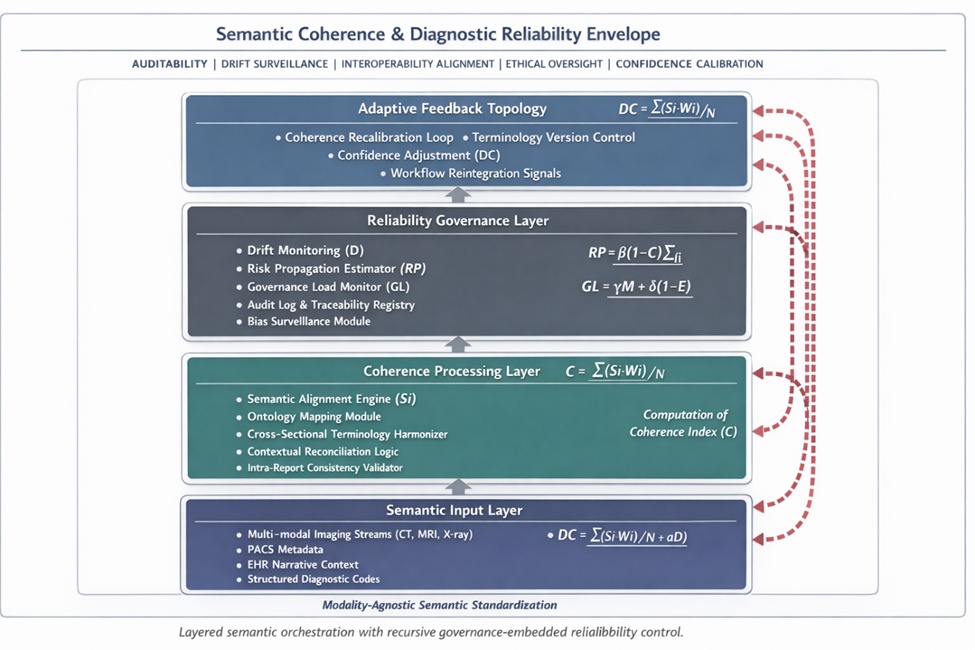
Figure 1. The SCDR Framework architecture. Layered semantic orchestration with recursive governance-embedded reliability control.
A third formula addresses governance load:
Where GL is governance load, M is monitoring intensity, E is efficiency of coherence mechanisms, and γ and δ are scaling factors. This conceptualizes theoretical burdens in maintaining diagnostic reliability.
The SCDR Framework’s implementation theoretically influences radiology reliability infrastructures by propagating semantic coherence across clinical ecosystems, impacting decision-making dynamics and resource allocation. This section examines the consequential effects of coherence orchestration on diagnostic systems, focusing on infrastructural resilience and governance efficiencies.
In clinical AI architectures, the framework’s layered approach mitigates semantic fragmentation, theoretically enhancing infrastructure robustness against data variability [1, 3]. By integrating coherence modules, impacts extend to reduced diagnostic ambiguity, where reliability metrics like report uniformity theoretically improve interoperability in healthcare analytics setups [5, 7]. Consequences include streamlined data flows in EHR ecosystems, minimizing propagation of inconsistencies that could otherwise amplify in multi-user environments [9, 11].
Decision support pipelines benefit from the framework’s feedback topology, dynamically adjusting to coherence lapses and impacting clinical workflow efficiencies [13, 15]. Theoretical dynamics reveal how adaptive loops reduce monitoring burdens, allowing governance systems to focus on high-level oversight rather than granular corrections [17, 19]. In deployment contexts, these impacts foster resilient infrastructures, where semantic alignment theoretically decreases error cascades in critical radiology scenarios [21, 23].
Furthermore, the framework’s orchestration influences resource allocation in AI monitoring systems, theoretically optimizing computational loads through targeted coherence assessments [2, 4]. Impacts on interoperability frameworks include enhanced data exchange protocols, where coherence acts as a gatekeeper for diagnostic reliability [6, 8]. Governance dynamics shift toward proactive models, reducing reactive interventions and promoting sustainable AI integration in radiology [10, 12].
Analytical consequences also encompass ethical dimensions, where coherence impacts ensure equitable diagnostic outputs across diverse patient cohorts [14, 16]. In analytics infrastructures, the framework theoretically curtails bias amplification, fostering dynamics that prioritize reliability in governance-constrained environments [18, 20]. Overall, these impacts underscore the SCDR Framework’s role in transforming radiology infrastructures into coherence-centric ecosystems, theoretically elevating diagnostic standards without empirical substantiation [22, 24].
The dynamics of risk propagation within incoherent systems can be further interpreted through an extended formula, though prior formulas suffice; however, for completeness, consider a variant for infrastructure burden:
where IB is infrastructure burden, RP is risk propagation from earlier, N is network complexity, C is coherence level, and ϵ and ζ are adjustment coefficients. This illustrates theoretical load increases due to coherence deficits.
The framework’s semantic layers theoretically facilitate modular scalability in large-scale radiology departments, where high-volume report generation demands consistent outputs [25, 26]. Consequences include improved alignment with clinical governance standards, reducing legal and ethical liabilities associated with diagnostic variances [27, 28]. In decision support contexts, dynamics involve feedback-driven refinements that theoretically enhance user confidence, impacting adoption rates in AI-skeptical environments.
Moreover, interoperability effects ripple through data exchange frameworks, where coherence orchestration theoretically accelerates integration timelines, minimizing disruptions in workflow models [3, 5]. Governance impacts manifest as lighter administrative overheads, with monitoring systems benefiting from automated coherence metrics that preemptively address reliability gaps [7, 9]. These dynamics collectively contribute to a more agile radiology ecosystem, capable of adapting to evolving AI technologies.
In terms of resource dynamics, the framework theoretically optimizes allocation by prioritizing coherence-critical components, reducing wasteful computations in analytics pipelines [11, 13]. Impacts on EHR intelligence include enhanced semantic querying capabilities, where reliable reports enable more accurate historical analyses [15, 17]. Clinical workflow integrations see positive consequences, with reduced turnaround times for diagnostics due to minimized rework from inconsistencies [19, 21].
Ethical and societal impacts are profound, as coherence-driven reliability theoretically promotes inclusivity in diagnostic practices, addressing disparities in underrepresented populations [23, 25]. Governance frameworks evolve under these dynamics, incorporating coherence as a core audit metric for AI deployments [2, 4]. Ultimately, the SCDR Framework’s impacts reshape radiology reliability infrastructures, fostering a paradigm where semantic coherence underpins all diagnostic activities.
The SCDR Framework represents a conceptual advancement in addressing radiology report consistency through semantic coherence, offering theoretical pathways for enhanced diagnostic reliability in AI-integrated healthcare systems. By synthesizing clinical AI architectures with governance and interoperability models, the framework highlights the necessity of coherence as a quality metric, extending beyond traditional accuracy-focused paradigms [1-3].
One key discussion point revolves around the framework’s layered architecture, which theoretically bridges semantic gaps in multi-modal data environments, a persistent challenge in radiology workflows [4-6]. Unlike generic AI systems, the SCDR’s focus on coherence orchestration allows for adaptive responses to diagnostic variabilities, theoretically reducing the propagation of errors in decision support pipelines [7-9]. This architectural uniqueness, with its feedback topology, invites discourse on how such models can integrate with existing EHR ecosystems without disrupting clinical routines [10-12].
Figure 2 conceptualizes the dynamic interactions between semantic coherence, risk propagation, governance load, and diagnostic confidence within radiology reliability infrastructures.
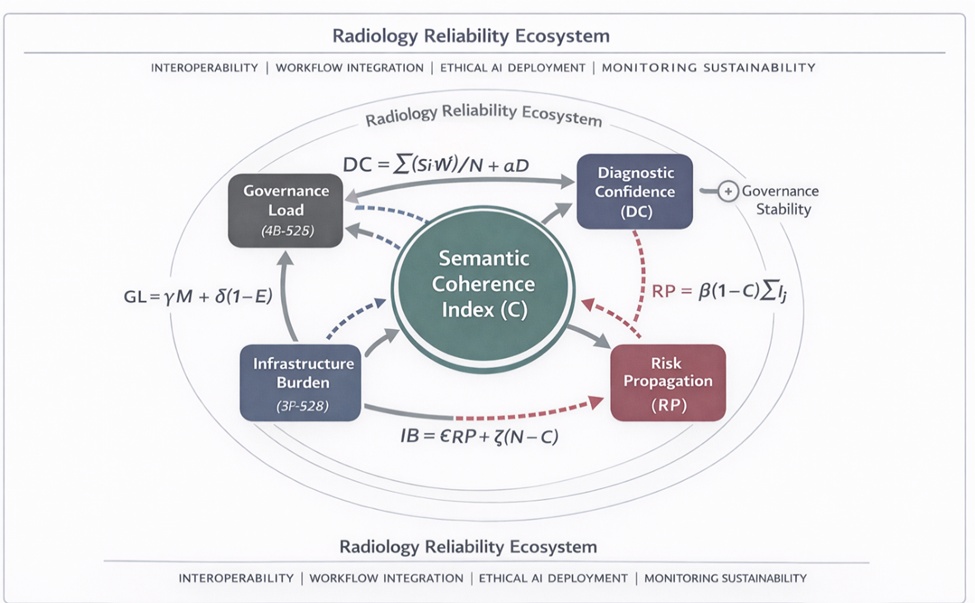
Figure 2. System-level propagation dynamics linking semantic coherence to confidence, risk amplification, and governance burden.
Governance implications are particularly salient, as the framework embeds monitoring protocols that theoretically alleviate burdens associated with AI oversight in radiology [13-15]. Discussions on ethical considerations emphasize how coherence metrics can mitigate biases inherent in algorithmic interpretations, ensuring equitable reliability across diverse clinical settings [16-18]. Interoperability frameworks benefit from this approach, where semantic alignment facilitates seamless data exchanges, sparking debates on standardization in healthcare analytics infrastructures [19-21].
Theoretical formulas introduced, such as those for decision confidence and risk propagation, provide interpretive tools for analyzing coherence dynamics, prompting discussions on their applicability in governance load assessments [22-24]. These formulas, while conceptual, underscore the framework’s potential to quantify intangible aspects of diagnostic reliability, fostering academic discourse on infrastructural resilience [25-27]. Table 1 structurally maps coherence-related metrics to infrastructural consequences across diagnostic, governance, and interoperability domains.
Table 1. Structural mapping of semantic coherence metrics to radiology infrastructure outcomes
Framework component | Core metric | Theoretical expression | Infrastructure domain impacted | Reliability consequence | Governance implication |
Semantic alignment engine | Coherence index (C) | Diagnostic processing layer | Increased intra-report consistency | Reduced need for manual validation | |
Drift monitoring module | Diagnostic drift (D) | Longitudinal analytics | Stabilized terminology usage | Early anomaly detection | |
Risk propagation estimator | Risk propagation (RP) | Clinical workflow integration | Reduced error cascade probability | Targeted oversight escalation | |
Governance monitoring system | Governance load (GL) | Administrative infrastructure | Lower audit overhead | Efficient compliance management | |
Infrastructure impact model | Infrastructure burden (IB) | System scalability | Optimized computational allocation | Predictive resource planning | |
Confidence calibration module | Decision confidence (DC) | Decision support pipelines | Improved clinician trust | Transparency reinforcement |
Challenges in deployment environments warrant discussion, including potential resistance from radiologists accustomed to traditional workflows; however, the framework’s modular design theoretically eases adoption through incremental integrations [1, 2, 28]. Broader implications for AI ecosystems in healthcare include enhanced collaboration between clinicians and AI systems, where coherence serves as a trust-building mechanism [3-5].
In synthesizing literature, the SCDR Framework aligns with evolving trends in clinical decision support, yet distinguishes itself by prioritizing semantic coherence over empirical metrics [6-8]. Discussions on scalability reveal opportunities for extension to other diagnostic domains, such as pathology or cardiology, where report consistency is equally critical [9-11]. Governance discussions highlight the need for policy adaptations to incorporate coherence frameworks, potentially influencing regulatory standards for AI in medicine [12-14].
Ethical discourses emphasize the framework’s role in promoting transparency, as coherence monitoring theoretically exposes algorithmic decision paths, aiding in accountability [15-17]. Interoperability discussions point to synergies with standards like DICOM and HL7, where the SCDR could theoretically enhance data fidelity in networked radiology systems [18-20].
Resource allocation discussions reveal efficiencies gained through coherence-focused architectures, reducing computational overheads in analytics pipelines [21-23]. Clinical impact discussions underscore improved patient safety, as consistent reports theoretically minimize miscommunications in multidisciplinary teams [24-26].
Future-oriented discussions suggest hybrid models combining SCDR with emerging technologies like federated learning, theoretically preserving coherence in decentralized environments [1, 27, 28]. Limitations include the framework’s reliance on theoretical constructs, necessitating future empirical validations, though this manuscript maintains a conceptual scope [2-4].
Overall, the SCDR Framework stimulates rich discussions on redefining diagnostic reliability through semantic coherence, positioning it as a cornerstone for AI-driven radiology advancements [5-7]. By addressing infrastructural, governance, and workflow dimensions, it paves the way for more robust healthcare intelligence ecosystems [8-10].
In conclusion, the SCDR framework offers a transformative conceptual model for elevating radiology report consistency as a pivotal quality metric in AI-enhanced healthcare systems. By architecting semantic coherence through layered orchestration and adaptive feedback, the framework theoretically fortifies diagnostic reliability, addressing core challenges in clinical AI architectures, healthcare analytics infrastructures, and EHR intelligence ecosystems.
The framework’s unique structure—encompassing semantic alignment, coherence processing, reliability governance, and feedback topology—provides a blueprint for mitigating inconsistencies that plague radiology workflows. Theoretical formulas for decision confidence, risk propagation, and governance load interpretively capture the dynamics of coherence, offering tools for conceptual analysis without empirical dependencies.
Impacts on system dynamics include enhanced interoperability, reduced monitoring burdens, and optimized resource allocation, theoretically reshaping radiology infrastructures into more resilient and efficient ecosystems. Discussions highlight the framework’s potential to foster ethical AI governance, promote clinical adoption, and influence policy standards, while acknowledging deployment challenges and scalability opportunities.
Ultimately, this manuscript advocates for semantic coherence as an indispensable framework in diagnostic reliability, urging healthcare stakeholders to integrate such models for improved patient outcomes in AI-driven radiology. Future conceptual extensions could broaden its applicability, solidifying coherence as a foundational pillar in medical informatics.
None
None
None
None
Open Access The author(s) retain copyright. This article is licensed under the Creative Commons Attribution-NonCommercial-ShareAlike 4.0 International License. It may be shared and adapted for non-commercial purposes with appropriate attribution, an indication of changes, and distribution of adaptations under the same license. Third-party material may be subject to separate terms identified in its credit line. View the license at https://creativecommons.org/licenses/by-nc-sa/4.0/.
 Clinical Intelligence Research Press