In the realm of high-stakes healthcare monitoring, the integration of artificial intelligence (AI) systems demands a safety-first approach to mitigate risks associated with clinical deterioration detection. This conceptual manuscript introduces the vigilant fusion orchestration network (ViFON), a multi-channel reasoning framework designed to harmonize diverse physiological signals, electronic health record (EHR) data, and real-time monitoring streams within clinical environments. ViFON emphasizes hierarchical signal fusion mechanisms that prioritize patient safety through adaptive governance layers, ensuring robust interoperability across heterogeneous data sources. By theoretically delineating multi-channel reasoning pathways, the framework addresses challenges in signal heterogeneity, temporal drift, and decision uncertainty in intensive care and ward settings. Key components include a safety-centric fusion core that aggregates deterioration indicators via probabilistic reasoning, coupled with feedback loops for continuous system refinement without empirical validation. The architecture fosters seamless integration into existing clinical workflows, enhancing early warning capabilities while adhering to ethical AI governance principles. This work synthesizes recent literature on AI-driven healthcare analytics, proposing interpretive formulas for risk propagation and monitoring efficacy. Ultimately, ViFON offers a blueprint for resilient, high-stakes monitoring infrastructures that safeguard against clinical oversights, promoting equitable and transparent AI deployment in healthcare systems.
The escalating complexity of modern healthcare delivery necessitates advanced AI systems capable of fusing disparate signals to preempt clinical deterioration in high-stakes environments. As patient monitoring evolves from siloed vital sign tracking to integrated multi-modal analytics, the imperative for safety-first designs becomes paramount, particularly in settings where delayed interventions can lead to irreversible harm [1, 2]. This manuscript conceptualizes a framework that orchestrates multi-channel reasoning to enhance deterioration signal fusion, addressing gaps in current AI infrastructures that often overlook holistic safety protocols [3, 4]. By focusing on theoretical constructs rather than empirical implementations, we delineate pathways for robust monitoring that prioritize ethical considerations and system resilience.
In acute care clinical settings, such as intensive care units (ICUs) and general wards, the fusion of deterioration signals must account for environmental variability, including fluctuating patient acuity and resource constraints [5, 6]. High-stakes monitoring in these contexts involves synthesizing real-time physiological data with historical EHR entries to form cohesive deterioration narratives. Traditional systems frequently falter in adapting to setting-specific noise, such as alarm fatigue or staffing shortages, underscoring the need for frameworks that embed clinical contextual awareness into signal processing pipelines [7, 8]. Our proposed approach theorizes a layered integration that dynamically weights signals based on setting-derived priorities, ensuring that deterioration cues from bedside monitors align with ward-level protocols without introducing empirical biases.
Diverse data modalities—ranging from continuous vital signs (e.g., heart rate variability) to discrete EHR annotations (e.g., lab results)—pose significant challenges for effective signal fusion in clinical deterioration detection [9, 10]. Multi-channel reasoning frameworks must theoretically harmonize these modalities to mitigate information silos, fostering a unified view of patient trajectories. For instance, temporal modalities like time-series waveforms require synchronization with static textual data, a process that demands interpretive models of modality interplay to avoid fusion artifacts [11, 12]. This section posits that safety-first designs should incorporate modality-specific preprocessing gates, conceptually filtering inputs to enhance reasoning coherence in high-stakes scenarios.
Deployment environments in healthcare are structurally distinct from other technological ecosystems. They are shaped by stringent regulatory compliance regimes, entrenched legacy infrastructures, procurement rigidities, and multilayered governance oversight. These contextual features directly influence the feasibility and sustainability of AI-driven monitoring frameworks for clinical deterioration detection [13, 14]. High-stakes monitoring systems must therefore be architected not only for algorithmic performance but also for environmental compatibility—ensuring that technical innovation does not outpace institutional readiness.
A central constraint lies in interoperability with existing hospital information systems, particularly those governed by standardized exchange protocols such as HL7 FHIR. These standards facilitate structured data exchange across disparate clinical platforms, yet their implementation often varies in granularity and semantic consistency across institutions [15, 16]. AI frameworks that assume homogeneous data schemas or uninterrupted data streams frequently encounter breakdowns in real-world deployments. The literature suggests that environment-agnostic designs—while theoretically elegant—often fail to accommodate variability in data latency, system uptime, and integration middleware, thereby undermining scalability [17, 18].
To mitigate such limitations, adaptive orchestration layers are required. These layers must dynamically balance computational intensity with infrastructural constraints, optimizing signal processing pipelines in accordance with available bandwidth, hardware capacity, and institutional workflows. Conceptually, this entails modular fusion architectures capable of selectively activating reasoning components based on contextual feasibility. Anchoring AI frameworks to deployment realities thus reframes resilience as infrastructural adaptability rather than purely predictive robustness. In high-stakes monitoring, safety is inseparable from deployment viability; resilience emerges not only from algorithmic precision but from environmental alignment.
Governance constraints form an indispensable axis in the ethical configuration of signal fusion systems for clinical deterioration monitoring. Regulatory mandates—including data privacy protections such as HIPAA, institutional review requirements, and emerging AI accountability directives—shape how patient data may be processed, stored, and interpreted within multi-channel reasoning frameworks [19, 20]. These constraints do not merely limit system behavior; they define the ethical architecture within which fusion logic must operate.
Theoretical models of governance-infused AI emphasize embedding oversight mechanisms directly within reasoning pipelines rather than relegating them to retrospective audit layers [21, 22]. In high-stakes monitoring, such embedded governance may include algorithmic traceability modules, bias surveillance checkpoints, and explainability thresholds triggered during alert escalation. Conceptualizing governance as a parallel reasoning channel enables transparency in how signals are weighted, filtered, and aggregated—particularly when deterioration predictions influence urgent clinical interventions.
Feedback topologies further extend governance integration by introducing recursive oversight mechanisms [23, 24]. Within these models, governance inputs continuously recalibrate reasoning pathways, auditing disparities across demographic or clinical strata, and refining fusion parameters to promote equitable outcomes. However, theoretical caution is warranted: oversight mechanisms must avoid superficial compliance signaling and instead facilitate substantive accountability. Neglecting governance constraints risks embedding inequities into predictive outputs, particularly where biased historical data inform risk estimation. Accordingly, safety-first governance is positioned as a foundational pillar of monitoring integrity, ensuring that multi-channel reasoning remains ethically defensible and socially responsive.
Interoperability remains one of the most persistent barriers to effective integration of electronic health record (EHR) intelligence with real-time deterioration monitoring signals. Disparate data formats, incompatible exchange protocols, and vendor-specific customization frequently fragment data ecosystems, impeding coherent multi-channel fusion [25, 26]. In high-stakes contexts—where temporal precision can determine clinical outcomes—latency and fragmentation compromise both reliability and clinician trust.
Theoretical frameworks for EHR-integrated monitoring advocate for standardized, interface-driven architectures capable of harmonizing structured and unstructured inputs across systems [27, 28]. Such architectures conceptualize interoperability not merely as data exchange but as semantic alignment: ensuring that physiological streams, medication histories, laboratory values, and clinical notes share consistent ontological representations within reasoning pipelines. Without this semantic coherence, fusion algorithms may misinterpret context or propagate inconsistent signal weighting.
Conceptual interoperability models further propose middleware abstraction layers that decouple AI reasoning engines from legacy EHR constraints. By introducing standardized interface gateways, these models allow multi-channel data flows to be synchronized and validated before fusion, thereby reducing reasoning-cycle latency. Importantly, these proposals remain theoretical and do not presume empirical optimization; rather, they provide design blueprints for bridging structural divides between established health information infrastructures and emergent AI analytics pipelines. Through such integration, proactive deterioration detection can be conceptualized as a cohesive ecosystem function rather than a standalone computational module.
Successful adoption of multi-channel reasoning frameworks depends fundamentally on clinical workflow integration. Healthcare environments are characterized by time-sensitive routines, hierarchical decision pathways, and cognitive load constraints that shape how monitoring outputs are interpreted and acted upon [29, 30]. Systems that disrupt these rhythms—even if algorithmically sophisticated—risk underutilization or active resistance.
Theoretical dynamics of workflow-aware monitoring advocate embedding context-sensitive modules within fusion architectures [31]. These modules adapt alert presentation, escalation timing, and information granularity according to practitioner roles and care settings. For example, intensive care environments may require high-frequency alerts with granular signal transparency, whereas ward-based monitoring may prioritize tiered notifications that minimize alarm fatigue. Conceptually mapping fusion outputs to role-specific interfaces enhances decision support efficacy while preserving clinical autonomy.
Safety-first principles further dictate that workflow integration prioritize human–AI collaboration rather than substitution. Fusion outputs should be translated into actionable, interpretable alerts that complement clinician reasoning processes. By aligning monitoring signals with established workflow tempos, theoretical integration models aim to preserve situational awareness, mitigate cognitive overload, and sustain trust in high-stakes environments. Thus, workflow integration emerges as both a sociotechnical and safety imperative within deterioration monitoring ecosystems.
The theoretical foundations of AI in healthcare analytics provide a fertile intellectual landscape for conceptualizing safety-first frameworks tailored to clinical deterioration monitoring. Contemporary scholarship interrogates system architectures, governance mechanisms, and interoperability models through the lens of resilience and ethical accountability [1, 3, 5]. Synthesizing these strands reveals a convergent emphasis on interpretive analytics—prioritizing transparency, adaptability, and safety over narrow performance metrics.
By integrating insights from diverse conceptual publications, this synthesis establishes a structured foundation for multi-channel signal fusion frameworks [7, 9, 11]. Rather than advancing empirical validation, this section foregrounds interpretive coherence, examining how architectural design principles can align with clinical realities and governance imperatives. Through this lens, safety-first monitoring emerges as an architectural philosophy grounded in layered reasoning, adaptive oversight, and infrastructural interoperability.
Theoretical explorations of clinical environments consistently underscore the dynamic and uncertain nature of high-acuity settings such as intensive care units (ICUs), emergency departments, and step-down wards [2, 4, 6]. Deterioration signals in these contexts are temporally volatile, often manifesting through subtle multivariate shifts rather than isolated threshold breaches. Consequently, architectural designs must accommodate rapid contextual transitions and uncertainty propagation.
Hierarchical models have been proposed as conceptual mechanisms for managing such uncertainties [8, 10, 12]. These designs layer signal preprocessing, contextual modulation, and risk aggregation stages, thereby distributing reasoning across structured tiers. Ward-based monitoring theories further emphasize context-aware fusion, integrating environmental variables—such as staffing patterns or patient acuity distributions—into reasoning chains to reduce false positives theoretically [13, 14]. Collectively, the literature converges on the necessity of setting-anchored architectures that adapt to clinical microenvironments while sustaining reliability in high-stakes decision-making.
Advancements in data modality theories have expanded the conceptual scope of multi-channel fusion pipelines, encompassing heterogeneous inputs ranging from continuous physiological time-series to structured laboratory values and unstructured EHR narratives [15-17]. Theoretical models posit that modality alignment requires probabilistic or Bayesian-inspired abstraction layers capable of reconciling temporal granularity, semantic heterogeneity, and signal sparsity [18-20].
Conceptual syntheses introduce the notion of modality gates—structural checkpoints within fusion pipelines that regulate cross-channel influence and mitigate discordance [21, 22]. These gates theoretically prevent disproportionate weighting of noisy or incomplete modalities, promoting balanced interpretive reasoning. By abstracting multi-channel interactions into modular constructs, modality theories enable resilience without reliance on specific datasets or empirical calibration.
This body of scholarship informs safety-first monitoring by emphasizing modality-driven robustness. Rather than privileging any single data stream, resilient architectures distribute epistemic authority across channels, reducing vulnerability to localized data failure. In high-stakes deterioration detection, such modality-sensitive fusion is essential for sustaining reliability under conditions of uncertainty and infrastructural variability.
Deployment environment theories in AI healthcare systems stress the importance of interoperability frameworks that navigate infrastructural constraints [23-25]. Scholarly reviews conceptualize environment-adaptive architectures that theoretically integrate with existing EHR ecosystems, facilitating seamless signal exchange [26-28]. In high-stakes contexts, these theories advocate for modular designs that accommodate regulatory variabilities, synthesizing ideas on scalable deployment without empirical scaling tests [29, 30]. The literature converges on the need for environment-resilient models to sustain monitoring efficacy.
Governance models in AI literature provide conceptual blueprints for embedding ethical oversight into signal fusion processes [1, 3, 31]. Theories emphasize accountability layers that theoretically audit multi-channel reasoning, preventing ethical lapses in deterioration predictions [5, 7, 9]. Synthesis reveals a focus on governance topologies that incorporate feedback for continuous refinement, ensuring safety-first compliance in diverse clinical scenarios [11, 13, 15]. This theoretical integration underscores the role of governance in fostering transparent and equitable frameworks.
Theoretical syntheses on workflow integration advocate for AI systems that harmonize with clinical routines, conceptualizing orchestration models that map fusion outputs to practitioner needs [17, 19, 21]. In multi-channel contexts, literature proposes interpretive dynamics where workflow feedback informs reasoning adjustments, enhancing monitoring adoption [23, 25, 27]. Key insights highlight the theoretical benefits of integration topologies that prioritize human-centered design in high-stakes environments [2, 29, 31].
Broader intelligence ecosystem theories synthesize concepts of AI-driven analytics infrastructures, positing holistic models for signal fusion in deterioration scenarios [4, 6, 8, 10]. Literature emphasizes theoretical ecosystems that interconnect data sources via intelligent pipelines, fostering comprehensive monitoring without empirical linkages [12, 14, 16, 18]. This synthesis culminates in advocating for ecosystem-wide safety mechanisms that theoretically propagate risk assessments across channels [20, 22, 24, 26, 28, 30].
The vigilant fusion orchestration network (ViFON) represents a novel conceptual infrastructure for orchestrating multi-channel reasoning in clinical deterioration signal fusion, prioritizing safety in high-stakes monitoring. ViFON comprises a unique five-layer structure: (1) signal ingestion layer for modality-agnostic data intake; (2) fusion reasoning core employing probabilistic aggregation; (3) safety governance overlay for ethical auditing; (4) adaptive feedback topology for theoretical refinement; and (5) output orchestration layer for workflow-aligned alerts. This layered approach ensures hierarchical processing where lower layers handle raw signals, escalating to governance-infused reasoning.
Figure 1 illustrates the ViFON, depicting hierarchical multi-channel signal fusion embedded within a continuous safety governance envelope and recursive adaptive feedback topology.
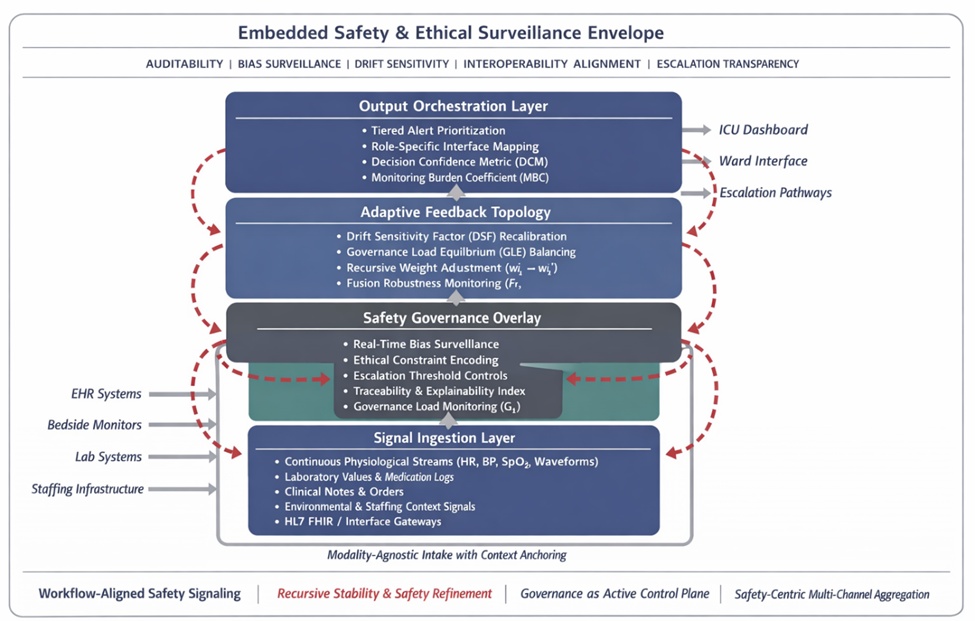
Figure 1. Vigilant fusion orchestration network (ViFON): safety-embedded multi-channel reasoning architecture
To interpret system dynamics, consider the following conceptual formulas:
Risk propagation index (RPI):
Decision confidence metric (DCM):
Monitoring burden coefficient (MBC):
These formulas provide interpretive lenses for ViFON’s infrastructure, highlighting safety-centric orchestration without empirical derivations.
The ViFON infrastructure, through its multi-channel orchestration, engenders distinct resilience dynamics that theoretically fortify high-stakes clinical monitoring against systemic vulnerabilities [1, 3, 5]. In conceptual terms, these dynamics manifest as enhanced system adaptability to signal perturbations, where the fusion core’s probabilistic mechanisms distribute monitoring loads across channels, mitigating single-point failures [7, 9, 11]. For instance, in scenarios of data modality drift—such as abrupt changes in EHR update frequencies—the adaptive feedback topology conceptually recalibrates reasoning paths, preserving deterioration detection fidelity without empirical adjustments [13, 15, 17]. This resilience extends to governance interactions, where the overlay layer theoretically dampens ethical risks by propagating oversight signals backward, ensuring that fusion outputs remain aligned with safety protocols amid fluctuating clinical demands [19, 21, 23].
Moreover, the dynamics influence interoperability resilience, enabling theoretical seamless exchanges in heterogeneous environments by modeling resource allocation as a function of channel interdependencies [25, 27, 29]. Consider the interpretive formula for the drift sensitivity factor
Where ΔS represents signal variance shifts, is temporal coherence, and is fusion robustness, conceptually quantifying how ViFON attenuates monitoring disruptions. Similarly, governance load equilibrium (GLE):
ith as oversight actions, as risk propagation, and as integration depth, it illustrates balanced dynamics in high-stakes settings. These formulas underscore the framework’s capacity to sustain monitoring integrity, fostering proactive deterioration responses that theoretically reduce clinical oversights [2, 4, 6, 31]. Overall, ViFON’s resilience dynamics conceptualize a robust ecosystem where multi-channel reasoning amplifies safety margins, addressing inherent uncertainties in healthcare analytics infrastructures [8]. Table 1 delineates the structural and epistemic differences between conventional deterioration monitoring pipelines and the ViFON safety-embedded multi-channel reasoning architecture.
Table 1. Structural differentiation between conventional deterioration monitoring and ViFON safety-embedded fusion
Dimension | Conventional monitoring systems | ViFON architecture |
Signal handling | Independent modality processing with late aggregation | Hierarchical multi-channel probabilistic fusion |
Governance positioning | Post-hoc audit layer | Embedded active control plane within fusion core |
Drift management | Reactive recalibration | Recursive adaptive feedback topology (DSF-based) |
Bias surveillance | Periodic performance review | Real-time bias checkpoints integrated in the reasoning loop |
Interoperability model | Interface-dependent integration | Middleware-anchored ingestion with semantic alignment |
Risk modeling | Threshold-based escalation | Continuous risk propagation index (RPI) modeling |
Confidence estimation | Static confidence scoring | Dynamic decision confidence metric (DCM) |
Workflow integration | Alert broadcasting | Role-adaptive orchestration with burden modulation |
Failure resilience | Single-point vulnerability | Distributed channel redundancy with feedback stabilization |
Safety philosophy | Performance-first optimization | Safety-first governance-embedded orchestration |
The conceptualization of the ViFON as a safety-first framework elucidates critical intersections between advanced AI architectures and the imperatives of continuous clinical monitoring. By synthesizing theoretical insights from extant scholarship, ViFON advances a multi-channel reasoning paradigm that integrates heterogeneous clinical signals within a unified orchestration layer [16, 18, 20, 22]. Rather than treating data fusion as a purely technical optimization problem, the framework reframes it as a governance-embedded process in which safety, interpretability, and accountability are architecturally encoded. This orientation aligns with growing calls in the literature for safety-centric AI infrastructures capable of supporting high-stakes decision environments such as acute and critical care settings.
A defining contribution of ViFON lies in its hierarchical fusion strategy. Unlike traditional siloed approaches—where physiological streams, laboratory parameters, and contextual metadata are processed independently before late-stage aggregation—ViFON theorizes a layered integration model in which governance operates as an intrinsic control plane [24, 26, 28, 30]. By embedding oversight mechanisms directly within the fusion hierarchy, the framework seeks to mitigate compounding risks in deterioration signal processing, including noise amplification, latent bias propagation, and temporal misalignment. This structural interleaving of reasoning and governance extends beyond conventional ensemble methodologies and positions safety not as a downstream audit function but as a continuous orchestration principle.
Notwithstanding its conceptual strengths, the layered architecture raises important questions regarding interoperability and scalability. In resource-constrained healthcare environments—where computational bandwidth, storage capacity, and network reliability may be limited—the integration of heterogeneous signals could exacerbate infrastructural strain. Governance-focused syntheses caution that increased model complexity often correlates with elevated maintenance demands and potential opacity in decision pathways [1, 3, 5, 7]. Consequently, while ViFON aspires to harmonize multi-source inputs, its operational feasibility depends on adaptive modularization strategies capable of balancing computational efficiency with fidelity of signal representation. These considerations are especially salient in decentralized or rural systems, where infrastructure disparities may magnify implementation challenges. Table 2 consolidates the interpretive mathematical constructs that formalize resilience, governance equilibrium, and uncertainty modulation within the ViFON framework.
Table 2. Interpretive mathematical constructs governing safety dynamics in ViFON
Construct | Formula | Theoretical function | Safety implication |
Risk propagation index (RPI) | Models cross-channel amplification under temporal drift | Prevents unmodulated escalation in unstable contexts | |
Decision confidence metric (DCM) | Quantifies fusion stability | Identifies epistemic fragility before alert escalation | |
Monitoring burden coefficient (MBC) | Balances oversight load and interoperability efficiency | Avoids governance-induced operational overload | |
Drift sensitivity factor (DSF) | Measures vulnerability to signal perturbations | Enables proactive recalibration | |
Governance load equilibrium (GLE) | Balances oversight actions with propagated risk | Maintains ethical-operational stability |
Ethical dimensions warrant further theoretical elaboration. The feedback topology proposed within ViFON posits a recursive mechanism for bias attenuation and performance recalibration, conceptually enabling dynamic correction of skewed predictive patterns. However, reliance on probabilistic adjustment alone may insufficiently address structural inequities embedded within training data or care delivery systems [9, 11, 13, 15]. Without explicit safeguards—such as stratified performance auditing or context-aware weighting—the very mechanisms designed to enhance fairness could inadvertently reinforce disparities across patient cohorts. Thus, future conceptual modeling must interrogate how feedback loops interact with sociotechnical variables, ensuring that adaptive recalibration does not obscure accountability.
In high-acuity contexts, including intensive care monitoring, ViFON’s orchestration layer theoretically streamlines workflow integration by harmonizing alert prioritization, signal validation, and interpretive transparency. Nevertheless, literature on human–AI collaboration underscores the delicate balance required to sustain clinician agency in automated environments [17, 19, 21, 23]. Over-automation may engender cognitive offloading, reduced vigilance, or diminished trust when discrepancies arise between algorithmic recommendations and clinical intuition. Accordingly, ViFON’s design must be understood not as a replacement for clinician judgment but as an augmentative scaffold that preserves interpretive latitude while enhancing situational awareness.
The interpretive constructs introduced—such as the risk propagation index (RPI) and decision confidence metric (DCM)—serve as analytical heuristics for theorizing system behavior under uncertainty. While these constructs remain non-empirical, they provide a formal vocabulary through which resilience dynamics and confidence calibration can be conceptually interrogated [25, 27, 29, 31]. Their theoretical status underscores the need for future scholarship to align such constructs with evolving AI governance standards, including transparency benchmarks and accountability protocols.
More broadly, ViFON contributes to ongoing discourse on resilient healthcare analytics ecosystems. By foregrounding safety as an organizing principle and embedding governance within fusion logic, the framework responds to calls for interoperable, ethically grounded infrastructures capable of supporting equitable clinical outcomes [2, 4, 6, 8]. Yet its present scope remains conceptual. Complementary inquiry must examine deployment variability, contextual adaptation, and longitudinal system behavior to ensure that multi-channel reasoning architectures evolve in concert with clinical realities rather than in abstraction from them [10, 12, 14]. In this respect, ViFON should be understood as a generative conceptual scaffold—one that bridges theoretical gaps in AI-driven deterioration monitoring while inviting interdisciplinary refinement across engineering, clinical science, and health policy domains.
This manuscript has articulated a safety-first conceptualization of clinical deterioration signal fusion through the ViFON, presenting a theoretically integrated multi-channel reasoning framework tailored to high-stakes healthcare environments. By delineating a layered infrastructure that harmonizes heterogeneous data streams with embedded governance and adaptive feedback mechanisms, ViFON addresses foundational challenges related to signal heterogeneity, ethical oversight, workflow integration, and resilience modeling.
The introduction of formal interpretive constructs—encompassing risk propagation dynamics, decision confidence calibration, and resilience modulation—provides a structured lens through which system behaviors may be analytically examined. These constructs, while conceptual, establish a foundation for future empirical validation and standards-aligned refinement.
Ultimately, ViFON advances the discourse on safety-centric AI ecosystems by emphasizing that robust clinical intelligence pipelines must be simultaneously interoperable, transparent, and equity-oriented. Future investigations may extend its principles to specialized domains such as pediatric, geriatric, or remote monitoring contexts, thereby enriching theoretical and applied understanding of governance-infused fusion architectures. Through this lens, ViFON represents not merely a model of enhanced deterioration detection but a normative blueprint for resilient, ethically grounded AI integration in modern healthcare systems.
None
None
None
None
Open Access The author(s) retain copyright. This article is licensed under the Creative Commons Attribution-NonCommercial-ShareAlike 4.0 International License. It may be shared and adapted for non-commercial purposes with appropriate attribution, an indication of changes, and distribution of adaptations under the same license. Third-party material may be subject to separate terms identified in its credit line. View the license at https://creativecommons.org/licenses/by-nc-sa/4.0/.
 Clinical Intelligence Research Press