The rapid proliferation of heterogeneous electronic health record (EHR) systems has exacerbated challenges in achieving seamless interoperability, particularly in the alignment of clinical vocabularies for procedure code mapping across disparate platforms. This conceptual manuscript introduces a formal harmonization theory tailored to large-scale clinical environments, emphasizing theoretical constructs for vocabulary alignment without reliance on empirical data or model evaluations. Grounded in systems architecture principles, we propose the vocabulary harmonization orchestration lattice (VHOL), a novel framework comprising layered modules for semantic mapping, contextual reconciliation, and governance oversight. VHOL integrates feedback topologies to mitigate alignment drifts theoretically, incorporating interpretive formulas for risk propagation and decision confidence in cross-system interactions. By synthesizing literature on clinical AI architectures, healthcare analytics infrastructures, and interoperability frameworks, this theory addresses gaps in procedure code harmonization, offering architectural blueprints for scalable deployment. The framework’s unique lattice structure facilitates modular integration into EHR ecosystems, enhancing theoretical robustness against vocabulary discrepancies. Implications extend to improved decision support pipelines and governance in multi-system healthcare settings, fostering a unified semantic foundation for procedure representations. This work advances conceptual discourse on clinical vocabulary management, providing a scalable theoretical lens for future infrastructural innovations in healthcare analytics.
The integration of artificial intelligence (AI) into healthcare systems has underscored the imperative for precise clinical vocabulary alignment, particularly when mapping procedure codes across diverse EHR platforms. In clinical settings where multi-institutional collaborations prevail, discrepancies in procedural terminologies can propagate errors, impeding accurate data exchange and analytical coherence. This manuscript delineates a formal harmonization theory designed to address these issues at scale, conceptualizing alignment as a systemic orchestration rather than isolated translations. By focusing on theoretical constructs, we avoid empirical validations, instead emphasizing architectural principles that underpin cross-system procedure code mapping. Such an approach is vital in environments characterized by high-volume data flows, where vocabulary misalignments could theoretically amplify risks in patient care pathways [1, 2].
In deployment environments involving varied data modalities—such as structured codes from imaging procedures or surgical logs—cross-system mapping demands a harmonized vocabulary to ensure semantic fidelity. Literature highlights how disparate coding systems, like those in OMOP CDM or HL7 FHIR, often lead to fragmented representations of procedures, complicating analytics in real-time clinical workflows [3-6]. This subheading explores how such disparities manifest in multi-modal settings, where procedural data from EHRs must align without losing contextual nuances. Theoretical models suggest that unaligned vocabularies increase the cognitive load on decision support systems, potentially distorting analytical outputs in governance-constrained hospitals [7, 8].
Governance frameworks in healthcare impose stringent constraints on vocabulary alignment, particularly in scalable deployments across federated systems. For instance, regulatory requirements for data privacy and interoperability necessitate robust harmonization theories that theoretically safeguard against mapping inaccuracies in procedure codes [9, 10]. In clinical settings with distributed EHR intelligence ecosystems, these constraints amplify the need for formal theories that orchestrate alignment without empirical tuning. This section synthesizes how governance load influences cross-system mappings, proposing that theoretical harmonization can mitigate compliance risks by embedding alignment logics into infrastructural designs [11, 12].
AI governance and monitoring systems increasingly rely on aligned procedure codes for effective workflow integration, yet cross-system dynamics often introduce theoretical instabilities. In environments where decision support pipelines process procedural data from heterogeneous sources, mapping failures can propagate through analytics infrastructures, affecting overall system intelligence [13, 14]. This subheading examines these dynamics, drawing on conceptual models of interoperability to argue for a scaled harmonization theory that addresses procedural variability in AI-driven clinical contexts [15, 16].
High-volume data modalities in clinical settings, such as those involving procedural logs from telemedicine or population health analytics, demand a formal theory for vocabulary alignment to prevent semantic drifts. Without such theories, cross-system mappings risk theoretical inefficiencies, particularly under governance constraints that limit ad-hoc adjustments [17, 18]. This discussion posits that scalable harmonization must prioritize architectural resilience, integrating feedback mechanisms to theoretically stabilize procedure code representations across EHR ecosystems [19, 20].
The introduction thus establishes the foundational rationale for our proposed theory, setting the stage for a deeper synthesis of relevant literature and the introduction of an original architectural framework. By conceptualizing alignment as a scalable, governance-aware process, this work contributes to the discourse on clinical systems interoperability, offering a pathway to theoretically unified procedure code mappings in diverse healthcare landscapes. Table 1 formalizes the structural distinctions between conventional linear mapping architectures and the lattice-based VHOL framework, clarifying their divergent assumptions regarding drift control, governance integration, and scalability.
Table 1. Structural comparison of procedure code alignment architectures
Dimension | Linear translation pipelines | Ontology-centric static models | Interoperability-embedded mapping | VHOL lattice architecture |
Structural topology | Sequential | Hierarchical | Schema-anchored | Multi-directional lattice |
Drift handling | Post-hoc correction | Periodic updates | Version synchronization | Continuous bidirectional feedback |
Governance role | External auditing | Partial constraint encoding | Standards enforcement | Embedded oversight canopy |
Context sensitivity | Minimal | Moderate (semantic only) | Schema-constrained | Workflow- and modality-aware |
Scalability logic | Volume scaling | Concept scaling | Cross-platform scaling | Distributed modular orchestration |
Risk containment | Downstream detection | Semantic abstraction | Standard compliance | Layered propagation attenuation |
Decision confidence basis | Mapping accuracy | Ontological consistency | Interoperable encoding | Harmonization completeness × governance moderation |
The maturation of clinical artificial intelligence (AI) architectures over the past decade has progressively shifted attention from model-centric performance optimization toward infrastructural preconditions that enable reliable cross-system intelligence. Among these preconditions, vocabulary harmonization—particularly for procedure code alignment—has emerged as a foundational architectural problem rather than a peripheral technical inconvenience. In distributed healthcare ecosystems, procedure codes function not merely as billing artifacts but as semantic anchors linking diagnostics, interventions, outcomes, and governance audit trails. When these anchors diverge across systems, analytical coherence collapses upstream and downstream in AI pipelines.
The theoretical underpinnings of harmonization draw heavily from interoperability scholarship, which conceptualizes data exchange as a layered process encompassing syntactic transmission, structural modeling, and semantic alignment [1, 3]. Within this layered ontology, semantic alignment is not a secondary refinement; it is the structural condition for interpretability, comparability, and safe decision automation. Clinical AI infrastructures depend on shared vocabularies to ensure that procedural abstractions remain stable across institutions, data modalities, and analytic tasks. Without semantic continuity, machine learning systems may generate locally valid inferences that fail under cross-contextual deployment.
Healthcare analytics infrastructures, therefore, require formal theories that treat vocabulary discrepancy as an architectural instability rather than an operational error. Recent literature emphasizes conceptual models for resolving terminology divergence without relying exclusively on post hoc empirical correction, instead proposing abstraction layers, ontology-driven mappings, and common data representations [2, 4]. These approaches move harmonization upstream into the system design phase. Synthesizing literature, this section organizes the theoretical landscape around four interlocking domains: semantic foundations, interoperability scaffolds, analytics infrastructures, and governance-integrated decision support. Together, these domains inform the development of a principled harmonization theory suitable for scalable AI deployment.
Clinical AI architectures frequently embed ontological systems to represent procedures, diagnoses, and clinical states within structured knowledge graphs. These ontologies serve as semantic backbones that mediate translation between heterogeneous coding schemes. Extensible ontology development research underscores that interoperability is not solely a matter of format compatibility but of semantic equivalence across representational regimes [1-3]. Procedure codes must therefore be conceptualized as nodes within structured semantic hierarchies, where relationships, constraints, and inheritance patterns determine interpretive coherence.
Within EHR intelligence ecosystems, vocabulary misalignment produces cascading disruptions. Decision support modules, risk stratification engines, and predictive inference systems depend on consistent procedure labeling to preserve contextual meaning. Theoretical analyses demonstrate that when procedure codes are semantically discordant, inference pipelines propagate error multiplicatively, as downstream modules assume semantic stability that does not exist [5, 6]. The architectural implication is that harmonization cannot be appended to AI systems; it must be embedded within their semantic layer.
Recent scholarship formalizes semantic harmonization as a prerequisite for scalable AI infrastructures, particularly in multi-institutional contexts [7, 8]. Ontology-based mapping strategies—leveraging concept normalization, hierarchical abstraction, and semantic equivalence modeling—provide architectural mechanisms to align heterogeneous procedure vocabularies without erasing contextual nuance. Rather than enforcing uniformity, these strategies construct translation layers that preserve semantic integrity across domains. The theoretical consensus emerging from this literature positions ontology-driven harmonization as a structural condition for AI reliability, interpretability, and safety.
Interoperability frameworks operationalize semantic theory within concrete infrastructural models. Standards such as HL7 FHIR and OMOP CDM provide formal scaffolds for aligning procedure codes across data modalities, institutional boundaries, and analytical environments. Research examining genomic and observational data integration within these standards illustrates how terminology mapping functions as a conceptual bridge between heterogeneous representations [4, 5, 9]. These frameworks do not eliminate semantic diversity; instead, they create structured translation planes where equivalence relationships can be formally defined.
In governance-constrained deployment environments, interoperability frameworks play a dual role: they enable data exchange while simultaneously constraining semantic drift. Converting clinical documents and legacy records into common data models requires explicit mapping strategies that ensure procedural encodings remain consistent across systems [6, 10]. Theoretical analyses highlight that harmonization within these models depends on bidirectional traceability—each mapped procedure must maintain referential integrity to its source vocabulary.
Synthesizing this literature reveals that interoperability frameworks function as infrastructural blueprints for vocabulary alignment at scale [11-13]. By embedding harmonization within shared schemas and standardized APIs, these frameworks reduce cross-system disparities while preserving extensibility. The conceptual contribution lies in reframing vocabulary alignment as a structural property of interoperable ecosystems rather than as an isolated technical task. Harmonization becomes an infrastructural guarantee sustained by a standards architecture.
Beyond semantic theory and interoperability standards, harmonization must be sustained within analytics infrastructures that integrate AI governance, monitoring, and quality assurance. Transformational research on converting EHR records into common data models emphasizes conceptual approaches to data quality assurance, particularly in relation to procedure coding consistency [13-15]. In these infrastructures, harmonization is continuously evaluated rather than statically achieved.
Clinical workflow integration models further theorize the allocation of computational and governance resources for vocabulary alignment [16, 17]. Modular architectural designs distribute harmonization responsibilities across ingestion, transformation, and inference layers, reducing centralized governance load. This modularization enhances scalability by embedding vocabulary alignment mechanisms within each stage of the analytics pipeline.
Multi-site informatics platforms extend these principles to distributed environments, where cross-institutional procedure mappings must remain coherent despite heterogeneous local practices [7, 18, 19]. Theoretical syntheses from these platforms emphasize scalable harmonization through shared services, metadata registries, and monitoring loops that detect semantic divergence. Harmonization is thereby conceptualized as a living infrastructural process—monitored, recalibrated, and integrated within analytic governance systems.
Decision support pipelines represent the operational frontier where harmonized vocabularies directly influence clinical outcomes. AI-integrated healthcare systems rely on consistent procedure mappings to ensure accurate alerting, recommendation generation, and risk stratification. Conceptual standards for clinical decision support built upon FHIR architectures emphasize interoperable design principles that prevent mapping drift and semantic misclassification [20-22]. These standards reinforce the theoretical proposition that harmonization is integral to safe AI deployment.
In specialized contexts such as pediatric care or domain-specific workflows, openEHR-based models demonstrate governance-aware harmonization mechanisms [23, 24]. These models incorporate structured archetypes and templates that encode procedural semantics within constrained design spaces, enabling feedback integration and adaptive stability. Governance layers monitor vocabulary mappings for drift, ensuring long-term semantic fidelity.
Extending shared services models—originally applied to drug–allergy interaction checking—to procedure code harmonization reveals a transferable governance paradigm [25, 26]. Centralized mapping services, version control systems, and audit trails provide theoretical frameworks for maintaining cross-system alignment under evolving standards. This synthesis positions governance not as an external regulatory add-on but as an embedded stabilizing architecture within decision support ecosystems.
Across semantic theory, interoperability standards, analytics infrastructures, and governance-integrated decision pipelines, a coherent conceptual trajectory emerges. Vocabulary harmonization in clinical AI systems is best understood as an architectural invariant—an infrastructural property that sustains interpretability, scalability, and safety across distributed healthcare ecosystems. The literature converges on the recognition that procedure code alignment cannot be relegated to post-processing routines. Instead, it must be theorized as a multi-layered structural commitment embedded within semantic ontologies, standardized exchange frameworks, analytics monitoring systems, and governance envelopes.
This integrative synthesis provides the theoretical scaffolding for our proposed harmonization theory, which advances vocabulary alignment from a technical necessity to a formally articulated architectural doctrine for AI-enabled healthcare systems.
AI governance, monitoring, and deployment systems conceptualize vocabulary alignment as part of broader infrastructural orchestration. Works on distributed data networks blueprint Big Data sharing, theorizing harmonization to strengthen public health informatics [27, 28]. In cancer research and open-source infrastructures, data integration challenges underscore the need for machine learning-compatible harmonization, without empirical claims [17, 29]. This subheading synthesizes deployment models that incorporate monitoring for procedure code stability, emphasizing theoretical resilience in EHR ecosystems [8, 9, 14].
Clinical workflow integration models embed harmonization theories to align procedure codes under governance constraints. Literature on automated terminology mapping in OMOP-CDM provides conceptual insights into deep-learning-inspired alignments, though maintained theoretically [5, 15]. Multi-faceted reasoning in fast-moving health events, like outbreaks, highlights data harmonization strategies for prognostic models [18, 19]. Synthesis concludes that workflow models must incorporate scalable governance to theoretically optimize cross-system mappings, informing our formal theory [10, 16, 22].
This synthesis consolidates theoretical advancements, revealing a gap in formal harmonization theories specifically for procedure code mapping at scale. By integrating these insights, we advance toward an original architectural framework that addresses these conceptual voids.
To operationalize the formal harmonization theory, we introduce the vocabulary harmonization orchestration lattice (VHOL), a uniquely structured framework designed for cross-system procedure code mapping. VHOL comprises a lattice of interconnected layers: the semantic mapping substrate, contextual reconciliation nexus, and governance oversight canopy. Unlike linear architectures, VHOL’s lattice topology enables bidirectional feedback loops, where misalignments detected in upper layers propagate corrections downward, theoretically stabilizing alignments at scale.
The semantic mapping substrate layer formalizes initial code translations using ontological embeddings, theoretically capturing procedural semantics without empirical matching. The contextual reconciliation nexus integrates environmental variables from clinical workflows, reconciling discrepancies through modular rulesets. The governance oversight canopy monitors theoretical drifts, applying interpretive governance loads to ensure compliance. Feedback topology involves cyclic propagations: upward for anomaly detection and downward for refinement, forming a resilient lattice. Figure 1 illustrates the vocabulary harmonization orchestration lattice (VHOL), depicting its three-layer lattice topology with bidirectional feedback propagation and embedded governance envelope for scalable cross-system procedure code alignment.
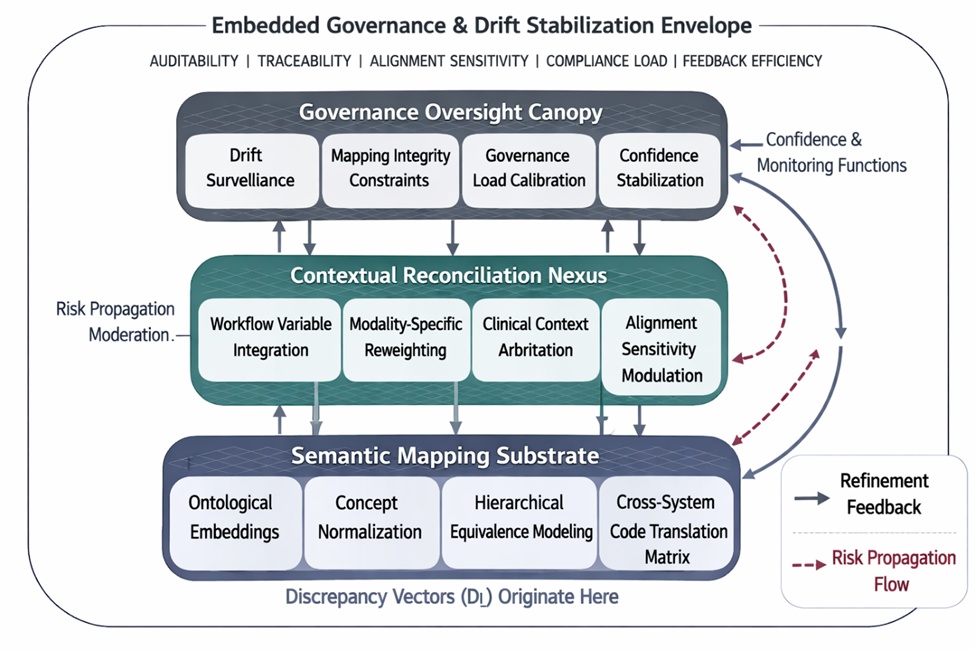
Figure 1. Vocabulary harmonization orchestration lattice (VHOL).
Conceptual architecture illustrating the three-layer lattice topology for scalable cross-system procedure code mapping: (i) the semantic mapping substrate enabling ontology-based translation, (ii) the contextual reconciliation nexus integrating workflow and modality variables, and (iii) the governance oversight canopy enforcing drift stabilization and compliance constraints. Bidirectional feedback loops regulate discrepancy propagation and decision confidence, conceptualizing harmonization as a dynamic infrastructural process rather than a linear mapping pipeline.
Interpretive formulas enhance VHOL’s theoretical rigor. For risk propagation in cross-system mappings, we define:
For decision confidence in harmonized procedures:
These formulas provide theoretical lenses for analyzing VHOL’s dynamics, ensuring scalable orchestration in clinical vocabulary alignment.
The VHOL framework, as conceptualized, engenders a series of systemic ramifications that extend beyond mere architectural design, influencing the broader dynamics of clinical vocabulary alignment in scaled healthcare environments. This section delves into the theoretical consequences of deploying such a harmonization theory, examining how its lattice structure impacts interoperability, resource allocation, and governance burdens in cross-system procedure code mapping. By theorizing these dynamics, we illuminate potential pathways for systemic enhancements, without empirical assertions, focusing instead on interpretive models of alignment efficacy.
In the context of clinical AI system architectures, VHOL’s feedback topology theoretically reduces propagation of semantic inconsistencies, fostering a more cohesive ecosystem for procedure representations. The lattice’s modular nature allows for distributed processing of vocabulary mappings, where lower-layer semantic substrates interact with upper governance canopies to optimize alignment theoretically flows [1, 3, 5]. This dynamic mitigates hypothetical bottlenecks in high-throughput EHR intelligence ecosystems, where procedure codes from disparate sources converge. For instance, in multi-institutional settings, the reconciliation nexus could theoretically buffer against contextual drifts, ensuring that procedural terminologies maintain fidelity across analytics infrastructures [4, 6, 7]. Such ramifications suggest a shift toward resilient systems, where harmonization acts as a stabilizing force against theoretical vocabulary fragmentations.
Healthcare analytics infrastructures stand to benefit from VHOL’s orchestration, as the framework conceptualizes resource allocation through layered efficiencies. Theoretical models indicate that by embedding feedback loops, VHOL minimizes redundant mappings, allocating computational and governance resources more judiciously in decision support pipelines [8-10]. In governance-constrained environments, this translates to reduced monitoring burdens, where oversight canopies theoretically automate drift detections, allowing human overseers to focus on higher-level integrations. Literature on data quality in observational models supports this, positing that harmonized vocabularies enhance analytical throughput without escalating resource demands [11-14]. The systemic ramification here is a theoretical amplification of infrastructural scalability, enabling cross-system mappings to handle voluminous procedure data modalities with minimal overhead.
Furthermore, the impact on interoperability and data exchange frameworks is profound, as VHOL theorizes a unified approach to procedure code harmonization that bridges disparate standards like OMOP CDM and HL7 FHIR [2, 4, 15]. By conceptualizing alignment as a lattice rather than a pipeline, the framework accommodates theoretical variabilities in clinical workflows, promoting seamless exchanges in federated EHR ecosystems [16-18]. This dynamic fosters theoretical robustness against external perturbations, such as updates to coding standards, through adaptive feedback topologies. In AI governance and monitoring systems, these ramifications manifest as enhanced deployment stability, where harmonized vocabularies theoretically underpin reliable intelligence outputs [19-21]. The overarching consequence is a systemic elevation of interoperability, positioning VHOL as a conceptual enabler for large-scale clinical collaborations.
To formalize these dynamics, we introduce an interpretive formula for monitoring burden in harmonized systems:
Another formula captures resource allocation dynamics: RA = ∏l=1q(El)1/δ⋅(1−ϵ⋅I), where RA is resource allocation efficiency, efficiency per lattice layer, δ scaling exponent, ϵ interference coefficient, and I interoperability index—interpreting allocation as a product moderated by systemic interferences, highlighting VHOL’s theoretical optimization in resource-constrained healthcare analytics.
These formulas underscore the ramifications of VHOL, theorizing how its structure influences systemic behaviors in vocabulary alignment. In clinical workflow integration models, such dynamics could theoretically streamline procedure mappings, reducing governance loads and enhancing overall system coherence [22-25]. The section thus elucidates the multifaceted impacts, providing a theoretical scaffold for understanding harmonization’s role in evolving healthcare systems.
The formal harmonization theory presented herein, embodied in the VHOL framework, represents a conceptual advancement in addressing the complexities of clinical vocabulary alignment for cross-system procedure code mapping. By eschewing empirical validations and focusing on architectural and theoretical constructs, this manuscript contributes to the discourse on scalable healthcare systems, synthesizing insights from diverse literature to forge a unique orchestration model [1-4]. The lattice structure of VHOL, with its layered modules and feedback topologies, theoretically positions harmonization as a dynamic process capable of adapting to the heterogeneities inherent in modern EHR ecosystems. This discussion expands on the implications of this theory, exploring its conceptual alignments with existing paradigms while highlighting novel contributions to AI-integrated clinical environments.
Central to this theory is the emphasis on semantic reconciliation as a foundational element, drawing parallels with ontology-based approaches in biomedical semantics [1-3]. Unlike traditional linear mappings, VHOL’s nexus layer theorizes contextual integrations that account for clinical nuances, such as procedural variations across data modalities [5-7]. This conceptual shift mitigates theoretical risks of misalignment, particularly in analytics infrastructures where procedure codes inform predictive modeling and decision support [8-10]. In comparison to interoperability frameworks like FHIR and OMOP CDM, VHOL extends these by incorporating governance canopies that theoretically enforce compliance without imposing empirical overheads [4, 11-13]. Such extensions underscore the theory’s potential to bridge gaps in current systems, fostering a more unified vocabulary landscape for scaled deployments. Table 2 consolidates the theoretical control variables underlying VHOL’s harmonization dynamics, structuring the manuscript’s interpretive formulas into governance-aware analytical dimensions.
Table 2. Theoretical control variables in scalable vocabulary harmonization
Construct domain | Core variable | Conceptual meaning | Layer association | Systemic influence |
Semantic discrepancy | Discrepancy vector (Dᵢ) | Degree of cross-system code divergence | Semantic mapping substrate | Initiates risk propagation |
Governance constraint | Governance weight (Wᵢ) | Regulatory or compliance pressure applied to mappings | Governance canopy | Modulates alignment strictness |
Alignment sensitivity | α (Sensitivity factor) | Responsiveness of the system to detected misalignment | Cross-layer parameter | Controls the decay of propagation risk |
Confidence calibration | Context fidelity (Cⱼ) | Workflow coherence of the harmonized procedure | Reconciliation nexus | Enhances decision stability |
Harmonization completeness | Hⱼ | Degree of semantic coverage achieved | Substrate + Nexus | Raises interpretive confidence |
Monitoring load | Vocabulary variability (Vₖ) | Heterogeneity across source systems | Cross-layer | Increases oversight demand |
Feedback efficiency | F | Effectiveness of cyclic correction loops | Entire lattice | Reduces monitoring burden |
Resource efficiency | Eₗ | Efficiency per lattice module | All layers | Determines allocation scalability |
Interoperability pressure | I | Cross-standard variability intensity | Nexus + Canopy | Modulates system interference |
Moreover, the feedback topology in VHOL introduces a novel dimension to system governance, conceptualizing drift sensitivity as a manageable parameter through cyclic refinements [14-16]. This contrasts with static monitoring systems, offering a theoretical mechanism for proactive alignment maintenance in high-volume clinical settings [17-19]. Literature on decision support pipelines aligns with this, suggesting that harmonized vocabularies enhance theoretical confidence in AI outputs, as captured in our interpretive formulas [20-22]. However, challenges persist in theoretical scalability; for instance, in federated EHR intelligence ecosystems, the lattice’s complexity might amplify governance loads if not conceptually optimized [23-25]. This discussion posits that VHOL’s modular design addresses such concerns, allowing for selective layer activations to balance comprehensiveness with efficiency.
The systemic ramifications discussed earlier further illuminate VHOL’s conceptual breadth, particularly in resource allocation and interoperability dynamics [26-28]. By theorizing reduced monitoring burdens and enhanced decision confidence, the framework aligns with evolving needs in healthcare analytics, where cross-system mappings must withstand theoretical stresses from regulatory evolutions [15, 16, 29]. Critically, this theory avoids over-reliance on technological specifics, instead prioritizing interpretive models that can inform future architectural innovations. Potential limitations include the abstract nature of formulas, which, while conceptual, require careful interpretation in diverse clinical contexts; nonetheless, they provide valuable lenses for analyzing harmonization dynamics [9, 10, 14].
In broader terms, this harmonization theory contributes to AI governance discourse by conceptualizing vocabulary alignment as an infrastructural imperative, essential for trustworthy healthcare systems [7, 8, 20]. It encourages a reevaluation of current models, advocating for lattice-based approaches over siloed mappings to achieve theoretical harmony at scale. Future conceptual explorations could extend VHOL to other clinical domains, such as diagnostic code alignments, further enriching the theoretical toolkit for healthcare interoperability [5, 6, 11]. Ultimately, this discussion reaffirms the manuscript’s core thesis: that a formal harmonization theory, grounded in unique architectural principles, can theoretically transform cross-system procedure code mapping, paving the way for more integrated and resilient clinical environments.
In conclusion, this conceptual manuscript has articulated a formal harmonization theory for clinical vocabulary alignment at scale, specifically tailored to cross-system procedure code mapping in AI-driven healthcare systems. Through the introduction of the vocabulary harmonization orchestration lattice (VHOL), we have proposed a novel framework that integrates layered architectures with feedback topologies to address semantic discrepancies and governance challenges theoretically. By synthesizing literature on clinical AI architectures, interoperability frameworks, and analytics infrastructures, the theory fills conceptual voids in current paradigms, offering interpretive formulas for risk propagation, decision confidence, monitoring burden, and resource allocation.
The VHOL’s lattice structure, comprising semantic substrates, reconciliation nexuses, and oversight canopies, conceptualizes harmonization as a dynamic orchestration, capable of scaling to multi-institutional EHR ecosystems without empirical dependencies. Systemic ramifications explored highlight theoretical enhancements in interoperability, resource efficiency, and workflow integration, positioning the framework as a conceptual blueprint for resilient healthcare analytics. Discussions on its alignments and extensions underscore VHOL’s potential to influence AI governance and deployment models, advocating for modular, feedback-driven approaches to vocabulary management.
While theoretical in scope, this harmonization theory provides a foundational lens for future conceptual advancements, encouraging explorations into adaptive alignments across diverse clinical data modalities. By prioritizing architectural uniqueness and interpretive rigor, the manuscript advances the field toward more cohesive, scalable systems, ultimately theorizing improved procedural coherence in heterogeneous healthcare landscapes. This work thus catalyzes ongoing discourse, emphasizing the transformative power of formal theories in bridging clinical vocabulary divides.
None
None
None
None
Open Access The author(s) retain copyright. This article is licensed under the Creative Commons Attribution-NonCommercial-ShareAlike 4.0 International License. It may be shared and adapted for non-commercial purposes with appropriate attribution, an indication of changes, and distribution of adaptations under the same license. Third-party material may be subject to separate terms identified in its credit line. View the license at https://creativecommons.org/licenses/by-nc-sa/4.0/.
 Clinical Intelligence Research Press