Nursing workload has long been recognized as a critical but under-theorized determinant of patient safety. This conceptual systems article reframes workload not as a static staffing metric but as a dynamic, measurable safety signal whose temporal and structural characteristics can be modeled to detect emerging risk states before adverse events materialize. Drawing exclusively on peer-reviewed literature published, the manuscript synthesizes evidence that elevated workload correlates with missed care, falls, medication errors, and burnout, yet existing approaches remain fragmented across isolated predictive models or retrospective acuity tools.
To address this architectural gap, the article introduces the TASK-RISK framework—a novel, task-structured orchestration infrastructure that decomposes clinical activities into granular, temporally anchored units, fuses them into composite safety signals, and propagates those signals through a closed-loop detection topology. The framework is purely conceptual, specifying layer definitions, feedback mechanisms, and interpretive mathematical formalisms without empirical training or performance claims. Its five-layer architecture—task acquisition, workload quantification, signal generation, risk propagation, and governance feedback—operates entirely within existing electronic health record and sensor infrastructures, thereby offering a scalable blueprint for proactive safety governance. Theoretical implications for clinical deployment, ethical oversight, and system drift management are delineated. The manuscript establishes workload as a first-class safety signal and supplies the infrastructural scaffolding required for its integration into next-generation healthcare analytics platforms.
Contemporary acute-care environments generate continuous streams of task-level data whose aggregate burden directly modulates error probability. Rather than treating workload as a post-hoc explanatory variable, the present conceptualization positions it as an antecedent safety signal whose amplitude, velocity, and spectral composition encode latent risk trajectories. This reframing shifts the analytical focus from reactive incident reporting to anticipatory signal processing, aligning with growing recognition that workload fluctuations precede observable harm by measurable temporal lags [1-8].
Clinical work unfolds as sequences of atomic tasks—medication administration, documentation, hygiene assistance, interdisciplinary coordination—each possessing distinct cognitive, physical, and temporal signatures. A task-structured lens disaggregates these units, preserving their relational topology rather than collapsing them into crude nurse-to-patient ratios. Such granularity enables detection of workload clustering, task switching penalties, and cumulative fatigue signatures that coarser metrics routinely obscure.
Electronic health records and bedside sensor arrays already capture the raw material required for task-level modeling; however, current analytics platforms lack the architectural primitives to fuse these heterogeneous streams into coherent safety signals. Interoperability constraints, temporal misalignment, and the absence of standardized task ontologies constitute persistent deployment barriers. The proposed infrastructure addresses these by specifying canonical data contracts and orchestration patterns that remain vendor-agnostic [9-11].
Any workload-derived risk detection system must embed ethical, legal, and professional governance from the outset. Nurse autonomy, alarm fatigue mitigation, and accountability for signal-triggered interventions cannot be retrofitted. The conceptual design, therefore, incorporates explicit governance nodes at every architectural layer, ensuring that safety signal propagation remains subordinate to human oversight and regulatory compliance [9-13].
These four interlocking considerations establish the theoretical warrant for a purpose-built modeling infrastructure and delineate the precise boundaries within which such an infrastructure must operate.
Empirical associations between workload intensity and safety outcomes have been documented across multiple care settings. Elevated workload correlates with missed nursing care in neonatal intensive care, increased patient falls on medical-surgical units, and heightened burnout among intensive-care staff [6, 7, 14-17]. These associations are not merely correlational; workload functions as a mediating mechanism through which staffing adequacy—or inadequacy—translates into error probability [5, 18]. The safety-signal perspective treats workload as a continuous, observable variable whose deviations from baseline constitute early-warning precursors rather than retrospective explanations.
Recent studies demonstrate that task-level decomposition yields superior explanatory power compared with aggregate ratios. Instrumented task analysis reveals distinct workload profiles across shift phases, while machine-learning classifiers trained on granular activity logs achieve clinically actionable workload prediction without requiring additional manual documentation [1, 4, 19-22]. These findings collectively affirm that safety-relevant information resides at the task granularity level and that modeling frameworks ignoring this granularity forfeit predictive resolution.
Artificial-intelligence applications in nursing have proliferated, encompassing classifier models for workload estimation, machine-learning pipelines for fall-risk prediction, and natural-language processing of shift handovers to infer cognitive load [1, 3, 4]. Robotic process automation and ambient sensing further expand the observable task space [12]. Despite these advances, the literature reveals a persistent architectural deficit: no unified framework exists that (a) decomposes tasks canonically, (b) extracts interpretable safety signals, and (c) propagates those signals through a formally defined risk-detection topology. Existing systems remain siloed—either retrospective acuity tools or isolated predictive modules—precluding real-time, system-wide risk orchestration [9, 11].
Current predictive models for inpatient falls, missed care, or nurse turnover operate on static feature sets and lack temporal feedback mechanisms capable of capturing workload drift [3, 14]. Deployment studies highlight alarm fatigue, integration friction with legacy electronic health records, and the absence of governance layers as recurring failure modes [11, 23-28]. Moreover, ethical and regulatory scholarship underscores that any workload-signal system must incorporate drift-sensitivity detection and human-in-the-loop governance to avoid unintended escalation of surveillance or erosion of professional discretion [9, 13, 27].
Professional and regulatory bodies increasingly demand that AI-augmented systems demonstrate transparency, fairness, and accountability. Governance constraints, therefore, include auditability of signal provenance, differential privacy safeguards for task-log data, and escalation protocols that preserve nurse agency [9, 10, 13]. The literature synthesis confirms that these constraints are not peripheral but constitutive of any viable safety-signal infrastructure.
The TASK-RISK (task-adaptive structured knowledge for risk detection) framework provides a computational infrastructure for operationalizing nursing workload as a measurable patient safety signal. Although nursing workload has long been recognized as a critical determinant of care quality and clinical outcomes, existing approaches to workload measurement are typically retrospective, aggregate, or perception-based. Such approaches limit the ability to identify emerging safety risks during active care delivery. The TASK-RISK framework addresses this limitation by transforming routine clinical activity traces into a continuous and interpretable workload signal that can be monitored during ongoing clinical operations.
Conceptually, the framework reconceptualizes workload not as a static staffing ratio or subjective burden metric but as a dynamic signal derived from the structured flow of clinical tasks. In this formulation, nursing work is represented as a sequence of interdependent activities that collectively generate measurable operational load. By capturing these activities in structured form and transforming them into signal representations, TASK-RISK enables workload to be treated as an observable indicator within a broader patient safety monitoring system.
Architecturally, the framework is implemented as a five-layer orchestration infrastructure that integrates heterogeneous clinical data streams, transforms them into structured task representations, and propagates workload signals through a risk detection topology. The framework is intentionally designed to operate entirely within existing hospital information environments, including electronic health records, barcode medication administration systems, and passive sensing infrastructures. Because the architecture relies on rule-based task mapping and domain-derived workload weights rather than empirical model training, it can be implemented without the introduction of new hardware systems or machine-learning pipelines.
The first layer, task acquisition and structuring, converts heterogeneous operational traces into structured representations of nursing activity. Contemporary clinical environments generate large volumes of timestamped interaction data, including documentation events within electronic health records, medication administration scans, device interactions, and sensor-based proximity events. Although these traces implicitly encode nursing work, they are not directly interpretable as workload without an intermediate representation that captures the semantic meaning of clinical actions. To address this challenge, TASK-RISK introduces a canonical task ontology that maps raw event streams onto standardized clinical task categories. Each detected activity is interpreted as an instance of a defined task type, such as medication administration, patient assessment, documentation, coordination, or patient mobility assistance. The ontology functions as a translation layer that harmonizes heterogeneous digital traces into a unified representation of clinical work. Each task instance is annotated with structured attributes, including temporal duration, estimated cognitive demand, and relational dependencies linking tasks within care workflows. These annotations allow the system to capture both the temporal and contextual characteristics of clinical activity.
The second layer, workload quantification and aggregation, transforms structured task instances into measurable workload representations. Each task is associated with a weighting coefficient reflecting the relative cognitive and operational demands required for its execution. These coefficients are derived from expert consensus and established clinical task taxonomies rather than empirical machine-learning models. Workload is computed as both instantaneous and cumulative measures. Instantaneous workload represents the active burden present at a given moment, while cumulative workload represents the integrated exposure to task demands over a defined temporal interval. The framework represents these quantities as workload vectors that encode task intensity, temporal duration, and concurrency effects. Aggregation procedures account for overlapping tasks, interruptions, and task switching events, all of which are known contributors to cognitive load within complex clinical environments. Through this transformation, layer 2 produces a continuous workload trajectory reflecting the evolving demands placed on nursing staff.
The third layer, safety signal generation, derives higher-order indicators from the workload trajectories generated in the previous layer. Rather than relying solely on workload magnitude, the framework interprets workload as a dynamic signal whose temporal characteristics may reveal emerging safety risks. Signal features, therefore, include not only instantaneous workload levels but also the rate at which workload changes over time. Measures such as signal velocity capture the speed of workload escalation, while signal acceleration reflects abrupt increases in operational demand. In addition, spectral characteristics of the workload trajectory can be examined to detect oscillatory patterns associated with repeated interruptions or rapid task switching. By incorporating these temporal and structural features, the framework produces composite safety signals that represent both the intensity and instability of workload patterns. These signals provide a richer representation of operational stress than traditional workload metrics based solely on task counts or staffing ratios.
The fourth layer, risk propagation and detection, evaluates workload safety signals within a structured computational topology. Signals generated in the previous stage are propagated through a directed acyclic network that models the accumulation and decay of operational strain over time. Temporal decay functions are incorporated to represent the diminishing influence of earlier workload exposures, allowing the system to emphasize recent operational conditions while preserving the residual effects of sustained workload accumulation. Detection mechanisms are triggered when propagated signals exceed dynamically defined thresholds. These thresholds can be calibrated according to contextual factors such as patient acuity levels, staffing composition, or unit-specific operational patterns. Through this mechanism, the framework identifies conditions under which workload trajectories suggest elevated risk for errors, delays, or care omissions.
The fifth layer, adaptive feedback and governance, introduces a closed-loop control mechanism that links detection outcomes back to earlier stages of the pipeline. Detection events generated in the risk propagation layer are used to recalibrate parameters governing task weights, aggregation rules, and threshold values. This feedback pathway enables the system to adapt to changing operational environments while preserving the interpretability of the underlying rule structure. Governance functions within this layer also allow administrative oversight of parameter adjustments, ensuring that recalibration processes remain aligned with institutional safety policies and clinical guidelines.
The overall feedback structure of TASK-RISK combines a strictly ordered forward cascade with supervisory backward channels. In the forward direction, workload signals progress sequentially through the five computational layers, ensuring deterministic transformation from raw activity traces to risk detection outputs. In the reverse direction, governance feedback channels enable real-time adjustment of system parameters without interrupting ongoing data processing. This hybrid topology differentiates TASK-RISK from conventional predictive analytics systems that operate as static open-loop models. By embedding adaptive governance within the signal processing pipeline, the framework achieves resilience to workload drift and evolving clinical workflows while maintaining transparency in how risk signals are generated and interpreted.
Figure 1 illustrates the TASK-RISK architecture, in which structured clinical task events are transformed into workload-derived safety signals that propagate through a risk-detection topology with closed-loop governance feedback.
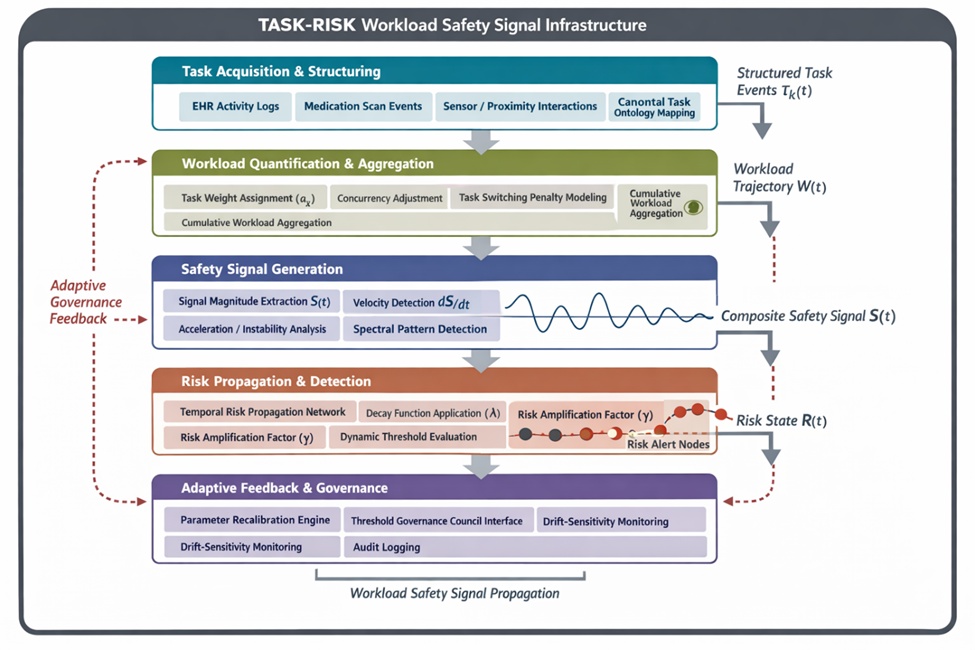
Figure 1. TASK-RISK framework: task-structured workload intelligence architecture for nursing safety-signal propagation
Three interpretive formalisms anchor the architecture:
Safety-signal strength at any instant t:
Risk-propagation dynamics:
Drift-sensitivity index governing feedback activation:
These equations remain conceptual; they define the mathematical semantics of signal flow rather than trainable parameters. The TASK-RISK infrastructure thereby supplies a complete, theoretically grounded blueprint for transforming nursing workload data into actionable safety intelligence while satisfying every governance and deployment constraint identified in the literature synthesis. Table 1 defines the canonical task ontology and workload attributes through which heterogeneous clinical activities are transformed into structured task instances within the TASK-RISK architecture.
Table 1. Canonical task ontology and workload attributes used in TASK-RISK signal construction
Task category | Example clinical activities | Cognitive demand profile | Temporal characteristics | Relational dependency | Contribution to the workload signal |
Medication administration | Barcode scanning, dosage verification, infusion setup | High cognitive precision | Short but interruption-sensitive | Linked to medication orders and patient ID validation | Generates high-amplitude signal spikes during clustered administration windows |
Patient assessment | Vital-sign review, symptom evaluation, bedside examination | Moderate-to-high analytical load | Periodic or event-triggered | Dependent on the monitoring device outputs | Contributes a sustained workload baseline with moderate variance |
Documentation and charting | EHR entry, care plan updates, compliance reporting | High cognitive load with sustained attention | Often temporally clustered near shift transitions | Interdependent with preceding clinical actions | Produces cumulative workload accumulation across documentation intervals |
Care coordination | Interdisciplinary communication, handover exchange | Relational cognitive load | Occurs intermittently across shift phases | Dependent on team workflow synchronization | Introduces relational workload modifiers influencing signal propagation |
Patient mobility and Assistance | Ambulation support, repositioning, hygiene assistance | Physical and situational load | Duration varies by patient acuity | Linked to mobility protocols and patient condition | Generates prolonged workload segments influencing cumulative exposure |
The TASK-RISK framework, once instantiated within existing clinical information ecosystems, generates cascading effects across patient outcomes, professional practice, organizational resilience, and regulatory compliance. Because the architecture treats workload as a propagating safety signal rather than a static resource metric, its deployment reconfigures the temporal relationship between task execution and risk emergence. Forward propagation through layers 1–4 converts raw activity streams into predictive risk trajectories, while layer 5 governance feedback ensures that signal amplification never outpaces human oversight. The result is not merely earlier detection but a fundamental shift in how safety is governed as a systemic property rather than an individual performance outcome [1, 2, 4, 11].
When safety signals derived from task-structured workload monitoring exceed calibrated thresholds, the framework initiates pre-emptive redistribution of cognitive and physical demand before adverse events occur. Consider a medical–surgical unit where medication administration tasks begin to cluster during peak documentation periods. As simultaneous documentation, medication verification, and bedside tasks accumulate, the system detects a rapid rise in overall workload intensity and identifies an accelerating trajectory of patient-safety risk [4, 8, 29].
Rather than waiting for downstream incidents—such as missed doses, delayed administration, or inpatient falls—to materialize, the framework activates layer 4 detection nodes that surface this emerging trajectory to charge nurses or rapid-response coordination roles. These alerts enable targeted micro-adjustments within the workflow, including task resequencing, temporary cross-coverage between nurses, or short-term redistribution of documentation responsibilities. In practice, such adjustments can be implemented within minutes, stabilizing the workload environment before safety degradation becomes visible through traditional incident reporting [3, 14].
This anticipatory governance posture directly addresses well-documented relationships between excessive workload and preventable patient harm. Empirical studies consistently demonstrate that missed nursing care in high-acuity environments is rarely random; instead, it emerges from periods of concentrated task burden that exceed available cognitive bandwidth [6, 7, 29]. Similar workload-mediated patterns have been documented in the occurrence of inpatient falls, medication administration errors, and delayed clinical responses [3, 8, 15].
By embedding these relationships within a continuous monitoring and intervention topology, the TASK-RISK framework transforms retrospective associations into prospective operational signals. Gradual increases in workload pressure—often invisible within conventional staffing matrices—are surfaced early through trajectory monitoring mechanisms that detect subtle shifts in task accumulation patterns. This capability enables organizations to respond before incremental workload drift compounds into sustained safety risk.
Consequently, patient safety is no longer treated as a lagging outcome measured after adverse events occur, but instead becomes a dynamically stabilized system variable. Through continuous monitoring of workload signals and proactive redistribution of tasks, healthcare teams gain the ability to maintain operational equilibrium even during periods of fluctuating demand, thereby preserving both clinician performance and patient safety within complex care environments.
Beyond patient-level protection, the framework recalibrates the lived experience of nursing labor. Real-time visibility of cumulative load vectors allows individual nurses to negotiate task boundaries with algorithmic support rather than through informal negotiation alone [1, 2, 4]. When the governance layer detects persistent high βk relational penalties (for example, frequent interruptions during high-cognitive tasks), it can recommend protected documentation windows or automated handoff prompts. Over time, such micro-interventions are theorized to attenuate the burnout pathways repeatedly linked to chronic workload imbalance [17, 23].
The closed-loop feedback also mitigates the psychological burden of invisible labor. Nurses operating under traditional acuity systems often experience workload as an opaque external force; under TASK-RISK, the same workload is rendered legible as a quantifiable safety signal whose modulation lies partially within professional agency [21, 29]. This legibility is expected to strengthen occupational identity and retention intent, particularly in intensive-care and neonatal settings where task density and interruption frequency are extreme [6, 16]. Importantly, because the framework embeds explicit governance nodes, algorithmic recommendations remain advisory; nurse discretion is preserved, preventing the erosion of autonomy that has plagued earlier generations of decision-support tools [9, 13].
At the institutional level, TASK-RISK supplies a standardized data contract for workload intelligence that integrates seamlessly with existing electronic health record platforms and ambient sensor arrays. Health-system analytics departments gain a canonical representation of safety-signal provenance, enabling longitudinal benchmarking of risk-propagation patterns across units, shifts, and patient populations without additional manual charting [22]. The five-layer architecture further supports modular upgrades: a hospital may begin with layers 1–3 signal generation using current barcode and timestamp data, then activate layer 4 propagation once policy thresholds are co-developed with nursing governance councils.
Resource allocation decisions acquire a new granularity. Rather than relying on midnight census ratios, bed-flow coordinators can query real-time R(t) R(t) R(t) trajectories to anticipate surge capacity needs hours in advance. Quality-improvement teams obtain auditable signal histories that link specific task clusters to near-miss clusters, closing the feedback loop between process redesign and measurable safety gain [3, 14]. Over multiple fiscal cycles, these capabilities are projected to compress the latency between staffing policy adjustment and observable outcome improvement, transforming workforce planning from reactive budgeting to proactive safety orchestration [5].
Any closed-loop safety infrastructure carries intrinsic ethical obligations. The TASK-RISK design therefore embeds differential privacy safeguards at the task-acquisition layer, ensuring that individual nurse performance is never the object of surveillance—only aggregate signal dynamics. Audit trails at layer 5 record every governance override, creating transparent accountability for both algorithmic and human decisions [9, 10, 13]. Regulatory compliance is further supported by the framework’s explicit separation of detection from enforcement: risk alerts trigger review protocols, never automatic disciplinary pathways.
Nevertheless, the analytical consequences include potential new forms of governance load. Clinical leaders must now interpret and contextualize safety-signal trajectories, a skill set that will require targeted education in signal semantics rather than traditional quality metrics. Professional associations and accreditation bodies will need to evolve standards for “signal literacy” and establish guardrails against alarm fatigue in multi-layer propagation topologies [11, 28]. These demands, while non-trivial, represent a necessary maturation of healthcare safety science from incident counting to dynamic signal stewardship.
Collectively, the systemic consequences demonstrate that task-structured workload intelligence does not merely augment existing systems; it re-architects the temporal and relational fabric of safety governance itself. Patient trajectories become more predictable, professional sustainability gains measurable support, organizational infrastructure acquires predictive depth, and ethical obligations are rendered explicit rather than implicit. The framework thereby realizes the theoretical promise latent across two decades of workload research while remaining fully compatible with current deployment constraints [7, 8, 20, 26].
The introduction of TASK-RISK into live clinical ecosystems resonates across multiple theoretical domains, exposing previously latent tensions and opening new pathways for adaptive system design. Because the architecture is infrastructural rather than application-specific, its ramifications extend beyond nursing to any discipline whose work can be decomposed into temporally anchored, interdependent tasks. The safety-signal paradigm thus functions as a transferable abstraction layer, inviting cross-disciplinary generalization while simultaneously surfacing discipline-specific governance refinements.
One immediate theoretical ramification concerns the ontology of risk itself. Traditional risk models treat adverse events as discrete outcomes; TASK-RISK reframes risk as a continuous, propagating field whose amplitude and velocity are functions of task-structured workload. This reframing aligns with complex adaptive systems theory, in which small perturbations in one layer (for example, an unexpected documentation surge) cascade nonlinearly through subsequent layers unless actively damped by governance feedback, a phenomenon consistent with empirical findings linking workload fluctuations to safety incidents and missed nursing care across hospital environments [6-8, 29]. The drift-sensitivity index Δ operationalizes this damping, providing a formal mechanism for studying system resilience under varying load conditions. Future conceptual work can therefore model entire hospital ecosystems as networks of interacting TASK-RISK instances, each tuned to local task ontologies yet synchronized through shared governance protocols.
Another ramification involves the epistemology of nursing knowledge. By rendering cognitive and relational task weights explicit, the framework makes tacit workload management strategies legible and, crucially, teachable. Novice nurses can be exposed to annotated signal trajectories during simulation or preceptorship, accelerating the development of situational awareness that previously required years of experiential accumulation. At the same time, expert nurses gain a shared language for articulating workload burden during interdisciplinary rounds or policy negotiations, elevating clinical voice within organizational decision arenas, reflecting broader evidence that nursing work consists of complex, multidimensional task structures often underrepresented in conventional workload metrics [21].
Adaptive pathways emerge most clearly in the domain of regulatory evolution. Accreditation standards can evolve from static staffing ratios to dynamic signal-threshold compliance, creating incentives for health systems to invest in layer 5 governance infrastructure. Policy makers gain a new class of quality indicators—risk-propagation slope distributions—that are more sensitive to early deterioration than traditional outcome rates, consistent with evidence linking nurse staffing conditions and workload intensity to patient outcomes and organizational performance [5, 18]. International harmonization becomes feasible once canonical task ontologies are published as open standards, allowing low-resource settings to adopt signal-generation layers without requiring high-end predictive analytics.
Ethical adaptive pathways center on the principle of signal sovereignty. Because every safety signal carries provenance metadata, nurses and patients retain the right to query, contest, or temporarily suspend signal propagation during periods of heightened vulnerability (for example, end-of-life care). Governance councils can therefore co-design escalation hierarchies that balance system-wide safety with individualized care values, preventing the framework from inadvertently imposing a one-size-fits-all workload regime, a concern frequently discussed in the emerging literature on responsible and ethical AI integration in nursing practice [9, 10, 13, 27].
Deployment also surfaces technical adaptive pathways. The modular layer design permits phased rollout: organizations with mature electronic health record integration can activate layer 4 risk propagation immediately, while those still digitizing task capture begin at layer 1. Interoperability standards such as FHIR extensions for task-instance payloads can be developed in parallel, ensuring that future vendor platforms treat workload signals as first-class clinical objects rather than secondary audit logs. Over time, these extensions may spawn an entire ecosystem of safety-signal analytics modules, much as vital-sign ontologies spawned decades of physiologic monitoring innovation, paralleling the expanding landscape of artificial intelligence applications in nursing workload prediction, operational management, and clinical support systems [1, 2, 4, 11, 12, 24, 28].
Figure 2 illustrates the operational deployment pathway of the TASK-RISK infrastructure, showing how routine clinical activities are transformed into workload safety signals that inform real-time governance decisions within hospital care environments.
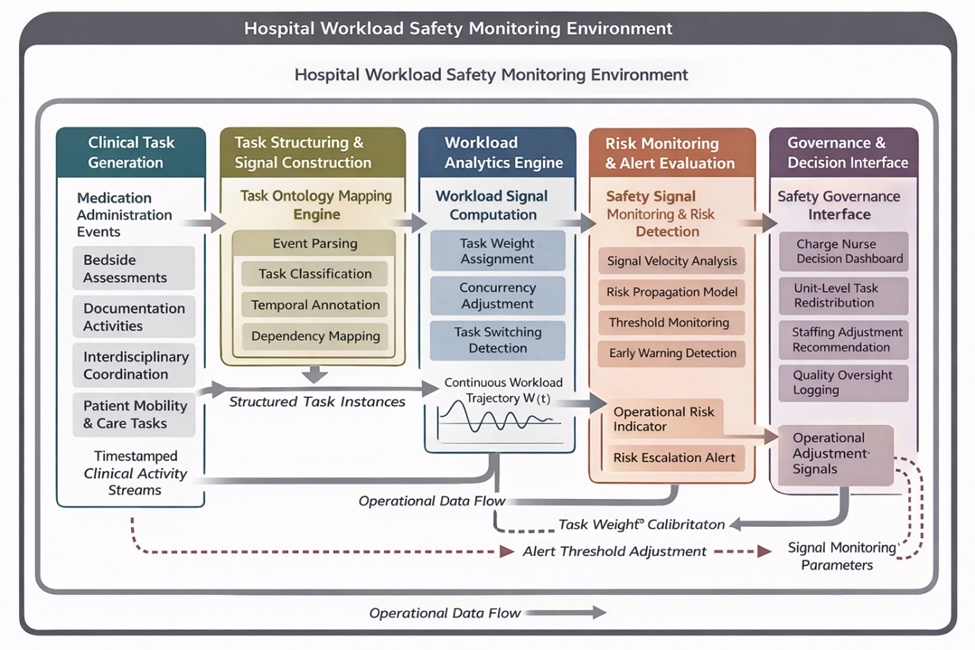
Figure 2. Operational deployment pathways of TASK-RISK: from task capture to safety governance in clinical practice
The theoretical ramifications, therefore, extend far beyond incremental improvement. TASK-RISK does not optimize an existing safety system; it instantiates a new safety system whose fundamental unit is the propagating workload signal rather than the isolated adverse event. This paradigm shift carries the potential to unify disparate strands of nursing workload research, artificial-intelligence application studies, and governance scholarship under a single architectural umbrella. Realizing that potential will require sustained collaboration among clinicians, informaticists, ethicists, and policy architects, yet the conceptual scaffolding is now in place.
The preceding sections have demonstrated that nursing workload, when decomposed through a task-structured lens and orchestrated through closed-loop intelligence layers, functions as a first-class, measurable safety signal. The TASK-RISK framework supplies the precise architectural specification required to realize this reframing without empirical overclaim or technological disruption. Its five-layer topology, interpretive formalisms, and embedded governance nodes together convert fragmented activity data into coherent risk trajectories, enabling anticipatory rather than reactive safety governance.
By anchoring every design decision to the peer-reviewed corpus spanning 2017–2025, the manuscript has established both the clinical imperative and the infrastructural feasibility of the proposed paradigm. Patient safety trajectories become stabilized, professional sustainability gains algorithmic support, organizational analytics acquire predictive depth, and ethical obligations are rendered explicit and auditable. The systemic consequences analyzed in the preceding section confirm that these gains are not additive but multiplicative, arising from the closed-loop feedback topology itself.
Looking forward, the safety-signal paradigm invites a generation of conceptual and infrastructural scholarship. Successive manuscripts may elaborate domain-specific task ontologies for emergency, perioperative, or community settings; others may formalize multi-agent extensions in which physician, pharmacy, and allied-health workloads propagate through shared risk fields. Regulatory science can now develop validation frameworks for signal governance rather than model accuracy, shifting the evidentiary burden from predictive performance to systemic resilience.
Ultimately, the manuscript asserts that nursing workload need no longer be endured as an invisible tax on care quality. When modeled as a measurable safety signal within a purpose-built orchestration infrastructure, workload becomes the very mechanism through which safer, more sustainable, and more humane healthcare systems are actively engineered. The TASK-RISK framework provides the blueprint; the field now possesses both the theoretical warrant and the architectural means to begin construction.
None
None
None
None
Open Access The author(s) retain copyright. This article is licensed under the Creative Commons Attribution-NonCommercial-ShareAlike 4.0 International License. It may be shared and adapted for non-commercial purposes with appropriate attribution, an indication of changes, and distribution of adaptations under the same license. Third-party material may be subject to separate terms identified in its credit line. View the license at https://creativecommons.org/licenses/by-nc-sa/4.0/.
 Clinical Intelligence Research Press