In the evolving landscape of artificial intelligence (AI) applications within healthcare, device-free methodologies offer promising avenues for non-invasive patient monitoring, particularly in post-treatment recovery phases. This conceptual manuscript introduces a novel architectural framework, termed the mobility outcome inference network (MOIN), designed to infer clinical outcomes from mobility-derived data without reliance on wearable or implanted devices. Drawing upon ambient sensing technologies and AI-driven analytics, MOIN integrates multi-modal data streams from environmental sensors to derive inferences on patient recovery trajectories. The architecture emphasizes interoperability with electronic health records (EHRs), decision support pipelines, and governance mechanisms to ensure ethical deployment and continuous monitoring. Key components include layered data orchestration for real-time mobility pattern analysis, feedback loops for adaptive inference refinement, and theoretical models for risk assessment in outcome predictions. By synthesizing recent literature on clinical AI systems, healthcare analytics infrastructures, and interoperability frameworks, this work delineates a blueprint for scalable, device-independent recovery assessment. Potential implications span enhanced clinical workflows, reduced patient burden, and improved equity in healthcare delivery, while addressing challenges such as data privacy and algorithmic fairness. This conceptual design prioritizes theoretical robustness over empirical validation, proposing interpretive formulas for decision confidence and governance load to guide future implementations in diverse clinical settings. Ultimately, MOIN aims to advance AI governance in mobility-based analytics, fostering resilient infrastructures for outcome inference in resource-constrained environments.
The integration of artificial intelligence into healthcare systems has revolutionized patient monitoring and outcome prediction. Yet, traditional approaches often depend on device-centric paradigms that impose burdens on patients and healthcare providers alike [1-14]. In contrast, device-free recovery assessment emerges as a transformative strategy, leveraging ambient environmental data to infer mobility-derived outcomes without intrusive hardware. This manuscript conceptualizes an architecture tailored for such inference, addressing the need for non-invasive, scalable solutions in post-acute care settings. By focusing on mobility as a proxy for recovery, the proposed system aligns with broader trends in AI-driven healthcare analytics, where data from everyday environments can inform clinical decisions [15].
Within postoperative and rehabilitative clinical settings, mobility patterns serve as critical indicators of recovery progress, often reflecting functional improvements or setbacks without requiring patient-worn sensors [16]. Device-free approaches capitalize on this by utilizing infrastructure-embedded sensors, such as those in smart hospital rooms or home environments, to capture gait, posture, and activity data passively. This modality reduces compliance issues associated with wearables, particularly for elderly or mobility-impaired populations, and integrates seamlessly with existing clinical workflows [17]. The architecture envisioned here prioritizes inference from these patterns to predict outcomes like readmission risks or functional independence, drawing on AI pipelines that process unstructured mobility data into actionable insights [18].
Mobility-derived data encompasses diverse modalities, including video-based motion capture, floor-embedded pressure sensors, and acoustic signals from ambient environments, all processed without direct patient interaction [19]. In device-free systems, these modalities must be harmonized through AI orchestration layers to enable robust outcome inference. Challenges arise from variability in data quality across settings—such as inpatient versus outpatient—necessitating architectural designs that incorporate standardization protocols akin to those in EHR intelligence ecosystems [20]. The conceptual framework proposed mitigates these by emphasizing modular data exchange frameworks, ensuring that mobility signals are transformed into standardized features for inference engines [21].
The deployment of device-free recovery systems spans varied environments, from acute care facilities to community-based rehabilitation, each imposing unique constraints on AI infrastructure [22]. In hospital settings, real-time mobility monitoring can inform immediate interventions, while home-based deployments extend recovery assessment beyond clinical walls, enhancing continuity of care [23]. Architectural considerations must account for these, incorporating edge computing for low-latency inference and cloud-based aggregation for longitudinal analysis. This ensures that mobility-derived outcomes are inferred with minimal disruption, aligning with interoperability standards that facilitate data flow across heterogeneous environments [24].
Ethical and regulatory governance forms a cornerstone of AI in healthcare, particularly for device-free systems where data privacy risks are amplified by ambient collection methods [25]. Constraints such as compliance with data protection regulations and bias mitigation in inference models demand integrated governance modules within the architecture [26]. By embedding monitoring systems that track algorithmic drift and decision transparency, the proposed design addresses these, fostering trust in mobility-derived predictions [27]. This section underscores the need for frameworks that balance innovation with accountability, setting the stage for a conceptual architecture that navigates these constraints effectively [28].
Theoretical underpinnings further illuminate how device-free methodologies can redefine recovery assessment, moving away from hardware dependency toward intelligent, environment-centric analytics [1]. As healthcare shifts toward personalized, predictive care, the absence of devices not only alleviates patient burden but also democratizes access to monitoring in underserved areas [2]. However, realizing this potential requires a cohesive architecture that orchestrates data, inference, and governance seamlessly [3].
Theoretical underpinnings further illuminate how device-free methodologies can redefine recovery assessment, moving away from hardware dependency toward intelligent, environment-centric analytics [1]. As healthcare shifts toward personalized, predictive care, the absence of devices not only alleviates patient burden but also democratizes access to monitoring in underserved areas [2]. However, realizing this potential requires a cohesive architecture that orchestrates data, inference, and governance seamlessly [3].
The theoretical foundations of device-free recovery assessment rest on advancements in AI system architectures for healthcare, where mobility data serves as a non-invasive biomarker for outcome inference [4]. This synthesis integrates insights from clinical AI pipelines, emphasizing conceptual models that abstract from empirical data to focus on infrastructural resilience and analytical dynamics [5]. By examining literature on EHR intelligence and decision support, this section constructs a narrative for mobility-derived systems, highlighting gaps that the proposed architecture addresses [6].
Recent developments in clinical AI architectures have shifted toward device-independent paradigms, where ambient data replaces traditional sensors for patient assessment [7]. Architectures like those outlined in governance frameworks prioritize layered designs that separate data acquisition from inference, enabling scalability in recovery contexts [8]. For mobility-derived outcomes, this evolution involves theoretical models that conceptualize data flows as probabilistic networks, inferring recovery states from environmental cues [9]. Literature underscores the need for architectures that handle multi-source inputs without device mediation, fostering resilience in variable clinical scenarios [10].
Analytics infrastructures in healthcare have advanced to accommodate unstructured data like mobility patterns, theoretical models proposing orchestration layers for real-time processing [11]. In device-free settings, these infrastructures must theoretically manage data heterogeneity, using conceptual pipelines to derive outcomes from ambient signals [12]. Synthesis reveals a focus on infrastructure robustness, with frameworks emphasizing feedback mechanisms to refine inferences over time [13]. This aligns with mobility assessment, where analytics must theoretically balance computational efficiency with interpretive accuracy [14].
Electronic health record (EHR) ecosystems increasingly function as the digital backbone of contemporary health systems, providing the structural substrate upon which heterogeneous data streams can be integrated, harmonized, and operationalized for clinical intelligence. Within this landscape, mobility-derived data—particularly from ambient or device-free sensing environments—represent an emerging class of health-relevant signals that demand careful architectural alignment. Theoretical syntheses advocate for intelligent querying, semantic fusion, and cross-domain reasoning techniques capable of transforming raw mobility indicators into clinically meaningful constructs within EHR infrastructures [15]. Rather than serving as passive repositories, modern EHR ecosystems are conceptualized as dynamic intelligence platforms capable of orchestrating multimodal data streams through layered interoperability frameworks.
In the context of recovery assessment, EHRs act as longitudinal repositories for inferred outcomes, aggregating indicators of functional progression over time. However, device-free mobility systems introduce novel integration challenges: these systems must enable passive data ingestion without disrupting established analytics layers, workflow engines, or regulatory controls embedded within EHR platforms [16]. Accordingly, ecosystem design must support non-intrusive ingestion pipelines that preserve data lineage, traceability, and auditability while maintaining compatibility with existing clinical intelligence modules.
Conceptual interoperability emerges as a central requirement in this integration paradigm. The literature emphasizes semantic alignment mechanisms capable of mapping mobility metrics—such as gait variability, spatial dispersion, or dwell-time distributions—to established clinical ontologies and outcome taxonomies [17]. Through formalized semantic mappings, ambient mobility signals can be elevated from environmental observations to structured clinical entities, ensuring their interpretability within diagnostic, prognostic, and therapeutic decision processes. This ontological mediation theoretically reduces fragmentation across healthcare data landscapes, enabling outcome inferences to directly inform EHR-driven decision-making pathways and mitigating the persistence of siloed information architectures [18].
Decision support pipelines represent the operational translation of integrated data ecosystems into actionable clinical intelligence. In mobility-based recovery contexts, theoretical models propose AI-enabled pipelines that ingest ambient mobility inferences and transform them into outcome predictions, alerts, and adaptive care recommendations [19]. These pipelines are not conceived as monolithic systems; rather, they are architected as modular assemblies, permitting the insertion or replacement of analytics components without destabilizing the broader infrastructure [20]. Such modularity is particularly critical in device-free contexts, where sensing technologies and modeling approaches may evolve independently of clinical governance frameworks.
Recent theoretical syntheses underscore the necessity of embedding uncertainty quantification within these pipelines. Because device-free inferences rely on probabilistic modeling of environmental signals, confidence intervals, posterior distributions, and reliability indices must accompany predicted outcomes [21]. By explicitly encoding epistemic and aleatoric uncertainty, decision support systems enable clinicians to calibrate trust appropriately, balancing algorithmic guidance with professional judgment. This approach is especially pertinent in recovery assessment, where patient mobility trajectories are dynamic and nonlinear.
Furthermore, adaptive pipeline architectures are theorized to respond to evolving patient mobility profiles [22]. Rather than static prediction engines, recovery-oriented pipelines must support temporal recalibration, incremental updating, and context-aware inference. Conceptual models thus advocate for feedback-enabled architectures in which longitudinal mobility trends inform successive inference cycles, ensuring that recovery assessments remain responsive to changing functional baselines and rehabilitation milestones.
The expansion of AI-driven, device-free monitoring systems into clinical environments necessitates robust governance and monitoring structures. Governance frameworks extend beyond algorithmic validation at deployment, encompassing continuous oversight mechanisms designed to detect and mitigate phenomena such as data drift, model degradation, and contextual bias [23]. In mobility monitoring environments, drift may arise from environmental reconfiguration, demographic shifts, or changes in patient behavior, each of which can alter the statistical properties of ambient signals.
The literature synthesizes models for governance load assessment, proposing conceptual metrics that evaluate the sustainability and resilience of mobility-monitoring infrastructures over time [24]. These metrics may encompass computational burden, monitoring frequency, model recalibration cycles, and oversight resource allocation. Such constructs allow organizations to anticipate governance strain and design architectures capable of scaling responsibly.
Ethical deployment constitutes a parallel dimension of governance. Device-free systems, by design, collect ambient signals without direct user instrumentation, raising heightened privacy and autonomy considerations. Theoretical frameworks, therefore, emphasize transparent data stewardship models, purpose limitation principles, and privacy-preserving inference techniques that align with established healthcare norms and regulatory expectations [25]. Governance architectures must integrate these safeguards natively, embedding ethical constraints into system design rather than treating them as post hoc compliance measures.
Monitoring systems are further conceptualized as feedback topologies that sustain inference reliability across deployment lifecycles [26]. These topologies enable bidirectional communication between operational analytics and supervisory oversight layers, ensuring that deviations, anomalies, or performance degradations propagate upward for evaluation and downward for corrective recalibration. In this sense, governance is not external to the inference architecture but structurally intertwined with it.
Interoperability frameworks are foundational to extending mobility-derived outcomes beyond institutional silos. Theoretical syntheses advocate for standardized exchange protocols tailored to device-free environments, ensuring that mobility indicators can traverse healthcare boundaries without semantic distortion or loss of contextual fidelity [27]. Such protocols must support both syntactic interoperability.
Conceptual models propose dynamic exchange mechanisms capable of preserving data integrity while enabling secure outcome sharing across distributed systems [28]. These mechanisms may incorporate metadata schemas that capture environmental context, inference confidence, and temporal resolution, thereby maintaining interpretability as data migrate between care settings. In recovery assessment scenarios, interoperability frameworks bridge ambient sensing infrastructures with clinical analytics platforms, enabling inferred outcomes to inform multidisciplinary care pathways and population-level intelligence [1].
Despite these advances, fragmentation persists in the utilization of mobility-derived data. Architectural gaps remain in the native embedding of interoperability within device-free sensing systems, often resulting in downstream integration burdens. The literature, therefore, identifies a pressing need for cohesive designs that integrate interoperability at inception rather than retrofitting it post-deployment [2].
Across domains—EHR ecosystems, decision support pipelines, governance frameworks, and interoperability standards—the literature converges on a shared imperative: the development of conceptual architectures that transcend device dependency while synthesizing theoretical components into coherent systems for mobility-derived outcome inference [3]. Yet, unified orchestration models that integrate these elements holistically remain underdeveloped. This gap motivates the articulation of an original architectural framework that operationalizes these theoretical insights within a structured, layered system [4]
At the core of device-free recovery assessment lies the proposed Mobility Outcome Inference Network (MOIN)—a novel, theoretically grounded architecture engineered to derive clinically actionable recovery outcomes from ambient mobility data. MOIN is conceptualized as a multi-layered orchestration system comprising four interdependent tiers:
Ambient Acquisition Layer
Inference Processing Layer
Outcome Integration Layer
Governance Feedback Layer
This stratified architecture ensures modular scalability and functional separation of concerns. Data propagate upward from raw environmental inputs to structured outcome inferences, while bidirectional feedback loops enable adaptive refinement across layers.
The ambient acquisition layer operationalizes the passive collection of mobility signals through embedded environmental sensors. Conceptually, this layer aggregates multimodal inputs—such as spatial trajectories, velocity gradients, dwell-time distributions, and interaction proximities—into standardized data streams suitable for higher-order processing. Crucially, acquisition mechanisms are designed to remain device-independent, eliminating reliance on patient-worn instrumentation and minimizing behavioral disruption.
To preserve interoperability, this layer incorporates metadata tagging, temporal synchronization, and context annotation. These processes ensure that mobility streams retain semantic clarity when interfaced with downstream inference engines or external health information systems.
The inference processing layer constitutes the analytic core of MOIN. Within this tier, AI-driven modules apply probabilistic modeling, signal abstraction, and feature transformation techniques to derive recovery-relevant indicators. Importantly, the architecture does not presuppose empirical training dependencies; rather, it is defined in terms of conceptual modeling capacities capable of accommodating varied algorithmic implementations.
Outputs may include functional mobility indices, trajectory stability measures, adaptive recovery slopes, and probabilistic risk stratifications. Embedded uncertainty quantification accompanies each inference, providing structured representations of confidence that inform subsequent decision layers.
The outcome integration layer bridges ambient inferences with EHR intelligence ecosystems. Through semantic mapping interfaces and standardized exchange schemas, derived mobility outcomes are translated into clinically interpretable constructs aligned with existing ontologies. This enables seamless incorporation into clinical dashboards, longitudinal recovery charts, and AI-enabled decision support pipelines.
Integration processes are designed to be non-disruptive, preserving existing EHR intelligence layers while augmenting them with enriched recovery indicators. By embedding mobility-derived inferences within established documentation and analytics workflows, this layer mitigates fragmentation and promotes cohesive health intelligence generation.
The governance feedback layer ensures systemic resilience and ethical sustainability. Continuous monitoring modules assess data integrity, inference stability, and contextual drift, generating alerts or recalibration triggers when anomalies are detected. Governance metrics evaluate system load, privacy adherence, and operational sustainability, enabling proactive oversight.
Bidirectional feedback mechanisms propagate adjustments downward—refining acquisition parameters or recalibrating inference models—and upward—informing supervisory dashboards and compliance frameworks. In this manner, governance is architecturally embedded rather than externally imposed, sustaining inference reliability across the deployment lifecycle. Figure 1 illustrates the governance-embedded, cyclic orchestration architecture of the Mobility Outcome Inference Network (MOIN), detailing layered mobility signal propagation, probabilistic inference transformation, semantic EHR integration, and recursive drift-regulated feedback dynamics.
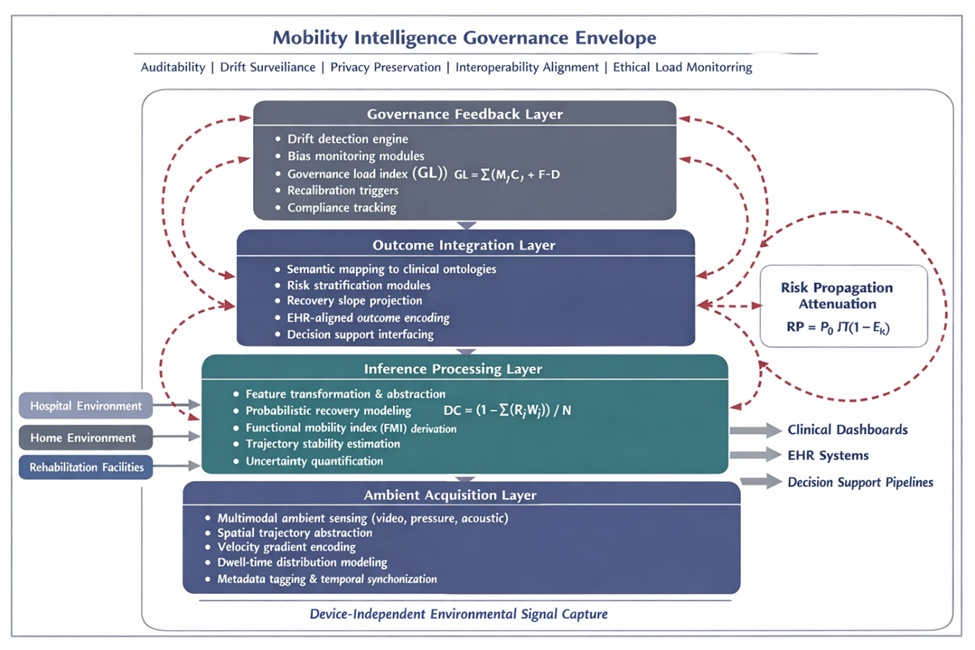
Figure 1. Architecture of the mobility outcome inference network (MOIN): governance-embedded orchestration for device-free recovery assessment
To formalize key dynamics, consider the following interpretive formulas:
Decision confidence (DC) in mobility-derived inferences:
Governance load (GL) for system monitoring:
Risk propagation (RP) across layers:
MOIN’s unique feedback topology employs cyclic governance loops, distinct from linear pipelines, to theoretically sustain long-term deployment viability in diverse recovery settings [5-7]. Table 1 delineates the functional stratification of MOIN, specifying how each architectural tier attenuates risk propagation through embedded governance-mediated efficiency factors.
Table 1. Layer-specific functional roles and risk attenuation mechanisms within the mobility outcome inference network (MOIN)
MOIN layer | Core function | Primary risk vector | Risk attenuation mechanism | Governance interaction | Theoretical efficiency factor (Eₖ) |
Ambient acquisition | Environmental mobility capture | Signal noise and environmental variability | Temporal synchronization and metadata tagging | Drift-sensitive recalibration triggers | E₁ |
Inference processing | Probabilistic modeling of recovery | Model bias, uncertainty misestimation | Embedded uncertainty quantification | Confidence recalibration thresholds | E₂ |
Outcome integration | Semantic EHR alignment | Ontological misalignment | Structured semantic mapping interfaces | Interoperability audit modules | E₃ |
Governance feedback | System monitoring and oversight | Drift accumulation, oversight fatigue | Continuous monitoring and governance load modeling | Bidirectional correction loops | E₄ |
The mobility outcome inference network (MOIN) introduces a conceptual paradigm shift in healthcare analytics, where device-free mobility data drives outcome predictions with implications for system-wide dynamics. This section explores the theoretical consequences of deploying such an architecture, focusing on how inference propagation influences clinical ecosystems, resource utilization, and patient-centered outcomes. By conceptualizing mobility as a core data modality, MOIN’s layered orchestration enables dynamic interactions that could theoretically amplify the sensitivity of recovery assessments to subtle environmental changes [8]. Figure 2 illustrates a real-world clinical workflow in which ambient environmental sensing captures patient mobility patterns, enabling electronic health systems to infer recovery deviations and support clinician-guided intervention without reliance on wearable monitoring devices.
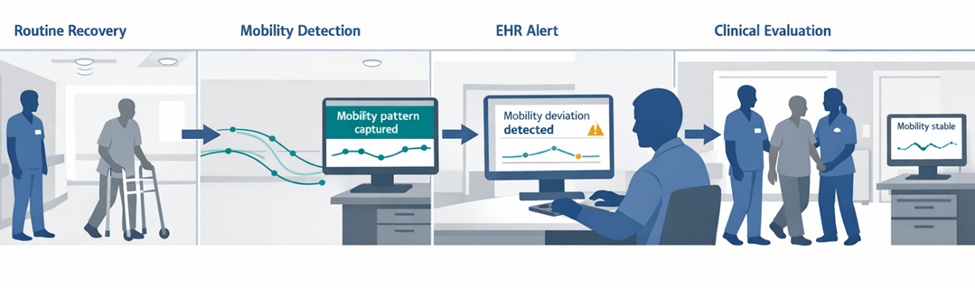
Figure 2. Clinical workflow integration of device-free mobility monitoring for recovery assessment.
The illustration depicts a real-world clinical workflow in which patient mobility during recovery is passively captured through an ambient sensing infrastructure. Environmental sensors detect movement patterns and transmit mobility data to the hospital information system, where analytics modules infer potential deviations in recovery trajectories. Clinicians review these signals through electronic health record dashboards and respond with targeted patient evaluation and care adjustments. The workflow demonstrates how device-free mobility inference can be embedded within routine clinical processes to support non-intrusive recovery monitoring and timely intervention.
In clinical settings, the propagation of mobility-derived inferences through MOIN’s layers could reshape workflow dynamics, theoretically streamlining decision-making by providing real-time, non-invasive insights into patient recovery [9]. For instance, the feedback topology allows for iterative refinement of outcomes, reducing the latency between mobility detection and clinical intervention. This dynamic fosters a more responsive ecosystem, where governance layers monitor propagation to prevent error amplification, such as over-reliance on noisy ambient data [10]. Consequences include enhanced interoperability with existing decision support pipelines, potentially minimizing disruptions in high-volume environments like rehabilitation centers [11]. Theoretically, this leads to a reduction in monitoring burden, as automated inference replaces manual assessments, allowing clinicians to allocate attention to complex cases [12].
MOIN’s architecture theoretically optimizes resource allocation by distributing computational loads across edge and cloud components, with dynamics that adapt to deployment scale [13]. In resource-constrained settings, such as rural healthcare facilities, the device-free approach minimizes hardware dependencies, propagating inferences efficiently through modular layers [14]. Analytical models suggest that governance feedback could dynamically adjust resource demands, interpreting load variations to prevent bottlenecks in data exchange frameworks [15]. For example, in large-scale implementations, the propagation of risk assessments ensures equitable distribution of analytical resources, mitigating disparities in recovery monitoring across diverse populations [16]. This impact extends to economic dynamics, where reduced device costs translate to broader accessibility, though theoretical trade-offs in energy consumption for ambient sensors must be considered [17].
The inference propagation within MOIN inherently amplifies governance challenges, as ambient data flows introduce privacy vulnerabilities that cascade through the system [18]. Theoretical dynamics highlight how feedback loops can detect and attenuate biases in mobility-derived outcomes, ensuring ethical alignment in multicultural clinical contexts [19]. Impacts include strengthened AI monitoring systems, where propagation metrics inform proactive adjustments to maintain fairness [20]. In terms of system resilience, these dynamics theoretically buffer against external disruptions, such as environmental noise, by recalibrating inference confidence in real-time [21]. Overall, the analytical lens reveals MOIN as a catalyst for evolving governance paradigms, where propagation not only drives outcomes but also enforces accountability in device-free ecosystems [22].
From a patient perspective, MOIN’s dynamics promote non-intrusive recovery tracking, theoretically enhancing engagement by eliminating device adherence barriers [23]. Propagation of mobility inferences could personalize outcomes, adapting to individual patterns for more accurate predictions of functional recovery [24]. However, analytical considerations warn of potential over-inference, where system dynamics might misinterpret normal variability as decline, impacting patient trust [25]. In aggregate, these consequences underscore a shift toward empowering patients through transparent, ambient analytics, with broader implications for equity in healthcare delivery [26].
The conceptualization of MOIN as a device-free architecture for mobility-derived outcome inference invites a multifaceted discussion on its place within the broader AI healthcare landscape. Central to this is the reconciliation of theoretical innovation with practical deployment hurdles, as evidenced by syntheses of clinical AI systems that emphasize architectural flexibility [1, 2]. While MOIN addresses gaps in non-invasive monitoring, its reliance on ambient data raises questions about generalizability across varied mobility contexts, such as acute versus chronic recovery phases [3]. Discussions in literature highlight similar tensions in healthcare analytics infrastructures, where device independence must balance against data fidelity [4, 5].
One pivotal aspect is the interplay between MOIN’s feedback topologies and existing EHR intelligence ecosystems. Theoretical integration promises seamless data flows, yet discussions reveal potential conflicts in standardization, particularly when mobility metrics diverge from structured EHR formats [6, 7]. This necessitates evolving interoperability frameworks that accommodate unstructured ambient inputs, fostering discussions on hybrid models that blend device-free with traditional systems [8, 9]. Furthermore, AI governance emerges as a critical discourse, with MOIN’s monitoring layers prompting debates on regulatory adaptation for ambient inference [10, 11]. Ethical discussions extend to algorithmic fairness, where mobility-derived biases—such as those influenced by environmental factors—could exacerbate disparities, echoing concerns in recent syntheses [12, 13].
Deployment discussions underscore MOIN’s potential in diverse environments, from hospital-based recovery to home monitoring, aligning with trends in decision support pipelines that prioritize adaptability [14, 15]. However, scalability discussions caution against unchecked propagation, advocating for theoretical safeguards to manage drift in long-term use [16, 17]. Table 2 synthesizes deployment-specific architectural adaptations, demonstrating how MOIN dynamically recalibrates inference, governance load, and interoperability mechanisms across heterogeneous recovery environments.
Table 2. Deployment environment constraints and adaptive architectural responses in device-free mobility inference
Deployment context | Environmental constraint | Architectural adaptation | Governance adjustment | Scalability implication |
Acute hospital care | High patient turnover | Edge-based low-latency inference | Increased drift monitoring frequency | High real-time computational load |
Rehabilitation centers | Structured activity patterns | Adaptive trajectory slope modeling | Moderate recalibration cycles | Stable longitudinal modeling |
Home-based recovery | Environmental heterogeneity | Cloud aggregation with contextual metadata enrichment | Privacy-sensitive governance thresholds | Distributed resource optimization |
Rural/low-resource settings | Limited infrastructure | Lightweight modular inference modules | Reduced governance load cycles | Energy-efficient scalability |
Clinical workflow integration further fuels debate, as MOIN could theoretically reduce provider burden but requires cultural shifts in trusting ambient-derived outcomes [18, 19]. Patient-centric discussions amplify this, positing that device-free approaches enhance autonomy, yet call for empirical future work to validate theoretical benefits [20, 21].
Broader societal discussions position MOIN within global health digitalization, where device-free systems could bridge access gaps in low-resource settings [22, 23]. Yet, economic discussions highlight investment needs for ambient infrastructure, balancing against cost savings from eliminated devices [24, 25]. Innovation discussions, drawing from continual learning models, suggest MOIN as a foundation for evolving AI, though autonomy concerns in medical intelligence warrant ongoing scrutiny [26, 27]. Ultimately, this discussion frames MOIN not as a panacea but as a conceptual catalyst, urging interdisciplinary collaboration to refine its dynamics for real-world impact [28].
In synthesizing the conceptual architecture of the mobility outcome inference network (MOIN), this manuscript delineates a forward-looking blueprint for device-free recovery assessment through mobility-derived outcome inference. By orchestrating ambient data into layered inferences with embedded governance, MOIN theoretically advances healthcare analytics beyond device dependency, addressing key challenges in clinical AI systems and interoperability. The dynamics of inference propagation, as analyzed, reveal profound impacts on workflows, resources, and ethics, positioning MOIN as a resilient infrastructure for equitable recovery monitoring.
Future directions call for theoretical extensions, such as incorporating advanced probabilistic models to enhance drift sensitivity, and collaborative efforts to align with evolving governance standards. While limitations persist in assuming ideal ambient environments, MOIN’s unique topology offers a scalable foundation, inspiring adaptations in diverse clinical domains. This work contributes to the discourse on AI-driven healthcare, advocating for architectures that prioritize patient-centric, non-invasive intelligence.
In conclusion, MOIN exemplifies the potential of conceptual designs to transform recovery assessment, fostering infrastructures that infer outcomes with minimal intrusion while upholding robustness and fairness. As AI permeates healthcare, such frameworks will be instrumental in realizing sustainable, inclusive analytics ecosystems.
None
None
None
None
Open Access The author(s) retain copyright. This article is licensed under the Creative Commons Attribution-NonCommercial-ShareAlike 4.0 International License. It may be shared and adapted for non-commercial purposes with appropriate attribution, an indication of changes, and distribution of adaptations under the same license. Third-party material may be subject to separate terms identified in its credit line. View the license at https://creativecommons.org/licenses/by-nc-sa/4.0/.
 Clinical Intelligence Research Press