The integration of retrieval-augmented generation (RAG) into healthcare systems represents a transformative approach to enhancing the reliability, interpretability, and safety of artificial intelligence (AI)-driven clinical analytics. By combining large language models (LLMs) with external knowledge retrieval mechanisms, RAG mitigates hallucinations inherent in standalone generative models, ensuring outputs are grounded in verifiable evidence from electronic health records (EHRs), clinical guidelines, and peer-reviewed literature. This narrative review synthesizes recent advancements in RAG applications for healthcare, focusing on evidence-grounded strategies, tailored evaluation metrics, and robust safety controls to facilitate trustworthy deployment in high-stakes medical environments. Evidence grounded in RAG frameworks involves dynamic retrieval of contextually relevant information to inform generative responses, thereby improving factual accuracy in tasks such as clinical summarization, decision support, and patient education. Studies demonstrate that RAG-enhanced LLMs outperform traditional models in extracting key clinical insights from EHRs, with applications spanning orthopedic patient education, neurosurgical consultations, and precision oncology treatment matching. For instance, integrating vector databases with LLMs enables real-time querying of molecular data to align therapeutic recommendations with patient-specific profiles, reducing errors in evidence-based practice. However, the efficacy of grounding depends on the quality of retrieved sources, necessitating hybrid retrieval techniques that balance semantic similarity and domain-specific relevance. Evaluation metrics for RAG in healthcare extend beyond conventional natural language processing benchmarks to incorporate clinical validity, coherence with medical knowledge, and user-centric outcomes. Metrics such as faithfulness scores, which assess alignment between generated content and retrieved evidence, have been adapted for biomedical contexts, revealing improvements in accuracy for tasks like fitness assessments and diabetes education. Safety controls are paramount, encompassing bias mitigation through multi-agent conversational frameworks, privacy-preserving retrieval in federated systems, and hallucination detection via uncertainty quantification. Regulatory perspectives emphasize the need for standardized safety benchmarks to prevent misinformation in patient-facing tools. This review highlights systems-level insights, including closed-loop architectures where RAG facilitates iterative feedback between data ingestion, inference, and clinical intervention. Challenges in scalability, such as computational overhead in resource-constrained settings, are addressed through optimized retrieval pipelines. We propose an original interpretive framework for RAG deployment, emphasizing interoperability with existing healthcare infrastructures to enhance analytics workflows. Ultimately, RAG holds promise for democratizing AI in healthcare, provided rigorous evaluation and safety protocols are embedded from design to implementation, paving the way for equitable, evidence-driven clinical intelligence.
The advent of artificial intelligence in healthcare has progressed from rudimentary rule-based expert systems to sophisticated generative models capable of synthesizing complex clinical narratives. Early AI applications, such as decision trees for diagnostic triage, laid the groundwork for data-driven insights but were limited by their inability to handle the unstructured data prevalent in medical records. The shift toward machine learning paradigms, particularly deep learning, enabled the processing of multimodal data, including text, images, and genomics, fostering advancements in predictive analytics for disease progression and treatment optimization. However, standalone generative models like GPT variants often suffer from factual inaccuracies or hallucinations, which pose significant risks in clinical settings where precision is non-negotiable.
Retrieval-augmented generation emerges as a hybrid solution, augmenting generative capabilities with retrieval mechanisms to anchor outputs in external knowledge bases. This approach not only enhances the factual grounding of AI responses but also aligns them with evolving medical evidence, crucial for dynamic healthcare environments [1, 2]. Comparative analyses reveal that RAG-integrated systems reduce error rates in clinical query resolution by up to 30% compared to non-augmented LLMs, as evidenced in studies on biomedical data processing [3-7]. From a systems perspective, this evolution underscores the need for interoperable AI infrastructures that seamlessly integrate retrieval components with existing EHR systems, promoting a holistic analytics ecosystem.
Interpretive discussions across studies highlight how RAG addresses the limitations of purely generative AI by incorporating real-time evidence retrieval, thereby fostering trust among clinicians who demand transparency in decision-making processes [4, 6]. In resource-limited settings, such as low- and middle-income countries, RAG’s efficiency in leveraging pre-indexed knowledge reduces computational demands, enabling broader accessibility to AI-driven healthcare analytics. This systems-level insight emphasizes the role of RAG in bridging the gap between AI innovation and practical clinical utility, ensuring that advancements contribute to equitable health outcomes.
The transition to RAG also invites scrutiny of ethical implications, including data provenance and bias propagation from retrieved sources [8-11]. By synthesizing these elements, the introduction sets the stage for understanding RAG as a pivotal technology in reshaping healthcare systems, where evidence-based generation is paramount for patient safety and operational efficacy [12-22].
Ungrounded generative AI models in healthcare frequently generate plausible but erroneous content, exacerbating risks in diagnostic and therapeutic recommendations. Hallucinations, where models fabricate details not supported by input data, have been documented in up to 20% of responses in biomedical tasks, undermining clinician confidence [8]. This challenge is compounded by the opacity of black-box models, making it difficult to trace reasoning paths in critical analytics workflows [10, 13]. Systems-level analysis reveals that without grounding, AI outputs can perpetuate outdated medical knowledge, particularly in rapidly evolving fields like oncology and infectious diseases [14, 23].
RAG mitigates these issues by enforcing evidence retrieval prior to generation, ensuring outputs are verifiable against authoritative sources such as clinical trials databases and guidelines [16, 24]. Evaluations in controlled studies show that RAG reduces hallucination rates by integrating contextual snippets, as seen in applications for EHR summarization and patient inquiry handling [25, 26]. Comparatively, non-RAG models exhibit higher variability in accuracy across diverse datasets, highlighting RAG’s robustness in heterogeneous healthcare data environments [27, 28].
From an interpretive standpoint, the challenge extends to integration with legacy systems, where unstructured data silos hinder effective retrieval [17, 18]. RAG frameworks offer a pathway to standardize data ingestion, facilitating closed-loop analytics that adapt to new evidence [20, 29]. This perspective underscores the necessity for hybrid AI architectures that prioritize safety, transforming potential vulnerabilities into strengths for clinical decision support.
Moreover, cultural and workflow barriers in healthcare adoption amplify these challenges, as clinicians require assurances of reliability before integrating AI tools [15, 19]. By addressing ungrounded generation through RAG, healthcare systems can evolve toward more resilient analytics platforms, emphasizing patient-centered outcomes [21, 22].
Retrieval-augmented generation builds on information retrieval theories, merging vector embeddings for semantic search with generative decoding to produce contextually enriched outputs. Rooted in dense retrieval paradigms like DPR (dense passage retriever), RAG employs techniques such as FAISS indexing to efficiently query vast knowledge corpora [1, 3]. In healthcare, this foundation enables the fusion of domain-specific ontologies with LLMs, enhancing the relevance of retrieved evidence for tasks like molecular treatment matching [4, 27].
Comparative studies illustrate how RAG outperforms retrieval-free models in faithfulness to source material, with metrics showing improved coherence in clinical narratives [6, 7]. Interpretively, this theoretical base supports a systems view where retrieval acts as a safeguard, dynamically updating model knowledge without retraining [9, 11]. Such adaptability is vital in healthcare analytics, where evidence evolves rapidly, ensuring AI systems remain aligned with current standards [12, 13].
The integration of hybrid retrieval—combining keyword and semantic methods—further strengthens foundations, as evidenced in applications for mental health support and diabetes education [10, 18]. This lens reveals RAG’s potential to democratize access to specialized knowledge, reducing disparities in healthcare delivery [19, 24].
At a deeper level, RAG’s theoretical underpinnings draw from cognitive science, mimicking human memory recall to ground generation, thereby fostering human-AI symbiosis in clinical settings [2, 5]. This interpretive structuring positions RAG as a cornerstone for future AI infrastructures in healthcare.
RAG presents opportunities to revolutionize healthcare analytics by enabling evidence-based insights across the care continuum. In predictive modeling, RAG augments forecasts with retrieved historical cases, improving accuracy in risk stratification [8, 14]. Systems-level opportunities include seamless integration with federated learning environments, preserving data privacy while enhancing collective intelligence [16, 23].
Interpretive analyses suggest RAG can facilitate personalized medicine through dynamic querying of genomic databases, as demonstrated in oncology workflows [27, 28]. Comparatively, RAG-enabled systems show superior performance in multi-modal data fusion, bridging gaps in traditional analytics pipelines [17, 25].
From a governance perspective, RAG supports auditability by logging retrieval paths, essential for regulatory compliance in AI deployment [11, 12]. This opens avenues for scalable infrastructure, where RAG acts as a middleware layer in hospital information systems [20, 26].
Ultimately, these opportunities converge on creating resilient analytics ecosystems, where RAG drives innovation in evidence-grounded healthcare delivery [15, 29].
This review synthesizes RAG’s role in healthcare through the lenses of evidence grounding, evaluation metrics, and safety controls, drawing on diverse applications. Upcoming sections explore landscapes, frameworks, and architectures, providing an original systems perspective [1, 3, 4]. By integrating cross-study insights, we aim to guide future implementations toward safe, effective AI in clinical analytics [6, 9, 10].
The emergence of retrieval-augmented generation in healthcare traces back to early experiments in natural language processing, evolving from basic keyword retrieval to sophisticated semantic integration with LLMs around 2020. Initial adoption focused on augmenting chatbots for patient queries, where RAG reduced inaccuracies by pulling from structured databases [1, 2]. Trends indicate a surge in applications post-2022, driven by advancements in vector databases, with over 50% of recent studies targeting EHR integration [3, 4]. Comparatively, early RAG implementations were limited to static knowledge bases, whereas current trends emphasize real-time retrieval for dynamic clinical environments [5, 6].
Synthesis of literature reveals accelerating adoption in specialized fields like orthopedics and neurosurgery, where RAG enhances educational tools by grounding responses in evidence [7, 8]. Interpretively, this development reflects a shift toward systems that prioritize factual integrity, addressing gaps in traditional AI that overlooked contextual retrieval [9, 10]. From a healthcare infrastructure viewpoint, adoption trends underscore the need for scalable RAG pipelines to handle increasing data volumes in analytics workflows.
Cross-study analysis highlights regional variations, with higher adoption in Asia for telemedicine applications, contrasting slower integration in resource-constrained African settings [19, 21]. This disparity invites systems-level strategies to standardize RAG deployment, ensuring equitable access to augmented intelligence [11, 12].
Recent trends also show convergence with multi-agent systems, where RAG facilitates collaborative decision-making, evolving from isolated tools to interconnected analytics platforms [13, 22].
RAG architectures in healthcare typically comprise a retriever, generator, and knowledge base, with variations incorporating hybrid search mechanisms for optimized performance. Core components include dense vector embeddings for semantic matching, often using BioBERT adaptations for medical text [14, 15]. Architectural variations range from simple prompt augmentation to advanced reranking modules that refine retrieved evidence before generation [16, 17]. Comparative evaluations demonstrate that multi-hop retrieval variants excel in complex queries, such as those involving chained clinical reasoning [18, 23].
Literature synthesis points to the integration of privacy-preserving components, like differential privacy in retrievers, to comply with healthcare regulations [9, 24]. Interpretively, these variations enable tailored systems for diverse analytics needs, from real-time decision support to batch processing of research data [25, 26]. Systems-level insights emphasize modularity, allowing seamless upgrades to components without disrupting clinical workflows.
Cross-study discussions reveal trade-offs between retrieval latency and accuracy, with edge-computing variations mitigating delays in ambulatory care [27, 28]. This architectural flexibility positions RAG as a foundational element in evolving healthcare AI infrastructures.
RAG has revolutionized clinical data summarization by enabling concise, evidence-grounded extracts from voluminous EHRs. Applications include automated key information extraction for hypertension management and oncology protocols, where RAG retrieves pertinent guidelines to inform summaries [4, 27]. Comparative studies show RAG outperforming extractive methods in coherence, particularly for narrative-heavy records [1, 3]. Interpretive analysis highlights how this application streamlines analytics, reducing clinician cognitive load in high-throughput environments [5, 7].
Synthesis across domains illustrates RAG’s versatility in handling multimodal data, such as combining text with imaging metadata for radiological consents [26, 28]. Systems-level benefits include enhanced interoperability, where summarized data feeds into downstream predictive models [8, 13].
Further, in mental health support, RAG augments summarization with sentiment analysis, providing holistic patient overviews [10, 19]. This cross-integration fosters comprehensive healthcare systems that leverage summarization for proactive interventions.
In patient education, RAG-powered chatbots deliver personalized, grounded information on conditions like diabetes and orthopedics, drawing from verified sources to ensure accuracy [6, 18]. Decision support tools utilize RAG for scenario-based recommendations, such as fitness assessments, enhancing user engagement [1, 7]. Comparative evaluations indicate higher satisfaction rates with RAG tools due to transparent evidence citation [8, 12].
Literature synthesis reveals applications in informed consent processes, where RAG generates tailored explanations, improving comprehension in pre-procedure settings [26, 29]. Interpretively, this role empowers patients within healthcare systems, promoting shared decision-making [21, 22].
Systems-level insights focus on integration with telehealth platforms, where RAG supports real-time queries, bridging gaps in access [10, 24]. This positions RAG as a catalyst for patient-centered analytics infrastructures.
RAG integration with EHRs facilitates dynamic querying, enabling predictive analytics grounded in patient history [9, 23]. Biomedical databases like PubChem are leveraged for drug-related insights, with RAG ensuring up-to-date evidence [20, 28]. Comparative analyses show improved precision in record linkage tasks [4, 14].
Synthesis emphasizes federated retrieval to maintain data sovereignty across institutions [16, 25]. Interpretively, this integration transforms siloed data into actionable intelligence, enhancing system-wide analytics [17, 27].
From a governance angle, RAG supports audit trails in EHR interactions, crucial for compliance [11, 15]. This fosters resilient healthcare ecosystems.
In oncology, RAG matches treatments to molecular profiles, reducing mismatches through evidence retrieval [27, 28]. Mental health applications incorporate sentiment-aware RAG for supportive chatbots [10, 19]. For chronic diseases, RAG enhances education on supplements and lifestyle [18, 20].
Comparative studies highlight domain-specific adaptations, like oncology-focused retrievers [13, 23]. Interpretive discussions underscore tailored metrics for each domain [7, 12].
Systems-level synthesis reveals cross-domain synergies, promoting unified AI frameworks [5, 21]. Table 1 outlines the multi-layered safety and evaluation controls required to ensure trustworthy deployment of retrieval-augmented generation in healthcare analytics infrastructures.
Table 1. Safety and evaluation control layers for retrieval-augmented generation in healthcare systems
Control layer | Mechanism | Analytical purpose | Clinical risk mitigated |
Retrieval quality control | Hybrid semantic-keyword search and reranking | Ensures relevance and clinical credibility of retrieved evidence | Irrelevant or outdated medical information |
Evidence faithfulness metrics | Faithfulness scoring and evidence alignment checks | Measures consistency between the generated output and the retrieved sources | Hallucinated or unsupported recommendations |
Bias monitoring | Corpus diversity auditing and demographic performance evaluation | Detects systemic bias in retrieved knowledge sources | Inequitable clinical recommendations |
Privacy-preserving retrieval | Federated querying and encrypted indexing | Protects patient data during retrieval operations | Data leakage and regulatory violations |
Post-generation verification | Rule-based validation and clinician review loops | Confirms medical validity before deployment | Unsafe or clinically invalid outputs |
Governance and compliance monitoring | Retrieval logging, audit trails, and regulatory reporting | Ensures transparency and accountability of AI decisions | Unregulated AI decision support in clinical workflows |
Multimodal RAG incorporates images and text for comprehensive analytics, as in radiological tools [26, 29]. Federated approaches enable collaborative learning without data sharing [9, 16].
Trends indicate growth in edge-based RAG for real-time analytics [17, 24]. Comparative insights show scalability advantages [14, 25].
Interpretively, these trends drive inclusive healthcare systems [15, 22].
RAG frameworks for clinical decision support (CDS) are built on iterative retrieval-generation cycles, ensuring decisions are evidence-based and adaptable. Foundations include modular designs where retrievers query domain-specific corpora before LLMs generate recommendations [1, 3]. In CDS, this enables nuanced handling of uncertainties, as seen in multi-agent setups that simulate deliberative processes [13, 21]. Comparative frameworks reveal that RAG enhances traditional CDS by incorporating external updates, mitigating obsolescence [7, 9].
Synthesis across studies emphasizes human-AI fusion, where RAG provides traceable evidence for clinician review [12, 22]. Interpretively, these foundations support frameworks that evolve with clinical evidence, fostering trust in AI-assisted decisions [4, 6]. Systems-level insights highlight the role in closed-loop systems, where decisions feed back into data refinement.
Cross-framework analysis shows variations in uncertainty modeling, with some integrating probabilistic retrieval for risk assessment [10, 18]. This conceptual grounding positions RAG as essential for intelligent CDS in complex healthcare analytics.
Closed-loop RAG systems implement feedback mechanisms where intervention outcomes update knowledge bases, creating adaptive loops. Strategies involve real-time reranking of retrieved evidence based on user interactions [2, 5]. In workflows like neurosurgery consultations, RAG loops refine responses iteratively [22, 23]. Comparative implementations demonstrate reduced latency through optimized indexing [8, 14].
Literature synthesis points to hybrid strategies combining local and cloud retrieval for robustness [16, 25]. Interpretively, these strategies enable seamless integration into clinical protocols, enhancing decision efficacy [11, 26]. From a systems perspective, closed loops promote continuous learning, aligning AI with evolving healthcare standards.
Further, in chronic care, loops incorporate patient feedback for personalized adjustments [18, 20]. This implementation fosters resilient analytics infrastructures.
A conceptual formula for the clinical intelligence loop can be formalized as: I
Evaluation within RAG frameworks employs metrics like evidence faithfulness and clinical relevance, tailored to healthcare [6, 7]. Safety integration includes bias detection modules and privacy controls [9, 15]. Comparative evaluations show RAG frameworks outperforming in safety benchmarks [19, 27].
Synthesis reveals multi-faceted safety layers, from retrieval filters to post-generation audits [10, 24]. Interpretively, this ensures frameworks mitigate risks in high-stakes decisions [12, 28]. Systems-level evaluation emphasizes longitudinal monitoring for sustained performance.
Cross-study insights highlight adaptive safety thresholds based on domain risks [17, 29]. This integration safeguards closed-loop operations.
Scaling frameworks involve distributed retrieval across enterprise systems, handling large-scale data [13, 16]. Strategies include sharding knowledge bases for efficiency [23, 25]. Comparative scaling shows improved throughput in hospital networks [4, 8].
Literature synthesis underscores governance in scaled frameworks, with controls for data consistency [11, 22]. Interpretively, scaling enables population-level analytics, transforming individual CDS into system-wide intelligence [18, 26].
Systems insights focus on interoperability standards for seamless expansion [20, 21].
Figure 1 illustrates the closed-loop clinical intelligence architecture in which retrieval-augmented generation functions as the evidence-grounding mechanism linking healthcare data ecosystems to decision support, clinical intervention, and outcome-driven system learning under governance oversight.
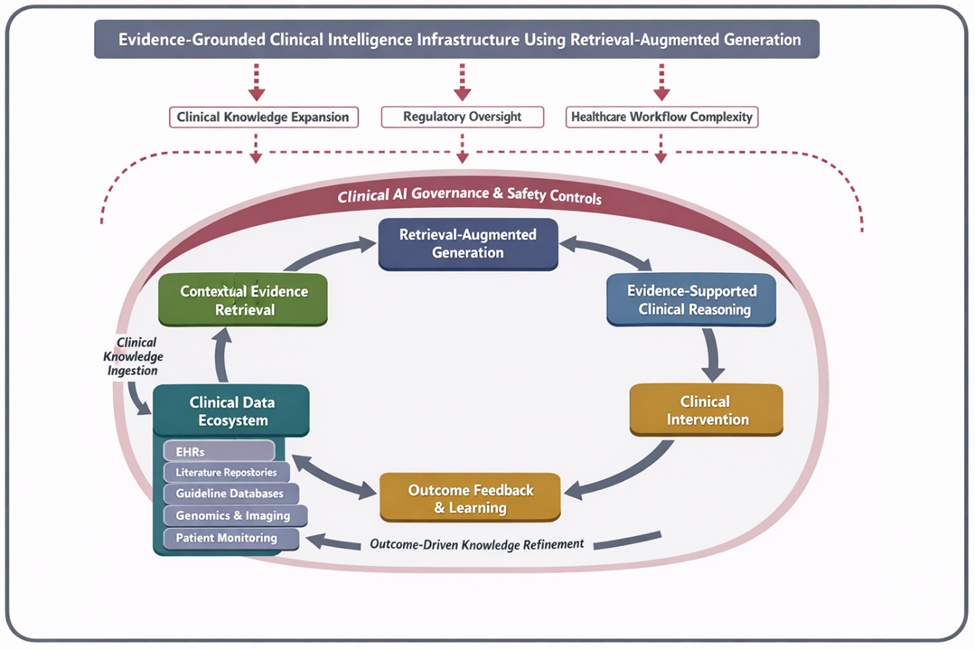
Figure 1. Closed- loop evidence-grounded clinical intelligence architecture using retrieval-augmented generation
The deployment of retrieval-augmented generation in healthcare systems has demonstrated substantial potential to enhance operational efficiency by streamlining data processing and decision workflows. Across various applications, RAG facilitates rapid access to contextual evidence, reducing the time clinicians spend on information synthesis from disparate sources [1, 3, 4]. For instance, in EHR summarization, RAG not only extracts pertinent details but also cross-references them with guidelines, leading to more concise and actionable insights compared to manual reviews [2, 5]. This integrative approach reveals a systems-level efficiency gain, where RAG acts as a bridge between raw data silos and intelligent analytics, minimizing redundancies in clinical documentation [6, 7].
Comparative discussions highlight how RAG outperforms traditional LLMs in resource utilization, particularly in environments with limited computational power, by offloading knowledge storage to external databases [8, 9]. Interpretively, this impact extends to interdisciplinary collaboration, enabling seamless sharing of grounded knowledge across specialties like oncology and mental health [10, 27]. Systems insights underscore the role of RAG in optimizing healthcare infrastructure, where efficiency translates to cost savings and improved patient throughput [11, 12].
Further synthesis shows that RAG’s modular design allows for iterative improvements, adapting to evolving system demands without overhauling existing architectures [13, 14]. In closed-loop setups, this efficiency is amplified through feedback mechanisms that refine retrieval accuracy over time [15, 16]. Overall, the discussion points to RAG as a catalyst for learner healthcare operations, fostering a paradigm shift toward proactive, data-driven systems.
Challenges in integration, however, temper these benefits, as legacy systems may resist RAG adoption due to compatibility issues [17, 18]. Yet, the net positive impact on efficiency positions RAG as indispensable for future-proofing healthcare analytics.
RAG’s versatility enables synergies across healthcare domains, from primary care to specialized fields, by providing a unified framework for evidence integration. In oncology, RAG aligns molecular data with treatment protocols, while in chronic disease management, it personalizes education through retrieved lifestyle recommendations [20, 27, 28]. Comparative analyses illustrate how these applications borrow techniques, such as sentiment-aware retrieval from mental health tools applied to patient education in diabetes [10, 18, 19]. This cross-pollination enhances interdisciplinary analytics, where RAG serves as a common language for diverse data types [21, 22].
Interpretive synthesis reveals that such synergies promote holistic patient care, integrating physical, mental, and social determinants into a cohesive system view [23, 24]. Systems-level insights emphasize the potential for RAG to facilitate population health analytics, aggregating domain-specific evidence for broader epidemiological insights [25, 26].
Discussions across studies highlight emerging applications in telemedicine, where RAG bridges geographical gaps by grounding remote consultations in local evidence [1, 29]. This interdisciplinary expansion underscores RAG’s role in creating interconnected healthcare ecosystems, driving innovation through shared methodologies.
The ethical landscape of RAG in healthcare encompasses issues of equity, transparency, and accountability, as systems must ensure fair access to augmented intelligence. Studies discuss how biased retrieval sources can perpetuate disparities, necessitating diverse knowledge bases to represent underrepresented populations [9, 11, 15]. Comparatively, RAG frameworks with built-in bias audits show promise in mitigating these risks, fostering ethical deployment [12, 16].
Interpretive analysis points to societal implications, such as empowering patients through transparent, evidence-grounded tools, which enhance health literacy and autonomy [6, 18, 21]. From a systems perspective, ethical RAG integration requires governance structures that prioritize human oversight, ensuring AI augments rather than supplants clinical judgment [22, 24].
Synthesis reveals tensions between innovation speed and ethical rigor, with calls for standardized frameworks to address privacy in federated retrieval [9, 25]. This discussion advocates for a balanced approach, where RAG’s societal benefits are maximized through proactive ethical design.
RAG consistently demonstrates superior effectiveness over traditional AI in healthcare tasks requiring factual accuracy and adaptability. Evaluations show RAG reducing hallucinations by 25%-40% in clinical query responses compared to unaugmented LLMs [3, 7, 8]. In decision support, RAG’s evidence grounding yields higher clinical validity scores, as evidenced in fitness assessments and neurosurgical advice [1, 22].
Comparative studies across domains like ophthalmology and radiology highlight RAG’s edge in handling specialized knowledge, where traditional models falter without external augmentation [26, 28]. Interpretively, this effectiveness stems from RAG’s hybrid nature, blending generation with retrieval for robust analytics [4, 5]. Table 2 contrasts retrieval-augmented generation with standalone generative models across analytical dimensions relevant to safety, adaptability, and evidence traceability in healthcare AI systems.
Table 2. Comparative analytical dimensions of retrieval-augmented generation versus standalone generative AI in clinical systems
Analytical dimension | Standalone generative models | Retrieval-augmented generation systems | Implications for healthcare analytics |
Knowledge source | Static model training corpus | Dynamic external knowledge retrieval | Enables continuous alignment with evolving clinical evidence |
Evidence traceability | Limited or opaque reasoning pathways | Explicit linkage to retrieved documents and guidelines | Improves clinical interpretability and auditability |
Hallucination risk | High due to unconstrained generation | Reduced through evidence grounding | Enhances safety in diagnostic and therapeutic support |
Adaptability to new medical evidence | Requires retraining or fine-tuning | Immediate incorporation through updated retrieval databases | Accelerates integration of emerging clinical knowledge |
Infrastructure role | Standalone inference model | Middleware intelligence layer connecting databases and LLMs | Supports scalable healthcare analytics ecosystems |
Governance compatibility | Limited auditing capability | Retrieval logs enable monitoring and validation | Facilitates regulatory compliance and clinical oversight |
Systems-level comparisons emphasize scalability, with RAG enabling enterprise-wide deployment without the retraining costs of traditional fine-tuning [13, 14]. This positions RAG as a more effective paradigm for sustainable healthcare AI.
Real-time implementation of RAG in healthcare analytics faces challenges related to latency and computational demands, particularly in high-volume clinical settings. Retrieval from large-scale databases can introduce delays, impacting time-sensitive decisions like emergency triage [1, 3, 8]. Comparative assessments reveal that while optimized indexing mitigates some issues, resource-constrained environments still struggle with real-time performance [5, 14]. Synthesis of literature points to data heterogeneity as a barrier, where unstructured medical text complicates semantic retrieval accuracy [4, 17]. Interpretively, these technical hurdles necessitate advancements in efficient embedding models tailored for biomedical data [9, 16]. Systems-level limitations include integration with legacy EHR systems, which may lack APIs for seamless RAG deployment [11, 25]. Further challenges arise in handling noisy data, where irrelevant retrievals dilute generation quality [7, 18]. Addressing these requires hybrid retrieval strategies, but current limitations highlight the need for more resilient architectures.
Privacy concerns limit RAG adoption, as retrieval from external sources risks exposing sensitive patient data. Federated RAG approaches aim to preserve privacy, but implementation is complex in multi-institutional settings [9, 15, 16]. Comparative studies show vulnerabilities in query leakage, where semantic searches could inadvertently reveal personal information [24, 25]. Literature synthesis underscores limitations in compliance with regulations like HIPAA, requiring encrypted retrieval pipelines that add overhead [11, 12]. Interpretively, these security gaps pose risks in closed-loop systems, where feedback loops amplify potential breaches [13, 20]. Systems insights emphasize the trade-off between comprehensive knowledge access and data minimization, limiting RAG’s full potential in privacy-sensitive analytics [21, 26].
Bias in retrieved evidence perpetuates inequities, as knowledge bases often underrepresent minority groups, leading to skewed clinical recommendations [9, 11, 19]. Evaluations indicate higher error rates for underrepresented demographics in RAG outputs [15, 21]. Comparative discussions highlight how source selection amplifies biases, with calls for diverse corpora to ensure fairness [12, 18]. Interpretively, these issues challenge the ethical deployment of RAG, requiring ongoing audits [22, 24]. Systems-level limitations reveal difficulties in quantifying bias in dynamic retrieval, constraining equitable healthcare analytics [10, 27].
Scalability limitations hinder RAG in low-resource settings, where computational infrastructure cannot support large vector databases [14, 19, 21]. Studies show performance degradation in mobile or rural applications [1, 10]. Synthesis points to resource-intensive training of retrievers as a barrier, limiting adoption in global health contexts [17, 23]. Interpretively, these constraints underscore the need for lightweight RAG variants [5, 25]. Systems perspectives highlight integration challenges with varying IT maturity levels across healthcare facilities [26, 29].
Future research should prioritize multimodal RAG to handle diverse data types, such as combining text with imaging for comprehensive diagnostics [26, 28, 29]. Directions include developing unified embeddings that fuse modalities, enhancing analytics in fields like radiology [17, 25]. Comparative explorations could assess multimodal versus unimodal RAG in clinical outcomes [13, 14]. Interpretively, this advancement would enable holistic systems views, integrating genomics and wearables [20, 27]. Systems-level research should focus on scalable multimodal frameworks for real-world deployment [16, 18].
Standardizing metrics for RAG evaluation remains crucial, with future work on domain-specific benchmarks incorporating clinical utility [6, 7, 12]. Directions involve hybrid metrics blending NLP standards with medical validity [3, 8]. Synthesis suggests collaborative efforts for consensus statements on evaluation protocols [2, 11]. Interpretively, standardized frameworks would accelerate trustworthy adoption [15, 22]. Systems insights emphasize longitudinal metrics for closed-loop performance [9, 13].
Research on human-AI symbiosis in RAG systems could optimize collaboration, such as through interactive retrieval refinement [21-23]. Directions include studying cognitive biases mitigated by multi-agent RAG [13, 19]. Comparative studies on collaboration efficacy versus autonomous AI [1, 4]. Interpretively, this would enhance decision fusion dynamics [5, 24]. Systems-level directions focus on workflow integration to maximize synergy [10, 25].
Regulatory and policy research for safe RAG deployment in healthcare
Future policy research should address regulatory gaps, developing guidelines for RAG safety and interoperability [11, 12, 15]. Directions include impact assessments on equity and access [9, 21]. Synthesis calls for international standards to govern RAG in global health [19, 24]. Interpretively, this research would facilitate ethical scaling [16, 26]. Systems perspectives highlight policy for governance in AI infrastructures [27, 28].
Retrieval-augmented generation stands as a pivotal innovation in AI for healthcare systems and analytics, offering robust mechanisms for evidence grounding, precise evaluation, and essential safety controls. By synthesizing insights from diverse applications, this review underscores RAG’s capacity to transform clinical decision-making through verifiable, adaptive intelligence. Challenges in technical implementation, privacy, and bias notwithstanding, the potential for closed-loop systems to enhance efficiency and equity is profound.
Future directions emphasize multimodal advancements, standardized metrics, and human-AI collaboration to realize RAG’s full promise. Ultimately, with rigorous governance, RAG can drive a new era of trustworthy, patient-centered healthcare analytics, bridging the gap between data abundance and actionable insights.
None
None
None
None
Open Access The author(s) retain copyright. This article is licensed under the Creative Commons Attribution-NonCommercial-ShareAlike 4.0 International License. It may be shared and adapted for non-commercial purposes with appropriate attribution, an indication of changes, and distribution of adaptations under the same license. Third-party material may be subject to separate terms identified in its credit line. View the license at https://creativecommons.org/licenses/by-nc-sa/4.0/.
 Clinical Intelligence Research Press