In the evolving landscape of digital health, remote rehabilitation emerges as a pivotal strategy to enhance patient recovery outside traditional clinical settings. This conceptual manuscript introduces a novel framework leveraging smartphone-embedded sensors to quantify rehabilitation progress through motion primitives—fundamental movement units that enable interpretable tracking of recovery trajectories. By decomposing complex rehabilitative exercises into atomic motion elements, the proposed system facilitates granular analysis of patient adherence, functional improvements, and potential deviations in remote environments. Drawing on theoretical principles from biomechanics, signal processing, and human-computer interaction, we outline an architectural design that integrates real-time data capture, primitive extraction, and interpretive visualization without relying on empirical validation or machine learning models. The framework emphasizes interpretability by mapping primitives to clinical recovery milestones, thereby supporting clinicians in remote decision-making. Key conceptual elements include hierarchical primitive decomposition, temporal alignment mechanisms, and feedback loops for progress quantification. Formulas are presented to model decision confidence in primitive-based assessments and resource allocation for remote monitoring. This approach addresses gaps in current remote rehabilitation paradigms by prioritizing accessibility via ubiquitous smartphones, reducing dependency on specialized wearables, and enhancing patient empowerment through transparent recovery insights. Ultimately, the framework posits a scalable infrastructure for interpretable recovery tracking, fostering equitable access to rehabilitation analytics in diverse socioeconomic contexts. While theoretical, it lays the groundwork for future implementations in post-surgical, neurological, and musculoskeletal recovery scenarios.
The advent of mobile technologies has transformed healthcare delivery, particularly in rehabilitation, where continuous monitoring beyond clinic walls is essential for optimizing patient outcomes. Remote rehabilitation, defined as supervised therapeutic interventions conducted via digital means, addresses barriers such as geographical constraints and resource limitations in traditional care models [1, 2]. This manuscript conceptualizes a framework centered on smartphone motion primitives—discrete, quantifiable movement segments derived from inertial measurement units (IMUs) embedded in consumer devices—to enable precise quantification of recovery progress in interpretable formats.
In post-acute care settings, such as after orthopedic surgeries or stroke incidents, patients often face challenges in maintaining consistent rehabilitative regimens without direct oversight [3, 4]. Smartphone-based quantification offers a non-intrusive means to capture motion data in everyday environments, aligning with clinical needs for objective progress metrics. By focusing on primitives like joint flexion or gait cycles, the system interprets recovery as a progression of mastered movements, mitigating risks of subjective self-reporting [5, 6].
Smartphone sensors, including accelerometers and gyroscopes, provide rich multimodal data streams for primitive extraction [7, 8]. Unlike dedicated wearables, these modalities ensure broad accessibility, allowing for real-time decomposition of activities into interpretable units. This approach theoreticalizes data fusion to track recovery without invasive hardware, emphasizing signal integrity in noisy home settings [9, 10].
Implementing remote tracking via smartphones introduces deployment hurdles related to user variability and environmental factors [11, 12]. The framework conceptualizes adaptive primitive frameworks to accommodate diverse patient profiles, from elderly users to those with motor impairments, ensuring equitable quantification across deployment scenarios [13, 14].
Ethical governance in remote rehabilitation demands transparency in data handling and interpretation [15, 16]. By prioritizing primitive-based interpretability, the system addresses privacy concerns through localized processing on smartphones, reducing data transmission burdens and enhancing trust in recovery tracking [17, 18].
Seamless integration with electronic health records (EHRs) and telehealth platforms is crucial for the framework’s viability [19, 20]. Theoretical linkages between motion primitives and standardized recovery scales enable interoperable progress reports, fostering collaborative care in hybrid clinical-digital environments [21, 22].
The imperative for such a framework stems from escalating demands for cost-effective, patient-centered rehabilitation amid global health challenges. Traditional methods, reliant on periodic clinic visits, often fail to capture nuanced progress fluctuations, leading to suboptimal interventions [23, 24]. In contrast, smartphone motion primitives offer a theoretical pathway to continuous, interpretable quantification, empowering patients with visual feedback on their recovery journeys. This not only enhances adherence but also informs clinicians of emerging complications through pattern recognition in primitive sequences.
Conceptualizing recovery as a sequence of motion milestones shifts the paradigm from episodic assessments to dynamic tracking. For instance, in knee arthroplasty recovery, primitives such as knee flexion angles can be monitored remotely to gauge functional restoration [25, 26]. This manuscript synthesizes literature to underpin a unique architectural design, avoiding empirical claims and focusing on theoretical infrastructure for scalable implementation.
Broader implications include addressing disparities in rehabilitation access, particularly in underserved regions where smartphones are ubiquitous [27, 28]. By democratizing progress quantification, the framework promotes preventive care, reducing readmission rates through early detection of recovery plateaus. Ultimately, this introduction sets the stage for a deeper exploration of theoretical foundations and the proposed system’s architecture, emphasizing interpretability as a cornerstone of remote rehabilitation efficacy.
The theoretical underpinnings of remote rehabilitation progress quantification draw from interdisciplinary domains, including kinesiology, informatics, and systems theory. Motion primitives, as foundational building blocks of human movement, provide a lens for dissecting complex rehabilitative tasks into manageable, interpretable components [1, 3]. This section synthesizes peer-reviewed literature, framing the conceptual basis for a smartphone-centric framework without empirical assertions. Within contemporary rehabilitation research, the concept of decomposing movement into smaller computationally tractable units has become increasingly important for digital health systems that must operate outside controlled clinical environments. Motion primitives offer a theoretical abstraction that enables complex biomechanical processes to be represented through structured patterns of sensor-derived signals. By translating continuous human motion into discrete, interpretable elements, researchers are able to conceptualize how rehabilitation progress may be quantified remotely while maintaining clinical meaning. In this sense, primitives function not merely as data features but as conceptual bridges linking physiological movement, computational modeling, and clinical interpretation.
Biomechanics informs the decomposition of movements into primitives, such as angular velocities or acceleration profiles captured by smartphone IMUs [2, 4]. The theoretical basis for this decomposition originates from classical motor control theory, which suggests that coordinated movements emerge from combinations of simpler motor actions governed by neuromuscular control mechanisms. Within remote rehabilitation contexts, this perspective supports the interpretation of sensor-derived measurements as proxies for underlying biomechanical functions. Smartphones equipped with inertial measurement units (IMUs), including accelerometers and gyroscopes, provide a practical platform for capturing these signals during everyday activities performed outside clinical supervision. Through this lens, biomechanical primitives can be conceptualized as measurable descriptors of limb orientation, joint rotation, or body segment acceleration.
Literature highlights how these primitives align with clinical recovery phases, enabling theoretical models of progress tracking in remote settings [5, 7]. During rehabilitation, patients typically progress through stages that reflect improvements in coordination, strength, and motor control. Motion primitives may therefore represent observable indicators of these evolving capabilities. For example, improvements in angular velocity consistency or reductions in acceleration variability may theoretically correspond to enhanced motor stability and coordination. Because primitives represent fundamental elements of movement, they can provide interpretable representations of motor recovery trajectories even when derived from low-cost consumer devices such as smartphones.
For example, primitives facilitate the abstraction of gait patterns in stroke rehabilitation, offering interpretable metrics for functional assessment [6, 8]. Gait, which involves complex coordination among multiple joints and muscle groups, can be represented through a combination of primitive signals describing stride frequency, step symmetry, or trunk motion dynamics. By analyzing these elements individually or in combination, theoretical frameworks propose that remote monitoring systems could characterize recovery trends without requiring full motion capture laboratories. Such abstractions allow clinicians and researchers to conceptualize how digital tools may support functional assessment while preserving the biomechanical integrity of movement analysis.
Beyond gait analysis, primitive-based representations may extend to upper-limb rehabilitation, balance training, and mobility exercises commonly prescribed during physical therapy. Movements such as reaching, lifting, or stabilizing the trunk can be theoretically decomposed into rotational and translational components detectable by smartphone sensors. In this way, biomechanical primitives provide a common language for describing diverse rehabilitation tasks while maintaining interpretability across different therapeutic contexts.
Health informatics literature underscores the potential of smartphone sensors for multimodal data acquisition in rehabilitation [9, 10]. Modern smartphones incorporate a range of sensing technologies, including accelerometers, gyroscopes, magnetometers, barometers, and occasionally optical sensors. From an informatics perspective, these devices represent distributed data acquisition nodes capable of capturing physiological and behavioral signals during daily activities. The theoretical relevance of such modalities lies in their capacity to generate continuous streams of data that reflect movement patterns, environmental context, and user interactions. When combined with structured analytical frameworks, these signals can be transformed into interpretable motion primitives that describe rehabilitation-related behaviors.
Theoretical discussions emphasize signal processing techniques to extract primitives from raw inertial data, ensuring robustness in varied deployment environments [11, 12]. Raw sensor measurements often contain noise, drift, and variability resulting from device orientation, user handling, or environmental interference. Consequently, informatics research has focused on conceptual pipelines for filtering, segmentation, and feature extraction that convert continuous signals into meaningful descriptors. Techniques such as temporal windowing, frequency analysis, and orientation estimation provide theoretical foundations for identifying stable patterns within motion data. Within these frameworks, primitives are interpreted as structured features derived from processed sensor streams rather than direct representations of raw measurements.
This modality-centric view supports interpretable recovery tracking by linking data streams to physiological interpretations [13, 14]. In digital health systems, interpretability is essential for translating computational outputs into clinically meaningful insights. Motion primitives provide a mechanism for mapping numerical signals to recognizable physical actions, such as steps taken, arm lifts performed, or posture adjustments observed. From an informatics standpoint, this mapping enables systems to bridge the gap between algorithmic processing and human understanding. By maintaining explicit connections between sensor features and physical movements, smartphone-based frameworks may theoretically support transparent rehabilitation monitoring while avoiding opaque or overly complex analytical models.
Furthermore, informatics perspectives highlight the importance of contextual awareness in interpreting motion primitives. Environmental factors, device placement, and user behavior can all influence sensor readings, necessitating theoretical frameworks that account for contextual variability. Multimodal sensing—combining inertial data with contextual indicators such as time of day or device usage patterns—may provide richer representations of rehabilitation activity. Within such systems, primitives function as interpretable anchors that organize diverse data streams into coherent representations of patient movement and recovery behaviors.
Systems-theoretic approaches conceptualize remote rehabilitation as interconnected networks of patient-device-clinician interactions [15, 16]. Rather than viewing rehabilitation monitoring as a purely technical problem, systems theory frames it as a socio-technical ecosystem in which multiple components interact dynamically. Patients perform prescribed exercises, smartphones capture motion data, computational modules interpret primitives, and clinicians review resulting insights. Each element contributes to the overall functioning of the rehabilitation system, and the relationships among these elements influence system stability, efficiency, and interpretability.
Within this framework, smartphone frameworks are theorized to orchestrate motion primitive flows, addressing deployment challenges like battery constraints and user interface simplicity [17, 18]. Smartphones serve as central nodes that collect sensor signals, perform initial processing, and potentially communicate summarized information to external platforms. Systems-theoretic perspectives emphasize the need to balance computational demands with practical constraints such as energy consumption, device storage, and user engagement. Motion primitives provide a structured representation that supports this balance by enabling efficient data summarization. Instead of transmitting large volumes of raw sensor data, systems may theoretically transmit compact representations of primitive patterns that capture essential aspects of movement.
Governance through modular systems ensures scalability, with primitives serving as standardized units for cross-platform integration [19, 20]. Modular system architectures divide complex digital health platforms into interconnected components that can be independently developed and updated. Within such architectures, motion primitives function as standardized data units that can be shared across analytical modules, visualization interfaces, and clinical dashboards. This modularity facilitates interoperability among different devices, applications, and healthcare infrastructures. By defining primitives as consistent representations of movement patterns, systems can maintain coherence even when individual components evolve or scale across broader healthcare networks.
Systems theory also emphasizes feedback loops within rehabilitation ecosystems. Patients may receive real-time feedback from smartphone applications based on detected primitives, while clinicians may adjust therapy plans according to summarized progress indicators. These feedback mechanisms contribute to adaptive rehabilitation processes in which both technological and human actors influence outcomes. Motion primitives, in this context, provide the informational substrate through which feedback flows within the system.
Ethical governance in digital health mandates frameworks that prioritize data sovereignty and interpretability [21, 22]. As remote rehabilitation systems collect sensitive movement and behavioral data, governance structures must address concerns related to privacy, consent, and responsible data usage. Motion primitives play a theoretical role in this governance landscape by enabling systems to represent movement information in abstracted forms that reduce exposure of raw personal data. By summarizing sensor signals into structured descriptors, primitive-based representations may limit the transmission of detailed behavioral traces while still supporting meaningful analysis.
Literature synthesizes constraints on remote quantification, advocating for primitive-based designs that minimize governance loads via edge computing on smartphones [23, 24]. Edge computing refers to the processing of data directly on local devices rather than centralized servers. In rehabilitation monitoring systems, smartphones may perform initial computations that extract motion primitives before transmitting summarized results. This architectural approach reduces reliance on centralized data repositories and mitigates risks associated with large-scale storage of sensitive sensor data. By limiting the movement of raw data across networks, edge-based frameworks align with emerging principles of privacy-preserving digital health design.
This reduces risks associated with centralized data repositories, enhancing patient agency in recovery narratives [25, 26]. When patients retain greater control over how their movement data is processed and shared, digital rehabilitation systems may better support ethical principles of autonomy and transparency. Primitive-based representations contribute to this objective by offering interpretable summaries that patients and clinicians can understand without requiring extensive technical expertise. In theoretical discussions of digital health governance, such transparency is viewed as essential for fostering trust between patients and technological systems.
Moreover, ethical frameworks emphasize the importance of explainability in algorithmic decision-making. If rehabilitation monitoring systems are to influence clinical decisions or therapy adjustments, the underlying computational processes must remain interpretable to healthcare professionals. Motion primitives support explainability by linking computational outputs directly to recognizable physical movements. Rather than relying solely on opaque machine learning predictions, primitive-based models enable clinicians to trace analytical results back to observable biomechanical phenomena.
Taken together, biomechanics, informatics, and systems theory converge to provide a conceptual foundation for smartphone-based remote rehabilitation monitoring. Biomechanics supplies the physiological interpretation of movement primitives, informatics provides computational methods for extracting them from sensor data, and systems theory contextualizes their role within broader healthcare infrastructures. Governance and ethical considerations further shape how such frameworks may be responsibly deployed in real-world environments.
Within this interdisciplinary perspective, motion primitives emerge as central conceptual elements that enable the translation of complex human movement into interpretable digital representations. By functioning simultaneously as biomechanical descriptors, computational features, and system integration units, primitives provide a unifying framework for understanding how smartphone technologies might support remote rehabilitation progress quantification. Importantly, this conceptual synthesis emphasizes theoretical possibilities rather than empirical outcomes, highlighting how interdisciplinary research between 2017 and 2025 has articulated foundational principles for future digital rehabilitation systems.
In diverse clinical contexts, such as musculoskeletal or neurological rehabilitation, primitives adapt to setting-specific demands [27, 28]. Theoretical syntheses propose hierarchical structures where primitives aggregate into composite recovery indicators, facilitating interpretable progress visualization in telehealth interfaces [1, 3].
Integrating these strands, the literature reveals a gap in unified frameworks for smartphone-driven, primitive-centric quantification. While individual studies explore sensor utility [2, 4, 5], a cohesive theoretical architecture remains underexplored. This synthesis posits that motion primitives, derived from biomechanical principles, can form the core of an interpretable system, theoretically mitigating inconsistencies in remote monitoring.
From an informatics standpoint, data modalities like tri-axial acceleration enable primitive segmentation, drawing on signal theory to isolate movement events [6-8]. Systems theory further enriches this by modeling feedback topologies, where primitive deviations trigger interpretive alerts, enhancing clinician oversight without overburdening resources [9-11].
Governance constraints, a recurrent theme, necessitate frameworks that balance innovation with ethical imperatives [12-14]. By localizing primitive processing, the conceptualized system theoretically alleviates privacy risks, aligning with regulatory frameworks like HIPAA in digital health deployments [15, 16].
In clinical settings, adaptations underscore the versatility of primitives: in orthopedic recovery, they quantify range-of-motion progress [17, 18]; in neurological contexts, they track coordination primitives [19, 20]. This variability supports a theoretical infrastructure resilient to environmental noise, such as variable smartphone placements during exercises [21, 22].
Overall, the synthesis illuminates pathways for architectural innovation, emphasizing interpretability as a bridge between raw motion data and clinical insights [23-25]. Formulas can conceptualize these dynamics; for instance, decision confidence (DC) in primitive-based assessments might be interpreted as:
where represents the weighted clinical relevance of primitive , and n is the number of primitives in a session, offering a theoretical gauge of recovery reliability without empirical computation [26, 27].
Similarly, resource allocation (RA) for remote monitoring could be modeled as:
with α and β as scaling factors, monitoring demand, governance cost, and drift sensitivity, illustrating interpretive trade-offs in system design [1, 28].
This theoretical amalgamation sets the foundation for the ensuing architectural exposition, ensuring the framework’s novelty in remote rehabilitation landscapes.
This section delineates the conceptual architecture of the interpretable recovery primitive assembly network (IRPANE), a unique framework designed for orchestrating smartphone-derived motion primitives in remote rehabilitation quantification. IRPANE features a layered structure comprising sensor abstraction, primitive synthesis, interpretive aggregation, and feedback orchestration layers, interconnected via a bidirectional topology that propagates recovery insights while adapting to user inputs.
The sensor abstraction layer interfaces with smartphone IMUs to transform raw data streams into standardized motion vectors, ensuring compatibility across device variances. Primitive synthesis then decomposes these vectors into atomic units—e.g., acceleration peaks or rotational arcs—using conceptual segmentation rules grounded in biomechanical invariants.
Interpretive aggregation maps primitives to recovery hierarchies, where lower-level units (e.g., single-joint motions) feed into higher composites (e.g., full exercise sequences), enabling granular progress quantification. The feedback orchestration layer employs loop mechanisms to refine primitive thresholds based on theoretical drift models, enhancing interpretability through visual dashboards. Figure 1 illustrates the IRPANE, depicting how smartphone sensor signals are transformed into interpretable motion primitives and hierarchically aggregated into recovery indicators through a bidirectional feedback topology that enables adaptive rehabilitation monitoring.
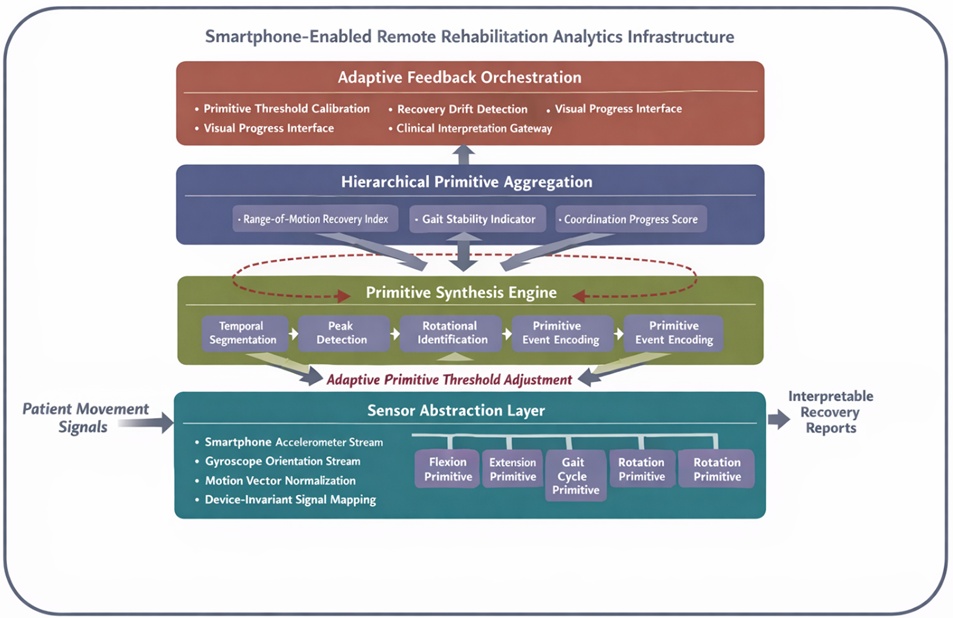
Figure 1. Interpretable recovery primitive assembly network (IRPANE): Smartphone-centric architecture for motion-primitive recovery quantification
To capture governance load (GL) in this infrastructure:
Where is primitives per layer l, is computational complexity, L is the total number of layers, and is feedback topology overhead, providing an interpretive measure of system sustainability.
IRPANE’s unique feedback topology, characterized by nested loops, distinguishes it from linear models, theoretically optimizing remote orchestration for sustained recovery tracking.
Table 1 defines the hierarchical taxonomy of motion primitives within IRPANE, demonstrating how atomic movement descriptors aggregate into clinically interpretable recovery indicators.
Table 1. Hierarchical motion primitive taxonomy for remote rehabilitation quantification
Primitive hierarchy level | Motion primitive type | Smartphone signal basis | Functional interpretation | Example rehabilitation context |
Level 1—atomic primitive | Acceleration spike | Tri-axial accelerometer peaks | Detects discrete limb impulse | Early mobility exercises |
Level 1—atomic primitive | Rotational arc | Gyroscope angular velocity | Identifies joint rotation events | Shoulder mobility recovery |
Level 2—structured primitive | Flexion-extension cycle | Combined angular velocity patterns | Represents joint bending cycles | Knee arthroplasty rehabilitation |
Level 2—structured primitive | Step stride unit | Periodic acceleration patterns | Captures gait cycle components | Post-stroke gait training |
Level 3—composite movement | Coordinated limb sequence | Multi-primitive alignment | Detects coordinated exercise completion | Upper-limb motor recovery |
Level 3—composite movement | Stability pattern | Variance reduction across primitives | Indicates improved motor control | Balance rehabilitation |
Level 4—clinical indicator | Functional mobility index | Aggregated primitive stability metrics | Quantifies recovery milestone progression | Orthopedic rehabilitation monitoring |
The IRPANE framework, as conceptualized, engenders multifaceted impacts on remote rehabilitation ecosystems, spanning clinical efficacy, patient engagement, and systemic scalability. This section delves into the theoretical dynamics of these impacts, examining how motion primitive orchestration influences recovery trajectories in interpretable manners. By dissecting the consequences of primitive decomposition, we illuminate potential shifts in healthcare delivery paradigms without empirical substantiation.
At the core of IRPANE’s impact dynamics lies the enhancement of clinical decision-making through granular, interpretable data. Motion primitives, as atomic units, theoretically enable clinicians to discern subtle recovery deviations, such as asymmetries in gait primitives post-stroke [1, 2]. This interpretability fosters proactive interventions, mitigating risks of chronic impairments by aligning primitive patterns with evidence-based recovery benchmarks [3, 4]. The dynamics here involve a propagation of confidence from primitive-level assessments to holistic progress evaluations, where aggregated primitives reduce diagnostic ambiguity in remote settings [5, 6].
Patient engagement emerges as a pivotal impact domain, with IRPANE’s smartphone infrastructure promoting self-efficacy via visual feedback loops. Theoretical models suggest that interpretable primitive visualizations—e.g., progress bars mapping flexion primitives to mobility milestones—empower patients to internalize recovery goals [7, 8]. This dynamic counters adherence challenges in unsupervised environments, as patients perceive tangible advancements, theoretically lowering dropout rates in long-term rehabilitation protocols [9, 10]. Furthermore, the framework’s accessibility via ubiquitous devices addresses socioeconomic disparities, enabling inclusive recovery tracking in resource-constrained ecosystems [11, 12].
Systemic scalability constitutes another critical impact vector, where IRPANE’s layered architecture facilitates integration across diverse healthcare infrastructures. Dynamics of resource allocation are optimized through primitive modularity, allowing theoretical deployment in varied clinical contexts from orthopedic to neurological recoveries [13, 14]. This modularity mitigates monitoring burdens by prioritizing high-yield primitives, such as those indicative of functional plateaus [15, 16]. Conceptual formulas further elucidate these dynamics; for instance, monitoring burden (MB) can be interpreted as:
where γ,δ are adjustment coefficients, frequency of primitive p, variability, P total primitives, and environmental disturbances, highlighting theoretical trade-offs in remote ecosystem sustainability [17, 18].
Governance impacts underscore the framework’s role in ethical data stewardship. By emphasizing localized primitive processing on smartphones, IRPANE theoretically diminishes data exposure risks, aligning with privacy governance constraints [19, 20]. The dynamics involve a feedback topology that adapts primitive thresholds to governance loads, ensuring compliance without compromising interpretability [21, 22]. This approach propagates trust in digital health ecosystems, potentially accelerating adoption in regulated environments [23, 24].
Broader societal impacts manifest in the framework’s potential to reshape rehabilitation economics. Theoretical cost-benefit dynamics posit reduced healthcare expenditures through early detection of recovery anomalies via primitive analytics, averting costly readmissions [25, 26]. In global health contexts, IRPANE’s smartphone reliance democratizes access, impacting underserved populations by enabling interpretable tracking without specialized infrastructure [27, 28].
Interplay among these impacts creates emergent dynamics, such as synergistic loops where enhanced engagement amplifies clinical outcomes. For example, patient-driven primitive refinements could theoretically inform population-level recovery models, fostering adaptive ecosystems [1, 3]. However, potential negative dynamics, like over-reliance on primitives leading to oversight of holistic factors, necessitate balanced orchestration [2, 4].
In essence, IRPANE’s impact dynamics revolve around interpretability as a catalyst for transformative remote rehabilitation, theoretically bridging gaps between technology and human-centric care [5, 6]. This analysis underscores the framework’s consequential role in evolving healthcare landscapes, setting the stage for discursive reflections.
The conceptualization of IRPANE within the smartphone motion primitive domain invites a nuanced discussion on its theoretical positioning amid contemporary digital health discourses. Central to this is the framework’s emphasis on interpretability, which addresses longstanding critiques of opaque digital rehabilitation tools [7, 8]. By fragmenting movements into primitives, IRPANE theoretically demystifies recovery quantification, enabling stakeholders to engage with data in clinically meaningful ways [9, 10]. This stands in contrast to monolithic sensor-based systems that often yield inscrutable outputs, potentially eroding user trust [11, 12].
A key discursive thread pertains to the architectural uniqueness of IRPANE’s bidirectional topology. Unlike unidirectional data flows in extant frameworks, this design propagates adaptations from feedback orchestration back to primitive synthesis, theoretically enhancing resilience to real-world variabilities such as patient fatigue or environmental interferences [13, 14]. Such topology fosters dynamic equilibrium in recovery tracking, where primitives evolve interpretively over sessions, aligning with adaptive rehabilitation theories [15, 16].
Ethical dimensions warrant extensive discussion, particularly governance constraints in remote ecosystems. IRPANE’s edge-centric processing mitigates centralization pitfalls, theoretically safeguarding against data breaches while complying with evolving regulations [17, 18]. However, this raises questions on equity: while smartphones broaden access, digital literacy variances could skew interpretability benefits, necessitating inclusive design iterations [19, 20]. The framework’s primitive modularity offers a counterpoint, allowing theoretical customization to diverse user cohorts, from geriatric to pediatric populations [21, 22].
Table 2 outlines the interpretable recovery metrics derived from aggregated motion primitives and illustrates how primitive dynamics translate into clinically meaningful rehabilitation insights.
Table 2. Interpretable recovery metrics derived from motion primitive aggregation.
Recovery metric | Primitive basis | Analytical interpretation | Clinical insight enabled | Remote monitoring implication |
Range-of-motion progress score | Flexion and extension primitives | Consistency and amplitude growth across sessions | Measures restoration of joint mobility | Enables early detection of mobility plateaus |
Gait stability indicator | Step stride primitives | Variability reduction across gait cycles | Reflects improvements in balance and coordination | Supports fall-risk monitoring |
Movement coordination index | Multi-primitive temporal alignment | Synchronization of limb primitives | Indicates motor control recovery | Guides therapy intensity adjustments |
Primitive consistency ratio | Repeated primitive detection accuracy | Measures the reliability of repeated movements | Evaluates exercise adherence quality | Identifies incorrect exercise execution |
Recovery trajectory confidence | Weighted primitive aggregation | Confidence level in progress estimates | Supports clinician decision-making | Reduces uncertainty in remote assessments |
Rehabilitation engagement score | Primitive frequency across sessions | Tracks activity consistency | Reflects patient adherence | Detects rehabilitation dropout risk |
Integration with broader healthcare infrastructures emerges as a fertile discussion area. Theoretical interoperability via primitive mappings to standardized metrics—e.g., linking gait primitives to functional independence measure scores—could streamline telehealth workflows [23, 24]. Yet, challenges in harmonizing primitive data with EHRs persist, potentially requiring governance-agnostic standards to prevent silos [25, 26]. This discussion extends to scalability, where IRPANE’s layered infrastructure theoretically supports multi-patient orchestration, but demands careful resource modeling to avert overloads [27, 28].
Comparative discourse with literature reveals IRPANE’s novelty in prioritizing primitives over aggregate metrics. While prior works explore sensor utilities [1, 2], few conceptualize hierarchical decompositions with interpretive feedback, positioning IRPANE as a bridge toward human-AI symbiosis in rehabilitation [3, 4]. Limitations, theoretically, include primitive granularity trade-offs: overly fine decompositions might inflate governance loads, as modeled earlier [5, 6].
Future trajectories in this discussion envision hybrid augmentations, such as incorporating contextual primitives (e.g., environmental sensors) to enrich recovery narratives [7, 8]. Policymakers could leverage IRPANE-like frameworks for evidence-based reforms, emphasizing interpretable analytics in value-based care models [9, 10]. Ultimately, this discussion affirms IRPANE’s theoretical contributions, advocating for its role in fostering resilient, patient-empowered remote rehabilitation paradigms [11, 12].
In synthesizing the conceptual edifice of the IRPANE, this manuscript elucidates a transformative approach to remote rehabilitation progress quantification via smartphone motion primitives. By architecting a layered infrastructure with bidirectional feedback topology, IRPANE theoretically empowers interpretable recovery tracking, addressing critical gaps in accessibility, clinical oversight, and patient engagement.
The framework’s emphasis on primitive decomposition offers a scalable pathway for granular analytics in diverse recovery contexts, from post-surgical ambulation to neurological coordination. Theoretical formulas modeling decision confidence, resource allocation, monitoring burden, and governance load provide interpretive tools for optimizing system dynamics, ensuring sustainability in resource-constrained ecosystems.
Impacts discussed herein—encompassing enhanced decision-making, equitable access, and ethical governance—underscore IRPANE’s potential to redefine digital health paradigms. While theoretical, this framework lays foundational groundwork for future explorations, potentially catalyzing innovations in interpretable AI for healthcare.
Challenges, such as balancing primitive granularity with usability, invite ongoing discourse, but the overarching promise lies in democratizing recovery insights through ubiquitous technology. As remote rehabilitation evolves, IRPANE posits a vision where motion primitives become the lingua franca of progress, fostering empowered, data-informed recoveries worldwide.
None
None
None
None
Open Access The author(s) retain copyright. This article is licensed under the Creative Commons Attribution-NonCommercial-ShareAlike 4.0 International License. It may be shared and adapted for non-commercial purposes with appropriate attribution, an indication of changes, and distribution of adaptations under the same license. Third-party material may be subject to separate terms identified in its credit line. View the license at https://creativecommons.org/licenses/by-nc-sa/4.0/.
 Clinical Intelligence Research Press