In the evolving landscape of healthcare systems, ensuring adherence to clinical guidelines through order-sets remains a critical challenge, particularly when temporal dynamics influence decision-making processes. This conceptual manuscript introduces a novel framework for modeling guideline adherence as temporal logic constructs, enabling systematic conformance verification within order-set evaluation environments. By leveraging linear temporal logic (LTL) and computational tree logic (CTL) principles, the proposed system architecture facilitates the theoretical assessment of sequential and branching compliance pathways without relying on empirical data or simulations. Key components include a layered temporal abstraction module, a verification engine for detecting deviations in real-time clinical workflows, and a feedback topology that integrates governance constraints to mitigate potential risks. The framework emphasizes infrastructural uniqueness by incorporating a unique acronym, TCV-OS (temporal conformance verification for order-sets), with distinct layers for logic encoding, state monitoring, and adaptive reconciliation. Conceptual formulas are presented to interpret risk propagation across temporal states and decision confidence in adherence scenarios. This work synthesizes recent literature on temporal reasoning in medical decision support, highlighting gaps in current approaches and proposing architectural innovations for enhanced guideline orchestration. Ultimately, the framework offers a theoretical foundation for improving healthcare analytics integrity, fostering safer and more efficient order-set deployments in diverse clinical settings.
The integration of artificial intelligence (AI) into healthcare systems has amplified the need for robust mechanisms to ensure guideline adherence, particularly in the context of order-sets that dictate sequential clinical actions. Order-sets, as predefined bundles of interventions, serve as foundational tools in electronic health records (EHRs) to standardize care delivery. However, temporal inconsistencies—such as delays in procedure execution or branching decisions based on patient states—often undermine conformance, leading to suboptimal outcomes. This manuscript conceptualizes guideline adherence through temporal logic paradigms, proposing a conformance verification framework tailored for order-set evaluation. By framing adherence as a series of temporally constrained propositions, the approach enables theoretical scrutiny of compliance without empirical validations, aligning with infrastructural advancements in AI-driven healthcare analytics.
In acute care settings, temporal dynamics play a pivotal role in guideline deployment, where order-sets must accommodate time-sensitive interventions like antibiotic administration windows or sequential diagnostic testing. Temporal logic, drawing from formal verification techniques, models these dynamics as sequences of states satisfying predicates over time [1]. For instance, adherence might require that a certain action “eventually” follows a trigger event, or remains “globally” active until resolution. This subheading explores how such logic can abstract clinical timelines, ensuring order-set evaluation captures not just static rules but evolving conformance paths in high-stakes environments like intensive care units.
Healthcare data modalities, ranging from structured EHR entries to temporal streams from wearable sensors, directly impact conformance verification in order-set frameworks [2, 3]. Temporal logic allows for the integration of heterogeneous data, such as time-stamped vital signs or procedural logs, into verifiable models. This ensures that adherence assessments account for modality-specific temporal granularities, such as real-time monitoring versus retrospective audits. By anchoring verification to data modalities, the framework mitigates discrepancies arising from incomplete or asynchronous inputs, fostering a more cohesive evaluation of guideline fidelity in multisource clinical ecosystems.
Governance constraints, including regulatory standards like HIPAA or institutional protocols, impose temporal boundaries on order-set orchestration [2]. These constraints necessitate logic-based checks to verify that adherence paths comply with time-bound obligations, such as mandatory reviews within specified intervals. The proposed framework incorporates governance as an overlay in temporal models, enabling conceptual detection of violations where order-sets deviate due to external pressures. This subheading delineates how such constraints shape verification architectures, emphasizing the need for adaptive logic to balance clinical autonomy with oversight in governed healthcare deployments.
Different clinical settings, from ambulatory care to surgical theaters, require tailored adaptations in temporal adherence modeling for order-sets [4]. In emergency departments, for example, rapid temporal branching—where guidelines fork based on evolving patient conditions—demands logic that handles uncertainty and concurrency. This subheading examines setting-specific challenges, proposing that conformance verification frameworks embed contextual temporal operators to evaluate order-set efficacy across diverse environments, thereby enhancing theoretical resilience against setting-induced non-adherence.
Deployment environments, characterized by varying computational resources and interoperability levels, pose unique challenges to logic-based evaluation of guideline adherence [5]. Temporal logic must navigate these by abstracting environment variables into verifiable states, such as network latency affecting order-set execution timelines. This ensures that the framework’s verification remains robust, conceptually addressing how environmental factors influence temporal conformance without delving into performance metrics.
The urgency for such a framework stems from the increasing complexity of AI-augmented healthcare, where order-sets integrate predictive analytics yet risk temporal misalignments [6]. Traditional approaches often overlook the nuanced temporal interdependencies, leading to gaps in adherence assurance. This manuscript addresses these by synthesizing temporal logic with conformance verification, offering a conceptual blueprint for order-set evaluation that prioritizes theoretical integrity over empirical testing. Through this lens, we advance the discourse on AI in healthcare, paving the way for infrastructures that inherently embed temporal reasoning for sustained guideline fidelity.
The theoretical underpinnings of guideline adherence in healthcare draw from formal methods in computer science, particularly temporal logic, which provides a rigorous means to specify and verify time-dependent behaviors. Temporal logic, encompassing modalities like linear temporal logic (LTL) for sequential paths and computational tree logic (CTL) for branching possibilities, has been adapted to model clinical processes where actions unfold over time [7]. In the realm of order-set evaluation, this logic translates guidelines into temporal formulas, enabling conceptual checks for conformance without empirical datasets.
Recent literature highlights temporal logic’s utility in clinical settings for modeling adherence [1]. For example, answer set programming approaches have been conceptualized to analyze guideline execution traces, verifying temporal conformance through declarative rules [1]. This synthesis extends to heart failure management, where abductive reasoning integrates temporal constraints to enhance adherence [2]. In wearable sensor contexts, temporal patterns interpret data against interpretable guidelines, abstracting clinical states into verifiable timelines [3]. These works collectively underscore the shift toward logic-based infrastructures in dynamic clinical environments.
Data modalities in healthcare, such as time-series from monitoring devices, necessitate temporal logic for conformance verification [8]. Studies on distributed guideline execution propose conceptual models that handle multi-source data, ensuring temporal alignment in order-sets [4]. Bi-directional knowledge assessments further synthesize compliance over extended periods, incorporating modality-specific temporal operators [5]. This subheading synthesizes how literature addresses modality challenges, emphasizing logic’s role in unifying disparate data streams for robust order-set evaluation.
Governance in AI healthcare systems imposes theoretical constraints on temporal verification [9]. Runtime verification techniques conceptually improve care quality by monitoring temporal properties in real-time [10]. Formal frameworks for data-driven case management check compliance using temporal logic, integrating governance rules into verification layers [11]. Literature on domain-specific modeling supports temporal verification, synthesizing governance with logic to prevent deviations in governed deployments [12]. This synthesis reveals a theoretical emphasis on embedding governance within temporal models for order-set orchestration. Table 1 summarizes the temporal logic operators used within TCV-OS and illustrates how formal logical constructs correspond to interpretable clinical workflow behaviors.
Table 1. Temporal logic operators and their clinical interpretation in order-set adherence modeling
Temporal operator | Formal logic meaning | Clinical workflow interpretation | Example order-set scenario | Verification implication |
G (Globally) | Condition must hold at all time points | Intervention must remain continuously valid throughout care | Maintain anticoagulation monitoring during hospitalization | Continuous monitoring is required for adherence |
F (Eventually) | Condition must occur at some future time | Required action must occur within the care trajectory | Antibiotics must eventually follow sepsis identification | Detects missing or delayed interventions |
X (Next) | Condition must hold in the next temporal step | The sequential task must follow immediately | The diagnostic test must follow an abnormal screening result | Validates the correct ordering of steps |
U (Until) | Condition holds until another condition occurs | Treatment continues until the milestone is achieved | Oxygen therapy continues until saturation stabilizes | Detects premature discontinuation |
A / E (CTL path quantifiers) | For all paths/there exists a path | Branching clinical decisions depending on the patient’s state | Escalation pathway triggered by deterioration | Verifies the correctness of decision branches |
Theoretical explorations of deployment environments focus on temporal logic’s adaptability to infrastructural variances [13]. Conformance checking in process logs uses causality approaches to verify the temporal alignments conceptually [13]. Multi-model monitoring frameworks handle hybrid specifications, synthesizing temporal reasoning for complex environments [14]. Action languages monitor constraints temporally, providing theoretical foundations for adherence in diverse deployments [15]. These insights synthesize how logic mitigates environment-induced temporal drifts in order-set evaluations.
Despite advancements, literature reveals gaps in comprehensive temporal conformance for order-sets [16]. Automata-theoretic approaches model check logic specifications but often lack integration with clinical governance [16]. Multi-perspective process mining models activities temporally, yet overlooks layered feedback in adherence frameworks [17]. Systematic mappings of process mining in healthcare highlight the need for purely conceptual verifications [18]. Neural network conformance in dynamics like glucose-insulin points to broader applicability, but theoretical syntheses call for unique architectures [19]. Runtime verification in multi-agent systems conceptually extends to healthcare, yet requires tailored topologies for order-sets [20].
This synthesis integrates recent peer-reviewed works to establish a theoretical baseline, identifying opportunities for innovative frameworks that model adherence as temporal logic. By avoiding empirical claims, the discussion remains anchored in architectural possibilities, setting the stage for the proposed system.
The proposed temporal conformance verification for order-sets (TCV-OS) framework introduces a layered infrastructure designed to orchestrate guideline adherence through temporal logic primitives. At its core, TCV-OS comprises three distinct layers: the logic encoding layer, which translates guidelines into LTL/CTL formulas; the state monitoring layer, which abstracts clinical states into temporal automata; and the adaptive reconciliation layer, which employs feedback loops to resolve deviations conceptually. This unique layer structure ensures a bidirectional feedback topology, where monitoring outputs inform encoding refinements, fostering self-correcting orchestration without empirical interventions (Figure 1).
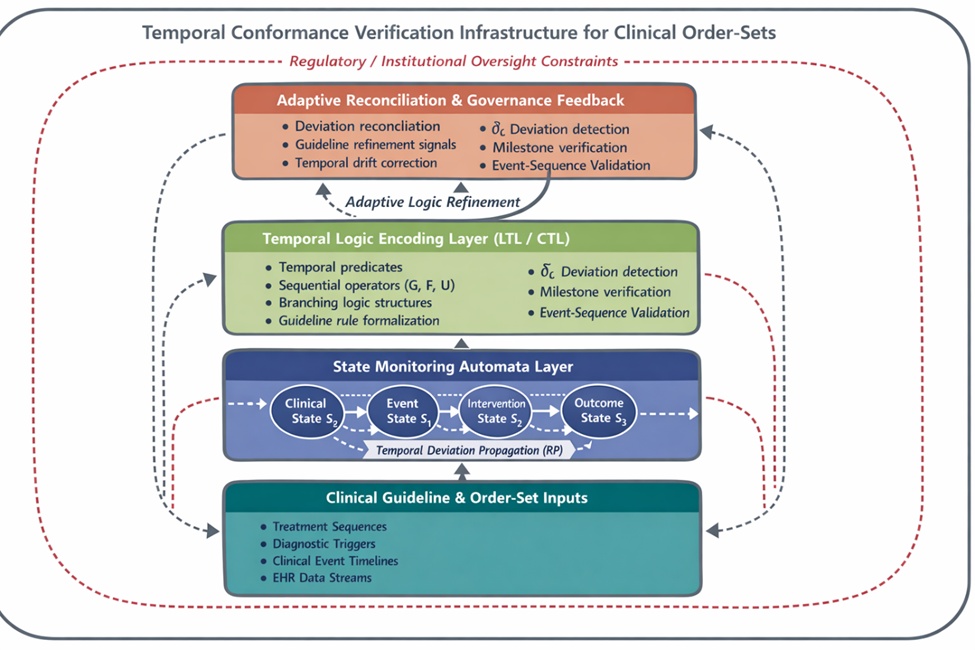
Figure 1. Temporal conformance verification for order-sets (TCV-OS): temporal logic infrastructure for guideline adherence evaluation
To interpret system dynamics, consider the following conceptual formulas:
Risk propagation (RP):
Decision confidence (DC):
Governance load (GL):
These formulas provide interpretive lenses for TCV-OS, emphasizing theoretical analytics in healthcare infrastructures.
The TCV-OS framework, through its temporal logic infrastructure, engenders a broad spectrum of conceptual impacts on healthcare guideline ecosystems, particularly in the manner by which conformance verification reshapes order-set dynamics and clinical workflow governance. Unlike conventional guideline evaluation mechanisms that treat adherence as a static rule-checking exercise, TCV-OS conceptualizes compliance as a temporally structured phenomenon, embedding clinical processes within a logical sequence of time-dependent propositions. This perspective fundamentally alters how guideline adherence is interpreted within healthcare information systems, shifting the focus from isolated compliance checkpoints toward continuous temporal coherence across clinical pathways.
Within this paradigm, adherence is represented through temporal propositions that describe evolving clinical states over time. Such propositions allow the framework to capture not only whether a guideline action occurs but also when it occurs relative to other actions in the care trajectory. This temporal embedding theoretically enhances the detection of latent systemic risks that remain invisible within static rule-based systems. For example, prolonged deviations in treatment sequences—such as delayed diagnostic confirmation or postponed therapeutic escalation—can propagate across multiple patient care episodes, gradually amplifying clinical uncertainty and resource inefficiencies. By encoding such deviations within temporal logic structures, the system conceptually magnifies early warning signals that might otherwise remain undetected until adverse outcomes emerge.
The impact analysis presented here, therefore, focuses not on empirical performance metrics but on the infrastructural ripple effects introduced by layered temporal verification. The framework’s architecture supports a cascade of analytical transformations whereby temporal reasoning propagates across multiple system layers, reinforcing a form of orchestrated oversight within guideline ecosystems. Through this layered verification process, order-set governance becomes dynamically responsive rather than statically enforced, promoting conceptual advancements in the theoretical management of clinical protocols.
At the foundation of this architecture lies the Logic Encoding Layer, where clinical guideline intents are translated into formal temporal expressions. Within this layer, temporal formulas function as semantic containers that encapsulate the underlying purpose and expected sequencing of clinical actions. By representing guideline instructions in this structured logical form, the system theoretically reduces ambiguity in order-set interpretation and clarifies the causal relationships embedded within clinical recommendations [21]. Such clarification is especially valuable in multidisciplinary clinical environments where multiple practitioners interact with the same order-set at different stages of care. Temporal encoding, therefore, acts as a unifying interpretive framework, ensuring that guideline directives retain coherent meaning across diverse operational contexts.
Furthermore, the encoding of guideline logic through temporal constructs enables branching explorations of adherence pathways. Through the use of computation tree logic (CTL), the framework allows for theoretical examination of alternative decision trajectories within clinical workflows. This capability is particularly significant when guidelines contain conditional branches or contingency pathways triggered by evolving patient states. By modeling these branches formally, TCV-OS provides an analytical environment in which potential adherence paths can be evaluated before they manifest operationally. Such exploration mitigates the risk of workflow deadlocks or logical inconsistencies that might otherwise arise when complex guideline dependencies intersect with real-world clinical variability.
The second structural component, the state monitoring layer, translates encoded temporal propositions into operational monitoring constructs. Within this layer, clinical system states are abstracted into automata capable of tracking evolving adherence conditions across time. Each automaton functions as a conceptual observer of guideline execution, continuously evaluating whether temporal milestones are being satisfied or violated. This abstraction provides a theoretical mechanism for enhancing real-time awareness within healthcare information infrastructures.
The monitoring process can conceptually generate alerts when temporal thresholds are exceeded or when expected events fail to occur within defined time windows. For instance, in chronic disease management, the framework may detect missed clinical milestones such as delayed laboratory reassessments, overdue medication adjustments, or postponed follow-up consultations. These alerts do not merely signal static non-compliance; rather, they represent temporal violations that reveal disruptions in the intended progression of care processes [22]. By highlighting such deviations early in the care timeline, the framework contributes to a proactive monitoring environment in which temporal anomalies are recognized before they evolve into clinically significant disruptions.
Beyond immediate monitoring, the architecture incorporates an adaptive reconciliation layer, which introduces feedback-driven recalibration mechanisms. This layer synthesizes insights derived from previous conformance analyses and reintegrates them into the logic encoding process, thereby enabling the framework to evolve alongside changing clinical practices. The feedback topology embedded within this layer establishes a dynamic learning cycle in which historical adherence patterns inform the refinement of future guideline encodings.
Conceptually, this adaptive mechanism influences long-term guideline evolution. When recurring temporal deviations are identified across multiple instances of order-set execution, the system can theoretically reinterpret these patterns as indicators of structural misalignment between guideline assumptions and real clinical workflows. The reconciliation layer, therefore, functions as a conceptual bridge between operational monitoring and guideline governance, allowing healthcare systems to integrate experiential knowledge into the design of future order-sets [23]. Through this process, guideline ecosystems become progressively more aligned with practical care dynamics, reinforcing the adaptability of AI-assisted clinical infrastructures.
The impacts of TCV-OS extend beyond logical modeling into the domain of healthcare resource governance. Healthcare systems often struggle with the allocation of oversight resources, particularly when monitoring complex guideline adherence across large patient populations. Within the TCV-OS framework, conceptual prioritization mechanisms are introduced to optimize this governance burden. By identifying high-risk temporal segments within clinical pathways, the system directs analytical attention toward the most consequential adherence intervals.
This prioritization is captured through the conceptual GL formula, which models the distribution of governance load across temporal checkpoints within order-set execution. Rather than distributing oversight uniformly, the formula emphasizes segments of the care trajectory where deviations carry the greatest downstream consequences. For example, early diagnostic verification or timely therapeutic initiation may represent critical inflection points in a treatment pathway. By highlighting such points within the governance structure, TCV-OS theoretically distributes monitoring efforts more efficiently across multidisciplinary clinical teams [24]. This targeted oversight model enhances the conceptual efficiency of guideline governance while preserving system-wide awareness of adherence dynamics.
Another dimension of the framework’s impact lies in its treatment of temporal drift sensitivity. Clinical processes rarely unfold with perfect temporal precision; minor delays and scheduling variations frequently occur due to operational constraints, patient variability, or system-level bottlenecks. While many traditional guideline systems tolerate such deviations implicitly, the TCV-OS framework treats them as analytically meaningful signals. Through the conceptual RP formula, the framework interprets how small temporal shifts—such as postponed diagnostics or delayed medication titration—can propagate through subsequent stages of care.
This interpretation highlights the cumulative nature of temporal risk within healthcare processes. A single delay may appear inconsequential in isolation, but when propagated across multiple interconnected guideline steps, it may amplify downstream uncertainties and resource demands. By modeling this amplification process explicitly, the framework encourages architectural adjustments designed to enhance system resilience. Healthcare infrastructures may therefore evolve toward designs that incorporate temporal buffers, adaptive scheduling mechanisms, or enhanced coordination protocols to mitigate the cascading effects of temporal drift [25].
Taken collectively, these infrastructural transformations illustrate a broader conceptual transition within healthcare guideline ecosystems. The adoption of temporal logic frameworks shifts guideline evaluation from a retrospective compliance activity toward a proactive governance mechanism embedded directly within clinical information systems. Order-set evaluation becomes inherently time-aware, enabling healthcare organizations to anticipate deviations, coordinate multidisciplinary interventions, and refine guideline designs through continuous feedback loops.
In this emerging paradigm, temporal conformance becomes not merely a verification objective but a foundational principle guiding the architecture of AI-enabled healthcare analytics. By integrating logical reasoning with temporal awareness, TCV-OS establishes a theoretical foundation for healthcare ecosystems in which clinical protocols evolve dynamically alongside operational realities.
The conceptualization of guideline adherence through temporal logic within the TCV-OS framework represents a significant paradigm shift in the evaluation and governance of clinical order-sets. Historically, healthcare guideline systems have treated adherence primarily as a binary compliance condition, assessing whether individual actions conform to predefined rules. While effective for straightforward protocols, such approaches struggle to capture the temporal complexities that characterize real-world clinical care. Clinical workflows unfold as sequences of interdependent decisions, interventions, and observations, each occurring within specific time frames that influence subsequent outcomes. Static rule-sets therefore provide only partial insight into the true dynamics of guideline adherence [26].
By contrast, the TCV-OS framework redefines adherence as a temporally structured process embedded within formal logical representations. Through its layered architecture and bidirectional feedback topology, the framework introduces an infrastructural blueprint capable of modeling clinical processes as evolving sequences of logical states. This transformation allows conformance verification to extend beyond simple rule validation, incorporating dynamic interpretations of timing, sequence dependencies, and branching clinical possibilities. Table 2 consolidates the conceptual indices used to interpret temporal deviations, decision confidence, and governance load within the TCV-OS verification infrastructure.
Table 2. Conceptual indices for temporal governance and conformance analysis in the TCV-OS framework
Conceptual index | Mathematical representation | Interpretive role in TCV-OS | System layer of the application | Governance insight |
Risk propagation (RP) | RP = Σ (δₜ × ωₜ₊₁) | Models how temporal deviations propagate across sequential clinical states | State monitoring layer | Identifies cascading effects of delayed actions |
Decision confidence (DC) | DC = Π (φₚ ∧ ψₚ) | Quantifies confidence in adherence when multiple temporal predicates are satisfied | Logic encoding + Monitoring | Indicates reliability of order-set recommendations |
Governance load (GL) | Measures the intensity of governance oversight across temporal intervals | Reconciliation layer | Guides prioritization of monitoring resources | |
Temporal drift sensitivity (TDS) | TDS = | Estimates system sensitivity to timing deviations in clinical workflows | Monitoring layer | Highlights high-risk time windows |
Reconciliation impact factor (RIF) | Measures how reconciliation feedback improves guideline encoding | Feedback topology | Indicates the effectiveness of adaptive governance |
A central contribution of the framework lies in its integration of linear temporal logic (LTL) and computation tree logic (CTL) for modeling guideline adherence. These complementary logical systems enable the representation of both sequential and branching temporal structures within clinical workflows. LTL provides operators that capture linear progressions of time, allowing the framework to express concepts such as “eventually,” “always,” or “until” within guideline execution. Such operators are particularly useful for representing treatment sequences that must unfold in a specific order across defined time intervals.
Meanwhile, CTL introduces branching semantics that allow the exploration of multiple potential future states within a clinical pathway. Operators such as “for all possible paths” or “there exists a path” enable the framework to represent clinical decision trees in which different patient conditions lead to alternative treatment strategies. The integration of these two logical paradigms creates a modeling environment capable of capturing both deterministic guideline sequences and conditional decision structures within the same analytical framework [27].
This integration significantly advances existing literature on temporal reasoning in healthcare informatics. While prior studies have explored the application of temporal logic to medical protocols, few have developed a dedicated infrastructural model specifically designed for order-set evaluation. TCV-OS addresses this gap by embedding temporal reasoning directly into the governance architecture of clinical decision systems. In doing so, the framework transforms conformance verification from a passive validation step into an active component of guideline lifecycle management.
Another important contribution lies in the framework’s incorporation of governance-infused reconciliation processes. Traditional guideline evaluation systems often treat verification results as endpoints of analysis rather than inputs to iterative refinement. In contrast, the feedback topology within TCV-OS ensures that conformance insights continuously inform the evolution of guideline encodings. This dynamic interplay between monitoring and encoding supports the development of more resilient and context-aware clinical protocols [28].
The conceptual formulas embedded within the framework further enrich its analytical capabilities. These formulas function not as empirical metrics but as interpretive instruments that model theoretical dynamics within guideline ecosystems. For example, risk propagation and governance load can be conceptualized through structured logical expressions that illustrate how deviations influence system behavior over time. Such formulations allow researchers and system designers to reason about the structural properties of guideline infrastructures without requiring immediate access to operational datasets.
Among these interpretive constructs, the DC formula plays a particularly significant role. The formula theoretically quantifies confidence levels associated with specific decision points within clinical workflows. By modeling how temporal adherence influences decision assurance, the DC formula provides insights into the reliability of AI-assisted clinical recommendations. In practical terms, this conceptual tool can guide the design of decision support systems that dynamically adjust the strength of their recommendations based on temporal adherence patterns [29].
Despite these conceptual strengths, the framework also presents several theoretical limitations that warrant careful consideration. One primary challenge lies in the assumption of idealized temporal abstractions. Temporal logic models often rely on clearly defined event boundaries and deterministic transitions between states. However, real clinical environments are characterized by substantial variability and unpredictability. Emergent patient conditions, unforeseen complications, and resource constraints can disrupt the orderly progression assumed by formal temporal models [1].
Such variability raises important questions regarding the fidelity of temporal abstractions in representing complex clinical realities. While the framework provides a powerful analytical structure, additional mechanisms may be required to accommodate the stochastic nature of healthcare processes. Incorporating probabilistic reasoning or uncertainty modeling into the temporal framework could enhance its ability to capture unpredictable clinical trajectories.
Another limitation arises from the conceptual complexity introduced by the framework’s bidirectional feedback topology. While feedback loops are essential for adaptive guideline evolution, they also increase the structural intricacy of layer interactions. Without appropriate governance mechanisms, the accumulation of feedback signals may produce analytical overload or conflicting reconciliation directives. Addressing this challenge may require the development of hierarchical governance overlays capable of coordinating feedback flows across the system architecture [2].
Future research directions may therefore focus on hybrid logical frameworks that combine temporal reasoning with probabilistic inference. Such hybrid models could integrate stochastic representations of clinical variability while preserving the sequential clarity offered by temporal logic. By blending deterministic temporal structures with probabilistic reasoning mechanisms, researchers may develop more robust analytical tools capable of addressing the full spectrum of uncertainty inherent in healthcare environments [3].
Beyond methodological considerations, the broader implications of the TCV-OS framework extend into healthcare policy, regulatory oversight, and professional education. As healthcare systems increasingly adopt AI-driven decision support technologies, ensuring the temporal integrity of guideline execution becomes a critical safety requirement. Regulatory bodies may therefore begin to incorporate temporal conformance criteria into certification standards for AI-enabled clinical systems.
Within such regulatory contexts, frameworks like TCV-OS could serve as reference architectures for evaluating the temporal robustness of clinical decision platforms. By formalizing how guidelines should unfold over time, the framework provides regulators with conceptual tools for assessing whether AI systems support safe and coherent care pathways. In this sense, temporal logic becomes not merely an analytical instrument but a potential foundation for future healthcare technology standards [4].
Educational implications are equally significant. Training clinicians to understand and interact with logic-based guideline systems represents an important step toward bridging the gap between theoretical AI models and practical clinical application. The temporal structures embedded within TCV-OS offer pedagogical opportunities for teaching clinicians how treatment decisions relate to broader temporal care trajectories. Through such educational initiatives, healthcare professionals can develop a deeper appreciation of how adherence patterns influence patient outcomes and system performance [5].
Ultimately, the TCV-OS framework contributes to the emergence of a new generation of intelligent healthcare infrastructures. By embedding temporal reasoning into the core architecture of guideline systems, it enables the development of clinical environments in which decision support tools operate with heightened awareness of time-dependent dynamics. This evolution moves healthcare informatics closer to the vision of adaptive, context-aware AI systems capable of supporting clinicians in increasingly complex care environments.
In conclusion, this manuscript has presented a conceptual framework for modeling clinical guideline adherence through temporal logic, culminating in the development of the TCV-OS infrastructure for conformance verification in order-set evaluation. The framework introduces a layered architecture that integrates logic encoding, state monitoring, and adaptive reconciliation mechanisms within a unified temporal reasoning environment. Through this architecture, guideline adherence is interpreted not as a static compliance condition but as an evolving sequence of temporally structured propositions.
The proposed framework addresses critical theoretical challenges in AI-enabled healthcare analytics by emphasizing the temporal dynamics that shape real-world clinical workflows. Through the integration of Linear Temporal Logic and Computation Tree Logic, TCV-OS provides a comprehensive modeling environment capable of representing both sequential and branching treatment pathways. The conceptual formulas embedded within the framework further enhance its analytical depth, offering interpretive tools for understanding risk propagation, governance load distribution, and decision confidence dynamics.
The synthesized literature highlights the growing relevance of temporal reasoning within healthcare informatics, underscoring the timeliness of developing dedicated infrastructures for temporal conformance verification. The impact analysis presented in this manuscript illustrates how layered verification processes may reshape guideline ecosystems by enhancing monitoring capabilities, optimizing governance resources, and promoting adaptive guideline evolution.
By interpreting risks, confidences, and oversight dynamics through structured conceptual formulas, the framework establishes a theoretical foundation for more intelligent and resilient clinical decision environments. As healthcare systems continue to integrate advanced AI technologies, frameworks such as TCV-OS will play a crucial role in ensuring that automated decision processes remain temporally coherent with established clinical guidelines.
Future conceptual research should continue expanding this foundation by exploring hybrid logical models that integrate probabilistic reasoning, uncertainty management, and adaptive learning mechanisms. Such developments would further strengthen the ability of temporal logic frameworks to represent the complex and evolving realities of clinical practice. Through these continued advancements, temporally aware AI infrastructures may ultimately contribute to safer, more efficient, and more responsive healthcare delivery systems.
None
None
None
None
Open Access The author(s) retain copyright. This article is licensed under the Creative Commons Attribution-NonCommercial-ShareAlike 4.0 International License. It may be shared and adapted for non-commercial purposes with appropriate attribution, an indication of changes, and distribution of adaptations under the same license. Third-party material may be subject to separate terms identified in its credit line. View the license at https://creativecommons.org/licenses/by-nc-sa/4.0/.
 Clinical Intelligence Research Press