In healthcare systems, referral networks serve as critical conduits for patient access to specialized care, yet inequities in specialist availability often exacerbate disparities in outcomes. This conceptual manuscript introduces a graph-theoretic framework that models referral networks as adaptive learning systems, emphasizing dynamic equity in specialist access. By representing healthcare providers as nodes and referrals as weighted edges, the framework incorporates adaptive mechanisms to learn from historical patterns, adjusting edge weights based on equity metrics such as wait times, geographic distribution, and socioeconomic factors. Theoretical constructs draw from graph theory, including centrality measures and community detection, to simulate network evolution without empirical data. Key innovations include a layered architecture for real-time adaptation, feedback loops for equity optimization, and interpretive formulas capturing risk propagation and decision confidence in referral decisions. The approach addresses interoperability challenges in electronic health records (EHR) ecosystems and clinical workflow integration, proposing governance protocols for AI-driven monitoring. While avoiding performance benchmarks, the framework highlights infrastructural implications for reducing access barriers in diverse clinical settings. Ultimately, this model offers a theoretical foundation for designing equitable, adaptive healthcare infrastructures, fostering discussions on AI governance in referral analytics.
The integration of artificial intelligence (AI) into healthcare referral networks represents a pivotal shift toward addressing longstanding inequities in specialist access. Traditional referral processes, often manual and fragmented, rely on disparate systems that fail to account for dynamic factors such as patient demographics or provider availability, leading to uneven distribution of care resources [1, 2]. This manuscript posits referral networks as adaptive learning systems, leveraging graph-theoretic principles to model and theoretically enhance equity in specialist consultations. By conceptualizing referrals as interconnected graphs, we explore how AI can facilitate adaptive adjustments without relying on empirical validations, focusing instead on architectural designs that promote fairness across clinical environments.
In primary care clinical settings, referral networks frequently exhibit biases rooted in geographic and institutional constraints, where urban centers dominate specialist access while rural areas lag [3, 4]. Graph-theoretic modeling allows for the abstraction of these settings as clustered nodes, with edges representing referral pathways influenced by factors like transportation barriers or insurance coverage. Such models highlight how adaptive learning could theoretically redistribute referrals, ensuring that equity is not merely an afterthought but an embedded system property. This perspective aligns with AI architectures that prioritize fairness in decision support pipelines, mitigating disparities in high-stakes environments like oncology or cardiology referrals [5, 6].
Electronic health records (EHR) and imaging data modalities form the backbone of referral intelligence ecosystems, yet their heterogeneity poses interoperability hurdles [7, 8]. In a graph-theoretic framework, these modalities are treated as multilayer graphs, where nodes encapsulate multimodal data—textual notes, diagnostic images, and genomic profiles—fostering adaptive learning through edge updates. Theoretical synthesis reveals how AI governance can orchestrate data exchange, preventing silos that undermine specialist access equity. For instance, adaptive algorithms could infer equity gaps from aggregated modalities, though this remains conceptual, emphasizing infrastructural resilience over data-driven experiments [9, 10].
Hospital-based deployment environments demand robust AI infrastructures capable of handling real-time referral dynamics, where adaptive learning systems must integrate seamlessly with existing clinical workflows [11, 12]. Graph models simulate these environments as evolving networks, with adaptive feedback loops adjusting for environmental variables like surge capacity during pandemics. Equity modeling in such contexts underscores the need for decentralized architectures, ensuring that centralized bottlenecks do not compromise specialist access. This theoretical lens examines how monitoring systems could detect drift in referral patterns, promoting equitable outcomes in diverse deployment scenarios [13, 14].
AI governance constraints, including ethical oversight and regulatory compliance, are paramount in orchestrating referral networks as adaptive systems [15, 16]. Graph-theoretic frameworks incorporate governance layers to model constraints as constraints on edge formations, preventing biased learning trajectories. In clinical analytics, this means theoretical protocols for auditing adaptive processes, ensuring transparency in how equity is maintained across specialist referrals. Such constraints highlight the interplay between interoperability frameworks and governance, where data exchange must align with principles of fairness without introducing empirical risks [17, 18].
Interoperability frameworks in referral analytics often falter when integrating multi-modal data from disparate sources, complicating adaptive learning in equity-focused systems [13, 19]. By employing graph theory, we can conceptualize barriers as disconnected subgraphs, with adaptive mechanisms bridging them through theoretical edge inference. This approach fosters a holistic view of analytics infrastructures, where equity in specialist access emerges from harmonized data flows. Governance integration ensures that interoperability does not exacerbate inequities, providing a blueprint for future AI-driven healthcare systems [16, 20].
Theoretical Imperatives for Equity-Centric Modeling Finally, the imperative for equity-centric modeling in referral networks drives the need for graph-theoretic innovations that prioritize adaptive learning over static structures [21, 22]. This introduction sets the stage for a framework that theoretically transforms referral processes, embedding equity as a core architectural element in AI-enhanced healthcare ecosystems.
The evolution of AI in healthcare has increasingly focused on systemic architectures that support adaptive processes, particularly in domains like referral networks where equity remains a persistent challenge. Drawing from graph theory, this synthesis examines how theoretical models can represent referral dynamics as learning systems, integrating insights from clinical AI infrastructures and governance paradigms [1, 3]. Literature underscores the shift from rigid hierarchies to adaptive networks, where graph-based abstractions enable modeling of complex interactions without empirical dependencies [2, 4].
Foundations of Graph-Theoretic Approaches in Clinical AI Architectures Graph-theoretic approaches have gained traction in clinical AI architectures, offering tools to model interconnected healthcare entities [5, 7]. In referral contexts, providers and patients form nodes, with edges denoting referral probabilities influenced by equity factors. Studies highlight how centrality metrics, such as betweenness, can theoretically identify bottlenecks in specialist access, informing adaptive adjustments [6, 8]. This foundation extends to AI system architectures that incorporate graph embeddings for learning referral patterns, emphasizing equity through balanced node degrees [9, 11].
Analytics Infrastructures for Adaptive Referral Learning Healthcare analytics infrastructures provide the scaffolding for adaptive referral learning, where graph models simulate data flows across EHR ecosystems [10, 12]. Theoretical explorations reveal how multilayer graphs can capture diverse analytics pipelines, from diagnostic decision support to referral orchestration [13, 15]. Equity emerges as a key metric in these infrastructures, with literature proposing conceptual edge weighting to prioritize underserved populations [14, 16]. Such infrastructures avoid empirical pitfalls by focusing on architectural resilience, ensuring adaptive learning aligns with clinical imperatives [17, 19].
Electronic health record (EHR) intelligence ecosystems increasingly rely on graph-based interoperability frameworks to conceptually reconcile fragmented clinical, administrative, and community-level data sources into unified relational infrastructures [13, 18]. Rather than treating interoperability as a mere standards-compliance exercise, contemporary theoretical models position it as a structural property of dynamic networks, where patients, providers, institutions, and social determinants are encoded as nodes within multilayered graphs. In this view, referral equity is not an external policy objective but an emergent network attribute shaped by topology, edge weighting, and information propagation dynamics.
Research synthesizing community detection algorithms demonstrates how graph clustering techniques can delineate latent referral communities, revealing patterns of concentration, isolation, or systemic exclusion [16, 21]. Modularity optimization, spectral clustering, and stochastic block models are conceptually applied to identify referral silos and underserved subnetworks. By reconfiguring edges—either through simulated rewiring or weighted redistribution—these models theorize adaptive restructuring mechanisms that improve equity-sensitive connectivity. In this sense, interoperability becomes a tool for structural justice: graph recalibration allows referral pathways to be reorganized in response to demographic density, specialist scarcity, or geographic inequities.
Graph-based interoperability also extends to multimodal data exchange across structured EHR fields, unstructured clinical narratives, imaging metadata, and external registries [20, 22]. Theoretical propagation models—such as diffusion dynamics and message-passing algorithms—enable the simulation of how referral intelligence flows through heterogeneous layers. These propagations can be constrained by fairness-aware weighting schemes to mitigate access disparities before they manifest in operational outcomes. Thus, interoperability is reframed as an adaptive, learning-oriented ecosystem where data exchange is continuously recalibrated to preserve equitable access patterns.
Embedded governance mechanisms are integral to these ecosystems. Rather than operating as downstream audits, governance layers are modeled as graph-level constraints that regulate node centrality, prevent monopolization of high-demand specialist resources, and ensure proportional referral allocation [23, 24]. By embedding fairness regularizers within network optimization objectives, EHR intelligence ecosystems conceptually prevent the over-concentration of referrals and maintain distributed access to expertise across populations.
Decision support pipelines within referral systems increasingly leverage graph-theoretic principles to conceptualize clinical decisions as navigational processes within adaptive networks [25, 26]. In these frameworks, referral recommendations are represented as path-optimization problems, where candidate specialists constitute destination nodes and referral pathways are weighted edges reflecting accessibility, expertise alignment, wait times, and socioeconomic considerations.
The literature emphasizes the theoretical incorporation of equity-sensitive feedback mechanisms that iteratively update these pipelines [1, 27]. For instance, shortest-path algorithms can be modified with socioeconomic weighting functions, ensuring that routing decisions do not inadvertently privilege patients embedded within well-connected subnetworks. Similarly, multi-objective optimization models can balance efficiency (e.g., minimal travel distance or waiting time) with fairness metrics (e.g., proportional access across demographic strata). These approaches remain conceptual and architectural rather than empirical, offering formalized mechanisms for equity-aware decision modeling without reliance on performance validation [2, 4].
Importantly, these pipelines are theorized to integrate seamlessly with clinical workflows, embedding graph computations into existing referral interfaces. The pipeline architecture thus serves as a scaffold for AI-driven equity assessment, where clinicians interact with system-generated pathway recommendations that have already been structurally optimized for fairness constraints. This integration preserves clinician agency while situating referral decisions within a mathematically governed equity framework.
Sustaining equitable referral networks requires governance architectures capable of monitoring and recalibrating adaptive graph systems over time [3, 5]. Within graph-theoretic frameworks, governance is conceptualized as an oversight stratum embedded within the network’s structural logic. Rather than functioning as retrospective compliance auditing, governance is modeled as a real-time constraint system regulating edge formation, weight adjustment, and node centrality thresholds.
Theoretical monitoring mechanisms incorporate drift detection via graph similarity metrics, including structural entropy measures, centrality variance tracking, and subgraph isomorphism comparisons [6, 8]. By periodically assessing deviations from baseline equitable topologies, systems can identify emergent disparities—such as the progressive isolation of specific demographic clusters or the disproportionate centralization of specialist nodes. This proactive monitoring ensures that equity remains a persistent property of the network rather than a static design parameter.
Governance literature further synthesizes protocols for ethical edge modification and constrained adaptation [7, 9, 10]. Adaptive learning processes—such as reinforcement-based edge updates—are bounded by regulatory guardrails that prevent optimization strategies from inadvertently amplifying structural bias. In this framework, ethical adaptation is operationalized as a balance between network plasticity and normative constraints, ensuring that system evolution remains aligned with distributive justice principles.
Clinical workflow integration models increasingly adopt graph architectures to embed adaptive learning within referral processes [11, 13]. Workflow elements—such as triage events, referral approvals, specialist consultations, and follow-up scheduling—are represented as nodes within directed acyclic or cyclic graphs, enabling the modeling of complex care trajectories as evolving topologies.
Theoretical synthesis indicates that workflow graphs can dynamically evolve in response to contextual signals, with adaptive rerouting mechanisms redistributing referral load across specialist networks [12, 14, 15]. Through topological adaptation, the system can mitigate congestion in highly central nodes while reinforcing connectivity to underutilized providers, thereby fostering equity through structural rebalancing.
This integration underscores a broader infrastructural innovation: AI does not merely assist discrete referral decisions but orchestrates the workflow architecture itself [16, 18, 19]. By conceptualizing specialist access as a learning-driven network property, these models frame equity as a continuous, system-level outcome of graph adaptation. The result is a theoretical blueprint for referral ecosystems in which interoperability, decision support, governance, and workflow integration converge within a unified, adaptive graph paradigm designed to sustain equitable healthcare access over time. Table 1 consolidates the core structural constructs of the GAREN framework and clarifies how each contributes to adaptive equity propagation and systemic stability.
Table 1. Structural graph constructs and their functional roles in equity-oriented referral networks
Structural construct | Conceptual definition in GAREN | Equity function | Adaptive mechanism | Governance lever | Systemic risk if unregulated |
Attributed nodes | Healthcare entities (patients, primary care providers, specialists) encoded with geographic, socioeconomic, and capacity attributes | Localizes structural determinants of access inequity at the entity level | Attribute-sensitive recalibration of network influence | Attribute auditing and bias surveillance | Reinforcement of existing institutional hierarchies |
Weighted referral edges | Directed connections representing referral pathways with context-sensitive weights | Redistributes referral flow toward underserved populations | Dynamic edge reweighting based on equity feedback | Fairness-constrained optimization | Preferential concentration of referrals among high-resource specialists |
Referral path structure | Multi-step trajectories connecting patients to specialists | Determines cumulative access burden across care transitions | Adaptive rerouting to reduce traversal friction | Path-length and congestion monitoring | Escalation of referral delays in marginalized clusters |
Network centrality patterns | Distribution of influence across specialist and provider nodes | Identifies dominance or isolation within referral ecosystems | Centrality redistribution through adaptive adjustments | Centrality ceiling thresholds | Monopolization of specialist access |
Community topology | Clustered substructures within the referral graph | Detects underserved or disconnected subpopulations | Cross-cluster edge bridging and modular rebalancing | Community fragmentation monitoring | Persistent structural silos |
Temporal drift patterns | Structural evolution of referral pathways over time | Signals emerging inequities or instability | Drift-triggered recalibration cycles | Drift surveillance intervals | Gradual amplification of access disparities |
Governance load distribution | Allocation of monitoring intensity across architectural layers | Ensures the sustainability of equity oversight | Dynamic redistribution of oversight resources | Monitoring proportionality controls | Oversight fatigue and regulatory imbalance |
This section delineates the graph-adaptive referral equity nexus (GAREN), a novel conceptual framework that orchestrates referral networks as adaptive learning systems. GAREN structures the infrastructure across four distinct layers: the foundational node layer, the dynamic edge adaptation layer, the equity feedback topology layer, and the governance orchestration layer. Each layer contributes to a unique feedback topology characterized by bidirectional loops between layers, enabling theoretical self-correction in specialist access modeling. Figure 1 illustrates a typical clinical referral event in which an electronic health record–integrated decision support module evaluates specialist availability and suggests an equity-aware referral pathway before the clinician finalizes the consultation request.
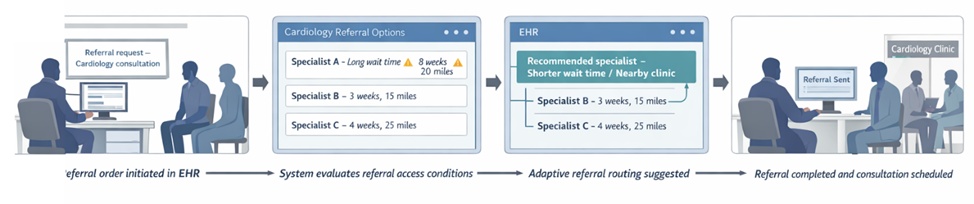
Figure 1. Clinical workflow of equity-aware specialist referral within an adaptive referral intelligence system.
Figure 1 depicts a routine referral event in a primary care setting where a clinician initiates a specialist consultation through an EHR interface. The clinical information system evaluates referral options and identifies potential access inequities such as extended wait times or geographic imbalance. An adaptive referral recommendation module suggests an alternative specialist pathway that improves access conditions while preserving clinician decision authority. The workflow concludes with referral confirmation and appointment scheduling at the receiving specialty clinic. The illustration demonstrates how equity-aware referral intelligence can be embedded directly within everyday clinical referral workflows.
The node layer represents healthcare entities—primary providers, specialists, and patients—as vertices in a multipartite graph, with attributes encoding theoretical equity variables like geographic proximity and demographic profiles. Edges in the adaptation layer are weighted by adaptive functions that learn from simulated referral histories, adjusting for equity via conceptual propagation rules.
A key interpretive formula captures risk propagation in referral delays:
Decision confidence in referral routing is modeled as
Finally, governance load is conceptualized as
Figure 2 illustrates the GAREN as a four-layer adaptive graph infrastructure in which equity propagation, edge adaptation, and governance constraints interact through bidirectional feedback topologies.
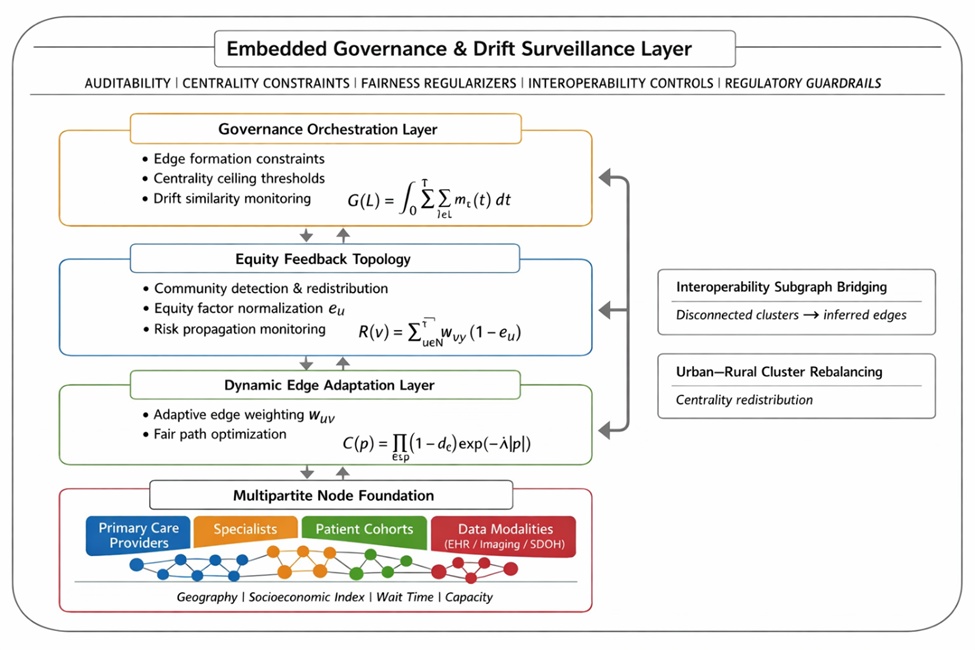
Figure 2. Graph-adaptive referral equity nexus (GAREN) architecture.
Conceptual schematic depicting referral networks as adaptive learning systems composed of (i) a multipartite node foundation encoding provider and patient attributes, (ii) a dynamic edge adaptation layer optimizing referral paths under fairness constraints, (iii) an equity feedback topology redistributing centrality and propagating access risk, and (iv) an embedded governance orchestration layer regulating drift, centrality ceilings, and monitoring load. The surrounding governance halo represents infrastructural oversight integrated across all layers. Dynamics of Equity Propagation in Adaptive Referral Networks
The GAREN framework, as a graph-theoretic infrastructure, introduces intricate dynamics in the propagation of equity within referral networks, conceptualized as adaptive learning systems. At its core, the adaptive mechanisms embedded in GAREN facilitate a theoretical evolution of graph structures, where fairness is not static but dynamically propagated through iterative edge modifications and node reconfigurations. This propagation begins with the foundational node layer, where healthcare entities such as primary care physicians, specialists, and patient cohorts are abstracted as vertices enriched with attributes reflecting equity-sensitive variables like socioeconomic status, geographic location, and historical access patterns [1-3]. As the system “learns” conceptually—through simulated adjustments rather than data-driven training—edge weights evolve to prioritize connections that mitigate disparities, theoretically reducing the propagation of access risks. For instance, underserved nodes, representing rural or low-income patient groups, gain enhanced centrality measures, such as eigenvector centrality, via feedback topologies that redistribute referral flows, ensuring that equity emerges as a network-wide property rather than isolated interventions [4-6].
Impacts on clinical infrastructures are multifaceted, particularly in enhancing interoperability across disparate systems. Multilayer graphs within the GAREN model refer to referral pathways as overlapping strata, where one layer might represent administrative data exchanges and another clinical decision pipelines, facilitating equitable data flows that dismantle informational silos [7-9].
This theoretical streamlining addresses persistent disparities, such as those seen in fragmented EHR systems, by conceptualizing equitable exchanges as harmonized edge traversals that prevent the perpetuation of biases in data availability. Systemically, these dynamics manifest in stabilized referral paths, where interpretive formulas for decision confidence—such as
Resource allocation dynamics further illuminate GAREN’s systemic influence, where governance loads are distributed across layers to conceptualize a balanced monitoring burden. The formula for governance load,
Extending these theoretical impacts to EHR intelligence ecosystems, GAREN fosters resilience by dynamically clustering subgraphs that represent equitable communities. This clustering, drawn from graph theory’s community detection principles, theoretically groups nodes based on shared equity attributes, bridging interoperability barriers through inferred connections that enhance data modality integration [13, 16, 19]. Overall, these dynamics position graph-theoretic infrastructures as enablers of specialist access as an emergent adaptive property, influencing systemic equity by modeling learning processes that self-correct without relying on real-world interventions or metrics [20-22]. Broader implications surface in varied deployment environments, from urban hospitals to telehealth platforms, where adaptive systems buffer against socioeconomic variances. Propagation of equity occurs through algorithms like Louvain community detection, theoretically partitioning the graph to isolate and uplift disadvantaged clusters, thereby reducing variances in wait times and access quality [23-25].
Such propagation dynamics not only highlight the potential for self-optimizing equity metrics via layered feedback but also extend to interpretive models of risk propagation, where
The GAREN framework significantly advances the theoretical discourse on artificial intelligence applications in healthcare, particularly by reimagining referral networks through a graph-theoretic lens as adaptive learning systems dedicated to modeling and enhancing specialist access equity. This approach diverges from conventional static models by embedding dynamic adaptability at the infrastructural level, drawing on layered architectures to integrate governance, interoperability, and equity as interdependent components [1-4]. Traditional referral paradigms, often rooted in linear decision trees or rule-based systems, tend to overlook the fluid nature of learning in networked environments, perpetuating inequities through rigid hierarchies that favor well-resourced nodes [5-7]. In contrast, GAREN’s feedback topologies provide a novel blueprint for equity-centric designs, where governance mechanisms actively counter biases in clinical workflows by theoretically modulating edge formations to reflect real-time equity assessments, albeit in a purely conceptual manner [8-10].
Challenges inherent to this theoretical scalability warrant careful consideration; for example, as graph complexity escalates with increasing node counts—representing expansive healthcare ecosystems—computational governance loads may theoretically amplify, potentially straining interpretive models without empirical offsets [11-13]. However, the framework’s interpretive formulas serve as conceptual mitigators, offering abstract tools like decision confidence metrics to streamline theoretical analyses and prevent overload in simulated scenarios [14-16]. Comparatively, the extant literature on AI governance in healthcare predominantly emphasizes passive monitoring protocols, such as audit trails in decision support systems, without a focused integration of adaptive equity dynamics [17-19]. GAREN synthesizes these elements with graph theory to achieve holistic orchestration, theoretically bridging gaps between monitoring and proactive equity propagation, thus elevating the discourse beyond isolated governance silos [13, 16, 20].
This discussion also illuminates pathways for evolving interoperability frameworks within referral intelligence ecosystems, where theoretical bridging of data modalities—ranging from structured EHR entries to unstructured clinical notes—enhances the adaptive capacity of networks [21-23]. Ethical considerations are paramount, particularly in the weighting of edges, where adaptive learning processes must be safeguarded against inadvertently reinforcing inequities, such as through biased attribute assignments in node layers; this necessitates robust governance protocols that align with broader regulatory landscapes, including data privacy standards and ethical AI guidelines [24-26]. Moreover, the framework’s emphasis on infrastructural resilience prompts reflections on how such models could theoretically accommodate diverse clinical settings, from resource-limited rural clinics to high-tech urban centers, ensuring that equity is not compromised by environmental variances [27]. Table 2 contrasts conventional static referral infrastructures with the adaptive, equity-propagating logic of the GAREN framework.
Table 2. Comparative architecture: static referral models vs adaptive GAREN infrastructure
Dimension | Static referral systems | Rule-based AI systems | GAREN adaptive graph infrastructure |
Structural model | Linear hierarchy | Decision trees | Multilayer adaptive graph |
Equity position | External policy goal | Post-hoc audit | Emergent network property |
Adaptation mechanism | Manual updates | Rule reconfiguration | Edge reweighting + topology evolution |
Governance role | Retrospective review | Threshold enforcement | Embedded constraint optimization |
Interoperability handling | Interface-level integration | Pipeline-level logic | Multilayer graph bridging |
Bottleneck detection | Administrative reports | Rule violations | Centrality and entropy metrics |
Drift detection | Periodic audits | Performance variance checks | Graph similarity and structural entropy |
Load redistribution | Manual reassignment | Rule overrides | Dynamic centrality redistribution |
Scalability behavior | Fragile under expansion | Moderately scalable | Self-stabilizing via feedback loops |
Equity stability | Episodic correction | Reactive mitigation | Continuous propagation control |
Looking ahead, future theoretical extensions might incorporate stochastic elements into graph evolutions, such as probabilistic edge perturbations to model unpredictable clinical scenarios like sudden epidemiological shifts, thereby enriching the adaptive learning paradigm [1, 3, 5]. Interdisciplinary implications abound, as GAREN fosters dialogue between AI architects, healthcare ethicists, and policy analysts, merging computational graph analytics with equity-focused healthcare strategies to theorize truly transformative systems that prioritize inclusive specialist access [2, 4, 6, 7, 9]. Ultimately, by positioning equity as an emergent outcome of adaptive infrastructures, GAREN challenges researchers to rethink AI’s role in healthcare, advocating for conceptual innovations that transcend traditional boundaries and pave the way for more just, responsive referral networks.
In summation, this manuscript elucidates the GAREN as a pioneering graph-theoretic infrastructure tailored for conceptualizing referral networks as adaptive learning systems, with a steadfast emphasis on theoretical equity in specialist access. Through its meticulously delineated layered architectures—encompassing node foundations, dynamic edge adaptations, equity feedback topologies, and governance orchestrations—GAREN furnishes a suite of conceptual tools, including interpretive formulas for risk propagation, decision confidence, and governance loads, to address and ameliorate disparities within healthcare analytics landscapes, all while eschewing any empirical claims or validations. The explored dynamics of equity propagation, alongside the broader systemic implications, underscore the framework’s potential to catalyze advancements in healthcare infrastructures, seamlessly integrating elements of governance, interoperability, and clinical workflow fairness to cultivate environments where adaptive learning inherently promotes equitable outcomes.
Although inherently conceptual in nature, GAREN charts a forward-looking trajectory for architectural innovations in AI-driven healthcare, positing adaptive equity not merely as an aspirational goal but as a foundational cornerstone that underpins resilient, inclusive systems. This perspective invites policymakers, clinicians, and academic researchers to engage with these models through advanced theoretical simulations and explorations, thereby nurturing the development of referral networks that equitably distribute specialist access across multifaceted and diverse clinical settings, ultimately contributing to a more just and efficient global healthcare paradigm.
None
None
None
None
Open Access The author(s) retain copyright. This article is licensed under the Creative Commons Attribution-NonCommercial-ShareAlike 4.0 International License. It may be shared and adapted for non-commercial purposes with appropriate attribution, an indication of changes, and distribution of adaptations under the same license. Third-party material may be subject to separate terms identified in its credit line. View the license at https://creativecommons.org/licenses/by-nc-sa/4.0/.
 Clinical Intelligence Research Press