Artificial intelligence (AI) has emerged as a transformative force in healthcare systems and analytics, enabling the processing of vast clinical datasets to support diagnostics, prognostics, and personalized interventions. This narrative review synthesizes literature on clinical data engineering for healthcare AI, with a focused examination of labeling theory, data quality assurance, and temporal structuring standards. These elements form the foundational infrastructure for robust AI-driven healthcare systems, addressing the challenges of heterogeneous data sources, bias mitigation, and dynamic patient trajectories.
Clinical data engineering encompasses the systematic preparation, integration, and optimization of healthcare data for AI models. Labeling theory, rooted in supervised learning paradigms, involves the annotation of data to train algorithms, but extends to considerations of label accuracy, inter-observer variability, and semi-supervised approaches to reduce manual effort. Data quality assurance ensures reliability through preprocessing, bias detection, and validation protocols, critical for avoiding “garbage in, garbage out” scenarios in clinical applications. Temporal structuring standards facilitate the handling of time-series data, such as electronic health records (EHRs) and longitudinal imaging, enabling predictive modeling of disease progression and real-time decision support.
The review highlights AI’s role in healthcare analytics, from image-based diagnostics (e.g., dermatology and retinal disease classification) to system-level optimizations (e.g., resource allocation and workflow efficiency). It underscores the convergence of human and AI intelligence for high-performance medicine, emphasizing ethical implementations to mitigate disparities. Synthesizing cross-study insights, we propose an original framework for integrative data engineering that prioritizes interoperability, fairness, and adaptability across healthcare infrastructures.
Key applications include deep learning for stroke management, cancer detection, and cardiovascular risk prediction, where data engineering directly impacts model efficacy. Challenges such as data silos, regulatory gaps, and temporal drift are addressed through original interpretive structures, including a conceptual pipeline for end-to-end AI analytics. This review positions clinical data engineering as essential for sustainable AI integration, advocating for systems-level framing that bridges data ingestion, model deployment, and governance to enhance clinical outcomes and equity in global health systems.
The integration of artificial intelligence (AI) into healthcare systems represents a paradigm shift from traditional rule-based approaches to data-driven, adaptive models capable of handling complex clinical scenarios. AI has evolved from exploratory applications in isolated domains, such as image classification, to comprehensive systems supporting end-to-end healthcare analytics [1-5]. This progression is driven by advancements in machine learning (ML) and deep learning (DL), which leverage vast datasets to mimic human cognitive processes in diagnosis, prognosis, and treatment planning [6-8].
Historically, AI in healthcare began with expert systems like MYCIN for infectious disease management, but limitations in handling unstructured data constrained their impact [9-17]. The advent of big data and computational power has enabled DL architectures, such as convolutional neural networks (CNNs), to achieve dermatologist-level accuracy in skin cancer detection [3] and superior performance in retinal disease diagnosis [4]. These developments have extended to healthcare systems, where AI optimizes workflows, reduces errors, and enhances resource allocation [7, 11, 16, 18-20]. For instance, AI-powered tools analyze EHRs for real-time risk scoring, predicting outcomes like sepsis or mortality with greater precision than traditional methods [2, 5, 6, 18].
In analytics, AI facilitates the extraction of actionable insights from multimodal data, including imaging, genomics, and physiological signals [6, 15, 21-25]. This has implications for population health management, where predictive models identify at-risk groups for interventions [16, 26, 27]. However, the efficacy of these systems hinges on robust data infrastructure, underscoring the need for specialized engineering practices [10, 11, 26].
Clinical data engineering serves as the backbone of AI applications in healthcare, transforming raw, heterogeneous data into structured inputs for algorithmic processing [6, 15, 18, 26]. Healthcare data encompass structured elements (e.g., lab results, vital signs) and unstructured narratives (e.g., clinical notes, imaging reports), posing unique engineering challenges [1, 5, 6]. Effective engineering involves data ingestion, cleaning, integration, and feature extraction to support AI models [6, 11, 15].
The literature emphasizes that poor data engineering leads to suboptimal AI performance, amplifying biases and reducing generalizability [7, 10, 14, 26]. For example, in stroke care, engineering pipelines convert neuroimaging and physiological data into features for ML-based prediction [1]. Similarly, in oncology, data engineering integrates histopathological images with genomic profiles for personalized prognostics [15, 24]. This process is critical for healthcare systems aiming for scalability, as seen in cloud-based platforms that aggregate multi-center datasets [2, 18].
Moreover, data engineering addresses interoperability issues, such as those arising from disparate EHR systems [11, 16, 26]. Standards like fast healthcare interoperability resources (FHIR) are increasingly advocated to facilitate seamless data flow [11]. In analytics, engineered data enables advanced techniques like natural language processing (NLP) for extracting insights from clinical texts [1, 5, 13]. Table 1 summarizes the conceptual functions of the core data engineering layers that underpin reliable healthcare AI infrastructures.
Table 1. Conceptual roles of data engineering layers in healthcare AI infrastructure
Engineering layer | Primary function | Core methods | Impact on AI reliability | Healthcare system implications |
Labeling theory | Establishes ground truth for supervised learning | Expert annotation, weak supervision, and hierarchical labeling taxonomies | Determines the validity of model training signals | Enables clinically meaningful AI predictions |
Data quality assurance | Ensures the integrity and representativeness of datasets | Noise filtering, bias detection, missing-data imputation, and dataset auditing | Prevents model brittleness and algorithmic bias | Supports trustworthy deployment in clinical environments |
Temporal structuring standards | Organizes longitudinal clinical data sequences | Time-series harmonization, event sequencing, and drift detection | Enables modeling of disease progression and patient trajectories | Facilitates predictive analytics and early intervention systems |
Multimodal integration engineering | Combines heterogeneous healthcare data modalities | Data harmonization, FHIR interoperability, and feature fusion | Enhances model generalizability and robustness | Supports system-level healthcare analytics |
Governance-aligned data engineering | Embeds ethical and regulatory oversight within engineering processes | Bias audits, privacy-preserving computation, federated learning | Maintains fairness and accountability | Ensures compliance and equitable healthcare delivery |
Labeling theory in AI refers to the systematic annotation of data for supervised learning, where labels (e.g., disease presence/absence) guide model training [3, 4, 6, 22]. In healthcare, this extends beyond mere classification to encompass theoretical considerations of label reliability and bias [6, 10, 14]. High-quality labels, often derived from expert consensus, are essential for applications like ICH detection from CT scans [25] or retinopathy screening [4].
Challenges include inter-observer variability, as seen in histopathological labeling for cancer [3, 20], and the high cost of manual annotation [6, 22]. Semi-supervised and weakly supervised approaches mitigate this by leveraging partial labels or NLP-extracted annotations from reports [6, 13]. Theoretically, labeling influences model fairness, as underrepresented groups in labeled datasets can perpetuate disparities [10, 14, 26, 28, 29].
Data quality assurance ensures the integrity, accuracy, and representativeness of inputs for AI models [6, 7, 10, 11, 15, 26]. This involves preprocessing to handle noise, missing values, and imbalances [6, 15, 25]. In healthcare analytics, assurance protocols include validation against benchmarks like ChestX-ray8 [2, 6] and bias audits to prevent discriminatory outcomes [10, 14, 28].
Key methodologies encompass uncertainty quantification via ensembles [4, 6] and differential privacy for data sharing [6, 10]. Challenges arise from data heterogeneity across institutions, necessitating multi-center validation [11, 13, 26]. Assurance is pivotal for ethical AI, aligning with regulatory frameworks like FDA guidelines [9, 10, 18].
Temporal structuring standards organize time-dependent data, such as sequential EHR entries or longitudinal imaging, to capture disease dynamics [6, 16, 18, 24]. Standards like HL7 FHIR support chronological integration, enabling models to predict trajectories (e.g., survival in cardiac care) [24]. Recurrent neural networks (RNNs) and long short-term memory (LSTM) units handle temporal dependencies [6, 18].
In systems, temporal standards facilitate closed-loop feedback, but challenges include handling sparse timestamps and non-stationarity [6, 11]. Literature highlights their role in prognosis, such as modeling Alzheimer’s progression [2].
Ethical implementation of AI in healthcare requires addressing biases, privacy, and transparency [9, 10, 14, 28, 29]. Regulatory bodies emphasize post-market surveillance for adaptive models [9, 10, 18]. In LMICs, data engineering must prioritize inclusivity to avoid exacerbating inequities [29].
This review provides an original synthesis of AI in healthcare systems and analytics through the lens of clinical data engineering, integrating labeling theory, data quality assurance, and temporal structuring standards into a cohesive framework. We offer new interpretive structures that emphasize systems-level integration, moving beyond isolated applications to holistic infrastructures that support intelligent decision-making and closed-loop systems. The scope focuses on narrative synthesis without original experiments, positioning data engineering as central to achieving equitable, high-performance healthcare AI.
Healthcare AI relies on diverse data sources, including EHRs, imaging, genomics, and wearable sensors, which must be integrated for comprehensive analytics [1, 2, 5, 6, 15, 16, 26]. Multimodal integration engineering combines structured and unstructured data, such as NLP-enriched clinical notes with imaging features [1, 5, 13]. For instance, in stroke analytics, data from MRI/CT and physiological parameters are fused for predictive modeling [1].
Challenges in integration include silos and heterogeneity, addressed through standards like FHIR [11, 26]. Literature synthesizes that effective integration enhances system-level analytics, enabling population health insights [16, 27]. In radiology, AI processes volumetric CT scans for ICH detection, integrating temporal slices [25].
AI techniques in healthcare analytics encompass supervised ML for classification (e.g., SVM, CNNs) and unsupervised methods for feature discovery [1, 3, 4, 6, 15, 22]. Pipelines typically involve data preprocessing, model training, and inference [6, 11, 18, 25]. DL dominates imaging analytics, achieving expert-level performance in skin cancer [3] and retinal disease [4].
Original synthesis: Analytics pipelines can be formalized as a conceptual workflow: D → P → M → I, where D denotes data ingestion, P preprocessing (including quality assurance), M modeling, and I inference with feedback. This structure supports system scalability [2, 18]. In cardiology, AI analyzes ECGs and fundus images for risk prediction [2, 24].
Heavy synthesis from literature reveals DL’s superiority in handling high-dimensional data, but requires engineered features for small datasets [6, 22, 25]. NLP techniques are extracted from EHRs for decision support [5, 13].
Labeling strategies in healthcare AI are grounded in theoretical principles that prioritize both accuracy and scalability in data annotation processes [3, 4, 6, 22]. Traditional supervised labeling approaches rely on expert-generated annotations, where domain specialists assign labels based on clinically verified information. For instance, biopsy-confirmed datasets are commonly used in cancer classification tasks to establish reliable training labels that reflect validated diagnostic outcomes [3].
Theoretical frameworks addressing labeling variability emphasize the importance of structured annotation schemes, including hierarchical taxonomies that support complex multi-class classification problems frequently encountered in medical datasets [3, 6]. Such frameworks enable the systematic organization of diagnostic categories while accommodating varying levels of clinical granularity.
More broadly, labeling theory in healthcare emphasizes that labels should correspond as closely as possible to clinical ground truth. Given the inherent ambiguity in many clinical observations, theoretical models increasingly incorporate uncertainty-aware approaches that account for annotation variability and diagnostic ambiguity [4, 6, 10]. Weak supervision methods, including label extraction from clinical reports using natural language processing, have emerged as practical alternatives that reduce annotation costs while maintaining reasonable data quality [6, 13]. In global healthcare contexts, labeling strategies must also prioritize representativeness to mitigate biases arising from demographic or institutional imbalances within training datasets [14, 28, 29].
Quality assurance constitutes a complementary component of data engineering frameworks for healthcare AI. Standard protocols include techniques such as noise reduction, missing-data imputation, and bias correction to improve the reliability and integrity of training datasets [6, 10, 15, 26]. Within healthcare analytics, evaluation metrics such as the area under the receiver operating characteristic curve (AUROC) are commonly used to assess model performance. However, in scenarios involving highly imbalanced datasets—common in rare disease detection—precision–recall metrics are often more appropriate indicators of predictive reliability [2, 6, 13]. Quality assurance processes also extend to ethical auditing procedures designed to identify potential fairness issues and ensure that models do not reinforce existing healthcare disparities [9, 10, 14].
Cross-study analyses demonstrate that inadequate data quality control can lead to brittle AI systems that perform poorly when exposed to dataset shifts or evolving clinical environments [11]. To mitigate such risks, protocols such as differential privacy have been proposed to enable secure data sharing while preserving patient confidentiality across institutions [6, 10]. These safeguards are particularly important in low- and middle-income countries (LMICs), where robust quality assurance mechanisms are essential to ensure that emerging AI technologies support equitable healthcare delivery [29].
Temporal analytics represents another critical dimension of healthcare data engineering. Sequential modeling techniques, including recurrent neural networks (RNNs), are frequently employed to analyze longitudinal electronic health record (EHR) trajectories and capture evolving patient states over time [6, 18, 24]. Structuring approaches organize time-stamped clinical events into coherent sequences, enabling predictive modeling of disease progression and treatment outcomes [2, 6, 16].
Although temporal standards have improved the ability to model dynamic clinical processes, the literature continues to highlight challenges related to data sparsity and irregular sampling in longitudinal healthcare datasets [6, 11]. Nevertheless, temporal modeling approaches have demonstrated practical value in healthcare systems, including applications such as predicting hospital readmissions and identifying early indicators of clinical deterioration [16, 18].
Case studies further illustrate the evolving landscape of AI-enabled healthcare analytics. For example, deep learning systems for diabetic retinopathy screening integrate retinal imaging with EHR-derived clinical data to support early detection and large-scale screening programs [4, 17]. Similarly, AI applications in radiology have been shown to enhance workflow efficiency by assisting with image triage, prioritization, and diagnostic interpretation [20, 22]. These examples highlight the potential systems-level benefits of healthcare AI; however, successful translation into clinical practice depends heavily on robust data engineering processes that ensure reliable, well-structured training data [11, 18, 26].
Finally, governance frameworks play a crucial role in sustaining responsible healthcare analytics ecosystems. Effective governance mechanisms establish standards for transparency, accountability, and ethical oversight throughout the AI lifecycle [9, 10, 14, 28, 29]. Looking forward, the healthcare AI landscape is increasingly expected to evolve toward hybrid human–AI systems in which automated analytics are integrated with clinical expertise to support collaborative and trustworthy decision-making environments [2, 9, 28].
Intelligent clinical decision support (CDS) architectures leverage AI to augment human judgment, integrating data engineering for real-time analytics [2, 5, 9, 18, 21]. Core components include data layers for ingestion, AI modules for inference, and interfaces for clinician interaction [2, 11, 18]. In healthcare systems, CDS processes multimodal inputs, such as EHRs and imaging, to generate recommendations [5, 6, 15].
Architects often employ DL for feature extraction and ML for decision fusion [1, 3, 4, 22]. For example, in retinal diagnostics, 3D U-Nets segment OCT scans, feeding classifiers for referral decisions [4]. Synthesis: Original framing views CDS as a human-AI hybrid, where data engineering ensures seamless flow [2, 9, 28].
Challenges include black-box opacity, addressed through explainable AI like attention maps [22, 25]. In closed-loop systems, architectures incorporate feedback for continuous recalibration [2, 6, 18].
Closed-loop systems create iterative cycles of data collection, analysis, intervention, and monitoring [2, 6, 16, 18, 24]. These systems enable adaptive care, such as real-time mortality prediction from EHR time-series [2, 5, 6]. In analytics, loops use temporal data to refine models, improving prognosis in cardiovascular care [24].
Conceptual formalization: A closed-loop can be represented as where is temporal data at time t, M the model, I intervention, and F feedback updating M [6, 18]. This interpretive structure emphasizes governance for safety [9, 10].
Synthesis: Literature shows closed-loops enhance efficiency, but require robust engineering to handle drift [11, 18, 26]. Applications include sepsis prediction and robotic surgery assistance [2, 17, 20]. Figure 1 illustrates the clinical data engineering architecture that integrates labeling theory, data quality assurance, and temporal structuring into a closed-loop healthcare AI analytics system.
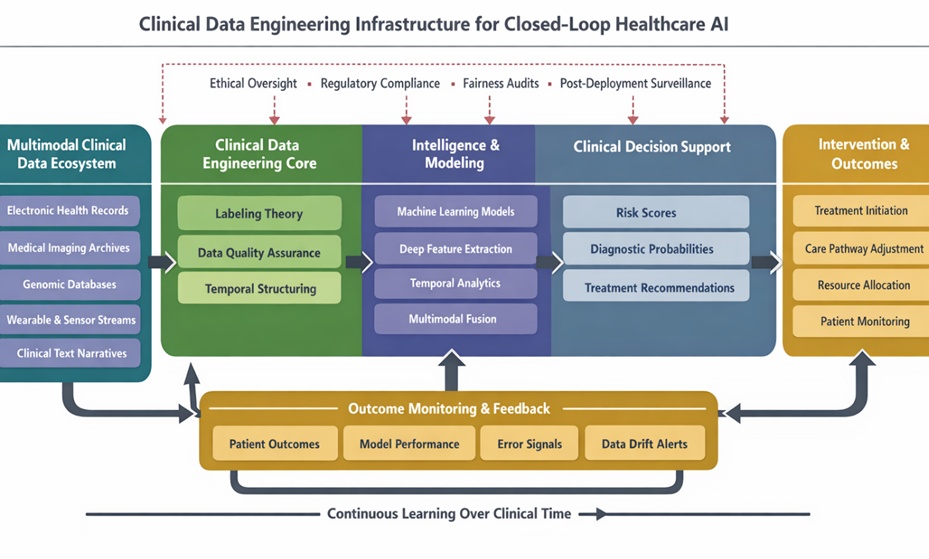
Figure 1. Clinical data engineering architecture for closed-loop healthcare AI systems.
The framework illustrates how heterogeneous clinical data sources are transformed through a structured engineering core consisting of labeling theory, data quality assurance, and temporal structuring standards. Engineered data enable predictive intelligence generation and clinical decision support, which guide real-world interventions and outcome monitoring. Feedback signals propagate upstream to recalibrate data engineering and model layers, forming a continuous learning loop governed by ethical and regulatory oversight.
The synthesis of literature from 2017 to 2021 reveals clinical data engineering as a pivotal enabler for AI in healthcare systems and analytics, bridging raw data to actionable intelligence [1, 2, 5, 6, 15, 18, 26]. Labeling theory, data quality assurance, and temporal structuring standards collectively form an infrastructural triad that supports the reliability and adaptability of AI applications [3, 4, 6, 10, 11, 22, 25]. This integrative view posits that effective engineering mitigates fragmentation in healthcare data ecosystems, fostering interoperability across silos [11, 16, 26].
Cross-study analysis highlights synergies: for instance, labeling practices in imaging AI (e.g., skin cancer datasets) inform quality assurance protocols in EHR analytics, reducing variability and enhancing temporal models for prognostic tasks [3, 4, 6, 13, 24]. An original interpretive structure frames this as a layered hierarchy: foundational labeling establishes ground truth, quality assurance refines fidelity, and temporal standards add dynamism, culminating in resilient systems [6, 10, 15]. This framework extends beyond individual studies, emphasizing governance integration to align with ethical imperatives [9, 10, 14, 28, 29]. Table 2 outlines the structural components and engineering challenges associated with closed-loop healthcare AI systems.
Table 2. Comparative characteristics of closed-loop healthcare AI systems
System component | Analytical role | Data requirements | Key technical challenges | Engineering solutions |
Data ingestion layer | Aggregates multimodal clinical data streams | EHR records, imaging archives, genomic data, and sensor streams | Data silos and interoperability barriers | FHIR standards and unified data schemas |
Intelligence generation layer | Extracts predictive patterns using AI models | Engineered datasets with reliable labels and temporal structures | Overfitting, dataset shift, and computational cost | Deep learning architectures and ensemble modeling |
Clinical decision support | Translates AI predictions into actionable insights | Risk scores, classification outputs, and uncertainty estimates | Explainability limitations and clinician trust | Explainable AI methods and probabilistic outputs |
Intervention layer | Executes care actions informed by AI recommendations | Clinical workflow integration | Workflow disruption, automation bias | Human-AI collaborative decision frameworks |
Feedback monitoring | Tracks outcomes and model performance | Longitudinal patient outcomes, performance metrics | Data drift, model degradation | Continuous learning loops and adaptive recalibration |
Governance infrastructure | Maintains ethical oversight across the lifecycle | Audit logs, fairness metrics, compliance records | Regulatory fragmentation, transparency deficits | Ethical AI governance frameworks |
In healthcare systems, engineered data drives analytics for population-level insights, such as resource optimization in overburdened facilities [16, 19, 27]. However, disparities in data access, particularly in low- and middle-income countries (LMICs), underscore the need for inclusive engineering [29]. Synthesis indicates that while DL excels in pattern recognition [1, 3, 4, 25], its success depends on upstream engineering to handle real-world complexities like data sparsity.
A primary challenge in clinical data engineering is managing heterogeneous data sources, which vary in format, granularity, and provenance [1, 5, 6, 11, 15, 26]. EHRs from different vendors often lack standardization, complicating integration for AI analytics [11, 16]. Literature synthesizes that this leads to incomplete datasets, as seen in multi-center studies where missing modalities degrade model performance [4, 13, 26]. Temporal structuring exacerbates this, with irregular timestamps in longitudinal data posing risks for sequence modeling [6, 18, 24].
Original analysis: Barriers can be conceptualized as impedance mismatches in a data flow pipeline, where unharmonized inputs propagate errors downstream [6, 11]. Solutions like FHIR standards are proposed, but adoption lags, limiting scalability in global systems [11, 29].
Bias infiltration within labeling processes and quality assurance pipelines remains a critical limitation in healthcare AI systems [6, 10, 14, 26, 28]. Underrepresentation of certain demographic groups in labeled datasets can perpetuate structural inequities, particularly when machine learning models are trained on data that do not adequately reflect population diversity. This limitation has been observed in medical imaging applications, where models trained on skewed populations often demonstrate reduced performance when deployed in more heterogeneous clinical environments [3, 4, 10, 13].
Quality assurance protocols may also fail to detect subtle forms of bias embedded within historical clinical data. Algorithms trained on such data can inadvertently amplify existing disparities in healthcare access, treatment decisions, or outcomes, thereby reinforcing inequitable patterns rather than mitigating them [7, 9, 10, 14].
Ethical analyses consistently emphasize that without systematic bias audits and fairness monitoring, AI-driven clinical decision support systems may pose risks to vulnerable patient populations [9, 14, 28, 29]. These challenges are particularly pronounced in low- and middle-income countries (LMICs), where limited access to diverse and representative datasets constrains the development of equitable data engineering practices and robust model validation [29].
Scalability presents a significant technical challenge for healthcare AI data engineering pipelines. Large-scale clinical datasets—including petabyte-scale electronic health records (EHRs), genomic repositories, and high-resolution medical imaging archives—require substantial computational infrastructure for preprocessing, labeling, and model training [2, 6, 15, 18, 22]. Such infrastructure demands often exceed the capabilities of smaller healthcare institutions or research centers, thereby creating disparities in AI development capacity [2, 11, 19].
Temporal data engineering further compounds these challenges. Real-time structuring and analysis of clinical data streams require advanced architectures, including edge computing and distributed processing frameworks capable of handling continuous data ingestion and transformation [18, 24].
Existing literature also highlights methodological risks associated with scaling healthcare AI systems. Small or institution-specific datasets can lead to overfitting, while models deployed in dynamic clinical environments may experience performance degradation due to data drift over time [6, 11, 25]. These limitations reflect a broader tension between precision and practicality: highly complex and computationally intensive data engineering pipelines may achieve theoretical performance gains but remain difficult to integrate into routine clinical workflows [11, 18, 21].
Regulatory frameworks governing healthcare AI continue to evolve but remain insufficiently aligned with the dynamic nature of modern machine learning systems. Existing regulatory pathways—such as those used in regulatory approval processes—often focus on static models. In contrast, many contemporary AI systems incorporate adaptive learning mechanisms that evolve as new data becomes available [9, 10, 18].
Ethical concerns further complicate implementation. Data sharing practices necessary for large-scale model training may introduce risks related to privacy erosion, particularly when sensitive clinical information is exchanged across institutional or national boundaries. Additionally, the use of complex “black-box” models can limit transparency, making it difficult for clinicians and regulators to fully understand or evaluate algorithmic decision-making processes [9, 14, 28].
Scholarly consensus increasingly calls for human-centered governance frameworks that integrate ethical oversight, transparency requirements, and accountability mechanisms throughout the AI lifecycle. However, implementation of such frameworks remains uneven across healthcare systems and regulatory jurisdictions, contributing to inconsistent adoption and oversight practices [10, 14, 29].
Human factors represent a critical barrier to the adoption of AI-driven healthcare systems. Clinician trust in AI tools may be undermined when underlying data engineering processes—such as labeling procedures, feature extraction, or temporal modeling—are opaque or poorly documented [2, 9, 28].
Limitations in explainability further complicate clinical adoption. Healthcare professionals may be hesitant to rely on predictions generated by systems whose reasoning processes are not easily interpretable, particularly when these predictions influence diagnostic or treatment decisions. Uncertainty regarding the reliability of labeled data or temporal predictions can therefore reduce confidence in AI-assisted decision support tools [22, 25, 28].
In advanced closed-loop clinical systems, where AI recommendations may directly influence interventions, overreliance on automated outputs introduces additional risks. Engineering errors, data quality issues, or undetected biases within training data could lead to erroneous recommendations, potentially resulting in adverse clinical outcomes if human oversight mechanisms are insufficiently robust [2, 9, 18].
Future research should extend labeling theory to accommodate semi-automated and hybrid annotation workflows that reduce manual burden while preserving clinical fidelity [3, 4, 6, 22]. One promising direction involves the development of active learning frameworks capable of selectively querying domain experts when model uncertainty is high, thereby optimizing expert time while improving label quality. These frameworks could be integrated with natural language processing (NLP) systems to derive labels directly from clinical narratives and reports, facilitating scalable annotation pipelines for healthcare datasets [6, 13].
In healthcare analytics, these approaches could be expanded to support distributed annotation ecosystems. For example, crowd-sourced labeling models combined with blockchain-based verification mechanisms could enable secure and transparent annotation across multiple institutions while preserving provenance and trust in multi-institutional datasets [6, 10].
Another critical research agenda involves a formal investigation of label uncertainty. Bayesian frameworks could be employed to quantify annotation variability and propagate uncertainty through model training, thereby improving robustness and interpretability of downstream predictive systems [4, 6, 10]. In parallel, future work should prioritize inclusive labeling practices designed to reduce systematic bias and improve representation of underrepresented populations within healthcare datasets [14, 28, 29].
Future research agendas should prioritize AI-augmented quality assurance frameworks capable of continuously monitoring and improving data integrity in healthcare machine learning pipelines. One promising direction involves the use of generative models to produce high-fidelity synthetic data for augmentation, thereby addressing class imbalance and enhancing model generalizability without compromising patient privacy [6, 15, 25].
Another critical direction involves the development of automated bias detection pipelines capable of identifying demographic or institutional disparities during model development and deployment. These pipelines could be implemented within federated learning environments to enable cross-institutional model training while preserving data privacy and regulatory compliance across participating healthcare sites [6, 10, 11].
In addition, future work should explore standardized quality metrics specifically tailored to healthcare contexts. Unlike generic machine learning benchmarks, these metrics should capture clinically meaningful indicators such as reliability across patient subgroups, temporal robustness, and safety implications in decision support systems [7, 10, 13]. For low- and middle-income countries (LMICs), research should also focus on developing lightweight quality assurance tools based on edge AI technologies that function effectively in low-resource environments with limited computational infrastructure [29].
Advancements in temporal data structuring should focus on modeling non-stationary and evolving clinical data streams. Future work may explore graph-based representations of patient trajectories, allowing complex relationships between clinical events, treatments, and outcomes to be represented within dynamic analytical frameworks [6, 16, 18, 24].
Another promising research direction involves integrating causal inference methods with temporal modeling to disentangle confounding relationships in predictive healthcare analytics better. Such integration could improve interpretability and support more reliable decision support systems in clinical environments [6, 24].
A theoretical foundation for adaptive temporal structuring may be formalized through the function:
where represents the system state at time ttt, and Δ denotes drift adjustments accounting for evolving data distributions. This formulation could guide closed-loop recalibration strategies in continuously learning healthcare systems [6, 18].
Future work should also investigate multimodal temporal fusion strategies that combine heterogeneous data sources—such as genomic profiles, wearable sensor streams, and electronic health record (EHR) sequences—to enable more comprehensive modeling of patient trajectories and disease progression [15, 24].
Future research should increasingly focus on systems-level integration, examining how engineering decisions across the data lifecycle influence clinical outcomes. Prospective clinical trials evaluating end-to-end AI systems will be essential for establishing evidence of safety, reliability, and real-world clinical value [2, 5, 11, 18, 26].
Research agendas should also explore hybrid human-AI architectures that combine automated prediction with human oversight. Such systems could incorporate governance layers that support transparency, auditability, and responsible deployment within clinical decision support frameworks [2, 9, 28].
Global research directions should emphasize context-sensitive engineering approaches tailored to healthcare environments in low- and middle-income countries. This includes the development of affordable, offline-capable AI tools capable of operating in settings with limited connectivity and infrastructure [29]. Additionally, interdisciplinary research on trust-building mechanisms—such as simulation environments that test human-AI decision fusion—will be critical for promoting responsible adoption of AI in clinical practice [9, 28].
Emerging computational paradigms may further transform healthcare data engineering research. For instance, quantum computing could eventually enable efficient optimization and modeling of highly complex biomedical datasets that exceed the capabilities of classical computational approaches [2, 8, 15, 18].
Equally important is the expansion of interdisciplinary collaborations between clinicians, computer scientists, data engineers, and social scientists. Such collaborations can ensure that technical innovations remain aligned with real clinical needs and ethical considerations.
Finally, future work should prioritize the development of standardized open-source engineering toolkits that promote reproducibility, transparency, and collaborative advancement across the healthcare AI research community [6, 11, 26].
Clinical data engineering stands as the cornerstone for advancing AI in healthcare systems and analytics, with labeling theory, data quality assurance, and temporal structuring standards enabling robust, equitable applications. This review’s original synthesis underscores the need for integrative frameworks that transcend isolated components, fostering closed-loop systems that enhance clinical decision-making. Despite challenges like bias and scalability, future directions in automated labeling, AI-driven assurance, and dynamic structuring promise transformative impacts. Ultimately, prioritizing ethical governance and inclusivity will ensure AI realizes its potential for high-performance, accessible healthcare.
None
None
None
None
Open Access The author(s) retain copyright. This article is licensed under the Creative Commons Attribution-NonCommercial-ShareAlike 4.0 International License. It may be shared and adapted for non-commercial purposes with appropriate attribution, an indication of changes, and distribution of adaptations under the same license. Third-party material may be subject to separate terms identified in its credit line. View the license at https://creativecommons.org/licenses/by-nc-sa/4.0/.
 Clinical Intelligence Research Press