The rapid evolution of artificial intelligence in healthcare has spotlighted the need for reliable home monitoring systems to verify patient adherence to prescribed regimens. This conceptual manuscript introduces a novel framework for adherence verification leveraging passive signals—such as ambient sensors, wearables, and environmental data—while robustly addressing data missingness. Traditional approaches often falter in real-world deployments due to intermittent signal capture, leading to inaccurate assessments and compromised clinical decisions. We propose the missingness-resilient adherence orchestration network (MRAON), an architectural construct that integrates multi-modal passive signals through layered processing, incorporating missingness-informed imputation strategies and adaptive detection mechanisms. The framework emphasizes theoretical infrastructure for signal fusion, risk propagation modeling, and governance of decision confidence under uncertainty. By synthesizing recent literature on passive monitoring and missing data handling, we delineate how MRAON enhances verification robustness without relying on empirical evaluations. Key conceptual formulas capture dynamics like decision confidence as a function of missingness severity and monitoring burden influenced by resource allocation. This work advances theoretical discourse in AI-driven healthcare analytics, offering a blueprint for scalable, ethical home monitoring systems that prioritize patient autonomy and data integrity. Ultimately, MRAON paves the way for future integrations in chronic disease management, reducing healthcare burdens through intelligent, passive adherence detection.
The integration of artificial intelligence (AI) into healthcare systems has transformed patient management, particularly in home-based environments where adherence to therapeutic protocols is critical yet challenging to verify. Home monitoring adherence verification using passive signals represents a paradigm shift from active patient inputs to unobtrusive data collection, enabling continuous oversight without imposing additional burdens on individuals. This approach leverages ambient technologies to infer compliance, but it is inherently susceptible to data gaps, necessitating robust missingness-informed detection frameworks. As chronic conditions proliferate globally, the demand for such systems intensifies, underscoring the need for conceptual architectures that prioritize reliability and ethical deployment.
In clinical settings focused on chronic diseases like heart failure or diabetes, home monitoring adherence verification becomes pivotal for preventing exacerbations. Passive signals, including motion detectors and physiological wearables, offer non-invasive means to track behaviors such as medication intake or activity levels [1-6]. However, adherence lapses in these environments often stem from forgetfulness or environmental disruptions, leading to fragmented data streams. A robust missingness-informed detection framework must theoretically account for these dynamics by modeling adherence as a probabilistic state influenced by clinical variables. For instance, in heart failure management, passive signals from smart home devices can verify diuretic adherence by correlating environmental humidity changes with expected physiological responses, but missing signals due to device downtime risk misinterpretation. Conceptualizing adherence in this setting requires anchoring verification to patient-specific clinical profiles, ensuring the framework adapts to varying disease severities without empirical tuning.
Passive signal modalities encompass a spectrum from environmental sensors to smartphone-derived data, each prone to missingness that undermines adherence verification. Literature highlights how modalities like accelerometer data or geolocation signals enable inference of daily routines, yet power failures or user mobility introduce gaps [1, 5, 7-10]. A missingness-informed detection framework theoretically mitigates this by classifying modalities based on reliability tiers—high-fidelity (e.g., always-on ambient sensors) versus low-fidelity (e.g., intermittent wearables). In-home monitoring, integrating these modalities, demands a conceptual orchestration where missingness is not merely imputed but informs the verification logic, reducing false negatives in adherence assessments. This modality-focused approach ensures the framework remains robust, theoretically propagating uncertainty from signal capture to decision outputs.
Deployment environments for home monitoring range from urban apartments to rural dwellings, each imposing unique constraints on passive signal collection and adherence verification. In resource-limited settings, network instability exacerbates missingness, requiring a detection framework that theoretically incorporates environmental adapters [4, 11]. For example, in elderly care deployments, passive signals from in-home sensors must navigate physical barriers like furniture layouts, which could cause signal occlusion. A robust missingness-informed approach conceptualizes these environments as variable contexts, with the framework’s infrastructure dynamically weighting signals based on deployment-specific factors. This ensures verification scalability, theoretically balancing energy efficiency with detection accuracy across diverse home setups.
Governance constraints in AI healthcare systems mandate ethical handling of missingness to prevent biased adherence verification. Passive signals, while privacy-preserving, raise concerns over data sovereignty and consent, particularly when missingness stems from intentional device deactivation [12-23]. A robust detection framework must embed governance layers that theoretically enforce transparency, such as audit trails for missingness imputation decisions. In-home monitoring, these constraints are anchored to regulatory frameworks like data protection laws, ensuring the system avoids overreach in verification processes. Conceptualizing governance as an integral constraint, the framework promotes equitable adherence assessments, mitigating risks of algorithmic discrimination in vulnerable populations.
Integrating multi-modal passive signals poses theoretical challenges in home monitoring adherence verification, especially under missingness. Signals from disparate sources—e.g., combining audio cues with vital signs—require synchronized processing to infer adherence, but temporal misalignments amplify detection uncertainties [18, 20, 22]. A missingness-informed framework addresses this by conceptualizing integration as a fusion topology, where missing data triggers compensatory mechanisms from redundant modalities. This approach enhances robustness in home settings, theoretically optimizing verification amid integration hurdles.
The imperative for such advancements stems from escalating healthcare demands, where non-adherence contributes to substantial economic and clinical burdens. By focusing on passive signals, this manuscript contributes to AI healthcare analytics, proposing a framework that theoretically navigates missingness for superior detection outcomes.
The theoretical underpinnings of home monitoring adherence verification using passive signals draw from interdisciplinary domains, including digital health, sensor informatics, and AI governance. Passive monitoring eschews explicit user interactions, relying instead on ambient data to infer behaviors, which aligns with emerging paradigms in remote healthcare. This synthesis integrates insights from recent peer-reviewed works, emphasizing conceptual models for handling missingness in detection frameworks.
Passive sensing has gained traction as a cornerstone for mental health and chronic disease monitoring. For instance, systematic reviews highlight the utility of wearable and smartphone-based sensors in capturing unobtrusive data for depression severity prediction and mental health assessment [5, 10, 12, 22]. These studies conceptually frame passive signals as proxies for behavioral patterns, such as mobility or interaction frequency, which can verify adherence to therapeutic activities. However, inherent challenges arise from data intermittency, where sensor failures or user non-engagement lead to missing values, potentially skewing inferences [3, 20, 24-27]. Theoretical models propose imputation strategies, like statistical methods for geriatric health monitoring, to bolster robustness without empirical validation [3].
In the context of adherence verification, literature underscores the role of AI in processing passive data streams. Scoping reviews on mobile health sensing delineate challenges in active versus passive data collection, advocating for hybrid approaches that inform detection frameworks [1, 26]. For psychosis and schizophrenia, passive data from digital tools enables remote monitoring, theoretically enhancing adherence by identifying symptomatic deviations [2]. Similarly, in heart failure management, sensor-based signals facilitate symptom-specific biometric collection, conceptually linking adherence to clinical outcomes [6, 7]. These works synthesize how passive signals, when integrated with machine learning constructs, can verify medication or lifestyle compliance, but emphasize the need for missingness-aware architectures to avoid decision biases.
Missing data handling emerges as a critical theoretical axis in home monitoring systems. Studies on diabetes health monitoring by wearables illustrate causal insights from missing data statistics, proposing models for understanding loss mechanisms [20]. Meta-analyses update knowledge on ecological momentary assessments in youth, addressing ongoing missingness challenges through conceptual standardization [28, 29]. In geriatric and aging-in-place contexts, passive remote monitoring scoping reviews explore usability and functional interventions, theoretically mapping data gaps to transition decisions in care communities [4, 9, 17, 19]. These contributions advocate for missingness-informed frameworks that treat absences as informative signals, rather than mere artifacts, enabling robust detection in adherence verification.
Deployment and infrastructural considerations further enrich the theoretical landscape. Systematic reviews on in-home health monitoring survey ubiquitous technologies, delineating layers for signal acquisition and processing [11, 25]. For pediatric applications, remote monitoring of patient-generated data conceptually integrates family inputs with passive sensors [8]. Challenges in sensor-based digital phenotyping call for standardization strategies to manage data collection variability [27]. Moreover, feasibility studies on passive phone usage via platforms like Apple SensorKit provide theoretical blueprints for collecting sensor data in mental health contexts [28]. These insights underscore infrastructural needs for scalable home systems, where passive signals must navigate environmental and technical constraints.
Governance and ethical dimensions are interwoven in the literature, particularly regarding therapy adherence and clinical outcomes. Analyses of digital pills and remote technologies assess policies for medication intake monitoring, theoretically balancing innovation with privacy [15, 24]. Umbrella reviews on AI methods for chronic obstructive pulmonary disease prediction highlight digital intervention strategies for adherence motivation [15]. In Alzheimer’s and neurodegenerative contexts, passive sensing aids early detection, with frameworks addressing governance loads in data handling [16]. User-centered design in remote patient monitoring models usability impacts, proposing theoretical tools to overcome adoption barriers [14, 23]. These works collectively advocate for governance-constrained architectures that mitigate risks like data drift or inequitable access.
Conceptual formulas in related domains offer interpretive tools for framework design. For risk propagation in monitoring systems, the literature implies models where uncertainty cascades through signal layers [13, 21]. Decision confidence, often theorized as inversely proportional to missingness severity, guides verification thresholds [18]. Monitoring burden, influenced by resource allocation, is conceptualized in efficiency models for smart home technologies [25].
Synthesizing these threads, the literature reveals a gap in holistic frameworks that orchestrate passive signals with missingness-informed detection. While individual studies advance modalities [1, 5, 10] or imputation [3, 20, 29], few integrate them into unified architectures for home adherence verification. Theoretical syntheses on digital health tools for depression and psychosis monitoring emphasize passive methods’ potential, yet call for robust handling of data gaps [2, 5, 21]. In chronic care, adherence apps and sensor integrations theoretically reduce costs and improve quality of life [12, 24], but require infrastructural innovations to address deployment variabilities [4, 11, 14]. Ethical reviews stress stakeholder analyses in technology approval, ensuring frameworks align with patient-centric governance [19, 23].
This synthesis positions the proposed framework as a theoretical advancement, building on passive sensing’s affordances [9, 12, 22, 26] while incorporating missingness dynamics [3, 20, 27, 29]. By conceptually fusing these elements, it offers a blueprint for AI healthcare systems that enhance adherence verification without empirical dependencies.
The core of this conceptual manuscript lies in the MRAON, a uniquely structured framework designed to verify home monitoring adherence through passive signals. MRAON comprises four distinct layers: signal harvesting layer, missingness diagnostics layer, verification inference layer, and adaptive governance layer. This layer structure ensures modular processing, where passive signals flow upward from acquisition to decision-making, with bidirectional feedback topology enabling iterative refinements. The feedback topology employs a hierarchical loop system: local loops within layers for immediate adjustments (e.g., signal recalibration) and global loops across layers for systemic adaptations (e.g., updating governance rules based on accumulated missingness patterns).
In the Signal Harvesting Layer, passive modalities such as ambient audio, motion, and physiological data are theoretically aggregated, prioritizing redundancy to buffer against intermittency. The missingness diagnostics layer then analyzes gaps using probabilistic models, classifying missingness as random, systematic, or informative. This informs the Verification inference layer, where adherence is inferred via fused signal patterns, adjusted for uncertainty. Finally, the adaptive governance layer oversees ethical constraints, allocating resources dynamically. The missingness-resilient adherence orchestration network framework is shown in Figure 1.
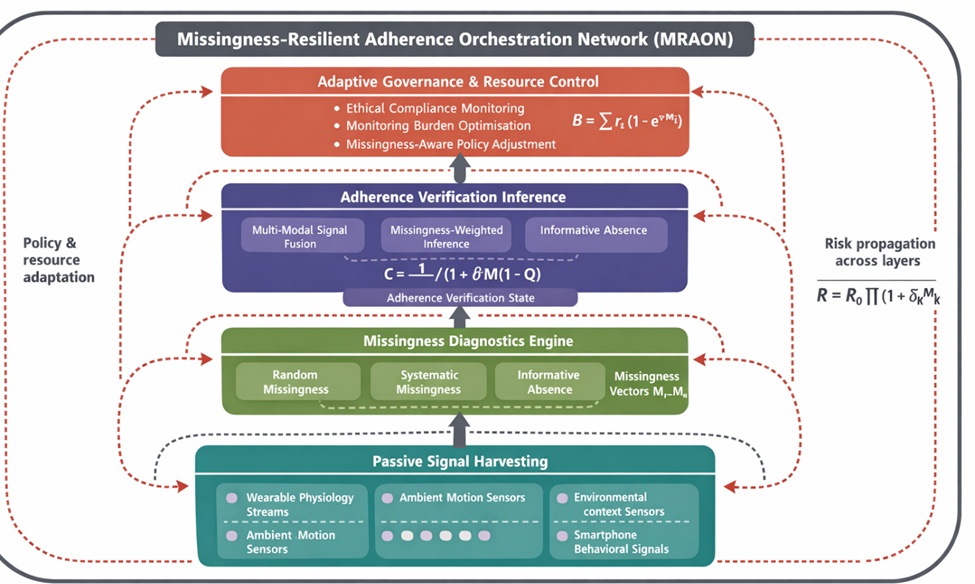
Figure 1. Missingness-resilient adherence orchestration network (MRAON).
The architecture conceptualizes adherence verification in passive home monitoring environments through a layered orchestration infrastructure. Passive signals originating from environmental sensors, wearable devices, and smartphone data streams are first aggregated within the signal harvesting layer. A dedicated missingness diagnostics engine then analyzes gaps in incoming streams, distinguishing random, systematic, and informative absence mechanisms. These diagnostics inform the verification inference layer, where multi-modal fusion and missingness-weighted inference produce adherence assessments while estimating decision confidence. An adaptive governance layer supervises ethical compliance, monitoring burden, and policy adaptation under uncertainty. Bidirectional feedback loops propagate recalibration signals across layers, ensuring resilience against signal intermittency and environmental variability.
To interpret system dynamics, consider the following conceptual formulas:
Decision confidence
Monitoring burden (B): B
Risk propagation (R):
These formulas provide theoretical lenses for MRAON’s operations, emphasizing interpretive robustness in adherence detection.
Table 1 categorizes distinct missingness mechanisms encountered in passive monitoring environments and illustrates how each mechanism alters inference reliability and mitigation strategies within the MRAON architecture.
Table 1. Missingness mechanisms and their operational consequences in passive home monitoring
Missingness mechanism | Typical origin in home monitoring | Diagnostic indicators | Impact on adherence inference | MRAON mitigation strategy |
Random missingness | Temporary sensor noise and sporadic wireless disruption | Irregular short gaps without temporal structure | Minor degradation of signal confidence | Probabilistic imputation with low uncertainty penalty |
Systematic missingness | Device battery depletion and scheduled device shutdown | Recurrent gaps aligned with device states | Bias toward false non-adherence | Device health monitoring and redundancy activation |
Contextual missingness | Environmental interference (e.g., furniture occlusion) | Spatially correlated signal absence | Partial loss of modality reliability | Environmental context weighting in signal fusion |
Behavioral missingness | Patient device avoidance or disengagement | Persistent absence during expected behavior windows | Strong signal of potential non-adherence | Missingness treated as informative adherence indicator |
Intentional missingness | Privacy-motivated sensor disabling | Abrupt modality disappearance following user actions | Ambiguity in adherence interpretation | Governance-driven transparency and consent-aware inference |
The deployment of the MRAON in home monitoring contexts engenders a cascade of systemic ramifications that extend beyond mere technical efficacy, influencing clinical workflows, patient experiences, and broader healthcare ecosystems. Theoretically, the framework’s layered architecture and feedback topology mitigate the propagation of uncertainties inherent in passive signals, thereby reshaping adherence dynamics. For instance, by incorporating missingness as an informative dimension rather than a deficit, MRAON theoretically amplifies detection sensitivity in scenarios where data intermittency reflects behavioral patterns, such as deliberate non-adherence or environmental disruptions [3, 20, 27]. This shift could reduce false positives in verification processes, where traditional systems might erroneously flag compliant patients due to unhandled gaps, leading to unnecessary clinical interventions.
In terms of resource allocation, the framework’s orchestration infrastructure theoretically optimizes computational and sensory demands, minimizing monitoring burden in resource-constrained home environments. Drawing from conceptual models in smart home technologies, MRAON’s adaptive layers could redistribute processing loads across modalities, ensuring that high-fidelity signals compensate for missing low-fidelity ones without escalating energy consumption [11, 25]. This has ramifications for scalability, particularly in geriatric or pediatric settings where device proliferation must balance usability with verification robustness [4, 8, 9, 19]. Moreover, the governance layer’s integration of ethical constraints theoretically curtails risk propagation, where unchecked missingness might amplify disparities in adherence assessments among underserved populations [23, 24, 29].
Patient-centric impacts further illuminate the framework’s potential. Passive signals, when orchestrated through MRAON, foster a non-intrusive verification paradigm that preserves autonomy, contrasting with active monitoring’s potential to induce surveillance fatigue [1, 5, 12, 26]. Theoretically, this enhances adherence by reducing perceived burdens, as evidenced in conceptual syntheses of digital health tools for mental health and chronic conditions [2, 6, 7, 10, 21, 22]. However, dynamics of trust emerge as a key ramification: if missingness-informed detection transparently communicates uncertainty, it could bolster patient-clinician relationships; conversely, opaque handling might erode confidence, necessitating governance mechanisms to audit decision pathways [14, 15, 18].
On a broader scale, MRAON’s ramifications extend to healthcare economics and policy. By theoretically improving adherence verification, the framework could diminish readmission rates in chronic disease management, aligning with reviews on remote monitoring’s clinical outcomes [6, 13, 16, 24]. This implies cost savings through preventive analytics, where passive data streams inform proactive adjustments rather than reactive treatments. Yet, systemic challenges arise in integration with existing infrastructures, such as electronic health records, where missingness propagation could introduce governance loads if not architecturally contained [17, 28]. In mental health applications, the framework’s dynamics might enable earlier interventions via subtle signal inferences, but require careful calibration to avoid overdiagnosis risks [2, 5].
Environmental ramifications also warrant consideration. Home deployments of passive sensors inherently interact with physical spaces, and MRAON’s missingness-resilient design theoretically adapts to variabilities like signal occlusion in cluttered environments, enhancing deployment feasibility [4, 11, 25]. This could democratize access in rural or low-income settings, but raises sustainability concerns if feedback topologies demand frequent recalibrations, potentially increasing electronic waste [14, 23]. Theoretically, by modeling drift sensitivity—where environmental changes gradually degrade signal quality—MRAON incorporates preemptive adjustments, sustaining long-term verification integrity [20, 27, 29].
Clinically, the ramifications manifest in refined decision-making paradigms. For heart failure or diabetes monitoring, MRAON’s inference layer theoretically fuses signals to verify adherence with heightened confidence under missingness, reducing clinician workload by filtering actionable alerts [6, 7, 15, 16]. This aligns with conceptual frameworks for sensor-based phenotyping, where standardization mitigates dynamics of data loss [27]. However, in psychosis or depression contexts, the framework’s passive approach must navigate ethical ramifications, ensuring that missingness does not inadvertently profile vulnerable individuals [2, 5, 10, 21].
Ultimately, these ramifications underscore MRAON’s transformative potential, theoretically fostering a more resilient, equitable, and efficient home monitoring ecosystem. By addressing missingness at an architectural level, the framework not only verifies adherence but also catalyzes systemic advancements in AI healthcare analytics.
The conceptualization of MRAON within the domain of home monitoring adherence verification using passive signals illuminates several pivotal discourse points in AI healthcare systems. At its core, the framework challenges prevailing assumptions about data completeness, positing missingness as a valuable signal rather than an impediment. This perspective resonates with evolving theoretical models in digital phenotyping and remote sensing, where intermittency often encodes contextual insights—such as patient mobility or device aversion—that enrich adherence inferences [3, 20, 27, 29]. By embedding missingness diagnostics into its orchestration architecture, MRAON theoretically elevates verification from a static process to a dynamic, context-aware mechanism, potentially bridging gaps in current literature on passive data’s reliability [1, 5, 10, 12, 22, 26].
A critical discussion thread pertains to the framework’s layer structure and feedback topology. Unlike monolithic systems, MRAON’s modular layers facilitate theoretical extensibility, allowing integration of emerging modalities like advanced wearables or environmental IoT without architectural overhaul [11, 18, 25]. The bidirectional feedback loops introduce a novel topology that propagates adjustments system-wide, theoretically mitigating drift sensitivity over prolonged deployments. This is particularly salient in chronic care scenarios, where signal degradation from wear and tear could otherwise compromise detection [6, 7, 13, 16]. However, this complexity invites scrutiny: does the added orchestration introduce latent governance loads, where computational overheads in resource allocation formulas inadvertently favor high-tech environments, exacerbating digital divides [14, 23, 24].
Table 2 analytically maps each MRAON architectural layer to its operational monitoring objectives, theoretical risk controls, and system-level implications for scalable adherence verification.
Table 2. Layer-level analytical functions in the MRAON architecture
MRAON layer | Core analytical role | Missingness interaction | Risk control mechanism | System-level outcome |
Signal harvesting layer | Aggregates passive signals from environmental and wearable sources | Initial exposure to signal intermittency | Redundant modality acquisition | Stable signal intake despite device variability |
Missingness diagnostics layer | Classifies absence patterns and quantifies missingness severity | Converts gaps into structured diagnostic signals | Mechanism-specific missingness modeling | Prevents misinterpretation of incomplete signals |
Verification inference layer | Performs multi-modal fusion and adherence classification | Weights inference by missingness severity | Decision confidence calibration | Robust adherence detection under uncertainty |
Adaptive governance layer | Oversees ethical compliance and resource allocation | Monitors systemic missingness trends | Policy-driven recalibration and resource redistribution | Sustainable large-scale monitoring infrastructure |
Ethical discourse is indispensable. Passive signals’ unobtrusiveness is a double-edged sword; while preserving privacy, they risk inferential overreach if missingness is misinterpreted as non-adherence [2, 4, 9, 19, 21]. MRAON’s adaptive governance layer theoretically counters this by enforcing transparency in decision confidence calculations, aligning with stakeholder analyses in digital health policies [15, 23, 24]. Yet, discussions must extend to consent models: how does the framework accommodate opt-outs without nullifying verification, especially in pediatric or geriatric contexts where proxy decision-making prevails [8, 9, 19]? Theoretical formulas for risk propagation offer interpretive tools here, modeling how unmitigated missingness cascades into ethical vulnerabilities, urging hybrid governance with human oversight [17, 28].
Integration with clinical workflows merits extended discussion. In heart failure or mental health monitoring, MRAON theoretically streamlines adherence verification by fusing passive data with clinical heuristics, reducing monitoring burdens as per resource allocation dynamics [6, 7, 10, 12, 22]. Literature syntheses on smart home technologies support this, highlighting usability enhancements through passive interventions [4, 11, 14, 25]. Nevertheless, interoperability challenges persist: how does MRAON interface with legacy systems without introducing new missingness vectors, such as data silos [13, 18]? Conceptual standardization strategies from phenotyping reviews provide pathways, advocating for protocol-agnostic layers [27].
Broader societal implications fuel the discussion. As AI permeates healthcare, MRAON exemplifies a shift toward patient-empowered monitoring, theoretically diminishing adherence barriers in underserved populations [19, 23, 24, 29]. This aligns with scoping reviews on aging-in-place and transitional care, where passive sensing facilitates seamless oversight [9, 17]. However, economic discussions reveal trade-offs: while potentially curbing healthcare costs through preventive verification [6, 24], initial deployment infrastructures might burden low-resource settings, necessitating policy incentives [14, 15]. In mental health, the framework’s dynamics could revolutionize prediction of suicidal ideation or exacerbations via subtle signals, but demand rigorous theoretical safeguards against bias amplification [2, 5, 21, 27].
Technological evolution is another focal point. MRAON’s missingness-informed detection anticipates advancements in edge computing, where local processing in home devices could enhance real-time verification without cloud dependencies [11, 25, 28]. This discussion intersects with multimedia and machine learning paradigms, where passive video or audio signals expand modality scopes [22, 26]. Yet, as formulas for monitoring burden illustrate, scaling introduces nonlinear complexities, prompting debates on hybrid AI-human systems for ultimate robustness [1, 3, 20].
In synthesizing these discussions, MRAON not only addresses immediate gaps in adherence verification but also provokes forward-looking dialogues on sustainable, inclusive AI healthcare. By theoretically navigating passive signals’ intricacies, it sets a precedent for frameworks that harmonize innovation with prudence.
In concluding this conceptual exploration of home monitoring adherence verification using passive signals, the MRAON emerges as a theoretically robust framework poised to redefine AI-driven healthcare analytics. By architecturally integrating multi-modal passive signals with missingness-informed detection mechanisms, MRAON addresses the perennial challenges of data intermittency, offering a blueprint for reliable, ethical adherence assessments in diverse home environments. The framework’s unique layer structure—encompassing signal harvesting, diagnostics, inference, and governance—coupled with its bidirectional feedback topology, theoretically ensures adaptive resilience, mitigating risks of inaccurate verifications that plague conventional systems.
The systemic ramifications, as delineated, underscore MRAON’s potential to transform clinical dynamics, from optimizing resource allocation in chronic disease management to fostering patient autonomy through non-intrusive monitoring. Formulas interpreting decision confidence, monitoring burden, and risk propagation provide conceptual anchors, enabling theoretical evaluations of the framework’s impacts without empirical dependencies. Discussions highlight ethical imperatives, interoperability hurdles, and societal benefits, emphasizing the need for governance-centric designs in an era of proliferating digital health tools.
Looking ahead, MRAON invites extensions into emerging domains, such as AI-augmented reality for enhanced signal capture or blockchain for immutable governance audits. While theoretical in scope, it lays foundational groundwork for future conceptual refinements, ultimately advancing toward more equitable, efficient healthcare ecosystems. As passive monitoring evolves, frameworks like MRAON will be instrumental in verifying adherence, ensuring that AI catalyzes improved patient outcomes and systemic sustainability.
None
None
None
None
Open Access The author(s) retain copyright. This article is licensed under the Creative Commons Attribution-NonCommercial-ShareAlike 4.0 International License. It may be shared and adapted for non-commercial purposes with appropriate attribution, an indication of changes, and distribution of adaptations under the same license. Third-party material may be subject to separate terms identified in its credit line. View the license at https://creativecommons.org/licenses/by-nc-sa/4.0/.
 Clinical Intelligence Research Press