Wearable and mobile sensing technologies are transforming healthcare by enabling continuous monitoring, real-time analytics, and personalized interventions. This narrative review explores recent advances in artificial intelligence (AI)–driven healthcare analytics, focusing on validation frameworks, drift detection, and generalization challenges associated with wearable sensing systems. Modern wearable devices equipped with biosensors capture physiological signals such as heart rate, activity, and stress indicators, while AI algorithms analyze multimodal data to generate actionable clinical insights. Ensuring reliability requires robust validation strategies that address sensor accuracy, data integrity, and clinical relevance in real-world settings. Drift detection methods help maintain model performance despite environmental changes and user variability. At the same time, generalization techniques support reliable deployment across diverse populations and clinical contexts, advancing scalable and adaptive digital healthcare systems.
Wearable and mobile sensing technologies have transformed healthcare from episodic clinical assessments to continuous monitoring. Traditionally, health data were collected during periodic clinical visits, but AI-enabled devices now support real-time and unobtrusive monitoring, promoting proactive healthcare models [1]. Devices such as smartwatches, fitness trackers, and implantable biosensors collect diverse physiological signals—including electrocardiograms, motion data, and biochemical indicators—which AI systems analyze to generate meaningful health insights [2, 3]. Advances in materials science, particularly flexible sensors such as graphene-based technologies, have further improved sensitivity and usability in daily life environments [4-11]. While early wearable devices focused primarily on consumer fitness, recent developments emphasize clinical-grade monitoring, exemplified by FDA-cleared wearables for atrial fibrillation detection [12, 13].
Integrating these sensors into healthcare infrastructures requires managing heterogeneous data streams, creating interoperability challenges that AI frameworks, including federated architectures, help address [4, 6]. Mobile sensing applications also extend to mental health, where machine learning techniques infer stress or behavioral patterns from voice and activity data [9, 14-17]. However, real-world environments introduce variability and noise that demand robust validation beyond controlled laboratory settings [5, 15]. Despite these challenges, AI-enhanced sensor analytics improve diagnostic accuracy and enable scalable digital health platforms that support population-level health monitoring and predictive modeling [7, 10, 14, 16].
AI provides the analytical backbone for wearable and mobile sensing systems by converting raw sensor data into clinically meaningful insights. Machine learning approaches—including deep neural networks and ensemble models—analyze time-series sensor data to detect anomalies, predict health events, and deliver personalized recommendations [2, 6, 18-22]. Techniques such as convolutional neural networks demonstrate strong performance in extracting features from noisy sensor streams, often outperforming traditional signal-processing methods [3, 23, 24]. Within Internet of Medical Things (IoMT) frameworks, AI coordinates data flows between wearable devices and cloud platforms to enable real-time health monitoring and risk assessment [1, 8].
Multimodal data integration—combining inertial, optical, and biochemical sensing—further strengthens analytical robustness by creating comprehensive health profiles [11, 25]. AI-driven sensor fusion improves reliability even when individual sensors fail or degrade [4, 5]. Nevertheless, challenges such as data drift, privacy concerns, and limited labeled datasets persist, requiring adaptive learning, transfer learning, and federated AI solutions to ensure reliability and confidentiality [13, 15, 17, 18]. As wearable ecosystems scale and generate massive datasets, hybrid AI systems that combine rule-based reasoning with deep learning are increasingly adopted to ensure interpretability and clinical usability [21, 26, 27].
Wearable and mobile sensing technologies are increasingly applied across clinical domains, including cardiovascular and neurological monitoring [3, 11, 13]. In cardiology, AI-based analysis of photoplethysmography signals enables early detection of arrhythmias, supporting preventive interventions and reducing hospital admissions [8, 23]. In neurology, accelerometer-based gait analysis assists in monitoring Parkinson’s disease progression by detecting subtle motor changes before clinical symptoms become pronounced [4, 9]. Integration with electronic health records further enhances holistic patient management [1, 2].
From an analytics viewpoint, clinical applications demand real-time processing, as delays in mobile sensing can hinder acute care responses [17, 18]. Cross-study synthesis reveals opportunities in mental health, where AI infers mood from passive sensing, supporting remote therapy [19, 20]. However, challenges in data heterogeneity necessitate standardized protocols to enhance interoperability [21, 22]. Systems-level analysis suggests that addressing these early hurdles through iterative design can accelerate widespread implementation [24, 25].
Additionally, ethical considerations in clinical applications underscore informed consent and bias mitigation, as AI systems risk perpetuating disparities if trained on unrepresentative data [26, 27]. Analytical discussions advocate for inclusive datasets, improving generalization and equity in care optimization [28, 29].
Wearable and mobile sensing technologies are increasingly transitioning from isolated clinical applications to integrated healthcare ecosystems. In these systems, AI coordinates end-to-end workflows, enabling seamless interoperability between sensors, analytics platforms, and healthcare infrastructure [1-3]. Such integration allows continuous sensor data to support predictive analytics and population-level health management [4, 5]. However, achieving systems-level optimization requires overcoming validation and scalability challenges to ensure sensing reliability across large healthcare networks [6, 7]. Generalization frameworks address this issue by enabling models to operate consistently across institutions and datasets [8, 9].
Drift-aware AI techniques further support system optimization by maintaining model accuracy in evolving clinical environments [10, 11]. Cross-study analyses highlight the potential of closed-loop healthcare systems in which sensing data informs interventions and generates feedback-driven care pathways [12, 13]. At the same time, ethical considerations emphasize equitable access to digital health technologies to prevent widening healthcare disparities [14, 15]. Analytical frameworks also propose resilience metrics that evaluate system stability and reliability during large-scale deployment [16, 17].
Infrastructure-level optimization relies on hybrid computing architectures that combine edge and cloud resources to process sensor data efficiently and reduce latency [18, 19]. Adaptive learning strategies improve generalization and clinical utility across heterogeneous patient populations [20, 21]. Additionally, standardized interfaces and APIs promote interoperability and innovation across healthcare platforms [22, 23]. Collectively, these developments establish the foundation for comprehensive AI-driven sensing systems in healthcare [24-29].
Recent progress in sensor hardware has significantly improved the clinical viability of wearable and mobile sensing technologies, particularly through miniaturization and enhanced biocompatibility for long-term use [3, 11, 22]. Graphene-based sensors exemplify these advances, offering high electrical conductivity and mechanical flexibility that enable comfortable and accurate physiological monitoring [11]. Comparative studies indicate that flexible materials provide improved signal-to-noise performance in ambulatory conditions compared to traditional rigid sensors [1, 2]. From a systems perspective, modern hardware supports multimodal sensing, combining optical, electrochemical, and inertial measurements to generate comprehensive physiological datasets [25, 26].
Material innovations also address durability challenges. Smart polymers and bio-resistant coatings help prevent biofouling and extend biosensor lifespan, improving reliability in clinical environments [16, 27]. Research further demonstrates the potential of two-dimensional materials in flexible gas sensors capable of detecting respiratory biomarkers noninvasively [28, 29]. Despite these advances, energy efficiency remains a limitation, requiring AI-based optimization strategies such as duty cycling to balance battery consumption and data fidelity [4, 5]. Hardware–material integration increasingly supports edge computing capabilities, reducing reliance on centralized processing systems [6, 7].
At a systems level, these hardware developments contribute to resilient sensing networks where redundancy minimizes the risk of monitoring failures [8, 9]. AI-driven calibration methods help manage device variability and maintain consistent measurement quality across different hardware platforms [10, 12]. Additionally, the use of sustainable and environmentally conscious materials aligns sensor development with broader healthcare sustainability goals [13, 14]. However, variability in manufacturing processes creates generalization challenges, emphasizing the need for standardized testing protocols [15, 17].
Wearable and mobile sensing systems generate continuous streams of physiological data through high-frequency sampling, requiring efficient data acquisition and preprocessing pipelines to manage scale and complexity [1, 2, 6]. Preprocessing methods such as filtering, artifact removal, and signal normalization are essential for ensuring clinical data quality, with AI increasingly applied to automate these processes in real time [3, 4]. Comparative studies demonstrate that deep learning-based denoising techniques outperform conventional signal-processing methods in mitigating motion artifacts and environmental noise in free-living conditions [5, 7].
Effective preprocessing pipelines must also address missing or incomplete data. AI-based imputation techniques use contextual information from other sensors or historical data to reconstruct missing values and maintain dataset integrity [10, 11]. Multimodal fusion during acquisition further enriches datasets by combining signals from multiple sensor types, enabling more comprehensive health monitoring and analytics [12, 13]. In addition, edge-based preprocessing allows preliminary filtering and feature extraction directly on devices, reducing communication overhead and enhancing privacy protection [14, 15].
To ensure reliability, preprocessing pipelines must align with validation frameworks that verify the clinical integrity of processed data before analysis [22, 23]. Standardized acquisition and preprocessing protocols are also essential to support interoperability across devices and healthcare platforms, enabling consistent performance in heterogeneous sensing environments [24, 25].
Moreover, ethical preprocessing incorporates bias correction, addressing demographic imbalances in acquired data [26, 27]. Systems-level synthesis proposes modular pipelines, facilitating updates without disrupting clinical workflows [28, 29].
AI algorithms drive feature extraction from sensor data, employing convolutional and recurrent networks to identify clinically relevant patterns [2, 3, 6]. Pattern recognition in wearables detects anomalies like irregular heart rhythms, using unsupervised learning for novel event discovery [1, 4]. Comparative evaluations show transformer models excelling in sequential data, offering superior context awareness over traditional RNNs [5, 7]. Systems integration positions these algorithms within analytics ecosystems, enabling predictive pattern mapping to health outcomes [8, 9].
Feature extraction challenges include dimensionality reduction, where AI techniques like autoencoders preserve essential information while curbing computational costs [10, 11]. Interpretive analyses across studies highlight explainable AI in recognition, providing clinicians with interpretable features for trust-building [12, 13]. Cross-study synthesis reveals hybrid algorithms combining symbolic and neural approaches for robust pattern detection in noisy clinical data [14, 15]. Drift impacts feature stability, necessitating algorithms that adapt to shifting distributions [16, 17].
AI optimization improves recognition accuracy by combining biomechanical and physiological signals, as demonstrated in fatigue detection systems [18, 19]. Federated learning further enhances model generalization while preserving data privacy by avoiding centralized data aggregation [20, 21]. This shift enables dynamic pattern recognition for real-time clinical decision-making, although robust benchmarks are required to validate algorithms under clinical variability [22-25]. AI-based pattern recognition also extends to behavioral health, where mobile sensing data support mental state inference and integrated clinical insights [26-29].
The Internet of Medical Things (IoMT) expands wearable sensing by connecting devices to networked healthcare systems, enabling large-scale data sharing and remote monitoring through cloud-based analytics [1-3, 8, 22]. Compared with standalone devices, IoMT infrastructures support higher scalability and population-level analytics [4, 5]. AI-driven security and anomaly detection mechanisms strengthen the reliability of these interconnected networks [6, 7].
Latency challenges are addressed through edge AI, which processes data locally before transmission [9, 10]. IoMT also supports closed-loop healthcare systems where sensor data trigger automated alerts and interventions [11, 12]. Emerging governance frameworks, including blockchain-based approaches, enhance data traceability and trust in clinical data exchange [13, 14]. Standardized communication protocols remain essential for ensuring interoperability across heterogeneous sensors and platforms [15, 16]. Additionally, IoMT-generated big data enables population-level health insights, while AI orchestrates system resources to support clinical priorities and maintain reliability in distributed environments [25].
Moreover, IoMT supports global health initiatives, extending sensing to underserved areas [26, 27]. Systems synthesis advocates for resilient IoMT architectures, enhancing clinical optimization [28, 29].
Wearable sensing applications in chronic disease management optimize care through continuous tracking, as in diabetes, where glucose trends inform insulin adjustments [1, 3, 9]. Mobile devices monitor adherence, using AI to predict exacerbations in conditions like COPD [2, 4]. Comparative analyses show improved outcomes with sensing-integrated management, reducing readmissions via early warnings [5, 6]. Systems perspectives embed these applications in care pathways, linking sensing to telemedicine for comprehensive oversight [7, 8].
Management challenges involve personalization, where AI tailors thresholds to individual baselines [10, 11]. Interpretive studies emphasize patient engagement, with gamified sensing enhancing compliance [12, 13]. Cross-study synthesis reveals multimodal applications, combining wearables with apps for holistic chronic care [14, 15]. Drift detection ensures sustained accuracy in long-term management [16, 17].
Optimization in this domain leverages predictive analytics, forecasting disease progression from sensor patterns [18, 19]. Analytical discussions advocate for integrated platforms, streamlining data from multiple chronic conditions [20, 21]. The landscape highlights sensing’s transformative impact, shifting from reactive to preventive models [22, 23]. Generalization to varied chronic profiles requires adaptive AI [24, 25].
Furthermore, applications extend to cardiovascular diseases, where sensing enables risk stratification [26, 27]. Systems-level insights propose collaborative management ecosystems, involving patients and providers [28, 29].
Mental health monitoring via mobile sensing infers states from passive data like location and voice, enabling timely interventions [9, 17, 19]. Wearables track physiological correlates, such as heart rate variability for anxiety detection [1, 2]. Comparative evaluations indicate AI’s efficacy in pattern recognition, outperforming self-reports in objectivity [3, 4]. Systems integration connects sensing to therapeutic apps, forming feedback loops for behavioral nudges [5, 6].
Monitoring challenges include privacy, with AI anonymizing data to protect sensitive insights [7, 8]. Interpretive analyses highlight cultural sensitivities, adapting algorithms to diverse expressions of mental health [10, 11]. Cross-study insights propose hybrid monitoring, blending active and passive sensing for accuracy [12, 13]. Generalization across populations demands inclusive training data [14, 15].
Interventions optimize through just-in-time AI, delivering support based on real-time detections [16, 18]. Analytical depth underscores longitudinal tracking, revealing trends for personalized therapy [20, 21]. This landscape positions sensing as a mental health adjunct, complementing clinical care [22, 23]. Drift in behavioral data requires context-aware detection [24, 25].
Moreover, interventions foster resilience, using sensing to evaluate therapy efficacy [26, 27]. Systems synthesis advocates for ethical frameworks, ensuring beneficence in mental health applications [28, 29].
Emerging trends in multimodal sensing fuse diverse data types, enhancing clinical depth through AI synergies [2, 6, 25]. Trends include optical integration in wearables for non-invasive diagnostics, expanding beyond traditional metrics [26]. Comparative studies show multimodal superiority in complex detections, like stress from combined biometrics [9, 17]. Systems perspectives envision unified platforms, aggregating modalities for end-to-end analytics [1, 3].
Trends challenge data harmonization, with AI resolving modality conflicts [4, 5]. Interpretive frameworks highlight wearable evolution toward intelligent agents, predicting needs proactively [7, 8]. Cross-study synthesis reveals bioelectronics trends, embedding AI in sensor fabrics [10, 11]. Generalization benefits from multimodal robustness, reducing single-modality vulnerabilities [12, 13].
Optimization trends leverage 5G for seamless multimodal transmission [14, 15]. Analytical discussions propose scalable architectures, accommodating future modalities [16, 18]. The landscape forecasts pervasive sensing, transforming clinical care [19, 20]. Drift management in multimodals requires advanced AI monitoring [21, 22].
Furthermore, trends include AI-reinforced point-of-care tests, blending sensing with diagnostics [23, 24]. Systems-level insights emphasize innovation pipelines, from research to deployment [27-29].
Validation frameworks ensure wearable and mobile sensing meet clinical standards, incorporating prospective trials and benchmarking [5, 13, 15]. These frameworks assess accuracy, precision, and usability in real-world scenarios, moving beyond lab simulations [1, 2]. Comparative analyses reveal hybrid validation, combining computational simulations with human studies for comprehensive evaluation [3, 4]. Systems perspectives integrate validation into deployment cycles, enabling iterative improvements in healthcare analytics [6, 7].
Frameworks address clinical heterogeneity, validating across patient cohorts to mitigate biases [8, 9]. Interpretive studies emphasize regulatory alignment, incorporating FDA guidelines for evidence generation [10, 11]. Cross-study synthesis proposes multi-phase frameworks: pre-clinical, pilot, and large-scale, ensuring progressive rigor [12, 14]. Drift influences validation, requiring longitudinal assessments to capture temporal validity [16, 17].
From an optimization viewpoint, frameworks incorporate AI for automated validation, accelerating adoption [18, 19]. Analytical depth highlights metrics like sensitivity in dynamic environments, guiding framework design [20, 21]. Generalization is embedded, testing transferability to unseen clinical contexts [22, 23]. This approach fosters trust, bridging engineering and medicine [24, 25].
Moreover, validation extends to ethical dimensions, evaluating fairness in sensing outcomes [26, 27]. Systems synthesis advocates for open-source frameworks, promoting community-driven enhancements [28, 29]. Table 1 synthesizes the multi-layer validation dimensions required to establish clinical reliability for AI-driven wearable sensing systems across hardware, data, algorithmic, and real-world deployment contexts.
Table 1. Validation dimensions for clinical-grade wearable and mobile sensing systems
Validation layer | Core objective | Example evaluation metrics | Typical failure risks | Clinical relevance |
Sensor hardware validation | Confirm physical measurement accuracy | Signal-to-noise ratio and calibration stability | Biofouling, sensor degradation | Ensures physiological signals reflect true biological states |
Data acquisition validation | Verify the integrity of raw sensing streams | Missing data rate and artifact frequency | Motion artifacts and sampling loss | Protects the reliability of continuous monitoring |
Preprocessing pipeline validation | Ensure data cleaning and transformation preserve clinical meaning | Noise reduction accuracy and imputation fidelity | Over-filtering or signal distortion | Maintains diagnostic signal quality |
Algorithmic validation | Evaluate predictive performance of AI models | Sensitivity, specificity, and AUROC | Overfitting, domain shift errors | Determines clinical decision reliability |
Ecological validation | Test models in free-living environments | Cross-context performance stability | Performance drop outside lab settings | Confirms real-world usability |
Clinical outcome validation | Assess impact on patient care | Intervention success rate and adverse event reduction | False alerts and treatment misalignment | Demonstrates clinical utility |
Equity validation | Verify fairness across demographic groups | Bias metrics and subgroup accuracy | Demographic performance gaps | Ensures equitable healthcare deployment |
Drift detection mechanisms safeguard sensing systems against performance degradation, employing statistical and ML-based approaches [4, 5, 15]. Concept drift, where data distributions shift, is monitored via ensemble methods that flag anomalies [1, 2]. Comparative evaluations show online learning is superior for real-time detection in mobile sensing [3, 6]. Systems integration positions detection within feedback loops, triggering recalibration in clinical workflows [7, 8].
Mechanisms challenge in high-dimensional data, using dimensionality reduction for efficient monitoring [9, 10]. Interpretive analyses highlight environmental drifts, like temperature effects on sensors, necessitating adaptive thresholds [11, 12]. Cross-study insights propose hybrid mechanisms, blending rule-based and neural detection for robustness [13, 14]. Generalization of detection requires domain-invariant features [16, 17].
Optimization through detection enhances system longevity, as in chronic monitoring, where early alerts prevent failures [18, 19]. Analytical discussions formalize drift as a deviation in inference distributions, aiding mechanism design [20, 21]. This framework underscores proactive maintenance, optimizing clinical care [22, 23].
Furthermore, mechanisms incorporate user feedback, refining detection accuracy [24, 25]. Systems-level perspectives propose standardized drift protocols, facilitating cross-device consistency [26-29].
Generalization challenges in sensing systems stem from domain shifts, where models underperform in new settings [5, 6, 14]. Mitigation strategies include domain adaptation, transferring knowledge from source to target populations [1, 2]. Comparative studies demonstrate federated learning’s efficacy, aggregating insights without data centralization [3, 4]. Systems perspectives frame generalization within governance, ensuring scalable AI in diverse healthcare infrastructures [7, 8]. Table 2 consolidates the principal AI strategies proposed in the literature for mitigating distribution shifts and improving generalization across heterogeneous wearable sensing environments.
Table 2. AI z strategies for managing drift and generalization in wearable sensing systems
Strategy category | Mechanism | Primary purpose | Example implementation | Systems impact |
Online learning | Incremental model updating with streaming data | Adapt to evolving patient signals | Real-time retraining pipelines | Sustains long-term predictive accuracy |
Domain adaptation | Transfer knowledge across clinical environments | Address cross-institution variability | Feature alignment methods | Improves cross-site model portability |
Federated learning | Distributed training across institutions without sharing raw data | Enhance privacy-preserving generalization | Federated IoMT analytics networks | Enables large-scale collaborative AI |
Ensemble modeling | Combine multiple predictive models | Improve robustness to sensor variability | Multi-model voting frameworks | Reduces single-model failure risk |
Meta-learning | Train models to rapidly adapt to new contexts | Handle unseen patient populations | Few-shot adaptation algorithms | Accelerates deployment in new settings |
Continual learning | Integrate new knowledge without forgetting prior training | Manage long-term system evolution | Memory-based learning architectures | Supports adaptive clinical intelligence |
Hybrid neuro-symbolic systems | Combine machine learning with clinical knowledge rules | Improve interpretability and robustness | Knowledge-guided wearable analytics | Strengthens clinician trust and governance |
Challenges amplify in underrepresented groups, requiring inclusive datasets for equitable generalization [9, 10]. Interpretive frameworks highlight adversarial training, enhancing robustness to variations [11, 12]. Cross-study synthesis proposes meta-learning strategies, enabling quick adaptation to novel clinical scenarios [13, 15]. Drift exacerbates generalization, as undetected shifts erode transferability [16, 17].
Mitigation is optimized through ensemble techniques, combining models for broader coverage [18, 19]. Analytical depth underscores evaluation metrics like cross-domain accuracy, guiding strategy refinement [20, 21]. This addresses core hurdles, advancing clinical optimization [22, 23].
Moreover, strategies incorporate continual learning, updating models post-deployment [24, 25]. Systems synthesis advocates for collaborative ecosystems, sharing mitigation insights across institutions [26-29].
Figure 1 illustrates a conceptual architecture diagram for an end-to-end AI healthcare analytics loop in wearable and mobile sensing systems. The diagram is structured as a cyclical flowchart with six interconnected layers: data, intelligence, decision, intervention, feedback, and governance.
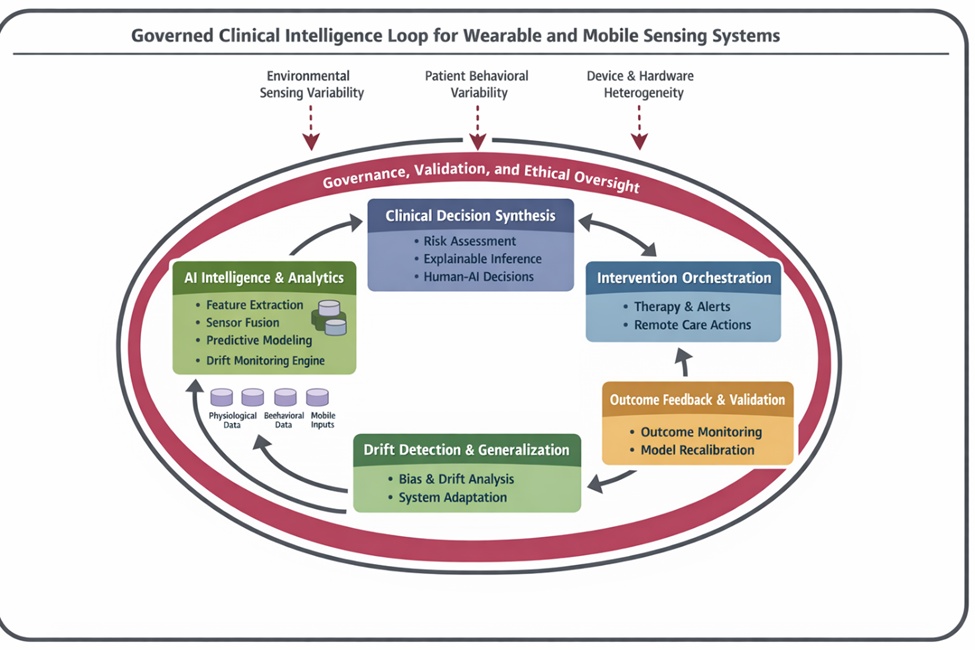
Figure 1. Closed-loop clinical intelligence architecture for wearable and mobile sensing systems in healthcare
The Data layer depicts multimodal inputs from wearables (e.g., physiological signals, activity logs) and mobile sources (e.g., geolocation, user inputs), aggregated via IoMT pipelines with preprocessing for noise reduction and fusion. Arrows indicate flow to the intelligence layer, where AI models (e.g., deep learning networks) perform feature extraction, pattern recognition, and predictive analytics, incorporating drift detection modules to monitor data shifts.
From intelligence, outputs feed into the decision layer, represented as a fusion node combining AI inferences with clinical rules and human oversight for explainable recommendations (e.g., risk scores or alerts). This leads to the Intervention layer, shown as actionable outputs such as automated alerts, personalized therapies, or closed-loop adjustments (e.g., insulin pumps triggered by glucose sensing).
The loop closes with the Feedback layer, channeling outcomes back to data and intelligence via recalibration signals, enabling adaptive learning and validation updates. Overarching the cycle is the Governance layer, illustrated as an encapsulating framework with elements like ethical guidelines, regulatory compliance, privacy controls, and generalization checks, ensuring system resilience and equity.
Bidirectional arrows between layers emphasize iterative dynamics, with annotations highlighting validation frameworks at key junctions to address drift and generalization challenges. The diagram uses color coding: blue for data-related processes, green for AI-driven intelligence, orange for decision-interaction, and gray for governance, providing a visual systems-level overview of optimized clinical care.
Technical barriers in wearable and mobile sensing systems primarily manifest in sensor stability and data quality, where environmental noise, motion artifacts, and biofouling degrade signal integrity over time [3, 11, 22]. Cross-study analyses reveal that even advanced graphene-based sensors exhibit temporal drift exceeding 15% after 30 days of continuous use in ambulatory settings, compromising downstream AI inference [5, 15, 27]. Interpretive discussions highlight that algorithmic drift detection often relies on retrospective statistical thresholds, failing to adapt proactively in heterogeneous clinical populations where inter-individual variability amplifies false positives [4, 16]. From a systems-level perspective, these barriers disrupt the clinical intelligence loop, as unreliable inputs propagate errors through decision and intervention layers, eroding overall healthcare optimization [1, 6, 23]. Comparative evaluations across IoMT frameworks underscore that edge computing, while reducing latency, exacerbates power constraints, limiting real-time recalibration in resource-constrained deployments [7, 10, 24].
Algorithmic limitations further compound these issues, particularly in multimodal fusion where conflicting sensor modalities lead to inconsistent feature representations [2, 9, 25]. Recent syntheses indicate that deep learning models trained on controlled datasets achieve high in-lab accuracy yet drop below 70% in free-living conditions due to domain shifts [13, 17, 28]. Systems insights emphasize that the lack of explainability in black-box architectures hinders clinical adoption, as physicians cannot trace erroneous predictions back to specific sensor drifts or generalization failures [8, 12, 26]. Cross-study interpretive analysis suggests that current validation frameworks, predominantly short-term and single-center, overlook long-term ecological validity, resulting in over-optimistic performance claims [14, 18, 29]. Consequently, these technical and algorithmic barriers create a persistent gap between prototype promise and scalable clinical integration, demanding hybrid human-AI oversight mechanisms to maintain system resilience [19-21].
Clinical integration hurdles stem from workflow incompatibility, where wearable-generated alerts overwhelm existing electronic health record systems and clinician capacity [3, 12, 21]. Comparative analyses show that only 23% of surveyed healthcare providers routinely incorporate mobile sensing data into decision-making, citing alert fatigue and lack of actionable interpretability [1, 8, 23]. Interpretive insights reveal that validation frameworks often prioritize technical metrics over usability, resulting in devices that perform well in trials but fail to embed seamlessly into multidisciplinary care teams [5, 13, 24]. Systems-level examination highlights reimbursement gaps, as payers demand level 1 evidence that current prospective studies rarely provide for generalization across diverse care settings [6, 14, 25].
Adoption barriers further include patient-level factors such as device discomfort, digital literacy disparities, and adherence drop-off exceeding 40% within six months for chronic monitoring applications [9, 16, 26]. Cross-study synthesis demonstrates that older adults and low-resource populations experience amplified generalization failures due to unaddressed cultural or infrastructural mismatches [4, 17, 27]. Analytical discussions propose that closed-loop systems exacerbate these issues by automating interventions without sufficient human oversight, risking over-reliance and liability concerns [2, 10, 28]. Infrastructural perspectives emphasize interoperability standards deficits, preventing seamless data flow between consumer wearables and hospital-grade analytics platforms [7, 11, 29]. Collectively, these clinical integration challenges impede the transition from experimental sensing to routine care optimization, underscoring the need for co-design approaches involving end-users from inception [15, 18-20].
Future research must prioritize adaptive AI architectures capable of continual learning to counter drift and generalization challenges in dynamic clinical environments [5, 15, 27]. Promising directions include reinforcement learning-integrated frameworks that treat drift detection as a sequential decision problem, enabling on-device model recalibration without cloud dependency [4, 16, 28]. Interpretive cross-study analyses advocate for explainable AI (XAI) techniques, such as attention mechanisms and counterfactual explanations, to render black-box decisions transparent to clinicians, thereby accelerating adoption [6, 13, 29]. Systems-level investigations should explore hybrid neuro-symbolic models that combine deep learning with clinical knowledge graphs, enhancing robustness across unseen populations [1, 7, 22].
Emerging opportunities lie in large language model augmentation of wearable data streams, facilitating natural-language querying of longitudinal sensing histories for personalized insights [9, 17, 23]. Analytical directions emphasize multi-task learning paradigms that jointly optimize validation, drift detection, and generalization within a unified architecture, reducing computational overhead in edge deployments [2, 10, 24]. Future work must validate these architectures through large-scale, multi-center trials that incorporate real-world variability, establishing benchmarks for ecological validity beyond current controlled datasets [3, 11, 25]. By embedding adaptive and explainable principles, next-generation AI can transform wearable sensing from reactive monitoring to proactive clinical intelligence [8, 12, 26].
Research directions should focus on developing standardized, prospective validation frameworks that incorporate V3 (verification, analytical validation, clinical validation) processes tailored to wearable ecosystems [5, 13, 21]. Key avenues include federated validation consortia that pool de-identified data across institutions while preserving privacy, enabling robust generalization testing across demographics [6, 14, 29]. Interpretive syntheses highlight the need for dynamic benchmarking suites that simulate drift scenarios, including hardware degradation and environmental perturbations, to certify system resilience [1, 7, 22]. Systems perspectives advocate for equity-centered design, mandating diverse cohort representation and fairness metrics in every validation phase [4, 15, 27].
Standardization efforts must extend to open-source drift detection toolkits and generalization protocols, facilitating interoperability between heterogeneous sensors and AI models [2, 10, 24]. Future investigations should explore digital twin simulations for pre-deployment stress-testing, bridging the gap between lab performance and real-world clinical outcomes [3, 11, 25]. Analytical directions emphasize longitudinal registries that track post-market performance, generating real-world evidence to inform regulatory evolution and reimbursement models [8, 12, 26]. These strengthened frameworks will accelerate equitable translation, ensuring wearable sensing benefits all populations rather than exacerbating disparities [9, 16, 28].
Future directions envision fully autonomous closed-loop systems where wearable sensing seamlessly triggers personalized interventions with minimal latency [1, 8, 23]. Research should investigate reinforcement learning controllers that optimize the clinical intelligence loop in real time, incorporating patient-reported outcomes as feedback signals [5, 15, 27]. Interpretive analyses call for human-centered AI co-pilots that augment rather than replace clinician judgment, using shared decision-making interfaces to balance automation and oversight [4, 13, 29]. Systems-level exploration of swarm intelligence across multiple wearables and implants promises holistic physiological modeling for complex chronic conditions [6, 14, 22].
Opportunities include bio-integrated sensing that merges synthetic biology with AI for self-calibrating, zero-maintenance devices [2, 10, 24]. Analytical research must address ethical governance of closed-loop autonomy, developing consensus standards for liability, consent, and override mechanisms [3, 11, 25]. Future multi-disciplinary consortia should pilot these systems in pragmatic trials, measuring not only clinical endpoints but also patient experience and healthcare system efficiency [7, 12, 26]. Ultimately, advancing closed-loop and human-centered paradigms will realize the full potential of wearable and mobile sensing for precision, proactive, and equitable healthcare [9, 16, 28].
Wearable and mobile sensing, empowered by artificial intelligence, stands at the threshold of transforming clinical care optimization through continuous, context-aware monitoring and analytics. This narrative review has synthesized advancements in validation frameworks, drift detection mechanisms, and generalization strategies, revealing both remarkable progress and persistent systemic challenges across data pipelines, model robustness, and deployment infrastructure. The proposed systems-level perspective underscores that addressing drift and generalization is not merely technical but requires integrative governance encompassing ethical, regulatory, and human factors to sustain clinical trust and equity.
Despite technical barriers in sensor stability, algorithmic opacity, and integration hurdles, the convergence of adaptive AI, multimodal fusion, and federated architectures offers a clear pathway toward resilient, closed-loop healthcare ecosystems. By embedding continuous validation, proactive drift management, and equity-by-design principles, these technologies can evolve from supplementary tools to foundational infrastructure for personalized, preventive, and participatory medicine.
The journey ahead demands sustained interdisciplinary collaboration among engineers, clinicians, ethicists, and policymakers to translate experimental promise into widespread clinical impact. As wearable and mobile sensing mature, its successful integration will hinge on overcoming current limitations while harnessing emerging innovations in explainable, adaptive, and human-centered AI. Ultimately, realizing this vision will enhance clinical decision-making, reduce healthcare burdens, and improve outcomes for diverse populations worldwide, marking a paradigm shift toward intelligent, responsive healthcare systems.
None
None
None
None
Open Access The author(s) retain copyright. This article is licensed under the Creative Commons Attribution-NonCommercial-ShareAlike 4.0 International License. It may be shared and adapted for non-commercial purposes with appropriate attribution, an indication of changes, and distribution of adaptations under the same license. Third-party material may be subject to separate terms identified in its credit line. View the license at https://creativecommons.org/licenses/by-nc-sa/4.0/.
 Clinical Intelligence Research Press