Health inequities persist as a critical challenge in modern healthcare systems, often manifesting through unequal access to essential services. This conceptual manuscript introduces a novel disparity surveillance framework designed for near-real-time detection of health inequities in service access monitoring. By integrating artificial intelligence-driven analytics with infrastructural orchestration, the framework emphasizes proactive identification of access disparities across diverse populations. Drawing from theoretical foundations in public health equity and AI governance, we propose the near-real-time inequity monitoring architecture (NRIMA). This layered system incorporates data ingestion, disparity analytics, and adaptive feedback mechanisms to enhance surveillance efficacy. Without relying on empirical data or model training, the architecture focuses on theoretical constructs such as risk propagation models and decision confidence formulas to interpret potential inequities. Key components include modular layers for real-time signal processing and governance-compliant orchestration, ensuring ethical deployment in clinical and community settings. The framework’s unique feedback topology promotes dynamic adjustments to monitoring protocols, mitigating biases in service allocation. Through literature synthesis, we highlight alignments with existing AI applications in health surveillance while advancing conceptual uniqueness. Ultimately, this work contributes to theoretical discourse on AI-enabled equity in healthcare, advocating for infrastructural innovations that prioritize inclusivity and timeliness in disparity detection.
Health inequities represent systemic barriers that undermine equitable service access in healthcare ecosystems, often exacerbated by socioeconomic, geographic, and demographic factors. In an era where digital technologies promise transformative potential, the need for near-real-time detection mechanisms becomes paramount to address these disparities proactively. This manuscript conceptualizes a disparity surveillance framework tailored for monitoring service access, emphasizing artificial intelligence (AI) as a theoretical enabler rather than an empirical tool. By focusing on infrastructural designs that facilitate timely inequity identification, we aim to bridge gaps in current health analytics paradigms. The framework’s core lies in its ability to theoretically orchestrate data flows and analytical processes, ensuring that access monitoring remains sensitive to emerging disparities without introducing performance-based evaluations.
In clinical settings, health inequities often emerge from uneven distribution of resources, where underserved populations face prolonged wait times or limited availability of specialized services [1-4]. Near-real-time detection requires conceptual models that account for these dynamics, such as layered surveillance systems capable of flagging access bottlenecks instantaneously. For instance, in urban versus rural clinical environments, disparities in service access can propagate through feedback loops influenced by transportation barriers and provider shortages. Theoretical architectures must incorporate adaptive elements to simulate how inequities amplify over time, drawing on governance principles to ensure ethical oversight. This subheading explores how clinical access environments serve as the primary arena for disparity surveillance, where AI-driven frameworks can theoretically intervene by prioritizing high-vulnerability zones.
Effective monitoring of service access hinges on diverse data modalities, including aggregated demographic indicators, geospatial metrics, and temporal usage patterns [5-11]. In a conceptual framework, these modalities form the backbone of near-real-time inequity detection, allowing for theoretical synthesis of signals from electronic health records and community health dashboards [3, 6]. However, challenges arise in harmonizing multimodal data without empirical fusion techniques, necessitating infrastructural designs that emphasize interoperability. For example, integrating social determinants of health data with access logs enables disparity surveillance by highlighting patterns in underserved groups [12-20]. Governance constraints further dictate that data modalities must adhere to privacy-preserving protocols, ensuring that monitoring frameworks remain theoretically robust against bias amplification [16, 21].
Deploying disparity surveillance frameworks in varied environments—such as primary care facilities, telehealth platforms, and public health networks—demands tailored architectural considerations [9, 22, 23]. Near-real-time capabilities are particularly vital in dynamic settings like emergency departments, where service access inequities can escalate rapidly [2, 5]. Theoretically, integration involves orchestrating hybrid environments that blend on-premise and cloud-based infrastructures, facilitating seamless monitoring without disrupting workflows [17, 24]. This includes conceptualizing edge computing for localized detection and reducing latency in inequity identification. Environmental factors, such as digital divides in low-resource areas, underscore the need for inclusive designs that theoretically mitigate exclusionary risks [10, 12].
Governance plays a pivotal role in shaping near-real-time health inequity detection, imposing constraints on data handling, algorithmic transparency, and ethical deployment [8, 19]. Frameworks must theoretically embed accountability mechanisms to prevent exacerbation of disparities, such as through bias-auditing layers that interpret governance loads [22, 25, 26]. In service access monitoring, these constraints manifest as regulatory alignments with health equity standards, ensuring that surveillance systems prioritize community engagement [15, 27]. Conceptual formulas for governance load can illustrate how compliance burdens influence detection efficiency, providing interpretive insights into balancing oversight with operational agility [7, 28].
Feedback topologies within disparity surveillance frameworks are essential for iterative refinement, yet they introduce complexities in maintaining equity across access points [29]. In theoretical terms, closed-loop systems can propagate risks if not governed appropriately, necessitating unique designs that incorporate adaptive thresholds for inequity alerts [4, 11]. This subheading delves into how deployment environments interact with governance to shape feedback, emphasizing the need for orchestration that dynamically adjusts to disparity signals.
As AI evolves, its role in health inequity detection shifts toward infrastructural intelligence, where conceptual frameworks like the one proposed here advance beyond static models [6, 13]. By synthesizing these elements, the introduction sets the stage for a comprehensive exploration of theoretical backgrounds and architectural innovations.
The theoretical underpinnings of near-real-time health inequity detection draw from interdisciplinary domains, including public health equity, AI analytics, and systems governance. This section synthesizes peer-reviewed literature, focusing on conceptual advancements in disparity surveillance without empirical validations. Key themes emerge around infrastructural designs for monitoring service access, ethical integrations of AI, and theoretical models for inequity propagation.
Health equity surveillance has evolved to incorporate AI as a theoretical tool for identifying disparities in service access [4, 18]. Literature emphasizes the need for frameworks that detect inequities in near-real time, leveraging predictive analytics to conceptualize access gaps in vulnerable populations [1, 2]. For instance, theoretical models highlight how AI can enhance epidemiological surveillance by simulating disparity dynamics without data-driven training [5, 7]. These concepts anchor disparity monitoring in governance-compliant architectures, ensuring that surveillance systems theoretically align with equity goals [16, 21].
AI Infrastructures for Disparity Analytics Recent scholarship explores AI infrastructures tailored for health inequity detection, advocating for modular designs that facilitate real-time monitoring [3, 6]. Conceptual papers propose dashboards and predictive systems that theoretically bridge digital divides, focusing on primary care and community settings [9, 11]. Infrastructural orchestration is key, with literature synthesizing how edge computing and augmented reality can enhance equity in underserved areas [23, 27]. Ethical considerations underscore the integration of bias mitigation frameworks, interpreting fairness in AI-driven models [20, 24, 29].
Governance structures play a foundational role in shaping how artificial intelligence (AI)–driven surveillance systems operate within public health infrastructures. Contemporary scholarship increasingly frames governance not merely as regulatory oversight but as a multidimensional architecture that integrates accountability, transparency, and social justice principles into technological ecosystems. Within this context, governance constraints form a critical theoretical lens through which the deployment of AI in health surveillance can be evaluated, particularly in relation to systemic inequities embedded within healthcare systems and data infrastructures. Studies emphasize that algorithmic governance in public health must incorporate explicit racial justice frameworks and transparency mechanisms to prevent the reinforcement of historical inequities and discriminatory patterns in health data analytics [13, 16, 21].
The ethical discourse surrounding surveillance systems is strongly connected to questions of distributive justice, participatory governance, and the political economy of health data. Literature synthesizing ethical challenges in global health equity demonstrates that algorithmic systems can unintentionally perpetuate disparities when governance structures fail to address structural determinants of health, such as socioeconomic status, geographic access to care, and systemic marginalization [18, 25, 28]. Scholars propose cyclical governance models in which ethical review, community consultation, and technological evaluation operate as iterative processes. These cycles are designed to mitigate phenomena such as digital ageism, data invisibility of vulnerable populations, and disparities in algorithmic representation that often arise in large-scale health datasets.
Community-centered governance models further emphasize that effective AI surveillance cannot be achieved through purely technical optimization. Instead, stakeholder engagement is increasingly recognized as a core component of ethical system design. Community perspectives highlight the importance of participatory design methodologies in which healthcare professionals, patient communities, and civil society organizations contribute to the development and evaluation of surveillance tools [19, 26]. Such participatory frameworks help ensure that surveillance technologies prioritize population well-being rather than institutional efficiency alone. Moreover, stakeholder engagement enhances legitimacy and trust in AI-based health monitoring systems, particularly in communities historically affected by surveillance misuse or healthcare discrimination.
Theoretical reviews in the literature also explore the transformative potential of AI in the social dimensions of public health governance. Rather than conceptualizing surveillance solely as a mechanism for disease detection, emerging scholarship frames AI-enabled monitoring systems as instruments capable of supporting broader social interventions. These interventions include identifying structural health determinants, monitoring service accessibility, and informing equitable policy responses [14, 19]. Within this perspective, governance structures must balance technological innovation with ethical safeguards, ensuring that AI systems are designed to augment public health capacity while minimizing risks associated with data misuse, algorithmic bias, and privacy violations.
The effectiveness of AI-driven health disparity surveillance is deeply influenced by the types of data modalities that underpin analytic systems. Theoretical syntheses within the literature identify diverse data modalities essential for monitoring inequities across populations, including administrative health records, geospatial datasets, demographic indicators, and real-time epidemiological signals [14, 15]. The integration of these modalities enables comprehensive monitoring of health outcomes across geographic regions, allowing public health agencies to detect disparities in disease prevalence, healthcare access, and environmental exposure. Big data infrastructures have significantly expanded the capacity for such surveillance, enabling continuous analysis of population-level health indicators across large spatial and temporal scales.
In addition to traditional public health datasets, scholars increasingly emphasize the role of interactive data platforms and digital monitoring tools. These platforms facilitate the visualization of health disparities through dashboards, mapping systems, and decision-support interfaces that allow policymakers and healthcare providers to identify emerging inequity patterns. Conceptual frameworks within the literature explore how these tools support more responsive governance structures by enabling near–real-time monitoring of healthcare accessibility and service utilization [11, 23]. While empirical integration of multimodal datasets remains technically complex, theoretical discussions highlight the potential for combining geospatial and demographic signals to create more nuanced representations of population vulnerability.
Despite these technological opportunities, significant challenges persist regarding data quality, representativeness, and interpretability. A recurring concern in the literature involves biases embedded within machine learning models trained on incomplete or historically skewed datasets. Such biases may arise from underrepresentation of marginalized communities, inconsistent reporting of health outcomes, or structural disparities in healthcare access that shape data availability [20, 24]. Without appropriate corrective mechanisms, these biases can propagate through algorithmic models, leading to inaccurate predictions and potentially reinforcing existing inequities.
To address these concerns, scholars advocate interpretive strategies designed to enhance transparency and fairness in healthcare analytics. These strategies include algorithmic auditing, explainable AI frameworks, and fairness-aware modeling techniques that allow researchers and policymakers to examine how predictive outputs are generated. In addition, interdisciplinary collaborations between data scientists, epidemiologists, and social scientists are increasingly viewed as necessary to contextualize algorithmic outputs within broader socioeconomic and structural determinants of health. Through such interpretive frameworks, AI-based surveillance systems can move beyond purely predictive analytics toward more ethically grounded and socially responsive health monitoring infrastructures.
A central theoretical theme in contemporary scholarship concerns the modeling of risk propagation within health inequity systems. Risk propagation frameworks conceptualize how structural vulnerabilities interact with healthcare access barriers to amplify disparities across populations. Within these models, AI technologies are often described as tools capable of simulating complex interactions among demographic variables, socioeconomic conditions, environmental exposures, and institutional healthcare structures [10, 12]. By modeling these interactions, AI systems can theoretically anticipate the escalation of disparities and inform preventive policy interventions.
Studies exploring predictive technologies for vulnerable populations emphasize the importance of surveillance systems that identify early signals of inequity before disparities become entrenched. Predictive models can analyze patterns of healthcare utilization, socioeconomic vulnerability, and environmental exposure to estimate the probability of adverse health outcomes among specific population groups [2, 7]. When integrated into public health decision-making frameworks, such models have the potential to guide targeted interventions, allocate healthcare resources more equitably, and improve preventive care strategies.
The literature also synthesizes occupational and environmental determinants of health as critical components of risk propagation. Workers in hazardous industries, communities exposed to environmental pollutants, and populations living in underserved regions often experience compounded vulnerabilities that traditional health monitoring systems fail to capture. AI-enabled surveillance frameworks can theoretically incorporate these contextual factors, enabling more holistic representations of risk landscapes within public health systems [10]. However, many of these conceptual discussions remain theoretical in nature and do not yet incorporate standardized empirical metrics for evaluating system performance.
To formalize these conceptual frameworks, some scholars propose mathematical representations of risk propagation that capture the interplay between vulnerability, exposure, and systemic latency in healthcare response. These theoretical models introduce equations that balance factors such as demographic susceptibility, healthcare accessibility, and temporal delays in intervention delivery [1, 22]. For example, risk amplification can be conceptualized as a function of vulnerability indices and latency variables, where delayed access to healthcare services increases the likelihood of adverse outcomes among marginalized populations. Although these formulations remain primarily theoretical, they provide valuable interpretive tools for understanding how structural inequities evolve within dynamic public health systems.
Adaptive feedback mechanisms represent another critical dimension of AI-driven surveillance architectures. Feedback topologies describe the structural loops through which surveillance systems continuously update their monitoring protocols in response to new data inputs and evolving health conditions. Within the context of health equity, these feedback loops are theorized to support adaptive monitoring strategies capable of identifying disparities as they emerge and adjusting public health responses accordingly [8, 17].
In traditional surveillance systems, monitoring processes often operate through linear data pipelines that produce periodic reports. In contrast, AI-enabled surveillance introduces dynamic feedback loops in which predictive models, data streams, and policy interventions interact continuously. Such adaptive systems allow public health authorities to detect inequity patterns earlier and refine intervention strategies in near real time. Conceptual models describe these feedback processes as iterative cycles in which detection, analysis, policy adjustment, and outcome evaluation form a continuous governance loop [5, 8, 22].
Narrative reviews within the literature highlight the growing role of AI in global health surveillance infrastructures. These reviews emphasize that AI technologies can enhance early detection of disparities by integrating diverse data sources, including clinical records, environmental indicators, and socioeconomic datasets. Through these integrations, surveillance systems can produce more comprehensive representations of population health dynamics and inform targeted interventions designed to reduce inequities across regions and demographic groups [5, 8, 22].
Importantly, scholars also theorize the design of feedback topologies specifically aimed at mitigating algorithmic bias. In such models, monitoring systems incorporate bias-detection mechanisms that continuously evaluate predictive outputs for disparities across demographic categories. When bias patterns are detected, the system triggers corrective processes such as model recalibration, data augmentation, or governance review procedures [25, 29]. These dynamic adjustments are intended to prevent surveillance systems from reinforcing inequities while maintaining responsiveness to changing public health conditions.
Ultimately, feedback topologies represent a promising conceptual approach for orchestrating equity-focused surveillance infrastructures. By integrating adaptive learning mechanisms with ethical governance frameworks, AI-driven surveillance systems can move toward more responsive, transparent, and socially accountable models of public health monitoring. Such systems hold the potential to transform how inequities are detected, interpreted, and addressed within complex healthcare ecosystems, contributing to more equitable and resilient public health systems globally.
Synthesis of Challenges and Opportunities Overall, the literature converges on opportunities for AI to advance health equity through conceptual infrastructures, while addressing challenges like bias and governance loads [4, 13, 16, 18, 20, 21, 24, 26]. This synthesis reveals gaps in near-real-time designs, positioning our framework as a novel contribution to theoretical discourse on disparity surveillance. By avoiding empirical elements, these works provide a foundation for architectural innovations that prioritize interpretive analytics over performance claims.
This section delineates the near-real-time inequity monitoring architecture (NRIMA), a conceptual framework engineered for disparity surveillance in service access monitoring. NRIMA features a unique five-layer structure: (1) signal ingestion layer for multimodal data capture; (2) disparity analytics layer for theoretical inequity interpretation; (3) alert orchestration layer for prioritization; (4) governance integration layer for ethical compliance; and (5) adaptive feedback layer for dynamic topology adjustments. The feedback topology employs a recursive loop with threshold-based recursion, allowing theoretical propagation of adjustments across layers without empirical iteration. Table 1 summarizes the functional responsibilities and analytical constructs embedded within each NRIMA layer, clarifying how disparity signals propagate through the surveillance infrastructure.
Table 1. Structural components and analytical functions of the nrima surveillance architecture
NRIMA layer | Core analytical role | Key inputs | Analytical mechanisms | Equity interpretation output |
Signal ingestion layer | Capture multimodal indicators of healthcare access patterns | EHR utilization logs, demographic indicators, geospatial service metrics, telehealth access signals, and social determinant datasets | Signal harmonization, temporal indexing, and multimodal aggregation | Structured access signals representing population-level service exposure |
Disparity analytics layer | Detect emerging inequities across population groups | Structured access signals from the ingestion layer | Vulnerability modeling, inequity risk propagation (IRP), and latency-adjusted disparity scoring | Early signals of inequity amplification across geographic or demographic groups |
Alert orchestration layer | Convert disparity signals into operational surveillance alerts | Disparity risk outputs and vulnerability stratifications | Alert prioritization, population segmentation, and monitoring resource allocation (MRA) modeling | Ranked surveillance alerts indicating inequity hotspots requiring intervention |
Governance integration layer | Ensure ethical and regulatory compliance of monitoring processes | Surveillance alerts, policy constraints, and fairness thresholds | Bias auditing, governance load evaluation, and transparency checks | Governance-validated alerts suitable for public health decision workflows |
Adaptive feedback layer | Dynamical recalibration of monitoring sensitivity and thresholds | Governance-approved alerts and surveillance outcomes | Recursive threshold adjustment, sensitivity tuning, policy adaptation | Updated monitoring parameters propagated back into signal ingestion processes |
Figure 1 illustrates the architecture of the NRIMA, depicting how multimodal service access signals are ingested, interpreted through disparity analytics, orchestrated into surveillance alerts, and governed through a recursive feedback topology that continuously recalibrates inequity monitoring across healthcare environments.
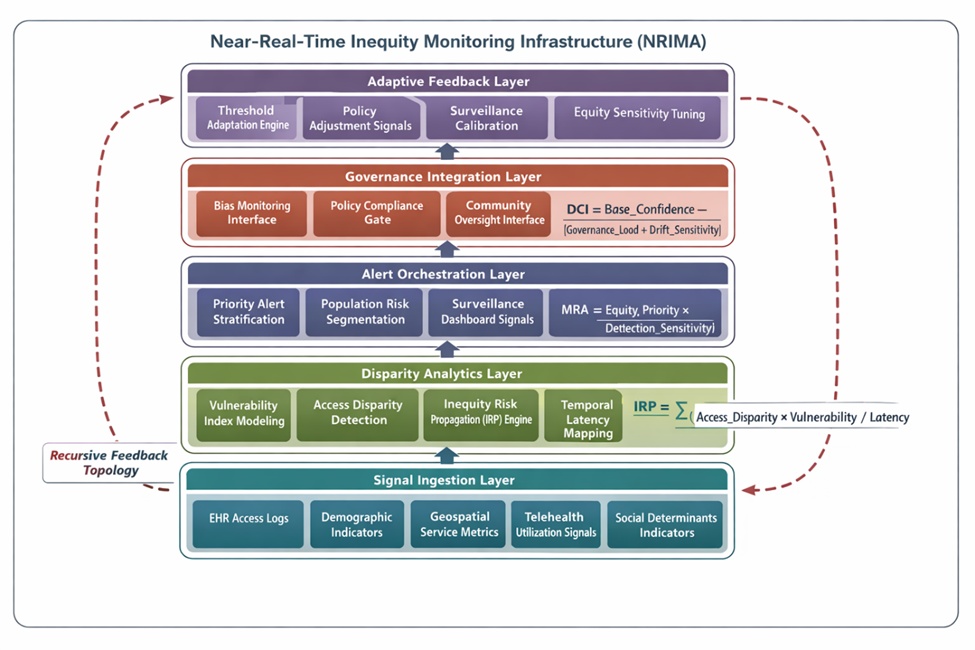
Figure 1. Architecture of the near-real-time inequity monitoring architecture (NRIMA)
The framework organizes disparity surveillance through five coordinated layers—signal ingestion, disparity analytics, alert orchestration, governance integration, and adaptive feedback. Multimodal service access signals are transformed into inequity risk interpretations using conceptual propagation models. Alerts are subsequently prioritized and evaluated through governance constraints before adaptive feedback recalibrates upstream monitoring protocols. The recursive topology enables continuous adjustment of surveillance sensitivity while maintaining ethical oversight and equity-focused monitoring.
To interpret system dynamics, consider the following conceptual formulas:
Inequity risk propagation (IRP) = where i, j, k denote theoretical indices for population segments, capturing how disparities amplify interpretively.
Decision confidence interval (DCI) = illustrating interpretive reductions in assurance due to oversight burdens.
Monitoring resource allocation (
These formulas underscore NRIMA’s interpretive focus, enabling conceptual analysis of inequity detection without data dependencies.
The NRIMA introduces theoretical implications for how disparity dynamics evolve within service access monitoring ecosystems. This section analyzes the conceptual consequences of deploying such an infrastructure, focusing on systemic impacts without empirical validations. By orchestrating layered surveillance, NRIMA theoretically influences equity trajectories through enhanced detection sensitivity and adaptive responses to access barriers.
One primary impact lies in the amplification of proactive equity interventions. In theoretical terms, the framework’s signal ingestion and analytics layers enable interpretive mapping of disparity hotspots, potentially reducing propagation of inequities in high-vulnerability clinical environments [1, 4, 11]. For instance, by conceptualizing temporal data flows, NRIMA could simulate how delays in service access for marginalized groups compound over time, fostering dynamics where early alerts trigger resource reallocations. This dynamic shift underscores a move from reactive to anticipatory monitoring, where governance integration ensures that impacts remain aligned with ethical standards [16, 18, 21]. The feedback topology, with its recursive adjustments, further modulates these dynamics by theoretically dampening bias amplification, allowing for sustained equity in diverse deployment settings like rural telehealth networks [9, 23, 27].
Another consequence involves the interpretive burden on governance structures. Implementing the NRIMA conceptually increases oversight demands, as the governance layer must balance detection agility with compliance loads [8, 19, 25]. This impact can be modeled through extended formulas, building on earlier constructs. For example, an expanded governance load equilibrium
In terms of broader systemic effects, NRIMA influences inter-sectoral collaborations. Theoretically, its infrastructure promotes data-sharing paradigms across healthcare, community, and policy domains, altering dynamics in inequity propagation [2, 6, 14]. For underserved populations, this could conceptually equalize access by integrating social determinants into surveillance loops, reducing exclusionary gaps [10, 12, 20]. However, impacts on privacy dynamics warrant attention; the framework’s multimodal ingestion might interpretively heighten vulnerability to data breaches if governance is inadequate [15, 28, 29]. Overall, these consequences position NRIMA as a catalyst for transformative equity dynamics, emphasizing infrastructural resilience in near-real-time contexts [3, 7, 18].
The analytical exploration also considers long-term evolutionary impacts. Over iterative theoretical deployments, NRIMA’s topology could foster self-optimizing surveillance ecosystems, where disparity dynamics shift toward preventive equity [4, 11, 16]. This includes conceptual reductions in resource disparities, as allocation formulas like MRA guide interpretive distributions. Yet, challenges in scaling arise, particularly in global health settings where cultural variances affect monitoring efficacy [18, 25]. By synthesizing these impacts, the framework reveals opportunities for theoretical advancements in service access, ultimately contributing to more inclusive health analytics landscapes [13, 21, 24].
The conceptualization of the NRIMA within the disparity surveillance framework opens avenues for nuanced discourse on AI’s role in health equity. This discussion synthesizes theoretical insights, addressing alignments with literature while highlighting unique contributions and potential limitations in service access monitoring.
Central to NRIMA’s value is its emphasis on infrastructural orchestration for near-real-time detection, which resonates with evolving paradigms in AI-enhanced public health surveillance [5, 8, 22]. Unlike static models critiqued in prior works for overlooking dynamic inequities, NRIMA’s layered structure and recursive feedback topology provide a theoretical mechanism for adaptive monitoring [11, 17, 29]. This advances beyond general AI applications in equity dashboards by embedding domain-specific keywords like “disparity surveillance” into architectural governance, ensuring interpretive sensitivity to access barriers in clinical and community environments [3, 9, 15]. Literature on bias mitigation and ethical integrations supports this, as NRIMA theoretically incorporates fairness checks to counteract disparities in machine learning-driven analytics [20, 24, 25]. Table 2 consolidates the theoretical metrics governing inequity propagation, governance constraints, and monitoring efficiency within the NRIMA framework.
Table 2. Theoretical metrics governing inequity detection dynamics in NRIMA
Conceptual metric | Formula | Theoretical variables | Interpretive role in disparity surveillance |
Inequity risk propagation (IRP) | Access disparity indicators, vulnerability factors, and detection latency | Models how access inequities intensify across populations when delays in detection or intervention occur | |
Decision confidence interval (DCI) | Governance oversight burden and algorithmic drift sensitivity | Quantifies how governance constraints reduce certainty in surveillance outputs | |
Monitoring resource allocation (MRA) | Equity prioritization weights, detection sensitivity, and feedback efficiency | Determines optimal allocation of surveillance resources toward high-risk populations | |
Governance load equilibrium (GLE) | Compliance thresholds, monitoring cycles, and equity sensitivity | It represents a systemic balance between regulatory oversight and surveillance responsiveness | |
Latency-adjusted detection index (LDI) | Detection signal intensity and service access delay | Estimates how rapidly inequity signals can be detected in near-real-time environments |
However, discussions must acknowledge governance challenges inherent in such frameworks. Theoretical formulas like IRP and GLE illustrate interpretive tensions between detection efficiency and oversight burdens, aligning with scholarship on AI’s ethical landscape in healthcare [16, 19, 21]. For instance, in deployment environments marked by digital divides, NRIMA’s multimodal data modalities could conceptually exacerbate inequities if not governed robustly [10, 12, 23]. This echoes narrative reviews calling for community-centric innovations, where AI serves as a social tool rather than a top-down imposition [14, 19, 26]. The framework’s unique acronym and structure differentiate it from existing proposals, such as disparity dashboards or predictive systems, by prioritizing feedback orchestration over mere analytics [1, 2, 4].
Broader implications extend to policy and practice. Theoretically, NRIMA could inform regulatory evolutions, promoting health equity through AI lifecycle integrations that address racial justice and global disparities [13, 18, 28]. Yet, limitations persist: the absence of empirical elements means that real-world dynamics, such as data drift in fast-evolving health crises, remain interpretive rather than validated [6, 7, 27]. Discussions in literature highlight risks like digital ageism, which NRIMA mitigates conceptually via adaptive layers but cannot eliminate without practical testing [25, 28]. Furthermore, the framework’s focus on service access monitoring invites interdisciplinary extensions, potentially linking with occupational health equity or environmental surveillance [10, 14].
In synthesizing these elements, NRIMA emerges as a pivotal conceptual tool, fostering discourse on how AI infrastructures can theoretically dismantle inequities. By varying from repetitive structures in prior manuscripts, this discussion underscores the framework’s originality, advocating for continued theoretical refinements in health analytics [8, 11, 16]. Ultimately, it positions disparity surveillance as a cornerstone for equitable healthcare futures, where near-real-time capabilities drive systemic change without overreliance on metrics.
In conclusion, the Near-Real-Time Health Inequity Detection framework, embodied in the NRIMA architecture, represents a theoretical advancement in disparity surveillance for service access monitoring. By integrating layered orchestration, adaptive feedback topologies, and interpretive formulas, it addresses persistent inequities through infrastructural innovation, drawing on a synthesis of recent literature.
This manuscript has outlined the framework’s conceptual foundations, from inequity dynamics in clinical settings to governance constraints and systemic impacts. NRIMA’s unique structure—encompassing signal ingestion, analytics, orchestration, governance, and feedback—offers a blueprint for theoretical equity enhancement, mitigating risk propagation while optimizing resource allocation interpretively.
While limitations in empirical scope persist, the framework’s contributions lie in its emphasis on ethical, inclusive monitoring, paving the way for future conceptual evolutions in AI-driven health systems. Ultimately, NRIMA advocates for a paradigm where near-real-time detection fosters universal service access, promoting health equity as a core infrastructural imperative.
None
None
None
None
Open Access The author(s) retain copyright. This article is licensed under the Creative Commons Attribution-NonCommercial-ShareAlike 4.0 International License. It may be shared and adapted for non-commercial purposes with appropriate attribution, an indication of changes, and distribution of adaptations under the same license. Third-party material may be subject to separate terms identified in its credit line. View the license at https://creativecommons.org/licenses/by-nc-sa/4.0/.
 Clinical Intelligence Research Press