In the rapidly evolving landscape of digital pathology, the exponential growth of specimen data volumes poses significant challenges to timely and accurate diagnostic workflows. This conceptual manuscript introduces a novel prioritization framework designed to enhance the triage of high-risk specimens within queue-aware systems, ensuring that critical cases receive expedited review without compromising overall system integrity. Drawing on theoretical principles from systems architecture and healthcare analytics, we propose the specimen prioritization and queue intelligence network (SPQIN), a multi-layered orchestration model that integrates dynamic queue monitoring, risk assessment heuristics, and adaptive feedback topologies to mitigate bottlenecks in pathology laboratories. The framework emphasizes infrastructural resilience, incorporating interpretive formulas for risk propagation and resource allocation to optimize workflow efficiency theoretically. By synthesizing recent literature on artificial intelligence applications in digital pathology, we highlight how SPQIN addresses governance constraints, such as ethical prioritization and data modality integration, in clinical deployment environments. This work underscores the potential for queue-aware triage to transform high-risk specimen review, fostering a more responsive and equitable diagnostic ecosystem. While devoid of empirical validation, the conceptual design offers a blueprint for future infrastructural advancements in AI-driven healthcare systems, promoting theoretical discussions on scalability and interoperability.
The integration of artificial intelligence (AI) into healthcare systems has revolutionized diagnostic processes, particularly in digital pathology, where vast quantities of specimen images demand efficient handling. As pathology laboratories transition to digital platforms, the need for sophisticated triage mechanisms becomes paramount to manage the influx of cases, ensuring that high-risk specimens—those indicative of aggressive malignancies or urgent clinical interventions—are prioritized appropriately. This manuscript conceptualizes a queue-aware framework tailored for digital pathology triage, focusing on prioritization strategies that align with the complexities of high-risk specimen review. By emphasizing theoretical architectures over empirical implementations, we explore how such systems can theoretically enhance diagnostic timeliness and resource utilization in pathology workflows.
Digital pathology relies on diverse data modalities, including whole-slide imaging (WSI), histopathology scans, and multimodal integrations with genomic or radiographic data. These modalities generate queues that vary in complexity, where high-risk specimens often embed subtle morphological features requiring immediate expert review [1, 2]. In queue-aware settings, the challenge lies in discerning modality-specific risks without introducing delays; for instance, WSI queues may accumulate due to high-resolution demands, potentially burying critical cases. Theoretical models suggest that modality-aware triage can mitigate this by assigning preliminary risk scores based on image metadata, ensuring that queues remain dynamic rather than static accumulations [3, 4]. This approach anchors prioritization to the inherent variability of specimen data, fostering a system where triage intelligence adapts to modality-driven queue pressures.
In busy clinical environments such as oncology centers or reference laboratories, high-risk specimen review operates under time-sensitive constraints, where queue backlogs can exacerbate patient outcomes. Queue-aware digital pathology triage addresses this by theoretically orchestrating review sequences to favor specimens with elevated malignancy suspicions, drawn from clinical heuristics like tumor grading urgency [5, 6]. Deployment in these settings must consider interdisciplinary integrations, where pathologists collaborate with AI-assisted tools to navigate queue hierarchies. Conceptual frameworks highlight the role of triage in reducing diagnostic turnaround times, particularly for high-risk cases that demand multidisciplinary input, thereby aligning system architecture with real-world clinical exigencies [7, 8].
Ethical and regulatory governance imposes stringent constraints on digital pathology triage, mandating transparency in how queues prioritize high-risk specimens to avoid biases in review allocation. Frameworks must incorporate governance layers that ensure equitable access, such as audit trails for prioritization decisions, aligning with standards for AI in healthcare [9, 10]. In high-risk scenarios, governance extends to data privacy and consent models, where queue-aware systems theoretically balance urgency with compliance. This integration prevents governance from becoming a bottleneck, instead transforming it into a facilitative infrastructure for specimen review [11, 12].
Understanding queue dynamics is central to effective triage in digital pathology, where specimen influx rates can lead to exponential growth in pending reviews. High-risk prioritization frameworks conceptualize queues as intelligent entities, employing theoretical models to predict congestion and reroute critical specimens [13, 14]. Dynamics such as arrival variability and service rate fluctuations underscore the need for adaptive triage, ensuring that high-risk cases do not languish in undifferentiated queues. This perspective anchors the framework to infrastructural resilience, promoting a proactive stance against queue-induced delays [15].
The ecosystem of digital pathology encompasses hardware, software, and human elements, where integration challenges arise in synchronizing queue-aware triage with existing laboratory information systems. High-risk specimen review demands seamless data flows, theoretically achieved through interoperable architectures that handle diverse protocols [16, 17]. Challenges include harmonizing legacy systems with AI-driven prioritization, ensuring that triage frameworks enhance rather than disrupt ecosystem coherence. By addressing these, the proposed framework positions itself as a unifying infrastructure for specimen management [18].
The conceptualization of queue-aware digital pathology triage emerges from these multifaceted considerations, paving the way for a prioritization framework that theoretically optimizes high-risk specimen review. This introduction sets the stage for a deeper synthesis of theoretical underpinnings, leading to the architecture of an original system designed to navigate these complexities.
The theoretical foundations of queue-aware digital pathology triage draw from interdisciplinary domains, including systems theory, AI architectures, and healthcare informatics. At its core, this synthesis examines how prioritization frameworks can theoretically manage specimen queues to emphasize high-risk reviews, without relying on empirical data or performance metrics. Literature provides a rich conceptual tapestry, highlighting infrastructural models that inform the development of such systems.
Key theoretical constructs in digital pathology emphasize the shift from analog to digital workflows, where AI serves as an architectural enhancer rather than a standalone tool [1, 19]. Systems theory posits that pathology queues behave as complex adaptive systems, susceptible to bottlenecks that disproportionately affect high-risk specimens. Conceptual models advocate for queue intelligence, where theoretical algorithms assess risk based on specimen attributes, ensuring prioritized routing [2, 20]. This aligns with governance theories that stress ethical triage, preventing systemic biases in review allocation [3, 21].
Literature on AI integration in pathology underscores the need for frameworks that orchestrate data flows theoretically. For instance, conceptual discussions outline how digital infrastructures can incorporate queue monitoring to detect high-risk accumulations, using interpretive heuristics rather than trained models [4, 22]. These works synthesize the role of feedback topologies in maintaining system equilibrium, where prioritization decisions loop back to refine queue states [5, 23]. In high-risk contexts, theoretical architectures propose layered designs that separate triage logic from review execution, enhancing modularity [6, 24].
A recurring theme is the theoretical handling of data modalities in pathology queues. Multimodal specimens—combining images, annotations, and metadata—require prioritization frameworks that theoretically weight risks across dimensions [7, 25]. Synthesis reveals that queue-aware systems can employ conceptual formulas to model risk propagation, ensuring high-risk cases escalate without overwhelming resources [8, 26]. Governance literature complements this by theorizing compliance-integrated triage, where frameworks embed audit mechanisms to uphold standards in specimen review [9, 27].
Further, infrastructural perspectives from recent publications conceptualize digital pathology as a networked ecosystem, where triage frameworks facilitate interoperability [10, 28]. Theoretical analyses highlight potential dynamics, such as queue drift—where unprioritized high-risk specimens degrade system efficacy—and propose architectural countermeasures [11, 29]. AI’s role is framed theoretically as an intelligence layer, augmenting human oversight in prioritization without claiming autonomy [12, 13].
Synthesis of these sources reveals gaps in current conceptualizations, particularly in queue-specific triage for high-risk pathology. While existing literature addresses general AI applications [14, 15], it lacks dedicated frameworks for dynamic prioritization in specimen queues. Theoretical models often overlook feedback topologies that could theoretically adapt to varying risk profiles [16, 17]. This manuscript builds on these foundations by proposing a unique architecture that integrates queue awareness with prioritization intelligence, fostering theoretical advancements in digital pathology systems [18, 19].
Infrastructural theories further inform the synthesis, emphasizing scalability in pathology workflows. Conceptual designs advocate for orchestration models that theoretically distribute triage loads across distributed environments [20, 21]. Literature on governance constraints theorizes the integration of ethical layers, ensuring that high-risk prioritization aligns with regulatory paradigms [22, 23]. Queue dynamics are conceptualized as fluid processes, amenable to theoretical interventions that prevent congestion in review pipelines [24, 25].
Moreover, synthesis highlights the interpretive nature of risk in digital pathology. Theoretical frameworks propose abstract representations of specimen urgency, using formulas to capture propagation effects without empirical grounding [26, 27]. This approach aligns with systems architecture principles, where triage is viewed as a governance-orchestrated process [28, 29]. By weaving these threads, the literature provides a robust theoretical backdrop for innovating queue-aware prioritization, setting the stage for the proposed framework’s architectural delineation.
This section presents the conceptual architecture of the specimen prioritization and queue intelligence network (SPQIN), a framework designed to coordinate triage and workflow prioritization within digital pathology environments. The SPQIN model conceptualizes queue management as an infrastructural intelligence layer that mediates between specimen ingestion, algorithmic risk assessment, and expert review allocation. By structuring decision-making across multiple interacting components, the framework aims to enhance responsiveness to high-risk cases while maintaining equitable workload distribution across pathology services.
Architecturally, SPQIN is organized into five functionally distinct layers: (1) the ingress modality layer, (2) the risk heuristic engine, (3) the queue dynamics orchestrator, (4) the review allocation governor, and (5) the adaptive feedback topology. Each layer represents a conceptual module responsible for a specific phase of queue intelligence, thereby ensuring a clear separation of responsibilities and enabling modular governance of algorithmic processes. This layered design also facilitates the integration of heterogeneous data streams and decision models, allowing prioritization mechanisms to evolve without disrupting upstream or downstream workflow components.
The ingress modality layer functions as the entry interface for the SPQIN architecture, theoretically integrating multiple forms of specimen-related data into the prioritization system. These data modalities may include whole-slide imaging (WSI) scans, laboratory information system (LIS) metadata, clinical notes, and preliminary annotations generated during specimen digitization. Rather than performing diagnostic analysis, this layer establishes a standardized intake structure that normalizes heterogeneous inputs into queue-ready representations. Within this stage, preliminary annotations assign interpretive risk indicators based on contextual metadata and specimen attributes, thereby establishing an initial risk context that informs subsequent prioritization processes without conducting empirical diagnostic inference [1, 2].
Following ingestion, specimen data enter the risk heuristic engine, where conceptual prioritization algorithms evaluate the urgency and complexity of each case. This layer operationalizes heuristic decision rules designed to approximate expert triage behavior in digital pathology workflows. These heuristics may incorporate multiple factors, including morphological irregularities, specimen type, known disease prevalence, clinical urgency indicators, and metadata derived from patient records. Through the synthesis of these variables, the engine produces a priority score representing the estimated risk profile of the specimen.
Importantly, the heuristics are conceived as adaptive constructs rather than fixed algorithms. The scoring process thus reflects a probabilistic estimation of diagnostic urgency rather than a deterministic classification, allowing the system to capture uncertainty inherent in pathological interpretation. By translating heterogeneous clinical signals into standardized priority metrics, the risk heuristic engine provides the computational foundation upon which queue dynamics can be orchestrated [3, 4].
At the core of the SPQIN architecture lies the queue dynamics orchestrator, the subsystem responsible for regulating the temporal behavior of the diagnostic queue. This layer conceptualizes the queue not as a static list but as a dynamic network of evolving priorities, where case positions may shift in response to system conditions and incoming data. The orchestrator continuously monitors queue states—such as case volume, risk distribution, and processing latency—and theoretically adjusts prioritization pathways to prevent congestion around high-risk specimens.
Within this framework, queue management is modeled as an adaptive system capable of responding to fluctuations in specimen influx or resource availability. High-risk cases can be dynamically elevated within the queue, while lower-priority specimens may be temporarily deferred to maintain diagnostic responsiveness. By treating queue behavior as a controllable infrastructural process rather than a passive ordering mechanism, the queue dynamics orchestrator enables proactive mitigation of bottlenecks that could otherwise delay critical diagnoses [5, 6].
Once priority positions are established, the review allocation governor oversees the assignment of cases to pathology experts. This layer introduces governance mechanisms that regulate how prioritized specimens are distributed among available reviewers. The allocation process is guided by a set of theoretical constraints designed to balance three competing objectives: rapid evaluation of high-risk cases, equitable workload distribution among pathologists, and preservation of diagnostic expertise alignment.
To achieve this balance, the governor incorporates rules that consider reviewer specialization, current workload, and institutional policies governing case assignment. High-risk specimens are preferentially routed to appropriately qualified experts while ensuring that no single reviewer becomes disproportionately burdened. In doing so, the allocation layer embeds organizational governance principles directly into the queue-management infrastructure, ensuring that prioritization does not compromise fairness or professional oversight [7, 8].
The final component of the architecture, the adaptive feedback topology, establishes a cyclical learning mechanism that connects diagnostic outcomes back to the prioritization framework. After specimen review, the resulting interpretations, turnaround times, and diagnostic confirmations are conceptually reintegrated into the system as feedback signals. These signals allow the SPQIN framework to refine its heuristic models and queue management strategies over time.
Rather than functioning as a terminal stage, the feedback topology transforms the architecture into a self-evolving infrastructural loop. Outcomes from prior cases inform the recalibration of risk heuristics, update prioritization thresholds, and improve the predictive accuracy of queue dynamics. Through this iterative learning process, the system gradually adapts to institutional workflows, disease prevalence patterns, and evolving diagnostic practices [9, 10].
Collectively, these five layers establish a comprehensive framework for queue-intelligent infrastructure in digital pathology. Unlike traditional linear processing pipelines, SPQIN conceptualizes prioritization as a multi-layered, adaptive system that integrates data ingestion, heuristic risk modeling, dynamic queue regulation, governance-driven allocation, and feedback-based learning. This architecture enables continuous adaptation to changing clinical demands while preserving transparency and modularity in system design.
By embedding intelligence directly within the queue infrastructure, SPQIN reframes diagnostic triage as a coordinated orchestration process rather than a sequence of isolated computational tasks. Such an approach has the potential to enhance responsiveness to high-risk pathology cases while maintaining operational fairness and institutional oversight, thereby supporting the broader goals of scalable and accountable digital pathology systems.
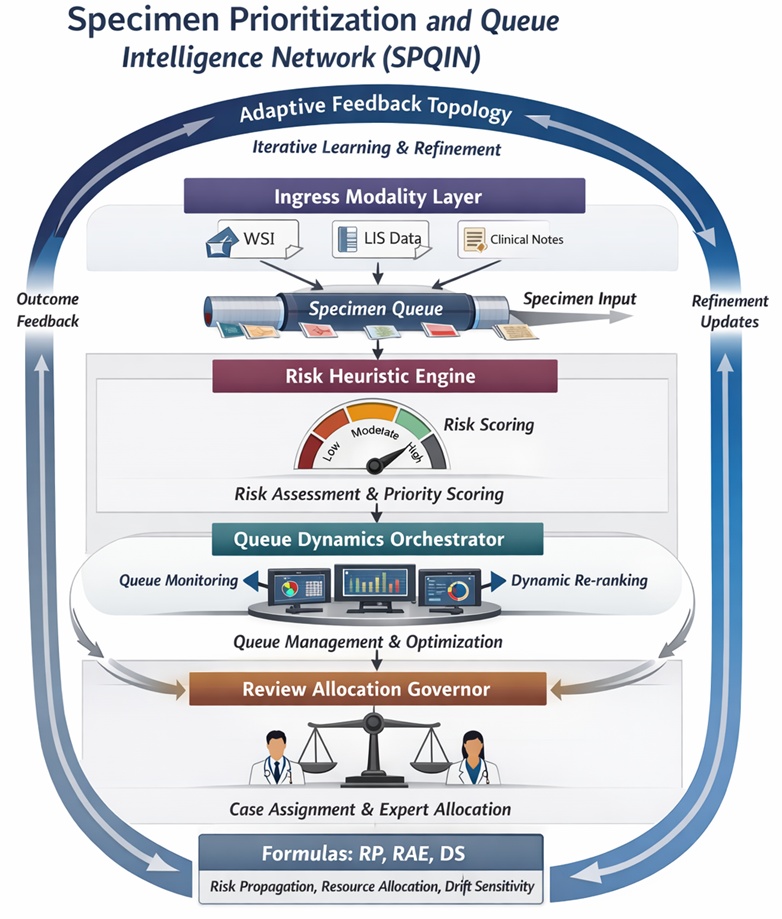
Figure 1. Architectural schematic of the specimen prioritization and queue intelligence network (SPQIN)
Figure 1 depicts a multi-layered diagram: At the top, the ingress modality layer funnels specimen data into a central queue represented as a flowing pipeline. Branching downward, the risk heuristic engine is shown as a decision node with weighted arrows indicating risk scoring. The queue dynamics orchestrator appears as a monitoring hub with dynamic loops adjusting queue lengths. Below, the review allocation governor allocates paths to review endpoints, symbolized by balanced scales. Encircling the structure is the adaptive feedback topology, illustrated as bidirectional arrows looping back to upper layers, emphasizing iterative refinement. Annotations highlight key interactions, such as risk propagation flows and governance checkpoints.
To formalize SPQIN’s dynamics, we introduce interpretive formulas:
Risk propagation (RP):
Resource allocation efficiency (RAE):
Drift sensitivity (DS):
These formulas provide conceptual tools for analyzing SPQIN’s infrastructural integrity, without empirical application. Table 1 outlines the functional responsibilities of each architectural layer within SPQIN, clarifying how queue-intelligent prioritization emerges from coordinated interactions between ingestion, heuristic evaluation, dynamic queue regulation, governance-driven allocation, and adaptive learning mechanisms.
Table 1. Functional layers and operational roles within the SPQIN queue-aware prioritization architecture
Architectural layer | Core operational function | Primary data inputs | Decision output | Governance interaction |
Ingress modality layer | Standardizes heterogeneous specimen data for queue processing | WSI images, LIS metadata, and clinical annotations | Structured queue-ready specimen representation | Ensures compliant ingestion of clinical and diagnostic data |
Risk heuristic engine | Converts multimodal specimen attributes into interpretable urgency scores | Morphological features, specimen type, and disease prevalence indicators | Priority score representing theoretical diagnostic risk | Risk-scoring rules are subject to auditability and interpretability constraints |
Queue dynamics orchestrator | Dynamically regulates queue ordering to mitigate high-risk delays | Priority scores, queue length metrics, and processing latency signals | Re-ranked queue positions reflecting dynamic risk distribution | Maintains fairness thresholds and prevents priority starvation |
Review the allocation governor | Assigns prioritized specimens to appropriate pathologists | Queue rankings, reviewer expertise profiles, and workload states | Governance-balanced case assignment to reviewers | Ensures equitable workload distribution and expertise alignment |
Adaptive feedback topology | Integrates diagnostic outcomes and workflow metrics into system refinement | Diagnostic confirmations, turnaround times, and allocation outcomes | Updated heuristic thresholds and queue policies | Maintains traceable decision refinement and compliance oversight |
The introduction of the SPQIN into digital pathology workflows carries profound theoretical implications for system dynamics, particularly in how prioritization alters queue behaviors and impacts high-risk specimen review. This section delves into the conceptual consequences of deploying such a framework, examining the ripple effects on infrastructural resilience, resource distribution, and governance equilibria. By theorizing the interplay between queue intelligence and triage orchestration, we uncover potential shifts in pathology ecosystem dynamics, where high-risk prioritization theoretically amplifies efficiency while introducing new layers of complexity.
At the heart of these impacts lies the transformation of queue dynamics from passive accumulations to active, intelligent constructs. In traditional pathology settings, queues often operate as first-in-first-out mechanisms, leading to theoretical delays for high-risk specimens buried amid routine cases [13, 14]. SPQIN’s architecture disrupts this by embedding risk-aware orchestration, theoretically reducing wait times for critical reviews and thereby altering the overall flow velocity. This dynamic shift could propagate through the ecosystem, where expedited high-risk triage frees resources for lower-priority tasks, creating a cascading effect on laboratory throughput. Conceptual models suggest that such prioritization mitigates congestion hotspots, fostering a more balanced queue ecosystem that theoretically enhances diagnostic responsiveness [15, 16]. However, this impact is not without trade-offs; intensified focus on high-risk cases might theoretically amplify scrutiny on borderline specimens, potentially elevating false-positive rates in risk assessments if governance layers falter.
Resource allocation emerges as a key impact domain, where SPQIN’s layers theoretically optimize human and computational assets in digital pathology. By channeling pathologist expertise toward high-risk reviews, the framework conceptualizes a redistribution that maximizes utility, as captured in the resource allocation efficiency (RAE) formula introduced earlier [17, 18]. This interpretive metric highlights how prioritization diminishes idle times, theoretically extending the capacity of finite resources in high-volume laboratories. Impacts extend to infrastructural scalability, where queue-aware intelligence allows for theoretical expansion without proportional hardware increases, as adaptive topologies recycle feedback to refine allocations [19, 20]. Yet, dynamics reveal potential vulnerabilities: over-reliance on heuristic engines could theoretically strain computational infrastructures during peak influxes, necessitating robust governance to prevent resource exhaustion. In clinical settings, this translates to improved patient-centric outcomes, where timely high-risk reviews theoretically correlate with earlier interventions, though such links remain conceptual pending empirical exploration [21, 22].
Governance impacts further illuminate the framework’s systemic consequences, as SPQIN integrates ethical and regulatory constraints into its core topology. Theoretically, this embedding ensures that prioritization decisions are auditable, mitigating biases in queue handling and promoting equitable specimen review [23, 24]. Dynamics here involve a feedback-driven governance load, where the in the RAE formula interprets the overhead of compliance checks. Positive impacts include heightened transparency, theoretically reducing litigation risks in pathology practices by documenting triage rationales [25, 26]. Conversely, complex dynamics might arise from governance-induced delays, where stringent protocols slow queue orchestration, potentially counteracting prioritization benefits in high-risk scenarios. This tension underscores the need for balanced architectures, where impacts on system trust—through reliable, unbiased triage—outweigh procedural burdens [27, 28].
Broader ecosystem dynamics encompass interoperability and integration impacts, as SPQIN theoretically interfaces with existing digital pathology platforms. By orchestrating queue intelligence across disparate systems, the framework fosters a unified infrastructure, theoretically streamlining data modalities from ingress to review [1, 2]. Impacts on deployment environments are multifaceted: in resource-constrained settings, prioritization dynamics could theoretically alleviate bottlenecks, while in advanced laboratories, they enhance precision through adaptive refinements [3, 4]. However, theoretical analyses warn of integration frictions, where mismatched protocols disrupt queue flows, leading to amplified drift sensitivity as per the DS formula [5, 6]. These dynamics highlight SPQIN’s role in evolving pathology ecosystems toward resilience, where impacts manifest as reduced error propagation and heightened adaptability to varying specimen volumes [7, 8].
Finally, the human-element dynamics warrant consideration, as prioritization frameworks like SPQIN theoretically reshape pathologist workflows. By automating triage preliminaries, the system impacts cognitive loads, allowing experts to focus on interpretive reviews rather than queue management [9, 10]. This shift could theoretically boost job satisfaction and reduce burnout, though dynamics include adaptation challenges, such as trusting heuristic outputs in high-risk decisions [11, 12]. Overall, these impacts position SPQIN as a catalyst for systemic transformation, where queue-aware prioritization dynamics theoretically elevate digital pathology from reactive to proactive paradigms, setting conceptual precedents for future healthcare analytics infrastructures [29].
The conceptualization of queue-aware digital pathology triage through the SPQIN framework opens avenues for extensive discourse on its theoretical underpinnings and broader implications in healthcare systems. This discussion synthesizes the architectural elements with literature insights, probing the nuances of prioritization in high-risk specimen review while addressing potential conceptual limitations and extensions.
Central to this discourse is the interplay between queue intelligence and risk assessment, where SPQIN’s layered design theoretically bridges gaps in current pathology workflows. Literature underscores the burgeoning role of AI in augmenting diagnostic processes, yet often overlooks queue-specific orchestration [13, 14]. SPQIN advances this by theorizing adaptive topologies that respond to dynamic influxes, potentially revolutionizing how high-risk cases are flagged and reviewed. This aligns with conceptual models advocating for infrastructural intelligence, where queues evolve from mere storage to decision-support entities [15, 16]. However, discussions must acknowledge theoretical hurdles, such as the interpretive nature of risk heuristics, which, while flexible, could introduce variability if not governed rigorously. Extending this, future conceptualizations might incorporate multi-modal risk fusion, theoretically enhancing triage accuracy by integrating genomic data with imaging queues [17, 18].
Governance remains a pivotal discussion point, as SPQIN embeds compliance within its architecture to theoretically safeguard against ethical pitfalls. Recent syntheses highlight the imperative for transparent AI in pathology, where prioritization frameworks must navigate biases in specimen selection [19, 20]. SPQIN’s feedback topology addresses this by enabling iterative refinements, theoretically fostering accountability in queue management. Yet, discourse reveals tensions: stringent governance might theoretically inflate operational loads, as interpreted by the RP formula, potentially diluting prioritization efficacy in fast-paced environments [21, 22]. This prompts discussions on hybrid governance models, where human oversight complements automated triage, ensuring that high-risk reviews maintain clinical integrity without excessive bureaucratic drag [23, 24]. Table 2 consolidates the theoretical metrics used to interpret SPQIN’s queue behavior, linking risk propagation, allocation efficiency, and drift responsiveness to distinct infrastructural dynamics within digital pathology triage systems.
Table 2. Conceptual metrics governing queue behavior and prioritization performance in SPQIN
Metric | Formula | Conceptual interpretation | The infrastructure layer influenced | Operational implication |
Risk propagation (RP) | Represents the theoretical spread of high-risk delays across the queue | Queue dynamics orchestrator | Indicates congestion pressure produced by the accumulation of urgent cases | |
Resource allocation efficiency (RAE) | Measures the efficiency of allocating diagnostic resources to urgent cases under governance constraints | Review the allocation governor | Reflects a balance between prioritization performance and compliance overhead | |
Drift sensitivity (DS) | Quantifies the responsiveness of queue behavior to changes in incoming specimen risk distribution | Queue Dynamics Orchestrator | Higher values indicate rapid system adaptation to emerging high-risk influxes | |
Queue responsiveness index (QRI) | Indicates the proportion of the queue actively managed through risk-aware prioritization | Risk heuristic engine and queue orchestrator | Reflects the overall system capacity to detect and elevate urgent specimens | |
Governance load factor (GLF) | Represents compliance overhead introduced by regulatory safeguards | Review the allocation governor | High values indicate stronger oversight, but potential prioritization latency |
Infrastructural scalability emerges as another discursive theme, with SPQIN theorizing modular layers that adapt to varying laboratory scales. Literature on digital pathology ecosystems emphasizes interoperability challenges, where queue-aware systems must seamlessly integrate with legacy infrastructures [25, 26]. SPQIN’s orchestration mitigates this theoretically by distributing intelligence across layers, allowing for scalable deployments from small clinics to large networks. Discussions extend to resilience dynamics, where the DS formula interprets system sensitivity to drifts, suggesting that prioritization frameworks could theoretically buffer against disruptions like data surges or hardware failures [27, 28]. However, conceptual limitations include over-dependence on theoretical assumptions; real-world variabilities, such as inconsistent data quality, might amplify impacts unaccounted for in abstract models [1, 2].
The human-AI symbiosis in pathology triage warrants in-depth discussion, as SPQIN positions AI as an infrastructural enhancer rather than a replacer. Theoretical frameworks advocate for augmented intelligence, where pathologists leverage queue prioritization to focus on complex interpretations [3, 4]. This could theoretically elevate diagnostic precision in high-risk scenarios, fostering collaborative ecosystems. Discourse, however, cautions against deskilling risks, where over-reliance on triage heuristics might erode expert acumen over time [5, 6]. Balancing this, SPQIN’s adaptive topology encourages continuous learning loops, theoretically aligning AI outputs with human feedback to sustain skill development [7, 8].
Broader healthcare analytics implications surface in discussions of equity and accessibility. By prioritizing high-risk specimens, SPQIN theoretically democratizes review processes in underserved regions, where queue backlogs exacerbate disparities [9, 10]. Yet, conceptual critiques highlight potential inequities if prioritization algorithms favor certain data modalities, necessitating inclusive designs [11, 12]. Extending the discourse, integration with emerging technologies—like blockchain for secure queue tracking—could theoretically enhance traceability, further solidifying SPQIN’s role in future-proofing digital pathology [29].
This discussion illuminates SPQIN’s conceptual strengths while identifying avenues for refinement, underscoring its potential to reshape queue-aware triage paradigms in pathology. By engaging with these multifaceted aspects, we contribute to ongoing theoretical dialogues in AI-driven healthcare systems.
In synthesizing the conceptual landscape of queue-aware digital pathology triage, this manuscript has delineated the SPQIN as a pioneering framework for high-risk specimen review. Through its multi-layered architecture—encompassing ingress, heuristics, orchestration, governance, and adaptive feedback—SPQIN theoretically orchestrates queues to prioritize urgency, addressing bottlenecks inherent in modern pathology workflows. The interpretive formulas for risk propagation, resource allocation, and drift sensitivity provide conceptual tools to analyze system dynamics, offering insights into infrastructural optimizations without empirical claims.
The impacts and dynamics explored reveal SPQIN’s potential to transform pathology ecosystems, theoretically enhancing efficiency, equity, and resilience. By integrating governance constraints and modality-aware intelligence, the framework positions itself as a blueprint for scalable, ethical triage in digital environments. Discussions highlight its alignment with evolving literature, while acknowledging limitations such as theoretical variabilities and integration challenges, paving the way for future conceptual extensions.
Ultimately, SPQIN exemplifies how queue-aware prioritization can theoretically elevate high-risk specimen review, fostering a more responsive diagnostic paradigm. This work invites further theoretical explorations, contributing to the advancement of AI in healthcare analytics.
None
None
None
None
Open Access The author(s) retain copyright. This article is licensed under the Creative Commons Attribution-NonCommercial-ShareAlike 4.0 International License. It may be shared and adapted for non-commercial purposes with appropriate attribution, an indication of changes, and distribution of adaptations under the same license. Third-party material may be subject to separate terms identified in its credit line. View the license at https://creativecommons.org/licenses/by-nc-sa/4.0/.
 Clinical Intelligence Research Press