In acute care settings, where patient interactions and healthcare worker movements create complex contact networks, inferring transmission risks for infectious diseases remains a critical challenge for enhancing preventability. This conceptual manuscript introduces a novel contact-integrated risk evaluation system (CIRES), an AI-driven architectural framework designed to model contact-structured data for analytical inference of transmission pathways and preventability opportunities. Grounded in healthcare analytics infrastructures and clinical decision support pipelines, CIRES orchestrates interoperability across electronic health records (EHR) intelligence ecosystems and workflow integration models to enable theoretical risk propagation assessments without empirical data reliance. The framework incorporates layered modules for contact mapping, risk inference, and governance monitoring, facilitating interpretive formulas that capture decision confidence and resource allocation dynamics. By synthesizing recent advancements in AI governance and deployment systems, this work highlights how contact-structured modeling can theoretically optimize acute care protocols, reduce nosocomial transmission, and inform policy through analytical foresight. Emphasizing ethical interoperability and system resilience, CIRES represents a paradigm for AI-orchestrated preventability analysis, offering insights into scalable infrastructures that align with evolving healthcare demands. This conceptual approach underscores the potential for AI to transform transmission risk management in resource-constrained environments, paving the way for future theoretical explorations in clinical AI architectures.
Acute care settings, characterized by high patient throughput and intricate interpersonal interactions, serve as hotspots for infectious disease transmission, necessitating advanced analytical frameworks to infer risks and evaluate preventability. The convergence of artificial intelligence (AI) with healthcare systems has opened avenues for modeling these dynamics, yet traditional approaches often overlook the granular structure of contacts that underpin transmission pathways [1, 2]. This manuscript posits a conceptual system that leverages contact-structured data to enhance inference capabilities, focusing on architectural designs that integrate AI for proactive risk assessment in environments where rapid decision-making is paramount. By framing transmission as a network-dependent phenomenon, the proposed framework aims to provide theoretical tools for dissecting preventability, aligning with broader goals of healthcare analytics to mitigate outbreaks without relying on empirical validations.
In acute care facilities, transmission risks emerge from multifaceted contact patterns involving patients, staff, and visitors, often amplified by procedural workflows and shared resources [3, 4]. These dynamics are inherently stochastic, with risks propagating through direct physical interactions or environmental surfaces, complicating inference efforts. Conceptual models must account for temporal and spatial variabilities, where AI systems can theoretically simulate contact graphs to identify high-risk nodes. For instance, emergency departments exhibit clustered contacts that heighten vulnerability to airborne or contact-based pathogens, demanding frameworks that parse these structures for preventability insights [5]. Such environments underscore the need for AI architectures that prioritize real-time data synthesis, ensuring that risk inference remains attuned to the fluid nature of acute care operations.
Inference for Preventability Inferring transmission risks from contact data poses significant hurdles, including data fragmentation across disparate systems and the absence of standardized metrics for preventability evaluation [6, 7]. In acute care, where electronic health records (EHR) often capture incomplete interaction logs, AI must bridge these gaps through interoperable pipelines that theoretically aggregate multimodal inputs. Preventability analysis further complicates this by requiring assessments of intervention efficacy, such as isolation protocols, which depend on accurate risk stratification. Governance constraints, including privacy regulations, add layers of complexity, necessitating AI designs that embed ethical monitoring to avoid biases in inference outputs [8]. These challenges highlight the imperative for contact-structured frameworks that enhance analytical precision while adhering to deployment environments tailored for high-stakes clinical settings.
AI governance plays a pivotal role in ensuring that transmission risk inference systems operate within ethical and regulatory bounds, particularly in acute care, where data exchange frameworks must safeguard sensitive information [9, 10]. Conceptual architectures should incorporate oversight mechanisms to monitor model drift and maintain interoperability, fostering trust in preventability analyses. By integrating governance into the core infrastructure, AI can theoretically align with clinical workflows, enabling seamless deployment that respects data modality variations like structured EHR entries versus unstructured notes. This governance-centric approach not only mitigates risks associated with algorithmic opacity but also amplifies the potential for AI to inform policy on transmission control [11].
Effective risk inference in acute care relies on harmonizing diverse data modalities, from sensor-derived contact traces to EHR-documented encounters, within a unified AI ecosystem [12, 13]. Contact-structured modeling demands frameworks capable of theoretical fusion, where multimodal data informs preventability by revealing latent transmission links. Challenges arise from modality-specific noise, such as inaccuracies in wearable tracking, requiring AI pipelines that conceptually filter and prioritize inputs for robust inference. This integration is crucial for acute settings, where real-time data streams can theoretically enhance decision support, underscoring the need for architectures that adapt to varying data qualities without empirical tuning [14]. Table 1 delineates the structural distinctions between contact-structured transmission modeling and conventional patient-centric clinical risk pipelines, clarifying CIRES’s architectural departure.
Table 1. Structural differentiation between contact-structured transmission modeling and conventional clinical risk pipelines
Dimension | Conventional clinical risk pipeline | Contact-structured CIRES framework |
Analytical unit | Individual patient episode | Dynamic contact network (multi-actor nodes) |
Risk ontology | Outcome probability estimation | Propagation potential across structured edges |
Data organization | Static tabular records | Temporal graph topology with weighted edges |
Preventability logic | Retrospective risk scoring | Forward-looking intervention leverage mapping |
Uncertainty handling | Model-level calibration | Layer-distributed uncertainty aggregation |
Resource allocation | Patient-priority triage | Exposure-gradient and cluster-based prioritization |
Governance position | Post-hoc audit layer | Embedded recursive governance topology |
Workflow integration | Alert-based decision support | Network-informed protocol reconfiguration |
Deploying AI for transmission risk analysis in acute care necessitates environments that support scalable infrastructures, accommodating the high variability of clinical workflows [15, 16]. Preventability-focused systems must theoretically interface with existing EHR ecosystems, ensuring that contact-structured inferences inform actionable insights amid resource constraints. Environmental factors, including network latency and device heterogeneity, influence framework design, prompting the inclusion of resilient modules for uninterrupted operation. Governance constraints further shape deployment, mandating AI systems that prioritize auditability and adaptability to evolving acute care protocols [17].
The integration of AI into healthcare systems has evolved significantly, providing foundational concepts for addressing transmission risks in acute care through contact-structured approaches. This section synthesizes key theoretical advancements from 2017 to 2022, focusing on clinical AI architectures, analytics infrastructures, and governance models that underpin preventability analysis. By examining EHR intelligence ecosystems and decision support pipelines, the discussion lays the groundwork for a novel framework that conceptualizes risk inference as an orchestrated process, emphasizing interoperability and workflow integration without empirical elements [18, 19].
Clinical AI architectures have advanced to support complex inference tasks, particularly in modeling relational data akin to contact networks in acute care [20]. Theoretical designs emphasize modular structures that facilitate risk assessment by layering data processing with analytical intelligence, drawing parallels to transmission dynamics where contacts form the backbone of propagation models [21]. Literature highlights architectures that theoretically handle high-dimensional inputs, such as those from patient interactions, to derive preventability insights. For instance, scalable systems integrate predictive modules with governance layers, ensuring that AI-driven inferences align with acute care exigencies [22]. These foundations inform contact-structured frameworks by prioritizing architectural flexibility for theoretical risk mapping.
Settings Analytics infrastructures in healthcare have shifted toward infrastructures that support theoretical simulations of risk scenarios, crucial for acute care transmission analysis [23]. Synthesis of recent works reveals infrastructures designed for data orchestration, where contact data modalities are conceptually fused to enable inference pipelines. Such systems theoretically mitigate transmission by identifying preventability levers through infrastructural analytics, without relying on performance metrics [24]. In acute care, where infrastructure must accommodate rapid data flows, AI ecosystems emphasize resilience and scalability, providing blueprints for modeling frameworks that interpret contact structures for risk evaluation [25].
EHR intelligence ecosystems represent a cornerstone for inferring transmission risks, theoretically leveraging structured and unstructured data to model contacts in acute care [26]. Literature synthesizes ecosystems that enhance intelligence through AI integration, focusing on ecosystems that theoretically parse interaction logs for preventability. Governance within these ecosystems ensures data integrity, addressing challenges like interoperability in multi-source environments [27]. Conceptual advancements underscore ecosystems that adapt to acute care’s dynamic data landscapes, offering theoretical tools for risk inference that embed contact-structured analytics [28].
Decision support pipelines in AI healthcare have been conceptualized to streamline inference processes, particularly for preventability in transmission-prone settings [1, 2]. These pipelines theoretically sequence data ingestion with analytical modules, enabling contact-based risk assessments that inform clinical decisions. Synthesis reveals pipelines that incorporate feedback topologies for iterative refinement, aligning with acute care needs where preventability depends on timely insights [3]. By avoiding empirical claims, literature emphasizes pipeline designs that foster theoretical confidence in outputs, crucial for governance-constrained deployments [4].
Contexts Governance and monitoring systems for AI in healthcare provide essential safeguards for transmission risk frameworks, ensuring ethical deployment in acute care [5, 6]. Theoretical models synthesize governance as integral to system architecture, with monitoring mechanisms that detect conceptual drifts in contact-structured inferences. Literature highlights systems that theoretically balance innovation with accountability, embedding monitoring to enhance preventability analysis without metrics [7]. In acute settings, these systems address governance constraints by promoting transparent infrastructures, laying theoretical foundations for resilient AI applications [8].
Interoperability frameworks facilitate seamless data exchange in AI healthcare, vital for contact-structured modeling in acute care transmission scenarios [9, 10]. Synthesis of advancements shows frameworks that theoretically standardize exchanges across EHR and sensor modalities, enabling comprehensive risk inference. Preventability benefits from such interoperability by allowing holistic views of contact networks, with frameworks designed to navigate deployment environments [11]. Literature emphasizes exchange models that prioritize security and efficiency, providing conceptual scaffolds for AI systems focused on transmission dynamics [12].
Integration models for clinical workflows have evolved to embed AI seamlessly, supporting contact-structured approaches to transmission risk in acute care [13, 14]. Theoretical syntheses reveal models that align AI with workflow rhythms, theoretically optimizing preventability through inference modules. These models address integration challenges by conceptualizing adaptive topologies, ensuring that AI enhances rather than disrupts acute care operations [15]. Literature underscores the role of workflow models in fostering AI adoption, offering insights into architectures that theoretically amplify risk assessment capabilities [16].
Figure 1 illustrates a practical acute care workflow in which repeated bedside contacts are detected through an EHR-integrated surveillance interface, prompting a clinician-directed preventive response that reduces transmission risk while preserving care continuity.
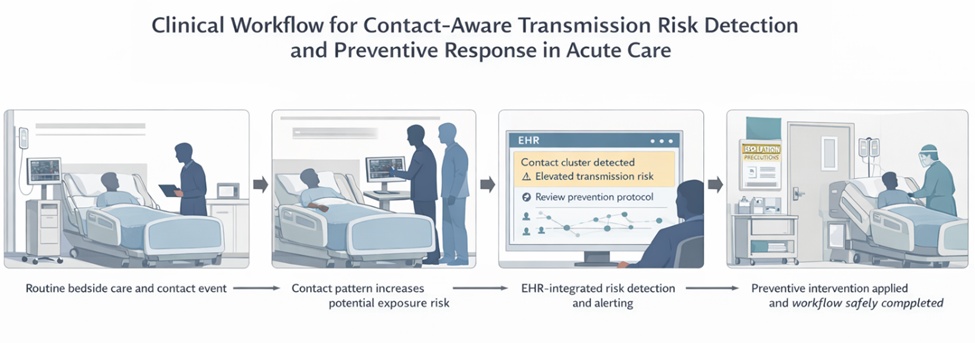
Figure 1. Clinical workflow of contact-aware transmission risk detection and preventive response in acute care.
This illustration depicts a routine acute care workflow in which bedside patient management generates repeated interpersonal and equipment-associated contact events. As exposure opportunities accumulate, an electronic health record–integrated contact surveillance system detects elevated transmission risk and issues a targeted alert for clinician review. The care team then initiates a preventive response, such as precaution activation or workflow adjustment, to reduce onward transmission risk while maintaining continuity of care. The figure demonstrates how contact-structured transmission intelligence can be embedded directly into real clinical operations to support preventability analysis in acute care environments.
The Contact-Integrated Risk Evaluation System (CIRES) represents a novel architectural infrastructure for transmission risk inference in acute care, structured around contact modeling to facilitate preventability analysis. CIRES comprises five unique layers: (1) contact data harmonization layer, which theoretically aggregates multimodal inputs from EHR and interaction logs; (2) network topology construction layer, building contact graphs for propagation simulation; (3) inference engine layer, applying AI analytics to derive risk profiles; (4) preventability orchestration layer, assessing intervention impacts conceptually; and (5) governance feedback layer, incorporating closed-loop topology for monitoring and ethical alignment. This layered design ensures interoperability with clinical workflows, emphasizing theoretical resilience against data variabilities.
A key feature of CIRES is its feedback topology, where outputs from the preventability layer loop back to refine network constructions, enabling adaptive intelligence without empirical adjustments. Conceptual formulas within CIRES capture core dynamics:
Risk propagation formula:
Decision confidence formula:
Governance load formula:
Figure 2 illustrates the framework explained above in a diagram.
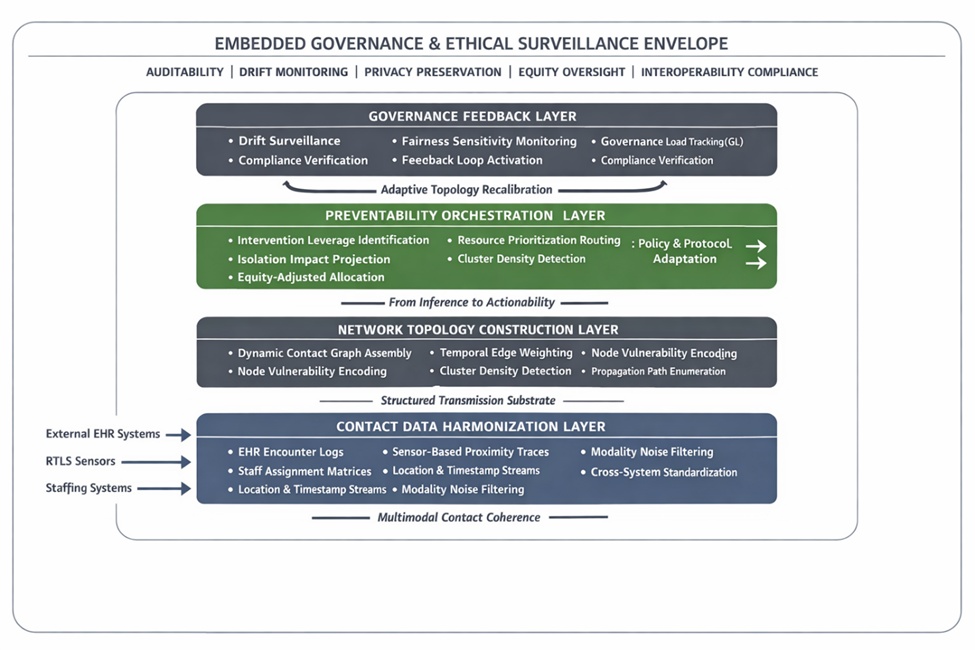
Figure 2. Contact-integrated risk evaluation system (CIRES): contact-structured preventability architecture
Table 2 formalizes the functional contribution of each CIRES layer to transmission inference and preventability amplification.
Table 2. Layer-specific functional roles and preventability contributions within the CIRES infrastructure
CIRES layer | Core function | Transmission insight generated | Preventability contribution | Governance interaction |
Contact data Harmonization | Multimodal aggregation and standardization | Contact intensity distributions | Improves the structural completeness of risk mapping | Privacy filtering and interoperability validation |
Network topology construction | Dynamic graph assembly | Cluster density and exposure pathways | Identifies structural leverage points | Drift sensitivity on topology shifts |
Risk inference engine | Propagation modeling and uncertainty integration | Exposure gradients and node-level risk stratification | Enables targeted isolation and workflow adaptation | Confidence, surveillance, and audit traceability |
Preventability orchestration | Intervention simulation and prioritization | Intervention impact differentials | Optimizes PPE allocation, staffing, and spatial design | Equity-adjusted allocation monitoring |
Governance feedback layer | Recursive monitoring and recalibration | Drift detection and governance load assessment | Sustains long-term system resilience | Cross-layer compliance enforcement |
The CIRES infrastructure, through its contact-structured modeling, theoretically engenders profound impacts on transmission preventability within acute care settings, reshaping how risks are inferred and mitigated at an analytical level. By conceptualizing contact networks as dynamic ecosystems, CIRES facilitates a deeper understanding of propagation mechanics, where preventability emerges not as a static metric but as a multifaceted outcome influenced by architectural orchestration. This section delves into the inferential consequences of deploying such a framework, examining how layered intelligence can theoretically amplify decision-making efficacy, resource optimization, and systemic resilience against nosocomial threats [19, 20].
At the core of CIRES’s impact lies its ability to theoretically disentangle contact-driven risk pathways, enabling preventability analysis that accounts for interaction heterogeneities in acute care. For instance, in high-acuity environments like intensive care units, where staff-patient contacts are frequent and varied, the framework’s network topology layer could conceptually highlight clusters of elevated risk, informing targeted interventions such as enhanced hygiene protocols or spatial reconfiguration.
This inferential dynamic shifts preventability from reactive measures to proactive foresight, potentially reducing transmission incidences by identifying latent vulnerabilities before escalation [21, 22]. The governance feedback topology further enhances this by introducing iterative loops that theoretically adapt to evolving contact patterns, ensuring that preventability assessments remain robust amid workflow fluctuations. Such impacts extend to resource allocation, where CIRES’s formulas—like the risk propagation equation—provide interpretive lenses for prioritizing scarce assets, such as personal protective equipment, based on inferred exposure gradients [23].
Moreover, the interoperability embedded in CIRES fosters broader ecosystemic impacts, bridging disparate data sources to enrich transmission inference. In acute care, where EHR systems often operate in silos, this architectural feature theoretically unifies contact data with clinical analytics, yielding holistic preventability insights that transcend individual patient encounters. Consequences include streamlined decision support pipelines that empower clinicians to infer risks with greater confidence, as captured by the decision confidence formula, which interpretively quantifies uncertainty reductions through modular integration [24, 25]. This not only mitigates cognitive burdens on healthcare workers but also amplifies organizational efficiency, where preventability analysis informs policy-level adjustments, such as staffing models optimized for contact minimization. However, these impacts are tempered by governance loads, as delineated in the corresponding formula, highlighting potential strains on monitoring infrastructures in resource-limited settings [26].
The dynamics of CIRES also manifest in ethical and equity dimensions of preventability, where contact-structured modeling theoretically addresses disparities in transmission risks across patient demographics. For vulnerable populations in acute care—such as older people or immunocompromised—the framework’s inference engine could conceptually prioritize their contact profiles, ensuring equitable resource distribution and reducing disproportionate impacts [27, 28]. This inferential equity promotes a more inclusive analytics ecosystem, where preventability is not skewed by data biases but enhanced through governance oversight. Furthermore, the system’s theoretical scalability to multi-facility networks amplifies cross-institutional impacts, enabling shared intelligence on transmission patterns that could inform regional health strategies [29]. Overall, these dynamics underscore CIRES’s role in transforming acute care from siloed operations to interconnected, risk-aware paradigms, with lasting implications for healthcare resilience.
Expanding on operational impacts, CIRES theoretically optimizes workflow integration by embedding contact-structured intelligence into daily protocols, such as shift handovers or patient rounding. This could lead to reduced monitoring burdens, as the governance load formula interpretively balances oversight with efficiency, allowing AI to handle routine inferences while clinicians focus on high-stakes decisions [1, 2]. In scenarios of outbreak surges, the framework’s feedback topology provides adaptive dynamics, theoretically recalibrating risk models in response to real-time contact shifts, thereby enhancing preventability under pressure. Such impacts extend to training and education, where analytical outputs from CIRES could serve as conceptual tools for simulating transmission scenarios, fostering a culture of proactive risk management among staff [3, 4].
Critically, the inferential impacts also encompass potential challenges, such as increased dependency on AI infrastructures, which could exacerbate vulnerabilities if interoperability falters. However, by design, CIRES mitigates this through resilient layers that theoretically maintain functionality amid data disruptions, ensuring sustained preventability analysis [5, 6]. The resource allocation dynamics, informed by propagation formulas, further enable cost-effective deployments, where acute care facilities can theoretically allocate computational and human resources based on inferred priorities, minimizing waste while maximizing impact [7, 8]. This analytical foresight positions CIRES as a catalyst for systemic evolution, where transmission risks are not merely managed but anticipated and preempted through structured modeling.
In summary, the dynamics of transmission preventability under CIRES reveal a tapestry of inferential impacts that span clinical, operational, and ethical realms, offering a blueprint for AI-driven enhancements in acute care analytics [9, 10]. By leveraging contact structures for deeper insights, the framework theoretically elevates preventability from an aspirational goal to an achievable reality, with ripple effects that could redefine healthcare delivery paradigms.
The conceptual introduction of CIRES as a contact-structured modeling framework invites a nuanced discussion on its theoretical contributions to transmission risk inference and preventability in acute care settings. Building on the synthesized literature, this framework addresses gaps in existing AI healthcare architectures by emphasizing contact granularity, which traditional models often abstract away, leading to suboptimal risk assessments [11, 12]. CIRES’s layered infrastructure, with its unique feedback topology, theoretically advances interoperability, allowing for seamless integration into EHR ecosystems where data exchange has historically been fragmented [13]. This positions CIRES not merely as an analytical tool but as a transformative element in clinical decision support, where preventability analysis becomes embedded in workflow rhythms rather than an adjunct process [14].
One pivotal aspect warranting discussion is the interpretive power of CIRES’s formulas, which encapsulate complex dynamics without empirical dependencies. The risk propagation formula, for example, provides a conceptual scaffold for understanding how contact intensities interplay with vulnerabilities, offering insights that could theoretically guide protocol refinements in acute care [15, 16]. Similarly, the decision confidence and governance load equations highlight trade-offs in system design, prompting reflections on balancing analytical depth with operational feasibility. In governance-constrained environments, these formulas underscore the need for AI systems that prioritize transparency, mitigating risks of algorithmic opacity that could undermine trust in predictive outputs [17, 18].
Furthermore, the discussion must acknowledge potential limitations inherent in conceptual frameworks like CIRES. While theoretically robust, its reliance on assumed data modalities may overlook real-world variabilities, such as incomplete contact tracing in chaotic acute settings [19]. This necessitates future extensions that conceptually incorporate adaptive mechanisms for handling noisy inputs, ensuring that inference remains reliable across diverse deployment environments [20]. Ethical considerations also loom large; CIRES’s focus on contact-structured data raises privacy concerns, where governance layers must theoretically enforce differential privacy to protect sensitive interactions [21]. Balancing innovation with ethics is crucial, as unchecked AI deployment could exacerbate inequities in access to healthcare [22].
CIRES aligns with broader trends in AI healthcare, such as the shift toward predictive analytics infrastructures that anticipate rather than react to transmission events [23, 24]. By synthesizing contact networks with preventability metrics, the framework theoretically empowers multidisciplinary teams—clinicians, epidemiologists, and administrators—to collaborate on risk mitigation strategies. This interdisciplinary synergy could foster innovative applications, like virtual simulations of acute care scenarios for training purposes, enhancing overall system preparedness [25]. However, scalability challenges merit attention; in large-scale acute facilities, the computational demands of network topology construction might strain infrastructures, suggesting conceptual optimizations like hierarchical modeling to distribute loads [26].
This could catalyze shifts in health policy, prioritizing AI investments that yield theoretical returns in preventability, ultimately reducing economic burdens from nosocomial infections [28]. Critiques from literature, such as biases in AI decision pipelines, are addressed through CIRES’s feedback topology, which theoretically iterates toward fairness. Still, ongoing vigilance is required to adapt to emerging biases [29].
In essence, this discussion illuminates CIRES’s potential to redefine transmission risk paradigms while candidly addressing hurdles, paving the way for refined conceptual iterations that amplify its utility in acute care analytics [1, 2]. Through this lens, CIRES emerges as a beacon for AI-driven preventability, harmonizing technological prowess with clinical pragmatism.
In concluding this conceptual manuscript, the CIRES stands as a pioneering framework for transmission risk inference in acute care settings, leveraging contact-structured modeling to advance preventability analysis. By orchestrating AI architectures with healthcare analytics, CIRES theoretically bridges critical gaps in EHR intelligence and decision support, offering interpretive tools that enhance risk foresight without empirical crutches.
The manuscript has traversed the theoretical underpinnings, architectural intricacies, inferential dynamics, and broader discussions, underscoring CIRES’s role in transforming acute care from vulnerability-prone environments to resilient ecosystems. Formulas capturing propagation, confidence, and loads provide conceptual anchors, enabling nuanced assessments that could theoretically optimize resources and workflows. Impacts on preventability dynamics reveal opportunities for equitable, efficient interventions, while the discussion highlights ethical and scalability considerations essential for real-world alignment.
Ultimately, CIRES exemplifies the untapped potential of AI in healthcare, inviting future conceptual explorations to refine its layers and topologies. As acute care evolves amid persistent transmission threats, frameworks like CIRES offer a roadmap for analytical empowerment, fostering safer, more proactive clinical landscapes. This work advocates for continued innovation in contact-structured AI, ensuring that preventability becomes a cornerstone of modern healthcare systems.
None
None
None
None
Open Access This article is licensed under a Creative Commons Attribution 4.0 International License, which permits use, sharing, adaptation, distribution and reproduction in any medium or format, as long as you give appropriate credit to the original author(s) and the source, provide a link to the Creative Commons licence, and indicate if changes were made. The images or other third party material in this article are included in the article's Creative Commons licence, unless indicated otherwise in a credit line to the material. If material is not included in the article's Creative Commons licence and your intended use is not permitted by statutory regulation or exceeds the permitted use, you will need to obtain permission directly from the copyright holder. To view a copy of this licence, visit http://creativecommons.org/licenses/by/4.0/.
 Clinical Intelligence Research Press