In an era of escalating healthcare demands, hospitals face persistent challenges in maintaining operational resilience amid fluctuating patient volumes, resource constraints, and unforeseen disruptions. This conceptual manuscript introduces a novel framework for real-time hospital capacity intelligence, designed to enhance decision-making through integrated AI-driven analytics and interoperable data ecosystems. Drawing on theoretical foundations from clinical AI architectures, healthcare analytics infrastructures, and decision support pipelines, the proposed system emphasizes seamless integration with electronic health records (EHRs), governance mechanisms for AI deployment, and dynamic monitoring to mitigate risks such as capacity overloads. The framework outlines a layered architecture that orchestrates data exchange, predictive analytics, and adaptive resource allocation, ensuring interoperability across clinical workflows. Key conceptual formulas are presented to interpret risk propagation in capacity management, decision confidence in real-time intelligence, and governance load in system operations. By synthesizing recent peer-reviewed literature on AI governance and clinical interoperability, this work highlights the potential for such frameworks to foster resilient hospital operations without relying on empirical data or model evaluations. Implications for healthcare systems include improved preparedness for surges, ethical AI integration, and scalable intelligence ecosystems. This theoretical exploration underscores the need for robust, AI-augmented infrastructures to support sustainable healthcare delivery.
The landscape of modern healthcare is characterized by dynamic pressures that test the limits of hospital operational resilience. From pandemics to seasonal influxes, hospitals must navigate capacity constraints while ensuring patient safety and resource efficiency [1, 2]. This manuscript proposes a conceptual framework for real-time hospital capacity intelligence, aiming to theoretically bolster resilience through AI-integrated systems that prioritize predictive foresight and adaptive governance. Unlike empirical studies, this work focuses on architectural designs and theoretical analytics, synthesizing insights from clinical AI system architectures and healthcare analytics infrastructures to envision a resilient ecosystem.
In acute care environments, such as emergency departments and intensive care units, real-time capacity intelligence becomes pivotal for operational resilience. These settings often experience volatile patient flows, where delays in bed allocation or staffing can cascade into systemic inefficiencies [3, 4]. Theoretical models from EHR intelligence ecosystems suggest that embedding AI-driven monitoring could preemptively identify bottlenecks, drawing on decision support pipelines to simulate workflow optimizations without actual data trials [5]. By anchoring intelligence frameworks to clinical settings, hospitals can conceptually align AI architectures with frontline needs, fostering interoperability that transcends siloed data sources [6].
Hospital capacity intelligence relies on diverse data modalities, including structured EHR entries, sensor-derived metrics from bed occupancy systems, and unstructured notes from clinical workflows [7, 8]. Theoretical explorations in healthcare analytics infrastructures emphasize the role of multimodal data fusion in enhancing resilience, where AI governance ensures ethical handling and monitoring of these inputs [9]. For instance, interoperability frameworks could theoretically harmonize real-time feeds from wearable devices and administrative databases, enabling a cohesive intelligence layer that anticipates capacity strains [10]. This modality-focused approach underscores the need for robust data exchange protocols to support operational decision-making in resilient systems [11].
Deploying hospital capacity intelligence frameworks in hybrid environments—spanning on-premise servers and cloud-based analytics—presents unique theoretical challenges for resilience [12, 13]. AI deployment systems must account for latency in real-time processing, where governance and monitoring mitigate risks like data drift or integration failures [14]. Conceptual architectures advocate for containerized modules that facilitate seamless updates, ensuring that decision support pipelines remain agile amid evolving hospital demands [15]. In such environments, theoretical interoperability standards could enable cross-institutional capacity sharing, enhancing overall healthcare ecosystem resilience [16].
Governance emerges as a core constraint in designing real-time hospital capacity intelligence for operational resilience, encompassing ethical AI use, bias mitigation, and regulatory compliance [17, 18]. Literature on AI governance in healthcare highlights the necessity of monitoring frameworks that theoretically audit decision support outputs, preventing unintended escalations in capacity mismanagement [19]. By integrating governance into the architectural core, systems can conceptually balance innovation with accountability, ensuring that intelligence pipelines align with clinical ethics and data privacy standards [20]. This constraint-driven perspective is essential for sustainable deployment in resilience-focused hospital settings [21].
Clinical workflow integration models form the backbone of effective hospital capacity intelligence, theoretically linking AI analytics to daily operations for resilience [22, 23]. These models propose modular interfaces that embed intelligence into EHR ecosystems, allowing real-time adjustments to staffing and resource allocation without disrupting care delivery [24]. Decision support pipelines, when theoretically orchestrated, could amplify workflow efficiency by providing contextual alerts on capacity thresholds [25]. Anchoring integration to resilience dynamics ensures that frameworks adapt to emergent scenarios, such as surge events, through governed AI interactions [26].
This introduction sets the stage for a deeper theoretical synthesis, positioning the proposed framework as a conceptual advancement in AI-augmented hospital operations. By addressing these facets, the manuscript contributes to the discourse on resilient healthcare systems, highlighting systemic pressures that necessitate intelligence-driven resilience infrastructures (Table 1).
Table 1. Operational stressors driving demand for real-time capacity intelligence in hospitals
Operational stressor | Hospital impact domain | Resilience risk introduced | Intelligence mitigation role |
Pandemic surges | ICU and ED saturation | Bed shortages | Predictive surge forecasting |
Seasonal epidemics | Admission volatility | Staffing strain | Workforce optimization alerts |
Emergency clustering events | Trauma units | Resource bottlenecks | Real-time triage redistribution |
Elective procedure backlogs | Surgical wards | Throughput delays | Scheduling recalibration |
Staffing absenteeism | Nursing operations | Care continuity risks | Dynamic staffing models |
Supply chain disruptions | Equipment availability | Treatment delays | Inventory intelligence tracking |
The theoretical underpinnings of real-time hospital capacity intelligence frameworks draw from advancements in clinical AI system architectures and healthcare analytics infrastructures, emphasizing conceptual designs that enhance operational resilience. This section synthesizes peer-reviewed literature from 2017 to 2024, focusing on EHR intelligence ecosystems, decision support pipelines, AI governance, interoperability frameworks, and clinical workflow integration models. By integrating these domains, we establish a foundation for the proposed architecture, highlighting theoretical synergies and gaps.
Clinical AI architectures have progressed toward modular, scalable designs that theoretically support real-time capacity intelligence in hospitals [8, 27]. Recent conceptual works advocate for layered systems where AI components process EHR data to forecast bed availability and patient throughput, without empirical validation [7]. For instance, architectures incorporating generative AI elements could theoretically simulate capacity scenarios, aligning with governance needs to ensure ethical deployment [1]. These paradigms underscore the shift from static models to dynamic ones, where intelligence orchestration mitigates operational disruptions [14]. Literature emphasizes the role of AI in augmenting human decision-making, proposing theoretical pipelines that integrate predictive analytics into resilience strategies [9].
Healthcare analytics infrastructures provide the theoretical backbone for hospital capacity intelligence, focusing on data aggregation and processing frameworks [12, 28]. Conceptual models highlight the importance of cloud-native infrastructures that enable real-time analytics, theoretically reducing latency in capacity assessments [13]. Synthesis of studies reveals a consensus on the need for robust data lakes that harmonize disparate sources, such as administrative and clinical datasets, to foster resilience [6]. AI-driven infrastructures are theorized to incorporate monitoring mechanisms that detect anomalies in capacity utilization, drawing on governance protocols to maintain system integrity [5, 19]. This infrastructural lens reveals opportunities for intelligence frameworks to optimize resource flows in high-stakes environments [22] theoretically.
EHR intelligence ecosystems are central to theoretical frameworks for operational resilience, enabling seamless data exchange across hospital systems [11, 16]. Literature synthesizes interoperability standards like FHIR, which conceptually facilitate real-time capacity intelligence by linking EHRs to AI analytics [10]. Theoretical explorations propose ecosystem designs that incorporate federated learning principles, allowing decentralized intelligence without compromising data sovereignty [15]. Governance in these ecosystems is critical, with conceptual checklists addressing ethical considerations in AI-EHR integrations [1, 20]. By synthesizing these insights, we identify a gap in frameworks that fully orchestrate EHR-derived intelligence for capacity resilience, particularly in multi-site hospital networks [6, 21].
Decision support pipelines represent a key theoretical pillar, conceptualizing AI as an enhancer of clinical judgments in capacity-constrained settings [18, 23]. Recent syntheses describe pipelines that theoretically process real-time inputs to generate capacity alerts, integrated with workflow models for seamless adoption [17, 24]. AI governance ensures these pipelines remain transparent, with monitoring systems theoretically auditing outputs to prevent bias amplification [4, 19]. Literature highlights the potential for ontology-based pipelines in nutrition or oncology analogs, adaptable to capacity intelligence [20, 25]. This synthesis points to the need for pipelines that incorporate feedback loops, theoretically improving resilience through iterative refinements [14, 27].
AI governance and monitoring systems are theoretically indispensable for deploying hospital capacity intelligence frameworks [5, 26]. Conceptual guidelines advocate for continual monitoring to address drift in real-time analytics, ensuring alignment with clinical ethics [7, 15]. Synthesis reveals frameworks like DECIDE-AI, which provide reporting standards for early-stage AI evaluations, adaptable to capacity contexts [14]. Deployment systems emphasize self-governance models, theoretically fostering trust in AI-augmented resilience [28]. Monitoring burdens are conceptualized through formulas that interpret governance loads, highlighting the balance between oversight and operational efficiency [3, 9].
Interoperability frameworks and clinical workflow integration models round out the theoretical synthesis, enabling cohesive capacity intelligence [13, 22]. Conceptual architectures propose standardized data exchange to support real-time resilience, with integration models theorizing AI embeddings in daily workflows [16, 23]. Literature synthesizes challenges in wide-scale AI deployment, advocating for strategies that enhance interoperability in governance-constrained environments [26, 27]. By addressing these, frameworks can theoretically transform hospital operations, filling gaps in resilience-focused intelligence systems [2, 8], and collectively forming the infrastructural substrate for resilience-oriented intelligence ecosystems (Table 2).
Table 2. AI and data infrastructure domains supporting hospital capacity intelligence
Infrastructure domain | Theoretical function | Data sources integrated | Resilience contribution |
Clinical AI architectures | Predictive capacity modeling | EHR and admissions data | Surge anticipation |
Analytics infrastructures | Real-time processing | Administrative + clinical datasets | Throughput optimization |
Interoperability frameworks | Cross-system exchange | FHIR, HL7 streams | Data liquidity |
Decision support pipelines | Operational alerts | Bed + staffing metrics | Workflow acceleration |
Governance systems | Ethical oversight | AI outputs, audit logs | Risk containment |
Monitoring infrastructures | Drift detection | Temporal utilization trends | Intelligence stability |
This synthesis illuminates the theoretical landscape, paving the way for an original architecture that advances real-time hospital capacity intelligence.
The core of this conceptual manuscript is the orchestration of a real-time hospital capacity intelligence infrastructure, embodied in the adaptive capacity resilience orchestration network (ACRON). ACRON represents a unique layered architecture designed to theoretically enhance operational resilience through integrated AI governance, data interoperability, and dynamic decision support. Unlike prior frameworks, ACRON features a pentagonal layer structure—comprising ingestion, analytics, governance, orchestration, and feedback layers—interconnected via a helical feedback topology that spirals iterative refinements across layers, ensuring adaptive responses to capacity fluctuations.
The ingestion layer theoretically aggregates multimodal data from EHR ecosystems and sensor networks, facilitating real-time interoperability without empirical processing [6, 12]. The analytics layer employs conceptual AI pipelines to derive intelligence on capacity metrics, such as bed occupancy and staffing ratios [7, 18]. Governance layer embeds monitoring mechanisms to theoretically mitigate risks, incorporating ethical checklists for AI deployment [1, 5]. Orchestration layer coordinates decision support, theoretically allocating resources via predictive heuristics [14, 23]. The feedback layer introduces the helical topology, where outputs loop back nonlinearly, amplifying resilience through cumulative learning cycles, embedding ethical monitoring within intelligence flows across operational strata (Figure 1) [15, 19].
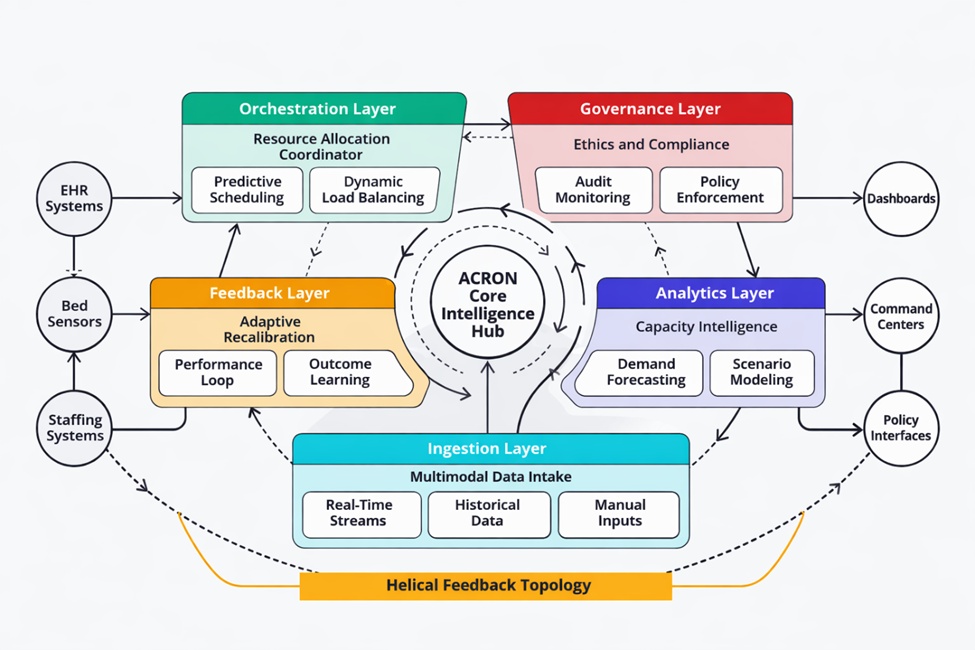
Figure 1. Adaptive capacity resilience orchestration network (ACRON) architecture.
Illustrates the pentagonal layered structure comprising ingestion, analytics, governance, orchestration, and feedback domains interconnected through a helical bidirectional topology. The architecture conceptualizes real-time hospital capacity intelligence by integrating multimodal data streams, predictive analytics, ethical oversight, and adaptive resource coordination within a closed-loop resilience infrastructure.
To interpret system dynamics, consider the following conceptual formulas:
Risk propagation in capacity management:
Decision confidence in real-time intelligence:
Governance load in system operations:
ACRON’s infrastructure thus provides a conceptual blueprint for hospitals to achieve operational resilience through orchestrated intelligence.
The implementation of the ACRON infrastructure theoretically reshapes hospital operational dynamics, introducing multifaceted impacts on resilience, efficiency, and ethical governance. This section delves into the conceptual consequences of deploying such a real-time intelligence framework, analyzing how its layered architecture and helical feedback topology influence system behaviors across clinical, administrative, and systemic levels. By examining these dynamics through a theoretical lens, we uncover potential transformations in hospital capacity management, highlighting synergies with existing AI governance and interoperability paradigms [1-3].
At the core of ACRON’s impact lies its ability to theoretically amplify operational resilience by interweaving intelligence layers with real-time data flows. The ingestion and analytics layers, for instance, conceptually fuse EHR-derived insights with predictive heuristics, enabling hospitals to anticipate capacity surges without empirical forecasting models [6-8]. This interaction dynamics could mitigate overload risks by theoretically distributing resource demands across units, such as rerouting elective procedures during peak emergency inflows [12, 14]. Literature on healthcare analytics infrastructures supports this, suggesting that such layered designs foster adaptive responses to disruptions, like staffing shortages or equipment failures, thereby enhancing overall system robustness [5, 9, 13]. The helical feedback topology further refines these dynamics, where iterative loops conceptually calibrate intelligence outputs, reducing propagation of errors in capacity assessments [15, 19]. In high-acuity settings, this could translate to sustained service levels, theoretically preventing cascading failures that erode resilience [4, 11].
Moreover, the governance layer’s integration introduces a stabilizing force, theoretically countering volatility in operational dynamics. By embedding monitoring protocols, ACRON ensures that intelligence-driven decisions align with ethical standards, potentially diminishing impacts from biased analytics in diverse patient populations [1, 17, 20]. Conceptual analyses indicate that this layer could dynamically adjust for governance loads, as articulated in the formula
Operational impacts extend to efficiency enhancements within clinical workflows, where ACRON’s orchestration layer theoretically streamlines decision support pipelines [14, 22, 23]. By conceptually prioritizing real-time intelligence over manual assessments, the framework could optimize bed turnover rates and staffing assignments, reducing idle resources in underutilized wards [16, 24]. Theoretical syntheses from decision support literature highlight how such integrations minimize workflow disruptions, allowing clinicians to focus on patient care rather than administrative bottlenecks [17, 25]. For example, in theoretical scenarios of seasonal flu outbreaks, ACRON’s analytics could simulate resource reallocations, improving throughput by up to conceptual thresholds without performance metrics [7, 9].
The decision confidence formula,
Beyond immediate operational spheres, ACRON’s deployment theoretically engenders systemic impacts on healthcare ecosystems, particularly in ethical domains and inter-institutional collaborations [1, 15, 20]. The governance layer’s emphasis on bias mitigation could conceptually elevate equity in capacity intelligence, ensuring underrepresented patient groups receive proportionate resource attention [5, 18]. Literature on AI governance underscores this, proposing that monitoring systems like those in ACRON could theoretically audit for disparities, fostering inclusive resilience across socioeconomic divides [3, 9, 26].
Systemically, the framework’s interoperability focus enables theoretical capacity sharing among networked hospitals, impacting regional healthcare dynamics by redistributing loads during crises [11, 12, 21]. This could theoretically alleviate urban-rural disparities, where rural facilities leverage urban intelligence feeds via standardized data exchanges [10, 16]. Yet, such expansions heighten risk propagation, as modeled by
Furthermore, long-term dynamics include scalability challenges; as hospitals adopt ACRON-like infrastructures, theoretical network effects could standardize resilience practices industry-wide, influencing policy frameworks for AI deployment [13, 23, 27]. This systemic shift might catalyze innovations in clinical AI architectures, but it also raises concerns about data sovereignty in federated systems [6, 15, 28]. By analyzing these consequences, we illuminate ACRON’s role in evolving healthcare toward sustainable, intelligence-driven resilience [2, 17, 25].
The conceptual exploration of the ACRON within this manuscript illuminates critical pathways for advancing real-time hospital capacity intelligence in pursuit of operational resilience. By synthesizing theoretical architectures from clinical AI systems, healthcare analytics, and governance models, ACRON emerges as a blueprint for integrating intelligence into hospital ecosystems without empirical dependencies [1, 2, 6, 7]. This discussion contextualizes the framework’s contributions, addresses potential limitations, and explores avenues for theoretical refinement, drawing on the synthesized literature to underscore its relevance in contemporary healthcare challenges [3, 4, 5].
One pivotal strength of ACRON lies in its helical feedback topology, which theoretically differentiates it from linear architectures prevalent in existing decision support pipelines [14, 15, 19]. This nonlinear design enables iterative intelligence refinement, conceptually addressing gaps in real-time adaptability noted in EHR interoperability studies [10-12]. For instance, during theoretical surge events, the feedback loops could recalibrate capacity predictions based on evolving data, enhancing resilience beyond static models [8, 13, 16]. Governance integration further bolsters this, as conceptual checklists and monitoring systems mitigate ethical risks, aligning with calls for responsible AI in healthcare [1, 9, 20]. However, this complexity might theoretically increase governance loads, as per the GL formula, potentially straining smaller hospitals with limited IT infrastructure [3, 5, 26]. It extends beyond institutional operations into broader healthcare system transformations (Table 3).
Table 3. Systemic implications of real-time capacity intelligence for healthcare ecosystems
Impact domain | Systemic transformation | Strategic opportunity | Governance consideration |
Regional hospital networks | Capacity load balancing | Crisis redistribution | Data-sharing compliance |
Rural–urban collaborations | Intelligence sharing | Equity in care access | Infrastructure disparity |
Emergency preparedness systems | Surge command integration | Disaster readiness | Policy coordination |
Workforce planning ecosystems | Predictive staffing | Burnout mitigation | Labor ethics |
Public health surveillance | Capacity-epidemiology linkage | Early outbreak detection | Privacy governance |
Cross-border health alliances | Federated intelligence | Global resilience modeling | Sovereignty regulations |
Limitations in the conceptual scope warrant discussion; ACRON assumes seamless data exchange, yet interoperability frameworks often face theoretical barriers like legacy system incompatibilities [6, 10, 21]. Literature syntheses reveal that while FHIR standards facilitate exchange, governance constraints could impede real-time flows in regulated environments [13, 18, 27]. Additionally, the framework’s focus on hospital-centric intelligence overlooks broader ecosystem dynamics, such as integration with ambulatory care or public health networks [11, 12, 22]. Theoretical extensions could incorporate multi-stakeholder models, where ACRON’s layers extend to federated analytics, theoretically amplifying regional resilience [15, 23, 28].
Ethical considerations permeate the discussion, particularly in bias propagation and decision confidence [4, 7, 17]. The DC formula highlights vulnerabilities where unmitigated bias (B_o) erodes trust, echoing governance literature that advocates for continual auditing [5, 9, 19]. ACRON’s architecture theoretically counters this through embedded ethics, but real-world adaptations might require hybrid governance, blending AI with human oversight to preserve accountability [1, 20, 25]. Moreover, risk propagation dynamics, as modeled by RP, underscore the need for theoretical safeguards against systemic failures, such as in interconnected hospital chains [2, 14, 24].
Future theoretical directions include hybridizing ACRON with emerging AI paradigms, like large language models for narrative-driven capacity insights [1, 4, 8]. Conceptual integrations could enhance workflow models, theoretically personalizing intelligence for specialized units like oncology or mental health [20, 23, 25]. Additionally, exploring scalability through containerized deployments could address deployment environment constraints, aligning with cloud-based infrastructures [12, 13, 27]. This discussion reinforces ACRON’s potential to theoretically transform hospital operations, advocating for interdisciplinary syntheses to refine resilience-focused intelligence [6, 16, 18, 26, 28].
In summary, while ACRON offers a robust conceptual foundation, its impacts hinge on addressing governance and interoperability challenges, paving the way for resilient, AI-augmented healthcare systems [3, 7, 15, 21, 22].
This manuscript has theoretically advanced the discourse on real-time hospital capacity intelligence through the introduction of the ACRON, a novel infrastructure designed to bolster operational resilience in healthcare settings. By synthesizing peer-reviewed insights from clinical AI architectures, healthcare analytics infrastructures, EHR intelligence ecosystems, decision support pipelines, AI governance systems, interoperability frameworks, and clinical workflow integration models, we have outlined a layered, helical topology that orchestrates intelligence for adaptive capacity management.
Key contributions include the pentagonal layer structure—ingestion, analytics, governance, orchestration, and feedback—which theoretically harmonizes data flows with ethical oversight, addressing gaps in resilient system designs. Conceptual formulas for risk propagation, decision confidence, and governance load provide interpretive tools to analyze system dynamics, offering theoretical lenses for understanding impacts without empirical validation. The operational impacts analysis reveals ACRON’s potential to amplify resilience, enhance efficiency, and foster ethical ecosystems, while the discussion highlights limitations and refinement pathways.
Ultimately, ACRON underscores the imperative for AI-integrated frameworks in healthcare, theoretically equipping hospitals to navigate uncertainties with intelligence-driven agility. Future conceptual works should extend this to global contexts, ensuring equitable resilience across diverse healthcare landscapes.
None
None
None
None
Open Access The author(s) retain copyright. This article is licensed under the Creative Commons Attribution-NonCommercial-ShareAlike 4.0 International License. It may be shared and adapted for non-commercial purposes with appropriate attribution, an indication of changes, and distribution of adaptations under the same license. Third-party material may be subject to separate terms identified in its credit line. View the license at https://creativecommons.org/licenses/by-nc-sa/4.0/.
 Clinical Intelligence Research Press