The escalating burden of chronic diseases necessitates innovative approaches to healthcare delivery that leverage artificial intelligence (AI) for continuous patient oversight. This conceptual manuscript introduces the Wearable-Integrated Remote Monitoring Intelligence Loop (WIRMIL). This novel architectural framework enhances chronic care systems by seamlessly integrating wearable devices, remote data streams, and intelligent decision-making loops. WIRMIL conceptualizes a closed-loop system in which wearable sensors feed real-time physiological data into AI-driven analytics pipelines, enabling proactive interventions for chronic conditions such as diabetes, cardiovascular diseases, and respiratory disorders. The framework emphasizes interoperability with electronic health records (EHRs), governance mechanisms for data privacy, and adaptive intelligence to mitigate monitoring fatigue. By synthesizing literature on clinical AI architectures, healthcare analytics infrastructures, and decision support pipelines, we outline the theoretical underpinnings of WIRMIL, including its layered structure comprising data acquisition, intelligence processing, and feedback orchestration layers. Conceptual formulas are presented to interpret risk propagation in remote loops, decision confidence in chronic monitoring, and governance load on intelligence systems. The architecture addresses challenges in clinical workflow integration, such as latency in remote data exchange and human-AI collaboration in chronic care settings. Ultimately, WIRMIL offers a blueprint for scalable, patient-centered chronic care ecosystems that improve outcomes through intelligent, wearable-enabled remote monitoring, without relying on empirical validation or performance metrics. This work contributes to the discourse on AI governance in healthcare by proposing a theoretical model that prioritizes ethical deployment and system resilience in distributed chronic care environments.
The integration of wearable technologies into chronic care systems represents a paradigm shift in how healthcare providers manage long-term conditions, enabling continuous remote monitoring that transcends traditional episodic encounters. As populations age and chronic illnesses like hypertension and chronic obstructive pulmonary disease (COPD) proliferate, the demand for intelligent systems capable of processing vast streams of wearable-derived data has intensified. This manuscript posits the Wearable-Integrated Remote Monitoring Intelligence Loop (WIRMIL) as a conceptual framework to orchestrate these elements, fostering a dynamic intelligence ecosystem tailored to chronic care demands. By embedding AI-driven loops into remote monitoring infrastructures, WIRMIL aims to theoretically enhance patient autonomy while ensuring robust, responsive clinical oversight.
In ambulatory chronic care settings, such as home-based management of diabetes or heart failure, wearable devices capture multimodal data including heart rate variability, activity levels, and glucose trends, which must be intelligently looped back into clinical decision-making. These modalities, often heterogeneous in format and frequency, pose integration challenges that WIRMIL addresses through a unified intelligence architecture. For instance, accelerometers in wearables provide locomotion data critical for fall risk assessment in elderly patients with chronic conditions. At the same time, biosensors monitor biomarkers, such as oxygen saturation, in patients with chronic respiratory conditions. The framework conceptualizes these inputs as foundational to a remote monitoring loop, where intelligence algorithms theoretically synthesize patterns to preempt exacerbations, aligning with evolving clinical needs in decentralized care environments.
Deployment of remote monitoring in chronic care often occurs in hybrid environments that blend hospital-linked telehealth platforms with patient-owned wearables, necessitating robust interoperability frameworks. WIRMIL envisions an intelligence loop that navigates these environments by prioritizing edge computing on wearables to reduce latency in data transmission to central chronic care hubs. This approach theoretically mitigates bandwidth constraints in rural or mobile deployment scenarios, where chronic patients may experience intermittent connectivity. Furthermore, the loop incorporates adaptive protocols to handle environmental variables, such as signal interference in urban settings, ensuring the intelligence layer remains operational across diverse chronic care landscapes.
Governing the flow of sensitive health data from wearables in chronic care systems demands stringent ethical and regulatory oversight, which WIRMIL embeds as an intrinsic component of its remote monitoring intelligence loop. Constraints such as data sovereignty under frameworks like GDPR or HIPAA influence how intelligence is orchestrated, requiring theoretical models for consent-driven data sharing. In chronic scenarios, where long-term monitoring generates longitudinal datasets, governance must address bias propagation in AI loops, potentially amplifying disparities in care access. WIRMIL’s conceptual design includes governance nodes within the loop to audit intelligence decisions, thereby, in theory, promoting equitable chronic care delivery.
Effective data exchange in wearable-integrated systems is pivotal for sustaining intelligence loops in chronic care, and this requires standardized protocols such as FHIR for seamless integration with EHRs. WIRMIL theorizes a bidirectional exchange framework in which remote monitoring data informs chronic care analytics, and vice versa, via encrypted loops that preserve data integrity. This facilitates theoretical advances in predictive intelligence, such as forecasting chronic flare-ups from aggregated wearable data. Challenges posed by heterogeneous data formats are addressed by conceptual middleware layers in the loop, ensuring interoperability across vendors and devices in a continuous deployment.
Integrating wearable-derived intelligence into chronic care workflows requires reimagining clinician-patient interactions, where remote loops provide actionable insights without overwhelming healthcare providers. WIRMIL conceptualizes workflow models that embed intelligence alerts into daily chronic management routines, theoretically reducing decision latency. In settings such as multidisciplinary chronic care teams, this integration fosters collaborative loops in which AI augments human expertise in interpreting remote monitoring data, ultimately streamlining care pathways.
The theoretical foundations of wearable-integrated remote monitoring intelligence loops in chronic care systems draw from advancements in clinical AI architectures and healthcare analytics infrastructures, emphasizing conceptual models for sustained patient engagement. Literature from 2017–2022 highlights the evolution of these systems, focusing on interoperability, governance, and decision support, but without empirical validation. This synthesis organizes key contributions into subheadings anchored to clinical settings, data modalities, deployment environments, and governance constraints, providing a bedrock for the proposed WIRMIL framework.
In chronic care clinical architectures, wearable devices serve as extensions of intelligence systems, enabling loops that, in theory, process continuous data for proactive management. Studies on the efficacy of telemedicine in cardiovascular chronic care underscore the need for integrated architectures that loop remote sensor data into clinical decision-making pipelines [1-3]. Similarly, remote cardiology clinic patterns reveal how wearable-integrated systems can form intelligence loops to monitor chronic conditions such as arrhythmias, thereby theoretically enhancing patient outcomes through architectural designs that prioritize data fidelity. These architectures often incorporate AI governance to ensure loop reliability in chronic settings, as seen in frameworks for health information technology adaptation during pandemics that integrate wearable data into chronic care ecosystems [4]. The synthesis indicates a gap in loop-based models for chronic intelligence, specifically in wearable integration that accounts for clinical variability in conditions like multiple sclerosis, using step count monitoring as a proxy for disability progression [5-10].
Data modalities from wearables, such as physiological signals and activity metrics, form the core of remote monitoring infrastructures in chronic care, requiring analytics that loop intelligence back to users. Research on wearable sensors for detecting infections such as SARS-CoV-2 illustrates how multimodal data can be synthesized within intelligence infrastructures for chronic respiratory monitoring [1]. In diabetes management, gamification with social incentives leverages wearable data modalities to modify lifestyles, theoretically closing monitoring loops through behavioral analytics [11]. EHR intelligence ecosystems further amplify this by integrating patient-generated data, such as blood glucose from wearables, into chronic care infrastructures [12-19]. The literature on estimating influenza burden via commercial wearables highlights the potential for population-scale analytics, in which data modalities inform remote intelligence loops to predict chronic exacerbations [15]. These insights underscore the need for infrastructures that handle modality heterogeneity in chronic loops, avoiding silos in data processing.
Deployment in varied environments, from home-based to hospital-linked, shapes EHR intelligence ecosystems for wearable remote monitoring in chronic care. Telehealth transformations during COVID-19 demonstrate how virtual care deployments integrate wearable data into ecosystems, theoretically enabling intelligence loops for chronic management [18]. Hospitalization outcomes from remote monitoring in COVID-19 patients reveal deployment strategies that loop intelligence into EHRs, enhancing chronic care continuity post-discharge [8]. In progressive care units, ambulation profiles from wearables predict chronic outcomes, such as readmissions, informing ecosystem designs for remote deployment [14]. Governance in these environments is critical, as seen in international case studies utilizing health IT for pandemic management, which extend to chronic deployments by ensuring ecosystem resilience [20, 21]. The literature synthesizes a need for adaptive ecosystems that accommodate deployment variabilities, such as in telerehabilitation for coronary artery disease, where cost-effectiveness models support intelligence integration [12].
AI governance in wearable-integrated systems ensures ethical monitoring within chronic care loops, addressing privacy and bias in the deployment of intelligence. Patient attitudes towards clinical AI highlight the need for governance to build trust in remote monitoring systems [2]. Challenges in advancing patient-centered decision support underscore the need for governance frameworks that monitor AI loops in chronic contexts [22]. Interoperability frameworks, such as those for mHealth and big data integration, emphasize governance for data exchange across chronic systems [23-32]. In IoT-based AI for telemedicine, governance sensitivities arise in wearable loops, requiring monitoring systems to handle ethical deployments [28]. Literature on smart healthcare in AI eras discusses governance for wearable technologies, theoretically mitigating risks in chronic intelligence ecosystems [24]. These contributions advocate for governance-embedded loops in which monitoring systems audit intelligence flows to prevent drift in chronic care.
Decision support pipelines in chronic care leverage wearable data for intelligence loops, theoretically optimizing clinical workflows. Deep learning for anaemia detection via ECGs exemplifies pipelines that could extend to wearable-derived decisions in chronic monitoring [6]. Envisioning AI documentation assistants in primary care suggests pipelines for looping intelligence into chronic consultations [17]. In cardiac telerehabilitation, pipelines support relapse prevention, integrating remote monitoring for decision support in chronic coronary care [12]. Patterns in machine learning for precision psychiatry inform pipelines for mental chronic conditions, where wearable data enhances decision confidence [31]. The synthesis reveals opportunities for pipelines that incorporate feedback topologies to address decision latency in distributed chronic systems [29].
Interoperability frameworks facilitate seamless data exchange in wearable-integrated chronic care, enabling robust intelligence loops. Applications of digital technology in pandemic responses highlight the importance of interoperability for remote monitoring workflows [5]. Bridging integration gaps in patient-generated data underscores models for EHR interoperability in chronic loops [19]. In IoT for wearable applications, interoperability challenges in healthcare delivery are addressed through framework designs [25]. Workflow integration models, such as those in qualitative explorations of statin adherence, theoretically loop behavioral data from wearables into chronic care [16]. The literature on medical sensors in wireless body area networks synthesizes models for pervasive chronic monitoring, emphasizing interoperability among intelligence systems [30].
The orchestration topology of the WIRMIL delineates a novel architectural framework for chronic care systems, conceptualizing a multi-layered structure with a recursive feedback topology to manage intelligence flows. WIRMIL comprises three primary layers: the Acquisition Layer, where wearable devices aggregate remote data; the Processing Layer, housing AI algorithms for intelligence derivation; and the Orchestration Layer, which loops decisions back to users and clinicians. This topology features a unique helical feedback mechanism, in which intelligence spirals to refine monitoring precision over time and adapt to chronic disease trajectories. structured across acquisition, intelligence processing, and orchestration gateways interconnected through recursive feedback pathways (Figure 1).
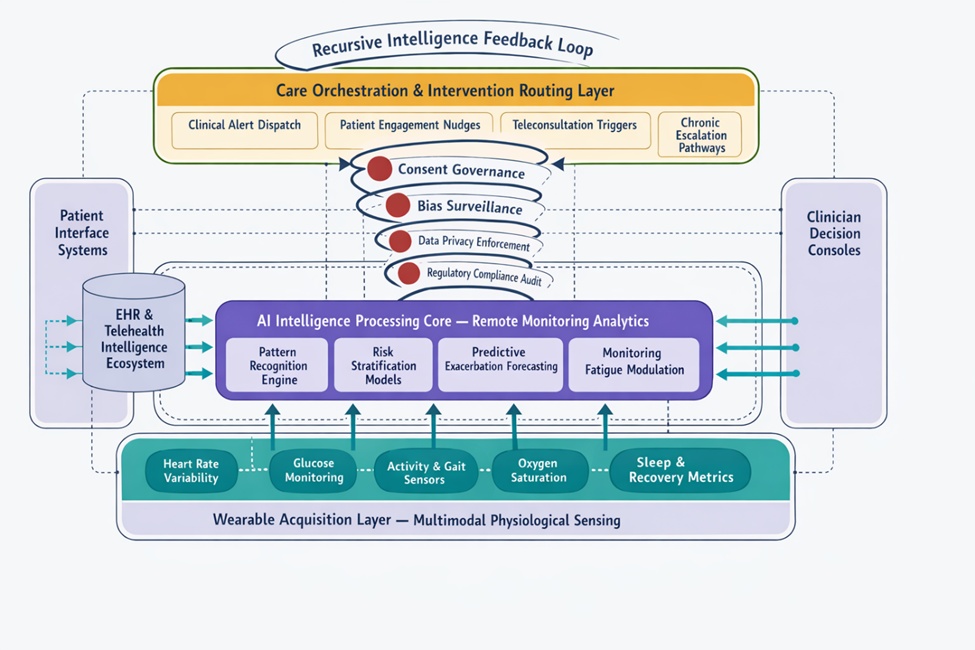
Figure 1. Wearable-integrated remote monitoring intelligence loop (WIRMIL) architecture
Conceptual architecture of the wearable-integrated remote monitoring intelligence loop (WIRMIL). The topology illustrates a closed-loop chronic care intelligence ecosystem in which wearable acquisition nodes feed continuous physiological data into an AI-driven processing core. Intelligence outputs are routed through orchestration gateways to clinicians and patients, while a helical feedback loop enables recursive monitoring adaptation. Distributed governance nodes enforce privacy, compliance, and oversight of bias across the loop.
To interpret system dynamics, consider the following conceptual formulas:
Risk propagation in remote loops:
Decision confidence in chronic monitoring:
Governance load on intelligence systems:
The adoption of the WIRMIL in chronic care systems introduces multifaceted dynamics that influence clinical workflows, patient engagement, and systemic resilience. These dynamics encompass shifts in human-AI interactions, potential for scalability across diverse chronic populations, and sensitivities to infrastructural variables. By theoretically examining these elements, we can anticipate how WIRMIL might reshape chronic care delivery, emphasizing proactive rather than reactive models.
At the core of clinical adoption lies the redistribution of cognitive load between clinicians and AI-driven loops. In chronic care, where monitoring is ongoing, WIRMIL’s helical feedback topology theoretically reduces clinician burden by automating routine data synthesis from wearables, enabling a focus on complex interventions. For instance, in managing chronic heart failure, the intelligence loop could theoretically flag subtle deteriorations in activity patterns detected by wearables, prompting timely adjustments without constant manual review [13, 14]. This dynamic fosters a symbiotic relationship in which AI augments human decision-making, potentially reducing burnout in high-volume chronic care clinics. However, adoption hinges on trust calibration; literature on patient and public attitudes towards clinical AI suggests that transparency in loop operations is crucial to mitigate skepticism, particularly in remote settings where physical examinations are absent [2]. WIRMIL addresses this by incorporating governance nodes that log intelligence derivations, enabling clinicians to trace decisions back to wearable inputs and thereby enhancing adoption through explainability.
Patient-centric dynamics further amplify WIRMIL’s impact, as wearable integration empowers individuals in chronic self-management. In conditions like diabetes, where lifestyle modifications are key, the loop’s orchestration layer could, in theory, deliver personalized nudges via mobile interfaces, drawing on gamification strategies observed in behavioral interventions [7, 11]. This promotes adherence by closing the intelligence loop with patient feedback, such as self-reported symptoms, integrated into risk-propagation models. Yet, the dynamics of the digital divide must be considered; in underserved chronic populations, wearable accessibility could exacerbate inequities, as highlighted in governance discussions on mHealth integration [32]. WIRMIL’s theoretical design mitigates this through modular layers that support low-cost wearables, ensuring broader adoption without assuming uniform technological proficiency.
Infrastructure sensitivities play a pivotal role in adoption dynamics, particularly in remote monitoring environments prone to connectivity fluctuations. The loop’s reliance on edge computing in wearables theoretically minimizes latency, but sensitivities to network infrastructure could disrupt intelligence flows in rural chronic care deployments [25, 29]. For example, in COPD management, intermittent data from oxygen saturation sensors might propagate risks if not governed effectively, as per the conceptual formula
Governance dependencies introduce another layer of dynamics, where regulatory compliance shapes adoption trajectories. In chronic care, long-term data accumulation from wearables necessitates robust privacy mechanisms, as emphasized in health IT governance for learning systems [4, 21]. WIRMIL’s embedded checkpoints theoretically enforce consent loops, but reliance on evolving standards such as FHIR could slow adoption if interoperability frameworks lag [19, 32]. Moreover, ethical dynamics arise in AI bias monitoring; loops processing diverse chronic data modalities must, in theory, self-audit to prevent disparate impacts, aligning with decision-support challenges [22, 31]. This fosters a dynamic where adoption accelerates in governed environments, such as integrated telehealth platforms, but stalls in fragmented systems [18, 20].
Decision latency trade-offs are a critical dynamic that balances speed and accuracy in chronic intelligence loops. WIRMIL’s processing layer theoretically optimizes this via adaptive algorithms. Still, trade-offs arise in high-stakes scenarios, such as detecting anaemia exacerbations in patients with chronic kidney disease using signals derived from wearables [6]. The formula
Operational consequences extend to resource allocation in chronic care infrastructures. WIRMIL theoretically redistributes resources by looping intelligence to predict resource needs, such as escalating remote monitoring to in-person visits only when necessary [9, 12]. This could optimize costs in telerehabilitation for chronic coronary conditions, as literature on cost-effectiveness indicates [12]. However, consequences include potential overload on governance loads, per
Human-AI workflow shifts underscore the transformative dynamics of WIRMIL, reorienting chronic care from siloed to looped intelligence models. In primary care consultations, AI assistants could, in theory, integrate wearable loops to document chronic progress, shifting workflows towards collaborative intelligence [17]. This dynamic aligns with pandemic-driven innovations, where digital tools looped remote data into chronic management [5, 20]. Yet, shifts require training to navigate, as sensitivities to AI errors could undermine adoption if not governed [21, 22]. Ultimately, these dynamics position WIRMIL as a catalyst for resilient chronic ecosystems, theoretically improving outcomes through integrated, intelligent monitoring.
The conceptual articulation of the Wearable-Integrated Remote Monitoring Intelligence Loop (WIRMIL) advances the discourse on AI-enabled chronic care by proposing a topology that harmonizes wearable data with intelligence orchestration. This framework, grounded in literature spanning clinical AI architectures to governance systems, bridges theoretical gaps in remote monitoring and offers insights into scalable, ethical deployments [1–32]. Central to the discussion is WIRMIL’s potential to redefine chronic care paradigms, moving beyond static analytics to dynamic loops that adapt to patient trajectories.
One key discussion point revolves around interoperability’s role in sustaining intelligence loops. As chronic care increasingly relies on disparate data sources, WIRMIL’s bidirectional exchange frameworks theoretically facilitate seamless integration with EHRs, echoing advancements in patient-generated data bridging [19, 32]. This interoperability not only enhances data fidelity but also mitigates fragmentation, as seen in telehealth transformations in which remote systems are integrated into broader ecosystems [18, 20]. However, challenges persist in standardizing wearable outputs across vendors, potentially hindering loop efficiency in heterogeneous chronic environments [25, 30]. Future conceptual extensions could incorporate semantic ontologies to further refine interoperability, ensuring loops remain robust against data modality variances [23, 27].
Governance emerges as a cornerstone in discussing WIRMIL’s viability, particularly in safeguarding against risks in long-term chronic monitoring. The framework’s governance nodes theoretically audit intelligence derivations, aligning with calls for ethical AI in healthcare [2, 4]. Literature on decision support challenges highlights the need for such mechanisms to address bias and privacy, especially in wearable-derived loops that accumulate sensitive longitudinal data [22, 31]. In chronic psychiatric care, for instance, machine learning patterns could be governed to prevent drift, as per precision psychiatry models [31]. Yet, governance overload, as captured in the GL formula, raises questions about balancing compliance with operational agility [24, 28]. This necessitates theoretical models for distributed governance, where blockchain-inspired ledgers could enhance trust in remote loops without centralized burdens.
The discussion also extends to the clinical workflow implications, where WIRMIL’s helical feedback is theoretically expected to streamline chronic management. In cardiovascular chronic care, telemedicine efficacy studies suggest loops could optimize interventions by integrating wearable insights [3, 13]. This aligns with gamification approaches that loop behavioral data for sustained engagement [7, 11]. However, workflow shifts demand consideration of human factors; AI augmentation might redistribute cognitive load but could introduce dependencies, as in comparisons between remote and in-home care [9]. The literature on ambulation profiles underscores how continuous monitoring loops predict chronic outcomes, theoretically reducing hospital burden [10, 14]. To maximize impact, discussions should explore hybrid models that blend WIRMIL with human oversight to mitigate over-reliance on intelligence.
Scalability and equity form another axis of discussion, as WIRMIL’s architecture theoretically supports diverse chronic populations. In pandemic contexts, digital innovations demonstrated scalable remote monitoring [5, 21], a capability that WIRMIL extends through wearable IoT integrations [25, 29]. In global chronic care, particularly in emerging economies, mHealth syntheses indicate a potential for big-data loops to address resource constraints [32]. Yet, equity concerns arise; wearable adoption dynamics may favor tech-savvy groups, amplifying disparities unless governed inclusively [16, 32]. Conceptual refinements could incorporate adaptive thresholds into risk formulas to tailor loops for underserved cohorts, promoting equitable distribution of intelligence. The functional interdependencies across WIRMIL layers, including governance load distribution and intelligence routing, are summarized in Table 1.
Table 1. Functional layer mapping of the WIRMIL chronic monitoring intelligence loop
Architectural layer | Core functions | Data inputs | Intelligence outputs | Governance dependencies | Clinical impact |
Wearable acquisition layer | Continuous biosignal capture; behavioral sensing | HRV, glucose, activity, SpO₂, sleep metrics | Raw physiological streams | Device consent; data ownership | Enables real-time chronic surveillance |
Intelligence processing core | Pattern detection; predictive modeling; anomaly detection | Normalized wearable data; EHR histories | Risk scores; exacerbation forecasts | Algorithmic bias monitoring | Early deterioration detection |
Interoperability exchange fabric | Data harmonization; protocol translation | Wearables + EHR + telehealth feeds | Unified patient intelligence vectors | Encryption compliance | Eliminates data silos |
Orchestration and decision layer | Alert routing; care escalation; engagement nudges | AI risk outputs; workflow triggers | Clinical alerts; patient prompts | Clinical accountability oversight | Reduces decision latency |
Governance and compliance nodes | Ethical auditing; consent validation; drift tracking | Intelligence logs; data lineage trails | Compliance reports; audit flags | GDPR/HIPAA frameworks | Sustains ethical chronic monitoring |
Technological sensitivities warrant discussion, particularly in edge-to-cloud transitions within WIRMIL. Wearable sensor studies reveal sensitivities to data quality, where intelligence loops must, in theory, filter noise for reliable chronic insights [1, 15]. Emerging technologies like 5G could enhance loop frequencies, reducing latency trade-offs as per the DC formula [27, 28]. In chronic infectious disease monitoring, this enables proactive loops that draw on estimates of influenza burden [15]. However, discussions must address cybersecurity, as cyber vulnerabilities in healthcare infrastructures could disrupt loops [29]. Theoretical fortifications, such as encrypted feedback topologies, are essential to sustain trust.
Finally, the discussion highlights WIRMIL’s contribution to the AI governance literature by proposing a loop-centric model that embeds monitoring within chronic systems. Unlike generic frameworks, its unique helical topology theoretically enables intelligence to iterate and align with lifecycle governance needs [4, 22]. This positions WIRMIL as a theoretical scaffold for future conceptual research, potentially influencing policy on wearable-integrated care [2, 21].
In conclusion, the WIRMIL offers a compelling conceptual framework for advancing chronic care systems through intelligent, wearable-enabled remote monitoring. By synthesizing key literature on clinical AI architectures, analytics infrastructures, and governance [1–32], this manuscript delineates a topology that, in theory, orchestrates data flows into actionable loops to address persistent challenges in chronic management. WIRMIL’s layered structure and helical feedback mechanism provide a blueprint for proactive intelligence, potentially transforming patient outcomes in conditions ranging from diabetes to respiratory disorders.
The clinical adoption dynamics explored reveal opportunities for human-AI synergy, infrastructure resilience, and equitable deployment, tempered by sensitivities to governance and latency. Conceptual formulas for risk propagation, decision confidence, and governance load underscore interpretive tools for system optimization, without empirical claims. As healthcare evolves towards distributed models, WIRMIL contributes theoretically to fostering scalable, ethical chronic ecosystems.
Future conceptual explorations could extend WIRMIL to multimodal AI fusions or quantum-inspired loops, building on current syntheses. Ultimately, this framework advocates for intelligence-driven chronic care, prioritizing patient empowerment and systemic efficiency in an era of wearable ubiquity.
None
None
None
None
Open Access The author(s) retain copyright. This article is licensed under the Creative Commons Attribution-NonCommercial-ShareAlike 4.0 International License. It may be shared and adapted for non-commercial purposes with appropriate attribution, an indication of changes, and distribution of adaptations under the same license. Third-party material may be subject to separate terms identified in its credit line. View the license at https://creativecommons.org/licenses/by-nc-sa/4.0/.
 Clinical Intelligence Research Press