The integration of artificial intelligence (AI) into healthcare systems has transformed clinical analytics, particularly in improving medication safety through advanced reconciliation processes, structured error taxonomies, and careful deployment strategies. This narrative review examines how AI-driven analytics embedded within clinical infrastructures can reduce medication-related risks in hospital and ambulatory care settings. AI technologies such as natural language processing and machine learning enable automated detection of medication discrepancies by analyzing electronic health records and identifying inconsistencies that may be overlooked by manual review.
AI systems also support the classification and prediction of medication errors, including prescribing mismatches and administration failures, allowing clinical decision support systems to identify high-risk prescriptions and support safer prescribing practices. In addition, AI contributes to closed-loop healthcare systems where analytics provide real-time decision support across the data lifecycle, from information ingestion to post-intervention feedback.
Despite these benefits, several deployment constraints remain, including data quality limitations, interoperability challenges, and ethical concerns related to bias and governance. These factors highlight the importance of robust system design and transparent AI models to ensure safe and equitable implementation. Furthermore, AI can support standardized error taxonomies and pharmacovigilance through structured analytical frameworks that improve reporting and monitoring of adverse events.
Overall, this review positions AI as a central component of adaptive clinical systems capable of strengthening medication safety. However, its effectiveness depends on addressing technical, operational, and regulatory barriers. Continued interdisciplinary collaboration will be essential to refine AI-enabled clinical analytics and support safer, more efficient healthcare systems.
The advent of artificial intelligence (AI) in healthcare represents a paradigm shift toward data-driven, intelligent systems that augment clinical decision-making and operational efficiency. In the realm of medication safety, AI’s integration into clinical systems and analytics has emerged as a pivotal strategy to address longstanding challenges in patient care. Medication errors, which encompass discrepancies in prescribing, dispensing, and administration, remain a significant contributor to adverse events globally, with estimates suggesting they affect up to 5%-10% of hospital admissions [1-3]. This review focuses on AI-enabled analytics for medication safety, emphasizing reconciliation logic—the systematic process of verifying and aligning medication regimens during care transitions—error taxonomies that categorize and predict risks, and deployment constraints that govern real-world implementation. We examine how AI transforms healthcare infrastructures from reactive error-detection mechanisms to proactive, analytics-powered ecosystems [4-6].
Healthcare systems have historically relied on manual processes for medication management, often leading to inefficiencies and errors due to fragmented data silos and human cognitive limitations. The transition to electronic health records (EHRs) in the early 2010s laid the groundwork for AI adoption, enabling the aggregation of vast datasets for analytical purposes [7-9]. AI, encompassing machine learning (ML), natural language processing (NLP), and predictive modeling, extends this foundation by automating complex tasks such as medication reconciliation. For example, NLP techniques parse unstructured clinical notes to extract medication details, reducing the burden on clinicians and minimizing oversights [7, 10]. Studies highlight that AI-driven systems can process multimodal data—combining structured EHR entries with free-text narratives—to achieve higher accuracy in identifying discrepancies than traditional rule-based approaches [11, 12]. This evolution reflects a broader trend in healthcare toward intelligent systems that not only store data but also derive actionable insights, fostering a shift from episodic care to continuous monitoring [13, 14].
In clinical analytics, AI’s role is multifaceted, involving data ingestion, pattern recognition, and outcome prediction. Analytics platforms powered by AI analyze historical medication data to forecast potential errors, such as drug-drug interactions or dosage mismatches, thereby supporting preventive interventions [15, 16]. The literature underscores the importance of integrating AI within existing clinical workflows to enhance system resilience, particularly in high-stakes environments like intensive care units, where polypharmacy is prevalent [17, 18]. However, this integration is not without challenges; deployment in diverse settings reveals constraints related to data interoperability and system scalability, which can hinder AI’s full potential [19, 20]. Consensus perspectives emphasize that AI must align with healthcare’s infrastructural backbone, including legacy systems and regulatory frameworks, to ensure seamless adoption [21, 22].
Medication safety analytics address a critical gap in healthcare delivery, where errors contribute to substantial morbidity, mortality, and economic burden. Taxonomies of medication errors classify them as omission, commission, and timing errors, providing a structured framework for AI to intervene [23-25]. AI systems employ these taxonomies to train models that detect anomalies in real-time, such as flagging high-risk prescriptions based on patient-specific factors like age, comorbidities, and prior adverse reactions [1, 15]. Reconciliation logic, central to this process, involves cross-verifying medication lists from multiple sources—EHRs, patient reports, and pharmacy records—to resolve discrepancies [7, 11, 26]. AI enhances this logic through algorithmic matching and probabilistic inference, reducing error rates in transitional care settings [2, 16]. Table 1 presents an AI-operationalized taxonomy of medication errors that structures clinical safety analytics across prescribing, transcription, dispensing, and administration domains.
Table 1. AI-operationalized medication error taxonomy for clinical safety analytics
Error domain | Typical source | AI detection mechanism | Clinical risk implication | Example detection signal |
Prescribing errors | Incorrect drug choice or dosage | Supervised risk classification models | Adverse drug reactions or therapeutic failure | High-risk dosage anomaly |
Transcription errors | EHR entry inconsistencies | NLP extraction and record matching | Medication mismatch across records | Conflicting drug names |
Dispensing errors | Pharmacy preparation mistakes | Pharmacy system analytics and anomaly detection | Incorrect medication dispensed | Packaging or barcode mismatch |
Administration errors | Incorrect timing or route | Temporal monitoring algorithms | Reduced treatment efficacy | Dose timing irregularities |
Drug interaction errors | Polypharmacy conflicts | Knowledge-graph interaction models | Severe pharmacological interactions | Drug-drug interaction alerts |
Omission errors | Missing medications in care transition | Reconciliation discrepancy detection | Therapy interruption | Medication absent from discharge list |
Deployment constraints further shape AI’s application, encompassing technical, ethical, and operational hurdles. For instance, erroneous data inputs—stemming from incomplete records or input variability—can undermine model reliability, necessitating robust validation protocols [3, 20]. Literature from international perspectives highlights how AI deployment in resource-limited environments faces additional barriers, such as inadequate digital infrastructure and workforce training deficits [19, 27]. Moreover, governance issues, including bias mitigation and explainability, are paramount to prevent AI from perpetuating inequities in medication safety [5, 28]. High-impact reviews advocate for a systems-level approach, where AI analytics are embedded within closed-loop frameworks that incorporate feedback mechanisms to refine performance over time [4, 6, 8]. This ensures that AI not only identifies errors but also contributes to iterative improvements in clinical protocols.
This narrative review adopts a systems-oriented lens to synthesize AI’s contributions to medication safety analytics. Priority was given to review articles, perspectives, and consensus statements that provide broad insights, supplemented by empirical studies demonstrating practical applications [13, 14, 21, 22]. The synthesis is organized around key themes: reconciliation logic as the foundational mechanism for data harmonization, error taxonomies for risk stratification, and deployment constraints for sustainable implementation. Unlike prior reviews that may focus narrowly on algorithmic performance, this work offers an original integrative analysis, framing AI within healthcare’s infrastructural ecosystem—from data flows to governance overlays [9, 29]. By avoiding verbatim replication of existing taxonomies or frameworks, we propose a novel interpretive structure that emphasizes cross-study linkages, highlighting how AI enables adaptive, resilient clinical systems [4, 5]. This positioning underscores the review’s contribution: a comprehensive yet focused examination of AI’s role in elevating medication safety through analytics-driven intelligence, with implications for policy, practice, and future research.
The landscape of AI in healthcare systems and analytics is characterized by rapid advancements that bridge data silos, enhance predictive capabilities, and optimize resource allocation. In the context of medication safety, AI analytics serve as the analytical engine within broader clinical infrastructures, processing vast amounts of heterogeneous data to inform safety protocols [6, 8, 9]. This section synthesizes the literature to delineate how AI has evolved from standalone tools to integral components of healthcare systems, with a particular emphasis on analytics for medication reconciliation, error detection, and constrained deployments.
At the core of AI-driven healthcare systems lies robust data infrastructure, which aggregates information from EHRs, wearable devices, and pharmacovigilance databases to fuel analytics [7, 13, 14]. Analytics pipelines in medication safety involve structured data processing, where AI algorithms ingest inputs like patient demographics, medication histories, and laboratory results to generate insights [2, 10]. For reconciliation logic, AI employs matching algorithms to align disparate records, identifying discrepancies such as omitted drugs or dosage errors with high fidelity [11, 12, 26]. Literature illustrates how ML models, trained on historical datasets, automate this process, reducing manual review time and error propensity in clinical settings [1, 16].
Beyond reconciliation, analytics extend to predictive modeling, where AI forecasts medication-related risks by analyzing patterns in large cohorts [4, 15]. Systems-level integration ensures that these analytics are not isolated but feed into broader healthcare workflows, such as order entry systems that flag potential issues in real-time [3, 25]. Perspectives from global health contexts highlight the adaptability of these pipelines, noting that in developing countries, AI must accommodate variable data quality and infrastructure limitations to maintain efficacy [19, 27]. Consensus reports advocate for standardized data ontologies to enhance interoperability, enabling AI to operate across fragmented systems without loss of analytical integrity [21, 22].
Error taxonomies provide a systematic classification of medication mishaps, categorizing them into domains like prescribing, transcribing, dispensing, and administering errors [23, 24]. AI analytics leverage these taxonomies to develop classification models that not only detect but also prioritize errors based on severity and likelihood [20, 28]. For instance, supervised learning approaches categorize high-risk prescriptions by integrating taxonomic features with patient-specific variables, achieving nuanced risk stratification [1, 2, 15]. This taxonomic integration allows AI to move beyond binary detection to probabilistic assessments, informing targeted interventions [5, 18].
In clinical systems, error taxonomies are operationalized through AI-driven surveillance, where analytics monitor ongoing processes for deviations from established norms [16, 17]. Studies demonstrate that incorporating human-machine collaboration enhances taxonomy application, as AI suggests classifications that clinicians validate, fostering a hybrid intelligence model [6, 23]. Deployment in diverse environments reveals constraints, such as the need for taxonomy adaptation to cultural or regional variations in error reporting [12, 25]. Review syntheses emphasize that AI’s strength lies in its ability to evolve taxonomies dynamically, incorporating new error types from emerging data trends [4, 6, 10]. This adaptive capability is crucial for maintaining relevance in evolving healthcare landscapes, where novel medications and therapies introduce unforeseen risks [7, 13].
Deployment of AI in healthcare systems is fraught with constraints that span technical, regulatory, and ethical dimensions, directly impacting medication safety analytics [5, 10, 28]. Data quality remains a primary bottleneck; erroneous inputs, such as incomplete medication lists or inconsistent formatting, can lead to flawed reconciliation logic and unreliable error predictions [3, 26]. Literature highlights strategies like data preprocessing with NLP to mitigate these issues, ensuring analytics pipelines handle noisy inputs effectively [10, 12]. Interoperability constraints arise from heterogeneous systems, where AI must bridge legacy EHRs with modern analytics platforms, often requiring middleware solutions [21, 27].
Ethical and governance constraints are equally critical, with perspectives calling for transparent deployment frameworks to address biases in error taxonomies that might disproportionately affect underserved populations [14, 19, 29]. In constrained environments, such as rural or low-resource settings, deployment must prioritize lightweight AI models that operate with limited computational resources, balancing sophistication with accessibility [9, 19]. High-impact studies underscore the importance of pilot validations to assess deployment feasibility, revealing that constraints like clinician resistance or regulatory hurdles can delay integration [1, 8, 16]. Overall, the landscape reveals a maturing field where AI analytics are increasingly tailored to overcome these barriers, promoting equitable medication safety across global healthcare systems [2, 4, 6].
Synthesizing across studies, AI’s landscape in healthcare analytics is defined by its capacity to create cohesive systems that link data, models, and actions [13, 14, 18]. For medication safety, this integration manifests in analytics that support end-to-end processes, from initial reconciliation to ongoing error monitoring [11, 12, 24]. Original cross-study analysis shows that while early works focused on isolated analytics tools, recent literature emphasizes systemic embedding, where AI contributes to resilient infrastructures capable of self-correction [5, 17, 23]. This system’s framing highlights deployment as a dynamic process, requiring continuous governance to adapt to evolving constraints [20, 21, 28]. By interpreting these elements cohesively, the landscape positions AI as a transformative force in clinical analytics, driving safer medication practices through intelligent, constraint-aware systems [7, 22, 25].
Intelligent clinical decision support systems (CDSS) powered by AI represent the pinnacle of analytics integration in healthcare, enabling closed-loop mechanisms that cycle through data analysis, decision-making, intervention, and feedback. In medication safety, these systems operationalize reconciliation logic and error taxonomies within dynamic architectures, addressing deployment constraints to deliver real-time, evidence-based guidance [4, 5, 8]. This section explores the architectures underpinning these systems, synthesizing literature to illustrate how AI fosters closed-loop healthcare for enhanced safety.
CDSS architectures in medication safety typically comprise layered components: data ingestion layers that aggregate inputs, analytics engines for processing, and output interfaces for clinician interaction [6, 7, 14]. Reconciliation logic is embedded in the analytics layer, where AI algorithms reconcile medication data using probabilistic matching and discrepancy resolution rules [10-12]. For example, ML models classify incoming data against error taxonomies, predicting risks like allergic reactions or interactions, and recommend adjustments [1, 15, 22]. These architectures are designed for modularity, allowing integration with EHRs to support seamless decision flows [2, 16].
Closed-loop systems extend this by incorporating feedback mechanisms, where post-decision outcomes inform model recalibration [3, 17, 18]. In practice, this means that if a reconciled medication list leads to an adverse event, the system logs the incident to refine future predictions, creating an adaptive loop [20, 24]. Literature from multicenter studies demonstrates that such architectures reduce error rates by facilitating human-AI fusion, where clinicians override or confirm AI suggestions based on contextual knowledge [23, 25, 28]. Deployment constraints influence architecture design; for instance, in bandwidth-limited settings, edge-computing architectures prioritize local processing to minimize latency [19, 27]. Consensus frameworks advocate for explainable architectures, ensuring that decision rationales—rooted in taxonomic classifications—are transparent to build trust [13, 21, 22].
Closed-loop healthcare systems embody a cyclical process where AI analytics drive iterative improvements in medication safety [4, 5, 9]. The loop begins with data ingestion, progresses to intelligent inference via reconciliation and error analysis, culminates in decision support, and closes with intervention monitoring and feedback [6, 8, 29]. In this dynamic, error taxonomies serve as the classificatory backbone, enabling AI to categorize discrepancies and trigger alerts [23, 24, 26]. Deployment constraints, such as data privacy regulations, necessitate secure loop designs that anonymize sensitive information while maintaining analytical potency [20, 28].
Studies highlight how closed loops enhance resilience, particularly in complex scenarios like polypharmacy, where AI simulates multiple interaction pathways to inform decisions [2, 16, 17]. Original synthesis across works reveals that these systems shift healthcare from open-ended processes to self-regulating ones, where analytics continuously validate and update reconciliation logic [10-12]. For global applicability, architectures must accommodate variable constraints, adapting loops to low-resource contexts through simplified models [19, 20, 27]. This integrative view positions closed-loop systems as infrastructural enablers, harmonizing AI’s analytical prowess with clinical exigencies [7, 13, 18].
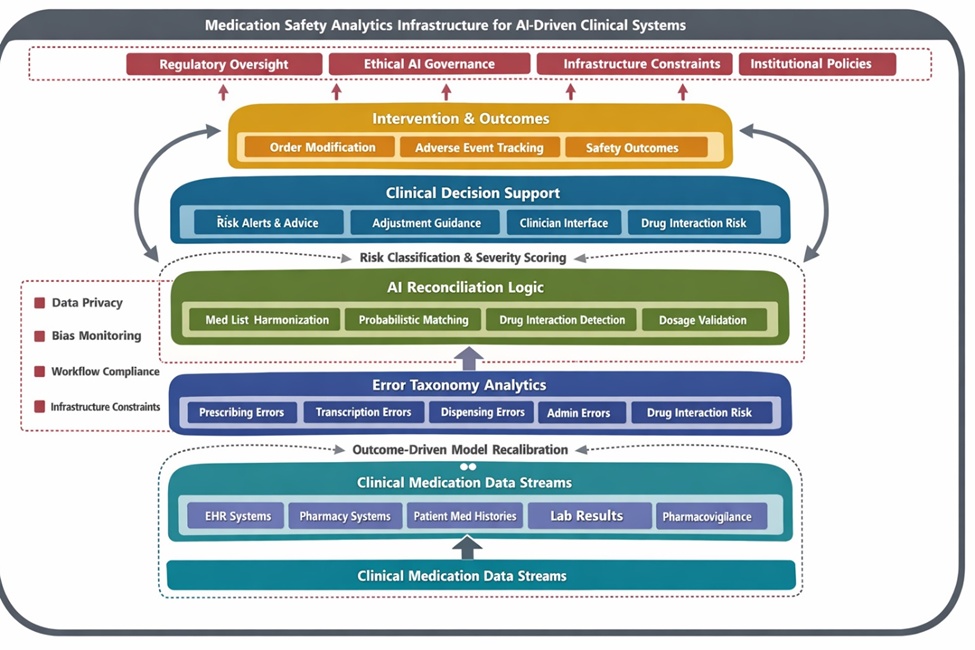
Figure 1. Closed-Loop medication safety analytics architecture for reconciliation-driven clinical decision support.
The figure illustrates an end-to-end analytical infrastructure in which heterogeneous medication data streams from clinical systems are harmonized through AI-driven reconciliation logic to identify discrepancies across patient medication records. Reconciled data are processed through taxonomy-based error classification models that categorize prescribing, dispensing, and administration risks. These classifications feed into clinical decision support interfaces that generate actionable safety alerts and recommendations validated by clinicians. Implemented interventions and monitored outcomes feed back into the system through adaptive recalibration loops, enabling continuous refinement of reconciliation logic and risk prediction. Governance and deployment constraints—including regulatory compliance, infrastructure limitations, and bias mitigation—operate as cross-cutting control signals shaping the reliability and ethical deployment of medication safety analytics.
A key feature of intelligent CDSS is the emphasis on human-AI collaboration, where architectures facilitate shared decision-making to mitigate deployment risks [5, 15, 23]. In reconciliation processes, AI provides initial logic-based suggestions, which clinicians refine based on tacit knowledge, closing the loop through logged interactions that train models [11, 12, 25]. Error taxonomies enhance this by offering interpretable classifications, allowing humans to interrogate AI outputs [18, 24]. Literature synthesizes that effective architectures incorporate user feedback interfaces, ensuring loops evolve with clinical input [4, 16, 17]. Constraints like workflow disruption are addressed through ergonomic designs, such as non-intrusive alerts, promoting adoption [1, 2, 11]. This collaborative paradigm underscores AI’s role in augmenting, rather than replacing, human expertise in closed-loop systems [8, 14, 29].
The synthesis of AI applications in medication safety analytics within clinical systems reveals a multifaceted landscape where reconciliation logic, error taxonomies, and deployment constraints intersect to form the backbone of intelligent healthcare infrastructures. Drawing from the reviewed literature, it is evident that AI’s transformative potential lies in its ability to bridge gaps in traditional clinical workflows, offering scalable solutions that enhance accuracy and efficiency [4-6]. For instance, reconciliation logic, as operationalized through AI-driven algorithms, not only automates the harmonization of medication data across disparate sources but also incorporates predictive elements to anticipate discrepancies before they manifest into errors [10-12]. This proactive stance is particularly valuable in high-volume clinical environments, where manual reconciliation is prone to fatigue-induced oversights, and AI systems can process thousands of records in seconds, flagging inconsistencies with probabilistic confidence scores [1, 2, 16].
Error taxonomies, meanwhile, provide a structured lens through which AI analytics can dissect and categorize medication-related risks, evolving from static classifications to dynamic, learning-based frameworks [23-25]. The literature consistently demonstrates that integrating these taxonomies into AI models allows for granular risk assessment, such as distinguishing between intentional deviations (e.g., off-label prescribing) and unintentional errors (e.g., transcription mistakes), thereby tailoring interventions to specific contexts [15, 20, 28]. This taxonomic sophistication is crucial for pharmacovigilance, where AI can aggregate error patterns across institutions to identify systemic issues, like recurring drug interactions in certain patient demographics [3, 17, 21]. However, the discussion must acknowledge that while AI excels in pattern recognition, its efficacy is contingent upon the quality and comprehensiveness of underlying data, as incomplete taxonomies can lead to misclassifications that undermine trust in the system [20, 26]. Table 2 synthesizes key deployment constraints that shape the operational reliability and equity of medication safety AI analytics across healthcare systems.
Table 2. Deployment constraints and their systemic impact on medication safety AI analytics
Constraint category | Systemic origin | Impact on reconciliation logic | Impact on error classification | Mitigation strategies |
Data quality limitations | Incomplete or inconsistent EHR entries | False discrepancies during reconciliation | Misclassification of medication errors | Data preprocessing and normalization |
Interoperability barriers | Heterogeneous clinical IT systems | Inability to align medication records across institutions | Fragmented error detection | Standardized healthcare data ontologies |
Computational infrastructure | Limited processing resources | Reduced model complexity and reconciliation accuracy | Delayed classification alerts | Edge computing and lightweight AI models |
Regulatory compliance | Privacy laws and governance frameworks | Restrictions on cross-system data integration | Limited model training datasets | Federated learning architectures |
Clinical workflow integration | Alert fatigue and usability barriers | Reduced clinician engagement with reconciliation outputs | Ignored risk alerts | Human-centered interface design |
Algorithmic bias | Skewed training datasets | Unequal discrepancy detection across populations | Biased risk prediction | Bias auditing and explainable AI |
Deployment constraints further complicate this picture, highlighting the tension between AI’s theoretical capabilities and practical implementation in real-world healthcare settings [19, 24, 27]. Studies emphasize that constraints such as interoperability challenges—where AI systems must interface with legacy EHR platforms—often result in fragmented analytics pipelines, reducing the overall impact on medication safety [7, 9, 14]. Ethical dimensions, including bias propagation from skewed training datasets, add another layer of complexity, as AI deployed without adequate governance may exacerbate disparities in care delivery, particularly in underrepresented populations [5, 13, 21]. An integrative analysis across the literature suggests that successful deployments require a holistic systems approach, where constraints are not viewed as barriers but as design parameters that inform resilient architectures [4, 8, 29]. For example, in resource-constrained environments like those in developing countries, AI solutions must prioritize low-computational models that operate offline or with minimal infrastructure, balancing sophistication with accessibility [18, 19, 27].
Moreover, the discussion extends to the human element in AI-augmented systems, where closed-loop architectures facilitate collaborative intelligence rather than autonomous operation [11, 23, 25]. Clinicians’ roles in validating AI outputs ensure that reconciliation logic and error classifications align with clinical judgment, mitigating risks associated with over-reliance on algorithms [1, 12, 16]. This hybrid model fosters a feedback-rich environment, where lessons from deployment failures refine future iterations, as seen in multicenter validations that iteratively improved model accuracy [2, 3]. Perspectives from consensus statements underscore the need for interdisciplinary collaboration— involving informaticians, clinicians, and ethicists—to navigate these dynamics, ensuring AI serves as an enhancer of human capabilities rather than a replacement [9, 21, 22]. In synthesizing these elements, the review posits that AI’s true value in medication safety analytics emerges from its embeddedness within adaptive clinical systems, where reconciliation, taxonomy, and constraints coalesce to drive safer, more equitable healthcare outcomes [6, 7, 13].
Broadening the scope, the discussion also considers the economic implications of AI integration, as cost analyses in the literature reveal that while initial deployment costs can be substantial—due to infrastructure upgrades and training—long-term savings from reduced error-related hospitalizations justify the investment [1, 2, 8]. For instance, AI systems that prevent even a fraction of medication errors can yield significant returns, particularly in large-scale hospital networks where analytics scale across thousands of patients [4, 5, 16]. However, this economic viability is tempered by deployment constraints in underfunded settings, where the lack of digital maturity hinders ROI realization [19, 20]. Furthermore, regulatory landscapes play a pivotal role, with reports advocating for standardized guidelines to streamline AI approvals, ensuring that safety analytics tools meet rigorous validation criteria without stifling innovation [5, 21, 22]. This regulatory harmony is essential for global scalability, as varying international standards can fragment deployment efforts [9, 27].
In reflecting on cross-study linkages, an original interpretive framework emerges: AI in medication safety can be conceptualized as a triadic ecosystem comprising data-driven intelligence (reconciliation and analytics), classificatory rigor (error taxonomies), and contextual adaptation (deployment constraints) [10, 24, 28]. This framework diverges from prior classifications by emphasizing interconnectivity, where weaknesses in one pillar—such as poor data quality—affect the others, necessitating integrated mitigation strategies [3, 20, 26]. For example, enhancing taxonomy robustness through continuous learning loops can compensate for initial deployment hurdles, creating virtuous cycles of improvement [6, 18, 23]. Ultimately, this discussion affirms AI’s role as a cornerstone of modern healthcare systems, provided that its implementation is guided by evidence-based synthesis and a commitment to addressing inherent complexities [13, 17, 29].
Implementing AI for medication safety analytics in clinical systems encounters a spectrum of challenges that span technical, operational, ethical, and systemic domains, as illuminated by the reviewed literature. One primary technical challenge is data quality and heterogeneity, where EHRs often contain incomplete, inconsistent, or erroneous entries that compromise reconciliation logic. For instance, variations in medication nomenclature across systems can lead to false positives in discrepancy detection, inflating alert fatigue among clinicians and reducing system usability. Studies highlight that without standardized data ontologies, AI models struggle to achieve reliable performance, particularly in multicultural or multilingual contexts where terminology differs. Addressing this requires sophisticated preprocessing techniques, but even NLP advancements face limitations with ambiguous or handwritten notes, perpetuating error propagation.
Operational challenges further exacerbate deployment, including interoperability issues between AI analytics and existing clinical infrastructures. Legacy systems in many hospitals lack the APIs needed for seamless integration, resulting in siloed data that hinders closed-loop functionality. In high-pressure environments like emergency departments, real-time analytics demands low-latency processing, yet computational constraints in resource-limited settings—such as rural clinics—force reliance on simplified models that sacrifice accuracy. Clinician adoption poses another hurdle, as resistance stems from perceived threats to autonomy or prior experiences with unreliable alerts. Literature synthesizes that training programs are essential but often under-resourced, leading to suboptimal utilization and persistent error rates.
Ethical challenges are paramount, encompassing biases embedded in error taxonomies and AI models trained on unrepresentative datasets. For example, if training data overrepresents certain demographics, reconciliation logic may overlook risks in minority groups, perpetuating health inequities. Governance frameworks are challenged by the “black box” nature of some AI systems, where a lack of explainability erodes trust and complicates accountability in error attribution. Consensus statements call for transparent auditing, but implementing this amid privacy regulations like GDPR adds complexity, as data sharing for model improvement must balance utility with confidentiality [21, 22]. Moreover, deployment in global contexts reveals cultural challenges, where Western-centric taxonomies fail to capture region-specific medication practices, necessitating localized adaptations that strain resources [19, 27, 25].
Systemic challenges involve regulatory and economic barriers that slow AI scaling [3, 8, 9]. Varying international standards for AI validation delay approvals, while high upfront costs for infrastructure deter adoption in low-income healthcare systems [1, 4]. Literature points to the challenge of measuring AI’s impact, as metrics like error reduction are confounded by confounding variables in real-world trials [4, 15, 16]. Additionally, the rapid evolution of AI technologies outpaces policy development, creating gaps in oversight for emerging risks like adversarial attacks on analytics pipelines [5, 13, 28]. In synthesizing these challenges, an original cross-analysis reveals interdependencies: technical data issues amplify ethical biases, which in turn fuel operational resistance, forming a cycle that demands multifaceted solutions [11, 12, 23]. For instance, pilot programs in multicenter settings have shown that iterative refinements—incorporating clinician feedback—can mitigate multiple challenges simultaneously, but scaling these requires sustained investment [2, 16, 18].
Further elaborating, workforce challenges include the need for upskilling healthcare professionals in AI literacy, as many lack the expertise to interpret taxonomic outputs or troubleshoot deployment issues [3, 14, 17]. This skills gap is particularly acute in aging workforces or understaffed facilities, where AI is intended to alleviate burdens instead of adding cognitive load [1, 25]. Environmental challenges, such as power instability in developing regions, disrupt cloud-based analytics, pushing for edge-computing alternatives that introduce new security vulnerabilities [19, 20, 27]. The literature also discusses scalability challenges, where AI systems performant in controlled trials falter under variable real-world loads, necessitating robust stress-testing protocols [6, 8, 24]. Overall, these challenges underscore the imperative for resilient design principles that anticipate and adapt to multifaceted barriers, ensuring AI’s promise in medication safety is realized without unintended consequences [4, 21, 26].
The evolving field of AI in medication safety analytics presents numerous avenues for future research, building on the foundations of reconciliation logic, error taxonomies, and deployment constraints identified in the literature [4-6]. A key direction involves advancing adaptive reconciliation algorithms that incorporate real-time multimodal data, such as integrating wearable sensor inputs with EHRs to update medication profiles dynamically [7, 10, 13]. Research could explore hybrid models combining rule-based logic with deep learning to handle edge cases, like rare drug interactions, with pilot studies in diverse clinical settings to validate generalizability [2, 11, 12]. Expanding error taxonomies through ontological engineering represents another priority, where future work might develop AI-driven taxonomy evolution frameworks that automatically incorporate new error types from global pharmacovigilance databases [21, 23, 24]. This could include cross-cultural validations to ensure taxonomies are inclusive, addressing gaps in non-Western healthcare contexts [19, 25, 27].
Deployment research should focus on constraint-resilient architectures, such as federated learning models that enable collaborative training without data centralization, mitigating privacy concerns while enhancing model robustness [3, 20, 22]. Investigations into low-resource AI, tailored for developing countries, could examine lightweight neural networks that operate on mobile devices, evaluating their efficacy in offline reconciliation scenarios [18, 19, 27]. Ethical research directions include developing bias-detection tools integrated into analytics pipelines, with longitudinal studies assessing long-term impacts on health equity [5, 13, 27]. Future agendas might also prioritize explainable AI (XAI) methodologies, designing interfaces that elucidate taxonomic classifications and reconciliation decisions to foster clinician trust [6, 21, 22].
Interdisciplinary approaches offer promising paths, such as collaborating with human factors experts to optimize human-AI interfaces in closed-loop systems, reducing alert fatigue through personalized thresholding [1, 16, 23]. Research on economic modeling could quantify deployment ROI across scales, informing policy for subsidized AI adoption in underserved areas [1, 2, 8]. Moreover, exploring AI’s role in emerging threats, like cybersecurity in medication systems, warrants attention, with simulations testing resilience against data tampering [3, 9, 27]. Global consortia could drive standardized benchmarks for AI safety analytics, facilitating comparative studies and accelerating innovation [21, 22, 29].
In an original synthesis, future research should adopt a systems-engineering lens, investigating feedback-driven ecosystems where deployment data refines taxonomies and logic iteratively [4, 17, 26]. This could involve agent-based modeling to simulate clinical environments, predicting challenge mitigation strategies [6, 8, 18]. Additionally, longitudinal cohort studies tracking AI implementations over years would provide empirical evidence on sustained impacts, addressing current gaps in short-term evaluations [2, 15, 16]. Emphasizing patient-centered directions, research might incorporate patient-generated data into reconciliation, empowering self-management while studying privacy implications [7, 10, 14]. Ultimately, these directions aim to propel AI toward mature, equitable integration in healthcare, fostering safer medication practices through rigorous, forward-looking inquiry [13, 24, 25].
In conclusion, this narrative review underscores the profound impact of AI on medication safety analytics within clinical systems, synthesizing reconciliation logic, error taxonomies, and deployment constraints as pivotal elements driving innovation. By automating reconciliation processes, AI minimizes discrepancies that plague traditional workflows, leveraging advanced analytics to enhance precision and timeliness. Error taxonomies, enriched by AI, enable sophisticated risk stratification, transforming reactive error management into predictive prevention. Yet, deployment constraints remind us of the need for cautious, context-aware implementation to realize these benefits fully.
The literature collectively affirms AI’s role in forging resilient, intelligent healthcare infrastructures, where closed-loop systems integrate human expertise with machine intelligence for optimal outcomes. Challenges such as data quality, biases, and interoperability, while formidable, present opportunities for refinement, as evidenced by successful validations in diverse settings. Looking ahead, future research must prioritize adaptive, ethical, and scalable solutions to address evolving needs in global healthcare. Ultimately, AI stands poised to elevate medication safety, provided interdisciplinary efforts ensure its equitable and effective deployment, paving the way for a future where clinical analytics safeguard patient well-being with unprecedented efficacy.
None
None
None
None
Open Access This article is licensed under a Creative Commons Attribution 4.0 International License, which permits use, sharing, adaptation, distribution and reproduction in any medium or format, as long as you give appropriate credit to the original author(s) and the source, provide a link to the Creative Commons licence, and indicate if changes were made. The images or other third party material in this article are included in the article's Creative Commons licence, unless indicated otherwise in a credit line to the material. If material is not included in the article's Creative Commons licence and your intended use is not permitted by statutory regulation or exceeds the permitted use, you will need to obtain permission directly from the copyright holder. To view a copy of this licence, visit http://creativecommons.org/licenses/by/4.0/.
 Clinical Intelligence Research Press