Hospital-acquired pressure injuries (HAPIs) are a common and largely preventable complication in ICU patients, affecting 5–15% of cases and contributing to increased morbidity and healthcare costs. Despite standardized nursing protocols, incidence remains high, highlighting the need for more effective predictive and preventive approaches. While traditional tools like the Braden Scale offer interpretability, they lack sufficient predictive accuracy in critically ill populations. In contrast, machine learning models such as XGBoost and random forests improve prediction but function as black boxes, limiting clinical trust and actionable insight. To address this gap, this work proposes an Explainable Boosting Machine (EBM) framework trained on electronic health record (EHR) data from over 50,000 ICU admissions (2017–2023). EBMs combine strong predictive performance with interpretability by modeling feature effects through shape functions and capturing pairwise interactions. This allows identification of both global and patient-specific risk factors while maintaining transparency. The framework emphasizes modifiable factors such as repositioning frequency, nutrition, and medical device management, revealing nonlinear thresholds and interaction effects often missed by conventional methods. Overall, the proposed approach integrates accurate prediction with clear, clinically interpretable insights, enabling real-time identification of actionable risk factors for HAPI prevention. By bridging predictive modeling and nursing decision-making, it supports more targeted interventions and improved patient outcomes in critical care settings.
Hospital-acquired pressure injuries (HAPIs), also known as pressure ulcers, are classified into stages 1 through 4, with additional categories for unstageable injuries and deep tissue pressure injuries. In critically ill patients admitted to intensive care units, the incidence of HAPIs ranges from 5% to 15%, contributing to prolonged hospital stays and elevated mortality risks. These injuries often result in severe pain, secondary infections, and substantial litigation costs for healthcare systems. The consequences extend beyond individual patients to strain nursing resources and overall quality of care metrics [1-3].
Prevention of HAPIs demands intensive nursing efforts focused on repositioning patients every two hours, utilizing pressure redistribution surfaces, optimizing nutrition, managing moisture, and timely removal of medical devices. These interventions are resource-intensive yet essential for mitigating risk in immobile and sedated ICU patients. Critical care protocols emphasize multidisciplinary approaches to implement these strategies consistently across shifts. Effective prevention hinges on timely identification of at-risk individuals using data from electronic health records [4-6].
Current tools such as the Braden Scale offer interpretability through subscale scoring but demonstrate low accuracy in dynamic critical care environments. In contrast, black-box models like XGBoost and neural networks provide superior predictive performance for HAPI risk but lack the transparency required for clinical trust and action. Clinicians require models that not only forecast risk but also elucidate why a particular patient is vulnerable and which specific modifiable factors to address. This gap motivates the development of inherently interpretable approaches tailored to ICU data [7-9].
This article presents a conceptual framework for an Explainable Boosting Machine (EBM) applied to HAPI prediction using electronic health record data from 50,000 admissions between 2017 and 2023. The framework prioritizes both high accuracy and full interpretability to identify modifiable risk factors for targeted prevention. It provides a roadmap for integrating XAI into critical care nursing workflows. Subsequent sections detail the background, architecture, and clinical implications of this approach [10-12].
Hospital-acquired pressure injuries arise from a combination of non-modifiable and modifiable risk factors that interact in complex ways within the ICU environment. Non-modifiable factors include advanced age, underlying comorbidities such as diabetes or vascular disease, and high severity of illness scores that reflect overall physiologic stress. Modifiable factors encompass elements directly amenable to nursing intervention, including mobility limitations, repositioning frequency, nutritional status, skin moisture levels, and the presence of medical devices that create localized pressure. Understanding this distinction allows for targeted strategies that address what can be changed to lower HAPI incidence [2, 13, 14].
Modifiable risk factors offer the greatest opportunity for prevention because they respond to real-time clinical actions documented in electronic health records. For instance, prolonged periods without repositioning or inadequate management of moisture from incontinence can rapidly elevate tissue damage risk in critically ill patients. Medical devices such as endotracheal tubes or arterial lines further contribute through friction and shear forces that exacerbate pressure effects. By focusing on these actionable elements, healthcare teams can shift from reactive treatment to proactive mitigation using data-driven insights [4, 5, 15].
Table 1 clarifies the conceptual distinction between baseline vulnerability and intervention-sensitive risk domains, thereby showing why the proposed EBM framework is uniquely positioned to prioritize modifiable prevention targets rather than merely estimate overall HAPI probability.
Table 1. Conceptual Differentiation of Non-Modifiable and Modifiable Risk Domains in Explainable Boosting Machine-Based Hospital-Acquired Pressure Injury Prediction
Risk domain | Representative variables in this manuscript | Temporal behavior in ICU stay | Clinical meaning | Degree of modifiability | Role in EBM architecture | Why this category matters for prevention |
Non-modifiable demographic vulnerability | Age at admission | Stable | Captures intrinsic susceptibility to tissue injury and impaired recovery | None | Baseline shape function contributing foundational risk level | Provides context for why some patients begin at higher risk even before care-process failures emerge |
Non-modifiable disease burden | Diabetes, peripheral vascular disease, chronic malnutrition history | Stable or slowly varying | Reflects chronic physiologic predisposition to skin breakdown and impaired perfusion | None | Baseline additive terms that anchor the patient’s structural vulnerability | Prevents misattribution of immutable predisposition to bedside nursing factors |
Non-modifiable acute severity | SOFA score, critical illness burden, admission diagnosis category | Semi-stable early, may evolve slowly | Represents systemic instability that intensifies susceptibility to pressure damage | Very low | Major contextual risk component that interacts conceptually with care-process stressors | Helps distinguish unavoidable acuity-related burden from preventable deterioration |
Modifiable mobility-related care processes | Hours since last repositioning, mobility subscale, activity subscale | Highly dynamic | Reflects whether preventive offloading and movement protocols are functioning adequately | High | Core modifiable shape functions likely to show threshold effects | Directly supports immediate nursing intervention and staffing prioritization |
Modifiable skin and moisture management | Moisture subscale, incontinence-related exposure, linen change timing | Highly dynamic | Indicates skin integrity stress from prolonged dampness, friction, and shear | High | Dynamic predictors with likely nonlinear marginal effects | Supports targeted skin care and escalation before damage becomes irreversible |
Modifiable nutrition-related support | Nutrition subscale, intake adequacy, supplement delivery, cumulative intake deficit | Dynamic across shifts and days | Captures whether tissue tolerance and healing capacity are being actively supported | Moderate to high | Shape functions identifying deteriorating nutritional trajectories | Links documentation of support failure to actionable prevention pathways |
Modifiable device-related pressure burden | Number of devices, duration of device exposure, restraints, line-related pressure points | Dynamic | Represents local, often overlooked pressure sources superimposed on immobility | High | Important standalone and interaction-based risk drivers | Enables proactive device repositioning, padding, or early removal |
Outcome-linked prevention opportunity zone | Combined pattern of elevated modifiable burdens on top of fixed baseline risk | Dynamic and clinically emergent | Defines the practical space in which intervention can alter predicted HAPI trajectory | High | Emerges from additive and pairwise EBM explanation structure | Converts prediction into a prevention strategy rather than a passive risk label |
The Braden Scale has served as a longstanding tool for pressure injury risk assessment, relying on subjective scoring of sensory perception, moisture, activity, mobility, nutrition, and friction to guide clinical decisions. While its interpretability supports bedside use, the scale often underperforms in ICU populations due to its static nature and limited incorporation of dynamic EHR variables. Studies comparing it to machine learning methods highlight persistent gaps in predictive power, particularly when patient conditions evolve rapidly during admission. These limitations underscore the need for more adaptive approaches that learn directly from local institutional data [4, 6, 7].
Machine learning studies have explored black-box techniques such as random forests and neural networks for HAPI prediction from EHR sources, demonstrating improved discrimination over traditional scores. However, these models provide risk probabilities without revealing which factors drive the output or how clinicians should intervene. Implementation barriers arise because black-box outputs cannot directly inform nursing protocols or quality improvement initiatives. Consequently, adoption in critical care remains low despite promising accuracy in retrospective analyses [8-10].
Explainable Boosting Machines build upon Generalized Additive Models by adding pairwise interaction terms, thereby preserving high accuracy while delivering complete model transparency through shape functions. The EBM algorithm iteratively fits these functions using gradient boosting and bagging techniques, ensuring that each feature's contribution remains individually interpretable. This architecture resolves the long-standing trade-off between model performance and clinical usability in healthcare applications. As a result, EBMs enable direct visualization of risk relationships without post-hoc approximations [11, 14, 16].
In critical care contexts, EBMs have shown promise for tasks requiring both prediction and explanation, such as identifying drivers of adverse events from structured EHR data. Their inherent interpretability stems from the additive structure, where clinicians can inspect marginal effects and interactions at a glance. Unlike black-box alternatives, EBMs avoid the need for separate explanation layers that may introduce fidelity errors. This makes them particularly suited for applications like HAPI prevention, where understanding modifiable influences is paramount [11, 12, 17].
The high-level architecture begins with extraction of structured EHR data from 50,000 ICU admissions spanning 2017 to 2023, followed by targeted feature engineering to encode both static and time-varying patient variables. An EBM is then trained to output HAPI risk probabilities alongside shape functions that quantify feature contributions. These outputs feed into explanation modules that generate global summaries for unit-level insights and local profiles for individual patient recommendations. The end-to-end flow ensures seamless translation from raw data to actionable clinical intelligence [9, 10, 15].
Training occurs on reliably documented HAPI outcomes, with the model producing risk predictions that integrate directly with existing EHR workflows. Shape functions serve as the core explanatory mechanism, allowing visualization of how specific inputs influence outcomes. This architecture supports deployment as a real-time decision support tool without requiring additional computational overhead for explanations. Overall, it creates a closed loop from data ingestion to prevention guidance [3, 11, 14].
The framework assumes access to a large-scale EHR dataset comprising over 50,000 critical care admissions with comprehensive documentation of both non-modifiable and modifiable risk elements. Structured data on factors such as repositioning timestamps, nutritional intake records, and device utilization must be consistently captured to enable robust model training. HAPI outcomes are presumed to be reliably coded within the EHR using standardized staging criteria. These assumptions align with contemporary ICU data infrastructures that facilitate high-fidelity analyses [2, 10, 13].
Additional assumptions include the availability of temporal granularity in EHR entries, allowing derivation of dynamic variables like hours since last repositioning. The model presumes that modifiable factors are accurately logged by nursing staff as part of routine critical care protocols. Outcome labeling relies on established documentation practices without introducing systematic bias. Under these conditions, the EBM can reliably surface causal patterns relevant to prevention [5, 9, 18].
Full interpretability stands as a foundational design principle, ensuring every prediction includes explicit contributions from individual features and their interactions. The framework prioritizes identification of modifiable risk factors to empower nurses with precise, evidence-based intervention targets rather than generic alerts. Clinical actionability guides all components, with outputs formatted to integrate directly into bedside decision support. This principle set distinguishes the approach from purely predictive systems [11, 12, 16].
The design further emphasizes scalability across diverse ICU populations while maintaining fidelity to local EHR practices. By avoiding reliance on post-hoc methods, the framework guarantees globally consistent explanations that clinicians can trust universally. Actionability extends to quality improvement by aggregating insights for system-level protocol refinements. Collectively, these principles create a transparent bridge between machine learning and frontline critical care nursing [4, 14, 15].
Figure 1 illustrates the full conceptual architecture through which large-scale ICU electronic health record data are transformed into explainable risk predictions, modifiable factor identification, interaction discovery, and actionable prevention guidance for hospital-acquired pressure injuries.
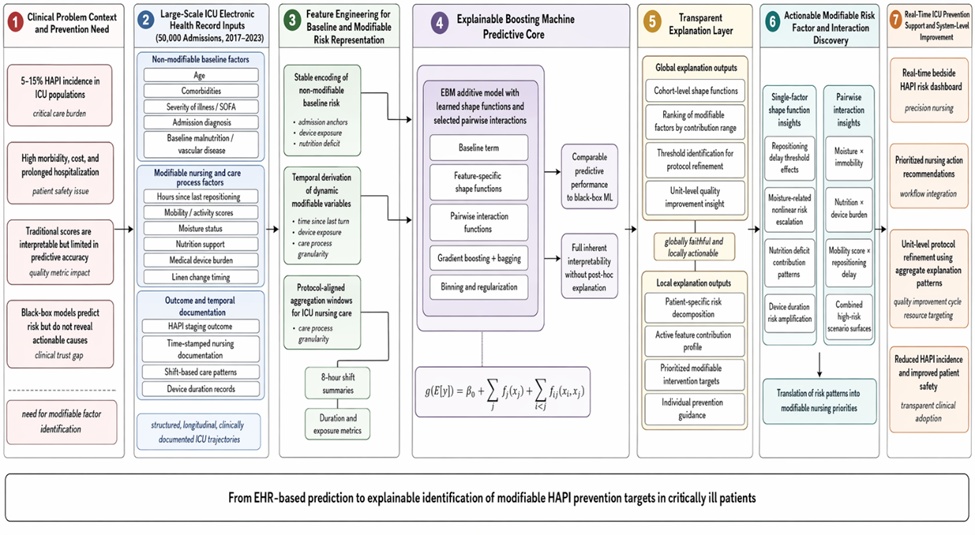
Figure 1. Explainable Boosting Machine Framework for Identifying Modifiable Risk Factors of Hospital-Acquired Pressure Injuries in Critically Ill Patients Using Large-Scale ICU Electronic Health Record Data
Explainable Boosting Machines employ an additive model structure that decomposes the predicted risk into a baseline term plus independent shape functions for each feature and selected pairwise interactions. This formulation is expressed as
Pairwise interaction terms allow the model to account for clinically relevant synergies, such as how moisture levels amplify the effect of infrequent repositioning. Unlike purely linear GAMs, EBMs automatically detect and include only the most impactful interactions during training. This selective inclusion preserves interpretability while enhancing representational power for complex ICU data. The resulting architecture delivers predictions that clinicians can trace directly to specific patient variables [11, 17, 19].
The training procedure for EBMs utilizes a cycle of bagging and gradient boosting applied iteratively to the shape functions and interaction terms. Continuous features undergo intelligent binning to balance granularity with smoothness, while categorical variables receive dedicated encoding that respects clinical semantics. A controlled learning rate prevents overfitting and ensures stable convergence across the large EHR dataset. Regularization techniques further constrain model complexity to maintain clinical plausibility [11, 14, 16].
Bagging across multiple base learners promotes robustness by averaging shape functions derived from resampled data subsets. Gradient boosting refines each function by focusing residuals on unexplained variance, progressively improving fit to HAPI outcomes. Hyperparameters such as the number of boosting iterations and maximum interaction depth are tuned to optimize the bias-variance trade-off for interpretability. The procedure culminates in a fully trained model ready for deployment with transparent outputs [11, 12, 20].
Output interpretation relies on inspection of the learned shape functions, which plot the marginal contribution of each feature across its observed range to reveal nonlinear risk patterns. Positive or negative slopes within a shape function directly indicate whether increasing a variable elevates or reduces HAPI probability, guiding modifiable factor interventions. Interaction heatmaps visualize pairwise terms as two-dimensional surfaces, highlighting regions of amplified risk. These visualizations form the basis for both patient-level and population-level decision support [2, 11, 14].
Local explanations for individual admissions aggregate the active shape function values to attribute the total risk score to specific features, enabling personalized prevention plans. Global summaries average shape functions across the cohort to identify unit-wide priorities for protocol changes. Interpretation remains faithful to the underlying data without approximation errors common in post-hoc methods. This transparency fosters clinician confidence and facilitates integration into nursing workflows [12, 16, 21].
Non-modifiable features extracted from the EHR capture intrinsic patient characteristics that establish baseline risk levels for HAPIs in critically ill cohorts. These include age at admission, primary ICU diagnosis category, and composite severity scores such as the SOFA score that reflect multi-organ dysfunction. Comorbidities like diabetes, peripheral vascular disease, and baseline malnutrition are encoded as binary or ordinal indicators drawn from historical problem lists. Such features provide essential context for the EBM without serving as direct intervention targets [2, 9, 10].
Encoding of non-modifiable variables emphasizes temporal stability to avoid spurious correlations with time-varying elements. For example, admission diagnosis is fixed at entry, ensuring it anchors the model's baseline risk assessment. Comorbidity counts aggregate documented conditions present prior to ICU stay, preventing conflation with acute events. This careful engineering ensures the EBM distinguishes immutable risks from those amenable to change [5, 13, 14].
Modifiable features are engineered from time-stamped EHR entries to reflect dynamic aspects of nursing care that directly influence tissue integrity. Key variables include hours elapsed since the last documented repositioning, Braden subscale scores for mobility, activity, moisture, and nutrition updated at regular intervals, and counts of indwelling medical devices such as central lines or restraints. Additional derivations capture time since last linen change and cumulative nutritional intake deficits during the admission. These features transform raw documentation into clinically meaningful predictors [4, 15, 18].
Feature engineering for modifiable elements incorporates temporal aggregation windows aligned with critical care protocols, such as eight-hour shifts for repositioning metrics. Device-related variables encode both presence and duration of exposure to create pressure points. Nutritional variables integrate ordered diet compliance and supplement administration records. The resulting set enables the EBM to isolate high-leverage opportunities for intervention that traditional static scores cannot address [3, 6, 7].
Shape function analysis within the EBM reveals the nonlinear marginal effects of modifiable risk factors on HAPI development in critically ill patients. Steep slopes in the repositioning frequency function, for example, indicate rapid risk escalation once hours since last turn exceed four, highlighting a clear threshold for nursing action. Moisture management and nutritional intake functions similarly display pronounced inflections where deviations from protocol targets amplify predicted probability. These visualizations transform abstract EHR data into precise, actionable insights that align directly with critical care prevention bundles [4, 15, 18].
Threshold effects identified through shape functions underscore opportunities for protocol refinement beyond static guidelines. Device exposure functions often exhibit accelerating risk contributions after prolonged placement, informing timely removal strategies. Braden subscale dynamics for mobility and activity further demonstrate how incremental improvements yield disproportionate risk reduction in high-acuity cohorts. Overall, this analysis prioritizes modifiable elements that offer the greatest leverage for intervention in real-world ICU settings [3, 6, 7].
Ranking modifiable factors by the range of their shape function contributions establishes a hierarchy of intervention priorities for HAPI prevention. Repositioning frequency and moisture control consistently emerge with the widest impact ranges, signaling their dominance over other variables in driving risk trajectories. Nutritional support metrics and device-related variables follow closely, providing clinicians with a data-informed sequence for addressing multiple risks simultaneously. This ranking mechanism supports efficient resource allocation in nursing workflows [2, 13, 14].
Feature importance derived from shape function variability enables targeted quality improvement without reliance on arbitrary weights. Highest-leverage modifiable factors receive visual prominence in explanations, ensuring frontline staff focus efforts where they matter most. Lower-impact variables still contribute contextually but do not overshadow primary drivers. Such ranking fosters a systematic approach to modifiable risk mitigation across large EHR cohorts [4, 5, 15].
EBMs automatically detect pairwise interactions among modifiable risk factors, uncovering synergies that single-feature analysis might overlook in ICU data. For instance, the interaction between moisture levels and immobility reveals amplified HAPI risk when both factors deviate from targets simultaneously. Nutrition status interacts with device presence to produce compounded effects not evident in isolation. These learned interactions reflect the multifaceted nature of pressure injury etiology in critically ill patients [11, 14, 16].
Pairwise terms also highlight how Braden mobility scores moderate the influence of repositioning delays, guiding nuanced protocol adjustments. Such clinically meaningful combinations emerge directly from the training process on 50,000 admissions. The model selectively retains only high-impact interactions to preserve overall interpretability. This capability advances beyond additive assumptions to capture real-world complexities relevant to critical care nursing [12, 17, 19].
Interaction interpretation employs heatmap visualizations to display how combined modifiable factors jointly influence HAPI risk across their ranges. Regions of heightened risk on these surfaces pinpoint scenarios requiring multiple simultaneous interventions, such as enhanced moisture management paired with accelerated repositioning schedules. Heatmaps translate complex interaction functions into intuitive formats suitable for bedside review. Clinicians can thereby anticipate cascading effects and tailor prevention bundles accordingly [2, 11, 14].
These visualizations support scenario planning for high-risk patients by illustrating interaction gradients. For example, optimal nutrition may attenuate device-related risk only within specific moisture thresholds. The global fidelity of EBM interactions ensures consistent guidance across the patient population. Ultimately, interaction interpretation equips nursing teams with layered strategies that address interconnected modifiable drivers [12, 16, 21].
EBMs achieve predictive performance comparable to black-box models such as XGBoost and random forests while delivering complete transparency through their additive structure. This balance eliminates the traditional trade-off that has limited clinical adoption of machine learning in HAPI prevention. Shape functions provide direct insight into modifiable factors without requiring separate explanation modules. Consequently, the framework maintains high utility for ICU decision support without sacrificing explanatory power [11, 14, 16].
Black-box approaches excel in raw discrimination yet withhold the causal pathways needed for intervention design. EBMs match this capability in modeling EHR patterns from 50,000 admissions but add inherent interpretability at no additional cost. The absence of accuracy loss stems from sophisticated boosting and interaction handling. This equivalence positions EBMs as the preferred choice for applications demanding both reliability and actionability [8-10].
Inherent interpretability distinguishes EBMs from post-hoc methods such as SHAP and LIME, which approximate explanations for otherwise opaque models. EBM shape functions and interaction terms remain globally faithful to the learned relationships rather than offering local surrogates that may diverge from the original predictions. This fidelity avoids approximation errors that can mislead clinicians regarding modifiable risk priorities. The result is a more trustworthy foundation for nursing protocols [11, 14, 16].
Post-hoc techniques introduce computational overhead and potential inconsistencies when applied at scale in EHR systems. EBMs bypass these issues by embedding explanations directly into the model architecture. Global consistency across all patients further enhances reliability compared to instance-specific approximations. These advantages make EBMs particularly suitable for high-stakes critical care environments where explanation accuracy directly impacts patient safety [11, 12, 20].
Table 2 situates the proposed EBM framework against traditional scoring systems, black-box machine learning models, and post-hoc explanation strategies, demonstrating that inherent interpretability is the only approach that simultaneously preserves predictive utility, explanation fidelity, and direct intervention relevance.
Table 2. Comparative Analytical Framework for Interpretable and Black-Box Modeling Approaches in Hospital-Acquired Pressure Injury Prediction and Prevention
Modeling approach | Typical examples | Predictive capacity in ICU HAPI setting | Nature of interpretability | Faithfulness of explanation to underlying model | Ability to identify modifiable risk thresholds | Ability to represent interactions | Clinical actionability | Main limitation in this manuscript’s context |
Traditional clinical risk score | Braden Scale | Modest in dynamic ICU settings | Direct and familiar | High for the score itself | Limited, because subscale totals rarely reveal nonlinear thresholds | Very limited | Moderate at bedside because it is simple | Insufficient sensitivity to evolving EHR-based risk trajectories |
Conventional logistic regression | Standard multivariable regression | Moderate when feature space is limited | Direct coefficient-based interpretation | High | Limited unless nonlinearity is manually engineered | Limited unless explicitly specified | Moderate | Often too rigid to capture dynamic nonlinear risk structure |
Black-box ensemble model | Random forest, XGBoost | High | Opaque without additional explanation tools | Low without post-hoc methods | Indirect; thresholds are not inherently visible | Strong | Low to moderate because outputs do not naturally specify what to change | High accuracy but weak transparency for protocol design |
Deep learning model | Neural networks | Potentially high with rich EHR data | Opaque | Low without surrogate explanation | Poor for direct bedside threshold interpretation | Strong | Low in routine nursing workflows | Difficult to justify clinically in high-stakes prevention decisions |
Black-box model plus post-hoc explanation | XGBoost + SHAP, model + LIME | High | Approximate rather than intrinsic | Variable and potentially unstable across cases | Partial; depends on local approximations rather than learned transparent functions | Partial and often harder to communicate | Moderate | Explanation may diverge from the true internal decision process |
Explainable Boosting Machine | EBM with shape functions and pairwise interactions | High to near black-box performance | Inherent, additive, visually inspectable | High | Strong, because shape functions expose nonlinear inflection points directly | Strong for selected clinically relevant pairwise terms | High | Requires high-quality structured EHR documentation and remains limited to lower-order interactions |
Proposed framework contribution | EBM tailored to ICU HAPI prevention | High with actionable clinical focus | Fully transparent at global and local levels | High and consistent | Strongly aligned with modifiable nursing interventions | Strong for interpretable pairwise risk synergies | Very high | Success depends on documentation completeness and workflow integration |
The real-time risk dashboard integrates EBM outputs into existing EHR interfaces to display patient-specific HAPI probabilities alongside highlighted modifiable factors. Largest negative contributions from shape functions receive color-coded emphasis, directing nurses toward immediate actions such as repositioning or device adjustment. Suggested interventions appear as prioritized, evidence-linked recommendations derived directly from interaction analysis. This design ensures seamless incorporation into critical care workflows without disrupting documentation routines [2, 11, 14].
Dashboard visualizations of shape functions and heatmaps remain interactive yet concise for bedside use. Clinicians can drill into individual feature contributions or pairwise effects to inform multidisciplinary rounds. Local explanations update dynamically with new EHR entries, supporting continuous risk reassessment. The overall interface translates model transparency into practical decision support for pressure injury prevention [12, 16, 21].
Aggregate shape functions across the ICU cohort identify system-level patterns in modifiable risk factors, informing unit-wide protocol refinements. For example, recurring threshold effects in repositioning frequency may prompt standardized scheduling adjustments or staff training initiatives. These population insights enable tracking of intervention impacts through repeated model applications on updated data. Quality improvement teams gain objective metrics tied to actionable drivers rather than generic incidence rates [4,15, 18].
Integration with quality dashboards allows monitoring of how changes in modifiable practices influence overall HAPI trends. Interaction summaries highlight opportunities for bundled interventions at the organizational level. The framework supports iterative refinement as new admissions expand the underlying dataset. This closed-loop approach embeds explainable AI directly into continuous improvement cycles for critical care nursing [3, 6, 7].
The EBM framework provides a comprehensive approach to HAPI prediction using electronic health record data from 50,000 admissions, with explicit emphasis on identifying modifiable risk factors in critically ill patients. Shape functions and interaction terms deliver transparent insights into repositioning, moisture, nutrition, and device management that traditional tools and black-box models cannot provide. The architecture aligns data-driven prediction with clinical actionability across ICU settings from 2017 to 2023. This conceptual design establishes a foundation for advancing explainable AI in healthcare quality improvement.
Key advantages include full inherent interpretability, precise targeting of modifiable factors, and preservation of predictive capability without reliance on post-hoc approximations. The framework resolves longstanding barriers to machine learning adoption in nursing by offering globally faithful explanations that clinicians can trust and act upon. It shifts prevention from reactive scoring to proactive, factor-specific interventions informed by local EHR patterns. These strengths position EBMs as a transformative tool for reducing HAPI burden in critical care.
Limitations of the framework center on the requirement for large, high-quality datasets with consistent documentation of modifiable variables. Assumptions regarding complete EHR capture of repositioning and device data may not hold universally across all institutions. Pairwise interactions, while powerful, do not capture higher-order effects that could emerge in more complex models. Future refinements could address these constraints through expanded data sources or hybrid architectures while retaining core interpretability.
Widespread implementation on ICU EHR platforms and integration into nursing quality improvement programs represent the next critical steps. This framework invites collaboration between data scientists, critical care clinicians, and informatics specialists to operationalize explainable AI for pressure injury prevention. By focusing on modifiable risk factors, it promises measurable reductions in HAPI incidence and associated costs. Ultimately, the approach exemplifies how XAI can bridge advanced modeling with frontline patient safety initiatives.
None
None
None
None
Open Access The author(s) retain copyright. This article is licensed under the Creative Commons Attribution-NonCommercial-ShareAlike 4.0 International License. It may be shared and adapted for non-commercial purposes with appropriate attribution, an indication of changes, and distribution of adaptations under the same license. Third-party material may be subject to separate terms identified in its credit line. View the license at https://creativecommons.org/licenses/by-nc-sa/4.0/.
 Clinical Intelligence Research Press