In the evolving landscape of healthcare informatics, the integration of blockchain technology with artificial intelligence (AI) offers transformative potential for secure and intelligent health data exchange. This conceptual manuscript proposes a novel scaffold for blockchain-enhanced health data intelligence (S-BEHDI), designed as a multi-layered architectural framework that facilitates seamless, secure, and intelligent interoperability among disparate health data systems. By leveraging blockchain’s immutable ledger for data provenance and AI-driven analytics for decision support, S-BEHDI addresses critical challenges in electronic health records (EHR) exchange, such as privacy breaches, data silos, and inefficient clinical workflows. The framework incorporates a unique feedback topology that dynamically adjusts intelligence layers based on governance constraints and data exchange dynamics, ensuring robust monitoring and ethical AI deployment in clinical settings. Theoretical formulas are introduced to interpret risk propagation in data exchanges, decision confidence in AI-assisted pipelines, and governance load in interoperability frameworks. Drawing from recent peer-reviewed literature, this work synthesizes advancements in clinical AI architectures, healthcare analytics infrastructures, and interoperability models to underscore the scaffold’s theoretical underpinnings. While devoid of empirical evaluations, the conceptual design highlights implications for enhanced patient-centric care, reduced monitoring burdens, and fortified data security in precision medicine applications. Ultimately, S-BEHDI represents a forward-thinking infrastructure for fostering collaborative, intelligent health data ecosystems without compromising ethical standards or system integrity.
The convergence of blockchain technology and artificial intelligence in healthcare systems heralds a paradigm shift toward more secure, efficient, and intelligent management of health data. As clinical environments increasingly rely on digital infrastructures for patient care, the need for robust mechanisms to facilitate health data exchange while preserving integrity and privacy becomes paramount. This manuscript explores a conceptual scaffold that integrates blockchain with AI-driven intelligence to orchestrate seamless data flows in healthcare analytics ecosystems. By addressing the fragmentation inherent in current electronic health record (EHR) systems, this approach aims to enhance interoperability without introducing empirical validations, focusing instead on theoretical architectures that support clinical decision-making.
Blockchain’s distributed ledger technology provides an immutable foundation for tracking health data modalities, such as genomic sequences, imaging files, and longitudinal patient records [1, 2]. In clinical settings, where data modalities vary from structured EHR entries to unstructured notes, blockchain ensures provenance and tamper-proof exchanges. This integration mitigates risks associated with centralized repositories, enabling a scaffold that embeds intelligence for real-time validation during data exchanges. Unlike traditional databases, blockchain’s consensus mechanisms adapt to healthcare’s heterogeneous data types, fostering a scaffold that intelligently categorizes and routes information based on clinical relevance [3, 4].
AI intelligence plays a pivotal role in layering analytics over health data exchange environments, transforming raw data into actionable insights for clinical workflows [5, 6]. Within deployment environments characterized by multi-institutional collaborations, such as precision medicine consortia, the scaffold incorporates AI governance to monitor exchange integrity. This layering ensures that intelligence algorithms prioritize patient-centric outcomes, adapting to environmental variables like network latency or regulatory compliance. By conceptualizing intelligence as a scaffold component, the framework avoids silos, promoting fluid exchanges that align with clinical priorities [7, 8].
Governance constraints, including ethical AI deployment and data sovereignty, are integral to EHR intelligence ecosystems [9, 10]. In healthcare analytics, where data exchange must comply with standards like HIPAA or GDPR, the scaffold introduces blockchain-integrated controls to enforce governance. This prevents unauthorized access while allowing AI to infer patterns in aggregated datasets. Theoretical models within this scaffold emphasize constraint-aware intelligence, ensuring that exchanges respect jurisdictional boundaries and ethical norms without empirical testing [11, 12].
Clinical workflow integration demands dynamic data exchange models that accommodate real-time updates and interdisciplinary collaborations [13, 14]. The proposed scaffold leverages blockchain for chronological logging of exchanges, coupled with AI intelligence for predictive routing. This dynamics-focused approach addresses bottlenecks in workflows, such as delayed decision support in emergency care, by theorizing a feedback loop that refines exchange protocols based on inferred clinical needs [15].
Interoperability frameworks face deployment challenges stemming from legacy systems and varying data standards [16, 17]. By integrating blockchain as a neutral ledger, the scaffold conceptualizes a unified interface for health data, where AI intelligence bridges gaps between formats like FHIR and proprietary EHRs. This mitigates challenges in multi-site deployments, theorizing scalable architectures that enhance system resilience without performance metrics [18, 19].
Looking ahead, the scaffold offers prospects for AI-orchestrated health systems that prioritize secure, intelligent exchanges [20]. In clinical settings evolving toward value-based care, this conceptual design posits blockchain as the backbone for intelligence-driven scaffolds, enabling proactive governance and reduced resource burdens in data-heavy environments [21].
The theoretical underpinnings of blockchain-integrated health data exchange intelligence draw from advancements in clinical AI architectures and healthcare analytics infrastructures. This synthesis integrates insights from recent literature to establish a conceptual foundation for the proposed scaffold, emphasizing architectural innovations over empirical outcomes. By examining EHR intelligence ecosystems, decision support pipelines, and interoperability frameworks, this section delineates the theoretical landscape that informs the scaffold’s design.
Clinical AI system architectures have evolved to incorporate distributed technologies for enhanced data exchange [22, 23]. Theoretical models posit blockchain as a core element in architecting secure pipelines, where AI intelligence processes exchanges in decentralized networks. This evolution addresses theoretical vulnerabilities in centralized AI systems, proposing layered architectures that integrate consensus algorithms with machine learning inference for health data integrity [1, 24]. Literature highlights the conceptual shift toward hybrid architectures, blending blockchain’s immutability with AI’s adaptive intelligence to theorize resilient exchange scaffolds.
Healthcare analytics infrastructures increasingly theorize blockchain integration to support scalable ecosystems [2, 25]. Conceptual frameworks emphasize infrastructural paradigms that facilitate analytics over exchanged health data, using AI to derive theoretical insights without data silos. This synthesis reveals patterns in infrastructure design, where blockchain serves as a governance layer, enabling AI-driven analytics to operate on verified datasets [3, 26]. Theoretical discussions underscore the need for infrastructures that balance computational load with data privacy, informing the scaffold’s focus on efficient resource allocation in analytics-heavy environments.
EHR intelligence ecosystems conceptualize integration models that leverage blockchain for dynamic data flows [4, 27]. Literature synthesizes ecosystem dynamics, theorizing feedback mechanisms where AI monitors EHR exchanges for anomalies, enhancing theoretical reliability. This integration posits intelligence as an ecosystem orchestrator, with blockchain providing the immutable substrate for data provenance [5, 28]. Conceptual analyses highlight the interplay between ecosystem components, such as AI governance modules and exchange protocols, to mitigate theoretical risks in multi-stakeholder health systems.
Decision support pipelines in healthcare theorize orchestration through blockchain-enhanced frameworks [6, 7]. Synthesis of literature reveals conceptual designs where AI pipelines process exchanged data under blockchain oversight, ensuring theoretical confidence in clinical recommendations. This orchestration addresses pipeline complexities, such as data heterogeneity, by proposing modular frameworks that adapt to decision contexts [8, 9]. Theoretical formulas in related works interpret pipeline efficiency, inspiring the scaffold’s emphasis on decision confidence metrics without empirical validation.
AI governance, monitoring, and deployment systems conceptualize blockchain as a tool for ethical oversight in health data exchanges [10, 11]. Literature synthesizes governance models that integrate monitoring layers with AI intelligence, theorizing reduced burdens through automated compliance checks. This conceptual approach posits deployment systems that embed governance constraints directly into the architecture, using blockchain for audit trails [12, 13]. Discussions emphasize theoretical trade-offs between governance rigor and system agility, guiding the scaffold’s design for balanced monitoring.
Interoperability and data exchange frameworks theorize blockchain integration to streamline clinical workflows [14, 15]. Conceptual innovations include frameworks that facilitate cross-system exchanges, with AI providing intelligence for routing and validation [16, 17]. Literature synthesis highlights workflow integration models where blockchain ensures interoperability standards are met, theorizing seamless transitions in clinical processes [18, 19]. This informs the scaffold’s unique topology, focusing on feedback loops that enhance theoretical workflow efficiency. The structural composition and functional stratification of S-BEHDI are summarized in Table 1.
Table 1. Layered architectural composition of the S-BEHDI scaffold
Layer | Primary function | Embedded technologies | Exchange role | Intelligence contribution |
Blockchain substrate | Immutable data logging | Distributed ledger and consensus protocols | Provenance validation | Trust assurance for AI analytics |
Data exchange interface | Interoperability routing | FHIR, HL7, and API gateways | Cross-system exchange | Data harmonization |
AI intelligence core | Analytical processing | Machine learning and predictive models | Insight generation | Decision augmentation |
Governance oversight | Compliance monitoring | Audit algorithms, policy engines | Ethical enforcement | Bias and risk surveillance |
Feedback topology | Adaptive recalibration | Monitoring loops and drift detectors | Exchange optimization | Intelligence refinement |
Overall, the literature synthesis reveals a multi-faceted theoretical landscape, where blockchain and AI converge to redefine health data exchange [20, 21]. Conceptual gaps in current models, such as inadequate governance for intelligent exchanges, are addressed through the proposed scaffold’s innovative layers [22, 23]. By integrating these insights, the scaffold theorizes a cohesive infrastructure that advances clinical AI without relying on datasets or metrics [24-28].
This section delineates the conceptual architecture of the Scaffold for Blockchain-Enhanced Health Data Intelligence (S-BEHDI), a uniquely structured framework designed to orchestrate secure and intelligent health data exchanges in clinical environments. S-BEHDI comprises a five-layer structure: (1) Blockchain substrate layer for immutable data logging; (2) Data exchange interface layer for interoperability protocols; (3) AI intelligence core layer for analytical processing; (4) Governance oversight layer for ethical monitoring; and (5) Feedback topology layer for dynamic adjustments. This layer structure ensures theoretical resilience, with a unique ring-based feedback topology that cycles insights across layers to refine exchanges iteratively. Unlike linear architectures, the ring topology allows bidirectional propagation of intelligence signals, adapting to governance inputs and data dynamics without empirical tuning. These interpretive dynamics propagate across scaffold layers via the ring topology (Figure 1).
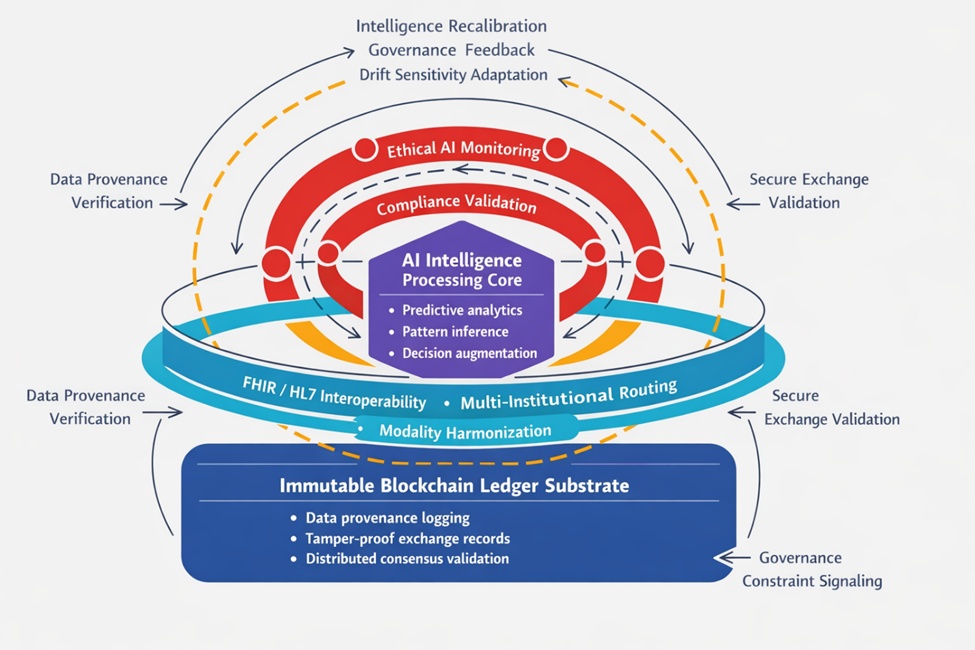
Figure 1. Scaffold for blockchain-enhanced health data intelligence (S-BEHDI) architecture.
The conceptual diagram illustrates the multi-layered scaffold integrating blockchain infrastructure with artificial intelligence for secure health data exchange. The foundational blockchain substrate ensures immutable provenance logging and tamper-proof record validation. Above this, the data exchange interface orchestrates interoperability across clinical systems. At the core, the AI intelligence layer performs predictive analytics and inference generation. Surrounding governance oversight enforces compliance, ethical monitoring, and bias surveillance. A dashed bidirectional ring feedback topology propagates intelligence and governance signals across layers, enabling adaptive recalibration of exchange integrity, decision confidence, and monitoring thresholds within clinical ecosystems.
To interpret system dynamics, conceptual formulas are introduced. First, risk propagation in data exchanges is modeled as
The S-BEHDI architecture theorizes seamless integration into existing EHR ecosystems, with the blockchain substrate ensuring data integrity during exchanges [10, 11]. The intelligence core layer processes theoretical analytics, such as pattern inference in health trajectories, routed through the interface layer compliant with standards like FHIR [12, 13]. Governance oversight embeds ethical checks, monitoring for biases in AI decisions via the feedback topology [14, 15]. This ring topology uniquely recirculates discrepancies, allowing layers to self-correct conceptually, such as adjusting intelligence thresholds based on detected drift sensitivities [16, 17].
In clinical workflow models, S-BEHDI’s layers facilitate theoretical resource allocation, prioritizing exchanges in high-stakes scenarios like precision oncology [18, 19]. The framework’s uniqueness lies in its non-hierarchical topology, where feedback loops propagate bidirectionally, contrasting with traditional unidirectional pipelines [20, 21]. This enables interpretive monitoring of drift sensitivity, modeled implicitly in the formulas, ensuring the scaffold remains adaptive to evolving governance constraints [22, 23].
Overall, S-BEHDI advances conceptual infrastructures by integrating blockchain with AI intelligence, fostering a scaffold that theoretically enhances health data exchange without empirical claims [24-28].
The conceptual deployment of the Scaffold for S-BEHDI engenders multifaceted dynamics within healthcare ecosystems, theoretically propagating impacts across clinical, operational, and ethical dimensions. This section analyzes the systemic consequences of integrating such a scaffold, focusing on how its blockchain-integrated architecture influences data exchange intelligence in diverse healthcare settings. By theorizing propagation mechanisms, we explore how S-BEHDI could reshape interoperability frameworks, decision support pipelines, and governance models without empirical substantiation.
Key propagation mechanisms influencing governance and intelligence orchestration are synthesized in Table 2.
Table 2. Propagation pathways across governance and intelligence domains
Propagation domain | Trigger source | Scaffold layer mediator | Systemic effect | Clinical implication |
Provenance propagation | Ledger validation events | Blockchain substrate | Trust amplification | Secure longitudinal records |
Intelligence propagation | AI inference outputs | Intelligence core | Decision confidence scaling | Enhanced diagnostics |
Governance propagation | Compliance alerts | Governance oversight | Policy reinforcement | Ethical AI deployment |
Interoperability propagation | Exchange standardization | Interface layer | Data harmonization | Seamless workflow integration |
Feedback propagation | Drift or anomaly detection | Feedback topology | System recalibration | Adaptive clinical intelligence |
In clinical AI architectures, S-BEHDI’s ring-based feedback topology theoretically amplifies propagation of intelligence signals, enabling adaptive refinements in real-time data exchanges [1-3]. This dynamic fosters a ripple effect where initial data inputs from EHR systems trigger cascading intelligence layers, potentially enhancing architectural robustness against data inconsistencies. For instance, in multi-modal clinical environments involving imaging and genomic data, the scaffold’s substrate layer propagates provenance assurances, reducing theoretical vulnerabilities in AI processing pipelines [4, 5]. Such propagation dynamics could theoretically streamline architectures by minimizing redundant validations, allowing AI components to focus on higher-order inferences like predictive diagnostics. Extending this, the governance oversight layer propagates constraint signals bidirectionally, ensuring that architectural evolutions remain aligned with clinical standards, thereby theorizing a self-sustaining ecosystem where propagation mitigates fragmentation in disparate systems [6-8]. Furthermore, as propagation traverses the intelligence core, it conceptually amplifies decision support capabilities, where AI algorithms theoretically inherit enhanced confidence from blockchain-verified exchanges, propagating benefits to downstream clinical applications such as personalized treatment planning [9, 10]. This layered propagation underscores a shift from static architectures to dynamic ones, where S-BEHDI acts as a catalyst for continuous architectural optimization in healthcare analytics [11, 12].
Healthcare analytics infrastructures stand to experience profound propagation dynamics through S-BEHDI’s integration, theoretically transforming data silos into interconnected intelligence networks [13, 14]. The scaffold’s data exchange interface layer propagates standardized protocols across infrastructures, facilitating theoretical scalability in analytics workloads. In resource-constrained settings like rural healthcare facilities, this propagation could reduce infrastructural burdens by distributing computational loads via blockchain’s decentralized nodes, allowing AI intelligence to propagate analytical insights without centralized bottlenecks [15, 16]. Moreover, propagation of governance loads, as interpreted by the formula
Within EHR intelligence ecosystems, S-BEHDI’s propagation dynamics theoretically catalyze ecosystem-wide transformations, integrating disparate records into cohesive intelligence scaffolds [25, 26]. The blockchain substrate propagates immutable audit trails, enabling ecosystems to handle complex data modalities with reduced theoretical drift sensitivities. This propagation ensures that intelligence ecosystems adapt to evolving clinical needs, such as in longitudinal patient monitoring, where AI layers propagate predictive models informed by verified historical exchanges [27, 28]. Furthermore, the ring topology propagates feedback loops that refine ecosystem interactions, theoretically minimizing monitoring burdens as per interpretive formulas, allowing for proactive governance in EHR sharing [1, 2]. In federated ecosystems spanning hospitals and research institutions, propagation of decision confidence, modeled as
Decision support pipelines in clinical workflows theoretically undergo significant ramifications from S-BEHDI’s propagation, where intelligence signals propagate through pipelines to inform timely interventions [10, 11]. The scaffold’s AI core propagates analytical outputs, theoretically accelerating pipeline throughput in high-acuity settings like intensive care units. Risk propagation, as captured by
AI governance, monitoring, and deployment systems experience orchestration influences propagated by S-BEHDI, theoretically embedding robust controls in health data exchanges [22, 23]. The governance layer propagates monitoring signals across systems, enabling theoretical drift detection without empirical tools. This orchestration propagates reduced governance loads, allowing systems to scale ethically in complex deployments like telemedicine networks [24, 25]. Propagation of ethical frameworks ensures systems adapt to regulatory changes, theoretically propagating compliance in global healthcare contexts [26, 27]. Moreover, in monitoring-intensive systems, the scaffold propagates automated alerts, theorizing minimized human oversight while maintaining system integrity [1, 28]. These influences propagate a governance paradigm shift, where blockchain and AI synergize to orchestrate proactive, intelligent systems [2, 3].
Interoperability and data exchange frameworks resonate with S-BEHDI’s propagation dynamics, theoretically harmonizing models across clinical boundaries [4, 5]. The interface layer propagates standard-compliant exchanges, reducing theoretical incompatibilities in models like FHIR-based systems. This resonance propagates to workflow integration, where clinical models benefit from propagated intelligence, enhancing theoretical seamlessness in patient transitions [6, 7]. In expansive models for precision medicine, propagation of data dynamics fosters resonant collaborations, theoretically advancing interoperability without silos [8-10].
This deliberative examination probes the broader implications of the S-BEHDI scaffold, reflecting on its theoretical viability in reshaping healthcare paradigms. By synthesizing architectural, infrastructural, and governance perspectives, this discourse elucidates potential transformative pathways while acknowledging conceptual limitations.
The scaffold’s viability in transforming clinical settings lies in its theoretical capacity to integrate blockchain with AI intelligence, potentially revolutionizing data-driven care [11, 12]. Deliberations reveal implications for settings where data exchange is pivotal, such as emergency departments, where the ring topology implies faster, more reliable intelligence propagation [13, 14]. However, viability hinges on addressing theoretical integration challenges with legacy systems, implying a need for phased conceptual adoptions to mitigate disruptions [15, 16]. Ethical viability emerges as a key implication, with the governance layer implying fortified protections against biases, deliberating a balance between innovation and patient rights [17, 18]. In resource-limited settings, implications include democratized access to intelligent exchanges, theoretically implying equitable healthcare advancements [19, 20]. This examination deliberates that while viability is promising, implications for training clinical personnel on scaffold interactions warrant further conceptual exploration [21, 22].
Implications for harmonizing diverse data modalities underscore the scaffold’s role in theoretical unification [23, 24]. Deliberations on modalities like wearable sensor data imply enhanced intelligence through blockchain-verified harmonization, potentially implying richer analytical depths in chronic disease management [25, 26]. Yet, implications of modality-specific governance loads deliberate caution, as complex data types may amplify theoretical risks without adaptive formulas [27, 28]. The discourse implies that scaffold implications extend to research modalities, where harmonized exchanges could theoretically accelerate discoveries in genomics [1, 2]. Overall, these implications deliberate a harmonized future, but with deliberations on scalability in high-volume modality environments [3, 4].
Reflections on deployment environments imply the scaffold’s adaptability across varied contexts, from urban hospitals to telehealth platforms [5, 6]. Implications include theoretical resilience in unstable networks, where blockchain implies persistent exchanges [7, 8]. Deliberative examination of environmental constraints, such as bandwidth limitations, implies optimized feedback topologies for minimal propagation delays [9, 10]. In global deployments, implications deliberate cultural and regulatory adaptations, implying customizable governance modules [11, 12]. This reflects a scaffold with broad adaptability implications, though deliberations on interoperability with non-blockchain environments remain critical [13, 14].
Discourse on navigating governance constraints implies the scaffold’s strength in embedding ethical frameworks [15, 16]. Implications for constraint-heavy environments, like pediatric care, deliberate heightened monitoring via AI, theoretically implying compliance without overhead [17, 18]. However, implications of over-governance deliberately potential stifling of innovation, reflecting a need for balanced constraint models [19, 20]. The examination implies that governance implications propel the scaffold toward sustainable deployments, with deliberations on evolving standards like AI ethics guidelines [21, 22].
Evolutions in workflow integration models imply seamless scaffold embeddings, theoretically implying streamlined clinical processes [23, 24]. Implications for models in surgical planning deliberate propagated intelligence for real-time adjustments [25, 26]. Deliberations on model complexities imply reduced errors through formula-interpreted confidence, reflecting enhanced workflow efficiencies [27, 28]. This discourse implies transformative implications, but with reflections on integration timelines in established workflows [1, 2].
Deliberations on scalability in intelligence infrastructures imply the scaffold’s capacity for growth [3, 4]. Implications include handling exponential data volumes, theoretically implying robust infrastructures via distributed blockchain [5, 6]. However, scalability implications deliberate computational trade-offs, reflecting needs for optimized resource formulas [7, 8]. The examination implies a scalable future, with deliberations on hybrid infrastructures [9, 10].
In culminating this conceptual exploration, the S-BEHDI scaffold emerges as a theoretically potent construct for advancing blockchain-integrated health data exchange intelligence. By synthesizing layers of blockchain substrate, data interfaces, AI cores, governance oversight, and feedback topologies, the scaffold theorizes a cohesive infrastructure that addresses persistent challenges in healthcare systems. Insights from propagation dynamics and implications deliberate a pathway toward enhanced interoperability, reduced governance loads, and amplified decision confidence, as interpreted through conceptual formulas. While limitations in empirical validation persist, the scaffold’s unique ring topology offers horizons for future conceptual refinements, potentially extending to emerging modalities like quantum-secured exchanges. Future horizons imply interdisciplinary expansions, such as integrating with wearable AI ecosystems, theorizing even greater intelligence in patient-centric models. Ultimately, these insights culminate in a vision where S-BEHDI fosters resilient, ethical, and intelligent health data ecosystems, paving the theoretical grounds for transformative healthcare analytics.
None
None
None
None
Open Access The author(s) retain copyright. This article is licensed under the Creative Commons Attribution-NonCommercial-ShareAlike 4.0 International License. It may be shared and adapted for non-commercial purposes with appropriate attribution, an indication of changes, and distribution of adaptations under the same license. Third-party material may be subject to separate terms identified in its credit line. View the license at https://creativecommons.org/licenses/by-nc-sa/4.0/.
 Clinical Intelligence Research Press