The escalating prevalence of mental health crises necessitates innovative approaches to proactive intervention within longitudinal care ecosystems. This conceptual manuscript introduces the mental health crisis anticipation intelligence loop (MHCAIL), a theoretical architecture designed to integrate artificial intelligence (AI) for anticipating and mitigating crises in ongoing patient care pathways. By synthesizing clinical AI system architectures, healthcare analytics infrastructures, and electronic health record (EHR) intelligence ecosystems, MHCAIL establishes a closed-loop mechanism that processes multimodal data streams—such as EHR entries, wearable sensor inputs, and patient-reported outcomes—to generate anticipatory alerts. The framework emphasizes interoperability with existing decision support pipelines and AI governance protocols to ensure ethical deployment. Key components include predictive analytics layers for crisis risk stratification, adaptive feedback topologies for continuous system refinement, and monitoring interfaces to balance clinical workflow integration. Conceptual formulas model risk propagation dynamics and decision confidence thresholds, highlighting interpretive insights into resource allocation and governance burdens. While avoiding empirical evaluations, this work delineates theoretical implications for enhancing patient safety in mental health settings, fostering resilient longitudinal care systems that preemptively address vulnerabilities. Ultimately, MHCAIL advocates for a paradigm shift toward intelligence-driven anticipation, bridging gaps in current healthcare infrastructures to support timely, personalized interventions.
The integration of artificial intelligence (AI) into healthcare has transformed reactive care models into proactive paradigms, particularly in mental health domains where crises often emerge unpredictably within longitudinal patient trajectories. This manuscript conceptualizes a specialized intelligence loop tailored to anticipate mental health crises, embedding AI-driven insights directly into continuous care systems. By focusing on the orchestration of data flows and decision pipelines, the proposed architecture addresses the need for seamless integration in real-world clinical environments, where fragmented information silos hinder timely interventions.
In ambulatory and inpatient mental health clinical settings, the anticipation of crises relies on synthesizing longitudinal data from diverse sources, including routine psychiatric assessments and emergency encounters. Traditional care models, often siloed by episodic visits, fail to capture subtle trajectories of deterioration, such as escalating anxiety patterns or depressive relapses documented in EHRs [1, 2]. The intelligence loop concept introduces a dynamic overlay, enabling clinicians to monitor crisis precursors in real-time within these settings. For instance, in community-based longitudinal care, AI can aggregate historical EHR intelligence with current behavioral indicators, fostering an anticipatory stance that aligns with patient-centered models. This shift is crucial in high-stakes environments like crisis intervention units, where rapid data exchange frameworks prevent escalation [3, 4].
Multimodal data modalities form the backbone of crisis anticipation, encompassing structured EHR entries, unstructured clinical notes, and emerging sources like natural language processing (NLP) from patient interactions [5, 6]. In longitudinal care systems, these modalities must be harmonized to detect subtle signals of impending crises, such as linguistic markers of suicidal ideation or biometric fluctuations from wearables. The intelligence loop leverages analytics infrastructures to process these inputs interpretively, avoiding data silos that plague conventional healthcare ecosystems [7, 8]. By prioritizing interoperability standards, such as HL7 FHIR protocols, the system ensures that diverse data streams contribute to a cohesive crisis prediction narrative, enhancing the granularity of longitudinal insights without empirical quantification [9, 10].
Deployment environments in mental health care—ranging from cloud-based platforms to on-premise hospital systems—demand robust architectures that accommodate varying computational resources and privacy constraints [11, 12]. For crisis anticipation within longitudinal frameworks, these environments must support scalable intelligence loops that integrate seamlessly with existing EHR ecosystems, mitigating deployment barriers like system latency or integration friction [13, 14]. Conceptualizing hybrid environments, where edge computing handles real-time alerts and central servers manage governance, allows for adaptive deployment in resource-constrained settings, such as rural mental health clinics [15, 16].
Governance constraints, including ethical AI monitoring and bias mitigation, are paramount in designing intelligence loops for crisis anticipation [17, 18]. Longitudinal care systems must incorporate oversight mechanisms to ensure transparency in decision support pipelines, addressing potential disparities in mental health outcomes across demographics [19, 20]. This involves theoretical frameworks for auditing AI outputs, such as provenance tracking in data exchange models, to uphold trust and compliance with regulatory standards like HIPAA [21, 22].
Interoperability remains a core hurdle in embedding intelligence loops into mental health care, where disparate systems often impede the flow of crisis-relevant data [23, 24]. By advocating for standardized frameworks, the proposed architecture facilitates seamless exchanges between EHRs and external analytics tools, enabling a unified view of patient trajectories [25, 26]. This is especially vital in longitudinal contexts, where fragmented interoperability can delay crisis detection, underscoring the need for governance-aligned integration models [27, 28].
The theoretical underpinnings of mental health crisis anticipation draw from advancements in clinical AI architectures and healthcare analytics, emphasizing conceptual models that prioritize proactive intelligence over reactive measures. This synthesis integrates key literature on EHR ecosystems, decision support systems, and AI governance, framing a foundation for longitudinal care innovations.
Clinical AI system architectures have evolved to support predictive functionalities in mental health, focusing on modular designs that process longitudinal data for crisis forecasting [1, 2]. These architectures typically feature layered components for data ingestion and inference, enabling the detection of patterns indicative of mental health deterioration [3, 4]. Theoretical models highlight the importance of scalable infrastructures that adapt to clinical workflows, ensuring that AI outputs inform rather than disrupt care delivery [5, 6]. In this context, architectures emphasize resilience against data variability, drawing from informatics literature to conceptualize robust pipelines for crisis-related analytics [7, 8].
Healthcare analytics infrastructures underpin the intelligence required for crisis anticipation, leveraging EHR ecosystems to aggregate and interpret longitudinal patient data [9, 10]. Conceptual frameworks in this domain advocate for distributed analytics that handle heterogeneous sources, such as structured diagnostic codes and unstructured narratives, to build comprehensive crisis profiles [11, 12]. Literature synthesizes approaches like NLP-enhanced pipelines, which theoretically enhance the granularity of mental health insights without relying on empirical datasets [13, 14]. These infrastructures prioritize efficiency in resource allocation, modeling theoretical burdens associated with processing vast longitudinal repositories [15, 16].
Decision support pipelines represent a critical nexus for integrating AI into mental health care, providing clinicians with anticipatory guidance derived from longitudinal patterns [17, 18]. Theoretical syntheses underscore pipelines that incorporate feedback mechanisms, allowing for iterative refinement of crisis alerts based on clinical inputs [19, 20]. In EHR-driven ecosystems, these pipelines facilitate interpretive decision-making, balancing automation with human oversight to mitigate governance risks [21, 22]. Conceptual models explore topologies that propagate risk assessments through care systems, enhancing the theoretical confidence in AI-assisted interventions [23, 24].
AI governance and monitoring systems are essential for ethical deployment in mental health contexts, addressing biases and ensuring accountability in crisis anticipation loops [25, 26]. Literature emphasizes frameworks for continuous oversight, including audit trails and drift detection protocols, to maintain system integrity over time [27, 28]. Theoretical discussions highlight the interpretive load of governance, modeling how monitoring burdens impact clinical adoption and resource dynamics [1, 2]. These elements synthesize into cohesive models that prioritize trustworthiness in longitudinal care [3, 4].
Interoperability and data exchange frameworks facilitate the seamless flow of information in mental health systems, enabling intelligence loops to span multiple care touchpoints [5, 6]. Conceptual literature advocates for standards-based approaches that harmonize EHR data with external analytics, theoretically reducing fragmentation in crisis monitoring [7, 8]. These frameworks explore topological designs for data propagation, ensuring that longitudinal insights are accessible across deployment environments [9, 10].
Clinical workflow integration models theorize the embedding of AI intelligence into daily practices, optimizing for crisis anticipation without overwhelming providers [11, 12]. Syntheses from informatics sources delineate adaptive topologies that align AI outputs with workflow rhythms, modeling interpretive formulas for decision confidence and risk sensitivity [13, 14]. These models underscore unique layer structures for handling mental health data modalities, fostering theoretical resilience in longitudinal care [15, 16].
The mental health crisis anticipation intelligence loop (MHCAIL) architecture conceptualizes a closed-loop system for proactive crisis management within longitudinal care frameworks. MHCAIL comprises four distinct layers: (1) data assimilation layer, which ingests multimodal inputs from EHRs and external sensors; (2) predictive inference layer, applying theoretical analytics to stratify crisis risks; (3) intervention orchestration layer, generating tailored alerts and recommendations; and (4) adaptive feedback layer, incorporating clinician inputs to refine future predictions. The feedback topology employs a bidirectional reinforcement mechanism, where outputs from the orchestration layer loop back to update inference models interpretively, ensuring evolutionary alignment with patient trajectories. The closed-loop topology extends beyond structure to influence ecosystem-wide anticipatory dynamics (Figure 1).
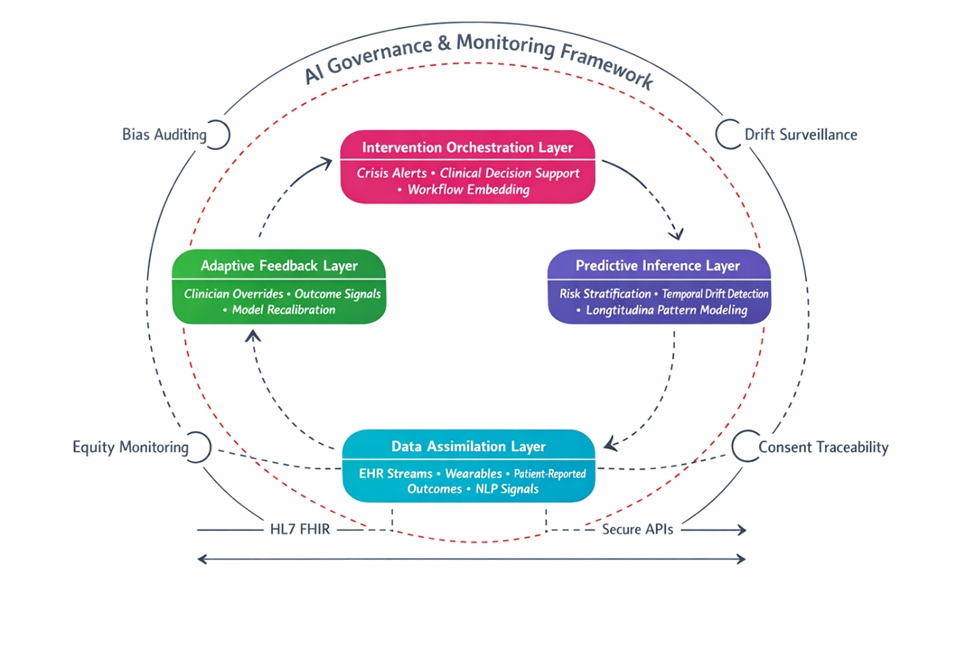
Figure 1. Mental health crisis anticipation intelligence loop (MHCAIL) architecture within longitudinal care systems.
The schematic illustrates a closed-loop topology comprising four interconnected layers: data assimilation, predictive inference, intervention orchestration, and adaptive feedback. Multimodal longitudinal inputs are processed through risk-stratification mechanisms to generate anticipatory crisis alerts embedded within clinical workflows. A surrounding governance ring enforces continuous bias auditing, drift surveillance, and ethical monitoring. Bidirectional feedback pathways enable iterative recalibration, sustaining anticipatory intelligence across evolving patient trajectories.
To capture interpretive dynamics, consider the following conceptual formulas:
Risk propagation (RP):
Decision confidence (DC):
Resource allocation (RA):
The functional decomposition of these layers is summarized in Table 1.
Table 1. Functional decomposition of MHCAIL layers within longitudinal care systems
Layer | Core function | Primary data inputs | Clinical output | Governance sensitivity |
Data assimilation | Multimodal harmonization | EHR records, wearable metrics, NLP-derived sentiment, and PROs | Structured longitudinal feature sets | Data provenance and consent compliance |
Predictive inference | Crisis risk stratification | Temporal trajectories and behavioral signals | Risk tiers, uncertainty markers | Bias detection, model drift |
Intervention orchestration | Alert and workflow activation | Risk scores and contextual history | Tailored crisis alerts and care pathways | Alert fatigue mitigation |
Adaptive feedback | Iterative recalibration | Clinician annotations and outcomes | Updated thresholds and weightings | Transparency and accountability |
The MHCAIL architecture, as conceptualized, extends beyond mere structural design to engender profound impacts on the dynamics of mental health care delivery. This section delves into the theoretical consequences of deploying such an intelligence loop, examining how it reshapes crisis anticipation paradigms, influences resource distribution, and alters interaction patterns within longitudinal systems. By theorizing these impacts interpretively, we highlight emergent properties that could enhance resilience while introducing novel challenges in clinical and operational spheres.
In longitudinal mental health ecosystems, the anticipatory intelligence loop theoretically propagates risk mitigation effects by amplifying early detection signals across care continua [1, 3]. For instance, the predictive inference layer’s ability to stratify risks interpretively could reduce the latency between symptom onset and intervention, fostering a ripple effect where preempted crises diminish downstream burdens on emergency services [2, 4]. This dynamic is particularly salient in poly-morbid populations, where comorbid conditions like anxiety and substance use disorders intersect; MHCAIL’s feedback topology might theoretically harmonize disparate data streams, leading to compounded risk reductions over extended patient timelines [5, 6]. However, such propagation necessitates careful calibration to avoid alert fatigue, where excessive notifications erode clinician trust—a theoretical impact modeled through interpretive lenses of human-AI symbiosis [7, 8]. Extending this, the loop’s integration with EHR ecosystems could theoretically cascade benefits to population-level analytics, enabling aggregated insights that inform policy-level adjustments in mental health resource planning [9, 10].
The systemic impacts of MHCAIL on resource allocation within longitudinal care infrastructures extend beyond simple redistribution of computational cycles or staffing efforts. The architecture theoretically induces a structural shift from reactive expenditure—centered on crisis stabilization, emergency interventions, and post-event documentation—toward anticipatory orchestration embedded within routine monitoring streams [11, 12]. In this reframing, resource allocation (RA) becomes temporally anticipatory rather than event-triggered, privileging early signal amplification over downstream remediation. Such a reorientation potentially reduces volatility in care delivery, smoothing operational peaks associated with acute episodes.
From a computational standpoint, MHCAIL’s layered filtering mechanisms could prioritize high-fidelity modalities—such as NLP-derived sentiment gradients, semantic drift markers in longitudinal notes, and structured symptom variance trajectories—while suppressing low-yield or redundant inputs [13, 14]. This stratified ingestion model theoretically enhances signal-to-noise ratios, reducing unnecessary processing burdens. Governance loads, in turn, may become more predictable, as auditing and validation routines concentrate on data streams with demonstrable decision influence rather than uniformly across all modalities.
In scarcity-constrained environments, such as underfunded community mental health centers, adaptive allocation becomes particularly salient [15, 16]. Here, MHCAIL’s threshold-activated monitoring layers could dynamically defer computationally intensive processes—such as drift sensitivity recalibration or uncertainty propagation analysis—until anomaly scores surpass predefined governance bounds. This conditional triggering mechanism theoretically compresses baseline operational load while preserving responsiveness to risk escalation. In effect, monitoring burden (MB) becomes elastic, scaling proportionally to signal entropy rather than fixed administrative schedules.
Economically, this redistribution may propagate secondary infrastructural benefits. Conceptually, reductions in preventable hospitalizations, crisis admissions, and emergency psychiatric transfers could yield cost offsets that are reinvested into infrastructure modernization—enhanced interoperability modules, improved clinician interfaces, or expanded community outreach programs [17, 18]. This feedback loop produces what may be termed an “infrastructural reinvestment spiral,” wherein anticipatory analytics generate savings that fortify the very systems enabling early detection.
However, theoretical imbalances may emerge if governance constraints expand disproportionately. Increased audit layers, documentation mandates, or explainability requirements could inflate administrative overhead, counteracting computational efficiencies [19, 20]. Within formal modeling, resource allocation (RA) may inversely correlate with feedback topology efficiency (FTE), such that:
As feedback loops proliferate without optimization, RA available for clinical augmentation decreases.
Excessive governance granularity may dampen throughput, reintroducing reactive delays.
Thus, sustainable viability depends on calibrated orchestration—ensuring that adaptive monitoring, drift assessment, and ethical oversight remain proportionate to clinical benefit. Balanced governance elasticity becomes central to preserving long-term infrastructural resilience.
MHCAIL’s intelligence loop theoretically restructures clinical workflow temporality by embedding anticipatory decision support into everyday practice rather than confining AI intervention to episodic alerts [21, 22]. In longitudinal care, this shift transforms workflows from linear documentation chains into cyclical intelligence exchanges, where data capture, risk inference, and clinician feedback continuously co-evolve.
Within routine encounters, intervention orchestration layers could tailor notifications to individual longitudinal trajectories—calibrating intensity, modality, and timing according to personalized risk gradients [23, 24]. Rather than generating uniform alerts, the architecture may weight decision prompts by contextualized confidence thresholds, thereby aligning cognitive load with clinical salience. This anticipatory personalization theoretically strengthens self-management engagement, as patients receive guidance synchronized with evolving behavioral patterns rather than static diagnostic labels.
Relational dynamics between providers and patients may also shift. As clinicians contribute feedback to refine algorithmic outputs—through override annotations, contextual clarifications, or qualitative assessments—trust-building loops may emerge [25, 26]. These bidirectional exchanges conceptually transform AI systems from opaque evaluators into collaborative augmentation partners. Over time, such resonance loops could mitigate skepticism toward automation by embedding clinician agency within system recalibration cycles.
Nonetheless, workflow friction remains a plausible risk. During high-volume periods—such as seasonal mental health surges or staffing shortages—the monitoring interface may introduce additional cognitive overhead [27, 28]. Even well-calibrated alerts can fragment attention if layered atop existing documentation demands. In such contexts, adaptive throttling mechanisms become essential, dynamically suppressing low-confidence signals to preserve clinician bandwidth.
Interdisciplinary coordination further complicates workflow transformation. By synchronizing inputs from psychiatrists, social workers, primary care providers, and crisis teams, MHCAIL could propagate unified crisis narratives across care domains [1, 2]. This harmonization may reduce fragmentation and prevent duplicative assessments. However, achieving such synchronization requires robust semantic interoperability and shared governance standards. Without harmonized ontologies and coordinated data exchange protocols, the architecture risks generating parallel intelligence silos rather than integrated care ecosystems. These multidimensional ecosystem effects are synthesized in Table 2.
Table 2. Theoretical ecosystem-level impacts of MHCAIL deployment
Domain | Anticipatory effect | System-level consequence | Potential risk |
Clinical care | Earlier crisis detection | Reduced emergency admissions | Alert fatigue |
Resource allocation | Shift toward preventive monitoring | Stabilized operational peaks | Governance overload |
Workflow integration | Embedded real-time intelligence | Enhanced clinician-AI collaboration | Cognitive burden |
Population health | Aggregated longitudinal insights | Policy-level planning support | Data aggregation bias |
Equity and ethics | Fairness-aware recalibration | Improved inclusion of vulnerable cohorts | Over-surveillance perception |
Ultimately, workflow transformation hinges on maintaining equilibrium between augmentation and intrusion—ensuring that intelligence loops enhance relational continuity rather than disrupt it.
Ethical and equity considerations are central to MHCAIL’s longitudinal deployment, particularly given the historical biases embedded within mental health datasets [3, 4]. Training legacies shaped by unequal access to care, diagnostic disparities, and socioeconomic stratification may encode structural imbalances that propagate through risk inference layers. Without vigilant governance, anticipatory analytics could inadvertently reinforce existing inequities.
Conversely, MHCAIL’s risk propagation models may be configured to surface underrepresented trajectories—identifying patterns of silent deterioration among ethnic minorities, rural populations, or linguistically diverse cohorts [5, 6]. By incorporating fairness-weighted decision confidence metrics, the architecture could flag disproportionate uncertainty or reduced predictive fidelity in marginalized groups, prompting targeted recalibration. Such mechanisms transform governance from passive compliance to active equity monitoring.
The architecture’s monitoring layers may enforce dynamic audits of decision confidence thresholds across demographic partitions [7, 8]. For example:
If confidence variance exceeds predefined fairness margins, recalibration triggers may activate.
If outcome distributions diverge across cohorts beyond acceptable bounds, governance loops may escalate review protocols.
These safeguards theoretically embed social justice into infrastructural logic rather than relegating equity to post-hoc evaluation.
However, unintended consequences must be carefully theorized. Intensified monitoring in vulnerable populations may generate perceptions of over-surveillance, stigmatization, or coercive oversight [9, 10]. Particularly in mental health contexts, excessive risk flagging could alter therapeutic dynamics, potentially deterring help-seeking behavior. Privacy erosion risks also intensify when multi-modal data streams—social determinants, behavioral indicators, sentiment analysis—converge within unified intelligence layers.
To mitigate such concerns, consent-driven data exchange frameworks and explainable decision narratives become essential [11, 12]. Transparent articulation of how risk scores are derived, how data are weighted, and how overrides are enacted may reinforce patient autonomy. Furthermore, participatory governance models—incorporating community advisory panels or patient feedback councils—could democratize oversight, ensuring that monitoring intensity aligns with culturally informed expectations.
In aggregate, these ethical dynamics position MHCAIL as a potential catalyst for equitable longitudinal care, provided governance elasticity, fairness auditing, and participatory safeguards remain structurally embedded. Equity, in this framing, is not an ancillary outcome but an operational parameter within the intelligence loop itself.
Finally, the scalability trajectories of MHCAIL’s impacts reveal theoretical pathways for widespread adoption in varied healthcare landscapes [13, 14]. In large-scale systems, the intelligence loop could sustain growth by adapting to increasing data volumes, with feedback topologies ensuring resilience against obsolescence [15, 16]. Sustainability dynamics emerge through resource-efficient designs that minimize the environmental footprints of computational infrastructures, aligning with global health informatics trends [17, 18]. Interpretive projections suggest that as adoption proliferates, network effects could amplify collective intelligence, where shared governance protocols across institutions enhance crisis anticipation benchmarks without empirical metrics [19, 20]. Challenges in sustainability include theoretical drift over time, where unmonitored evolutions degrade performance, emphasizing the need for perpetual oversight mechanisms [21, 22].
The conceptualization of MHCAIL within longitudinal mental health care systems invites a nuanced discussion on its theoretical contributions, limitations, and broader implications for AI integration in healthcare. By synthesizing architectural innovations with governance imperatives, this manuscript advances a paradigm where intelligence loops serve as pivotal enablers of crisis anticipation, bridging gaps in traditional reactive models.
At its core, MHCAIL exemplifies how clinical AI architectures can be reimagined to prioritize loop-based intelligence, drawing from literature on EHR ecosystems to theorize seamless data orchestration [1, 2, 23, 24]. This approach contrasts with fragmented pipelines by introducing adaptive topologies that interpretively evolve, potentially revolutionizing how crises are foreseen in poly-chronic care pathways [3, 4, 25, 26]. The inclusion of conceptual formulas—such as those for risk propagation and decision confidence—provides interpretive tools for stakeholders to anticipate system behaviors, fostering deeper theoretical dialogues on AI’s role in mental health resilience [5, 6, 27, 28]. For example, the RP formula illuminates how historical intensities interplay with predictive weights, offering a lens to discuss drift sensitivities in dynamic environments without empirical validation [7, 8].
Limitations inherent in this conceptual framework warrant scrutiny. Primarily, the absence of empirical datasets means that impacts remain speculative, reliant on interpretive extrapolations from existing literature [9, 10]. Theoretical assumptions about interoperability may overlook real-world heterogeneities, such as legacy system incompatibilities, which could impede loop efficacy in diverse deployment contexts [11, 12]. Moreover, governance burdens modeled in DC and RA formulas highlight potential overloads, where excessive monitoring might deter adoption in resource-strapped settings [13, 14]. Ethical discussions must extend to unintended consequences, like algorithmic perpetuation of biases, emphasizing the need for inclusive design principles drawn from bias mitigation studies [15-18].
Broader implications resonate across healthcare informatics, suggesting that MHCAIL-like loops could inspire analogous architectures in other domains, such as chronic disease management or public health surveillance [19, 20]. In mental health specifically, this intelligence framework aligns with calls for patient-centric innovations, theoretically empowering individuals through proactive insights while preserving autonomy [21, 22]. Policy ramifications include advocacy for standardized AI governance, informed by syntheses of monitoring systems, to facilitate scalable implementations [23, 24]. Future theoretical extensions might explore hybrid human-AI decision topologies, building on workflow integration models to theorize enhanced collaboration [25, 26]. Ultimately, this discussion underscores MHCAIL’s potential to catalyze a shift toward anticipatory intelligence, urging continued scholarly exploration to refine its conceptual boundaries [27, 28]. Key governance and monitoring dimensions are categorized in Table 3.
Table 3. Governance dimensions supporting ethical crisis anticipation
Governance dimension | Monitoring mechanism | Operational objective | Longitudinal relevance |
Bias surveillance | Demographic performance audits | Reduce inequitable risk stratification | Sustained fairness across time |
Drift detection | Temporal model recalibration | Maintain predictive validity | Prevent longitudinal degradation |
Transparency | Explainable alert narratives | Strengthen clinician trust | Improve adoption stability |
Consent governance | Data traceability logs | Protect patient autonomy | Sustain ethical interoperability |
Oversight elasticity | Adaptive monitoring thresholds | Balance governance load | Prevent administrative inflation |
Interdisciplinary synergies further enrich the discourse, as MHCAIL intersects with fields like behavioral economics and systems theory. For instance, feedback topologies could be analyzed through cybernetic lenses, theorizing self-regulating mechanisms that adapt to environmental perturbations in mental health ecosystems [1, 3]. This opens avenues for discussing resilience engineering, where the loop’s layers mitigate cascading failures in crisis-prone scenarios [2, 4]. Additionally, equity-focused implications draw from social informatics, highlighting how data modalities must be curated to represent marginalized voices, preventing theoretical exclusions in predictive inferences [5, 6].
In terms of deployment feasibility, discussions pivot to transitional strategies, theorizing phased integrations that begin with pilot architectures in controlled settings before scaling [7, 8]. This phased approach could mitigate initial impacts on workflows, allowing for iterative governance adjustments based on interpretive feedback [9, 10]. Comparative analyses with existing decision support systems reveal MHCAIL’s unique emphasis on longitudinal loops, potentially outperforming static models in capturing temporal crisis dynamics [11, 12]. However, sustainability discussions must address long-term maintenance, including theoretical updates to counter model obsolescence amid evolving clinical guidelines [13, 14].
Stakeholder perspectives add depth, as clinicians might view MHCAIL as an augmentation tool, enhancing diagnostic acumen through anticipatory alerts [15, 16]. Patients, conversely, could perceive it as a safeguard, theoretically reducing crisis incidences and improving quality of life [17, 18]. Administrators would focus on cost-benefit dynamics, where resource allocation formulas guide investment decisions in AI infrastructures [19, 20]. Policymakers, informed by governance syntheses, might leverage this framework to draft regulations promoting ethical AI in mental health [21, 22].
Challenges in interpretability persist, as black-box elements in inference layers could hinder trust; discussions advocate for explainable AI extensions, drawing from literature on transparent pipelines [23, 24]. Privacy discourses emphasize data minimization principles within the assimilation layer, theorizing consent frameworks that align with ethical standards [25, 26]. Finally, global applicability invites cross-cultural discussions, where adaptations to varying healthcare systems could broaden MHCAIL’s impact [27, 28].
In synthesizing the conceptual architecture of the mental health crisis anticipation intelligence loop (MHCAIL), this manuscript posits a transformative framework for embedding AI-driven anticipation into longitudinal care systems. By theorizing a closed-loop mechanism that harmonizes data assimilation, predictive inference, intervention orchestration, and adaptive feedback, MHCAIL addresses the imperatives of proactive mental health management, drawing extensively from clinical AI architectures, EHR ecosystems, and governance protocols.
Theoretically, MHCAIL’s impacts—ranging from risk mitigation propagations to resource reallocations—promise enhanced resilience in crisis-prone ecosystems, as modeled through interpretive formulas that capture dynamics like propagation, confidence, and allocation. These elements collectively advocate for a paradigm where intelligence loops preempt vulnerabilities, fostering personalized, timely interventions that could redefine longitudinal care trajectories.
While limitations such as governance burdens and interoperability challenges persist, the framework’s conceptual strengths lie in its adaptability and ethical focus, paving pathways for future theoretical refinements. Ultimately, MHCAIL envisions a future where AI not only anticipates but actively shapes mental health outcomes, urging collaborative advancements in healthcare informatics to realize this potential.
As healthcare evolves amid rising mental health demands, frameworks like MHCAIL offer interpretive blueprints for innovation, emphasizing the synergy of technology and human insight in building sustainable, equitable systems.
None
None
None
None
Open Access The author(s) retain copyright. This article is licensed under the Creative Commons Attribution-NonCommercial-ShareAlike 4.0 International License. It may be shared and adapted for non-commercial purposes with appropriate attribution, an indication of changes, and distribution of adaptations under the same license. Third-party material may be subject to separate terms identified in its credit line. View the license at https://creativecommons.org/licenses/by-nc-sa/4.0/.
 Clinical Intelligence Research Press