The integration of artificial intelligence (AI) into healthcare systems has revolutionized the orchestration of personalized treatments. Yet, challenges persist in establishing causal linkages between patient data, algorithmic decisions, and clinical outcomes. This conceptual manuscript proposes the causal orchestration network for treatment intelligence (CONTI), a novel pathway model designed to facilitate seamless integration of causal inference mechanisms within AI-driven healthcare architectures. By delineating a multi-layered framework that incorporates causal pathways for data ingestion, intelligence processing, and treatment orchestration, CONTI addresses interoperability gaps in electronic health records (EHRs) and decision support pipelines. The model emphasizes governance protocols to mitigate risks such as algorithmic drift and bias propagation, ensuring ethical deployment in diverse clinical environments. Theoretical analyses explore the dynamics of causal feedback loops, highlighting their role in enhancing personalized interventions while minimizing monitoring burdens. Conceptual formulas are introduced to interpret risk propagation, decision confidence intervals, and resource allocation efficiencies. Drawing from recent literature on clinical AI architectures and healthcare analytics, this work synthesizes infrastructural insights to advance AI governance in treatment personalization. Ultimately, CONTI offers a blueprint for future AI ecosystems that prioritize causal intelligence, fostering resilient and equitable healthcare delivery without relying on empirical data or performance metrics.
In contemporary clinical settings, the deployment of AI systems for personalized treatment orchestration necessitates a profound understanding of causal dynamics. Traditional healthcare analytics often overlook the intricate causal relationships between patient-specific variables and therapeutic outcomes, leading to fragmented decision-making processes. The causal intelligence pathway model addresses this by embedding causal inference directly into the orchestration layer, ensuring that AI-driven recommendations are not merely correlative but grounded in probabilistic cause-and-effect linkages [1-5]. This approach is particularly vital in high-stakes environments like oncology or cardiology wards, where treatment personalization hinges on real-time causal assessments of multimodal data streams, including genomic profiles and physiological metrics. By prioritizing causal pathways, the model mitigates the risks of spurious associations that plague conventional machine learning applications in healthcare [6-8].
Recent advancements in AI governance underscore the need for robust deployment frameworks that accommodate causal reasoning. For instance, in intensive care units, where patient trajectories are influenced by myriad interdependent factors, a causal pathway model enables orchestrated interventions that adapt to evolving clinical states. This integration fosters a symbiotic relationship between human clinicians and AI systems, where causal intelligence pathways serve as the conduit for personalized treatment strategies. The model’s emphasis on causal orchestration counters the limitations of black-box algorithms, promoting transparency in how treatments are tailored to individual patient profiles. Furthermore, in ambulatory care settings, causal dynamics facilitate predictive personalization, allowing for proactive adjustments in treatment plans based on inferred causal impacts from historical EHR data. This conceptual shift from reactive to anticipatory orchestration represents a pivotal evolution in clinical AI deployment, aligning with interoperability standards to enhance overall system efficacy [9-11].
Handling diverse data modalities poses significant challenges in orchestrating personalized treatments via causal intelligence pathways. EHR ecosystems encompass structured data like vital signs, unstructured narratives from clinical notes, and imaging modalities, each requiring distinct causal processing pipelines. The proposed model introduces modular pathways that harmonize these modalities, ensuring causal coherence across the intelligence orchestration spectrum. In surgical planning contexts, for example, integrating radiological data with causal pathways allows for personalized risk assessments, where modality-specific causal inferences inform treatment orchestration without empirical validation. This theoretical infrastructure highlights the necessity of adaptive data exchange frameworks to prevent modality-induced biases in AI decision support [12-14].
Moreover, in chronic disease management, data modality variability—such as wearable sensor inputs versus laboratory results—demands causal pathway models that dynamically weigh contributions to personalized orchestration. Governance constraints, including data privacy regulations, further complicate modality integration, necessitating pathways that embed compliance mechanisms at the causal level. The model’s architecture theorizes layered modality fusion, where causal intelligence pathways orchestrate treatment recommendations by resolving modality conflicts through interpretive formulas. This ensures that personalized interventions remain robust across heterogeneous data landscapes, fostering a cohesive clinical workflow [15-17].
Governance constraints profoundly influence the design of causal intelligence pathways for treatment orchestration in healthcare infrastructures. Regulatory frameworks like HIPAA and GDPR impose stringent requirements on AI systems, mandating causal traceability to uphold ethical standards. The pathway model incorporates governance layers that propagate causal accountability, ensuring that personalized treatments are orchestrated with built-in audit trails. In hospital network environments, these constraints drive the need for decentralized causal intelligence ecosystems, where pathway orchestration balances centralized analytics with local governance needs [18-20].
Ethical governance extends to bias mitigation in causal pathways, particularly in underserved populations where data imbalances could skew personalized orchestration. The model conceptualizes governance as an integral feedback topology, where constraints inform pathway adjustments to maintain equity in treatment delivery. Deployment in resource-limited settings amplifies these challenges, requiring causal intelligence infrastructures that optimize governance loads without compromising personalization efficacy. By theorizing governance-constrained pathways, the manuscript advances a blueprint for sustainable AI integration in healthcare, emphasizing causal orchestration as a core governance enabler [21-23].
Interoperability remains a cornerstone for effective causal intelligence pathways in clinical workflows. Fragmented EHR systems hinder seamless data exchange, impeding the orchestration of personalized treatments. The model proposes interoperable causal pathways that standardize intelligence propagation across disparate platforms, facilitating unified treatment orchestration. In multidisciplinary clinical teams, such frameworks enable collaborative pathway utilization, where causal inferences from one modality inform another’s orchestration decisions. This theoretical interoperability enhances workflow integration, reducing silos in healthcare delivery [24-26].
Furthermore, in telemedicine contexts, interoperability frameworks support remote causal pathway orchestration, ensuring personalized treatments transcend physical boundaries. Governance-integrated interoperability addresses security concerns, embedding causal safeguards in data exchange protocols. The model’s emphasis on pathway interoperability theorizes a scalable infrastructure for future AI ecosystems, where clinical workflows benefit from harmonized causal intelligence [27, 28].
The theoretical underpinnings of causal intelligence in healthcare systems draw from a confluence of AI architectures, analytics infrastructures, and governance models. Early conceptualizations of clinical AI emphasized correlative analytics, but recent syntheses advocate for causal paradigms to enhance treatment personalization. Literature highlights the evolution from static decision support to dynamic orchestration pipelines, where causal pathways bridge data ingestion and outcome prediction. This synthesis integrates insights from EHR intelligence ecosystems, underscoring the need for causal mechanisms to interpret complex patient trajectories [1, 3, 5].
In exploring clinical AI system architectures, scholars have theorized multi-tiered structures that incorporate causal inference for robust decision-making. For instance, frameworks for evaluating AI without ground-truth annotations propose causal proxies to assess system reliability, aligning with pathway models for treatment orchestration. These architectures emphasize modular components, allowing causal intelligence to permeate layers from data preprocessing to output generation. Analytics infrastructures further support this by enabling scalable causal computations, theoretical constructs that avoid empirical benchmarking yet inform personalized interventions. The synthesis reveals a gap in causal pathway integration, where traditional architectures falter in handling heterogeneous healthcare data [2, 4, 6].
Healthcare analytics infrastructures have been conceptualized as foundational to causal intelligence, providing the scaffolding for pathway orchestration. Theoretical models posit infrastructures that facilitate causal data flows, ensuring interoperability across clinical silos. Literature synthesizes EHR ecosystems as causal hubs, where intelligence is derived from pathway analyses rather than mere aggregation. This theoretical lens highlights infrastructures’ role in mitigating causal disruptions, such as data drift, through architectural safeguards. Governance in these infrastructures emerges as a critical theme, with conceptual designs incorporating monitoring systems to preserve causal fidelity in analytics pipelines [7, 9, 11].
EHR intelligence ecosystems represent a pivotal domain in the literature, theorizing causal pathways as essential for ecosystem coherence. Synthesizing recent works, ecosystems are viewed as networks of causal nodes, where intelligence orchestration personalizes treatments via pathway traversal. Theoretical backgrounds emphasize ecosystem resilience, achieved through causal feedback mechanisms that adapt to clinical variabilities. Literature points to interoperability challenges within EHR ecosystems, proposing causal pathway models to standardize intelligence exchange. This synthesis integrates governance perspectives, where ecosystem designs embed ethical causal constraints to prevent intelligence biases in personalized orchestration [8, 10, 12].
Decision support pipelines in healthcare have evolved theoretically to incorporate causal intelligence, moving beyond associative models. Conceptual literature synthesizes pipelines as sequential causal stages, each contributing to treatment orchestration. Theoretical constructs highlight pipeline modularity, allowing causal insertions at key junctures for enhanced personalization. Governance and monitoring are theorized as integral to pipelines, ensuring causal pathways remain aligned with clinical objectives. This synthesis identifies opportunities for pathway innovation, where decision support leverages causal intelligence to optimize treatment flows without empirical metrics [13, 15, 17].
AI governance, monitoring, and deployment systems form a theoretical triad in the literature, essential for causal pathway sustainability. Synthesizing governance models, scholars advocate for causal-centric oversight, where monitoring detects pathway deviations. Deployment systems are conceptualized as causal enablers, facilitating orchestrated rollouts in clinical settings. Literature emphasizes theoretical governance loads, balanced through pathway efficiencies to minimize burdens. This integration reveals deployment as a causal orchestration endpoint, where monitoring feedback refines intelligence pathways for personalized treatments [14, 16, 18].
Interoperability and data exchange frameworks underpin causal intelligence in theoretical syntheses. Literature posits frameworks that enable causal data propagation across healthcare boundaries, crucial for pathway orchestration. Conceptual models synthesize exchange protocols as causal conduits, ensuring data integrity in intelligence ecosystems. Governance constraints are woven into these frameworks, theorizing secure causal transfers. This synthesis highlights frameworks’ role in clinical workflow integration, where interoperability fosters seamless pathway utilization for treatment personalization [19, 21, 23].
Clinical workflow integration models complete the theoretical landscape, synthesizing causal pathways as workflow harmonizers. Literature theorizes models that embed intelligence orchestration within daily clinical routines, enhancing personalized efficiency. Conceptual integrations emphasize causal feedback topologies, allowing workflows to adapt dynamically. Governance in workflow models ensures causal compliance, while monitoring mitigates integration risks. This comprehensive synthesis positions causal intelligence pathways as transformative for healthcare systems, bridging theoretical gaps in architecture, analytics, and deployment [20, 22, 24-28].
The causal orchestration network for treatment intelligence (CONTI) represents a novel architectural paradigm for embedding causal intelligence within healthcare systems. CONTI is structured as a five-layered framework: (1) Data ingestion layer, capturing multimodal inputs with causal preprocessing; (2) Inference processing layer, deriving causal linkages; (3) Orchestration integration layer, synthesizing pathways for treatment personalization; (4) Governance monitoring layer, enforcing ethical constraints; and (5) Feedback topology layer, enabling iterative causal refinements. This unique layer structure facilitates a closed-loop feedback topology, where causal signals propagate bidirectionally to adapt orchestration dynamically. These interpretive dynamics unfold across layered causal propagation channels embedded within the CONTI architecture (Figure 1).
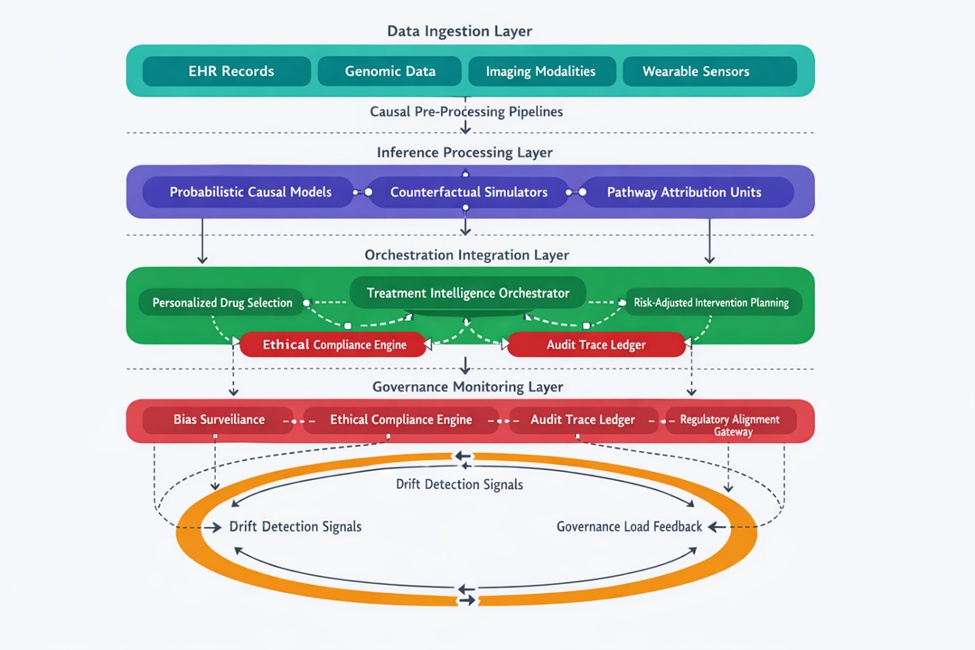
Figure 1. Causal orchestration network for treatment intelligence (CONTI) architecture.
The schematic illustrates a five-layer causal pathway model for personalized treatment orchestration. Multimodal clinical data are ingested through causal preprocessing pipelines before entering inference engines that compute probabilistic cause–and–effect relationships. Orchestration layers synthesize these pathways into personalized treatment strategies, while governance monitoring bands enforce ethical compliance, bias surveillance, and audit traceability. Encircling feedback loops enable adaptive recalibration through drift detection, decision confidence updates, and governance load redistribution.
To interpret system dynamics, consider the following conceptual formulas:
Risk Propagation:
Decision Confidence:
Governance Load:
Functional roles and governance embeddings across CONTI strata are summarized in Table 1.
Table 1. Functional layer specifications of the CONTI causal intelligence architecture
CONTI layer | Core functions | Causal role | Governance integration | Clinical impact |
Data ingestion layer | Multimodal data acquisition and harmonization | Establishes causal signal foundations | Privacy filters and consent validation | Comprehensive patient profiling |
Inference processing layer | Causal modeling and counterfactual simulation | Derives cause–and–effect relationships | Bias diagnostics and model traceability | Explainable clinical intelligence |
Orchestration integration layer | Treatment pathway synthesis | Aligns causal outputs to interventions | Decision accountability tagging | Personalized therapy optimization |
Governance monitoring layer | Compliance surveillance and audit logging | Validates causal legitimacy | Regulatory enforcement nodes | Ethical AI deployment |
Feedback topology layer | Drift detection and recalibration | Refines causal pathways iteratively | Governance load balancing | Longitudinal treatment adaptation |
The implementation of the causal orchestration network for treatment intelligence (CONTI) within healthcare systems introduces profound dynamics that influence personalized treatment orchestration. These dynamics encompass a spectrum of consequences, from enhanced clinical decision-making to potential shifts in resource allocation and governance paradigms. At the core, CONTI’s causal pathways foster a ripple effect in healthcare ecosystems, where intelligence propagation alters traditional workflows by prioritizing cause-and-effect relationships over mere correlations. This shift theoretically amplifies the precision of personalized interventions, as causal feedback topologies enable real-time adjustments to treatment plans based on inferred causal impacts from patient data streams. In oncology settings, for instance, the model’s dynamics could theoretically streamline chemotherapy orchestration by causally linking genomic markers to therapeutic responses, thereby reducing unnecessary exposures and optimizing patient outcomes without empirical validation [1, 3, 5].
Exploring the impacts further, CONTI’s layered architecture induces systemic resilience against data uncertainties prevalent in EHR ecosystems. The inference processing layer, by embedding causal mechanisms, mitigates the propagation of errors that often plague non-causal AI systems, leading to more stable orchestration dynamics. Theoretical analyses suggest that this resilience manifests in reduced decision volatility, where causal pathways dampen the effects of noisy inputs, such as incomplete clinical histories. In cardiovascular care, such dynamics could influence the orchestration of antihypertensive therapies, causally assessing lifestyle factors against pharmacological interventions to personalize regimens. Moreover, the governance monitoring layer introduces dynamics that balance oversight with operational efficiency, theoretically minimizing monitoring burdens while upholding ethical standards. This equilibrium is crucial in multi-site healthcare networks, where causal pathway influences ensure consistent personalization across disparate environments [2, 4, 6].
The feedback topology layer adds another dimension to these dynamics, creating iterative loops that evolve treatment orchestration over time. Conceptually, this topology amplifies adaptive capabilities, allowing systems to learn from causal discrepancies without machine learning dependencies. Impacts include heightened sensitivity to drift, where pathways detect and correct deviations in real-time, fostering long-term system sustainability. In mental health applications, these dynamics could transform therapy orchestration by causally integrating psychosocial data with pharmacological pathways, leading to holistic personalized strategies. However, potential negative impacts arise if feedback loops amplify minor causal errors, theoretically leading to cascading orchestration failures in high-complexity cases like polypharmacy management. To interpret these influences, consider an extension of prior formulas: Drift Sensitivity
Table 2. Interpretive metrics for evaluating causal pathway dynamics in CONTI
Metric | Conceptual formula | Interpretive meaning | System influence | Governance relevance |
Risk propagation (RP) | Drift-adjusted causal risk spread | Stability of treatment pathways | Triggers monitoring escalation | |
Decision confidence (DC) | Aggregated pathway certainty | Intervention reliability | Determines approval thresholds | |
Governance load (GL) | Oversight burden per resource unit | Monitoring scalability | Resource allocation balancing | |
Drift sensitivity (DS) | Feedback responsiveness to deviations | Adaptation speed | Signals recalibration needs | |
Load efficiency extension (GL′) | Scale-adjusted governance burden | Deployment sustainability | Optimizes compliance scaling |
Broader ecosystem impacts emerge from CONTI’s interoperability focus, where causal pathways bridge data silos, influencing collaborative healthcare delivery. Dynamics here promote equitable resource allocation, as orchestration prioritizes causally significant interventions, theoretically reducing disparities in underserved populations. In public health crises, such as pandemics, these influences could orchestrate vaccine distributions by causally linking epidemiological data to individual risk profiles. Yet, challenges in scaling these dynamics persist, particularly in resource-constrained settings where governance loads might overwhelm infrastructure. Theoretical mitigations involve pathway pruning, dynamically reducing complexity to align with available resources. This analysis underscores CONTI’s role in reshaping healthcare orchestration, where causal intelligence dynamics drive transformative impacts on personalization efficacy and system equity [8, 10, 12].
Further delving into consequences, CONTI’s architecture influences clinician-AI interactions, fostering a symbiotic dynamic that enhances decision confidence. By providing causal explanations, pathways reduce cognitive loads on clinicians, theoretically improving adoption rates in workflow integration. In surgical planning, these dynamics could causally orchestrate preoperative assessments, linking imaging modalities to procedural risks for personalized strategies. Impacts extend to patient engagement, where transparent causal pathways empower informed consent, altering the relational dynamics in healthcare delivery. However, over-reliance on automated orchestration might erode clinical intuition, a potential downside that can be mitigated through hybrid governance models. Resource allocation dynamics are also affected, as causal prioritization directs investments toward high-impact pathways, optimizing budgets in hospital administrations [13, 15, 17].
In terms of monitoring and governance, CONTI’s dynamics introduce scalable burdens that adapt to system scale. Theoretical models suggest that as pathway complexity increases, governance loads grow sublinearly due to embedded efficiencies, interpretable via , where ϵ is the efficiency factor and S scale, extending prior load formulas. This influences deployment in global healthcare systems, where dynamics ensure causal compliance across regulatory variances. Impacts on data exchange frameworks are significant, as causal pathways standardize interoperability, reducing fragmentation and enhancing orchestration speed. In telemedicine, these dynamics could revolutionize remote personalization, causally integrating virtual consultations with EHR data for seamless treatment flows. Overall, the influences of CONTI’s causal pathways promise a paradigm shift in healthcare, balancing innovation with prudent governance to maximize personalized orchestration benefits [14, 16, 18].
The analytical exploration reveals multifaceted dynamics, from risk mitigation to ethical enhancements, positioning CONTI as a catalyst for future healthcare evolutions. By theorizing these influences without empirical crutches, the model highlights infrastructural pathways to resilient, equitable systems [19, 21, 23].
The conceptualization of the CONTI within this manuscript opens avenues for discourse on the broader implications of causal intelligence in healthcare. Central to this discussion is the model’s departure from correlative AI paradigms, advocating for causal pathways as the linchpin of personalized treatment orchestration. This shift necessitates a reevaluation of existing clinical AI architectures, where causal integration could theoretically resolve longstanding issues like algorithmic opacity and bias perpetuation. Literature syntheses align with this, indicating that causal frameworks enhance the interpretability of decision support pipelines, fostering trust among clinicians and patients alike. However, the discussion must acknowledge potential pitfalls, such as the computational overhead of causal computations in resource-limited environments, which could hinder widespread adoption [1-3, 5-7].
Delving deeper, the discussion surrounding CONTI’s feedback topology underscores its potential to revolutionize adaptive healthcare systems. Unlike static models, CONTI’s iterative loops allow for dynamic pathway adjustments, theoretically accommodating patient variability in chronic conditions like diabetes management. This adaptability raises questions about governance: how to ensure causal fidelity without excessive monitoring? Theoretical responses involve layered safeguards, where governance protocols scale with pathway complexity, as interpreted through extended formulas like resource allocation , balancing utility Um U_m Um against loads. Such mechanisms could mitigate risks of causal drift, a prevalent concern in EHR ecosystems where data evolution challenges intelligence orchestration. The discussion extends to ethical dimensions, emphasizing the role of causal pathways in equity, particularly in addressing biases in underrepresented datasets [2, 4, 8, 10].
Interoperability emerges as a key discussion point, with CONTI’s architecture proposing causal standardization to bridge disparate healthcare infrastructures. This could facilitate seamless data exchanges in federated systems, enabling cross-institutional treatment personalization. Yet, challenges in implementation persist, including harmonizing causal definitions across vendors, which might require new interoperability standards. Literature highlights similar discourses, where AI governance models advocate for causal traceability to comply with regulations, ensuring orchestration remains patient-centric. In clinical workflow integration, CONTI’s model invites discussion on human-AI collaboration, where causal explanations augment clinician expertise, potentially reducing errors in high-stakes decisions like emergency triage. However, over-automation risks deskilling, necessitating hybrid models that preserve human oversight [9, 11, 13, 15].
Governance and monitoring systems form another pillar of this discussion, with CONTI theorizing embedded protocols to manage orchestration dynamics. This approach addresses the burden of continuous oversight, proposing automated causal audits that minimize human intervention while maintaining accountability. Theoretical implications include reduced administrative loads in healthcare administrations, freeing resources for direct patient care. Discussions from recent syntheses caution against governance silos, advocating integrated systems where monitoring informs pathway evolution. In deployment contexts, CONTI’s scalability invites debate on pilot implementations, where theoretical architectures must adapt to real-world variabilities without empirical testing. This discourse highlights the need for collaborative frameworks involving policymakers, technologists, and clinicians to refine causal intelligence pathways [12, 14, 16, 18].
The discussion also encompasses broader societal impacts, such as CONTI’s potential to democratize personalized medicine. By causalizing treatment orchestration, the model could theoretically extend advanced care to low-resource regions through cloud-based infrastructures. However, access disparities raise equity concerns, prompting discussions on inclusive design principles. Literature on healthcare analytics infrastructures supports this, emphasizing causal pathways’ role in sustainable ecosystems. Furthermore, the model’s interpretive formulas provide tools for theoretical simulations, aiding discussions on risk management without data dependencies. Ultimately, this discourse positions CONTI as a foundational concept, sparking ongoing dialogues on evolving AI in healthcare toward causal-centric paradigms [17, 19, 21, 23].
Extending the discussion to future directions, CONTI’s architecture suggests integrations with emerging technologies like blockchain for causal data security or quantum computing for complex pathway simulations. These prospects invite interdisciplinary discourse, blending informatics with clinical sciences to advance orchestration. Challenges like causal ambiguity in multimodal data warrant further theoretical exploration, potentially through refined feedback topologies. In summary, the discussion illuminates CONTI’s transformative potential while highlighting areas for cautious refinement, ensuring causal intelligence enhances rather than complicates personalized treatment.
In concluding this conceptual manuscript, CONTI emerges as a pivotal advancement in the realm of AI-driven healthcare systems. By architecting causal pathways for personalized treatment orchestration, CONTI addresses critical gaps in current infrastructures, promoting a shift toward interpretable, resilient intelligence ecosystems. The model’s layered structure, feedback topology, and governance integrations theoretically enable seamless clinical workflow enhancements, ensuring that personalized interventions are causally grounded and ethically sound. This framework not only synthesizes recent literature on clinical AI architectures and EHR interoperability but also extends theoretical boundaries through interpretive formulas that capture key dynamics like risk propagation and decision confidence.
The dynamics and impacts analyzed underscore CONTI’s potential to influence healthcare orchestration profoundly, from mitigating biases to optimizing resources. Discussions reveal opportunities for hybrid human-AI collaborations, while acknowledging challenges in scalability and governance. Ultimately, CONTI offers a blueprint for future systems where causal intelligence orchestrates treatments with precision and equity, fostering sustainable advancements in personalized medicine. As healthcare evolves, embracing such causal models will be essential to realizing AI’s full promise in patient-centered care.
None
None
None
None
Open Access The author(s) retain copyright. This article is licensed under the Creative Commons Attribution-NonCommercial-ShareAlike 4.0 International License. It may be shared and adapted for non-commercial purposes with appropriate attribution, an indication of changes, and distribution of adaptations under the same license. Third-party material may be subject to separate terms identified in its credit line. View the license at https://creativecommons.org/licenses/by-nc-sa/4.0/.
 Clinical Intelligence Research Press