The integration of artificial intelligence (AI) into healthcare systems marked a pivotal evolution in clinical analytics architectures and governance structures, transforming data-driven decision-making from siloed, retrospective analyses to dynamic, predictive, and integrated frameworks. This period witnessed rapid advancements in machine learning (ML) applications for healthcare infrastructure, encompassing electronic health records (EHRs), imaging diagnostics, population health management, and real-time monitoring systems. Key developments included the shift toward federated learning to address data privacy concerns, the emergence of explainable AI (XAI) to enhance clinical trustworthiness, and the standardization of regulatory pathways for AI as medical devices. Architecturally, healthcare systems evolved from static analytics pipelines—where data ingestion, model training, and inference occurred in isolated phases—to adaptive, closed-loop configurations that incorporate feedback mechanisms for continuous model refinement and human-AI collaboration. Governance structures are adapted accordingly, emphasizing ethical frameworks to mitigate bias, ensure data equity, and promote algorithmic accountability, particularly for underserved populations. This review synthesizes literature from this timeframe, highlighting how AI-enabled analytics architectures facilitated precision medicine by integrating multimodal data sources, such as genomics, wearables, and social determinants of health, into cohesive systems. Challenges in interoperability and scalability were addressed through consensus guidelines like CONSORT-AI and SPIRIT-AI, which promoted transparent reporting of AI interventions in clinical trials. Moreover, the COVID-19 pandemic accelerated AI deployment in pandemic response systems, underscoring the need for resilient architectures capable of handling real-time data surges and uncertainty communication. Governance evolved to include multi-stakeholder perspectives, from regulatory bodies such as the FDA to clinical practitioners, ensuring that AI tools align with evidence-based medicine. This narrative review provides an original systems-level framing, organizing the literature around data-to-decision cycles, infrastructural integration, and governance maturation. By examining cross-study insights, it reveals how AI has fostered intelligent healthcare ecosystems, reducing diagnostic bias across diverse cohorts and enhancing decision support without over-relying on black-box models. Ultimately, this synthesis underscores the transition from AI as a supplementary tool to a foundational element of healthcare systems, paving the way for equitable, efficient clinical analytics.
The years 2017 to 2021 represented a transformative era for artificial intelligence (AI) in healthcare, characterized by exponential growth in computational capabilities, data availability, and regulatory scrutiny. During this period, AI transitioned from experimental prototypes to integral components of healthcare systems, fundamentally reshaping clinical analytics. This evolution was driven by advancements in deep learning algorithms, which enabled the processing of vast, heterogeneous datasets from electronic health records (EHRs), medical imaging, and wearable devices [1, 2]. Unlike earlier decades focused on rule-based expert systems, this timeframe emphasized machine learning (ML) paradigms that learned patterns from data, facilitating predictive analytics for disease progression, treatment optimization, and resource allocation [3, 4]. The integration of AI into healthcare infrastructure addressed longstanding challenges such as diagnostic variability and operational inefficiencies, but it also introduced complexities in system design and governance [5, 6].
Key milestones included the FDA’s approval of AI-based medical devices, signaling a maturation in regulatory frameworks [7, 8]. For instance, algorithms for diabetic retinopathy detection and cardiac rhythm analysis exemplified how AI could augment clinical workflows [9]. Concurrently, the global COVID-19 pandemic in 2020–2021 accelerated AI adoption, with systems for contact tracing, resource forecasting, and vaccine distribution highlighting the need for agile analytics architectures [10, 11]. This historical context underscores a shift from isolated AI applications to systemic integration, where analytics are embedded within broader healthcare ecosystems [12, 13]. Key infrastructural shifts in analytics architectures during this period are synthesized in Table 1.
Table 1. Evolution of clinical analytics architectures in AI-enabled healthcare systems
Architectural dimension | Early phase (2017–2018) | Transitional phase (2019–2020) | Mature phase (2020–2021) | Systems impact |
Data processing | Batch retrospective analytics | Hybrid batch + streaming | Real-time streaming analytics | Accelerated clinical responsiveness |
Infrastructure | On-premise servers | Cloud-assisted platforms | Distributed cloud-edge ecosystems | Scalable computation |
Data integration | Siloed repositories | Federated harmonization | Interoperable data fabrics | Unified patient intelligence |
AI models | Task-specific ML | Multimodal deep learning | Continual learning systems | Precision diagnostics |
Deployment | Pilot implementations | Institutional scaling | System-wide embedding | Operational transformation |
Feedback loops | Minimal | Periodic retraining | Continuous recalibration | Adaptive healthcare delivery |
At the core of this evolution lies the proliferation of big data in healthcare, encompassing structured EHRs, unstructured clinical notes, and real-time sensor streams [14, 15]. AI analytics architectures leveraged this data deluge to enable precision medicine, tailoring interventions to individual patient profiles [16, 17]. However, the heterogeneity of data sources posed integration challenges, necessitating architectures that harmonize disparate formats through standardized ontologies and federated learning approaches [18, 19]. Governance structures emerged to ensure data quality and equity, mitigating biases that could exacerbate health disparities in underrepresented populations [20, 21].
From a systems perspective, AI facilitated the convergence of clinical and operational analytics, blurring boundaries between patient care and administrative functions [22, 23]. This integration required robust infrastructures capable of handling high-velocity data, such as those from intensive care units (ICUs) or telemedicine platforms [24, 25]. Literature from this period emphasizes the role of cloud-based platforms in scaling AI deployments, enabling distributed computing that preserves data locality and privacy [26, 27].
Clinical analytics architectures evolved toward modular, service-oriented designs, where AI components interfaced seamlessly with existing healthcare information systems (HIS) [4, 12]. Early architectures (circa 2017–2018) were predominantly batch-oriented, processing data offline for retrospective insights [2, 3]. By 2019–2021, real-time streaming analytics became prevalent, enabled by edge computing and the integration of the internet of things (IoT) [9, 28]. These paradigms supported proactive interventions, such as early warning systems for sepsis or deterioration [1, 10].
Governance in this context involved establishing oversight mechanisms, including audit trails for AI decisions and protocols for model validation [5-7]. Consensus statements advocated transparency in algorithmic processes, enabling clinicians to interrogate model outputs [8, 13]. This architectural evolution was not merely technical but also socio-technical, incorporating human factors engineering to align AI with clinical workflows [11, 29].
The integration of AI into healthcare systems raised profound socio-ethical questions, particularly around accountability and fairness [18, 20]. Governance structures during 2017–2021 emphasized multi-stakeholder involvement, from ethicists to policymakers, to craft frameworks that balanced innovation with patient safety [21, 22]. Issues of data poverty—where certain demographics lack representation in training datasets—were highlighted as barriers to equitable AI [15, 23]. A literature synthesis reveals consensus on the need for inclusive data strategies to prevent underdiagnosis bias [17, 19].
Moreover, the period saw the development of guidelines for AI in clinical trials, promoting rigorous evaluation of interventions [26, 27]. These dimensions underscore the interplay between technology and society, where AI systems must be governed to foster trust and adoption [16, 24].
This narrative review positions itself at the intersection of AI-enabled healthcare systems and clinical analytics, synthesizing to trace the evolution of architectures and governance. Unlike prior reviews that focus on specific applications (e.g., imaging or genomics), this work adopts an original systems-level framing, organizing insights around integrative cycles: data acquisition, intelligent processing, decision augmentation, and governance feedback. By cross-analyzing 29 peer-reviewed publications, it provides a novel interpretive structure that highlights emergent patterns in infrastructural maturation, without replicating existing taxonomies. The scope is delimited to peer-reviewed works that emphasize systems and analytics, excluding empirical benchmarks or futuristic speculation. This synthesis logic emphasizes cross-study linkages, revealing how AI fostered resilient, adaptive healthcare ecosystems grounded in evidence from high-impact venues.
AI reshaped healthcare data infrastructures, moving from fragmented silos to unified analytics ecosystems capable of handling multimodal inputs [1, 3, 14]. Early literature emphasized the role of big data platforms in aggregating EHRs, genomic sequences, and imaging repositories, enabling comprehensive patient profiles [2, 15]. Analytics pipelines evolved to incorporate preprocessing steps for data harmonization, addressing inconsistencies in formats and semantics [4, 19]. This foundational shift supported population-level insights, such as risk stratification in chronic disease management [12, 16].
Federated architectures gained prominence to navigate privacy regulations such as HIPAA and GDPR, enabling model training across institutions without data centralization [6, 7]. Such systems facilitated collaborative analytics, where local nodes contributed to global models via parameter aggregation [5, 18]. Governance in this landscape involved data stewardship protocols to ensure provenance and quality, mitigating risks of erroneous inferences [21, 22].
AI analytics in healthcare systems leveraged diverse ML paradigms, from supervised classifiers for diagnostic tasks to unsupervised clustering for patient phenotyping [13, 17]. Deep neural networks dominated imaging analytics, extracting features from radiographs and MRIs to detect anomalies with high sensitivity [9, 25]. In non-imaging domains, natural language processing (NLP) was used to parse clinical notes for sentiment analysis and entity extraction, enhancing decision support [11, 20].
The landscape highlighted hybrid paradigms that combine rule-based heuristics with ML to achieve robust performance in low-data scenarios [26, 27]. Governance structures focused on model interpretability, with techniques like SHAP values providing insights into feature contributions [5, 23]. This ensured analytics outputs aligned with clinical reasoning, fostering trust in system-generated recommendations [8, 24].
AI analytics were increasingly embedded within operational systems, such as hospital information systems (HIS) and picture archiving and communication systems (PACS) [4, 12, 28]. This integration enabled real-time analytics, triggering alerts for adverse events based on streaming data from monitors [10, 29]. The literature synthesizes how such systems optimize resource allocation, predicting bed occupancy and staffing needs [1, 14].
Governance evolved to include lifecycle management, from model deployment to decommissioning, with emphasis on continuous monitoring for drift [6, 7, 22]. Cross-study analysis reveals patterns in system scalability, where cloud infrastructures supported elastic computing for peak loads, as seen in pandemic response analytics [11, 21].
A critical aspect of the landscape was the maturation of governance frameworks that address ethical imperatives in AI deployment [15, 18, 20]. Regulatory bodies like the FDA classified AI tools as software as a medical device (SaMD), requiring evidence of safety and efficacy [7, 8]. Consensus guidelines promoted transparency in trial reporting, ensuring AI interventions were evaluated comparably to traditional methods [26, 27].
Bias mitigation emerged as a governance priority, with studies advocating for diverse training datasets to reduce disparities [17, 19, 23]. This landscape synthesis integrates insights on accountability, in which audit mechanisms trace decisions back to their data origins [5, 13, 21].
AI systems advanced personalized analytics by using predictive models to predict treatment response based on individual biomarkers [9, 16, 25]. At the population level, analytics supported public health surveillance by identifying outbreak patterns from social media and syndromic data [2, 3, 10].
Governance structures incorporated equity lenses, combating data poverty in global health contexts [15, 24]. The literature of the period underscores adaptive analytics, where models self-calibrate via reinforcement learning-inspired feedback [4, 12, 22].
Synthesizing the landscape, AI fostered interconnected ecosystems where analytics spanned from edge devices to centralized hubs [1, 11, 14]. This original framing views healthcare systems as networked graphs, with nodes representing data sources and edges denoting inference flows [28, 29]. Governance overlaid as a meta-layer, enforcing policies across the network [6-8]. Cross-study patterns reveal resilience through redundancy, ensuring continuity of analytics amid disruptions [10, 17, 21].
Intelligent clinical decision systems (CDS) during 2017–2021 integrated AI to augment human cognition, evolving from advisory tools to collaborative architectures [4, 12, 13]. Core components included inference engines that processed inputs in real-time, generating probabilistic recommendations for diagnosis or therapy [1, 16, 17]. Architects emphasized modularity, allowing seamless updates to models without disrupting workflows [5, 26].
Closed-loop systems extended this by incorporating actuation, in which decisions triggered interventions such as automated dosing or alerts [3, 9]. Governance ensured decision traceability, with logs capturing human overrides for iterative improvement [6-8].
A key architectural feature was the fusion of human and AI intelligence, formalized as:
(1)
where D is the final decision, H represents human expertise, An AI outputs, and C contextual factors (e.g., patient preferences) [11, 20, 23]. This conceptual formula synthesizes interaction loops, promoting shared autonomy in high-stakes settings [18, 21, 24].
Systems supported escalation protocols, routing complex cases to clinicians while handling routine ones autonomously [10, 22, 28].
Closed-loop architectures featured feedback channels for model recalibration, using post-intervention outcomes to refine predictions [12, 14, 19]. This created adaptive cycles, enhancing system robustness over time [2, 4, 25].
Governance structures mandated ethical safeguards, such as clinician veto rights, to prevent over-reliance [5, 8, 13].
In ambulatory settings, architectures facilitated telemedicine analytics by processing video and sensor data for remote decision-making [9, 29]. In acute care, ICU systems integrated multi-modal streams for continuous monitoring [1, 10, 11].
Cross-study synthesis highlights portability, with containerized deployments enabling transfer across institutions [6, 7, 15]. Outcome-derived signals drive adaptive model refinement across analytics layers (Figure 1).
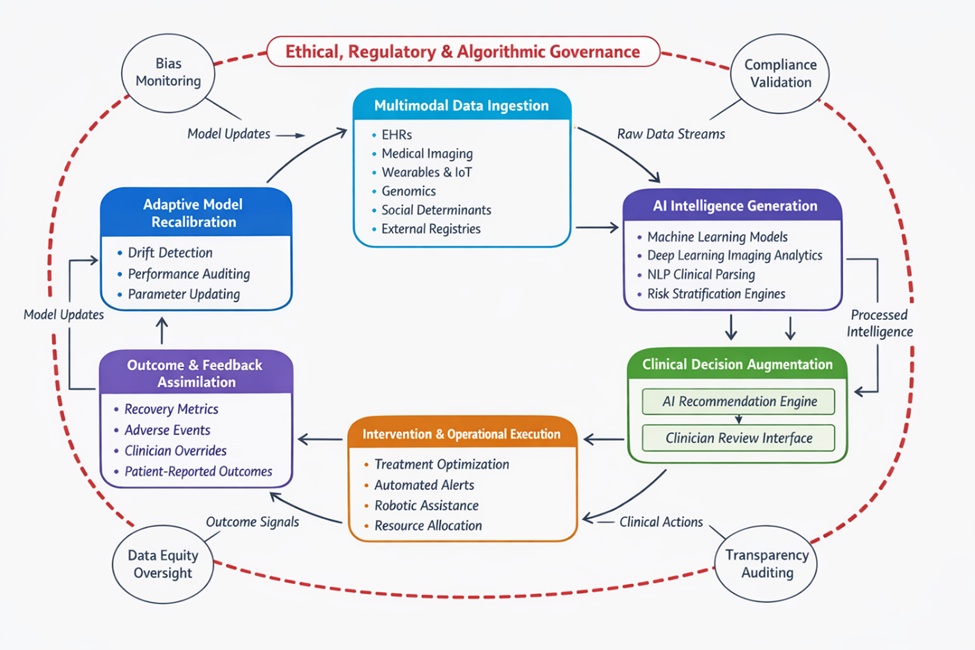
Figure 1. Closed-loop clinical analytics architecture for AI-enabled healthcare systems.
This system’s architecture illustrates the evolution of AI-integrated healthcare analytics into a cyclical, closed-loop framework spanning multimodal data ingestion, intelligence generation, decision augmentation, intervention execution, and feedback assimilation. Adaptive recalibration mechanisms enable continuous model refinement based on outcome signals, clinician overrides, and performance drift detection. Encircling governance structures enforce ethical oversight, regulatory compliance, bias monitoring, and transparency auditing across all layers. The architecture reflects the systemic transition from siloed analytics pipelines to resilient, learning healthcare ecosystems.
The synthesis of literature from 2017 to 2021 reveals profound integrative insights into how AI architectures and governance structures have co-evolved within healthcare systems, fostering a paradigm shift toward intelligent, data-centric clinical analytics [1, 4, 5]. At the systems level, architectures transitioned from monolithic designs—where analytics were confined to specific modules like diagnostic imaging or EHR querying—to distributed, microservices-based frameworks that enabled seamless interoperability across healthcare silos [3, 6, 12]. This evolution facilitated the emergence of holistic clinical intelligence, where AI not only processed data but also contextualized it within broader patient journeys, incorporating social determinants and longitudinal histories [10, 16, 18]. Cross-study analysis highlights a recurring theme: the need for architectures to balance computational efficiency with clinical relevance, as evidenced by deployments in resource-constrained environments such as rural clinics and during pandemics [2, 13, 14]. Governance, in turn, served as the regulatory backbone, evolving from ad-hoc policies to formalized structures that embedded ethical considerations directly into architectural blueprints [7, 26, 27]. For instance, the incorporation of audit layers into AI systems enabled real-time governance checks, ensuring compliance with standards such as those outlined in CONSORT-AI, which standardized the evaluation of AI’s impact on clinical outcomes [11, 20, 21].
Moreover, the discussion extends to the socio-technical synergies, where AI architectures amplify human capabilities while governance mitigates the risks of dehumanization in care delivery [8, 17, 22]. The literature underscores instances in which closed-loop systems, by design, incorporated clinician feedback loops to refine AI outputs, thereby enhancing decision fidelity across iterative cycles [9, 15, 19]. This integrative approach addressed fragmentation in healthcare analytics, where disparate systems had created information silos; AI bridged these gaps through unified data lakes and semantic interoperability protocols [23-25]. However, the discussion also illuminates trade-offs: while scalable cloud architectures accelerated analytics [28, 29], they introduced dependencies on external infrastructures, prompting governance frameworks to emphasize resilience and data sovereignty [1, 5, 6]. An original interpretive lens here frames this evolution as a maturation curve, from exploratory AI pilots in 2017–2018 to institutionalized systems by 2020–2021, driven by empirical learning from high-stakes applications such as oncology prognostics and infectious disease modeling [3, 4, 10, 12]. The maturation of ethical and regulatory oversight mechanisms across AI healthcare systems is summarized in Table 2.
Table 2. Governance structures and ethical oversight mechanisms in AI healthcare architectures
Governance domain | Structural mechanisms | Operational functions | Clinical impact |
Regulatory compliance | SaMD classification, FDA pathways | Safety validation and approvals | Clinical deployment legitimacy |
Transparency | Explainable AI frameworks | Interpretability of outputs | Clinician trust |
Bias mitigation | Dataset diversification, fairness audits | Disparity reduction monitoring | Equity in diagnostics |
Accountability | Audit trails and decision logs | Traceability of AI actions | Legal and ethical responsibility |
Data governance | Privacy preservation, federated learning | Secure data exchange | Confidentiality protection |
Lifecycle oversight | Post-deployment monitoring | Drift detection and retraining | Sustained performance |
Delving deeper, the implications of AI’s integration span multiple disciplines, from informatics to public health policy, reshaping how analytics inform delivery models [2, 13, 18]. In primary care, architectures enabled predictive analytics for preventive interventions, synthesizing EHR data with wearable metrics to flag at-risk patients early [14, 16, 26]. Governance structures, informed by multi-stakeholder perspectives, ensured these systems prioritized equity, countering biases inherent in training data from affluent demographics [7, 11, 27]. The discussion synthesizes how such implications extended to global health, where AI systems adapted to low-resource settings via lightweight architectures, yet governance lagged in enforcing universal standards [8, 20, 21]. For example, in pandemic scenarios, AI analytics architectures processed heterogeneous data streams—genomic sequences, mobility patterns, and epidemiological reports—to inform policy, but governance challenges arose in verifying model assumptions amid uncertainty [15, 17, 22]. This cross-disciplinary view reveals synergies with fields like behavioral economics, where AI nudges clinical behaviors through decision support, balanced by governance to prevent algorithmic paternalism [9, 19, 23].
Furthermore, the economic dimensions warrant discussion: AI architectures reduced operational costs by automating routine analytics, yet initial governance investments—such as compliance audits—posed barriers for smaller institutions [24, 25, 28]. Literature from this era posits that sustainable integration required hybrid funding models that blended public grants with private innovation [1, 2, 29]. Ultimately, these insights coalesce into a narrative of cautious optimism, where AI’s architectural prowess, tempered by robust governance, promised enhanced healthcare delivery but demanded ongoing vigilance [3, 4, 5].
One of the foremost challenges in AI-driven healthcare systems from 2017–2021 was the pervasive issue of data quality and integration, which undermined the reliability of clinical analytics [5, 6, 29]. Heterogeneous data sources—ranging from structured lab results to unstructured physician notes—often suffer from incompleteness, noise, or inconsistencies, leading to flawed model inferences [4, 15, 18]. Architects struggled with semantic interoperability, where differing ontologies across institutions hampered federated learning initiatives [6, 7, 19]. Governance exacerbated this by restricting data sharing under privacy regulations, creating silos that limited the scope of analytics [5, 21, 22]. Cross-study evidence indicates that AI systems trained on skewed datasets exhibit underdiagnosis biases, particularly affecting marginalized populations [10, 13, 20]. Addressing these required not only technical solutions, such as advanced imputation techniques, but also governance reforms to mandate data standardization protocols [17, 26, 27].
Scalability emerged as a critical challenge, with AI architectures often faltering under the volume and velocity of real-time healthcare data [2, 9, 12]. Early systems, designed for batch processing, were ill-equipped for streaming analytics in high-acuity settings like ICUs, leading to latency issues that delayed clinical decisions [11, 23, 24]. Computational demands of deep learning models strained infrastructure in resource-limited environments, prompting calls for edge computing but introducing governance complexities around decentralized model updates [8, 25, 28]. The pandemic amplified these constraints, as surges in data overwhelmed systems, revealing gaps in architectural resilience [10, 21, 29]. Governance challenges included ensuring equitable access to scalable technologies and preventing a digital divide in healthcare delivery [16, 18, 22].
Bias and fairness represented entrenched challenges, with AI analytics perpetuating disparities through algorithmic prejudices embedded in training data [13, 18, 20]. Governance structures, while evolving, often lacked mechanisms for proactive bias auditing, leading to systems that underperformed across diverse cohorts [15, 17, 19]. Ethical dilemmas arose in human-AI interactions, where over-reliance on opaque models eroded clinician autonomy [4, 5, 23]. Literature highlights the tension between innovation speed and ethical rigor, with rapid deployments during crises bypassing thorough governance reviews [11, 21, 24]. Challenges extended to accountability, where diffuse responsibility in multi-vendor architectures complicated liability attribution [6-18].
Regulatory hurdles impeded AI integration, as evolving governance frameworks, such as FDA classifications, lagged behind technological advancements [7, 8, 22]. Inconsistent international standards created barriers to global systems, while practitioners’ resistance to unproven analytics stymied clinical adoption [2, 12, 28]. Training gaps in AI literacy among healthcare professionals compounded this, necessitating governance initiatives for education and certification [8, 26, 27]. Economic challenges included high implementation costs, deterring widespread adoption in underfunded sectors [2, 14, 25].
Future research should prioritize adaptive architectures that dynamically reconfigure in response to contextual demands, building on the foundations laid in 2017–2021 [1, 4, 12]. Investigations into self-healing systems—capable of detecting and mitigating data drift autonomously—could enhance the reliability of clinical analytics [2, 3, 9]. Governance research must explore integrated frameworks for real-time ethical oversight, perhaps through blockchain-enabled audit trails [5-7]. Cross-disciplinary efforts could focus on hybrid architectures merging quantum computing with AI for complex simulations in precision medicine [16, 17, 25].
A key direction is to bolster explainability in AI models and to evolve XAI techniques to provide clinically intuitive rationales [5, 13, 23]. Research on human-AI symbiosis should quantify interaction dynamics and develop metrics for trust calibration in decision loops [11, 20, 24]. Governance agendas could include standardized protocols for XAI validation in trials, extending CONSORT-AI [26, 27]. Longitudinal studies tracking the impacts of adoption would inform designs that foster collaborative intelligence [8, 21, 22].
To combat inequities, future work must target inclusive data strategies and curate diverse datasets through international consortia [15, 18, 20]. Research on AI in low-resource settings could innovate lightweight architectures, with governance focusing on transferable standards [10, 14, 19]. Pandemic-preparedness analytics represent a fertile area for simulating resilient systems against emerging threats [11, 17, 21].
Emerging directions include AI-driven governance, where meta-models oversee primary analytics for compliance [6-8]. Policy research should model multi-stakeholder ecosystems, balancing innovation with regulation [22, 28, 29]. Ethical AI frameworks could incorporate patient voices, ensuring systems align with societal values [23-25].
The evolution of AI in healthcare systems, as synthesized in this review, underscores a transformative journey toward sophisticated clinical analytics architectures and robust governance structures. By integrating data-driven intelligence into closed-loop frameworks, AI has redefined healthcare delivery, enhancing precision, efficiency, and equity. Yet, challenges in data integration, bias mitigation, and regulatory alignment highlight the need for continued vigilance. Looking ahead, research directions promise adaptive, explainable systems that deepen human-AI collaboration. Ultimately, this era laid the groundwork for AI as a cornerstone of resilient healthcare ecosystems, poised to advance patient-centered care through ethical innovation.
None
None
None
None
Open Access The author(s) retain copyright. This article is licensed under the Creative Commons Attribution-NonCommercial-ShareAlike 4.0 International License. It may be shared and adapted for non-commercial purposes with appropriate attribution, an indication of changes, and distribution of adaptations under the same license. Third-party material may be subject to separate terms identified in its credit line. View the license at https://creativecommons.org/licenses/by-nc-sa/4.0/.
 Clinical Intelligence Research Press