The integration of multimodal data sources in oncology, particularly imaging and electronic health records (EHRs), offers significant opportunities to advance precision medicine through sophisticated analytics architectures. This conceptual manuscript proposes a novel multimodal oncology integration framework (MOIF) to orchestrate seamless data fusion, analytical processing, and decision support within integrated imaging-EHR ecosystems. Drawing on theoretical foundations from clinical AI system architectures and healthcare analytics infrastructures, the framework emphasizes interoperability, governance, and monitoring to address challenges in data heterogeneity, privacy, and clinical workflow integration. By synthesizing recent literature on EHR intelligence ecosystems and decision support pipelines, we outline the architectural layers, including data ingestion, fusion, analytics, and feedback mechanisms, to enable real-time insights for oncology care. Conceptual formulas are introduced to model risk propagation, decision confidence, and governance load, providing interpretive tools for system dynamics. The architecture aims to enhance clinical decision-making by facilitating multi-modal data exchange and AI-driven analytics without empirical evaluations. Potential impacts include improved interoperability in oncology settings, reduced decision latency, and robust governance for deployment. This work contributes to the discourse on AI infrastructures in healthcare, offering a blueprint for future conceptual developments in integrated oncology ecosystems.
The advent of digital health technologies has transformed oncology practice, with multi-modal data sources becoming central to diagnostic and therapeutic strategies. Imaging modalities such as computed tomography (CT), magnetic resonance imaging (MRI), and positron emission tomography (PET) provide detailed anatomical and functional insights. At the same time, EHRs capture longitudinal patient histories, treatment responses, and outcomes. However, silos between these data streams hinder comprehensive analytics, necessitating integrated architectures that bridge the imaging and EHR ecosystems to enhance oncology care [1, 2]. This introduction explores the imperatives for such architectures, highlighting clinical, technical, and governance dimensions.
In contemporary oncology, imaging is a primary pillar of multimodal imaging, providing high-resolution data for tumor detection, staging, and monitoring. Advances in AI have enabled automated feature extraction from radiological images, but integration with EHRs remains fragmented, limiting holistic patient profiling [3, 4]. For instance, architectures that fuse PET-CT scans with EHR-derived biomarkers can theoretically enhance prognostic accuracy but require robust infrastructure to handle the volume and variety of data [5]. The ecosystem perspective emphasizes interconnected systems where imaging data flows into analytical pipelines, informing real-time clinical decisions without isolated processing [6].
EHRs serve as repositories of structured and unstructured data, including lab results, medication histories, and clinical notes, essential for contextualizing imaging findings in oncology [7, 8]. Multi-modal fusion architectures must address interoperability challenges, such as standardized data exchange formats like HL7 FHIR, to enable seamless integration [9]. In oncology settings, EHR intelligence ecosystems can augment imaging analytics by incorporating patient-specific variables, reducing diagnostic ambiguities, and supporting personalized treatment pathways [10, 11]. Theoretical models suggest that layered architectures can mitigate data discrepancies, thereby fostering a unified analytics ecosystem [12].
Oncology workflows involve multidisciplinary teams relying on timely data access, where delays in imaging-EHR integration can impact decision latency [13, 14]. Conceptual architectures propose orchestration topologies that embed AI monitoring within workflows, ensuring data provenance and traceability [15]. By conceptualizing feedback loops, these systems can adapt to evolving clinical needs, such as adjusting analytics based on treatment efficacy recorded in EHRs [16]. This dynamic integration is crucial in high-stakes environments such as tumor boards, where multimodal insights drive consensus [17].
Deployment in real-world oncology settings demands scalable infrastructures resilient to heterogeneous data sources [18, 19]. AI governance frameworks are vital for overseeing model deployment and ensuring compliance with regulatory standards such as HIPAA for imaging and EHR data [20]. Conceptual designs must incorporate monitoring systems to detect drift in multi-modal inputs, preserving analytical integrity across hospital networks [21]. Interoperability frameworks, such as those that leverage cloud-based ecosystems, facilitate broader adoption and enable federated learning without central data aggregation [22].
Governance emerges as a core constraint in integrated imaging-EHR ecosystems, encompassing ethical use of AI, data privacy, and bias mitigation [23, 24]. In oncology, where decisions affect patient survival, architectures must include oversight mechanisms for AI-driven analytics, such as audit trails and explainability modules [25]. Theoretical syntheses highlight the need for lifecycle governance, from data ingestion to output validation, to build trust in multi-modal systems [26]. This ensures equitable access and minimizes disparities in oncology care delivery [27].
Innovative architectures promise to revolutionize oncology by creating cohesive ecosystems that leverage multi-modal data for proactive analytics [28, 29]. By prioritizing integration over isolation, these systems can theoretically optimize resource allocation and enhance decision support, paving the way for future advancements in precision oncology [30-32]. This manuscript advances a conceptual framework to address these pathways, grounded in literature and theoretical modeling.
The theoretical foundations of multi-modal oncology analytics architectures are anchored in the convergence of three historically distinct yet increasingly interdependent domains: clinical artificial intelligence (AI) systems engineering, healthcare analytics infrastructures, and electronic health record (EHR) intelligence ecosystems. Collectively, these domains form the epistemic substrate upon which contemporary oncology intelligence frameworks are conceptualized. Advances between 2017 and 2023 reflect a decisive shift from unimodal diagnostic modeling toward deeply integrated, multi-source intelligence environments capable of orchestrating heterogeneous oncology data streams. Rather than emphasizing empirical performance benchmarking alone, the literature increasingly prioritizes architectural coherence, governance embedding, and lifecycle sustainability—dimensions essential for clinical translation but historically under-theorized.
Clinical AI system architectures have undergone significant transformation to accommodate the intrinsic complexity of oncology data environments. Cancer care generates a uniquely dense constellation of diagnostic signals spanning radiology, digital pathology, genomic sequencing, laboratory biomarkers, and longitudinal clinical documentation. Foundational multimodal fusion research demonstrates that isolated analytic pipelines—whether imaging-centric or genomics-centric—fail to capture cross-modal interactions critical for precision oncology decision-making [17]. Consequently, layered multimodal architectures have emerged, designed to integrate radiologic imaging with genomic alterations, histopathological markers, and structured EHR variables within unified inferential topologies.
These architectures are frequently conceptualized as modular processing strata, where modality-specific encoders transform heterogeneous inputs into harmonized latent representations [8]. Such stratification enables scalable system growth, allowing oncology platforms to incorporate emerging modalities—such as radiomics or liquid biopsy data—without destabilizing existing analytic cores. Theoretical discourse emphasizes adaptability as a core design principle, recognizing that oncology knowledge evolves rapidly alongside therapeutic innovation.
Parallel to algorithmic advances, healthcare analytics infrastructures have matured to support the computational demands of multimodal oncology intelligence. The literature highlights the role of distributed, cloud-native platforms in orchestrating high-volume imaging repositories alongside EHR and omics datasets [10]. These infrastructures are conceptualized not merely as storage environments but as active computational fabrics enabling real-time analytic execution.
Standardization protocols form the backbone of such infrastructures. Imaging data are harmonized through DICOM schemas, while clinical terminologies leverage SNOMED-CT and related ontologies to ensure semantic consistency across institutional boundaries [29]. Theoretical models stress that without such standardization, multimodal fusion collapses under semantic misalignment, producing analytically coherent but clinically misleading outputs.
Cloud-enabled orchestration further supports elastic compute allocation, enabling oncology analytics pipelines to scale dynamically during peak diagnostic demand without compromising latency thresholds critical for treatment planning.
EHR intelligence ecosystems constitute a third theoretical pillar, providing longitudinal patient context essential for oncology analytics. Unlike imaging modalities that capture episodic snapshots, EHRs encode temporal disease trajectories—treatment regimens, comorbidities, adverse events, and markers of survivorship. Conceptual research explores semantic interoperability layers that align imaging findings with longitudinal patient histories, producing temporally contextualized diagnostic insights [1, 19].
AI-driven extraction pipelines are theorized to convert unstructured oncology narratives into structured knowledge graphs, enabling cross-modal reasoning. Decision support engines embedded within these ecosystems operate as feedback-responsive systems, iteratively refining their outputs through clinician validation loops [3, 15]. Hybrid intelligence models—blending symbolic reasoning with machine learning inference—are widely proposed to mitigate purely data-driven biases while preserving adaptability [7].
As oncology analytics architectures become increasingly complex, governance systems emerge as indispensable structural layers rather than peripheral oversight mechanisms. Literature underscores that multimodal AI introduces amplified risks—algorithmic bias, data drift, and modality imbalance—that can propagate silently across integrated pipelines [23, 24].
Governance models are therefore conceptualized as embedded supervisory envelopes comprising audit trails, validation checkpoints, and drift surveillance dashboards [21]. These monitoring systems employ anomaly detection to identify deviations in modality weighting, predictive calibration, or data fidelity. Importantly, governance is framed not as static compliance but as adaptive stewardship evolving alongside analytic systems.
Deployment frameworks further extend governance into infrastructural domains. Containerized architectures enable reproducible deployment across oncology centers, while federated learning topologies allow collaborative intelligence development without compromising patient privacy [30]. Such federated paradigms are particularly salient in oncology, where rare cancer datasets are institutionally fragmented yet analytically valuable.
Interoperability frameworks reinforce deployment governance through API-mediated data exchange, linking imaging archives with EHR repositories in standards-compliant ecosystems [9, 20].
Clinical workflow integration models complete the theoretical synthesis, addressing how multimodal intelligence is operationalized within oncology care pathways. Rather than positioning AI as an autonomous diagnostic authority, the literature consistently advocates for augmentation-centric paradigms in which AI outputs inform but do not supersede clinician judgment [13, 16].
Human-AI collaboration models conceptualize interpretive dashboards, confidence visualizations, and modality attribution maps that enhance clinician trust and situational awareness [25]. Automated multimodal fusion is theorized to reduce cognitive burden by consolidating disparate diagnostic signals into coherent decision narratives [22]. However, workflow theorists caution that poorly integrated analytics may introduce alert fatigue or interpretive overload, underscoring the necessity of ergonomic system design.
Across these domains, several unifying constructs recur:
Data fusion paradigms
Early, intermediate, and late fusion strategies are extensively debated within oncology analytics [17, 29].
Early fusion integrates raw multimodal inputs at the ingestion layers, which is advantageous for homogeneous datasets but computationally intensive.
Intermediate fusion aligns modality-specific feature embeddings within shared latent spaces.
Late fusion aggregates high-level predictions, preserving modality independence while enabling ensemble reasoning [8].
Each paradigm presents trade-offs in interpretability, scalability, and governance traceability.
2. Lifecycle governance theories
Governance literature extends beyond deployment into full lifecycle oversight, encompassing design validation, operational monitoring, model retraining, and eventual decommissioning [24]. Such lifecycle framing is critical in oncology, where evolving clinical guidelines can render analytic models obsolete rapidly.
3. Adaptive monitoring systems
Monitoring architectures are conceptualized as self-calibrating networks that employ anomaly detection and performance-drift analytics to preserve multimodal reliability [21].
4. Semantic interoperability frameworks
Ontology-driven mappings enable machine-interpretable alignment between imaging metadata and EHR ontologies, often leveraging semantic web technologies to sustain cross-institutional coherence [9].
5. Microservices & modular deployment
Microservices architectures dominate conceptual deployment models, enabling modular upgrades to imaging analytics, genomic interpreters, or decision engines without systemic downtime [30].
6. Orchestrated workflow topologies
Workflow theorists frequently employ orchestration metaphors, depicting AI as a “conductor” harmonizing multimodal diagnostic ensembles rather than acting as a solitary decision node [16].
Collectively, the synthesized literature converges on a consensus: effective oncology intelligence systems must transcend siloed analytic paradigms. Integrated multimodal fusion, embedded governance, interoperable infrastructures, and workflow symbiosis are no longer optional enhancements but foundational requirements.
Yet critical gaps remain. Existing conceptual models often address fusion, governance, or deployment in isolation rather than as co-evolving architectural strata. Few frameworks fully theorize how modality orchestration, lifecycle governance, and clinician interpretability can be simultaneously operationalized within a single systemic topology.
It is precisely within this unaddressed intersection—multi-modal orchestration under continuous governance—that the present manuscript positions its proposed framework, extending prior theoretical work into a unified architectural paradigm capable of sustaining scalable, interpretable, and ethically governed oncology intelligence.
This section delineates the Multi-Modal Oncology Integration Framework (MOIF), a novel conceptual architecture designed to orchestrate analytics within integrated imaging-EHR ecosystems. MOIF features a unique five-layer structure: Data Ingestion Layer for multi-modal input harmonization; Fusion Layer for feature alignment; Analytics Layer for inferential processing; Decision Support Layer for output generation; and Governance Layer for oversight. The feedback topology employs a bidirectional closed-loop mechanism, where analytics outputs inform data refinement and governance adjusts layers dynamically. The systemic topology of the proposed architecture, including layered intelligence processing and governance enveloping, is illustrated in Figure 1.
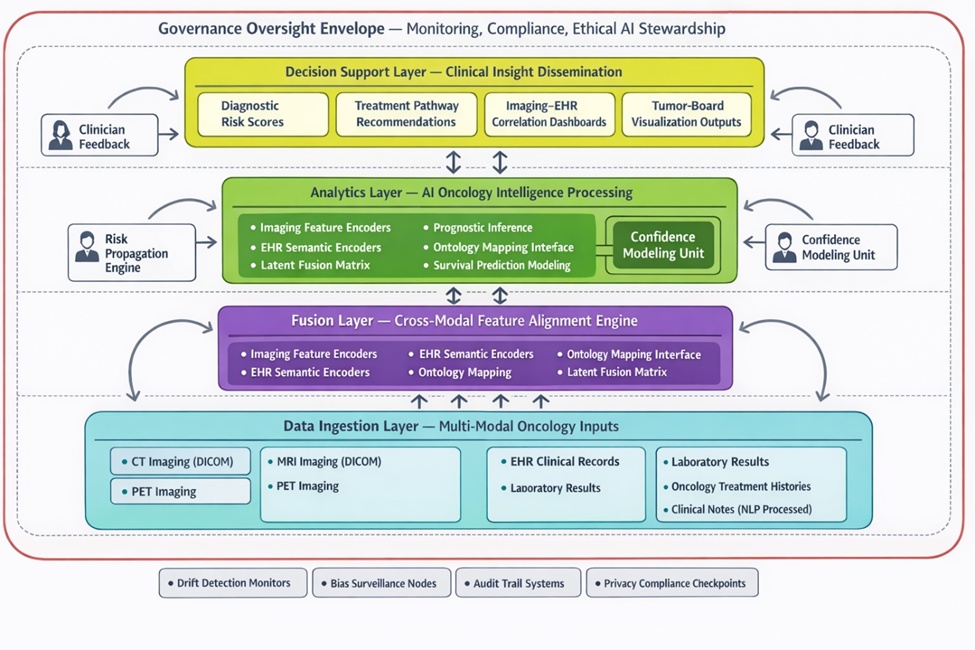
Figure 1. MOIF architecture for imaging–EHR ecosystems.
The conceptual architecture depicts a five-layer integrated oncology analytics system comprising multimodal data ingestion, cross-modal fusion, AI-driven analytics, and clinician-facing decision support, encapsulated within an overarching governance envelope. Imaging (CT, MRI, PET) and EHR streams converge via semantic fusion interfaces before undergoing inferential modeling to generate prognostic and diagnostic intelligence. Decision outputs are disseminated through interpretable dashboards, while embedded governance monitors ensure compliance, detect drift, and provide ethical oversight. Closed-loop feedback channels enable adaptive recalibration across analytical and infrastructural layers, supporting resilient deployment of oncology intelligence.
The functional stratification and governance embedding across architectural layers are detailed in Table 1.
Table 1. Functional layer characteristics of the MOIF
MOIF layer | Primary functions | Data modalities processed | Key AI/analytics processes | Governance controls | Clinical impact |
Data ingestion layer | Multimodal acquisition and harmonization | CT, MRI, PET, EHR records, labs, and clinical notes | Preprocessing, normalization, and NLP extraction | Data privacy filters and provenance tracking | Unified oncology data access |
Fusion layer | Cross-modal feature integration | Imaging radiomics + EHR semantics | Feature encoding, ontology mapping, and latent fusion modeling | Semantic validation and modality weighting audits | Enhanced diagnostic contextualization |
Analytics layer | Inferential intelligence generation | Fused multimodal datasets | Risk modeling, prognostic inference, and tumor heterogeneity analytics | Model drift monitoring and calibration review | Precision oncology insights |
Decision support layer | Clinical output dissemination | Analytical predictions and visualizations | Treatment optimization, modeling, and risk scoring dashboards | Explainability modules and clinician override logging | Improved decision accuracy |
Governance oversight layer | Lifecycle supervision and compliance | All architectural layers | Bias detection, performance auditing, and compliance analytics | Ethical AI review, regulatory adherence, and audit trails | Trustworthy AI deployment |
To interpret system dynamics, three conceptual formulas are introduced:
Risk propagation:
Decision confidence:
Governance load:
This infrastructure theoretically enables resilient, interoperable analytics for oncology care.
The implementation of the MOIF within integrated imaging-EHR ecosystems introduces a series of decision latency trade-offs that warrant detailed theoretical exploration. These trade-offs arise from the inherent tensions between computational efficiency, data fidelity, and clinical responsiveness in oncology settings, where timely decisions can significantly influence patient outcomes. By examining these dynamics through conceptual lenses, this section elucidates how architectural choices in MOIF impact operational workflows, resource utilization, and overall system resilience, drawing on theoretical syntheses from the literature to provide a nuanced understanding without empirical assertions.
At the foundational levels of MOIF, decision latency primarily stems from the ingestion and fusion of multi-modal data streams. Imaging data, characterized by high dimensionality and volume (e.g., volumetric CT scans), requires preprocessing steps such as normalization and artifact removal, which, in theory, extend processing times [2, 4]. Concurrently, EHR data introduces variability through unstructured elements like clinical notes, necessitating natural language processing integrations that could amplify latency if not optimized [1, 7]. The trade-off lies in balancing comprehensive fusion—merging imaging-derived tumor metrics with EHR-based comorbidity profiles—with streamlined pipelines that prioritize speed in urgent oncology scenarios, such as acute metastasis detection [3, 5]. Conceptual models suggest that early fusion strategies, while enhancing analytical depth, may increase latency by requiring synchronous data alignment, potentially delaying downstream decision support [17, 29]. In contrast, late fusion approaches could mitigate this by deferring integration, but at the risk of reduced contextual accuracy in oncology prognostics [8].
Governance dependencies exacerbate these latencies, as compliance checks (e.g., privacy audits via differential privacy mechanisms) must be embedded without halting data flow [23, 24]. Theoretical frameworks indicate that modular ingestion layers with parallel processing queues could reduce bottlenecks, yet this introduces synchronization complexities that might propagate delays across the ecosystem [9, 20]. For oncology ecosystems, where real-time imaging-EHR fusion is critical for intraoperative decisions, these trade-offs underscore the need for adaptive thresholding—dynamically adjusting fusion granularity based on clinical urgency [13, 16].
In the analytics and decision-support layers of MOIF, latency trade-offs shift toward higher computational intensity and more feedback iterations. AI-driven inferential processing, such as feature extraction from fused datasets, requires resource-intensive operations that can extend decision timelines [6, 11]. For instance, theoretical applications in oncology involve multi-modal pattern recognition for tumor heterogeneity, where iterative analytics refine predictions but at the cost of increased cycles [14, 18]. The bidirectional feedback topology in MOIF, designed to loop outputs back for refinement, inherently trades immediacy for accuracy; rapid initial decisions might overlook subtle EHR correlations, while exhaustive feedback enhances confidence but prolongs latency [15, 25].
Referencing the conceptual formulas introduced earlier, decision confidence
Human-AI workflow shifts also influence latency dynamics, as clinician overrides or annotations in the feedback loop introduce variable delays [22, 26]. In multi-disciplinary oncology teams, theoretical integrations propose asynchronous feedback to minimize disruptions, yet this risks desynchronization in high-stakes environments [16, 27].
Overarching governance in MOIF introduces trade-offs related to monitoring burden, as captured by the governance load formula
Operational consequences extend to resource allocation, where prioritizing low-latency paths for critical oncology tasks (e.g., emergency imaging reviews) might underfund governance, risking long-term system integrity [12, 32]. Literature syntheses emphasize adaptive governance topologies that dynamically scale M based on system load, theoretically optimizing trade-offs for sustained performance [28].
Across the ecosystem, these latency trade-offs influence clinical adoption, where perceived delays could hinder integration into routine oncology practice [13, 17]. Theoretical models suggest that user-centric designs incorporating latency-aware interfaces foster acceptance by providing transparency into trade-offs [22, 26]. In integrated imaging-EHR settings, resilience emerges from redundant pathways—alternative fusion modes for high-latency scenarios—ensuring continuity in patient care [9, 18]. However, dependencies on interoperability standards such as FHIR could introduce lags in standardization if not uniformly adopted [30].
Ultimately, these trade-offs highlight MOIF’s potential to redefine oncology analytics by balancing speed and sophistication, offering interpretive insights for future architectural refinements.
The conceptual articulation of the Multi-Modal Oncology Integration Framework (MOIF) within integrated imaging-EHR ecosystems opens avenues for profound discourse on its theoretical implications, limitations, and synergies with existing paradigms. This discussion extensively explores architectural innovations, governance intricacies, interoperability challenges, and prospective evolutions, weaving in insights from the literature to foster a comprehensive dialogue on advancing oncology analytics without venturing into empirical territory.
MOIF’s layered structure represents a paradigm shift in clinical AI architectures, emphasizing orchestration over isolation [6, 8]. By conceptualizing data ingestion as a harmonized gateway, the framework addresses perennial issues of modality silos, thereby enabling a symbiotic ecosystem in which imaging’s visual precision complements EHR’s narrative depth [2, 4]. This integration holds promise for conceptualizing holistic patient trajectories in oncology, from early detection via fused PET-EHR risk scores to adaptive therapy monitoring [5, 11]. However, the bidirectional feedback topology introduces complexities in system stability; theoretical analyses suggest potential oscillation risks if feedback gains are not calibrated, drawing parallels to control theory in healthcare infrastructures [10, 15]. The literature on decision support pipelines reinforces this, advocating damped feedback mechanisms to prevent over-correction in analytical outputs [3, 7].
Governance emerges as a multifaceted discussion point, with MOIF’s dedicated layer underscoring the imperative for ethical stewardship in multi-modal analytics [23, 24]. The governance load formula provides an interpretive lens for balancing oversight with operational fluidity, highlighting how escalated monitoring could, in theory, strain resources in resource-constrained oncology centers (Eq. 3) [21]. Broader implications include equity considerations; architectures like MOIF must, in theory, mitigate biases inherent in imaging datasets (e.g., underrepresented demographics) through inclusive fusion strategies [25, 27]. Interoperability frameworks, central to MOIF, facilitate this by leveraging standards-based exchanges but pose challenges for adapting legacy systems [9, 20]. Discussions in EHR intelligence ecosystems emphasize semantic mappings to bridge these gaps, theoretically enhancing data liquidity across oncology networks [1, 19].
Workflow integration models further enrich the discourse, positing MOIF as a catalyst for human-AI symbiosis in oncology [13, 16]. Theoretical shifts in cognitive load redistribution—clinicians focusing on interpretive rather than aggregative tasks—could enhance decision efficacy, but require careful orchestration to avoid over-reliance on AI [22, 26]. In tumor board scenarios, multi-modal outputs from MOIF could streamline deliberations, yet latency trade-offs discussed earlier necessitate prioritization algorithms to ensure timely insights [14, 18]. Infrastructure sensitivities, such as scalability in federated deployments, invite discussions on hybrid cloud-edge models, where edge computing reduces latency for on-site imaging while cloud governance handles EHR aggregation [30, 31].
Limitations of MOIF warrant extensive reflection: its conceptual nature precludes accounting for real-world variabilities, such as data quality fluctuations, which theoretical models assume are idealized [12, 28]. Privacy governance, while embedded, may still contend with evolving regulations, potentially requiring modular updates [32]. Synergies with emerging paradigms, such as generative AI for synthetic data augmentation, could extend MOIF’s utility in oncology research ecosystems [17, 29].
Prospective evolutions include expanding MOIF to incorporate additional modalities (e.g., genomics), theoretically creating hyper-multi-modal architectures for comprehensive precision oncology [8]. Discussions on sustainability highlight the need for energy-efficient designs to align with green healthcare initiatives [10]. Ultimately, MOIF contributes to the evolving narrative of AI in oncology, offering a blueprint for resilient, integrated ecosystems that prioritize patient-centric analytics.
In synthesizing the conceptual contours of the Multi-Modal Oncology Integration Framework (MOIF), this manuscript illuminates a pathway toward transformative analytics in integrated imaging-EHR ecosystems. By architecting a resilient infrastructure that integrates multimodal data with governance oversight, MOIF theoretically empowers oncology care through enhanced interoperability, reduced decision latency, and adaptive feedback topologies. The interpretive formulas for risk propagation, decision confidence, and governance load provide foundational tools for understanding system dynamics, underscoring the framework’s potential to mitigate uncertainties in high-stakes clinical environments.
Expanding on broader implications, MOIF’s adoption could redefine oncology workflows, fostering ecosystems where AI augments human expertise without supplanting it, ultimately advancing equitable, precise medicine. Future conceptual explorations should extend these principles to emerging modalities, ensuring sustained innovation in healthcare analytics.
None
None
None
None
Open Access The author(s) retain copyright. This article is licensed under the Creative Commons Attribution-NonCommercial-ShareAlike 4.0 International License. It may be shared and adapted for non-commercial purposes with appropriate attribution, an indication of changes, and distribution of adaptations under the same license. Third-party material may be subject to separate terms identified in its credit line. View the license at https://creativecommons.org/licenses/by-nc-sa/4.0/.
 Clinical Intelligence Research Press