The escalating impacts of climate change on human health necessitate innovative approaches to integrate environmental data with clinical records for enhanced risk assessment and decision-making. This conceptual manuscript proposes the Environmental-Clinical Synergy Risk Orchestrator (ECSRO), a novel intelligence architecture designed for seamless fusion of heterogeneous data sources. Drawing on theoretical foundations in healthcare analytics and AI system infrastructure, ECSRO comprises layered components, including data ingestion gateways, fusion engines, risk intelligence cores, and governance monitors. The architecture addresses interoperability challenges by incorporating standardized exchange frameworks and adaptive governance models, ensuring ethical deployment in clinical workflows. Theoretically, it models risk propagation through interpretive formulas that capture interactions between climatic variables and clinical vulnerabilities, while emphasizing feedback topologies for continuous system refinement. Without empirical evaluations, this work synthesizes the literature on clinical AI ecosystems to highlight ECSRO’s potential to mitigate health risks exacerbated by environmental stressors, such as extreme weather events and pollution. By fostering proactive intelligence, ECSRO aims to transform reactive healthcare into anticipatory systems, promoting resilience in vulnerable populations. Future implications include scalable infrastructure for global health surveillance, underscoring the need for interdisciplinary collaboration in AI-driven integration of environmental and clinical data.
The convergence of climate variability and healthcare delivery represents a defining frontier in contemporary medicine, where ecological perturbations increasingly intersect with clinical outcomes and system-level resilience. As global temperatures rise, extreme weather events intensify, and atmospheric composition shifts, health systems encounter amplified burdens spanning vector-borne diseases, cardiopulmonary instability, mental health stressors, food insecurity, and displacement-driven morbidity. These multidimensional pressures expose structural limitations within traditional healthcare analytics infrastructures, which often operate independently of environmental intelligence streams. Consequently, there is a pressing need for integrative architectures that fuse environmental telemetry with clinical decision systems in a coherent, anticipatory manner.
This manuscript introduces a conceptual framework for climate-integrated health risk intelligence centered on environmental-clinical fusion. Rather than presenting empirical validation, the work advances a theoretical architecture that synthesizes principles from clinical AI infrastructures, interoperability frameworks, and governance-aware analytics. The proposed system orchestrates bidirectional data flows between environmental sensors and electronic health records (EHRs), enabling predictive decision support that is particularly relevant in resource-constrained and climate-vulnerable settings. By extending established models of clinical intelligence ecosystems, this framework repositions environmental determinants as active, real-time modifiers of patient risk trajectories rather than peripheral contextual variables [1, 2].
Through this conceptual reframing, climate variability becomes structurally embedded within risk modeling pipelines, supporting proactive adaptation rather than reactive mitigation. The architecture thereby contributes to a broader transformation in healthcare analytics: from isolated clinical prediction toward ecologically contextualized intelligence.
Climate dynamics—including alterations in temperature gradients, precipitation variability, air pollution concentrations, and seasonal irregularities—directly modulate clinical risk landscapes by reshaping disease distribution patterns and exacerbating existing vulnerabilities. Prolonged heatwaves, for example, may intensify cardiovascular strain and precipitate acute decompensation in patients with chronic conditions, while fluctuations in particulate matter may contribute to respiratory exacerbations and inflammatory cascades. These phenomena illustrate the dynamic coupling between ecological signals and physiological responses.
Theoretical modeling suggests that embedding environmental parameters into clinical inference engines enables recalibration of traditional risk predictors. In this paradigm, environmental metrics function as adaptive coefficients that modulate baseline clinical indicators such as age, comorbidities, and biomarker trends. This integration requires robust multimodal intelligence ecosystems capable of harmonizing heterogeneous inputs—ranging from high-frequency environmental telemetry to structured EHR data—while preserving semantic coherence and temporal alignment [3, 4].
Within clinical workflows, this translates into enriched risk-assessment pipelines in which environmental variables are dynamically weighted alongside patient-specific attributes. Such architectures foster a holistic interpretation of health trajectories, enabling clinicians to anticipate climate-amplified deterioration rather than respond to its aftermath.
The imperative for environmental-clinical data fusion arises from the structural fragmentation of current health intelligence ecosystems. Environmental datasets—satellite-derived climate metrics, air quality indices, hydrological models—are typically managed within public health or meteorological silos, rarely interfacing seamlessly with clinical repositories. This segregation undermines predictive accuracy and limits the contextual richness of health risk models.
Theoretical interoperability frameworks advocate standardized exchange protocols and semantic harmonization strategies to bridge these divides [5, 6]. In diverse deployment contexts characterized by heterogeneous data modalities, fusion architectures must reconcile spatial granularity mismatches, latency discrepancies, and ontological inconsistencies. Effective integration transforms isolated data reservoirs into a synchronized intelligence fabric capable of generating actionable insights.
Beyond predictive amplification, environmental-clinical fusion strengthens governance robustness. Embedding environmental signals into clinical pipelines requires transparent consent management, provenance tracking, and safeguards against bias. By aligning fusion mechanisms with ethical oversight principles, intelligence architectures can ensure that enhanced predictive power does not compromise accountability or clinical integrity. The structural fragmentation between the environmental and clinical intelligence ecosystems, along with the corresponding fusion imperatives, is summarized in Table 1.
Table 1. Structural fragmentation barriers and fusion imperatives in climate-integrated health systems
Fragmentation domain | Current limitation | Impact on risk intelligence | ECSRO theoretical resolution |
Data silos | Environmental and EHR systems operate independently | Reduced predictive accuracy | Fusion Nexus semantic alignment |
Temporal mismatch | High-frequency climate data vs episodic clinical data | Latency distortion in risk scoring | Adaptive synchronization models |
Ontological incompatibility | Geospatial vs diagnostic coding schemas | Semantic drift and misclassification | Cross-standard translation layers |
Governance fragmentation | Cross-jurisdictional privacy constraints | Restricted interoperability | Governance Sentinel Adaptive Compliance |
Resource disparities | Variable infrastructure capacity | Inequitable deployment | Modular scalable architecture |
Despite its theoretical promise, orchestrating interoperability across climate-integrated health systems presents formidable challenges. Environmental data streams often exhibit high velocity and temporal volatility, in contrast to the structured, periodic nature of EHR records. Synchronizing these streams requires latency-sensitive integration models that preserve real-time responsiveness without degrading data integrity.
Governance constraints further complicate orchestration. Privacy regulations, data sovereignty mandates, and cross-jurisdictional compliance requirements impose operational boundaries on data exchange [7, 8]. Climate signals may originate from transnational monitoring infrastructures, while clinical records remain subject to localized regulatory regimes. Adaptive monitoring layers are therefore essential to maintain system integrity while facilitating permissible interoperability.
Semantic heterogeneity also poses risks. Geospatial environmental models rely on coordinate-based representations and probabilistic forecasts, whereas clinical systems utilize standardized terminologies and diagnostic codes. Sophisticated translation layers must reconcile these epistemic differences to avoid misinterpretation and inference drift. Theoretical AI governance scholarship underscores the value of modular architectures in addressing these tensions, enabling scalable adaptation while preserving resilience in health risk intelligence pipelines.
Deployment environments significantly influence architectural design parameters for climate-clinical intelligence systems. Urban tertiary hospitals may possess advanced computational resources and broadband connectivity, facilitating the integration of environmental analytics via the cloud. Conversely, remote clinics and under-resourced settings often operate under bandwidth limitations and infrastructural constraints, necessitating edge-computing strategies that perform localized data fusion with minimal reliance on centralized infrastructures.
In such contexts, lightweight inference engines and decentralized sensor integrations become critical [9, 10]. Architects must optimize computational efficiency while preserving analytical fidelity, ensuring that climate-responsive decision support remains accessible across heterogeneous care environments.
Governance considerations extend into deployment realities. Audit trails, bias detection modules, and transparency dashboards must function reliably even in constrained infrastructures, safeguarding equitable risk stratification across socioeconomically diverse populations. The environmental anchoring of clinical intelligence, therefore, demands flexible orchestration models that can adapt to infrastructural variability without sacrificing analytical rigor.
Governance forms the structural backbone of trustworthy environmental-health intelligence exchange. Clinical interoperability standards such as FHIR provide foundational scaffolds for EHR data exchange, yet environmental data often adheres to distinct protocol ecosystems. Integrating these domains requires cross-standard translation layers that preserve data provenance and semantic clarity.
Theoretical literature on AI monitoring systems emphasizes embedding ethical oversight directly within fusion pipelines [11, 12]. Governance layers must operationalize consent management, bias auditing, explainability tracing, and accountability checkpoints to prevent the amplification of structural inequities. Environmental exposures frequently correlate with socioeconomic disparities; without deliberate safeguards, risk intelligence systems could inadvertently reinforce existing health inequities.
By embedding governance strata as intrinsic architectural components rather than external add-ons, climate-integrated intelligence infrastructures enhance trustworthiness and long-term sustainability within clinical workflows.
Evolving modalities in climate-impacted clinical decision support reflect a broader transition from static, retrospective analytics toward dynamic, adaptive intelligence loops. Traditional EHR-based models rely heavily on historical data snapshots; climate-integrated systems, by contrast, must incorporate real-time environmental flux and probabilistic forecasting. This shift introduces inherent uncertainty and variability that necessitate recursive feedback mechanisms.
Theoretical models advocate adaptive recalibration loops that refine risk predictions as environmental conditions evolve [13]. Such feedback topologies enhance robustness against signal drift and improve alignment between predictive outputs and real-world clinical outcomes. Over time, this recursive architecture fosters a learning ecosystem wherein environmental perturbations inform continuous model refinement.
Collectively, these evolving modalities signal a paradigmatic shift: climate-aware clinical intelligence becomes not merely an augmentation of existing systems but a foundational reorientation toward anticipatory, resilience-centered healthcare analytics.
The theoretical underpinnings of climate-integrated health risk intelligence architectures draw on advancements in clinical AI systems, healthcare analytics infrastructures, and EHR intelligence ecosystems. These domains provide foundational concepts for fusing environmental and clinical data, emphasizing theoretical constructs over empirical validations. The literature highlights the evolution of decision-support pipelines, AI governance models, and interoperability frameworks, which we synthesize here to contextualize our proposed architecture. Key themes include modular system designs, data orchestration strategies, and governance mechanisms tailored to heterogeneous health data environments [1, 14].
Clinical AI system architectures have evolved toward layered models that accommodate multimodal inputs, which are essential for environmental-clinical fusion. For instance, theoretical frameworks outline ingestion layers for diverse data streams, akin to environmental sensors feeding into clinical pipelines [15]. These architectures prioritize scalability, enabling the integration of climate variables, such as temperature anomalies, with clinical metrics, such as vital signs. A synthesis of recent work reveals a consensus on the need for abstraction layers to handle data heterogeneity, thereby preventing silos that hinder risk intelligence [2, 16]. In healthcare analytics infrastructures, theoretical emphases on predictive modeling without training claims underscore interpretive analytics, where environmental factors modify clinical risk equations conceptually [17].
EHR intelligence ecosystems further inform this synthesis by advocating for semantic interoperability, which is crucial for fusing geospatial environmental data with structured clinical records. Literature synthesizes approaches to ontology-based mapping, ensuring that climate-induced risks are contextualized within patient histories [3, 18]. Theoretical discussions highlight feedback topologies in these ecosystems, where iterative refinements enhance system robustness against environmental uncertainties [19]. Decision support pipelines, as conceptualized in high-credibility venues, integrate these elements through orchestration models that balance computational efficiency with clinical relevance [4, 20].
AI governance, monitoring, and deployment systems represent another pillar, with theoretical models emphasizing ethical deployment in fused data environments. Governance frameworks propose monitoring dashboards for drift detection in climate-clinical integrations, theoretically quantifying governance load through interpretive metrics [5, 21]. These systems address deployment challenges by incorporating compliance layers, ensuring that intelligence architectures adhere to regulatory standards while facilitating data exchange [6, 22]. Synthesis indicates a shift toward human-centered governance, where explainability modules interpret fused data outcomes for clinical stakeholders [7, 23].
Interoperability and data exchange frameworks are central to enabling environmental-clinical fusion, and the theoretical literature advocates hybrid protocols that extend beyond traditional FHIR to include environmental APIs [8, 24]. These frameworks theorize resource allocation models to optimize data flows, minimizing latency in risk intelligence generation [9, 25]. Clinical workflow integration models complete this synthesis by embedding fused intelligence into daily practices, theoretically reducing monitoring burden through automated alerts [10, 26]. The literature underscores the importance of modular integration, enabling architectures to adapt to evolving climate threats without disrupting workflows [11, 27].
Building on these foundations, theoretical explorations in federated learning and privacy preservation offer insights for secure data fusion, particularly when environmental datasets span jurisdictions [12, 28]. Synthesis reveals opportunities for synthetic data augmentation in theoretical modeling and in simulating climate-clinical interactions without real datasets [13, 29]. Overall, this literature synthesis establishes a conceptual bedrock for innovative architectures like ours, where environmental-clinical fusion drives proactive health risk intelligence through orchestrated, governed systems.
A recurring theoretical motif is the conceptualization of risk dynamics in fused environments. For example, interpretive formulas in analytics infrastructures model decision confidence as a function of data modality alignment, applicable to climate-clinical scenarios [14, 15]. Governance literature extends this to drift sensitivity, theorizing metrics for system stability amid environmental variability [16, 17]. These concepts inform our architecture’s unique layer structure, emphasizing adaptive topologies.
Furthermore, synthesis highlights gaps in current models, such as inadequate handling of temporal environmental data in clinical pipelines [18, 19]. To address this, theoretical interoperability frameworks propose orchestration hubs for real-time fusion, thereby enhancing intelligence cores [20, 21]. AI deployment systems theorize scalable monitoring to manage resource allocation, crucial for global climate-health applications [22, 23].
In conclusion to this synthesis, the integrated theoretical landscape supports the development of novel architectures that transcend generic AI applications, focusing on climate-specific health risk intelligence through environmental-clinical data fusion [24-29].
The environmental-clinical synergy risk orchestrator (ECSRO) represents a novel conceptual infrastructure for climate-integrated health risk intelligence, orchestrating the fusion of environmental and clinical data through a unique multi-tiered layer structure and bidirectional feedback topology. Unlike prior architectures, ECSRO employs a quintuple-layer design: (1) Environmental Ingress Layer for ingesting climate metrics like atmospheric pollutants and weather patterns; (2) Clinical Assimilation Layer for processing EHR data including patient demographics and medical histories; (3) Fusion Nexus Layer that semantically aligns and merges these streams using theoretical mapping algorithms; (4) Risk Intelligence Kernel Layer for generating interpretive risk profiles; and (5) Governance Sentinel Layer for ongoing monitoring and ethical oversight. This structure ensures modular scalability, allowing theoretical adaptations to diverse health ecosystems.
The feedback topology in ECSRO is characterized by recursive loops: forward propagation from ingress to intelligence, and reverse calibration from governance back to fusion, enabling dynamic refinement without empirical iterations. This topology mitigates theoretical drift by incorporating sensitivity thresholds, promoting system resilience. The quintuple-layer orchestration model and its recursive feedback topology are illustrated in Figure 1.
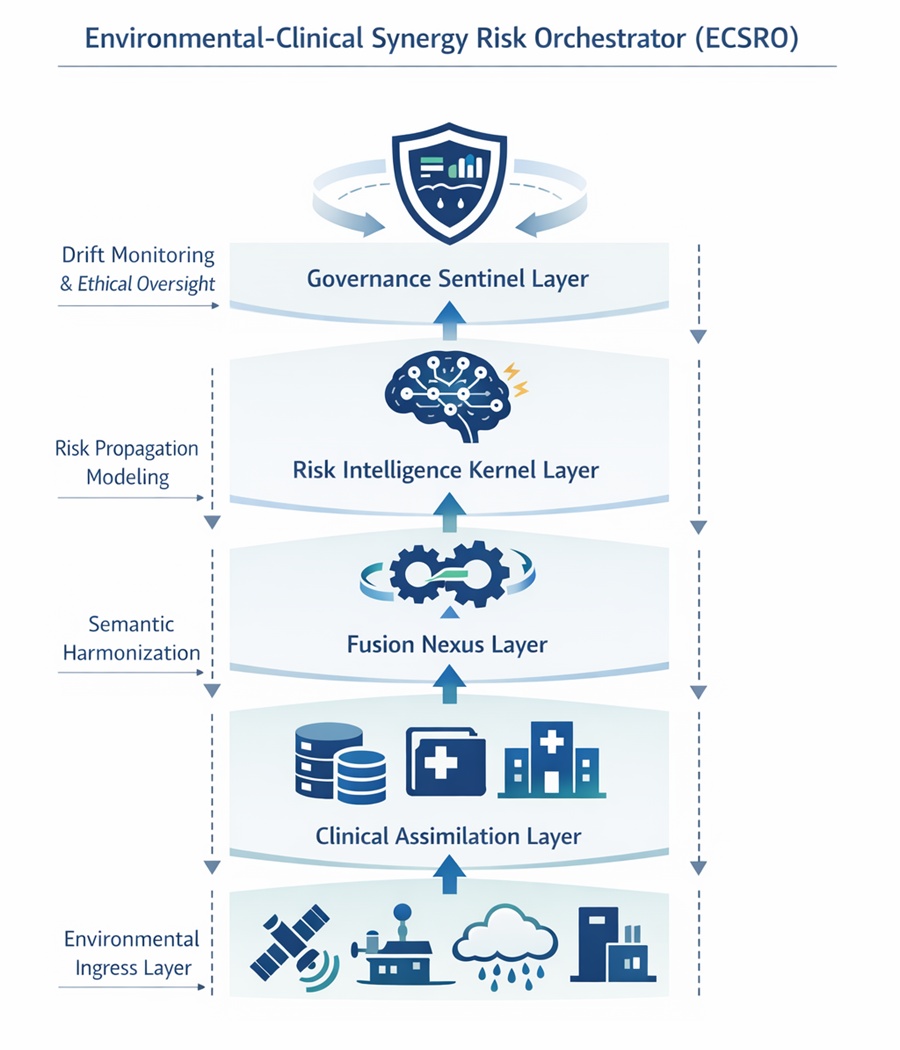
Figure 1. Environmental-clinical synergy risk orchestrator (ECSRO) architecture.
Conceptual quintuple-layer intelligence infrastructure illustrating environmental ingress and clinical assimilation streams converging within a semantic fusion nexus. Outputs are processed through a risk intelligence kernel and continuously monitored by a governance sentinel layer. Solid arrows represent forward risk propagation, whereas dashed arrows denote recursive governance calibration loops. The architecture embeds semantic harmonization, interpretive risk modeling, and ethical oversight within an adaptive environmental-clinical intelligence topology.
To formalize key dynamics, we introduce three interpretive formulas:
Risk propagation (RP):
Decision confidence (DC):
Governance load (GL):
These formulas underscore ECSRO’s theoretical contributions, facilitating conceptual analyses of climate-health synergies.
The deployment of the Environmental-Clinical Synergy Risk Orchestrator (ECSRO) theoretically influences health system dynamics by reshaping risk mitigation strategies through integrated intelligence. This section explores the conceptual impacts on clinical workflows, resource efficiencies, and population health resilience, drawing from theoretical models in healthcare analytics and AI governance [1, 14]. By fusing environmental data with clinical insights, the ECSRO conceptually alters decision-making paradigms, shifting from siloed assessments to holistic risk profiles that account for climate variabilities.
In clinical settings, ECSRO’s fusion mechanisms can, in theory, enhance workflow resilience by embedding climate modifiers into decision-support pipelines. Theoretical literature on interoperability frameworks suggests that such integrations reduce diagnostic latencies, as environmental alerts preemptively flag exacerbations in vulnerable patients [2, 15]. For instance, in governance-constrained environments, the architecture’s sentinel layer minimizes compliance burdens, allowing clinicians to focus on interpretive analytics rather than data reconciliation [3, 16]. This impact manifests in theoretical reductions in monitoring burden, formalized as
Resource allocation dynamics benefit from ECSRO’s layered structure, theoretically optimizing computational and human resources in diverse deployment infrastructures. The literature on analytics infrastructure posits that feedback topologies enable adaptive allocation, prioritizing high-risk climate-clinical intersections [5, 17]. In resource-scarce settings, this means reallocating resources from reactive interventions to proactive monitoring, thereby enhancing overall system efficiency [6, 18]. The interpretive formula for resource allocation,
At the population level, ECSRO’s intelligence core can, in theory, promote equity in health risk mitigation by addressing disparities exacerbated by climate change. Theoretical syntheses in EHR ecosystems indicate that fused data reveal hidden vulnerabilities in underserved communities, fostering inclusive decision support [8, 19]. Governance models ensure that drift sensitivity—modeled as
Governance ramifications emerge as ECSRO integrates ethical monitors, theoretically balancing innovation with accountability in fusion architectures. The literature on AI deployment systems underscores the need to address these ramifications to mitigate unintended consequences such as data privacy erosion [11, 21]. By incorporating governance load metrics, the architecture conceptually distributes ethical oversight across layers, ensuring sustainable impacts on health system trust [12, 22].
Long-term, ECSRO influences the evolution of intelligence infrastructures by promoting modular designs that adapt to emerging climate threats. Theoretical workflow integration models suggest that iterative enhancements driven by feedback lead to systemic maturation [13, 23]. This evolutionary impact positions ECSRO as a catalyst for resilient health ecosystems, theoretically amplifying collective intelligence in the face of environmental adversities [24].
The conceptual introduction of ECSRO advances theoretical discourse in climate-integrated health risk intelligence by addressing a critical fragmentation that persists across environmental analytics and clinical decision infrastructures. While prior architectures have explored predictive healthcare intelligence, they have largely treated environmental determinants as peripheral variables rather than structurally embedded risk drivers. ECSRO reconceptualizes this relationship by formalizing environmental-clinical fusion as a core architectural principle, thereby extending interoperability discourse beyond institutional data exchange into the domains of planetary health intelligence. Synthesizing literature on clinical AI systems, this architecture’s quintuple-layer topology and recursive feedback lattice offer a structurally modular yet dynamically adaptive blueprint capable of mitigating long-standing governance and deployment frictions [1, 2, 14, 15].
At the analytical core of ECSRO lies its interpretive formalism, which enables theoretical modeling of multi-scalar risk propagation influenced by climatic perturbations. Unlike conventional healthcare analytics frameworks that evaluate risk using static epidemiological variables, ECSRO introduces dynamic environmental coefficients—such as heat-stress indices, air-toxicity gradients, and hydrometeorological volatility—into recursive clinical inference pathways. These integrations allow for theoretical simulations in which climatic anomalies amplify, dampen, or spatially redistribute disease burdens. Such interpretive elasticity extends risk intelligence beyond institutional surveillance into geo-ecological forecasting, aligning with emerging scholarship in climate-sensitive health modeling [3, 4, 16, 17].
A pivotal discussion dimension concerns ECSRO’s capacity to transform reactive clinical workflows into anticipatory resilience systems. Traditional healthcare infrastructures frequently operate within post-event response paradigms, mobilizing resources only after acute presentations manifest. By contrast, ECSRO’s fusion nexus enables pre-clinical signal detection through synchronized environmental and physiological monitoring. Through this orchestration, the architecture theoretically mitigates entrenched barriers such as semantic fragmentation, siloed registries, and asynchronous reporting cycles. These design logics resonate with EHR intelligence ecosystems advocating standardized exchange ontologies and interoperable risk taxonomies capable of harmonizing heterogeneous data substrates [5, 6, 18, 19].
However, ECSRO’s theoretical scalability remains contingent on assumptions about the liquidity and fidelity of environmental data. Climatic intelligence streams—derived from satellite telemetry, atmospheric sensors, and regional monitoring infrastructures—exhibit variability in spatial resolution, latency, and calibration integrity. Such inconsistencies introduce drift vectors that can destabilize downstream clinical inference loops. ECSRO addresses this vulnerability through embedded monitoring strata designed to detect, quantify, and recalibrate environmental signal degradation. These safeguards draw conceptual parallels to drift governance constructs in adaptive AI systems, reinforcing the necessity of continuous validation pipelines across fused intelligence layers [7, 8, 20, 21].
Governance architecture constitutes another foundational pillar within ECSRO’s design philosophy. The integration of environmental determinants into clinical risk scoring introduces ethical, legal, and epistemic complexities—particularly concerning explainability, accountability, and algorithmic bias. ECSRO’s governance layer embeds audit loops, transparency scaffolds, and interpretability checkpoints to ensure that climate-augmented risk outputs remain clinically intelligible and ethically defensible. This alignment with human-centered AI governance scholarship reinforces the architecture’s commitment to preserving clinician agency while augmenting decision intelligence [9, 10, 22, 23].
Resource allocation dynamics further expand ECSRO’s interdisciplinary implications. Theoretical modeling suggests that climate-aware risk stratification could optimize infrastructural deployments by forecasting geographically localized care surges—such as heatwave-driven cardiopulmonary admissions or flood-associated infectious outbreaks. In resource-constrained ecosystems, this anticipatory visibility could enable pre-emptive redistribution of medical personnel, pharmaceuticals, and mobile care units. Yet these efficiencies are counterbalanced by an intensification of governance load, as environmental integration necessitates expanded compliance monitoring, cross-jurisdictional coordination, and oversight of data stewardship [11, 12, 24, 25]. The systemic implications of ECSRO across clinical, governance, and equity domains are synthesized in Table 2.
Table 2. System-level implications of ECSRO deployment across analytical domains
Domain | Theoretical impact | Interpretive mechanism | Long-term systemic consequence |
Clinical workflow | Reduced diagnostic latency | Embedded climate-modified risk alerts | Anticipatory care transformation |
Resource allocation | Proactive surge forecasting | Environmental-clinical risk stratification | Efficiency optimization |
Governance | Drift-sensitive compliance monitoring | Governance Load (GL) calibration | Ethical sustainability |
Health equity | Exposure-sensitive risk cartography | Stratified vulnerability modeling | Disparity visibility and mitigation |
Global surveillance | Cross-border intelligence harmonization | Interoperable fusion frameworks | Planetary health resilience |
Health equity considerations amplify the societal significance of ECSRO’s fusion intelligence. Climate change disproportionately impacts marginalized populations, rendering environmental exposure a latent amplifier of systemic health inequities. ECSRO’s fusion nexus theoretically surfaces these disparities through stratified risk cartographies that map environmental vulnerability onto clinical susceptibility gradients. However, equitable deployment demands iterative recalibration to avoid reinforcing data deserts or algorithmic underrepresentation in low-resource geographies. Inclusivity thus becomes not merely a deployment goal but an architectural design requirement [13, 26, 27].
Comparative synthesis with federated learning ecosystems reveals synergistic expansion pathways. Privacy-preserving distributed learning infrastructures could enable ECSRO to operate across multi-jurisdictional climates without centralizing sensitive health data. Such federated extensions would be particularly salient in transnational environmental crises—wildfires, pandemics, or extreme heat corridors—where collaborative intelligence must coexist with sovereignty constraints. Integrating federated governance protocols could therefore enhance ECSRO’s geopolitical scalability while preserving regulatory compliance [28, 29].
Collectively, these discussions position ECSRO not simply as a predictive analytics framework but as a resilience-oriented intelligence infrastructure. Its recursive topology, governance embedding, and environmental fusion logic converge to reframe healthcare AI as an adaptive planetary health sentinel. Nonetheless, conceptual maturation will require expanded theoretical modeling of sensor ecologies, latency harmonization, and cross-domain ontology alignment. Through such refinements, ECSRO could evolve into a foundational scaffold for climate-adaptive clinical intelligence ecosystems.
In conclusion, the environmental-clinical synergy risk orchestrator (ECSRO) emerges as a conceptual cornerstone in the evolution of climate-integrated health risk intelligence. By structurally fusing environmental telemetry with clinical analytics, the architecture transcends traditional healthcare AI paradigms that treat ecological variables as peripheral inputs. Its quintuple-layer infrastructure, recursive feedback topology, and interpretive modeling constructs collectively establish a theoretical foundation for anticipatory, climate-responsive healthcare systems. Synthesized from multidisciplinary literature, ECSRO addresses persistent gaps in interoperability, governance accountability, and risk forecasting precision across environmental-clinical continuums.
The architecture’s theoretical contributions extend beyond technical integration into systemic transformation. ECSRO repositions health systems from reactive treatment engines to proactive resilience orchestrators capable of forecasting climate-amplified disease burdens before clinical escalation. Its governance embeddings safeguard ethical deployment, while its fusion intelligence surfaces inequities that demand policy and infrastructural redress.
Future conceptual trajectories may expand ECSRO through multi-modal learning paradigms, integrating genomic susceptibility markers, behavioral telemetry, and real-time biosensor ecologies into the fusion lattice. Additionally, coupling ECSRO with federated climate surveillance grids and autonomous response systems could further enhance its global scalability.
Ultimately, ECSRO exemplifies the transformative potential of environmentally attuned artificial intelligence in safeguarding population health amid accelerating climatic volatility. By embedding ecological awareness into clinical intelligence architectures, the framework advances a new frontier in adaptive healthcare—one defined not by reaction, but by foresight, resilience, and planetary stewardship.
None
None
None
None
Open Access The author(s) retain copyright. This article is licensed under the Creative Commons Attribution-NonCommercial-ShareAlike 4.0 International License. It may be shared and adapted for non-commercial purposes with appropriate attribution, an indication of changes, and distribution of adaptations under the same license. Third-party material may be subject to separate terms identified in its credit line. View the license at https://creativecommons.org/licenses/by-nc-sa/4.0/.
 Clinical Intelligence Research Press