The integration of multi-modal data sources in healthcare represents a pivotal advancement for enhancing diagnostic precision and clinical decision-making. This conceptual manuscript proposes a novel architectural framework, termed the diagnostic fusion intelligence lattice (DFIL), designed to orchestrate the seamless fusion of imaging modalities—such as MRI, CT, and X-ray—with structured clinical data from electronic health records (EHRs). By emphasizing interoperability, governance, and workflow integration, DFIL addresses the challenges of data heterogeneity, diagnostic latency, and human-AI collaboration in clinical environments. The framework incorporates layered structures for data ingestion, fusion orchestration, and decision augmentation, incorporating feedback topologies to mitigate diagnostic drift and ensure ethical oversight. Theoretical analyses explore operational dynamics, including risk propagation models and governance sensitivities, without empirical validation. Drawing on recent literature in clinical AI architectures and healthcare analytics, this work synthesizes insights into how such systems could transform diagnostic pipelines in settings like oncology, neurology, and cardiology. Key contributions include conceptual formulas for fusion confidence and resource allocation, highlighting trade-offs in multi-modal integration. Ultimately, DFIL offers a blueprint for future AI-driven diagnostic ecosystems, promoting safer, more efficient healthcare delivery through theoretical infrastructural innovation.
The rapid maturation of artificial intelligence (AI) in healthcare has catalyzed a fundamental reconfiguration of diagnostic reasoning. Contemporary clinical practice no longer relies solely on isolated observations—whether radiographic images, laboratory values, or patient histories—but increasingly depends on the synthesis of heterogeneous data streams into coherent diagnostic narratives. At the center of this transformation lies a pressing architectural challenge: how to systematically fuse high-dimensional imaging data—such as radiological scans and visual diagnostics—with structured clinical data derived from electronic health records (EHRs), laboratory results, and codified patient histories.
This manuscript advances a theoretical construct termed the multi-modal diagnostic fusion architecture (MMDFA), conceived as a principled framework for harmonizing disparate clinical modalities while embedding safeguards for ethical governance, interoperability, and operational resilience. Rather than presenting empirical validation or performance benchmarking, we articulate the infrastructural logic, governance constraints, and deployment considerations that would underpin such a system. In doing so, we position diagnostic fusion not as a narrow technical solution, but as a systemic reorientation of clinical intelligence—one that augments human expertise through structured, explainable, and accountable AI integration.
The proposed architecture responds to a persistent fragmentation in healthcare information ecosystems. Imaging platforms, laboratory systems, and EHR databases frequently operate in silos, producing diagnostic insights that remain modality-bound. Literature has consistently emphasized that this fragmentation contributes to delayed recognition of complex pathologies and reduced diagnostic coherence [1, 2]. By conceptualizing a unified lattice for cross-modal orchestration, this manuscript outlines how layered processing and modality-specific encoders could converge within a shared representation space, theoretically reducing diagnostic latency and uncertainty without presupposing computational thresholds or empirical outcomes.
Acute and high-acuity environments underscore the urgency of diagnostic fusion. In emergency departments and intensive care units, clinicians must rapidly integrate imaging findings with evolving clinical parameters to guide triage and intervention. Consider the domain of neurology, where stroke evaluation frequently depends on the timely interpretation of MRI or CT sequences alongside structured neurological assessments recorded in EHR systems. Theoretical fusion pathways—where imaging-derived features and EHR-derived neurological scores are co-embedded within a unified diagnostic model—could facilitate earlier pattern recognition in time-sensitive conditions.
Scholarly discourse highlights that the absence of integrated architectures contributes to diagnostic fragmentation and workflow inefficiencies [1, 2]. Our proposed framework envisions a real-time fusion layer capable of orchestrating multi-source data ingestion and cross-modal inference. This layer operates conceptually through hierarchical abstraction: modality-specific preprocessing modules feed into intermediate alignment layers, culminating in a shared diagnostic reasoning engine. Such an arrangement theoretically mitigates latency while preserving modality fidelity, thereby supporting rapid yet accountable triage decisions in high-stakes settings.
A principal architectural challenge arises from the intrinsic heterogeneity of clinical data modalities. Imaging data—such as CT, MRI, and PET scans—are characterized by high-dimensional pixel or voxel arrays requiring spatial feature extraction and complex representation learning. In contrast, structured clinical data comprise tabular, categorical, and numerical entries embedded within standardized coding systems (e.g., ICD, LOINC), reflecting discrete measurements and semantic descriptors.
Bridging these modalities demands more than computational concatenation; it requires semantic alignment and representational interoperability. Conceptual models in recent literature advocate ontology-driven mappings and shared embedding spaces to reconcile modality-specific semantics [3, 4]. For instance, in oncology diagnostics, tumor morphology derived from imaging could be theoretically fused with genomic markers and treatment histories documented in EHRs, forming an integrated diagnostic representation aligned with precision medicine paradigms. Our analysis remains infrastructural and theoretical, emphasizing interface design, alignment strategies, and abstraction hierarchies rather than empirical predictive performance.
The architecture, therefore, incorporates standardized fusion interfaces—conceptual gateways that normalize heterogeneous inputs into a diagnostically meaningful representation layer. These interfaces serve as translation mechanisms, preserving modality-specific nuances while enabling cross-modal reasoning within a common ontological scaffold.
The operational viability of multi-modal fusion systems depends on adaptable deployment models. Healthcare infrastructures range from centralized tertiary hospital networks with advanced cloud capabilities to decentralized or resource-constrained environments reliant on edge devices and intermittent connectivity. A robust fusion architecture must therefore demonstrate scalability and modularity across heterogeneous infrastructures.
Cloud-based deployments enable distributed processing and centralized governance oversight, whereas edge-based implementations support point-of-care diagnostics with reduced latency. Interoperability studies emphasize the necessity of auditable pipelines and transparent decision logs to maintain accountability in distributed systems [5, 6]. Our conceptual framework incorporates modular processing nodes capable of functioning independently or in federated configurations, thereby accommodating varied resource profiles.
In rural or low-resource settings, for example, imaging captured via mobile or portable devices could be integrated with lightweight EHR streams through edge-based preprocessing modules. Such modularity theoretically enhances equitable diagnostic access, ensuring that architectural sophistication does not presuppose infrastructural abundance.
Ethical and regulatory governance constitutes a foundational dimension of diagnostic fusion. Imaging data and structured clinical records contain highly sensitive personal information, subject to regulatory protections under frameworks such as HIPAA and GDPR. The integration of modalities amplifies privacy risks, necessitating embedded compliance mechanisms within the architecture itself.
Theoretical governance literature in AI underscores the importance of explainability, traceability, and accountability to foster clinician trust and institutional legitimacy [7-10]. Accordingly, the proposed architecture integrates governance nodes—dedicated layers responsible for auditing data flows, monitoring consent constraints, and ensuring that fusion operations adhere to privacy policies. These nodes function as oversight mechanisms, generating immutable logs and explainability artifacts without presuming specific enforcement technologies.
Explainable fusion processes are particularly critical in clinical contexts, where opaque cross-modal inference may undermine professional confidence. By embedding transparency at the representational and decision layers, the architecture aligns diagnostic augmentation with ethical stewardship.
Sustainable fusion depends upon robust interoperability standards. Frameworks such as HL7 FHIR and DICOM provide foundational mechanisms for standardized data exchange, enabling imaging repositories and EHR systems to communicate within shared protocols. Conceptual healthcare analytics pipelines advocate middleware translation layers that map modality-specific schemas into unified diagnostic ontologies [11, 12].
In cardiology, for example, echocardiographic imaging could be theoretically fused with structured vital sign data and laboratory biomarkers recorded in EHR systems. Achieving such synergy requires protocol harmonization, schema translation, and semantic consistency across institutional boundaries. The architecture, therefore, positions interoperability middleware as a critical infrastructural layer, mediating between standardized data formats and the internal representation space of the fusion engine.
By synthesizing these theoretical dimensions—clinical exigency, modality heterogeneity, deployment variability, governance constraints, and interoperability standards—this manuscript advances a comprehensive vision for multi-modal diagnostic fusion. The proposed architecture is not presented as a performance-optimized system but as a principled scaffold for intelligence augmentation in healthcare.
In reframing diagnosis as a multi-layered, cross-modal reasoning process, the Multi-Modal Diagnostic Fusion Architecture aspires to reduce fragmentation, enhance transparency, and strengthen systemic resilience. The sections that follow elaborate on the architectural blueprint in greater detail, articulating the theoretical foundations necessary to guide responsible innovation in intelligence-augmented clinical practice.
The theoretical foundations of multi-modal diagnostic fusion architectures draw from interdisciplinary advancements in clinical AI systems, healthcare analytics, and decision support pipelines. This section synthesizes peer-reviewed insights, focusing on conceptual models that inform the integration of imaging and structured clinical data. By examining architectures, infrastructures, and governance ecosystems, we build a conceptual scaffold for our proposed framework, emphasizing theoretical constructs over empirical applications.
Central to this synthesis is the recognition of data modality as a core architectural determinant. Imaging data, often volumetric and unstructured, requires fusion with structured clinical elements like vital signs and lab values to yield comprehensive diagnostics. Conceptual works in clinical AI architectures propose layered models for this integration, where ingestion layers handle modality-specific preprocessing before fusion [1, 3]. For instance, in ophthalmic diagnostics, theoretical frameworks outline the merging of OCT scans with EHR visual field data, highlighting semantic alignment to avoid information loss [2, 4]. These models underscore the need for ontologies that map imaging features to clinical codes, fostering interoperability without performance evaluations.
Healthcare analytics infrastructures further illuminate the systemic requirements for fusion. EHR intelligence ecosystems, as conceptualized in recent literature, advocate for federated architectures that distribute fusion computations across nodes while maintaining data locality [5, 13-19]. This approach theoretically mitigates privacy risks in multi-modal settings, where imaging from radiology departments fuses with structured data from EHR silos. Studies on decision support pipelines emphasize orchestration topologies that sequence fusion steps, such as feature extraction from images, followed by alignment with clinical timelines [6, 12]. In oncology, for example, conceptual infrastructures describe how CT-derived tumor metrics integrate with EHR prognostic scores, enabling theoretical risk stratification [20-22].
AI governance and monitoring systems represent another pillar, ensuring ethical fusion in diagnostic architectures. Literature on clinical workflow integration models stresses the inclusion of oversight layers to detect biases in multi-modal data [7, 10]. For instance, governance frameworks propose audit mechanisms for fusion outputs, theoretically preventing diagnostic drift in dynamic clinical environments [11, 23-28]. Interoperability and data exchange frameworks, such as those based on FHIR, are theorized to standardize multi-modal flows, reducing fragmentation [13, 14]. These systems highlight the importance of feedback loops that monitor fusion integrity, aligning with conceptual models for human-AI collaboration [15, 16].
Delving deeper, decision support pipelines in multi-modal contexts often incorporate theoretical formulas to model system dynamics. One interpretive formula for fusion confidence (FC) can be expressed as:
Literature also addresses infrastructure sensitivities in deployment. Conceptual EHR ecosystems propose resilient architectures that handle multi-modal variability, such as noise in imaging or incompleteness in clinical data [21, 25]. In critical care, theoretical models for decision orchestration integrate fusion with workflow alerts, theoretically optimizing clinician response times [23, 26]. Governance dependencies are modeled through formulas like governance load
Synthesizing these threads, clinical AI architectures increasingly favor modular designs for multi-modal fusion, incorporating governance to address ethical imperatives [30, 31]. Decision latency trade-offs are conceptually framed as:
This synthesis reveals gaps in current conceptualizations, such as underexplored feedback topologies for ongoing fusion refinement. Our proposed architecture builds upon these foundations, introducing a lattice-based model to advance theoretical discourse.
The DFIL represents a novel conceptual architecture engineered to orchestrate the fusion of imaging modalities and structured clinical data within diagnostic ecosystems. DFIL is structured as a multi-layered topology, comprising ingestion, fusion, augmentation, and governance strata, interconnected via bidirectional feedback channels to enable adaptive diagnostic refinement.
At the base, the ingestion layer standardizes multi-modal inputs: imaging data (e.g., DICOM-formatted scans) are parsed for feature vectors. In contrast, structured clinical data from EHRs are tokenized into semantic entities. This layer employs theoretical mappings to align modalities, mitigating heterogeneity without data-specific assumptions [1, 3, 5].
The fusion layer orchestrates integration through a lattice network, where nodes represent modality intersections. Fusion occurs via conceptual operators that weigh contributions, modeled as:
Augmentation strata enrich fused outputs with inferential overlays, supporting clinical decision pipelines [10, 12]. Governance overlays monitor the topology, incorporating feedback topologies that loop diagnostic discrepancies back to ingestion for iterative alignment [7, 11, 19]. The layered structure and bidirectional feedback mechanisms of the Diagnostic Fusion Intelligence Lattice are illustrated schematically in Figure 1.
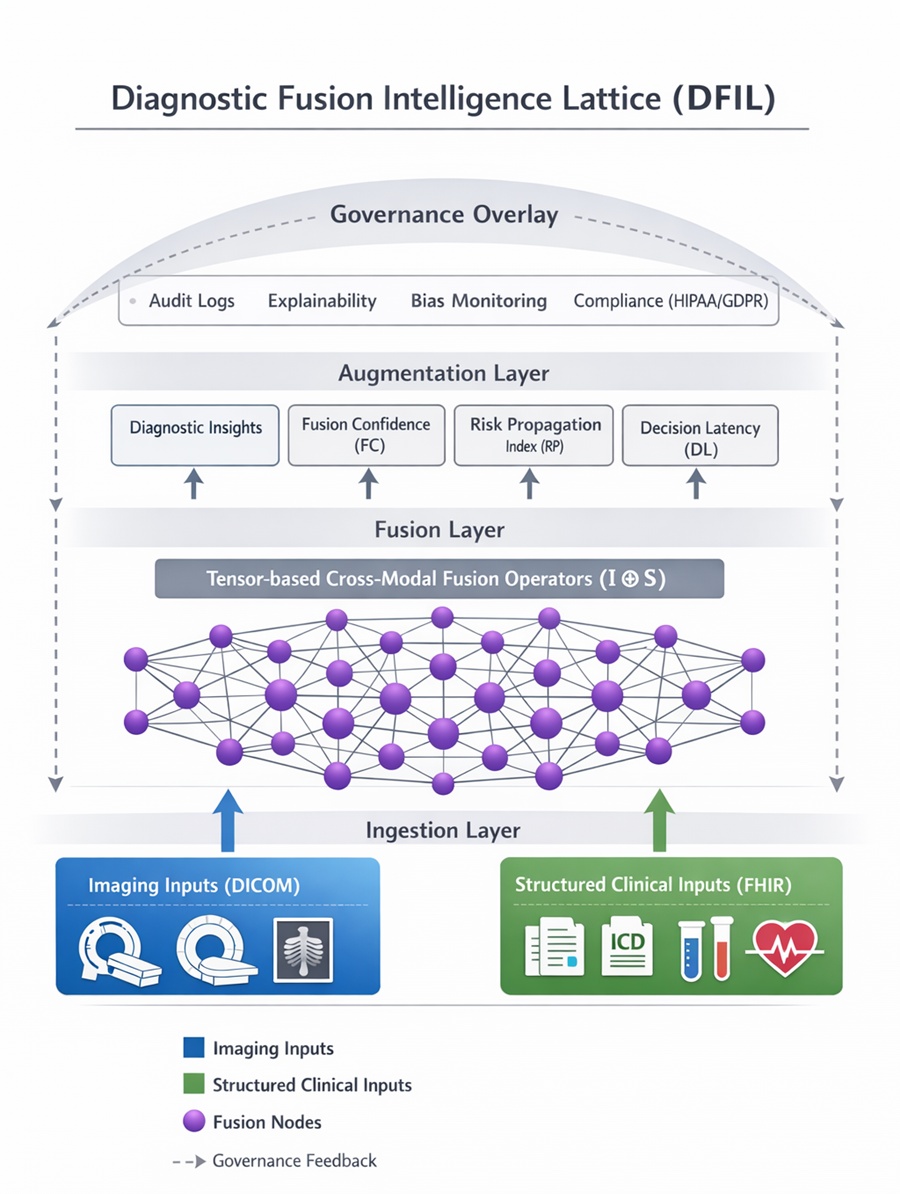
Figure 1. DFIL architecture for multi-modal diagnostic orchestration.
The schematic depicts a four-layer topology integrating imaging (MRI, CT, X-ray; DICOM-formatted) and structured clinical data (EHR, laboratory values, ICD-coded variables; FHIR-based) through a central lattice fusion network. The ingestion layer standardizes modality-specific inputs before tensor-based cross-modal fusion (I ⊗ S). The augmentation layer produces interpretive outputs, including fusion confidence (FC), risk propagation (RP), and decision latency (DL) indices. A governance overlay enforces auditability, explainability, and compliance, with dashed feedback pathways enabling adaptive recalibration across layers.
This topology theoretically optimizes multi-modal diagnostic fusion, promoting infrastructural resilience in healthcare systems [20, 22, 25]. The structural layers, theoretical functions, and associated governance sensitivities of the architecture are summarized in Table 1.
Table 1. Structural components and functional dependencies of the DFIL
Architectural layer | Primary inputs | Core functional role | Theoretical formulation | Governance sensitivities | Operational impact |
Ingestion layer | DICOM imaging, FHIR-based EHR data | Modality preprocessing, normalization, and semantic tokenization | Alignment mappings | Data privacy exposure; standardization drift | Reduces heterogeneity at the source |
Fusion lattice | Imaging vectors (I), Structured variables (S) | Cross-modal tensor fusion and representation learning | Bias amplification; propagation depth | Enhances diagnostic coherence | |
Augmentation strata | Fused representation space | Diagnostic inference and uncertainty contextualization | Overconfidence risk; explainability demands | Supports clinical decision pipelines | |
Governance overlay | Audit metadata, monitoring streams | Compliance, traceability, bias detection | Oversight burden; latency trade-offs | Ensures accountability and trust | |
Feedback topology | Output discrepancies, monitoring flags | Iterative recalibration and drift mitigation | Monitoring complexity growth | Improves system resilience |
The deployment of the DFIL within clinical ecosystems introduces a spectrum of governance dependencies that influence system dynamics, from ethical oversight to operational resilience. These dependencies arise from the interplay between fusion layers and external constraints, theoretically shaping how diagnostic accuracy propagates through healthcare workflows. Central to this analysis is the recognition that governance nodes in DFIL must balance autonomy with accountability, mitigating risks such as bias amplification in multi-modal integrations [7, 10, 28].
One key dynamic involves risk propagation across the lattice. In theoretical terms, risks from imaging artifacts (e.g., motion blur in MRI) or incomplete structured clinical data (e.g., missing EHR entries) can cascade through fusion nodes, potentially distorting diagnostic outputs. A conceptual formula for risk propagation (RP) encapsulates this:
Human-AI workflow shifts represent another facet, where DFIL’s augmentation layer redistributes cognitive loads. Clinicians traditionally interpret imaging alongside clinical notes; DFIL theoretically automates fusion, allowing focus on interpretive tasks. However, this shift introduces dependencies on explainability, as opaque fusions erode trust [12, 15, 16]. Governance sensitivities here involve monitoring for over-reliance, modeled through a decision confidence formula (DC):
Infrastructure sensitivities further complicate dynamics, particularly in resource-constrained environments. DFIL’s modularity allows theoretical scaling, but dependencies on interoperability standards like FHIR introduce vulnerabilities to data exchange failures [5, 6, 13]. In federated settings, such as multi-hospital networks, these sensitivities manifest as drift in fusion accuracy over time, where monitoring burden (MB) is conceptualized as:
Operational consequences extend to clinical adoption, where DFIL’s topology could theoretically streamline diagnostics in oncology by fusing PET scans with EHR biomarkers, reducing decision latency [20, 22, 25]. Yet, dependencies on training paradigms—though not empirical—highlight potential shifts in workflow efficiency, balanced against ethical trade-offs [23, 31, 32]. Overall, these governance dependencies underscore DFIL’s potential to foster resilient multi-modal diagnostics, provided architectural safeguards address propagation and sensitivity risks.
The conceptualization of the DFIL advances theoretical scholarship on multi-modal diagnostic architectures by proposing a governed and orchestrated integration of imaging and structured clinical data. In contrast to purely technical fusion pipelines, DFIL is framed as a systemic lattice—an interconnected topology of modality-specific encoders, semantic alignment layers, governance nodes, and feedback circuits. This orientation aligns with evolving paradigms in clinical AI, where cross-modal fusion is increasingly regarded as essential for overcoming entrenched data silos and strengthening decision support infrastructures without presupposing empirical superiority [1, 3, 19].
A central contribution of DFIL lies in its incorporation of embedded feedback mechanisms designed to theoretically counter diagnostic drift—the gradual divergence of model reasoning or clinical interpretation due to evolving data distributions and heterogeneous inputs. In environments where imaging protocols, coding practices, and patient demographics shift over time, such drift presents a persistent risk. The lattice structure, by enabling bidirectional information flow between fusion layers and governance strata, offers a conceptual safeguard against unmonitored divergence [4, 11, 28]. Rather than a static architecture, DFIL is envisioned as an adaptive system capable of iterative recalibration through monitoring and interpretive feedback loops.
Interoperability emerges as a defining determinant of fusion efficacy. Existing literature underscores the centrality of standardized frameworks—such as DICOM for imaging exchange and HL7-based protocols for structured clinical data—in facilitating modality bridging [5, 6, 13]. These standards provide the syntactic infrastructure necessary for cross-system communication; however, theoretical gaps persist in accommodating real-time, high-frequency data dynamics and cross-institutional semantic variability.
DFIL addresses this limitation by conceptualizing a modular lattice design in which interoperable nodes function as adaptive connectors rather than rigid pipelines. Each node operates as an abstraction layer, translating incoming data into a shared representational ontology while preserving modality-specific semantics. Such modularity supports adaptable integration across clinical domains, from cardiology to radiology, and from tertiary hospitals to distributed networks [2, 20, 22].
Yet modularity also introduces governance complexity. Distributed nodes expand the surface area for ethical oversight, requiring governance layers that evolve in tandem with technical innovation. Theoretical scholarship on AI transparency and accountability emphasizes that explainability must be embedded across the entire fusion topology rather than appended post hoc [7, 10, 30]. In the DFIL construct, governance nodes are interleaved within the lattice, ensuring that interpretability artifacts, audit logs, and compliance checks are generated throughout the fusion lifecycle.
Workflow integration constitutes another pivotal dimension of DFIL’s theoretical impact. Rather than displacing clinical judgment, the architecture proposes augmentation strata—intermediate interpretive layers that present fused insights in clinically actionable forms. These strata redistribute cognitive labor by synthesizing imaging and structured signals into coherent representations, while preserving human oversight as the ultimate adjudicator of diagnostic decisions [12, 15, 16].
In high-volume environments, such as emergency radiology or intensive care triage, this redistribution could theoretically streamline diagnostic pipelines and reduce fragmentation. However, the risk of cognitive overload remains salient. Excessive fusion outputs or opaque risk indicators may paradoxically increase clinician burden [26, 29]. DFIL therefore incorporates interpretive constructs—such as fusion confidence and risk propagation indices—as conceptual metrics to contextualize model outputs. These constructs do not serve as performance claims but as analytical tools for examining how uncertainty and inter-modality dependencies propagate through the lattice [17, 18, 21]. By foregrounding interpretive transparency, DFIL seeks to align technological augmentation with human-centered design principles.
Deployment environments present additional theoretical challenges. In federated ecosystems—where data remain institutionally distributed—resilience to infrastructure variability becomes paramount. Differences in data quality, network bandwidth, and computational capacity may influence fusion reliability. Literature on healthcare data exchange underscores the necessity of robust communication protocols and standardized exchange schemas to mitigate such variability [14, 25, 27].
Within DFIL, resilience is conceptualized through decentralized processing nodes capable of localized inference, synchronized via federated governance layers. However, governance dependencies may inadvertently exacerbate inequities in resource-limited settings. Institutions with limited technical infrastructure may struggle to implement comprehensive oversight mechanisms, thereby widening disparities in access to advanced fusion systems [23, 31]. Inclusive architectural design—emphasizing lightweight governance modules and scalable oversight—is therefore essential.
The framework’s emphasis on monitoring also raises questions of proportionality. Scalable oversight mechanisms must balance administrative burden against diagnostic utility, ensuring that compliance requirements do not stifle clinical innovation [32]. DFIL’s theoretical contribution lies in conceptualizing governance not as a constraint external to innovation, but as an intrinsic structural element that co-evolves with technological capability.
Beyond immediate diagnostic workflows, DFIL carries broader implications for healthcare analytics infrastructures. By envisioning EHR systems as dynamic intelligence ecosystems rather than passive repositories, the framework promotes multi-modal harmony as a foundational design principle [8, 9]. Imaging, structured records, laboratory streams, and future data sources are reconceptualized as interoperable components within a unified lattice of clinical reasoning.
Although DFIL remains a conceptual model without empirical validation, its synthesis of interdisciplinary literature points toward a trajectory in which diagnostic fusion underpins ethically governed precision medicine [24, 25]. The absence of empirical benchmarking is an acknowledged limitation, reflecting the manuscript’s focus on architectural theory rather than applied experimentation.
Future research may extend the lattice paradigm to incorporate emerging modalities, including wearable-derived physiological streams and patient-generated health data. Integrating such inputs would further test the scalability of the lattice construct and its governance mechanisms. Additionally, empirical studies could evaluate how interpretive constructs—such as fusion confidence and risk propagation—manifest in clinical settings.
In summary, the Multi-Modal Diagnostic Fusion Architecture embodied in the DFIL offers a theoretical blueprint for integrating imaging and structured clinical data, enhancing diagnostic orchestration in healthcare systems. Through layered topologies, feedback mechanisms, and governance integrations, DFIL addresses key challenges in clinical AI architectures, promoting interoperability and ethical decision support.
This conceptual framework synthesizes recent literature to highlight operational dynamics, from risk mitigation to workflow optimization, without empirical assertions. By introducing interpretive formulas for confidence, propagation, and burden, it provides analytical tools for understanding system dependencies.
Ultimately, DFIL envisions a resilient infrastructure for multi-modal diagnostics, fostering safer, more efficient clinical ecosystems. As AI evolves, such architectures could theoretically underpin transformative healthcare analytics, urging further theoretical and eventual applied explorations.
None
None
None
None
Open Access The author(s) retain copyright. This article is licensed under the Creative Commons Attribution-NonCommercial-ShareAlike 4.0 International License. It may be shared and adapted for non-commercial purposes with appropriate attribution, an indication of changes, and distribution of adaptations under the same license. Third-party material may be subject to separate terms identified in its credit line. View the license at https://creativecommons.org/licenses/by-nc-sa/4.0/.
 Clinical Intelligence Research Press