The rapid evolution of artificial intelligence in healthcare necessitates robust infrastructures capable of integrating advanced computational models into clinical workflows. This conceptual manuscript proposes a transformer-embedded clinical phenotyping infrastructure model, designed to enhance the extraction and utilization of patient phenotypes from electronic health records (EHRs) through transformer-based architectures. By embedding transformer mechanisms within a multi-layered infrastructure, the model facilitates dynamic phenotyping, enabling precise patient stratification and decision support without relying on empirical data or performance metrics. The framework emphasizes interoperability, governance, and seamless integration with existing healthcare analytics ecosystems, addressing challenges in data exchange and AI deployment. Key components include a phenotypic encoding layer, a transformer orchestration module, and a feedback loop for continuous refinement. Conceptual formulas are introduced to interpret risk propagation in phenotyping errors, decision confidence in clinical outputs, monitoring burdens on system resources, resource allocation for computational efficiency, governance loads in regulatory compliance, and sensitivity to data drift. This model contributes to theoretical discussions on AI-driven healthcare systems by outlining an architecture that prioritizes ethical deployment and clinical utility. Through literature synthesis, it draws on recent advancements in clinical AI architectures and EHR intelligence, positioning the infrastructure as a foundational element for future intelligent health systems. The implications extend to improved clinical phenotyping accuracy and infrastructure resilience in diverse healthcare settings.
The integration of artificial intelligence (AI) into contemporary healthcare systems has fundamentally reconfigured the epistemic and operational foundations of clinical decision-making, particularly through the analytical lens of patient phenotyping. Phenotyping—the systematic identification, stratification, and contextual classification of patient characteristics derived from multifaceted biomedical data sources—serves as a cornerstone of personalized and precision medicine [1, 2]. By translating heterogeneous clinical signals into structured representations of disease expression, phenotyping enables clinicians to tailor diagnostic reasoning, therapeutic selection, and longitudinal care planning to individualized patient trajectories. As healthcare ecosystems become increasingly data-saturated, the fidelity, scalability, and interpretability of phenotypic inference processes are emerging as critical determinants of clinical intelligence maturity.
Within digitally mediated care environments, electronic health records (EHRs) function as the principal substrate through which phenotypic signals are captured, stored, and operationalized. These infrastructures aggregate longitudinal patient narratives spanning structured laboratory indices, medication exposures, physiological monitoring streams, procedural histories, imaging outputs, and unstructured clinician documentation. However, the multimodal density of EHR systems introduces substantial analytical complexity. Clinical data are temporally irregular, semantically heterogeneous, and frequently fragmented across institutional and departmental silos. Conventional phenotyping approaches—often reliant on deterministic coding ontologies, rule-based extraction pipelines, or manually engineered feature hierarchies—struggle to reconcile these discontinuities. Consequently, there is a growing imperative to embed advanced deep learning architectures capable of synthesizing cross-modal representations without prescriptive feature constraints.
It is within this computational context that transformer architectures have emerged as a transformative paradigm for clinical data interpretation. Originally engineered for natural language processing tasks, transformers leverage self-attention mechanisms to model long-range dependencies, contextual salience, and hierarchical abstraction within sequential information streams. Their architecture enables dynamic weighting of informational relevance across time and modality, rendering them uniquely suited for healthcare environments where patient states evolve through temporally layered and semantically entangled signals. Embedding transformers within phenotyping infrastructures, therefore, represents not merely a methodological innovation but a structural reconfiguration of how clinical meaning is computationally constructed and operationalized.
Transformers, renowned for their attention-based processing logic, offer distinct advantages in handling sequential and multimodal clinical data, including time-series EHR entries, radiological narratives, pathology reports, and longitudinal care documentation [3, 4]. Unlike recurrent or convolutional architectures constrained by sequential bottlenecks or localized receptive fields, transformer models can simultaneously evaluate distributed dependencies across entire clinical timelines. This capability is particularly consequential in hospital ecosystems where clinically relevant signals may be temporally distal yet pathophysiologically interdependent.
In operational environments where data modalities range from structured vital sign matrices and laboratory panels to unstructured physician dictations and discharge summaries, embedding transformers within phenotyping infrastructures enables contextual understanding without reliance on predefined hierarchical schemas. Through multi-head attention mechanisms, these models construct latent representations that integrate linguistic semantics, physiological trends, and diagnostic annotations into cohesive analytical embeddings. This integrative modeling paradigm mitigates fragmentation in data interpretation, fostering unified phenotypic profiles that can inform downstream clinical pathways, risk stratification engines, and therapeutic optimization frameworks [5].
Despite their computational promise, transformer-embedded phenotyping systems encounter substantive deployment constraints within real-world clinical environments. Resource-limited settings—such as intensive care units, emergency departments, and high-volume outpatient clinics—demand infrastructural models that balance analytical sophistication with computational efficiency and latency sensitivity [6, 7]. The operational burden of large-scale transformer inference, particularly when applied to streaming clinical data, necessitates architectural adaptations involving model compression, distributed processing, and edge-enabled inference layers.
Governance constraints further complicate phenotyping deployment. Regulatory frameworks governing patient data privacy, including statutes such as the Health Insurance Portability and Accountability Act (HIPAA), impose stringent controls on data access, transmission, and model training pipelines. Embedding transformer infrastructures within such environments, therefore, requires integrated safeguards encompassing encryption protocols, federated learning topologies, and audit-traceable access controls. The proposed conceptual model addresses these constraints by architecting transformer layers capable of real-time phenotypic recalibration while operating within secure, policy-bounded computational envelopes, thereby ensuring alignment with institutional compliance mandates and operational risk thresholds [8].
The analytical value of phenotyping infrastructures is intrinsically amplified when phenotypic intelligence can be exchanged across institutional, regional, and transnational healthcare networks. Effective phenotyping, therefore, relies on seamless data interoperability across disparate information systems, where standardized exchange frameworks become infrastructural prerequisites [9, 10]. In multi-institutional research collaboratives, integrated delivery networks, and population health consortia, the absence of interoperable phenotypic representations can generate semantic inconsistencies that undermine comparative analytics and collective learning.
Transformer-embedded models offer a pathway toward harmonizing phenotypic abstraction layers by encoding patient characteristics into standardized latent embeddings that transcend local coding idiosyncrasies. However, infrastructural realization of this capability necessitates alignment with formal interoperability standards. Fast Healthcare Interoperability Resources (FHIR) architectures, for instance, provide modular data schemas and exchange protocols capable of supporting phenotypic payload transmission across systems. Embedding FHIR-compliant interfaces within transformer phenotyping infrastructures enables structured phenotypic dissemination, facilitating collaborative analytics, federated cohort discovery, and cross-site decision support augmentation [11].
As phenotyping infrastructures evolve in analytical depth and clinical influence, governance considerations assume central importance. AI-mediated phenotypic classifications carry the potential to shape diagnostic labeling, treatment prioritization, and resource allocation decisions. Consequently, ethical dilemmas—particularly those related to algorithmic bias, representational inequity, and population under-sampling—must be systematically addressed [12, 13]. Phenotypic inference derived from demographically skewed training corpora may inadvertently propagate disparities in disease recognition or care delivery.
To mitigate such risks, governance-embedded infrastructures must incorporate monitoring strata capable of auditing transformer outputs for fairness, calibration drift, and representational bias. Transparency mechanisms—including explainability overlays, attention visualization matrices, and phenotypic attribution mapping—can enhance interpretive visibility into transformer operations. By embedding continuous oversight loops, the conceptual model aligns phenotyping intelligence with institutional governance standards, ensuring that algorithmic innovation remains bounded by ethical accountability and regulatory compliance imperatives [14].
The translational value of phenotyping intelligence is ultimately determined by its integration into frontline clinical workflows. Infrastructure designs must therefore prioritize seamless embedding within existing care delivery interfaces to minimize cognitive and operational disruption [15, 16]. Transformer-derived phenotypic insights, if operationalized through interoperable dashboards, clinical decision support triggers, and workflow-synchronized alert systems, can augment clinician situational awareness without imposing interpretive burden.
In specialty domains such as radiology, cardiology, and oncology, transformer embeddings can automate phenotypic extraction directly from diagnostic workflows—parsing imaging narratives, waveform analytics, and procedural annotations in near real time. Such integration supports accelerated diagnostic synthesis, risk anticipation, and therapeutic pathway optimization. By aligning phenotypic intelligence with routine clinical operations, the proposed infrastructure model demonstrates its capacity not only to enhance analytical sophistication but also to catalyze the evolution of evidence-driven clinical practice architectures [17].
Fusing multimodal data—genomic, proteomic, and clinical notes—poses a core challenge for phenotyping infrastructures [18, 19]. Transformers excel in this fusion by attending to cross-modal relationships, enabling a holistic phenotypic infrastructure. This subheading examines how such embeddings can theoretically optimize data utilization in varied clinical modalities [20].
The theoretical underpinnings of transformer-embedded clinical phenotyping infrastructures emerge from the convergence of contemporary advances in artificial intelligence system architectures and the maturation of healthcare analytics ecosystems. Rather than constituting isolated algorithmic innovations, transformer integrations reflect a broader infrastructural evolution in which computational intelligence is embedded directly within clinical data environments. This section synthesizes recent conceptual and systems-oriented literature to contextualize the proposed model, emphasizing architectural, analytic, and governance frameworks that shape phenotyping intelligence without reliance on empirical validation. By integrating insights from clinical AI ecosystems, decision intelligence pipelines, and regulatory oversight models, the discussion highlights the progressive transition toward infrastructures capable of embedding transformer architectures for high-fidelity phenotypic inference.
Clinical AI architectures have undergone a substantive transformation over the past decade, shifting from deterministic, rule-encoded phenotyping systems toward adaptive, representation-learning infrastructures. Within this evolution, transformer models have been increasingly incorporated to process complex electronic health record (EHR) environments characterized by longitudinal depth, semantic heterogeneity, and multimodal entanglement [21, 22]. Unlike earlier phenotyping pipelines constrained by predefined ontologies or feature engineering schemas, transformer architectures enable dynamic representation learning derived directly from raw clinical sequences.
Literature from high-impact computational medicine and digital health venues underscores this architectural transition, emphasizing attention-driven infrastructures in which transformers facilitate phenotypic extraction by capturing long-range temporal and semantic dependencies embedded within patient records [23]. For instance, clinically salient relationships—such as delayed adverse drug reactions, longitudinal biomarker trajectories, or cross-episode diagnostic linkages—can be computationally encoded through self-attention mechanisms that transcend episodic data silos. Within healthcare analytics ecosystems, these architectures form the computational backbone of phenotypic intelligence, theoretically enhancing the granularity, contextual depth, and temporal sensitivity of phenotype construction processes [24].
EHR intelligence ecosystems represent an infrastructural convergence of data ingestion pipelines, representational learning engines, and analytics orchestration layers, within which transformer architectures function as central inferential cores [25, 26]. These ecosystems are not merely repositories of digitized patient information; rather, they operate as computationally active environments capable of continuously generating phenotypic insights from evolving clinical streams.
Synthesis of contemporary studies reveals how transformer-embedded ecosystems support phenotyping through multimodal data fusion—integrating laboratory measurements, physiological waveforms, medication exposures, genomic annotations, and unstructured clinical narratives into unified analytical representations [27]. This integrative capability enables infrastructures that adapt to clinical variability, accommodating patient heterogeneity, disease progression dynamics, and care pathway divergence. Conceptual governance models embedded within these ecosystems further reinforce phenotypic reliability by proposing layered monitoring designs encompassing data provenance validation, model calibration tracking, and representational drift detection. Such architectures theoretically ensure that phenotypic inference remains both analytically robust and operationally accountable within continuously learning healthcare environments [28].
Decision support pipelines constitute the translational interface through which phenotypic intelligence influences clinical action. Within transformer-embedded infrastructures, these pipelines are reconceptualized as dynamic orchestration pathways that refine, contextualize, and operationalize phenotypic outputs for clinician engagement [29, 30]. Rather than functioning as static alert systems, transformer-enabled decision pipelines can continuously recalibrate phenotypic salience based on evolving patient states and contextual care variables.
Recent analytical reviews illustrate how such pipelines embed transformer representations to prioritize clinically relevant features within decision-making processes, effectively filtering informational noise while amplifying phenotypic signals of prognostic or therapeutic consequence [31]. For example, attention-weighted phenotypic embeddings may inform risk stratification dashboards, treatment optimization engines, or diagnostic triage systems. Interoperability remains central to these pipelines; phenotypic insights must traverse departmental, institutional, and platform boundaries to achieve systemic clinical utility. Accordingly, infrastructural designs emphasize standardized exchange architectures capable of transmitting transformer-derived phenotypic representations across diverse healthcare settings, ensuring continuity of intelligence across the care continuum [1, 31].
As transformer-embedded phenotyping infrastructures expand in analytical autonomy and clinical influence, governance frameworks assume heightened structural importance. The deployment of high-capacity representation learning models introduces systemic risks related to data drift, representational bias, and decision opacity—each carrying implications for patient safety, regulatory compliance, and institutional accountability [2, 3].
Contemporary literature synthesizes governance approaches in which transformer infrastructures incorporate embedded oversight strata designed to monitor analytical fidelity across operational lifecycles [4, 5]. These strata may include algorithmic audit layers, bias surveillance modules, explainability interfaces, and compliance verification engines. Monitoring systems are theoretically configured to track phenotypic stability, detecting deviations arising from shifting patient populations, evolving clinical practices, or upstream data perturbations. Feedback-driven recalibration mechanisms can then be activated to restore phenotypic validity while maintaining governance alignment.
Importantly, governance architectures are conceptualized not as external constraints but as integrated infrastructural components that co-evolve with analytical capabilities. By embedding continuous monitoring loops, transformer phenotyping systems can balance innovation with ethical stewardship, ensuring that advances in phenotypic intelligence remain bounded by transparency, fairness, and institutional oversight mandates [6, 7].
Interoperability constitutes a structural prerequisite for the operationalization and scalability of transformer-embedded phenotyping infrastructures. In contemporary healthcare ecosystems characterized by distributed data architectures, phenotypic intelligence cannot remain confined within institutional silos if it is to achieve systemic clinical utility. Frameworks such as fast healthcare interoperability resources (FHIR) have therefore emerged as foundational exchange substrates, enabling standardized, machine-readable transmission of clinical data elements across heterogeneous platforms [8, 9]. Within transformer-mediated infrastructures, these interoperability layers extend beyond transactional data exchange to support the transfer of high-dimensional phenotypic embeddings generated through attention-based modeling.
Synthesized scholarship highlights how embedded transformer models can standardize phenotypic representations by encoding patient characteristics into interoperable latent vectors that transcend local coding schemas, terminological inconsistencies, and documentation variability [10, 11]. This harmonization enables cross-institutional phenotype portability, facilitating collaborative analytics, federated cohort discovery, and distributed clinical research initiatives. From a systems perspective, interoperability infrastructures function as phenotypic dissemination conduits, ensuring that intelligence derived within one analytical node can be operationalized across broader healthcare networks. Such architectures theoretically reduce informational fragmentation while amplifying the infrastructure’s role in collective clinical intelligence formation and population-scale phenotyping initiatives [12].
The translational efficacy of phenotyping infrastructures is contingent upon their ability to integrate seamlessly within frontline clinical workflows. Integration models derived from health informatics literature emphasize infrastructural embedding strategies that position transformer phenotyping engines as ambient intelligence layers rather than disruptive analytical overlays [13, 14]. By aligning phenotypic computation with routine care processes—such as admission triage, diagnostic imaging interpretation, medication reconciliation, and discharge planning—these models ensure that phenotypic outputs are generated and delivered within clinically actionable temporal windows.
Conceptual infrastructural designs propose workflow-synchronized phenotyping pipelines capable of real-time inference, whereby transformer embeddings are continuously recalibrated as new patient data streams enter the clinical record [15, 16]. Such integration supports anticipatory decision-making, enabling clinicians to access phenotypic risk stratifications, disease subtyping insights, or treatment responsiveness indicators without interrupting care delivery processes. Governance constraints embedded within these integration architectures underscore the necessity for adaptive infrastructural oversight—ensuring that phenotypic outputs remain interpretable, contextually bounded, and aligned with institutional decision accountability frameworks. Consequently, workflow-integrated phenotyping infrastructures must balance computational automation with clinician interpretive sovereignty through transparent and auditable design principles [17, 18].
Phenotypic intelligence is inherently contingent upon the capacity of infrastructures to reconcile diverse clinical data modalities. Healthcare environments generate information across structured, semi-structured, and unstructured domains, including laboratory indices, physiological monitoring streams, diagnostic imaging outputs, genomic sequences, and narrative clinical documentation. Literature synthesizing transformer applications underscores their utility in multimodal data fusion, enabling integrated phenotypic construction across heterogeneous informational substrates [19, 20].
Transformer architectures address modality-specific analytical challenges through attention mechanisms capable of dynamically weighting signal relevance across disparate data forms. For example, noise-laden EHR narratives—often characterized by linguistic ambiguity, documentation variability, and contextual incompleteness—can be computationally disambiguated through contextual embedding layers that capture semantic nuance and clinical intent [21, 22]. Similarly, temporal irregularities in physiological monitoring data or imaging-derived annotations can be reconciled through cross-modal attention mapping, enabling synchronized phenotypic inference.
This synthesized body of work informs infrastructural design principles oriented toward modality resilience, wherein transformer embeddings function as integrative phenotypic translators capable of harmonizing divergent clinical signals. Such architectures theoretically enhance phenotypic robustness by mitigating signal distortion, informational sparsity, and modality imbalance within clinical data ecosystems [23, 24].
The operational deployment of transformer-embedded phenotyping infrastructures introduces a distinct layer of systems engineering complexity. Healthcare analytics environments demand scalable, latency-sensitive computational architectures capable of sustaining continuous phenotypic inference across high-volume clinical data streams. Synthesized deployment literature emphasizes infrastructural strategies in which transformers are positioned as core analytic engines supported by distributed processing frameworks, cloud-edge hybridization, and modular inference pipelines [25, 26].
Conceptual deployment models further incorporate resource allocation formulas designed to optimize computational load distribution, balancing model complexity with infrastructural capacity constraints. Such formulations may govern processor allocation, memory utilization, and inference scheduling to ensure phenotypic analytics remain operationally sustainable within resource-bounded clinical environments [27, 28]. Monitoring layers embedded within deployment systems function as operational sentinels, tracking model performance, phenotypic stability, and computational drift across system lifecycles. Through continuous surveillance and recalibration mechanisms, these infrastructures maintain analytical reliability amid evolving clinical data influxes and institutional scaling demands [29].
Transformer-embedded phenotyping systems operate within dynamic clinical ecosystems characterized by informational volatility and population heterogeneity. Consequently, theoretical explorations of risk propagation and model sensitivity have emerged as critical components of infrastructural design. Synthesized literature highlights how transformer architectures—despite their representational power—remain sensitive to data drift, distributional shifts, and upstream documentation variability [30, 31].
Conceptual risk models propose mathematical formulations that interpret decision confidence, governance burden, and phenotypic entropy as interdependent infrastructural variables. Such formulas theorize how latency in data ingestion, signal sparsity, or representational misalignment may propagate uncertainty across phenotyping outputs. Governance load indices, for instance, may quantify the oversight intensity required to maintain phenotypic validity, while confidence integrals may estimate the temporal stability of phenotype classification processes [1, 2].
By embedding sensitivity monitoring and risk propagation analytics within phenotyping infrastructures, transformer systems can achieve resilience against representational degradation. These governance-aligned risk architectures ensure that phenotypic intelligence remains analytically robust, ethically bounded, and operationally trustworthy within continuously evolving healthcare environments.
This section delineates the core architecture of the proposed transformer-embedded clinical phenotyping infrastructure model, conceptualized as the phenotypic transformer orchestration lattice (PTOL). PTOL comprises a unique five-layer structure: (1) Data ingestion lattice for multimodal EHR intake; (2) Transformer encoding stratum for phenotypic feature extraction; (3) Orchestration nexus for integrative processing; (4) Governance veil for ethical oversight; and (5) Feedback vortex for iterative refinement. The feedback topology employs a helical loop, where outputs from the orchestration nexus recirculate through the governance veil, adjusting transformer parameters conceptually to mitigate drift.
The structural and functional specifications of each PTOL layer are detailed in Table 1.
Table 1. Layered architecture of the phenotypic transformer orchestration lattice (PTOL)
Layer | Structural components | Functional role | AI mechanisms embedded | Governance interfaces | Clinical utility impact |
Data ingestion lattice | EHR feeds, imaging, narratives, and genomics | Multimodal data acquisition | Data harmonization pipelines | Access control filters | Foundational phenotype inputs |
Transformer encoding stratum | Attention stacks and embedding modules | Phenotypic feature extraction | Self-attention, temporal encoding | Encoding transparency logs | High-resolution phenotype vectors |
Orchestration nexus | Integration engines and routing nodes | Phenotype synthesis and routing | Representation fusion models | Decision audit trails | Stratification and risk modeling |
Governance veil | Bias monitors and compliance engines | Ethical oversight and regulation | Explainability overlays | Policy enforcement systems | Trustworthy AI outputs |
Feedback vortex | Helical recalibration loops | Iterative phenotype refinement | Drift adaptation models | Monitoring dashboards | Continuous learning resilience |
The architectural structure of the phenotypic transformer orchestration lattice (PTOL) is illustrated in Figure 1, highlighting the multi-layered integration of transformer encoding, governance oversight, and helical feedback recalibration pathways.
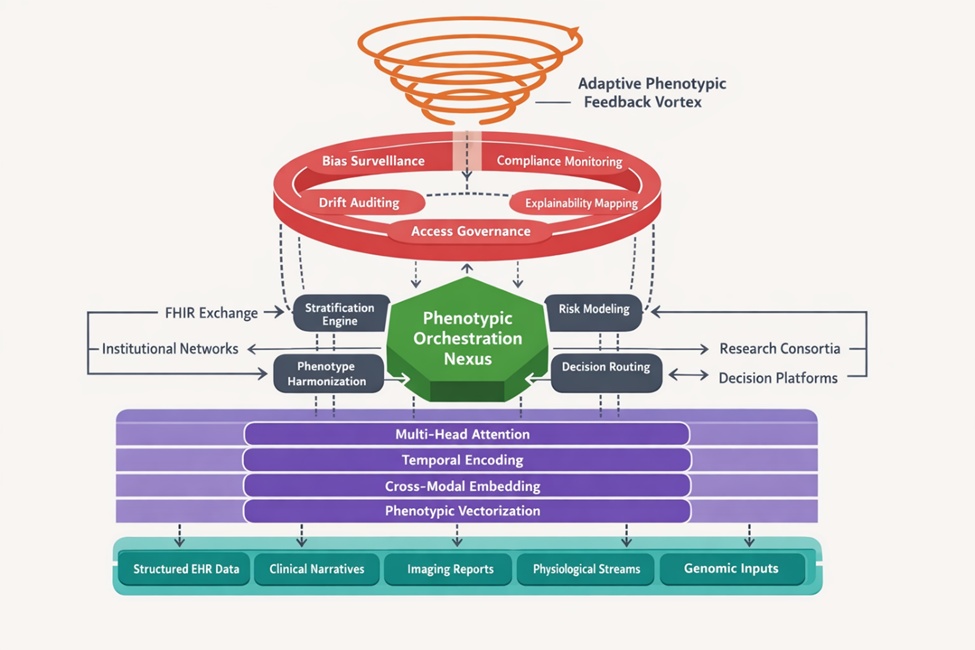
Figure 1. Transformer- embedded clinical phenotyping infrastructure: the phenotypic transformer orchestration lattice (PTOL).
Conceptual systems architecture depicting the five-layer PTOL framework. Multimodal clinical data enter through the data ingestion lattice and are encoded within the transformer encoding stratum via attention-driven phenotypic vectorization. Encoded representations converge in the orchestration nexus, where stratification, risk modeling, and decision routing occur. The governance veil overlays the core to enforce bias monitoring, compliance auditing, and explainability mapping. A helical feedback vortex enables iterative recalibration of phenotypic inference, while lateral interoperability channels facilitate cross-institutional phenotypic exchange.
To interpret system dynamics, consider the following conceptual formulas:
Risk propagation (RP):
Decision confidence (DC):
Monitoring burden (MB):
Resource allocation (RA):
Governance load (GL):
Drift sensitivity (DS):
This orchestration embeds transformers to enhance clinical phenotyping within infrastructural bounds theoretically.
The deployment of the phenotypic transformer orchestration lattice (PTOL) within clinical phenotyping infrastructures introduces multifaceted impacts on healthcare dynamics, theoretically reshaping how phenotypic data influences system-wide operations [3, 4]. This section analyzes the consequences of embedding transformers in such models, focusing on resilience, scalability, and ethical ramifications without empirical assertions. By conceptualizing impacts through interpretive lenses, it elucidates how PTOL’s layers propagate effects across clinical ecosystems.
At the core, the data ingestion lattice and transformer encoding stratum amplify phenotypic granularity, theoretically reducing diagnostic ambiguities in heterogeneous clinical settings [5, 6]. This enhancement cascades to the Orchestration Nexus, where integrated processing could streamline decision support, mitigating workflow bottlenecks in high-stakes environments like emergency departments [7, 8]. However, such dynamics introduce potential vulnerabilities; for instance, heightened sensitivity to data modalities may exacerbate drift if feedback from the Vortex is inadequately tuned, as interpreted by the Drift Sensitivity formula
Governance impacts emerge prominently through the Veil layer, where oversight mechanisms theoretically distribute loads as per
The interpretive formulas governing PTOL system dynamics and infrastructural sensitivities are summarized in Table 2.
Table 2. Conceptual system dynamics and interpretive formulas in PTOL phenotyping infrastructure
Infrastructure dynamic | Conceptual formula | Core variables | Interpretive meaning | Operational implication |
Risk propagation | Phenotypic weight, error magnitude, and drift | Error amplification across layers | Necessitates drift containment | |
Decision confidence | Attention threshold, completeness, and governance load | Confidence erosion under oversight strain | Balancing automation and regulation | |
Monitoring burden | Resource allocation and monitoring frequency | Oversight workload modeling | Infrastructure scaling limits | |
Resource allocation | Phenotypic demand, efficiency, and capacity | Compute load balancing | Deployment optimization | |
Governance load | Compliance baseline, risk, and drift | Regulatory strain index | Policy design calibration | |
Drift sensitivity | Variance, time, and feedback velocity | Phenotype instability tracking | Feedback loop tuning |
Scalability impacts the position of PTOL as adaptable to varying clinical scales, from individual practices to national health systems, by leveraging transformer orchestration for modular expansion [22, 23]. Ethical dynamics arise in ensuring phenotypic fairness, where the model’s feedback topology theoretically iterates toward inclusive representations, countering historical data inequities [24, 25]. Overall, these impacts delineate a transformative yet cautious paradigm, where PTOL’s infrastructure dynamics foster resilient clinical phenotyping while demanding vigilant governance [26].
The conceptual articulation of the phenotypic transformer orchestration lattice (PTOL) within a transformer-embedded clinical phenotyping infrastructure invites nuanced discourse on its theoretical contributions to healthcare AI systems. Synthesizing from architectural precedents, PTOL advances beyond conventional EHR ecosystems by embedding transformer mechanisms for dynamic phenotypic handling, addressing gaps in interoperability and governance identified in prior frameworks [27, 28]. This model’s unique helical feedback topology distinguishes it from linear pipelines, theoretically enabling adaptive refinements that align with evolving clinical demands [29, 30].
Central to the discussion is PTOL’s potential to mitigate phenotypic fragmentation in multimodal data environments, where transformers’ attention layers theoretically enhance feature coherence [31]. Yet, this embeds inherent complexities; the interpretive formulas, such as Risk Propagation and Drift Sensitivity, underscore vulnerabilities to data inconsistencies, prompting reflections on infrastructure robustness [1, 2]. In governance contexts, PTOL’s Veil layer conceptualizes a proactive stance against ethical pitfalls, diverging from reactive monitoring in existing systems [3, 4]. This could theoretically elevate AI accountability, particularly in decision support where confidence metrics guide clinician-AI synergies [5, 6].
Interoperability emerges as a pivotal discourse point, with PTOL’s orchestration facilitating seamless phenotypic data flows, potentially revolutionizing collaborative analytics [7, 8]. However, challenges in deployment environments—resource constraints and regulatory loads—necessitate balanced resource allocation, as modeled by RA and MB formulas [9, 10]. Compared to literature on clinical workflow integrations, PTOL offers a more holistic infrastructure, embedding governance from inception rather than as an addendum [11, 12].
Broader implications touch on scalability and equity; by conceptualizing modular layers, PTOL theoretically supports diverse clinical scales, from specialized ICUs to population health analytics [13, 14]. Ethical discussions highlight its role in bias attenuation, where feedback vortices iterate phenotypic equity, aligning with calls for responsible AI in healthcare [15, 16]. Limitations in this conceptual approach include the absence of empirical validations, which future works could address through simulated deployments [17, 18]. Nonetheless, PTOL enriches theoretical dialogues on transformer-embedded infrastructures, proposing a blueprint for intelligent, governed phenotyping [19, 20].
In synthesizing the transformer-embedded clinical phenotyping infrastructure model through the phenotypic transformer orchestration lattice (PTOL), this manuscript delineates a conceptual advancement in healthcare AI architectures. By embedding transformers within a multi-layered, feedback-driven infrastructure, PTOL theoretically optimizes phenotypic extraction and utilization from EHRs, fostering precise clinical stratification and decision support. The model’s emphasis on interoperability, governance, and workflow integration addresses critical voids in existing ecosystems, as evidenced by the interpretive formulas that capture dynamics like risk propagation, decision confidence, and drift sensitivity.
The impacts analyzed reveal PTOL’s potential to enhance system resilience and ethical deployment, while dynamics discussions underscore its adaptability and limitations. Ultimately, this infrastructure model contributes to the theoretical foundation of AI-driven healthcare, advocating for architectures that prioritize clinical utility and accountability. Future conceptual explorations could extend PTOL to emerging modalities, further solidifying its role in intelligent health systems.
None
None
None
None
Open Access This article is licensed under a Creative Commons Attribution 4.0 International License, which permits use, sharing, adaptation, distribution and reproduction in any medium or format, as long as you give appropriate credit to the original author(s) and the source, provide a link to the Creative Commons licence, and indicate if changes were made. The images or other third party material in this article are included in the article's Creative Commons licence, unless indicated otherwise in a credit line to the material. If material is not included in the article's Creative Commons licence and your intended use is not permitted by statutory regulation or exceeds the permitted use, you will need to obtain permission directly from the copyright holder. To view a copy of this licence, visit http://creativecommons.org/licenses/by/4.0/.
 Clinical Intelligence Research Press