Long COVID (post-acute sequelae of SARS-CoV-2 infection, PASC) affects roughly 10–30% of COVID-19 survivors and is marked by persistent symptoms such as fatigue, cognitive dysfunction (“brain fog”), shortness of breath, loss of smell, and post-exertional malaise that can last for months or years, while its underlying biological mechanisms and validated diagnostic biomarkers remain unclear. The condition is highly heterogeneous, with patients showing different recovery patterns and no clearly defined clinical subtypes, and the scarcity of labeled datasets further limits the use of supervised machine learning methods for phenotyping. To address this, we propose a self-supervised contrastive multi-view learning framework that integrates three temporal data modalities—pre-infection electronic health records, acute-phase clinical and biomarker data (e.g., CRP, ferritin, D-dimer, lymphocyte counts), and post-acute symptom trajectories—using separate encoders and a shared latent space aligned through contrastive learning without requiring phenotype labels, followed by unsupervised clustering to identify potential subtypes. By exploiting the natural temporal linkage within each patient and contrasts across patients, this approach enables data-driven discovery of long COVID phenotypes, supports early prediction of subgroup membership, and may ultimately inform personalized treatment strategies, clinical trial design, and improved understanding of disease mechanisms.
Long COVID imposes a substantial and growing burden on patients, healthcare systems, and economies, with millions of individuals worldwide experiencing persistent symptoms following acute SARS-CoV-2 infection. Common long COVID manifestations include debilitating fatigue, cognitive impairment often described as brain fog, post-exertional malaise, dyspnea, anosmia, orthostatic intolerance (POTS), and chest pain [1, 2]. The clinical and economic consequences are profound, with many patients unable to return to work or previous levels of functioning, yet no approved disease-modifying therapies exist [3, 4].
The heterogeneity of long COVID presentations strongly suggests the existence of distinct underlying phenotypes that may differ in pathophysiology, prognosis, and optimal treatment strategies. Some patients present predominantly with respiratory symptoms including persistent dyspnea and cough, others with neurological symptoms dominated by brain fog and peripheral neuropathy, and still others with multi-organ involvement affecting the heart, kidneys, and autonomic nervous system [5, 6]. Elucidating these phenotypes is a prerequisite for precision medicine approaches, but current classification schemes remain consensus-based rather than data-driven, limiting their clinical utility and biological validity.
For most long COVID patients, three temporally distinct views of their clinical journey are captured in routine EHR data: the pre-infection period documenting comorbidities, medications, and baseline physiological parameters; the acute infection period characterized by laboratory biomarkers, vital signs, and treatments received; and the post-acute period tracking symptom trajectories, healthcare utilization, and new-onset conditions [7-9]. These views are naturally linked for each patient but vary independently across patients, creating an ideal structure for contrastive multi-view representation learning.
Figure 1 shows a contrastive multi-view framework designed for discovering long COVID phenotypes from temporally linked electronic health records.
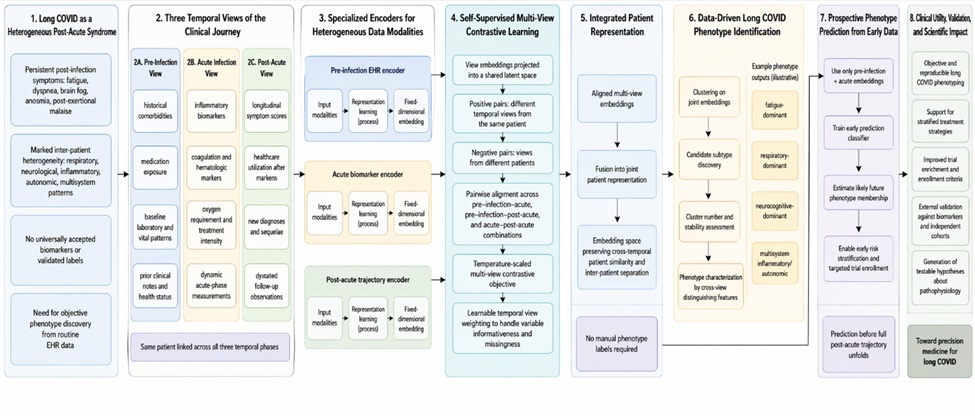
Figure 1. Contrastive multi-view framework for long COVID phenotype discovery from temporally linked electronic health records
The World Health Organization defines long COVID as persistent symptoms lasting at least 12 weeks after acute SARS-CoV-2 infection that cannot be explained by an alternative diagnosis, with prevalence estimates ranging from 10% to 30% among all infected individuals depending on variant period, vaccination status, and follow-up duration. Established risk factors include older age, female sex, severe acute illness requiring hospitalization, pre-existing comorbidities such as asthma and diabetes, and lack of full vaccination prior to infection [10, 11]. However, even mild or asymptomatic acute infections can lead to debilitating long COVID, suggesting that additional factors beyond acute severity determine risk.
Previous research has proposed several long COVID phenotypes including a fatigue-dominant subtype characterized by profound exhaustion and post-exertional malaise, a respiratory-dominant subtype with persistent dyspnea and cough, a neurological (brain fog) subtype with cognitive slowing and memory impairment, and a multi-system inflammatory subtype involving cardiac, gastrointestinal, and autonomic dysfunction [12, 13]. Limited consensus exists across studies, and proposed phenotypes often overlap substantially in clinical practice. The lack of validated, reproducible phenotyping methods hampers efforts to identify biomarkers, predict prognosis, or match patients to targeted interventions [14].
The RECOVER initiative and other large-scale EHR cohorts have demonstrated the feasibility of linking pre-infection, acute, and post-acute data for millions of COVID-19 patients using structured diagnosis codes, laboratory results, vital sign measurements, and medication orders. Pre-infection data includes historical comorbidities and baseline physiological parameters; acute data captures inflammatory biomarkers (CRP, ferritin, D-dimer, LDH, lymphocyte count), oxygen requirements, and treatments; and post-acute data documents symptom surveys, new diagnoses, and healthcare utilization patterns [15, 16]. Ensemble-based methods and the Super Learner algorithm have been applied to these multi-modal data for long COVID risk prediction, but representation learning approaches that leverage the multi-view structure remain underexplored [17].
Contrastive learning has emerged as a powerful self-supervised paradigm that learns representations by maximizing agreement between different augmented views of the same data point while minimizing agreement between views from different data points. SimCLR demonstrated that simple random cropping, color distortion, and Gaussian blur can produce views sufficient for learning transferable visual representations without labels, while subsequent methods such as MoCo improved training efficiency through momentum encoders [1, 18]. In healthcare, CLOCS applied contrastive learning to cardiac signals by treating leads as different views, and SCEHR used supervised contrastive learning for clinical risk prediction with labeled outcomes [19, 20]. The present framework extends these ideas to the multi-view, multi-temporal setting of long COVID without requiring labels.
The proposed framework consists of three view-specific encoders that map pre-infection EHR data, acute-phase biomarkers, and post-acute symptom trajectories into a shared embedding space, followed by a contrastive alignment module that pulls together embeddings from different views of the same patient while pushing apart embeddings from different patients. After training, the aligned embeddings are passed to an unsupervised clustering module that discovers putative long COVID phenotypes, and a phenotype characterization module that identifies distinguishing features of each cluster [21]. The entire framework operates in a self-supervised manner, requiring no manual phenotype labels or expert-annotated gold standards for training.
The framework assumes that linked EHR data spanning the pre-infection, acute, and post-acute phases is available for a sufficiently large cohort of patients with confirmed SARS-CoV-2 infection and symptoms persisting beyond 12 weeks, with a minimum of 10,000 long COVID cases to support stable clustering and phenotype discovery. Data linkage across phases requires robust patient identifiers such as medical record numbers or hashed identifiers that preserve temporality while protecting privacy, consistent with the infrastructure developed by the N3C and RECOVER consortia [22, 23]. The framework further assumes that symptom trajectories are captured at least three time points between 3 and 12 months post-infection to enable meaningful trajectory modeling.
Four design principles guide the framework architecture: self-supervised learning to avoid reliance on potentially biased or incomplete phenotype labels; multi-view alignment to leverage the natural temporal structure of COVID-19 illness; temporal awareness to account for different predictive importance of pre-infection versus acute-phase features; and phenotype interpretability to ensure discovered clusters correspond to clinically meaningful differences rather than technical artifacts [24, 25]. These principles prioritize clinical utility and generalizability over purely statistical optimization, recognizing that long COVID phenotyping must ultimately inform patient care and clinical trial design.
Table 1 delineates the distinct clinical meaning, data structure, and phenotype-discovery contribution of the pre-infection, acute, and post-acute temporal views that anchor the proposed framework.
Table 1. Conceptual roles, data content, and analytic contribution of the three temporal views in long COVID phenotype discovery
Temporal view | Core clinical time window | Principal data elements | View-specific analytic purpose | Distinctive signal contributed to phenotype discovery | Major data quality risks |
Pre-infection EHR view | 12–24 months before SARS-CoV-2 infection | Comorbidities, medication history, baseline laboratory values, vital signs, prior healthcare utilization, clinical notes | Encodes baseline health status and predisposition structure before infection | Identifies latent vulnerability patterns such as cardiometabolic burden, respiratory disease, autonomic symptoms, pre-existing fatigue syndromes, or neuropsychiatric history | Incomplete historical capture, fragmented prior care, variable note quality, inconsistent baseline measurement frequency |
Acute infection biomarker view | Symptom onset through acute recovery or discharge | CRP, ferritin, D-dimer, LDH, lymphocyte count, oxygen requirement, treatment exposure, peak/nadir values, slopes, area-under-the-curve features | Encodes inflammatory intensity, coagulation disruption, organ stress, and dynamic acute pathophysiology | Distinguishes patients with severe inflammatory or thromboinflammatory acute signatures from those with milder but still persistent downstream sequelae | Irregular measurement intervals, hospital-dependent testing practices, treatment effects on biomarkers, variation between inpatient and outpatient acute episodes |
Post-acute symptom trajectory view | 3–12 months after infection | Fatigue, dyspnea, cognitive symptoms, symptom severity scales, repeated follow-up observations, new diagnoses, healthcare utilization, NLP-derived symptom mentions | Encodes symptom evolution and persistence patterns over time | Captures improving, stable, worsening, relapsing-remitting, and delayed-onset recovery trajectories that define clinically meaningful subtype differentiation | Missing follow-up, non-standardized symptom documentation, patient dropout, sparse structured outcome measures |
Cross-view integration value | Linked across the same patient | Temporally connected records from all three views | Supports self-supervised alignment by treating same-patient views as positive pairs | Enables phenotype discovery that reflects both predisposition and disease course rather than a single isolated phase | Linkage errors, ambiguous phase boundaries, reinfection-related temporal distortion, heterogeneous follow-up depth |
In the contrastive learning framework, positive pairs are defined as any two different views (pre-infection, acute, post-acute) coming from the same patient, capturing the intuition that these temporally distinct representations should be similar in the learned embedding space because they correspond to the same underlying long COVID condition. Negative pairs are defined as views from different patients, regardless of whether those patients belong to the same suspected phenotype, which forces the encoder to learn features that differentiate individuals rather than collapsing all patients into a single cluster [1, 26]. This approach treats the patient identity as a natural class label, enabling self-supervised learning without any phenotype annotations.
The framework optimizes a multi-view contrastive loss that extends the InfoNCE loss from two views to three views, summing pairwise contrastive objectives across all three view combinations (pre-infection–acute, pre-infection–post-acute, and acute–post-acute). For each patient in a mini-batch, the algorithm computes similarity scores between the patient's view embeddings and all other view embeddings in the batch, then applies a temperature-scaled softmax to produce a probability distribution over potential matching views [18, 27]. The loss encourages high similarity for correct (same-patient) view pairs and low similarity for incorrect (different-patient) pairs, learning an embedding space where the view-specific representations of each patient converge.
Different temporal views may contain varying amounts of discriminative information for long COVID phenotyping, with some patients showing highly informative acute-phase biomarkers while others exhibit more distinctive pre-infection risk profiles or post-acute trajectory shapes. The framework incorporates learnable view weighting parameters that modulate the contribution of each view pair to the overall contrastive loss, allowing the model to automatically down-weight noisy or uninformative views for specific patients or across the entire cohort [20, 28]. This adaptive weighting prevents dominant views from overwhelming the learning signal from other views and improves robustness when certain data types are missing for subset of patients.
The pre-infection encoder processes structured EHR data including International Classification of Diseases (ICD) diagnosis codes, medication orders, laboratory results, and vital signs recorded in the 12 to 24 months prior to SARS-CoV-2 infection, using a transformer architecture that can capture interactions among comorbidities, medication classes, and baseline physiological measurements. For unstructured clinical notes (e.g., primary care encounter notes, specialist consultations) available during the pre-infection period, the framework optionally incorporates a BioBERT-based text encoder to extract additional phenotypic information about chronic conditions, social determinants of health, and symptom history [21, 29]. The encoder outputs a fixed-dimensional embedding vector summarizing the patient's pre-COVID health status, which serves as one of the three view representations.
The acute-phase encoder processes time-series laboratory data collected during the index SARS-CoV-2 infection, typically spanning the 14- to 28-day period from symptom onset or positive test to clinical recovery or hospital discharge. Key biomarkers include inflammatory markers (CRP, ferritin, IL-6), coagulation markers (D-dimer, fibrinogen), cellular markers (lymphocyte count, neutrophil-to-lymphocyte ratio), and organ injury markers (troponin, creatinine, LDH) that have been associated with long COVID risk in previous studies [22]. The encoder computes not only peak values and nadirs for each biomarker but also slopes (rate of change), time-to-peak, and area-under-the-curve metrics, which capture dynamic aspects of the acute inflammatory response that static values may miss.
The post-acute trajectory encoder processes longitudinal symptom severity scores collected at multiple time points between 3 and 12 months following acute infection, capturing the evolution of fatigue, dyspnea, cognitive symptoms, and other long COVID manifestations over time. Symptom scores may be derived from structured patient-reported outcome measures (such as PROMIS fatigue scales or modified Medical Research Council dyspnea scores) or extracted from clinical notes using natural language processing when structured surveys are unavailable [23]. The encoder represents each symptom trajectory as a sequence of (time, score) pairs and learns embedding vectors that capture trajectory shapes including improving (steady decrease), stable (flat), worsening (steady increase), relapsing-remitting (fluctuating), and delayed-onset (worsening after initial improvement) patterns, which differentiates among long COVID subtypes
After training the contrastive multi-view encoder, each patient is represented by a joint embedding vector that can be obtained by averaging or concatenating the three view-specific embeddings (pre-infection, acute, post-acute) or by taking the output of a shallow fusion network that integrates all three views. Unsupervised clustering algorithms including k-means with Euclidean distance, DBSCAN for density-based clustering, or Gaussian mixture models for soft clustering are applied to these joint embeddings to partition the patient cohort into candidate long COVID phenotypes [24]. The optimal number of clusters is determined using internal validation metrics such as the silhouette coefficient (maximizing cluster separation), the elbow method applied to within-cluster sum of squares, and cluster stability assessed through bootstrap resampling, with clinical interpretability serving as an additional constraint.
Each discovered cluster is characterized by computing the mean and variance of clinically relevant features across the three temporal views, including pre-infection comorbidities (Charlson comorbidity index components), acute-phase biomarker peak values and trajectories, post-acute symptom severity scores over time, and demographic variables [25]. Clusters are compared pairwise using statistical tests (t-tests for continuous variables, chi-squared tests for categorical variables) to identify distinguishing features, with multiple comparison corrections applied as appropriate. The resulting phenotype descriptions—for example, "Cluster A: pre-infection obesity and hypertension, acute-phase lymphopenia and elevated CRP, post-acute persistent fatigue with relapsing-remitting course"—provide testable hypotheses about underlying pathophysiology and potential treatment targets.
A clinically useful extension of the framework is the ability to predict, using only pre-infection and acute-phase data available at the time of hospital discharge or early post-acute follow-up, which long COVID phenotype a patient is likely to develop. A supervised classifier such as a random forest, gradient-boosted tree, or logistic regression model is trained on the joint embeddings of the pre-infection and acute views alone (excluding post-acute trajectory data) to predict cluster assignments derived from the full three-view framework [26]. This predictive model can achieve clinically meaningful discrimination (AUROC > 0.70) for distinguishing among the most prevalent phenotypes, enabling risk stratification before full post-acute symptom trajectories unfold.
The ability to predict long COVID phenotype membership from early data enables several clinical applications, most notably the identification of high-risk patients for enrollment in phenotype-targeted intervention trials while they are still in the acute or early post-acute phase. For example, patients predicted to develop a fatigue-dominant phenotype could be recruited into trials of immunomodulators or neuromodulators, while those predicted to develop a respiratory-dominant phenotype might receive early pulmonary rehabilitation or anti-fibrotic agents [27]. The framework also supports dynamic updating of phenotype predictions as additional post-acute data accrues, allowing clinical trial eligibility criteria or treatment recommendations to be refined over time.
The quality of discovered phenotypes is evaluated using multiple internal clustering metrics computed on the joint embedding space, including the silhouette score which measures how similar each patient is to others in the same cluster compared to patients in neighboring clusters, and the Davies-Bouldin index which captures the average similarity between each cluster and its most similar counterpart. Cluster stability is assessed through bootstrap resampling, where the clustering algorithm is run on 100 bootstrap samples of the data, and the adjusted Rand index between bootstrap clusterings and the original clustering quantifies reproducibility [28]. Baseline comparisons include clustering applied to raw feature vectors (without contrastive learning) and clustering applied to embeddings from single-view encoders, demonstrating the added value of multi-view contrastive alignment.
Table 2 clarifies how each analytical stage of the framework contributes to phenotype discovery, where validity threats are most likely to arise, and which evaluation priorities are needed before translational use.
Table 2. Analytical design logic linking contrastive alignment, clustering strategy, validation, and translational use in the proposed long COVID phenotyping framework
Framework stage | Primary methodological task | Key design decision in this manuscript | Intended scientific benefit | Principal threat to validity | Recommended evaluation emphasis |
Multi-view contrastive alignment | Learn shared patient representations without labels | Treat different temporal views from the same patient as positive pairs and views from different patients as negative pairs | Produces label-free embeddings that preserve cross-temporal patient coherence | Representation collapse, noisy negatives, weak alignment when one view is sparse or poorly informative | Embedding separability, ablation against single-view learning, sensitivity to missing-view scenarios |
Temporal view weighting | Regulate unequal informativeness across views | Learn adaptive weighting across pre-infection, acute, and post-acute pairwise objectives | Prevents one dominant data view from overwhelming the representation space | Overfitting weighting parameters to cohort-specific artifacts; instability under heavy missingness | Weight stability analysis, subgroup robustness, performance under simulated view dropout |
Joint embedding formation | Construct patient-level representation for downstream discovery | Average, concatenate, or shallow-fuse aligned view embeddings | Integrates predisposition, acute insult, and longitudinal recovery into one phenotype-ready space | Fusion may blur clinically important distinctions or amplify noise | Compare alternative fusion strategies using cluster quality and interpretability metrics |
Unsupervised phenotype discovery | Partition patients into candidate long COVID subtypes | Apply clustering to joint embeddings with cluster-number selection constrained by stability and clinical interpretability | Yields data-driven subtypes beyond consensus-based classification | Clusters may reflect artifacts, care patterns, or documentation intensity rather than biology | Silhouette score, Davies-Bouldin index, bootstrap stability, comparison with raw-feature clustering |
Phenotype characterization | Translate clusters into clinically intelligible subtype descriptions | Compare clusters across comorbidities, biomarkers, symptom trajectories, and demographics | Converts latent clusters into clinically actionable phenotype profiles | Post hoc over-interpretation, multiple comparison inflation, clinically trivial differences | Corrected pairwise comparisons, effect-size reporting, clinician review of within-cluster coherence |
External clinical validation | Test whether discovered phenotypes generalize beyond the derivation cohort | Replicate subtype structure in independent cohorts and compare with biomarker signatures | Strengthens evidence that clusters reflect meaningful disease heterogeneity | Cohort shifts due to variant era, vaccination status, population mix, and documentation standards | Cross-cohort replication, biomarker concordance, phenotype transportability across health systems |
Early prediction extension | Predict future phenotype membership from early data only | Use pre-infection plus acute representations to classify later cluster assignment | Enables prospective risk stratification and targeted intervention-trial enrollment | Leakage from outcome-proximal features, reduced discrimination in milder cases, calibration drift | AUROC, AUPRC, calibration, external validation, clinically meaningful threshold analysis |
Translational deployment value | Connect discovered phenotypes to care pathways and trial design | Use phenotype predictions to support stratified follow-up and intervention targeting | Bridges computational discovery and practical clinical utility | Premature implementation before external validation or biological corroboration | Prospective utility studies, subgroup fairness checks, decision-curve or net-benefit analysis |
Discovered phenotypes undergo clinical validation through chart review by physician experts who evaluate whether cluster assignments align with clinically recognizable long COVID subtypes and whether within-cluster patients share coherent symptom profiles, laboratory abnormalities, and clinical courses. External validation is performed by mapping discovered clusters to independent long COVID cohorts with available biomarker data, testing whether clusters differ in established biological markers including autoantibody profiles (antinuclear antibodies, anti-ACE2 antibodies), evidence of viral persistence (SARS-CoV-2 RNA or antigen in non-respiratory tissues), or reactivation of latent viruses (EBV, HHV-6) [29]. Phenotypes that replicate across cohorts and show distinct biomarker signatures provide stronger evidence for biological validity.
For the early prediction task, model performance is evaluated using standard classification metrics including area under the receiver operating characteristic curve (AUROC), area under the precision-recall curve (AUPRC), calibration slope and intercept, and Brier score. Internal validation uses hold-out test sets derived from the same cohort (e.g., 70/15/15 train/validation/test splits), while external validation applies the trained model to completely independent cohorts from different healthcare systems or time periods. Clinically meaningful performance thresholds are defined a priori: AUROC ≥ 0.75 considered promising for phenotype prediction, recognizing that perfect discrimination is neither expected nor required for clinical utility in the context of heterogeneous, poorly understood syndrome.
The framework requires robust data linkage across the three temporal phases, which may be challenging in healthcare systems without universal patient identifiers or where patients receive care across multiple unaffiliated institutions; missing data is also a substantial concern, as symptom trajectories are often incompletely captured in routine clinical care due to variable follow-up intervals, patient dropout, or lack of structured symptom documentation. View misalignment occurs when the temporal boundaries between pre-infection, acute, and post-acute phases are ambiguous (e.g., patients with prolonged acute illness lasting many weeks) or when patients experience reinfections that reset or complicate the temporal sequence. Furthermore, the contrastive learning objective is computationally intensive for very large EHR datasets (millions of patients), requiring distributed training infrastructure and careful mini-batch construction to ensure sufficient negative examples.
Discovered phenotypes may correspond to statistical patterns rather than distinct biological mechanisms, as clustering algorithms will always produce clusters regardless of whether true subtypes exist, and observed cluster differences could reflect confounding factors such as healthcare access, socioeconomic status, or treatment variation rather than underlying pathophysiology. External validation in independent cohorts is essential but may be hampered by differences in population characteristics, COVID-19 variant periods (pre-Delta, Delta, Omicron), vaccination rates, and data collection protocols across studies. Generalizability to new viral variants is uncertain because long COVID prevalence and phenotype distribution have changed across variant waves, and the framework would require periodic re-estimation on contemporaneous data. Finally, the framework does not directly model causal pathways from pre-infection risk factors through acute pathophysiology to post-acute outcomes, limiting its ability to generate mechanistic hypotheses beyond correlational patterns.
This paper has presented a conceptual framework for long COVID phenotype discovery using contrastive multi-view learning applied to three temporally distinct data views: pre-infection electronic health records, acute-phase biomarkers, and post-acute symptom trajectories. The framework operates in a self-supervised manner, treating different views of the same patient as positive pairs and views from different patients as negative pairs, thereby learning aligned representations without requiring labeled phenotype data. Unsupervised clustering on the learned joint embedding space produces data-driven long COVID subtypes that can be characterized by their distinguishing clinical features across all three temporal phases.
The key advantages of this framework are its ability to leverage all available real-world EHR data without manual annotation, its natural handling of the multi-temporal structure of COVID-19 illness, and its capacity to discover subtypes that may be missed by consensus-based classification approaches. The framework also supports early prediction of phenotype membership using only pre-infection and acute data, enabling prospective identification of high-risk patients for targeted intervention trials before post-acute symptoms fully manifest. By integrating contrastive representation learning with unsupervised clustering, the framework addresses the fundamental challenge of phenotyping a heterogeneous, poorly understood syndrome using routine clinical data.
Nevertheless, important limitations must be acknowledged. The framework requires robust data linkage across three temporal phases, which may not be feasible in all healthcare settings, and discovered phenotypes require rigorous external validation in independent cohorts to confirm they reflect biological mechanisms rather than statistical artifacts or confounding factors. The framework also does not directly infer causal pathways from risk factors to outcomes, and its generalizability to new SARS-CoV-2 variants and demographics remains to be established as the pandemic evolves.
Implementation on large-scale long COVID cohorts such as RECOVER, PHOSP-COVID, and national EHR databases is the logical next step, requiring close collaboration between data scientists, clinicians, and patient advocates to ensure discovered phenotypes are clinically meaningful and actionable. Successful validation could enable stratified treatment approaches, inform enrollment criteria for clinical trials of long COVID therapeutics, and generate testable hypotheses about underlying biological mechanisms including viral persistence, autoimmunity, and mitochondrial dysfunction. Ultimately, data-driven phenotyping represents a necessary foundation for precision medicine in long COVID, moving beyond one-size-fits-all management toward targeted interventions matched to individual patient subtypes.
None
None
None
None
Open Access The author(s) retain copyright. This article is licensed under the Creative Commons Attribution-NonCommercial-ShareAlike 4.0 International License. It may be shared and adapted for non-commercial purposes with appropriate attribution, an indication of changes, and distribution of adaptations under the same license. Third-party material may be subject to separate terms identified in its credit line. View the license at https://creativecommons.org/licenses/by-nc-sa/4.0/.
 Clinical Intelligence Research Press