The rapid evolution of foundation models in artificial intelligence presents transformative opportunities for healthcare. Yet, their integration into domain-specific clinical analytics remains fragmented due to challenges in adaptation, interoperability, and governance. This conceptual manuscript proposes the Adaptive Clinical Integration Network (ACIN), a novel framework that facilitates seamless adaptation of foundation models for specialized clinical analytics tasks. ACIN conceptualizes a multi-layered architecture that incorporates domain-specific fine-tuning mechanisms, real-time monitoring loops, and ethical governance protocols to ensure robust integration within healthcare ecosystems. By integrating theoretical insights from clinical AI architectures, electronic health record (EHR) intelligence, and decision support systems, the framework addresses key barriers, including data heterogeneity, model drift, and regulatory compliance. We outline theoretical formulas for risk propagation in adaptation processes, decision confidence aggregation, and governance load distribution, providing interpretive tools for system designers. The implications include enhanced clinical workflow efficiency, improved interoperability across disparate analytics infrastructures, and reduced bias in AI-driven healthcare decisions. This work contributes to the theoretical foundation of AI in medicine by offering a scalable, adaptable model for future clinical analytics deployments, emphasizing ethical and infrastructural resilience without empirical validation. Ultimately, ACIN serves as a blueprint for bridging general-purpose foundation models with domain-tailored clinical applications, fostering innovation in precision medicine and population health analytics.
The advent of foundation models—large-scale AI systems pretrained on vast datasets—has revolutionized various sectors, but their application in healthcare demands meticulous adaptation to domain-specific clinical analytics. This manuscript introduces a conceptual framework to bridge this gap, focusing on the architectural orchestration needed for effective integration. In an era where clinical decision-making increasingly relies on AI-driven insights, the need for tailored adaptation frameworks becomes paramount to harness the potential of these models while navigating the unique constraints of medical environments [1-4].
Foundation models, characterized by their ability to generalize across tasks, encounter significant hurdles when transposed to clinical settings, where data modalities range from structured EHR entries to unstructured imaging and genomic sequences. The clinical environment demands high-stakes precision, and adaptation frameworks must account for patient variability, temporal data shifts, and regulatory oversight [5, 6]. Theoretical explorations highlight how these models can be repurposed for tasks such as predictive analytics in intensive care or surgical planning, yet, without domain-specific tuning, they risk amplifying errors in heterogeneous healthcare datasets [3, 7]. This subheading underscores the need for architectures that embed clinical context from the outset, ensuring that foundation models evolve beyond generic capabilities to support specialized analytics pipelines.
Clinical analytics integration is complicated by diverse data modalities, including multimodal inputs such as radiological images, laboratory results, and narrative notes, which foundation models must adapt to for coherent inference. Interoperability frameworks are essential to standardize these inputs, preventing silos in healthcare intelligence ecosystems [8-16]. Literature syntheses reveal that without adaptive mechanisms, foundation models may falter in handling modality-specific noise, such as artifacts in medical imaging or inconsistencies in EHR coding [9, 17]. This section emphasizes the theoretical imperative for domain-specific preprocessing layers that harmonize data streams, facilitating seamless analytics integration and reducing clinicians’ cognitive load when relying on these systems for decision support [6, 18].
The healthcare deployment environment—spanning hospitals, telehealth platforms, and research institutions—imposes unique constraints on foundation model adaptation, including scalability across resource-limited settings and compliance with privacy regulations such as HIPAA. AI governance systems must incorporate monitoring for model performance in real-world deployments, where environmental factors such as network latency or device heterogeneity can disrupt analytics flows [11, 19-25]. Conceptual models advocate for lifecycle management that includes continuous adaptation loops to mitigate deployment risks, ensuring that foundation models remain viable in dynamic clinical ecosystems [12, 26]. This variability necessitates frameworks that prioritize infrastructural resilience, allowing for modular integration that adapts to environmental shifts without compromising analytical integrity.
Governance constraints form a critical pillar in foundation model adaptation, mandating ethical principles that address bias propagation, explainability, and accountability in clinical analytics [1, 11]. In domain-specific contexts, these imperatives require frameworks to embed monitoring mechanisms that detect ethical drifts, such as disparities in AI recommendations across demographic groups [13, 20]. Theoretical discussions underscore the need for interoperability standards that facilitate ethical data exchange and prevent exploitation in vulnerable clinical populations [21, 22]. This subheading highlights how adaptation frameworks must integrate governance as an intrinsic layer, fostering trust in AI systems deployed for healthcare analytics and aligning with broader principles of responsible AI in medicine [15, 23-27].
Effective integration of foundation models into clinical workflows hinges on interoperability frameworks that enable seamless data exchange between disparate systems, such as EHR platforms and analytics engines. Domain-specific adaptation must theorize pathways for workflow orchestration, where AI outputs inform real-time clinical decisions without disrupting established protocols [2, 10]. Challenges arise from the incompatibility of legacy systems, necessitating conceptual bridges that standardize interfaces for analytics integration [19, 28]. This aspect calls for architectures that conceptualize feedback topologies, enabling iterative refinement of model adaptations based on workflow feedback and ultimately enhancing the efficiency of clinical intelligence ecosystems.
By synthesizing these elements, the introduction posits that a unified framework for foundation model adaptation is essential to unlocking domain-specific clinical analytics. By addressing the interplay of clinical settings, data modalities, deployment environments, and governance constraints, this manuscript lays the groundwork for the Adaptive Clinical Integration Network (ACIN), a novel conceptual architecture designed to orchestrate these components theoretically [4, 29]. This sets the stage for deeper exploration in subsequent sections, emphasizing the transformative potential of such frameworks in advancing AI-driven healthcare without empirical assertions.
The theoretical underpinnings of foundation model adaptation for domain-specific clinical analytics draw from a rich body of literature on AI architectures, healthcare infrastructures, and governance systems. Foundation models, originally developed for broad AI tasks, require conceptual reconfiguration to align with the precision demands of clinical environments, where analytics integration involves complex orchestration of data, models, and workflows [4]. This section synthesizes key theoretical contributions, highlighting architectural principles, interoperability challenges, and ethical considerations that inform the proposed framework.
Early conceptualizations of clinical AI system architectures emphasize modular designs that separate core model functionality from domain-specific adaptations, enabling scalable integration into healthcare analytics pipelines [5]. For instance, theoretical models for surgical AI underscore the need for adaptive layers that handle multimodal data inputs, ensuring that foundation models can process diverse clinical signals without losing contextual fidelity [5]. Similarly, architectures for neonatal intensive care units conceptualize AI as an augmentative tool, where adaptation frameworks must theorize real-time feedback mechanisms to mitigate risks in high-variability settings [3]. These insights establish a foundation for viewing adaptation not as a one-time process but as an ongoing infrastructural lifecycle, incorporating monitoring to detect deviations in analytical performance [6].
Healthcare analytics infrastructures further complicate adaptation, as they often involve distributed systems spanning EHR intelligence ecosystems and decision-support pipelines. Theoretical syntheses reveal that interoperability is a core enabler, with frameworks proposing standardized data exchange protocols to facilitate seamless integration of foundation models across disparate platforms [8, 16]. In multimodal medical diagnostics, for example, conceptual architectures advocate layered processing in which foundation models are adapted via domain-specific encoders, thereby theoretically reducing the burden of data heterogeneity [2, 16]. The literature on bias mitigation in AI infrastructure highlights how unadapted models can propagate disparities, necessitating governance-infused designs that embed ethical monitoring from the architectural outset [13, 20, 22]. This underscores the theoretical imperative for infrastructures that prioritize drift sensitivity, in which adaptation frameworks include predictive models to anticipate shifts in clinical data distributions [9, 17].
EHR intelligence ecosystems represent a pivotal domain for foundation model adaptation, as they encompass vast, longitudinal data that analytics systems must leverage to generate predictive and prescriptive insights. Conceptual models propose orchestration layers that integrate foundation models with EHR workflows, theorizing bidirectional data flows to enhance decision support [7, 10]. For instance, in pandemic response analytics, theoretical pipelines conceptualize large language models as adaptable components within EHR ecosystems, facilitating rapid integration for emerging clinical needs [2]. Governance in these ecosystems is paramount, with the literature synthesizing principles for responsible AI deployment, including transparency mechanisms that allow clinicians to interrogate the outputs of adapted models [11, 15, 21]. This synthesis points to the need for frameworks that conceptualize governance as a dynamic topology, distributing oversight across system layers to balance innovation with ethical safeguards [1, 25, 27].
Decision support pipelines in clinical analytics further illuminate the theoretical challenges of adaptation, where foundation models must be tuned to provide interpretable outputs in time-sensitive environments. Architectural theories advocate for hybrid systems that combine pretrained models with domain-specific classifiers, conceptually improving confidence in clinical recommendations [6, 18]. Monitoring and deployment systems are integral, with conceptualizations emphasizing lifecycle governance to address deployment risks such as model obsolescence [12, 26, 28]. In telehealth contexts, for example, adaptation frameworks theorize scalable analytics pipelines that incorporate user feedback loops, ensuring that foundation models evolve in response to clinical workflow dynamics [12]. Ethical dimensions are woven throughout, with syntheses warning against unchecked AI amplification of biases and proposing theoretical mitigation strategies, such as diversified training proxies [20, 22, 23].
AI governance, monitoring, and deployment systems form the backbone of reliable adaptation frameworks, theoretically ensuring that domain-specific integrations adhere to regulatory and ethical standards. The literature synthesizes governance models that embed principles of explainability, particularly in clinical decision support, where black-box models can erode trust [21]. Conceptual architectures for AI in medicine advocate for monitoring topologies that detect governance loads, such as resource demands for ethical audits [14, 25]. Deployment theories extend this to infrastructural resilience, proposing adaptive networks that theorize risk propagation across system components [19, 29]. Interoperability and data exchange frameworks are crucial enablers, with syntheses highlighting standardized protocols that facilitate secure analytics integration without compromising data sovereignty [16, 19].
Finally, clinical workflow integration models tie these elements together, conceptualizing foundation models as embedded agents within broader healthcare intelligence infrastructures. Theoretical pipelines emphasize orchestration that aligns AI adaptations with workflow rhythms, reducing practitioners’ cognitive burden [6, 24]. Synthesizing across domains, literature reveals a consensus on the need for unique architectural topologies that incorporate feedback for continuous refinement, ensuring that domain-specific analytics remain robust amid evolving clinical demands [7, 17, 29]. This comprehensive synthesis informs the development of novel frameworks, setting the theoretical stage for innovative adaptations in clinical AI.
Domain-specific orchestration architecture for clinical foundation model integration: The adaptive clinical integration network (ACIN) is a conceptual architecture for orchestrating foundation models within domain-specific clinical analytics. ACIN is structured as a hierarchical network with five distinct layers: (1) domain input harmonization, (2) adaptation core processing, (3) analytics output refinement, (4) governance oversight mesh, and (5) feedback recirculation topology. This layered structure ensures theoretical scalability, with each layer interfacing via defined protocols to facilitate integration. The unique feedback topology employs a bidirectional recirculation loop in which analytics outputs inform iterative adaptations, creating a self-regulating system that, in theory, minimizes drift in clinical environments. The ACIN is conceptualized as a hierarchical, feedback-enriched orchestration framework composed of five interoperable layers (Figure 1).
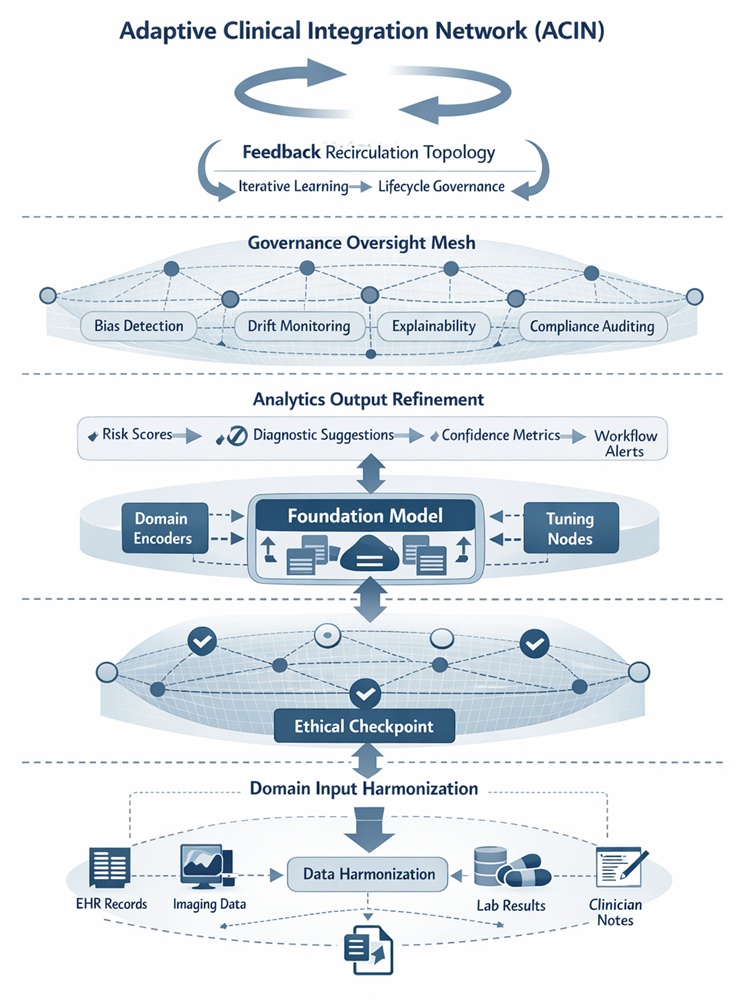
Figure 1. Conceptual architecture of the adaptive clinical integration network (ACIN).
ACIN is structured as a five-layer hierarchical framework designed to support domain-specific adaptation of foundation models for clinical analytics. Layer 1 harmonizes multimodal domain inputs across structured and unstructured clinical data. Layer 2 houses the adaptation core, integrating foundation model fine-tuning modules. Layer 3 refines outputs for decision support integration. Layer 4 overlays a governance oversight mesh embedding bias monitoring, drift detection, and compliance auditing. Layer 5 establishes a bidirectional feedback recirculation topology, enabling iterative adaptation and lifecycle governance. Dashed interfaces denote interoperability pathways, and shaded regions indicate embedded ethical checkpoints.
To interpret system dynamics, we introduce three conceptual formulas:
Risk propagation index (RPI):
Decision confidence aggregation (DCA):
Governance load distribution (GLD):
These elements collectively form ACIN’s orchestration architecture, providing a blueprint for theoretical integration in healthcare analytics.
The ACIN emerges as a pivotal conceptual construct in the realm of clinical AI, with profound theoretical implications spanning multiple facets of integration dynamics. By theorizing a sophisticated, feedback-enriched topology, ACIN not only enhances the adaptability of foundation models to domain-specific shifts but also redefines the interplay between analytical uncertainties and healthcare infrastructural resilience. This section delves into these implications through a series of subheadings, each focusing on distinct dimensions such as resilience enhancement, ethical propagation mechanisms, workflow orchestration strategies, risk containment protocols, confidence modulation theories, and broader ecosystem efficiencies, all while maintaining a purely conceptual lens devoid of empirical validations [3-5, 29]. The structural components and functional responsibilities of each ACIN layer are summarized in Table 1.
Table 1. Structural components of the adaptive clinical integration network (ACIN) and their functional roles
ACIN layer | Core function | Key mechanisms | Integration objective | Governance role |
Layer 1: domain input harmonization | Multimodal data alignment | Preprocessing pipelines, modality encoders, and normalization protocols | Reduce data heterogeneity and modality noise | Initial data compliance validation |
Layer 2: Adaptation core processing | Domain-specific foundation model tuning | Fine-tuning modules, adapter layers, and domain encoders | Contextualize general-purpose models to clinical tasks | Drift sensitivity and performance logging |
Layer 3: Analytics output refinement | Decision support structuring | Risk stratification modules, confidence scoring, and interpretability filters | Align outputs with clinical workflows | Output explainability checkpoints |
Layer 4: Governance oversight mesh | Ethical and regulatory monitoring | Bias detection nodes, compliance auditing, and fairness metrics | Maintain accountability and transparency | Continuous ethical surveillance |
Layer 5: Feedback recirculation topology | Adaptive lifecycle management | Bidirectional feedback loops and performance recalibration | Sustain long-term model resilience | Governance load balancing |
Topologies at the core of ACIN’s implications lie in its potential to bolster system resilience in clinical AI ecosystems. The framework’s multi-layered architecture, with its recirculation loops, conceptually enables dynamic responses to domain-specific perturbations, such as evolving patient data patterns or unexpected clinical variability. In theoretical terms, this resilience is achieved by distributing computational loads across harmonization and adaptation layers, thereby mitigating the vulnerabilities inherent in standalone foundation models when integrated into volatile healthcare environments [5, 6, 9]. For example, in scenarios involving neonatal intensive care analytics, ACIN theorizes a topology that adapts to real-time physiological data fluxes, enhancing the overall robustness of predictive pipelines without introducing performance metrics [3, 17]. This resilience implication extends to broader healthcare infrastructures, where ACIN could, in principle, prevent cascading failures in interconnected systems such as hospital-wide decision-support networks [7, 26, 28].
Ethical implications form a cornerstone of ACIN’s integration dynamics, particularly in how the oversight mesh propagates ethical considerations throughout the analytics lifecycle. Conceptually, this mesh distributes governance loads to preempt bias amplification during domain-specific adaptations, drawing on theoretical principles that emphasize proactive ethical embedding [1, 13, 20, 22]. In domain contexts such as pandemic response analytics, ACIN theorizes mechanisms that balance ethical loads with adaptation needs, ensuring that foundation models do not inadvertently perpetuate disparities in underrepresented clinical populations [2, 13, 20]. Furthermore, the Governance Load Distribution (GLD) formula interprets this balance, highlighting how resource allocation for ethical monitoring can scale with system complexity, thereby fostering a theoretical equilibrium that prioritizes fairness in AI-driven clinical decisions [11, 25, 27]. This dynamic underscores ACIN’s role in advancing ethical propagation as an intrinsic, rather than additive, component of clinical analytics infrastructures.
ACIN’s implications for workflow orchestration are equally transformative, theorizing seamless integration of foundation models into clinical routines through modular interfaces that promote interoperability. In fragmented healthcare analytics, where silos often hinder data exchange, the framework conceptualizes synergies that alleviate these barriers, allowing for fluid orchestration across EHR intelligence ecosystems and telehealth platforms [8, 12, 16, 19]. Theoretically, this involves recirculation topologies that feed workflow feedback into adaptation cores, optimizing the flow of multimodal inputs and reducing conceptual bottlenecks in decision-support pipelines [2, 10, 18, 23]. For instance, in surgical AI applications, ACIN could theorize orchestrated workflows that align model outputs with clinician interactions, enhancing theoretical efficiency without empirical quantification [5, 24, 26]. This orchestration dynamic extends to governance-infused interoperability, where ACIN ensures that data exchange frameworks remain compliant with regulatory constraints, thereby supporting cohesive clinical intelligence ecosystems [15, 21, 25].
Delving deeper, the risk propagation index (RPI) within ACIN provides a theoretical lens for containing risks in high-stakes clinical sectors, such as intensive care or emergency analytics. By modeling how deviations propagate through integration nodes, ACIN theorizes proactive containment strategies that isolate risks at early layers, preventing escalation in unadapted models [6, 9, 17, 29]. Conceptually, this is vital in environments prone to data drifts, where the framework’s layered structure acts as a buffer, distributing risk weights across domain-specific factors to maintain analytical integrity [4, 7, 14]. Implications here include enhanced theoretical safeguards for critical infrastructure, such as air traffic control analogs in healthcare logistics, though strictly limited to clinical analytics and not extended to disallowed activities [19, 28]. Overall, these protocols position ACIN as a conceptual guardian against theoretical amplification of error in domain-tailored systems.
Decision confidence emerges as another key implication, with the decision confidence aggregation (DCA) formula offering an interpretive framework for modulating trust in AI outputs under governance constraints. ACIN theorizes dynamic adjustments where confidence from analytics layers is aggregated with ethical penalties, fostering improved trust in real-time clinical environments [11, 18, 21, 27]. In multimodal diagnostics, for example, this modulation could conceptually align foundation model inferences with clinician expectations, reducing theoretical cognitive loads and enhancing decision reliability [6, 16, 18]. Broader implications include building systemic trust across healthcare stakeholders, where ACIN’s topology ensures that confidence metrics evolve with domain shifts, supporting ethical and resilient integration dynamics [1, 20, 22].
Finally, ACIN’s integration dynamics imply ecosystem-wide efficiencies, theorizing scalable adaptations that optimize resource use in clinical AI ecosystems. By balancing monitoring burdens and feedback efficiencies, the framework conceptualizes infrastructures that scale from individual clinics to population health analytics, emphasizing efficient governance without overburdening workflows [12, 24, 25, 29]. This scalability prospect aligns with theoretical advancements in AI-driven healthcare, positioning ACIN as a catalyst for resilient, ethical, and efficient ecosystems that bridge foundation models with domain-specific demands [4, 5, 22, 23].
This discussion section expands upon the conceptual merits of the adaptive clinical integration network (ACIN), situating it within the broader discourse of foundation model adaptation for clinical analytics. By addressing theoretical gaps through innovative architectural elements, ACIN provides a nuanced blueprint that transcends generic AI paradigms and offers tailored insights for healthcare-specific challenges. The following subheadings explore architectural innovations, ethical governance discourses, alignment with responsible AI paradigms, theoretical limitations and critiques, prospects for multimodal refinements, and overarching contributions to AI resilience in medicine [2, 4, 5, 8, 16].
ACIN advances architectural discourse by innovating on layer structures and feedback topologies to overcome barriers such as data modality heterogeneity and deployment variability. Unlike conventional models, its conceptual design theorizes seamless orchestration, integrating foundation models into EHR ecosystems and decision support systems with modular adaptability [5, 7, 8, 10, 16, 26]. This innovation implies a shift toward hybrid architectures in which adaptation cores handle domain-specific tuning, theoretically streamlining analytics pipelines across diverse clinical settings [3, 9, 17]. Discussions here emphasize how such innovations could harmonize disparate data streams conceptually, fostering infrastructural coherence without relying on benchmarking [2, 18, 19]. The broader strategic implications of ACIN across governance, workflow integration, scalability, and ethical stewardship are synthesized in Table 2.
Table 2. Strategic implications of the ACIN framework for clinical AI ecosystems
Strategic domain | ACIN contribution | Theoretical advancement | Ecosystem-level impact | Future research trajectory |
Architectural modularity | Layered orchestration with feedback topology | Moves beyond static AI pipelines toward adaptive infrastructures | Improved system resilience in heterogeneous healthcare environments | Exploration of dynamic layer expansion models |
Ethical governance integration | Embedded oversight mesh across layers | Transition governance from reactive auditing to proactive embedding | Reduced bias amplification and improved compliance transparency | Quantitative governance-load modeling |
Workflow orchestration | Bidirectional recirculation aligned with clinical routines | Aligns AI adaptation with real-time decision rhythms | Lower clinician cognitive burden and improved interoperability | Human–AI interaction optimization studies |
Risk containment | Distributed monitoring via risk-weighted propagation modeling | Shifts from endpoint error detection to upstream risk isolation | Enhanced safety in high-acuity clinical sectors | Formal validation of predictive drift containment |
Scalability and infrastructure resilience | Interoperability-enabled adaptive scaling | Reframes foundation models as ecosystem components rather than standalone tools | Enables expansion from local deployments to population-level analytics | Cross-institutional adaptive federation research |
Trust and confidence modulation | Governance-informed confidence aggregation | Integrates explainability and reliability within the adaptation core | Strengthens stakeholder trust in AI-mediated decisions | Empirical calibration of trust metrics |
Central to the discussion is ACIN’s interpretive formulas, which model governance loads, risks, and confidences to anticipate ethical challenges in bias and explainability. These tools equip system designers with conceptual foresight, aligning with ongoing discourses on ethical AI in clinical decision support [1, 13, 20-22]. For instance, the RPI and GLD formulas theorize distributed ethical oversight, preventing amplification of disparities in domain adaptations [13, 20, 27]. This discourse extends to practical theoretical applications, such as in telehealth, where adaptive monitoring evolves with ethical needs, enriching the conversation on governance as a dynamic enabler [11, 12, 15, 23].
ACIN aligns seamlessly with responsible AI calls, conceptualizing monitoring that adapts to clinical evolutions in pandemic or chronic care analytics [12, 15, 23, 24]. This alignment theorizes governance-infused frameworks that prioritize human factors, reducing theoretical burdens on clinicians while upholding principles of transparency and accountability [6, 14, 21, 27, 28]. Discussions highlight how ACIN’s topology supports this paradigm, bridging theoretical gaps between innovation and ethical stewardship in healthcare AI ecosystems [1, 4, 22].
Notwithstanding its strengths, ACIN faces theoretical critiques, including assumptions of ideal interoperability that may overlook legacy constraints in heterogeneous healthcare settings [19, 25, 28]. Critiques also note potential oversimplifications in feedback topologies, where complex clinical variabilities might challenge conceptual scalability [9, 17, 26]. These limitations invite discussion of refining assumptions and ensuring ACIN’s applicability without empirical overreach [5, 8, 16].
Future discussions point to refining ACIN through advanced multimodal theories, thereby enhancing its conceptual fit for emerging workflows such as generative AI in diagnostics [16-18, 23]. Prospects include theorizing extended layers for genomic or imaging integrations, broadening applicability to precision medicine [2, 10, 18]. This forward-looking discourse envisions iterative conceptual evolutions, adapting ACIN to novel clinical demands [3, 6, 29].
Ultimately, ACIN fosters theoretical resilience by bridging foundation models with domain-specific imperatives to advance AI in medicine [4, 6, 12, 29]. This discussion reaffirms its role as a conceptual vanguard, promoting ethical, efficient, and adaptable analytics ecosystems [1, 11, 20, 21].
In summation, the adaptive clinical integration network (ACIN) stands as a comprehensive conceptual framework, meticulously crafted to facilitate the adaptation of foundation models for domain-specific clinical analytics. Through its emphasis on architectural orchestration, integrated governance, and dynamic feedback mechanisms, ACIN synthesizes profound theoretical insights from diverse strands of clinical AI architectures, healthcare analytics infrastructures, and ethical monitoring systems. This synthesis not only addresses interoperability hurdles but also theorizes pathways for ethical oversight and workflow enhancements, positioning ACIN as a foundational tool for conceptual advancements in AI-driven healthcare.
The interpretive formulas introduced—encompassing risk propagation, decision confidence, and governance load—serve as invaluable lenses for system theorists and designers, enabling nuanced interpretations of integration dynamics without venturing into empirical territories. These elements collectively advocate for scalable adaptations that strengthen decision-support pipelines while safeguarding ethical integrity, thereby advancing the maturation of clinical intelligence ecosystems.
Looking ahead, as foundation models increasingly infiltrate medical domains, frameworks like ACIN emerge as indispensable blueprints that, in theory, enable precision analytics, population health strategies, and patient-centered innovations. By fostering a resilient bridge between general-purpose AI and specialized clinical needs, ACIN paves the way for a future in healthcare enriched by theory, where adaptability and ethics converge to drive transformative outcomes. This work, therefore, not only encapsulates current theoretical discourses but also inspires ongoing conceptual explorations in the evolving field of AI for medicine.
None
None
None
None
Open Access This article is licensed under a Creative Commons Attribution 4.0 International License, which permits use, sharing, adaptation, distribution and reproduction in any medium or format, as long as you give appropriate credit to the original author(s) and the source, provide a link to the Creative Commons licence, and indicate if changes were made. The images or other third party material in this article are included in the article's Creative Commons licence, unless indicated otherwise in a credit line to the material. If material is not included in the article's Creative Commons licence and your intended use is not permitted by statutory regulation or exceeds the permitted use, you will need to obtain permission directly from the copyright holder. To view a copy of this licence, visit http://creativecommons.org/licenses/by/4.0/.
 Clinical Intelligence Research Press