The integration of health data across organizational boundaries represents a cornerstone of modern artificial intelligence (AI) applications in healthcare systems and analytics, enabling enhanced predictive modeling, population health management, and personalized interventions. This narrative review synthesizes methodological approaches for cross-organizational data linkage, elucidates pathways through which biases emerge in these processes, and delineates validation standards essential for ensuring reliability and equity in AI-driven healthcare infrastructures. Drawing from literature, we examine how federated learning paradigms facilitate collaborative analytics without direct data sharing, thereby addressing privacy concerns while enabling multi-institutional model training. Approaches such as swarm learning and secure multi-party computation allow for distributed computation on decentralized datasets, mitigating risks associated with centralized repositories. However, such linkages introduce bias pathways, including selection biases arising from heterogeneous data sources, algorithmic amplification of disparities, and confounding factors rooted in demographic underrepresentation. For instance, racial and gender biases embedded in training data can propagate through linked systems, potentially leading to inequitable clinical outcomes. Validation standards are therefore critical to address these challenges, encompassing probabilistic linkage accuracy assessments, privacy-preserving evaluation metrics, and ethical frameworks designed to support fairness auditing. The review also highlights the potential role of blockchain technologies in enabling auditable linkage mechanisms and emphasizes the need for consensus-driven guidelines to standardize validation practices across healthcare ecosystems. In addition, the review integrates systems-level perspectives by framing data linkage as a foundational component of intelligent clinical decision support and closed-loop healthcare systems, where AI-driven analytics inform real-time interventions supported by continuous feedback mechanisms. Through this synthesis, the article underscores the importance of robust and bias-aware linkage methodologies for advancing AI-enabled healthcare analytics. Ultimately, the adoption of rigorous validation protocols can support trustworthy cross-organizational collaborations, reduce disparities, and enhance system resilience across diverse clinical environments. This work positions cross-organizational data linkage as a critical infrastructure for scalable AI healthcare applications and calls for interdisciplinary efforts to align methodological innovation with responsible ethical governance.
The proliferation of artificial intelligence (AI) in healthcare systems has transformed the landscape of clinical analytics, shifting from siloed, institution-specific data processing to interconnected, multi-organizational frameworks that leverage collective intelligence for improved patient outcomes. At the heart of this evolution lies cross-organizational health data linkage, a process that enables the secure integration of disparate datasets while preserving privacy and regulatory compliance. This linkage is essential for training robust AI models that can generalize across diverse populations, predict disease trajectories, and support evidence-based decision-making in real-time clinical environments [1-8]. Historically, healthcare data has been fragmented across hospitals, research institutions, and public health agencies, leading to inefficiencies in analytics and missed opportunities for population-level insights. The advent of AI-driven approaches, particularly those incorporating machine learning, has necessitated innovative linkage methods to overcome these barriers without compromising data sovereignty [6, 7].
The methodological foundations of cross-organizational data linkage have evolved significantly since the mid-2010s, driven by advancements in distributed computing and privacy technologies. Traditional linkage techniques, such as deterministic matching based on unique identifiers, have given way to probabilistic and privacy-preserving methods that accommodate variability in data formats and quality. For example, randomized response techniques and balanced Bloom filters have been employed to enable linkage while obfuscating sensitive information, allowing for statistical inference across datasets without revealing individual records. In the context of AI for healthcare analytics, these methods support the aggregation of features for model training, such as in federated learning setups where local models are updated iteratively without centralizing raw data [1-6]. This evolution reflects a broader shift toward systems-level integration, where AI not only analyzes data but also orchestrates workflows across organizational boundaries to facilitate seamless analytics pipelines [4, 8].
AI algorithms play a dual role in data linkage: as tools for automating matching processes and as beneficiaries of the linked data for enhanced predictive capabilities. Machine learning-based linkage, incorporating hashing techniques and similarity metrics, improves accuracy in handling noisy or incomplete records, which is prevalent in healthcare datasets. Studies have demonstrated that AI-driven probabilistic linkage can achieve high completeness rates, as seen in national registry validations where linkage quality directly impacts analytic reliability. Furthermore, integrating AI with blockchain technologies provides an auditable trail for linkages, ensuring traceability in multi-stakeholder environments. This synergy is particularly vital in analytics-heavy applications, such as risk stratification models that draw from cross-organizational electronic health records (EHRs) to inform population health strategies [9-11].
Despite these advancements, cross-organizational linkage introduces complexities related to data heterogeneity, interoperability standards, and governance. Heterogeneous data sources—varying in structure, semantics, and quality—can impede effective linkage, necessitating AI-mediated harmonization techniques. Interoperability frameworks, such as those outlined in guidance for linking administrative datasets, emphasize the need for standardized protocols to mitigate errors in multi-jurisdictional settings. Governance challenges further complicate this, as organizations must navigate legal frameworks like HIPAA or GDPR while deploying AI analytics [12-17]. Ethical considerations, including consent models for linked data use, underscore the importance of transparent systems that prioritize patient autonomy [13, 17, 18].
A critical dimension of cross-organizational linkage is the potential for bias propagation, where systemic inequities in source data are amplified through AI models [11, 12, 15]. For instance, underrepresentation of minority groups in linked datasets can lead to skewed predictions, exacerbating health disparities [11, 18]. Validation standards thus become paramount, involving metrics for linkage accuracy, bias detection, and model fairness [19-21]. Consensus statements advocate for multi-phase validation, including pre-linkage quality assessments and post-linkage performance audits [13, 22-24]. These imperatives ensure that AI healthcare systems remain equitable and reliable, fostering trust in cross-organizational collaborations.
This review positions cross-organizational health data linkage as a foundational enabler of AI-driven healthcare systems and analytics, synthesizing methodological approaches, bias pathways, and validation standards through an original integrative lens. By structuring the analysis around systems-level workflows—from data ingestion to governance—we provide a novel framework that interconnects distributed learning paradigms with ethical validation practices, highlighting opportunities for resilient, bias-mitigated infrastructures in clinical settings.
The application of AI in healthcare systems and analytics has expanded rapidly, encompassing predictive modeling, diagnostic support, and operational optimization. Central to this landscape is the ability to link health data across organizations, which underpins the scalability and effectiveness of AI tools. Federated learning emerges as a dominant paradigm, allowing institutions to collaborate on model development without exchanging sensitive patient data, thereby addressing privacy and regulatory hurdles [1-8]. This approach has been applied in diverse clinical scenarios, from oncology imaging to infectious disease forecasting, demonstrating its versatility in analytics-driven systems [2, 3].
Methodological innovations in cross-organizational linkage focus on privacy-preserving techniques that enable AI analytics while minimizing data exposure. Secure federated frameworks, such as those utilizing differential privacy and homomorphic encryption, facilitate distributed training where gradients are aggregated rather than raw data shared [4, 5, 7]. For instance, swarm learning decentralizes the process further by leveraging peer-to-peer networks, enhancing robustness in heterogeneous environments [5]. Probabilistic record linkage methods complement these, using statistical models to match records across datasets with incomplete identifiers, achieving high accuracy in population-level analytics [19, 20, 21, 23-28]. Hashing-based approaches provide efficient, scalable linkage for large-scale AI applications, reducing computational overhead while preserving anonymity [22, 27]. Blockchain integration adds a layer of security, enabling verifiable linkages in multi-organizational consortia [29]. These methods collectively form the backbone of AI healthcare systems, supporting analytics pipelines that integrate EHRs, imaging data, and genomic profiles for comprehensive insights [9, 10]. Table 1 summarizes major methodological paradigms for cross-organizational health data linkage, highlighting differences in privacy preservation, computational requirements, and healthcare analytic applications.
Table 1. Methodological approaches for cross-organizational health data linkage in AI healthcare systems
Linkage methodology | Core mechanism | Privacy characteristics | Computational requirements | Typical healthcare use cases |
Deterministic identifier matching | Exact matching using unique identifiers (e.g., national ID, patient number) | Low privacy protection if identifiers are exposed | Low computational burden | National registries and administrative databases |
Probabilistic record linkage | Statistical similarity scoring across partially matching identifiers | Moderate privacy depending on encryption | Moderate computational load | Multi-hospital EHR integration |
Hash-based linkage | Identifiers transformed through cryptographic hashing | High privacy protection if salted hashing is used | Low-to-moderate computational cost | Large-scale healthcare registries |
Bloom filter linkage | Encodes identifiers into probabilistic bit arrays for comparison | High privacy with controlled re-identification risk | Moderate computational demand | Privacy-preserving multi-institutional studies |
Secure multi-party computation | Distributed cryptographic protocols enabling joint computation without data sharing | Very high privacy protection | High computational overhead | Sensitive clinical consortia collaborations |
Federated learning-based linkage | Local models trained on decentralized data with parameter aggregation | High privacy; raw data never leaves the institution | High infrastructure and coordination requirements | Multi-institutional AI model training |
In healthcare infrastructures, AI-enabled linkage supports end-to-end analytics, from data acquisition to deployment. Multi-institutional collaborations, as seen in federated networks for rare disease modeling, illustrate how linkage enhances data diversity, improving model generalizability [3, 6]. Analytics platforms incorporate these linkages to enable real-time processing, such as in predictive systems for patient deterioration [9, 10]. Governance structures are integral, with frameworks ensuring compliance and data stewardship across boundaries [16, 17]. This integration fosters resilient systems where AI analytics inform resource allocation, epidemic surveillance, and personalized care pathways [8, 9].
Bias pathways in cross-organizational linkage arise from multiple sources, potentially undermining AI analytics equity. Selection biases occur when linked datasets disproportionately represent certain demographics, leading to algorithmic disparities [11, 12, 15, 18]. For example, racial biases in health management algorithms stem from unrepresentative training data, amplifying inequities in clinical recommendations [11]. Gender and socioeconomic biases further compound this, as seen in biomedicine applications where AI models perpetuate historical underrepresentations [15]. In federated settings, heterogeneity across organizations can introduce confounding biases, where local data variations skew global models [13, 14]. Pathways also include deployment biases, where linked data informs decisions that reinforce systemic inequalities without adequate safeguards [12, 18]. Recognizing these pathways is crucial for designing bias-mitigated AI healthcare systems.
Validation standards for cross-organizational linkage emphasize rigorous, multi-faceted assessments to ensure analytic integrity. Accuracy metrics, such as linkage completeness and false positive rates, are evaluated through national validation studies, providing benchmarks for AI applications [23, 26, 28]. Privacy-preserving validation incorporates techniques like privacy-preserving probabilistic linkage (P3RL), which maintains confidentiality during quality checks [21]. Fairness audits, guided by ethical frameworks, assess bias impact across linked datasets [12, 13, 16, 17]. Consensus guidelines advocate for standardized protocols, including guidance for information about linking datasets (GUILD), to harmonize validation in research and clinical analytics [24, 25]. These standards are essential for trustworthy AI systems, ensuring that linkages support equitable, high-fidelity healthcare analytics.
Synthesizing these elements, the landscape reveals a maturing ecosystem where methodological linkage approaches converge with bias-aware validation to bolster AI healthcare analytics. Federated paradigms exemplify this, enabling scalable systems that integrate diverse data sources for advanced analytics [1, 4, 5, 8]. Yet, persistent bias pathways necessitate proactive validation, fostering infrastructures that prioritize equity and reliability [11, 13, 15, 19]. This synthesis underscores the need for interdisciplinary collaboration to refine linkage methodologies, ultimately enhancing the analytic capabilities of healthcare systems.
Intelligent clinical decision support systems (CDSS) leverage cross-organizational data linkage to provide actionable insights, integrating AI analytics into healthcare workflows for enhanced precision and efficiency. These systems form closed-loop architectures, where data linkage informs model predictions, which in turn guide interventions with iterative feedback for system refinement [9, 10, 13]. In this context, linkage methodologies enable the fusion of multi-source data, supporting real-time decision-making in dynamic clinical environments [1-3, 8].
Core architectures in intelligent CDSS emphasize modular designs that incorporate federated linkage for distributed analytics. For instance, secure federated learning architectures allow local model training on organization-specific data, with aggregated updates enhancing global decision models without data transfer [6, 7]. This is particularly effective in closed-loop systems, where predictions feed into intervention protocols, such as alerting clinicians to potential adverse events [9, 10]. Privacy-preserving linkages, including probabilistic and hashing methods, ensure seamless integration while mitigating risks [19, 20, 22, 27]. Ethical architectures further embed fairness checks, addressing bias pathways during decision fusion [12, 16-18].
Closed-loop healthcare systems operationalize linkage through cyclical processes: data ingestion via cross-organizational methods, AI inference for decision generation, intervention deployment, and feedback for recalibration [4, 5, 13]. Validation standards play a key role here, with ongoing audits ensuring linkage quality informs reliable loops [21, 23-28]. Blockchain-enhanced architectures provide immutable feedback logs, supporting adaptive systems that evolve with new data [29]. These dynamics enable proactive healthcare, where AI analytics anticipate needs and refine decisions iteratively.
In these systems, human-AI collaboration is facilitated by explainable architectures that demystify linkage-derived decisions [14]. Frameworks for responsible AI emphasize hybrid models where clinicians validate outputs, countering biases from linked data [11, 13, 15]. Governance structures ensure ethical integration, promoting trust in closed-loop operations [16, 17]. Figure 1 illustrates the closed-loop cross-organizational health data linkage architecture in which privacy-preserving linkage methods enable distributed AI analytics. At the same time, validation and bias-surveillance mechanisms continuously recalibrate clinical decision systems.
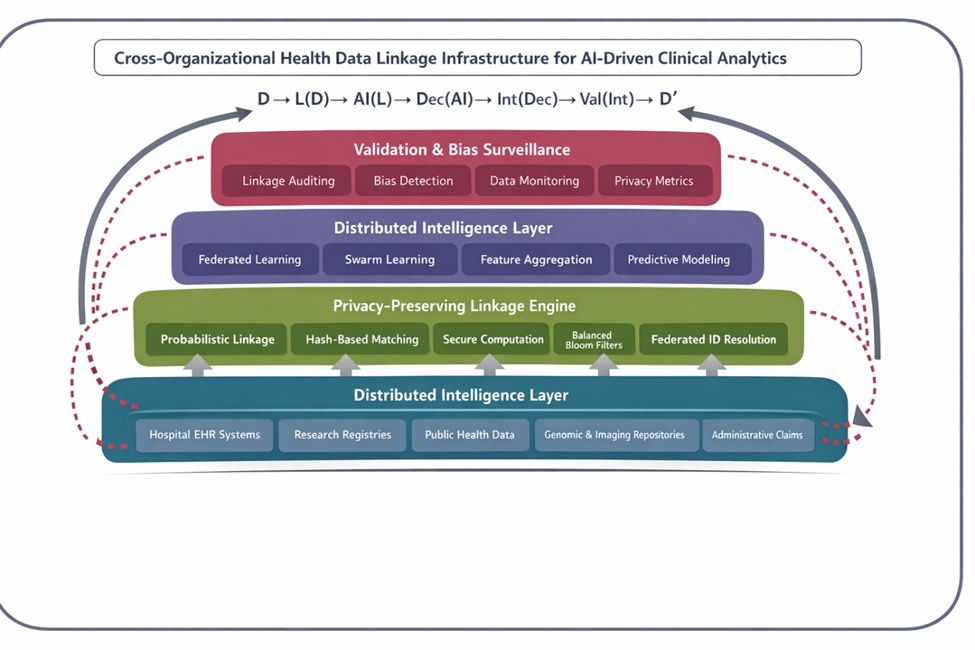
Figure 1. Closed-loop cross-organizational health data linkage architecture for AI-driven clinical Analytics
The deployment of cross-organizational health data linkage in AI-driven healthcare systems and analytics, while promising, is fraught with multifaceted challenges and limitations that span technical, ethical, operational, and regulatory domains. These hurdles not only impede the seamless integration of disparate datasets but also amplify risks associated with bias propagation and validation inconsistencies, potentially undermining the reliability of clinical analytics and decision support frameworks. Table 2 delineates key bias pathways that emerge in cross-organizational health data linkage pipelines and outlines validation mechanisms required to ensure fairness and analytic reliability in AI healthcare systems.
Table 2. Bias pathways and validation mechanisms in cross-organizational health data linkage systems
Bias pathway | Origin in the data linkage pipeline | Impact on AI healthcare analytics | Detection mechanisms | Mitigation strategies |
Selection bias | Uneven representation across participating institutions | Skewed model generalizability and inaccurate population risk estimates | Demographic distribution analysis across linked datasets | Inclusion weighting and federated sampling adjustments |
Identifier incompleteness bias | Missing or inconsistent patient identifiers during linkage | False negatives in record matching lead to incomplete patient histories | Linkage completeness metrics and recall analysis | Hybrid deterministic-probabilistic matching |
Algorithmic amplification bias | AI models trained on biased linked datasets | Disparities in clinical predictions across demographic groups | Fairness metrics (e.g., equal opportunity difference) | Fairness-aware model training and reweighting |
Data harmonization bias | Inconsistent coding standards across institutions (ICD, SNOMED, etc.) | Confounded analytics due to semantic mismatches | Ontology alignment audits and semantic mapping validation | Standardized clinical terminologies |
Deployment bias | AI decisions are implemented unevenly across healthcare settings | Differential access to AI-guided interventions | Outcome monitoring across institutions | Governance-driven deployment guidelines |
Temporal drift bias | Changes in data distributions over time in linked systems | Degradation of model performance in longitudinal analytics | Continuous validation, monitoring, and model recalibration | Adaptive model retraining pipelines |
Addressing these challenges requires a nuanced understanding of their interplay within healthcare ecosystems, where AI models must navigate complex data landscapes to deliver equitable and effective outcomes. This section delves deeply into the primary obstacles, synthesizing insights from the literature to highlight systemic vulnerabilities and propose mitigative strategies grounded in existing methodological frameworks.
Technical impediments form a core category of challenges in cross-organizational health data linkage, primarily arising from data heterogeneity, scalability issues, and computational demands. Heterogeneous data formats across organizations—encompassing structured EHRs, unstructured clinical notes, imaging files, and genomic sequences—complicate linkage processes, often leading to incomplete or erroneous matches that degrade AI analytic performance [19-25]. For instance, variations in coding standards, such as differing uses of ICD-10 versus SNOMED-CT, can introduce mismatches in probabilistic linkage algorithms, resulting in false negatives that skew population-level analytics [23, 26, 28]. Scalability further exacerbates this, as federated learning approaches, while privacy-preserving, require substantial computational resources for gradient aggregation across distributed nodes, particularly in large-scale networks involving hundreds of institutions [1, 3, 5-7]. Studies have noted that network latency and bandwidth constraints in real-world healthcare settings can prolong training times, limiting the feasibility of real-time analytics [4, 5]. Moreover, the integration of advanced techniques like homomorphic encryption adds overhead, potentially reducing model efficiency in resource-constrained environments [7]. These technical barriers are compounded by the need for robust infrastructure to handle high-dimensional data, where AI models must process vast volumes without centralized storage, as emphasized in multi-institutional collaborations for rare disease modeling [3, 6]. Overcoming these requires innovative optimizations, such as adaptive aggregation protocols that prioritize high-quality data sources, but current literature reveals gaps in standardized implementations [8, 22, 27].
Bias pathways represent a pervasive limitation, where cross-organizational linkages can inadvertently perpetuate or exacerbate disparities embedded in source datasets, posing significant risks to AI healthcare analytics equity [11-13, 15, 18]. Selection biases emerge when participating organizations disproportionately represent affluent or urban populations, leading to underrepresentation of marginalized groups in linked datasets and subsequent AI models that fail to generalize [11, 15]. For example, algorithmic biases in health management tools have been shown to disadvantage racial minorities by prioritizing care based on historical spending patterns rather than clinical need, a pathway amplified through federated linkages that aggregate biased local data [11]. Gender biases similarly manifest, with AI biomedicine applications often overlooking sex-specific physiological differences due to imbalanced training data [15]. Confounding biases arise from unharmonized covariates across organizations, such as varying socioeconomic indicators, which can distort predictive analytics in closed-loop systems [12, 13, 18].
Furthermore, deployment biases occur when linked data informs decisions that reinforce systemic inequities, such as in resource allocation models that overlook rural healthcare disparities [9, 10]. The literature underscores that these pathways are not isolated but interconnected, with federated setups potentially masking local biases during global model convergence [2, 4, 5]. Validation efforts, while essential, often fall short in detecting subtle amplifications, as current metrics may not capture intersectional biases involving multiple demographic factors [14, 21, 24, 25]. This limitation highlights the need for enhanced bias auditing frameworks that incorporate diverse stakeholder inputs to dissect and mitigate these pathways comprehensively.
Validation standards for cross-organizational linkages face inherent limitations in scope, applicability, and enforcement, which can compromise the integrity of AI-driven healthcare systems [19, 21, 23-28]. Accuracy assessments, such as those evaluating linkage completeness in national registries, are often constrained by the lack of gold-standard datasets for benchmarking, leading to overestimations of performance in heterogeneous environments [26, 28]. Privacy-preserving validation methods, like P3RL, preserve confidentiality but may introduce approximation errors that affect metric reliability [21]. Moreover, the absence of universal standards results in fragmented practices; for instance, GUILD guidelines provide conceptual frameworks but lack prescriptive protocols for AI-specific validations, such as real-time fairness checks in federated models [24, 25]. Enforcement challenges are evident in multi-jurisdictional settings, where differing regulatory requirements hinder consistent application [16, 17]. Ethical limitations further arise, as validation processes may overlook long-term impacts, such as model drift in evolving healthcare data landscapes [13, 14]. Blockchain-based validations offer traceability but are limited by adoption barriers and interoperability issues with legacy systems [29]. Synthesizing these, the literature reveals a gap in adaptive validation paradigms that evolve with AI advancements, necessitating more rigorous, multi-phase approaches to ensure sustained quality in clinical analytics.
Ethical and regulatory challenges constitute another layer of limitations, intertwining with technical aspects to create barriers in cross-organizational AI applications [13, 16-18]. Consent models for linked data use remain ambiguous, particularly in federated scenarios where patients may not fully comprehend downstream AI utilizations, raising autonomy concerns [17, 18]. Regulatory frameworks, such as those governing data sharing under GDPR or HIPAA, impose stringent requirements that can stifle innovation, as organizations grapple with compliance while pursuing collaborative analytics [16]. Conflicts arise in balancing privacy with utility, where overly restrictive policies limit data diversity essential for robust AI models [4, 7]. Moreover, ethical dilemmas in bias mitigation—such as deciding trade-offs between accuracy and fairness—lack consensus, leading to inconsistent implementations across systems [12-15]. The literature highlights cases where AI in medicine has faced scrutiny for opaque decision processes, exacerbating trust deficits in linked systems [10, 14]. Addressing these requires interdisciplinary governance models that integrate ethicists, clinicians, and policymakers, but current efforts are often siloed, limiting holistic resolutions [9, 16].
Operational limitations in deploying cross-organizational linkages include workforce readiness, cost implications, and integration with existing workflows [8-10]. Healthcare professionals may lack training in interpreting AI outputs from linked data, leading to underutilization or misapplication in clinical decisions [10, 13]. Cost barriers are significant, with infrastructure for federated systems demanding investments in secure networks and specialized software, disproportionately affecting smaller organizations [5, 6]. Integration challenges manifest in closed-loop systems, where linkage-derived analytics must align with legacy EHR platforms, often requiring custom adaptations that delay rollout [1-3]. Literature on multi-institutional collaborations reveals frequent interoperability failures, where data silos persist despite methodological advances [19, 20, 25]. These operational hurdles underscore the need for capacity-building initiatives and cost-effective solutions to democratize AI healthcare analytics.
In summary, the challenges and limitations in cross-organizational health data linkage are deeply interconnected, demanding a systems-level approach to resolution. By synthesizing technical, bias-related, validation, ethical, and operational dimensions, this discussion illuminates pathways for enhancing AI resilience in healthcare, setting the stage for future advancements.
Charting future research directions for cross-organizational health data linkage in AI healthcare systems and analytics is imperative to address current gaps and harness emerging opportunities. This agenda synthesizes priorities from the literature, emphasizing innovative methodologies, bias mitigation strategies, enhanced validation paradigms, ethical innovations, and interdisciplinary collaborations to propel the field toward more equitable, efficient, and scalable applications.
By focusing on these areas, research can transition from reactive fixes to proactive designs that anticipate evolving healthcare needs.
Future research should prioritize the development of hybrid linkage methodologies that combine federated learning with advanced privacy techniques to enhance efficiency and adaptability. Exploring integrations of swarm learning with blockchain could yield decentralized, auditable systems capable of handling dynamic data streams in real-time analytics [5, 29]. Investigations into AI-augmented probabilistic linkage, leveraging deep learning for similarity detection in multimodal data (e.g., integrating text, images, and genomics), promise to reduce errors in heterogeneous environments [19-23, 27]. Scalability research should focus on optimizing computational frameworks for edge computing in resource-limited settings, such as rural healthcare networks, to broaden accessibility [3, 6, 7]. Additionally, adaptive algorithms that self-tune based on data quality metrics could mitigate heterogeneity issues, fostering more robust AI models [4, 8]. Longitudinal studies evaluating these innovations in diverse clinical contexts, like pandemics or chronic disease management, will be crucial to validate their practical utility [2, 9].
A key research agenda involves dissecting and countering bias pathways through advanced detection and correction mechanisms. Future work should develop intersectional bias frameworks that account for multifaceted demographics, using simulation studies to model propagation in federated linkages [11, 12, 15, 18]. Integrating fairness-aware aggregation in federated learning, where weights are adjusted based on demographic representation, could prevent amplification [13, 14]. Research on explainable AI (XAI) tailored to linkage processes—such as visualizing bias sources in linked datasets—will enhance transparency and enable clinician-led mitigations [14]. Prospective studies examining bias impacts in deployed systems, including randomized trials comparing biased versus debiased models, are needed to quantify real-world effects [10, 11]. Moreover, exploring cultural and socioeconomic bias in global linkages, particularly in international collaborations, will address underrepresented perspectives [15, 18].
Research directions should aim to establish dynamic, AI-centric validation standards that evolve with technological advancements. Developing automated tools for continuous linkage quality monitoring, incorporating machine learning for anomaly detection in validation metrics, could ensure ongoing reliability [21, 23-28]. Consensus-building initiatives, extending GUILD frameworks to include AI-specific benchmarks like federated fairness audits, are essential for standardization [24, 25]. Future studies should investigate privacy-preserving validation in blockchain-integrated systems, assessing their efficacy in multi-stakeholder environments [29]. Validation research should also encompass human factors, evaluating how clinicians perceive and act on validated AI outputs in closed-loop systems [13, 16]. Large-scale, multi-center trials validating these standards across varied healthcare infrastructures will provide empirical foundations for widespread adoption.
Ethical research agendas must focus on evolving consent and governance models for AI-linked data. Innovations in dynamic consent platforms, where patients can granularly control data uses in federated analytics, warrant exploration [17, 18]. Regulatory research should simulate policy impacts on linkage adoption, proposing harmonized frameworks that balance innovation with protection [16]. Studies on ethical AI deployment, including frameworks for human-AI decision fusion that prioritize equity, will guide responsible integration [12-14]. Interdisciplinary research involving ethicists, lawyers, and technologists could yield guidelines for addressing emerging dilemmas, such as AI accountability in linkage failures.
Operational research should target workforce development, designing training programs that equip healthcare professionals with skills for AI-linked systems [9, 10]. Cost-effectiveness analyses of linkage implementations, including return-on-investment models for federated infrastructures, will inform resource allocation [5, 6]. Interdisciplinary collaborations, merging AI with public health and social sciences, can explore linkage applications in population health equity [8, 11]. Finally, research on resilient systems against adversarial attacks in linkages, such as data poisoning in federated networks, will safeguard future AI healthcare analytics [4, 7].
This research agenda envisions a transformative trajectory, where targeted investigations bridge current limitations to realize the full potential of cross-organizational linkages in AI-driven healthcare.
In conclusion, cross-organizational health data linkage stands as a pivotal infrastructure in the advancement of AI for healthcare systems and analytics, offering methodological approaches that enable collaborative intelligence while navigating complex bias pathways and adhering to rigorous validation standards. This narrative review has synthesized key elements, from federated paradigms that preserve privacy to ethical frameworks that mitigate disparities, providing an original systems-level framing that interconnects data workflows with governance imperatives. Despite notable progress, challenges in technical scalability, bias amplification, and validation enforcement persist, underscoring the need for sustained innovation. Future directions, emphasizing hybrid methodologies, intersectional bias strategies, and dynamic standards, hold promise for more equitable and resilient AI applications. Ultimately, by prioritizing interdisciplinary efforts and patient-centered designs, the field can foster trustworthy healthcare ecosystems that leverage linked data to improve outcomes across diverse populations.
None
None
None
None
Open Access This article is licensed under a Creative Commons Attribution 4.0 International License, which permits use, sharing, adaptation, distribution and reproduction in any medium or format, as long as you give appropriate credit to the original author(s) and the source, provide a link to the Creative Commons licence, and indicate if changes were made. The images or other third party material in this article are included in the article's Creative Commons licence, unless indicated otherwise in a credit line to the material. If material is not included in the article's Creative Commons licence and your intended use is not permitted by statutory regulation or exceeds the permitted use, you will need to obtain permission directly from the copyright holder. To view a copy of this licence, visit http://creativecommons.org/licenses/by/4.0/.
 Clinical Intelligence Research Press