Chronic obstructive pulmonary disease (COPD) is a leading cause of death, with exacerbations worsening functional decline, reducing quality of life, and increasing healthcare use. Current management remains reactive, with treatment often initiated only after symptoms worsen. Existing monitoring approaches struggle to distinguish between clinically significant deterioration and normal variability, leading to delayed intervention. This article proposes a digital twin framework combining patient-specific respiratory models with real-time wearable data to predict and manage COPD exacerbations proactively. The framework includes a mechanistic lung model, continuous data ingestion, a data assimilation module, an exacerbation prediction layer, and an alert system, enabling early detection of physiological deviations before severe symptoms arise. By supporting pre-emptive telehealth, medication adjustments, and patient self-management with clinician oversight, this approach could shift COPD care from reactive to personalized, proactive management, pending robust modeling, reliable sensing, and real-world validation.
Chronic obstructive pulmonary disease is characterised by persistent respiratory symptoms, airflow limitation, and progressive loss of physiological reserve, with acute exacerbations marking clinically important episodes of worsening dyspnoea, cough, sputum, and systemic stress. Exacerbations contribute to hospitalisation, treatment escalation, recurrent healthcare use, and long-term decline, making their early recognition central to disease management. Adibi, Sin, Safari, Johnson, Aaron, FitzGerald, and Sadatsafavi formalised exacerbation-risk prediction as a modelling problem in the Acute COPD Exacerbation Prediction Tool, while Safari, Adibi, Sin, Lee, Ho, and Sadatsafavi later recalibrated and externally validated the approach, showing the continued importance of individualised risk estimation [1, 2]. Despite these advances, standard care often remains reactive because patients and clinicians usually act after symptom deterioration has already become clinically obvious.
Current prediction methods face limitations because COPD physiology varies substantially across individuals and across days within the same individual. Approaches based on simple threshold crossing, symptom trends, or isolated physiological measurements may produce false alarms or miss subtle deterioration when signals are noisy, incomplete, or confounded by activity and comorbidities. Chmiel, Burns, Pickering, Blythin, Wilkinson, and Boniface demonstrated that patient-reported app data can support statistical and machine-learning prediction, while Wu, Li, Huang, Cheng, Chen, Chien, Kuo, Kuo, and Lai showed that wearable-device data can be used to develop acute exacerbation prediction systems, but both lines of work still depend on robust interpretation of heterogeneous signals [3, 4]. A persistent gap is therefore the absence of a patient-specific physiological substrate that can explain why a pattern of wearable measurements is clinically meaningful.
Digital twins have emerged as dynamic, patient-specific virtual representations that combine mechanistic knowledge, observational data, and predictive analytics. In health care, Laubenbacher, Mehrad, Shmulevich, and Trayanova framed digital twins as computational systems capable of supporting personalised medicine, while Masison, Beezley, Mei, Ribeiro, Knapp, Sordo Vieira, Adhikari, Scindia, Grauer, Helba, Schroeder, Mehrad, and Laubenbacher proposed a modular computational framework for medical digital twins [5, 6]. Katsoulakis, Wang, Wu, Shahriyari, Fletcher, Liu, Achenie, Liu, Jackson, Xiao, Syeda-Mahmood, Tuli, and Deng further mapped digital-twin health applications across modelling, data integration, and decision support [7]. For COPD, this paradigm is especially relevant because exacerbations are both physiological events and data events, unfolding through interacting changes in ventilation, oxygenation, activity, symptoms, and treatment behaviour.
This manuscript proposes a conceptual framework for a COPD exacerbation digital twin that links patient-specific computational lung models with real-time wearable data and personalised alerting. The framework is intentionally non-experimental and does not report fabricated performance metrics, instead describing architecture, assumptions, model components, data streams, updating mechanisms, and evaluation pathways. Gonsard, Genet, and Drummond described the promise of digital twins for chronic lung diseases, while Sun, He, and Li identified broader health-care digital-twin challenges involving integration, validation, and implementation [8, 9]. The roadmap proceeds from COPD pathophysiology and sensing foundations to the proposed architecture, mechanistic model, wearable-data layer, and subsequent twin-updating and evaluation strategy.
COPD exacerbations arise from a vulnerable baseline of airway obstruction, small-airway dysfunction, gas trapping, hyperinflation, impaired gas exchange, and reduced ventilatory reserve. Infections, air pollution, medication non-adherence, and environmental stressors can increase airway inflammation and respiratory load, producing measurable changes in symptoms, oxygen saturation, respiratory rate, heart rate, and physical activity. Neelakantan, Suki, and Bates highlighted how computational lung modelling can represent respiratory mechanics and heterogeneity, while Roth, Isola, and Wall showed that patient-specific modelling can be coupled with electrical impedance tomography to predict ventilatory responses [10, 11]. These physiological mechanisms motivate a twin architecture in which worsening obstruction or gas exchange appears not merely as a sensor abnormality but as a change in inferred respiratory state.
Wearable sensors create the possibility of longitudinal COPD monitoring through pulse oximetry, respiratory-rate estimation, heart-rate tracking, accelerometry, step count, sleep proxies, cough monitoring, and patient-entered symptoms. Wu, Liaqat, de Lara, Son, Rudzicz, Alshaer, Abed-Esfahani, and Gershon showed the feasibility of smartwatch-based intensive monitoring in COPD, and Wu, Ginsburg, Son, and Gershon examined patient perspectives on wearables and self-management apps [12, 13]. Coutu, Iorio, and Ross reviewed remote monitoring strategies and wearable technology in COPD, while Iorio, Coutu, Malaeb, and Ross studied feasibility, functionality, and user experience for severe COPD exacerbation monitoring [14, 15]. These studies indicate that a digital twin must be designed around imperfect but clinically meaningful streams rather than assuming hospital-grade continuous measurement.
Patient-specific lung models may range from resistance–compliance representations of respiratory mechanics to multi-compartment ventilation, regional mechanics, gas-exchange, or imaging-informed simulations. Giroux, Bérar, Frey, and Delingette developed patient-specific biomechanical lung modelling for radiation therapy, and Geitner, Becher, Frerichs, Biehler, and Wall proposed a patient-specific computational model for studying recruitment and derecruitment dynamics in injured lungs [16, 17]. Lerios, Chase, Docherty, Tawhai, Burrowes, Davidson, and Pretty also developed an identifiable lung-mechanics model intended to diagnose and monitor COPD [18]. For a COPD twin, these modelling traditions support parameter estimation for airway resistance, compliance, ventilation distribution, and respiratory time constants using baseline pulmonary function and longitudinal observations.
The digital twin paradigm can be defined as a continuously updated virtual representation of an individual patient that links mechanistic simulation with real-time data streams and decision support. Li, Loscalzo, Mahmud, Aly, Rzhetsky, Zitnik, and Benson described digital twins as learning health and disease models for preventive and personalised medicine, reinforcing their role in longitudinal risk management [19]. In respiratory disease, the twin’s predictive horizon may span hours to days for exacerbation warning, while its updating mechanisms may include Kalman filtering, particle filtering, Bayesian inference, or hybrid model–machine-learning calibration. This framing distinguishes a digital twin from a static risk calculator because the twin’s internal state changes as new wearable observations arrive [5, 8].
The proposed architecture links a patient-specific mechanistic lung model with wearable measurements, a data-assimilation layer, an updated respiratory-state estimate, an exacerbation predictor, and a personalised alert or decision-support output. Wearable observations such as oxygen saturation, respiratory rate, heart rate, activity, and cough frequency provide repeated measurements, while the model interprets these measurements in relation to expected patient-specific physiology. Masison, Beezley, Mei, Ribeiro, Knapp, Sordo Vieira, Adhikari, Scindia, Grauer, Helba, Schroeder, Mehrad, and Laubenbacher emphasised modularity in medical digital-twin construction, which is important because sensing, modelling, inference, and clinical action must evolve independently as evidence improves [6]. The resulting framework is therefore conceived as a modular system rather than a single monolithic algorithm.
Figure 1 presents the proposed hierarchical digital twin architecture linking patient-specific lung modelling, wearable-data assimilation, exacerbation prediction, and clinician-supervised personalized management.
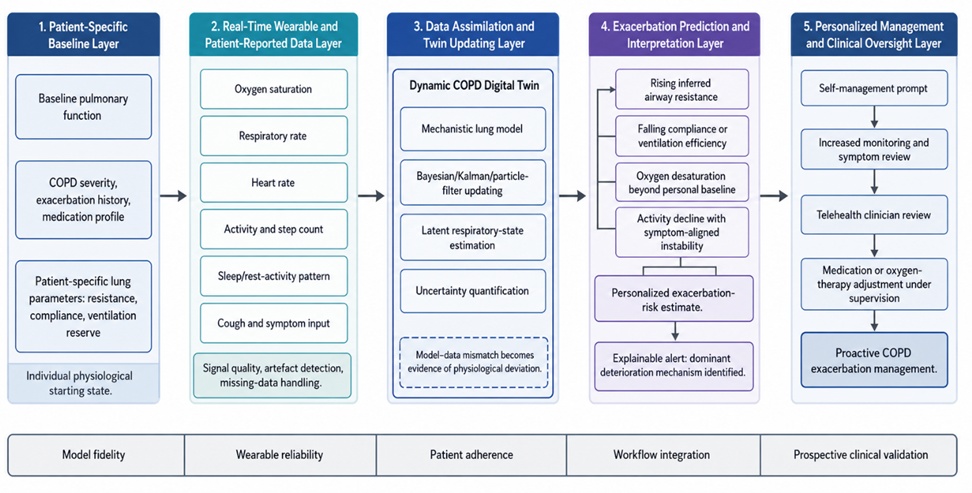
Figure 1. Hierarchical Digital Twin Architecture for Personalized COPD Exacerbation Prediction and Management
The framework assumes that the patient can provide continuous or near-continuous wearable data, operationalised conceptually as at least one usable measurement per hour for core variables such as oxygen saturation, heart rate, or activity. It also assumes patient willingness to wear sensors, enter symptoms when needed, and engage with alerts, because real-world adherence shapes data completeness and clinical usefulness. Cuperus, Bult, van Zelst, van den Brink, Kamstra, van den Broek, van den Eijnden, Panditha, In ’T Veen, and Braunstahl evaluated the feasibility of a wearable patch for detecting COPD exacerbations, while Hawthorne, Greening, Esliger, Morgan, Steiner, Singh, and Orme explored continuous free-living vital-sign monitoring after acute exacerbation [20, 21]. These studies support the assumption that longitudinal monitoring is plausible, while also showing that signal reliability and patient burden must be addressed at the design stage.
The framework follows five design principles: personalisation, real-time updating, non-invasive sensing, explainability, and clinical actionability. Personalisation means that the same oxygen saturation or respiratory-rate pattern may have different implications depending on baseline disease severity, activity context, and prior exacerbation history. Shah, Althobiani, Saigal, Ogbonnaya, Hurst, and Mandal synthesised wearable-technology interventions in COPD, while Glyde, Morgan, Wilkinson, Nabney, and Dodd reviewed remote patient monitoring and machine learning in acute exacerbations, together showing the need for systems that move beyond data collection toward interpretable clinical decisions [22, 23]. Therefore, the twin should not simply raise alarms but should explain whether concern arises from worsening mechanics, gas-exchange deviation, activity collapse, symptom progression, or a combination of signals.
Table 1 clarifies how each layer of the proposed COPD digital twin contributes a distinct inferential function rather than merely adding another monitoring component.
Table 1. Conceptual Role of Each Digital Twin Layer in Transforming COPD Monitoring From Reactive Observation to Personalized Physiological Inference
Digital twin layer | Primary conceptual function | What it adds beyond conventional monitoring | Key design requirement | Main failure risk if poorly implemented |
Patient-specific baseline layer | Defines the individual’s expected respiratory range before deterioration occurs | Moves interpretation away from population thresholds toward patient-specific deviation | Baseline calibration using pulmonary function, exacerbation history, symptoms, medications, and routine vital signs | False reassurance or excessive alerts if the baseline does not reflect the patient’s true physiological status |
Mechanistic lung-model layer | Represents COPD deterioration as changes in resistance, compliance, ventilation distribution, and respiratory reserve | Provides physiological meaning to sensor changes rather than treating them as isolated digital features | Model complexity must match available data quality and clinical usability | High-fidelity models may become computationally or clinically impractical |
Wearable-data layer | Supplies continuous or near-continuous observations from daily life | Captures deterioration during the hours or days before acute care is needed | Robust signal-quality assessment, artefact detection, and missing-data handling | Sensor noise, non-adherence, or device removal may be misread as clinical deterioration |
Data-assimilation layer | Updates the virtual patient as new observations arrive | Converts monitoring into a dynamic respiratory-state estimate | Sequential inference with uncertainty quantification | Overconfident updating may produce misleading risk estimates |
Exacerbation-prediction layer | Detects deviation patterns consistent with early exacerbation physiology | Combines physiological deviation, behavioural change, and symptom-aligned instability | Individually calibrated thresholds and interpretable risk scores | Generic thresholds may miss subtle deterioration or overload clinicians with false alarms |
Alert-and-action layer | Translates risk into graded clinical or self-management responses | Connects prediction to actionable care pathways | Human-in-the-loop escalation, safety rules, and workflow integration | Alerts may create anxiety, clinician burden, or unsafe treatment escalation |
Validation layer | Tests whether the system behaves plausibly and improves care | Separates conceptual promise from clinical readiness | Simulation, feasibility testing, prospective validation, and real-world implementation assessment | Premature deployment before safety, usability, and effectiveness are established |
The mechanistic core represents breathing through patient-specific respiratory resistance, compliance, and time-constant relationships that approximate the pressure–flow–volume behaviour of obstructed lungs. A single-compartment model may be sufficient for low-burden real-time inference, whereas a two-compartment model can represent heterogeneous ventilation, delayed emptying, and regional gas trapping more realistically. Lerios, Chase, Docherty, Tawhai, Burrowes, Davidson, and Pretty showed that identifiable lung-mechanics models can support COPD diagnosis and monitoring, while Neelakantan, Suki, and Bates situated such models within the wider computational lung-modelling literature [11, 18]. In the proposed twin, rising inferred airway resistance, falling compliance, or prolonged expiratory time constants would be interpreted as mechanistic evidence of deterioration when supported by wearable observations.
Initial parameter calibration would use baseline pulmonary function tests, clinical history, symptom scores, medication profile, oxygen prescription, exacerbation history, and routine vital signs to define a patient-specific starting state. Bayesian inference can then estimate plausible distributions for parameters rather than fixed values, allowing uncertainty to be carried forward into subsequent predictions and alerts. Roth, Isola, and Wall demonstrated coupling of physiological measurement with computational lung modelling, while Giroux, Bérar, Frey, and Delingette showed how patient-specific biomechanical modelling can be tailored to individual anatomy and clinical context [10, 16]. This calibration stage is essential because the twin must distinguish a clinically meaningful deviation from the patient’s own baseline rather than from a population average alone.
The wearable-data layer integrates peripheral oxygen saturation, respiratory rate estimated from accelerometry or impedance, heart rate, step count, sleep or rest-activity patterns, cough frequency, and manual symptom inputs such as dyspnoea or sputum change. Cooper, Sirichana, Arnold, Neufeld, Taylor, Wang, and Dolezal showed that remote physiological monitoring in COPD can be improved through statistical process control, which is relevant for identifying meaningful deviations from noisy home measurements [24]. Al Rajeh, Bhogal, Zhang, Costello, Hurst, and Mani demonstrated that oxygen-saturation variability analysis may help detect exacerbation-related change, while Nguyen, Moy, Liu, Fan, Gould, Desai, Towner, Yuen, Lee, Park, and Xiang studied activity coaching in COPD using digital monitoring pathways [25, 26]. These data streams allow the twin to interpret deterioration as a multidimensional pattern rather than as a single isolated abnormal value.
Before assimilation into the twin, wearable data require artefact detection, signal-quality assessment, resampling to uniform time intervals, contextual annotation, and imputation of missing observations. Movement artefact, poor sensor contact, low perfusion, device removal, and irregular charging can create false physiological patterns, so preprocessing must separate measurement failure from true respiratory deterioration. Wan, Kantorowski, Polak, Kadri, Richardson, Gagnon, and Moy showed that web-based pedometer-mediated intervention data can support long-term COPD monitoring, while Coutu, Iorio, and Ross emphasised the practical constraints of remote monitoring and wearable technologies in COPD care [14, 27]. In the proposed framework, preprocessing is not a peripheral engineering step but a clinical safeguard that protects the twin from overreacting to unreliable measurements.
The coupling mechanism treats wearable outputs as observations of the patient’s evolving respiratory state and, where appropriate, as boundary conditions for the computational lung model. For example, activity level can contextualise expected ventilation demand, oxygen saturation can constrain gas-exchange estimates, and respiratory rate can inform the model’s pressure–flow–volume dynamics. Geitner, Becher, Frerichs, Biehler, and Wall illustrated how patient-specific computational lung models can represent dynamic recruitment and derecruitment processes, while Roth, Isola, and Wall showed how external physiological measurements can be coupled with computational lung modelling [10, 17]. In the proposed twin, the error between model-predicted physiology and observed wearable signals becomes the basis for updating latent states such as effective resistance, compliance, ventilation efficiency, and exacerbation risk.
For a simplified linearised lung model, a Kalman filter could update respiratory states as new oxygen saturation, respiratory rate, heart rate, and activity measurements arrive. For non-linear or multi-compartment representations, particle filtering or sequential Bayesian inference may better capture uncertainty, multimodality, and abrupt physiological transitions during early exacerbation. Laubenbacher, Mehrad, Shmulevich, and Trayanova emphasised the need for computational systems that can integrate mechanistic and patient-specific information, and Masison, Beezley, Mei, Ribeiro, Knapp, Sordo Vieira, Adhikari, Scindia, Grauer, Helba, Schroeder, Mehrad, and Laubenbacher described modular digital-twin architectures that support such updating [5, 6]. The assimilation algorithm therefore functions as the mathematical bridge between continuous sensing and a clinically interpretable virtual patient.
The predictive signal arises when the twin detects deterioration in inferred respiratory mechanics, gas-exchange efficiency, activity tolerance, or symptom-aligned physiological stability. A gradual rise in estimated airway resistance, a fall in inferred compliance, persistent oxygen desaturation at lower-than-usual exertion, or increasing mismatch between predicted and observed respiratory rate may indicate early exacerbation physiology. Zeng, Arjomandi, Tong, Liao, and Luo developed machine-learning models for predicting severe COPD exacerbations, while Jo, Han, Lee, Min, Park, Yoon, Lee, Yoo, Jung, and Rhee developed a daily predictive model for COPD exacerbation [28, 29]. In the digital twin framework, these predictive strategies are strengthened by embedding statistical warning signals within a patient-specific physiological model rather than treating each variable as an isolated feature.
Alert thresholds should be calibrated to the individual patient because a fixed oxygen saturation, heart-rate change, or activity decline may be normal for one patient and dangerous for another. The proposed alerting layer would combine an anomaly score derived from model residuals with a machine-learning classifier trained on historical exacerbation patterns, symptom reports, and prior responses to treatment. Wu, Li, Huang, Cheng, Chen, Chien, Kuo, Kuo, and Lai demonstrated the feasibility of combining wearable-device data with machine learning and deep learning for COPD exacerbation prediction, while Chmiel, Burns, Pickering, Blythin, Wilkinson, and Boniface showed how self-reported digital-health data can contribute to predictive modelling [3, 4]. An alert would therefore represent a personalised probability of clinically relevant deterioration, accompanied by an explanation of which physiological and behavioural signals drove the warning.
The management layer translates twin outputs into graded, personalised recommendations rather than a single undifferentiated alarm. Low-risk deterioration might prompt symptom review, breathing exercises, medication-adherence checks, or increased monitoring, whereas higher-risk patterns could trigger telehealth consultation, bronchodilator review, oxygen-therapy reassessment, or clinician-supervised initiation of a pre-agreed prednisone or antibiotic protocol. Adibi, Sin, Safari, Johnson, Aaron, FitzGerald, and Sadatsafavi showed how exacerbation-risk prediction can inform clinical stratification, and Safari, Adibi, Sin, Lee, Ho, and Sadatsafavi reinforced the need for recalibration and external validation of such tools [1, 2]. In this framework, action selection depends not only on predicted risk but also on the mechanistic interpretation of deterioration, such as whether the dominant signal suggests ventilation limitation, gas-exchange instability, reduced activity tolerance, or symptom escalation.
A human-in-the-loop structure is necessary because COPD exacerbation management involves clinical judgement, patient preference, medication safety, and contextual interpretation. The twin can prioritise alerts, summarise trends, estimate plausible mechanisms, and recommend next steps, but clinicians should review high-risk alerts before major treatment changes are made. Wu, Ginsburg, Son, and Gershon found that patient use of wearables and self-management apps depends on usability, perceived value, and integration into care, while Glyde, Morgan, Wilkinson, Nabney, and Dodd highlighted the need to align remote monitoring and machine learning with clinical workflows [13, 23]. Shared decision-making therefore becomes part of the twin architecture, ensuring that automated inference supports rather than replaces patient–clinician interaction.
Simulation-based validation would begin with synthetic COPD patients whose baseline resistance, compliance, gas-exchange efficiency, activity patterns, and exacerbation trajectories are known by construction. The framework could generate repeated virtual monitoring periods, such as 500 simulated patient-months with varying signal quality, adherence, exacerbation severity, and comorbidity burden, then evaluate detection delay, false-positive frequency, missed-warning rate, and robustness to missing data. Neelakantan, Suki, and Bates described the role of computational lung modelling in respiratory medicine, and Lerios, Chase, Docherty, Tawhai, Burrowes, Davidson, and Pretty developed an identifiable lung-mechanics model relevant to COPD monitoring [11, 18]. This stage would not prove clinical effectiveness, but it would test whether the twin behaves plausibly before exposing patients and clinicians to prospective alerts.
Prospective validation would require a pilot study in which patients with COPD use wearable monitoring while digital twin alerts are compared with standard care, clinician assessment, symptom diaries, and observed exacerbation events. Feasible outcomes would include time from physiological deterioration to clinical review, alert burden, patient adherence, hospitalisation rate, treatment escalation, health-related quality of life, and clinician trust in the explanations generated by the twin. Shah, Althobiani, Saigal, Ogbonnaya, Hurst, and Mandal synthesised wearable-technology interventions in COPD, while Cuperus, Bult, van Zelst, van den Brink, Kamstra, van den Broek, van den Eijnden, Panditha, In ’T Veen, and Braunstahl evaluated wearable feasibility for COPD exacerbation detection [20, 22]. A later controlled trial could then compare twin-supported proactive management against usual reactive care, but only after feasibility, safety, and workflow integration have been established.
Table 2 provides a staged validation and implementation matrix that distinguishes technical plausibility, clinical safety, workflow feasibility, and real-world effectiveness.
Table 2. Validation and Implementation Matrix for a COPD Exacerbation Digital Twin
Evaluation domain | Core question | Recommended assessment approach | Evidence needed before clinical deployment | Consequence of insufficient evidence |
Physiological plausibility | Does the digital twin respond to simulated COPD deterioration in a clinically coherent way? | Synthetic patient simulations with controlled changes in resistance, compliance, oxygenation, activity, and symptom burden | Stable behaviour across mild, moderate, and severe exacerbation scenarios | The system may detect mathematical artefacts rather than meaningful respiratory decline |
Data reliability | Are wearable signals sufficiently accurate, complete, and interpretable in free-living COPD patients? | Signal-quality audits, missingness analysis, artefact detection testing, device-adherence monitoring | Demonstrated robustness to movement, poor sensor contact, charging gaps, and irregular use | False alerts or missed warnings caused by measurement failure |
Personalization validity | Does the model distinguish individual baseline variability from clinically important deviation? | Within-patient longitudinal calibration and comparison with symptom diaries, clinical review, and exacerbation history | Evidence that personalized thresholds outperform fixed generic thresholds | The system may reproduce one-size-fits-all care under a digital label |
Predictive usefulness | Does the twin identify deterioration earlier than usual symptom-driven recognition? | Prospective pilot comparing alert timing with symptom worsening, treatment escalation, and clinician assessment | Earlier detection without unacceptable false-positive burden | The twin may add monitoring complexity without improving care timing |
Explainability and trust | Can clinicians and patients understand why an alert was generated? | Usability testing, clinician review panels, patient-facing explanation assessment | Clear explanation of whether risk is driven by oxygenation, respiratory mechanics, activity decline, symptoms, or combined deviation | Users may ignore alerts or distrust the system |
Clinical actionability | Are alerts linked to safe and appropriate management options? | Protocol mapping, escalation pathway testing, human-in-the-loop review | Graded response pathways for self-management, telehealth review, medication adjustment, and urgent escalation | Alerts may increase anxiety or workload without producing useful intervention |
Workflow integration | Can the system fit into real COPD care pathways? | Telehealth workflow simulation, clinician workload assessment, reimbursement and responsibility mapping | Defined roles for patients, nurses, physicians, and remote-monitoring teams | Implementation may fail despite technical performance |
Real-world effectiveness | Does twin-supported care improve outcomes compared with reactive management? | Controlled trial after feasibility and safety testing | Evidence on exacerbation detection, hospitalisation, treatment delay, quality of life, adherence, and safety | The framework may remain conceptually promising but clinically unproven |
The proposed framework simplifies complex COPD pathophysiology into model components that may not fully capture airway inflammation, mucus dynamics, cardiovascular comorbidity, sleep-disordered breathing, anxiety-related dyspnoea, or medication effects. Wearable measurements can also be inaccurate during movement, low perfusion, sensor displacement, poor adherence, or device charging, which may create misleading model updates. Hawthorne, Greening, Esliger, Morgan, Steiner, Singh, and Orme demonstrated both the promise and practical complexity of free-living vital-sign monitoring, while Al Rajeh, Bhogal, Zhang, Costello, Hurst, and Mani showed that oxygen-saturation variability can be informative but requires careful interpretation [21, 25]. Computational burden is another limitation, because higher-fidelity models may be more physiologically realistic but harder to update reliably on edge devices or within routine telehealth workflows.
Clinical implementation may be constrained by patient adherence, digital literacy, anxiety caused by alerts, clinician workload, reimbursement, liability, and uncertainty about who should act when an exacerbation warning is generated. A system that produces too many false positives could undermine trust, while a system that suppresses alerts too aggressively could miss clinically important deterioration. Coutu, Iorio, and Ross reviewed remote monitoring and wearable strategies in COPD, and Iorio, Coutu, Malaeb, and Ross showed that feasibility and user experience are central to severe COPD monitoring with wearable technologies [14, 15]. The framework must therefore be evaluated not only as an algorithmic system but also as a sociotechnical intervention embedded in patient homes, clinician routines, and healthcare governance.
A digital twin framework for COPD exacerbation management offers a conceptual path toward personalised, anticipatory respiratory care. By representing each patient as a dynamic physiological system rather than a static risk category, the approach could help detect meaningful deterioration earlier and support more timely intervention.
The integration of a mechanistic lung model with real-time wearable data is the central contribution of the proposed framework. Wearable streams provide continuous observation, while the computational model supplies physiological interpretation, allowing alerts to reflect patient-specific deviation rather than generic thresholds alone.
Important challenges remain before such a framework can be implemented safely in clinical practice. Model fidelity, wearable-data quality, uncertainty quantification, patient adherence, workflow integration, and prospective validation will determine whether digital twins become useful clinical tools or remain promising conceptual systems.
Progress will require collaboration among lung physiologists, wearable-sensor engineers, artificial-intelligence researchers, implementation scientists, patients, and clinicians. With careful design and validation, COPD digital twins could help shift exacerbation management from delayed reaction to proactive, personalised support.
None
None
None
None
Open Access The author(s) retain copyright. This article is licensed under the Creative Commons Attribution-NonCommercial-ShareAlike 4.0 International License. It may be shared and adapted for non-commercial purposes with appropriate attribution, an indication of changes, and distribution of adaptations under the same license. Third-party material may be subject to separate terms identified in its credit line. View the license at https://creativecommons.org/licenses/by-nc-sa/4.0/.
 Clinical Intelligence Research Press